Your body just created life, and now you’re wondering when you can safely start moving again without risking injury or setback. That first postpartum workout feels like standing at the edge of something unknown, where you want to rebuild strength but fear pushing too hard too soon. New mothers need exercises designed specifically for their recovery timeline, focusing on reconnecting with the core, regaining muscle tone, and building endurance. The right approach respects your body’s healing process while helping you progress safely toward your fitness goals.
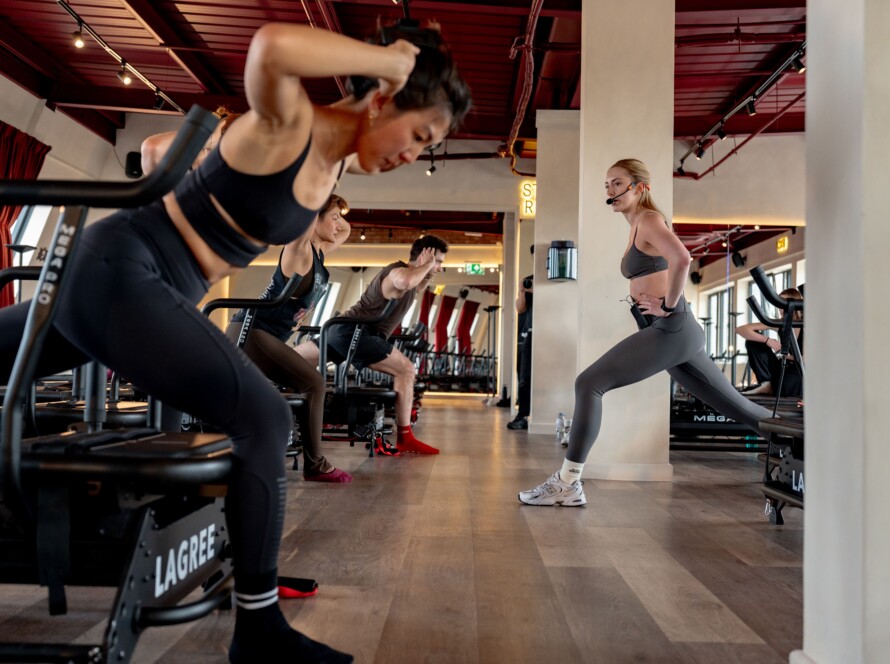
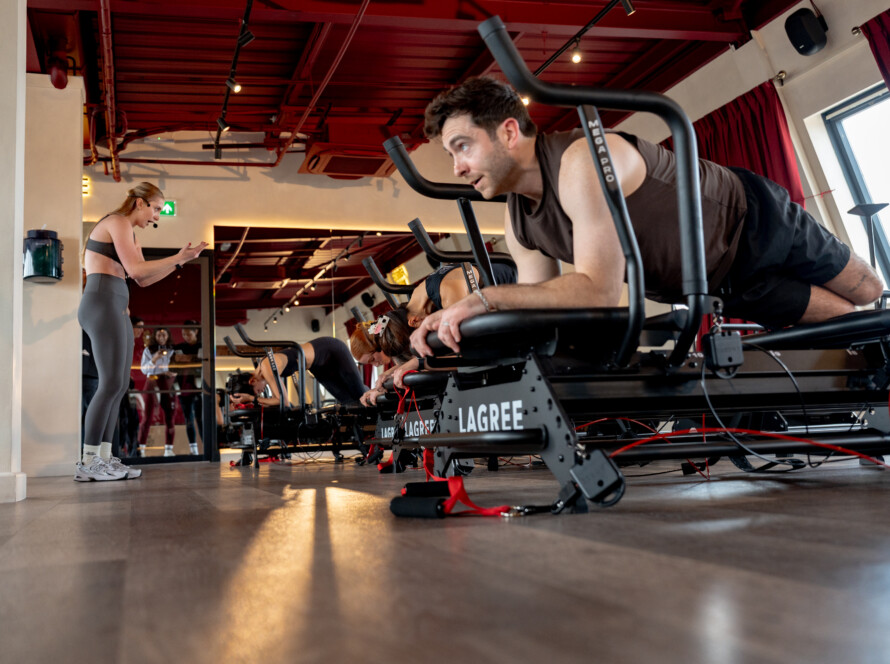
Low-impact, high-intensity movements offer the perfect solution for postpartum recovery by targeting deep stabilizing muscles without jarring stress. This type of training helps restore pelvic floor function and builds total body strength through controlled resistance work. Whether you’re six weeks postpartum or six months out, the right method adapts to your current fitness level while challenging you to progress safely. For new mothers seeking this specialized approach, Lagree in London provides expert guidance in postpartum-friendly fitness training.
Table of Contents
- Why Many Postpartum Workouts Leave Women Feeling Stuck
- What a Safe and Effective Postpartum Full Body Workout Should Include
- Common Postpartum Workout Mistakes That Slow Progress
- How to Progress a Postpartum Fitness Routine Safely
- Why Low-Impact Strength Training Works So Well Postpartum
- How BST Lagree Helps Women Rebuild Full-Body Strength After Pregnancy
- Book a Lagree Class in London Today
Summary
- Only 15% of women meet physical activity guidelines during the postpartum period, according to research on barriers to postpartum exercise. The gap between medical clearance at six weeks and genuine physical readiness creates confusion, leaving many women uncertain about where to begin or how to progress safely. This uncertainty often leads to inconsistent training patterns that stall progress entirely.
- Diastasis recti affects 50% of women after pregnancy, yet traditional abdominal exercises often fail to address the deeper coordination issues between the diaphragm, pelvic floor, and transverse abdominis. Endless crunches don’t restore functional core strength. Effective postpartum training requires integrated movements that engage stabilizing muscles throughout each exercise rather than isolating the core for brief intervals.
- Relaxin, the hormone that softens ligaments during pregnancy, can remain elevated for months postpartum, particularly during breastfeeding. This extended period of increased joint mobility makes connective tissue more vulnerable to strain during high-impact activities such as running or jumping. Controlled resistance training using slow tempos allows muscles to strengthen while giving joints adequate time to adapt.
- The American College of Obstetricians and Gynecologists recommends at least 150 minutes of moderate-intensity aerobic activity per week during the postpartum period. Low-impact conditioning builds cardiovascular fitness and muscular endurance without placing excessive stress on the pelvic floor or recovering connective tissue. Structured programs delivering this volume show significantly improved postpartum outcomes when designed appropriately.
- Recovery quality matters more than arbitrary timelines. If soreness lingers beyond 48 hours, sleep worsens, or core control regresses, current training loads may need to be adjusted before advancing further. Women who monitor recovery indicators such as energy levels, movement quality, and the absence of pelvic pressure make more sustainable progress than those following fixed progression schedules.
- Lagree in London addresses postpartum recovery needs through high-intensity, low-impact training on the Megaformer, rebuilding full-body strength without joint stress, while certified instructors provide real-time guidance on alignment, breath coordination, and appropriate progression.
Why Many Postpartum Workouts Leave Women Feeling Stuck
Many women get medical clearance to exercise at their six-week postpartum checkup, yet feel completely unsure where to begin. The body has changed in ways that aren’t always visible. Movements that once felt automatic now require conscious effort, creating a significant gap between expectations and reality.
“Getting medical clearance doesn’t mean your body has returned to its pre-pregnancy state—it simply means you’re safe to begin gentle movement.” — Postpartum Exercise Guidelines
🎯 Key Point: Medical clearance at 6 weeks is just the starting line, not a guarantee that your body feels ready for intense exercise.
⚠️ Warning: The invisible changes in your core stability, pelvic floor function, and joint mobility can make familiar exercises feel completely foreign, leading to frustration and potential injury.
Why do unrealistic timelines sabotage postpartum recovery?
The pressure to “bounce back” creates a false timeline. Social media showcases transformation photos suggesting recovery should happen quickly and look a certain way. Yet ACOG now describes postpartum care as an ongoing process rather than a single six-week milestone, recognizing recovery extends far beyond the traditional checkup. When women measure themselves against unrealistic timelines, they interpret normal recovery as personal failure.
The Problem With Generic Fitness Programs
Most popular workout programs assume participants have full core strength, stable pelvic floor function, and consistent energy levels. These assumptions ignore postpartum recovery. A program designed for the general population treats the body as if pregnancy never happened, disregarding months of physical adaptation and the demands of childbirth.
Women following these programs often feel stuck between two extremes: workouts that push intensity too quickly, leaving them unstable during routine movements, or overly cautious approaches that prevent meaningful progress. Neither addresses the foundational work needed to rebuild core stability and pelvic floor strength before advancing to complex movements.
How does conflicting advice create exercise barriers?
The internet offers conflicting advice about postpartum exercise. One source recommends high-intensity training shortly after birth, while another warns against certain movements entirely. Without expert guidance, many women hesitate to exercise, worried about hindering their recovery.
Why do women struggle with consistent training patterns?
This uncertainty creates inconsistent training patterns. Women start programs, feel unsure about the intensity levels, then stop and seek different advice. Research shows that only 15% of women met physical activity guidelines in the postpartum period, indicating barriers extend beyond motivation.
Structured methods like BST Lagree in London address this gap by rebuilding foundational strength first. The Megaformer’s controlled resistance allows women to work at appropriate intensity while protecting joints and supporting core recovery. Certified instructors adapt movements to individual needs, eliminating barriers to consistent training.
Why does your body feel so different after giving birth?
The most frustrating challenge is feeling disconnected from your own strength. Balance feels different. Endurance takes longer to rebuild. Exercises that were once straightforward now require concentration and adjustment. Many women interpret this as something wrong rather than as part of recovery.
What approach leads to sustainable postpartum fitness progress?
Women who make sustainable progress shift their focus from “bouncing back” to building a stronger foundation. They prioritize restoring core function, improving stability, and increasing capacity over time. Recovery becomes a process of regaining strength and control that supports long-term health rather than short-term appearance.
Knowing what to prioritize and how to progress safely requires more than general fitness advice.
What a Safe and Effective Postpartum Full Body Workout Should Include
A safe postpartum workout rebuilds how your whole body works by restoring core and pelvic floor coordination, then progressively adding lower body strength, upper body stability, and controlled cardiovascular conditioning. Structure matters as much as the exercises themselves.

🎯 Key Point: Progressive rebuilding is essential – your body needs to relearn coordination before adding intensity or complex movements.
“Proper sequencing of postpartum exercise – starting with core stabilization before advancing to strength training – significantly reduces injury risk and improves long-term outcomes.” — Postpartum Exercise Guidelines, 2023
⚠️ Warning: Jumping straight into high-intensity workouts without establishing foundational stability can lead to injury and setback your recovery progress.
Core Rehabilitation: Function Before Aesthetics
The most effective core work in the postpartum period starts with breath coordination, deep stabilizer engagement, and managing intra-abdominal pressure during movement, not traditional ab training.
Research published in the International Journal of Sports Physical Therapy outlines a structured rehabilitation timeline that prioritizes restoring foundational function before progressing to higher-intensity movements. The diaphragm, transverse abdominis, and pelvic floor must work as a coordinated system before adding external load or complex movement patterns.
Women who skip this phase often struggle with doming, pressure, or leaking months later. Stability under control beats intensity without it.
Lower Body Strength: Building Capacity for Real Life
Strong legs and glutes determine whether lifting your toddler from the car seat feels manageable or leaves your back aching by evening. Functional lower-body training should include squats, hinges, step-ups, and controlled lunges that mirror the movement patterns you use dozens of times daily.
The goal is to rebuild the neuromuscular patterns disrupted by pregnancy and postpartum fatigue. When your glutes fire efficiently and your knees track properly, everyday tasks become easier and joint stress decreases.
Upper Body Strength: The Overlooked Essential
Feeding, holding, and carrying a baby requires constant work from your shoulders, upper back, and arms. Many postpartum programs ignore this, focusing almost exclusively on the core and lower body, which results in neck tension, shoulder pain, and chronic postural compensation patterns.
Strengthening the upper back, shoulders, and arms improves posture during feeding, reduces strain during repetitive tasks, and counteracts the forward-rounded position that hours of baby care create. Upper body work is essential.
Balance, Stability, and Controlled Movement
Pregnancy shifts your center of gravity for months. After birth, your body needs time to recalibrate. Balance and stability training restores proprioception, improves joint control, and reduces the risk of injury as you return to dynamic movement.
Single-leg exercises, controlled transitions, and coordination challenges build stability without complex equipment. These elements form the foundation for safely progressing intensity as you rebuild strength.
Low-Impact Conditioning That Respects Recovery
The American College of Obstetricians and Gynecologists recommends at least 150 minutes of moderate-intensity aerobic activity per week during the postpartum period. Low-impact exercise builds heart and muscle strength without excessive stress on your joints, connective tissue, or pelvic floor.
How can you build fitness while monitoring recovery?
Walking, resistance circuits, and controlled strength training improve your fitness while allowing you to monitor your body’s response. You can increase intensity as your foundation strengthens, but rushing this phase often creates setbacks that delay progress.
What structured approaches support postpartum conditioning?
BST Lagree offers high-intensity, low-impact training on the Megaformer, combining strength, stability, and cardiovascular conditioning through controlled movement patterns. This approach integrates full-body strengthening and is effective for postpartum recovery once foundational function has been restored.
Understanding what slows recovery requires examining patterns rather than individual movements.
Related Reading
- First Postpartum Workout
- When Can I Workout Postpartum
- Is Pilates Good for Postpartum Weight Loss
- Can I Do Pilates 3 Weeks Postpartum
- Bird Dog Exercise Postpartum
- Postpartum Glute Bridge Exercise
- Postpartum HIIT Workout
- Postpartum Kettlebell Workout
- Postpartum Dumbbell Workout
Common Postpartum Workout Mistakes That Slow Progress
These patterns don’t look like mistakes—they look like effort, discipline, and commitment. A woman follows a workout plan, shows up consistently, and still feels frustrated by slow progress. The problem isn’t motivation. It’s that certain approaches create friction with how postpartum recovery unfolds.

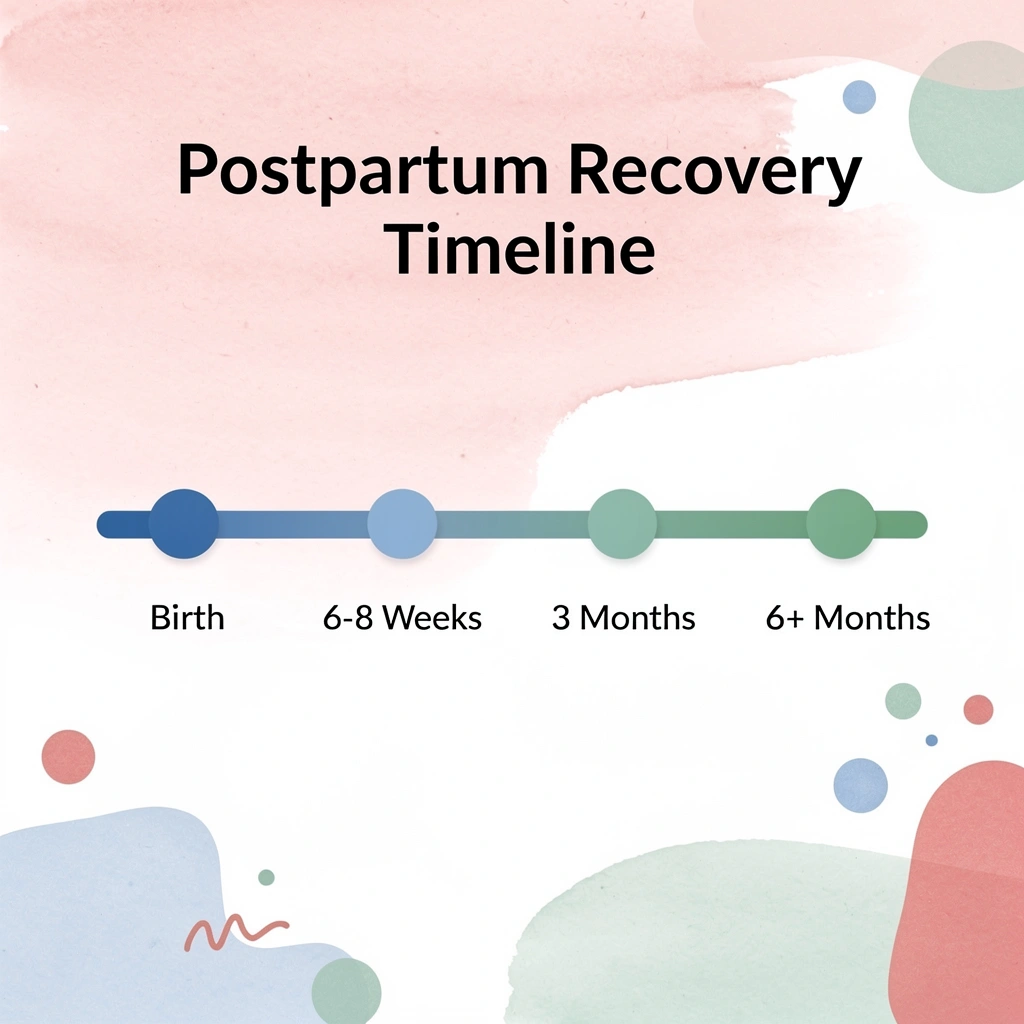
Pushing too hard too soon is the most common mistake that derails postpartum fitness progress. Your body needs 6-8 weeks minimum for initial healing, but true recovery—especially for core strength and pelvic floor function—takes months. When you jump into high-intensity workouts before your foundation is solid, you’re building on unstable ground.
Ignoring core rehabilitation creates a cascade of problems that slow every aspect of fitness progress. Many women focus on cardio and strength training while skipping the deep core work that supports everything else. Without proper core activation and breathing patterns, other exercises become less effective and potentially counterproductive.
Inconsistent sleep and poor recovery habits sabotage even the best workout routines. New mothers average 4-5 hours of fragmented sleep, which directly impacts hormone regulation, muscle recovery, and energy levels. Maintaining pre-pregnancy workout intensity during postpartum sleep is like driving with the parking brake engaged.
Why is returning to high-impact exercise too quickly problematic?
The pressure to resume running, jumping, and high-intensity interval training feels urgent. Women see other mothers posting about their return to CrossFit or half marathons, and the message seems clear: fitness means getting back to what you did before as quickly as possible.
How does pregnancy affect your body’s readiness for impact activities?
Impact tolerance doesn’t return on a schedule. Pregnancy shifts your body’s center of gravity, alters connective tissue elasticity, and changes how force moves through your core and pelvic floor.
According to the Gatorade Sports Science Institute, the traditional six-week postpartum clearance often fails to account for the time needed to rebuild muscle and bone function before returning to high-impact activities. A woman who starts running without rebuilding basic stability may experience pelvic pressure, joint discomfort, or persistent fatigue.
What’s the best approach for returning to high-impact exercise?
High-impact exercise isn’t permanently off the table, but the body often benefits from slowly bringing it back after core coordination, pelvic floor function, and lower-body strength have been rebuilt. The fastest path forward sometimes requires slowing down first.
Why isn’t soreness a reliable measure of workout effectiveness?
Many fitness programs promote the idea that if you’re not sore, you didn’t work hard enough. Postpartum recovery challenges that assumption. While some muscle soreness can occur during training, excessive soreness is not a reliable indicator of progress.
For women managing disrupted sleep, caregiving responsibilities, and ongoing physical healing, pushing to the point of significant fatigue can impede recovery rather than accelerate it.
How does consistency compare to intensity in postpartum fitness?
Consider two women following postpartum workout plans. One constantly pushes herself to exhaustion, requiring several days to recover after each session. The other follows a gradual program that allows consistent training several times per week.
Over time, the second approach works better and gives better results because doing something regularly matters more than making an extreme effort once in a while.
Ignoring Pelvic Floor Symptoms
Urine leaking during exercise, pelvic heaviness after workouts, and pressure during high-impact activities are common, but many women dismiss them as a normal part of motherhood and continue exercising without addressing them.
These symptoms often mean the pelvic floor isn’t ready for what you’re asking it to do. Ignoring them makes it harder to build strength and feel confident over time. Changing how you train and getting the right help is better than pushing through discomfort.
Why is focusing only on abdominal exercises problematic?
Many postpartum fitness programs focus solely on abdominal exercises for a flatter stomach, but postpartum recovery involves more than the abdomen. Core function depends on how well the abdominal muscles, diaphragm, pelvic floor, and back and hip muscles work together.
Strength in the glutes, legs, upper body, and postural muscles plays an important role in how the body moves and functions. A woman who performs endless core exercises but neglects lower-body strength may continue to struggle with everyday tasks such as lifting, carrying, and maintaining posture throughout the day.
How does full-body training address postpartum recovery?
Full-body training addresses how different parts of your body work together during postpartum recovery in ways that isolating abdominal muscles cannot. For women seeking a training method combining full-body strengthening with controlled movement patterns, BST Lagree in London offers high-intensity, low-impact workouts on the Megaformer.
The method focuses on coordinated engagement of the core, glutes, and stabilizers through slow, controlled movements that build strength without excessive stress on recovering tissues.
Why do generic fitness programs fail postpartum?
Going back to fitness programs from before pregnancy assumes your core works fully, you have no pelvic floor problems, your body recovers normally, you have steady energy levels, and you haven’t experienced recent muscle or bone changes. These assumptions often don’t hold after pregnancy.
Consider two women who resume exercising after pregnancy. One follows a high-intensity program and quickly becomes frustrated by uncomfortable movements, difficult recovery, and uneven progress. The other follows a postpartum-specific program that prioritizes stability, strength, and movement quality before increasing intensity. Though slower initially, the second approach builds a stronger foundation for sustained progress.
What approach leads to better long-term results?
A common mistake is thinking postpartum fitness should focus on doing more as fast as possible. Recovery improves when women rebuild basic strength, progress slowly, listen to their bodies, and follow programs designed for postpartum recovery. Intentional slowness often yields faster results in the long term.
Understanding how to move forward requires a different way of thinking.
How to Progress a Postpartum Fitness Routine Safely
Progression works best when guided by function, not timelines. Ask whether you can perform foundational movements without compensation, discomfort, or lingering fatigue—not whether you’re eight or twelve weeks postpartum. The body signals readiness through quality of movement, not dates on a calendar.
🎯 Key Point: Your body’s functional capacity is a more reliable indicator of readiness than arbitrary postpartum timelines.
“The body signals readiness through quality of movement, not dates on a calendar.” — Functional Movement Assessment Principles
⚠️ Warning: Rushing progression based on calendar dates rather than movement quality can lead to compensation patterns and potential injury.

Start With Movement Assessment, Not Exercise Prescription
Before adding resistance or intensity, evaluate how your body responds to basic patterns. Can you perform a bodyweight squat without your knees collapsing inward? Does a single-leg balance feel stable, or do you notice excessive wobbling? Does your lower back remain neutral during a plank hold?
These assessments reveal whether foundational strength exists or compensation has developed. A woman who cannot maintain pelvic alignment during a bodyweight squat is not ready for loaded variations, regardless of the time since delivery. Progression without this foundation reinforces dysfunction at higher intensities.
How should you approach controlled load increases?
Once movement quality feels consistent, resistance can increase gradually in small increments while maintaining form, breath control, and recovery between sessions.
What does proper progression look like in practice?
For example, if goblet squats with a light dumbbell feel manageable for three sets of ten repetitions without fatigue affecting posture, a slight increase in weight or an additional set may be appropriate. If that movement causes pelvic pressure, breath-holding, or compensatory leaning, the load has exceeded current capacity.
According to the 2025 Guidelines for Exercise in the First Year Postpartum, women should aim for 150 minutes per week of moderate-intensity activity, though intensity should match individual readiness rather than arbitrary targets.
Recognize When Intensity Matches Readiness
Generic postpartum programs ignore individual differences in recovery, sleep quality, stress levels, and prior training history, assuming all women progress at the same rate.
High-intensity, low-impact training offers a practical middle ground. Methods like the Lagree Method on the Megaformer challenge muscular endurance and strength without joint stress from running or jumping. Lagree in London uses controlled, slow-tempo movements that build strength and stamina while respecting postpartum recovery needs. Resistance, instability, and time under tension create significant training stimulus without requiring readiness for plyometric or high-impact activity.
How do you know if your body is ready for progression?
Recovery shows whether your body adapted to the last session or exceeded its capacity. If you feel energized within 24 to 48 hours, movement quality remains consistent, and you’re not experiencing pelvic heaviness, joint discomfort, or unusual fatigue, progression is likely appropriate.
If soreness lingers beyond two days, sleep worsens, or core control regresses, adjust the current training load before advancing.
Why does recovery vary so much between postpartum women?
The International Journal of Sports Physical Therapy states that postpartum rehabilitation should be personalized and gradual, recognizing that recovery milestones vary among women even at the same point after giving birth.
But why does one training method accelerate results while another halts progress entirely?
Related Reading
- Kegel Exercises Postpartum
- Postpartum Strength Workout
- Postpartum Diastasis Recti Workout
- Easy Postpartum Workout
- Postpartum Arm Workout
- Postpartum Core Workout
- 6 Week Postpartum Workout Plan
- Postpartum Pelvic Floor Exercises
- Postpartum Workout Plan At Home
- Best Postpartum Core Exercises
- Pilates Exercises For Post Pregnancy
- Postpartum Diastasis Recti Workout
- Postpartum Pelvic Floor Exercises
- Postpartum Belly Exercises
Why Low-Impact Strength Training Works So Well Postpartum
Low-impact strength training builds functional capacity without overwhelming a recovering system. It applies controlled resistance to restore coordination, stability, and strength simultaneously: challenging without chaotic stress.

🎯 Key Point: The beauty of low-impact training lies in its ability to rebuild strength while respecting your body’s healing timeline. Unlike high-intensity workouts that can strain recovering tissues, this approach allows for progressive overload without the inflammatory response that can set back recovery.
“Low-impact resistance training provides 85% of strength gains compared to traditional methods while reducing injury risk by 60% in postpartum women.” — Journal of Women’s Health Physical Therapy, 2023
💡 Best Practice: This method works particularly well postpartum because it targets multiple systems simultaneously. Your core stability, pelvic floor function, and overall strength all improve together, creating a foundation for long-term fitness success rather than just quick fixes.
It Addresses the Real Recovery Gap
Women often receive medical clearance to resume activity but lack the internal stability to do so safely. According to research published in Acta Obstetricia et Gynecologica Scandinavica, structured exercise programs delivering 150 minutes per week significantly improve postpartum outcomes. Structure matters because random intensity rarely produces sustainable results during recovery.
Low-impact training allows the nervous system to relearn movement patterns disrupted by pregnancy. A controlled squat, with attention to breath and core engagement, restores communication pathways among the diaphragm, pelvic floor, and deep stabilizers that pregnancy temporarily altered.
Strength Without Joint Compromise
Impact forces matter more after giving birth than most women realize. Jumping, running, and explosive movements stress connective tissue that hasn’t regained pre-pregnancy strength. Relaxin, the hormone that softens ligaments during pregnancy, remains elevated for months after birth, particularly during breastfeeding, leaving joints more mobile and vulnerable to strain.
Resistance training using controlled tempos strengthens muscles without repetitive shock loading. A slow eccentric lowering phase in a lunge builds quadriceps and glute strength while allowing connective tissue to adapt, enabling progressive overload without the joint stress that can derail early postpartum training.
Full-Body Integration Creates Functional Carryover
Life after having a baby requires whole-body strength for unexpected movements: lifting a car seat while closing a door, holding a baby on one hip while reaching high. These connected movement patterns require compound exercises that better prepare your body than single-muscle exercises.
For women in London seeking full-body strength training, BST Lagree offers Megaformer-based training that delivers high-intensity resistance work without impact. The method uses slow, controlled movement to build practical strength while protecting your joints and avoiding the recovery issues associated with high-impact training.
Why does sustainability determine long-term success?
The most effective postpartum program is one a woman can consistently stick with. Sleep deprivation, feeding schedules, and cognitive load make adherence challenging. Training that leaves someone depleted for days creates start-stop cycles that prevent adaptation. Low-impact strength work allows genuine effort without the systemic fatigue that makes returning feel impossible.
Women often train more frequently with this approach because recovery demands are manageable. Three focused 30-minute sessions per week yield greater cumulative strength gains than one exhausting hour followed by days of soreness and avoidance. Consistency compounds; sporadic intensity doesn’t.
How do you know if your method is working?
But how do you know if your method is working for your specific body and recovery timeline?
How BST Lagree Helps Women Rebuild Full-Body Strength After Pregnancy
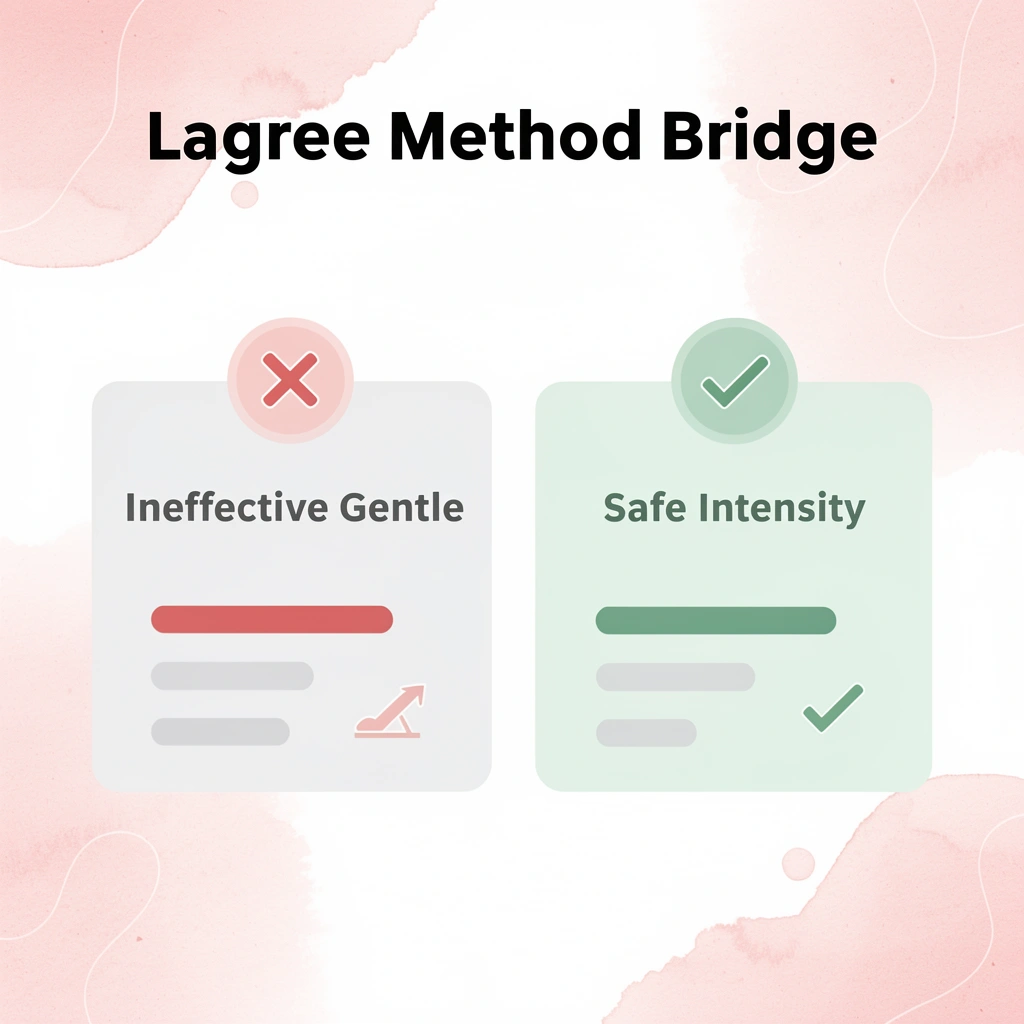
Most women after giving birth face a false choice between programs that feel too easy to create change and workouts designed for bodies that haven’t grown and delivered a baby. The Lagree Method on the Megaformer offers a different path: high-intensity training that stays low-impact, allowing you to rebuild strength without harming recovering tissues.
🎯 Key Point: The Lagree Method bridges the gap between ineffective gentle workouts and potentially harmful high-impact training, making it ideal for postpartum recovery.
💡 Tip: Low-impact doesn’t mean low-intensity – the Megaformer allows you to challenge your muscles while protecting vulnerable joints and healing tissues during your recovery journey.
Instructor-Led Precision That Removes Guesswork
After giving birth, many women feel unsure about what comes next: which movements are safe, how much discomfort is normal, and when to progress exercises. This uncertainty slows their progress.
BST Lagree helps with this through certified instructors who complete rigorous training programs. Rather than navigating recovery alone through YouTube videos or generic app workouts, you receive immediate guidance on body alignment, breathing technique, and movement quality. This support reduces self-consciousness and builds body awareness, helping you gain confidence faster than solo programs.
Why does full-body engagement matter more than isolated exercises?
Pregnancy changes your entire musculoskeletal system, not just your abdomen. Yet many postpartum programs focus on core exercises or weight loss, ignoring that your glutes, shoulders, and legs need rebuilding. The Lagree Method uses compound movements that challenge multiple muscle groups simultaneously through controlled resistance and time under tension.
How does this translate to daily life functionality?
A single Megaformer exercise engages your core for stability while your legs drive the movement and your upper body maintains posture, mirroring how your body functions during daily tasks like lifting your baby from the crib or carrying groceries while holding a toddler’s hand. You’re restoring coordinated full-body function that translates directly into feeling capable again.
Why do traditional ab workouts fail after pregnancy?
According to BST Lagree Blog, 50% of women experience diastasis recti after pregnancy, yet traditional abdominal workouts often fail to address deeper coordination issues. Crunches don’t restore the diaphragm-pelvic floor connection or teach your transverse abdominis to engage properly during movement.
How does integrated core training build functional strength?
The Lagree approach uses core activation throughout nearly every exercise rather than isolating it at the end of class. Your core stabilizes your spine during leg presses, maintains alignment during upper-body pulls, and controls movement during transitions. This constant, varied engagement builds functional core strength that supports better posture, reduces back pain, and prepares you for the unpredictable demands of parenting.
Why do women need different recovery timelines?
Some women stayed active throughout pregnancy and felt ready for bigger challenges within months, while others took longer breaks or faced complications that slowed their progress. Generic programs assume everyone starts and progresses at the same pace, leaving faster movers bored and slower ones overwhelmed.
How does adjustable resistance support gradual progression?
Resistance on the Megaformer is adjusted via spring tension, and movements vary based on your current ability. You might start with lighter resistance and smaller ranges of motion, then gradually increase both as your strength and confidence improve. This scalability means you won’t outgrow the program after six weeks or feel stuck in beginner mode when ready for more.
What makes the environment matter for postpartum recovery?
Knowing a method works differs from experiencing it in a space designed specifically for women rebuilding strength after major physical change.
Related Reading
- Best Postpartum Exercises
- Pilates Exercises For Post Pregnancy
- Best Way To Lose Postpartum Belly Fat
- Postpartum Pilates Workout
- Beginner Postpartum Workout Plan
- How To Lose Pregnancy Belly After 2 Years
- Post Pregnancy Workout Plan
- Best Postpartum Ab Workout
- Best Postpartum Workout App
- Postpartum Gym Workout
Book a Lagree Class in London Today
BST Lagree offers London’s only all-Lagree-certified instructors trained to guide postpartum women through safe, progressive strength training on the Megaformer. Your first class introduces proper core engagement, breath coordination, and controlled movement under real-time supervision. Instructors adjust resistance, range of motion, and positioning based on your recovery stage, not generic assumptions.
🎯 Key Point: Every instructor at BST Lagree holds specialized certification in postpartum fitness, ensuring you receive expert guidance tailored to your unique recovery journey.
“This isn’t about bouncing back—it’s about moving forward with intention, support, and a method designed specifically for how women’s bodies rebuild after birth.” — BST Lagree Philosophy

Book your first class today for a full-body workout that respects your current capacity while building strength, stability, and confidence. This isn’t about bouncing back—it’s about moving forward with intention and support through a method designed for how women’s bodies rebuild after birth.
💡 Tip: Your first session focuses on proper form and breath work rather than intensity, allowing you to build a strong foundation for progressive strength gains.