A safe beginner postpartum workout plan starts with breathing, pelvic floor exercises and walking in the first weeks, adds gentle strength work after your 6 to 8 week postnatal check, and builds intensity gradually over at least three months before any running, jumping or HIIT. That follows NHS advice and the UK Chief Medical Officers’ physical activity guidelines.
Below is the plan phase by phase, with an easy 15-minute session, an at-home week that needs no equipment, a full-body strength session, the exercises worth your time, and the signs that mean stop and get checked. When you are ready for a coached class, you can book one in Angel.
Before you start
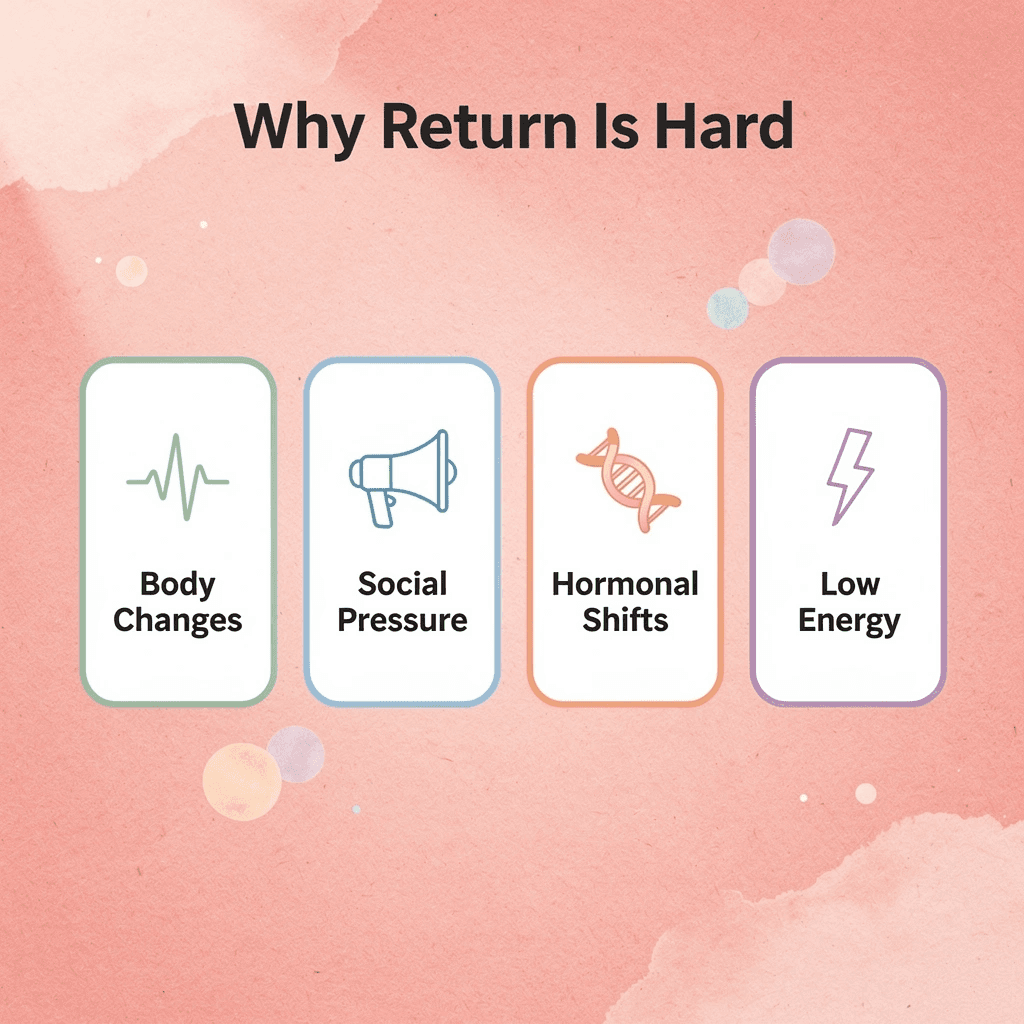
If you had a straightforward birth, the NHS says you can start gentle exercise as soon as you feel up to it. After a caesarean or a complicated birth, recovery takes longer, so check with your midwife, health visitor or GP before anything strenuous. Our guide to when you can work out after giving birth covers the timings in detail.
Use your symptoms, not the calendar, to decide when to move on. If anything in the warning signs section below shows up, step back a phase and get it checked.
The plan at a glance
| Phase | When | Focus | A typical week |
|---|---|---|---|
| 1. Recover | Birth to your 6 to 8 week check | Breathing, pelvic floor, deep tummy muscles, walking | Pelvic floor exercises 3 times a day, short daily walks, the easy 15-minute session most days |
| 2. Rebuild | After your check to about 3 months | Bodyweight strength, longer walks | Two full-body strength sessions, brisk walks on most other days |
| 3. Build | About 3 to 6 months | More resistance, longer or harder sessions, low-impact classes | Two or three strength sessions, walks, a class if you want one; impact only if you pass the readiness tests |
The Chief Medical Officers’ guidance for women after childbirth says to start pelvic floor exercises as soon as you can, build back up to muscle strengthening twice a week, and aim for at least 150 minutes of moderate activity a week. If you were not active before, start gradually.
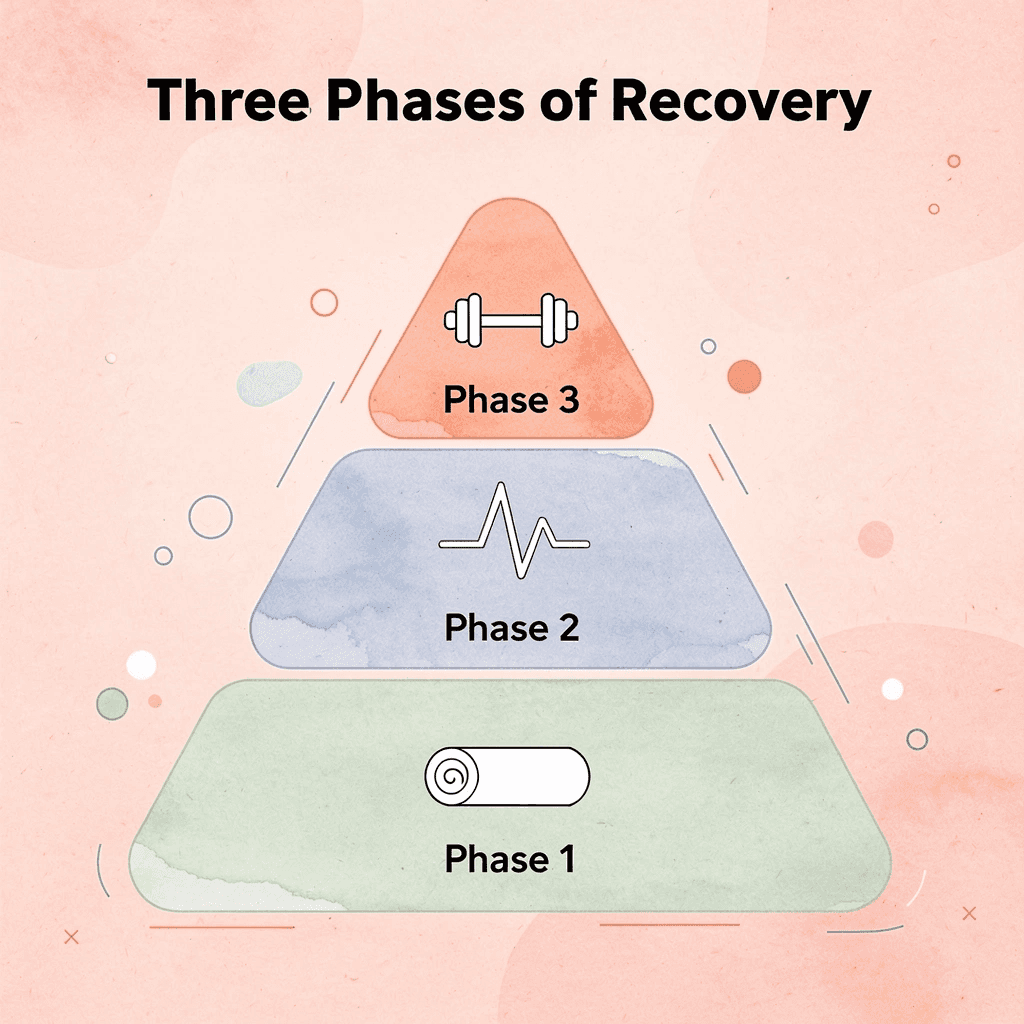
Phase 1: the first 6 weeks
Keep it gentle. The NHS suggests walking, gentle stretches and pelvic floor exercises, and pushing the buggy briskly with your arms bent and back straight. The POGP postnatal booklet says breathing and pelvic floor exercises can start within the first few hours after a vaginal birth, and after a caesarean once your catheter is out.
The NHS post-pregnancy body guide advises avoiding sit-ups, planks, high-impact exercise, heavy lifting and straining on the toilet for now. After a caesarean, POGP advises lifting nothing heavier than your baby for at least 6 weeks.
The easy 15-minute session
Do this on a mat or your bed, most days, once you feel up to it.
- Breathing, 2 minutes: lie on your back with knees bent. Breathe in gently, then breathe out slowly and let your ribs soften.
- Pelvic floor, 3 minutes: 10 long squeezes, holding up to 10 seconds, then 10 quick squeezes. Relax fully between each. Our pelvic floor exercises guide explains the technique.
- Deep tummy, 3 minutes: lie on your side, breathe out and gently draw in the lower part of your stomach like a corset while squeezing your pelvic floor. Hold for a count of 10, breathing normally. Up to 10 times. This is the NHS exercise.
- Heel slides, 2 minutes: on your back, breathe out, draw in gently and slide one heel away until the leg is nearly straight, then back. 6 to 8 each side.
- Walk, 5 minutes or more: easy pace, adding a few minutes each week.
Phase 2: after your 6 to 8 week check
Your postnatal check is offered by your GP surgery 6 to 8 weeks after the birth. Mention any leaking, heaviness, pain or tummy bulging. The NHS says to get advice there before starting high-impact exercise.
The Chief Medical Officers say that after this check, depending on how you feel, you can gradually build up from moderate to vigorous activity over at least 3 months. In practice, that means two strength sessions a week and brisk walks.
An at-home week with no equipment
| Day | What to do |
|---|---|
| Monday | Full-body strength session (below), about 25 minutes |
| Tuesday | Brisk walk with the pram, 20 to 30 minutes |
| Wednesday | Easy 15-minute session |
| Thursday | Full-body strength session |
| Friday | Brisk walk, 20 to 30 minutes |
| Weekend | One longer walk; pelvic floor exercises every day |
Missed a day? Move it. The order matters less than doing two strength sessions most weeks.
The full-body strength session
Do every exercise for the sets and reps shown, resting about a minute between sets. Stop each set with two or three reps left in the tank. Breathe out on the effort and lift your pelvic floor as you do.
| Exercise | Sets x reps | Easier | Harder (phase 3) |
|---|---|---|---|
| Sit-to-stand squat | 2 x 10 | Higher chair | Hold a dumbbell or a full bag |
| Glute bridge | 2 x 10 | Smaller lift | Pause 3 seconds at the top |
| Wall press-up | 2 x 8 to 10 | Feet closer to the wall | Hands on a kitchen counter |
| Bent-over row with a full bag or water bottles | 2 x 10 | Lighter bag | Dumbbells, slower lowering |
| Split squat holding a chair | 2 x 6 each leg | Shorter range | Deeper range, light weights |
| Bird dog | 2 x 6 each side | Arm or leg only | Hold 3 seconds |
| Dead bug heel taps | 2 x 6 each side | One heel at a time, small range | Straighter leg |
Add reps first, then range, then resistance, and change one thing at a time. If you have dumbbells, our postpartum dumbbell workout is the natural next step in phase 3.
The best postpartum exercises
These are the moves worth prioritising, and why:
- Pelvic floor squeezes: the base for everything else, and recommended by the NHS and NICE after birth.
- Deep tummy draw-in: the NHS says regular pelvic floor and deep stomach exercises can help reduce the gap between your tummy muscles.
- Walking: easy to fit around a baby, and POGP calls brisk walking with your baby an excellent way to exercise.
- Glute bridge: strengthens your glutes and the back of your hips, done lying down with no strain on your tummy like a sit-up. See our postpartum glute bridge guide.
- Sit-to-stand squat: trains the movement you do every time you get up with your baby.
- Wall press-up and row: build the upper body for lifting, feeding and carrying.
- Bird dog and dead bug: gentle core control that you can progress, unlike sit-ups.
Phase 3: months 3 to 6
Now you can add resistance, longer sessions and low-impact classes. Aim for two or three strength sessions a week plus your walking. Planks and harder core work can come back if your tummy does not dome or bulge and you have no leaking or heaviness.
When are HIIT, running and jumping OK?
Not in the first 12 weeks for most people. POGP describes weeks 6 to 12 as a time for low-impact work, with a return to running from around 12 weeks. Royal Berkshire NHS physiotherapists, using UK return-to-running guidelines, suggest you can test your readiness from week 12. You should be able to do all of these without pain, heaviness or leaking:
- Walk for 30 minutes
- Stand on one leg for 10 seconds, each side
- 10 single-leg squats on each leg
- Jog on the spot for 1 minute
- 10 forward bounds
- 10 hops on each leg
Wait, and get assessed, if any of these cause leaking, urgency, heaviness or a bulge in your vagina, or pelvic pain. If you want hard work without impact in the meantime, low-impact options like cycling, swimming once your bleeding has stopped for 7 days, or a Lagree class let you raise your heart rate without jumping.
Warning signs to stop
Stop exercising and get urgent medical help for any of the symptoms NICE postnatal guidance lists as needing urgent assessment: sudden or very heavy bleeding, or bleeding that keeps going or gets heavier; leg swelling and tenderness or shortness of breath; chest pain; or a persistent or severe headache.
Ease off and see your GP or a physio if you notice any of the symptoms POGP lists: urinary or bowel leakage, heaviness, vaginal discomfort, pain, increased bleeding, or bulging of your tummy muscles.
When to see a women’s health physio
See a pelvic health (women’s health) physiotherapist if you have any of the symptoms above, cannot feel a clear pelvic floor squeeze, still have an obvious gap between your tummy muscles 8 weeks after birth (the NHS says contact your GP), or want to return to running or HIIT and are not sure you are ready. POGP says you can refer yourself where that is available, or ask your GP to refer you.
Postnatal exercise classes in London
If you want a class, look for low-impact formats where the instructor asks about your birth and offers easier options. Wait until after your postnatal check, and tell the instructor how old your baby is. Lagree at our Angel studio is low impact but high intensity, so it suits phase 3 better than the early weeks. It’s not Pilates. It’s Lagree, and the differences between Lagree and Pilates explain why.
FAQs
How soon can I start a postpartum workout plan?
After a straightforward birth, as soon as you feel up to it, with phase 1 exercises. Wait for your 6 to 8 week check before anything high impact, and take longer after a caesarean.
Is 6 weeks postpartum too early for HIIT?
For high-impact HIIT, usually yes. The Chief Medical Officers advise building up to vigorous activity over at least 3 months after your check, and running-style impact is usually tested from around 12 weeks.
Will a postpartum workout plan help me lose baby weight?
The Chief Medical Officers’ guidance says physical activity helps control weight and return to pre-pregnancy weight, and improves mood and sleep. Go gently and focus on strength first. Our post on postpartum weight loss and exercise has more.
What is the best postpartum workout programme?
The one that follows the phases above, progresses slowly and that you can keep doing. Two strength sessions a week, daily pelvic floor exercises and regular walking cover the basics.
Try Lagree in Angel
When you have been cleared and have built a base, a Lagree class at Blood, Sweat & Tears is 45 minutes on the Megaformer: full body, low impact and high intensity, with slow, controlled movement. New clients can start with two weeks unlimited for £139, about three minutes’ walk from Angel tube. Book your first class.