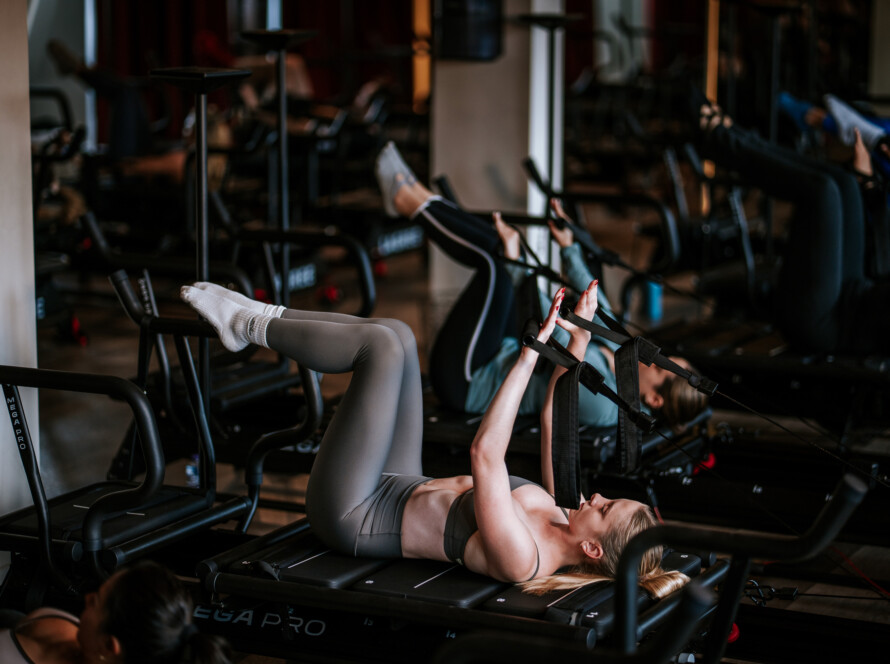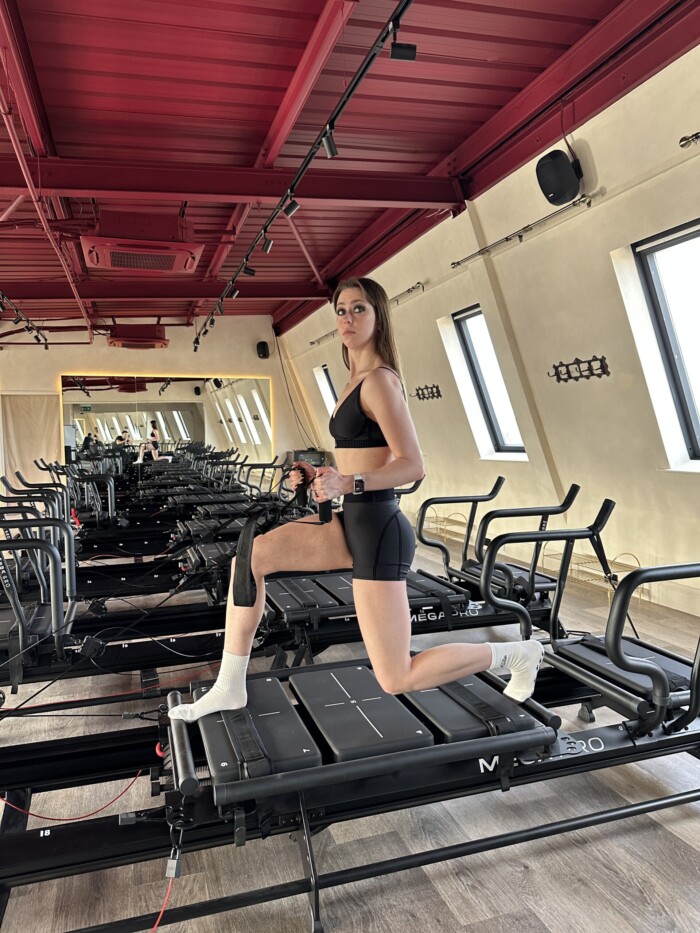
You want to build strength without pounding your joints, recover from injury, or add tone without endless high-intensity sessions. Reformer pilates body transformation demonstrates how controlled resistance, core stability, and precise alignment can transform your movement, enhance posture, and boost muscle endurance. Want to know which low-impact strength training exercises to try today for better balance, mobility, and lasting strength? This article outlines the best exercises, ranging from bodyweight and resistance band work to reformer-style training, with clear tips for joint-friendly progressions and functional stability.
To make that simple, BLOOD, SWEAT & TEARS’ Lagree in London, pairs slow controlled resistance, reformer-style exercises, and guided progressions to teach these low-impact strength training exercises safely and effectively, boosting flexibility, balance, and muscle tone.
Summary
- Low-impact strength training delivers rapid, measurable strength gains for busy women, with studies showing a 30% increase in muscle strength over a 12-week period.
- Tempo-driven, controlled resistance reduces injury risk while preserving intensity, with low-impact protocols associated with a roughly 30% decrease in injury incidence.
- Program formats that balance intensity and joint care improve adherence, reflected by a 50% increase in gym memberships focused on low-impact exercise in recent trend data.
- For athletes and high-volume exercisers, incorporating low-impact strength training enhances endurance and reduces joint stress, with reported improvements of 30% in muscle endurance and a 20% decrease in joint stress.
- Pairing deliberate resistance with targeted mobility yields functional improvements, including a reported 15% increase in flexibility and more pronounced unilateral strength symmetry on objective tests.
- Structured microprogressions and four-week training blocks make gains reliable, with many clients noticing shifts in body composition and performance within 6 to 12 weeks when one variable is changed at a time.
This is where Lagree in London fits in, by compressing full-body resistance, tempo coaching, and standardised progressions into efficient sessions that maintain strength while protecting joints.
What is Low Impact Strength Training?

Low-impact strength training builds meaningful, measurable strength by using controlled resistance, slower tempo, and intelligent movement choices so joints take less of the load while muscles do the work.
You get time-under-tension, progressive overload, and full-body conditioning without repetitive high-impact forces.
Why Does This Approach Actually Suit Busy Women?
When schedules compress, workouts must deliver both efficiency and longevity. This method combines compound resistance and tempo work into short, intense blocks, allowing a single session to improve strength, posture, and endurance simultaneously.
According to Method Gym (2024), low-impact strength training can increase muscle strength by 30% over 12 weeks, demonstrating how targeted resistance and consistent time under tension produce rapid, measurable gains when programming is disciplined and progressive.
How Does It Spare Joints While Staying Intense?
The secret is control, not gentleness. You slow eccentric phases, limit extreme joint ranges when necessary, and keep at least one stable contact point with the floor or apparatus to reduce shear and impulse loading. Think of muscles as shock absorbers that you tune with resistance and tempo; when they are strong and conditioned, forces that are used to travel through cartilage and ligaments are absorbed safely.
Vitruve (2025) reports that low-impact strength training can reduce injury risk by 30%, highlighting how deliberate load management and movement quality can change long-term risk profiles.
What Breaks With The Familiar Ways People Exercise?
Most people default to longer cardio sessions or high-impact classes because they equate higher heart rates with better value, and because those formats are easy to schedule. That works for short-term calorie burn, but the hidden cost is recurring joint irritation, slow strength development, and workouts that feel punishing rather than sustainable.
Studios like BLOOD, SWEAT & TEARS offer Lagree-based classes that reframe this tradeoff, compressing full-body resistance, calibrated tension, and instructor-led tempo control into efficient sessions that scale safely and deliver consistent improvements in posture, flexibility, and strength.
What Should You Check For When Choosing A Low-Impact Strength Session?
Look for clear, progressive overload; measurable time-under-tension cues; and instructor emphasis on alignment and breathing. Sessions that use variable resistance, controlled tempos (for example, measured eccentric phases), and microcircuit sequencing will improve muscle endurance and posture without relying on jumping or heavy ballistic loading.
We watch for clients who stop compensating and start recruiting the right muscles within 4 to 8 sessions; that shift in movement pattern is the real indicator of progress, not how much sweat a class produces.
You think you understand low-impact training, but what follows will show which simple choices make the biggest difference in strength, pain, and posture.
Related Reading
- Is Bodyrok Lagree
- How Many Calories Does Lagree Burn
- Xformer vs Megaformer
- Barre vs Lagree
- Lagree vs Weight Lifting
12 Best Low-Impact Strength Training Exercises to Try
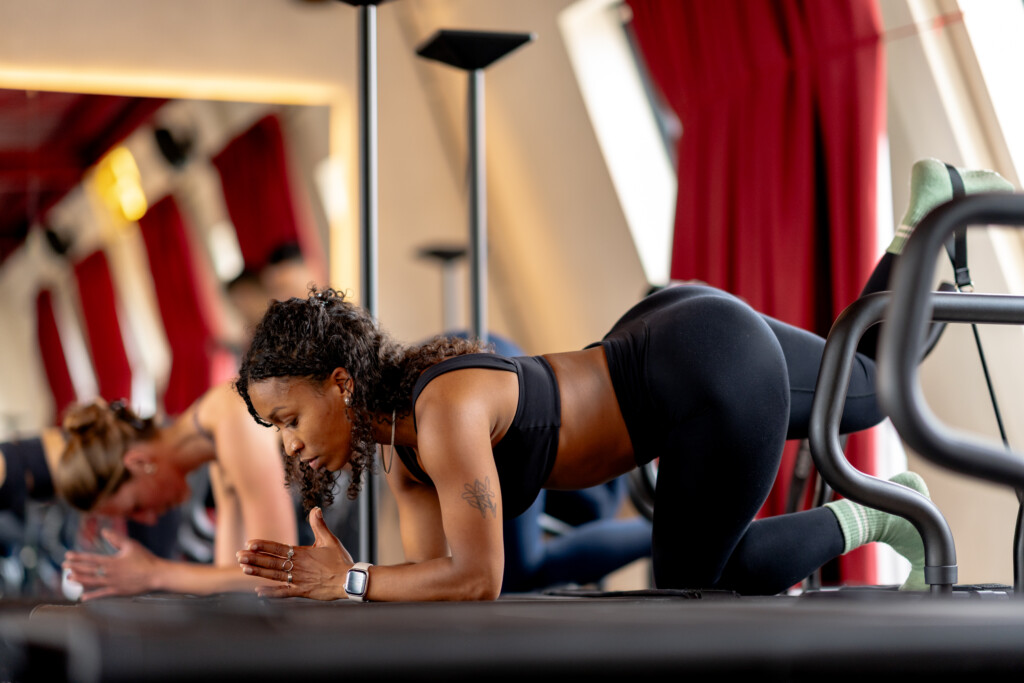
For both strength and endurance, common form faults to correct, and where they fit into a Lagree-style, high-tension session, these twelve movements form a practical toolkit.
Each entry below provides:
- The exercise load
- Scaling instructions
- Tempo
- Recommended rep ranges
1. Lagree Training
What it targets, quickly:
Full-body strength, high metabolic demand, and muscular endurance under constant resistance.
How to scale:
- Increase carriage resistance
- Slow the concentric and eccentric phases
- Add isometric holds at peak contraction
Tempo and rep guidance:
30 to 60 seconds per exercise or sets of 8 to 15 reps at a controlled 3:3 tempo for hypertrophy and stamina.
Cue and correction:
Maintain a neutral pelvis and constant micro-engagement of the core. If clients grip the handles or hyperextend their knees, reduce resistance and shorten the pulse range.
Why it matters:
It teaches continuous tension control, which makes other low-impact moves feel lighter and safer.
2. Bodyweight Squats
What it targets:
Quad and glute activation with hip and ankle mobility work.
How to scale:
Progress to box or wall-supported squats, then regress to slow-tempo single-leg box squats or pause squats.
Tempo and rep guidance:
3-second descent, 1-second pause, controlled ascent; 8 to 20 reps depending on depth and load.
Common faults and fixes:
Knees caving, chest dropping. Correct by cueing hip hinge first and pressing through the mid-foot.
Program tip:
Add a 2 to 3-second isometric hold at the bottom twice a week to build control for split-leg patterns.
3. Reverse Lunges
What it targets:
Unilateral leg strength and pelvic stability with less patellofemoral stress.
How to scale:
Reduce step distance, perform to a box, or use support for balance; progress by adding a slow eccentric tempo or loaded hold.
Tempo and rep guidance:
4-second step back, 2-second drive, 8 to 12 reps per side.
Cue and correction:
Keep weight over the front heel and avoid forward torso lean. If balance fails, shorten the movement and work on single-leg stands.
4. Glute Bridges
What it targets:
Posterior chain activation without spinal compression.
How to scale:
Single-leg bridge, banded bridges, or elevated-feet bridges for more ROM.
Tempo and rep guidance:
2-second lift, 2-second hold at top, 3-second descent; 10 to 20 reps for strength-endurance.
Common faults and fixes:
Overextending the lumbar spine, which signals weak posterior chain: cue rib-cage down and squeeze the glutes, then slow the negative.
5. Dead Bugs
What it targets:
Deep core stability and anti-extension control while the limbs move.
How to scale:
Start with single-limb movement, progress to alternating arms and legs with lower limbs closer to the floor.
Tempo and rep guidance:
Controlled 3 to 4 seconds per limb change, 8 to 12 total reps per side.
Form note:
Maintain a neutral spine; if the lower back arches, reduce the range of motion and add a tactile cue to the transverse abdominis.
6. Resistance Band Rows
What it targets:
Scapular retraction, posterior shoulder, and upper-back endurance.
How to scale:
Adjust band length or switch to cable/stack for more linear resistance.
Tempo and rep guidance:
2-second pull, 1-second squeeze, controlled release; 10 to 20 reps.
Programming tip:
Pair rows with anterior chain moves to preserve shoulder health during higher volumes.
7. Step-Ups
What it targets:
Functional strength, unilateral power, and balance.
How to scale:
Lower step height, add tempo pauses, or progress to loaded step-ups.
Tempo and rep guidance:
Controlled 2-second drive, 1-second top squeeze, 6 to 12 reps per leg.
Common mistake:
Using momentum or pushing off the trailing leg, correct by cueing the working leg to do the lift and using a slightly higher step for a longer time under tension.
8. Wall Sits
What it targets:
Quad endurance and isometric control without dynamic loading.
How to scale:
Shift your weight forward for more quad bias, add single-leg holds, or use a band around your knees to engage your glutes.
Duration guidance:
Start at 20 to 40 seconds and gradually build up to 90 seconds for endurance training.
Form cue:
Ensure knees track over toes and the pelvis sits level. If the lower back tenses, reduce depth and engage the posterior chain.
9. Hip Hinges
What it targets:
Efficient posterior chain recruitment and hip mechanics for safer loading.
How to scale:
Start with no weight, tapping a dowel for patterning, and progress to kettlebell or trap-bar loads.
Tempo and rep guidance:
3-second hinge, controlled return; 8 to 15 reps for technical mastery before heavier load.
Common failure:
Turning the hinge into a squat; fix by cueing pushback through the hips and maintaining a long spine.
10. Static Lunges
What it targets:
Single-leg strength and balance with reduced joint impulse.
How to scale:
Shorten stance, add pauses at the bottom, or add a loaded goblet hold.
Tempo and rep guidance:
Slow 3:1 eccentric to concentric; 8 to 12 reps per side.
Technique note:
Use a mirror or tactile feedback to stop hip drop and keep frontal plane alignment.
11. Modified Push-Ups
What it targets:
Horizontal pressing strength and core integration with lower load.
How to scale:
Hands elevated on a bench, progress to floor negatives, and then full push-ups.
Tempo and rep guidance:
3-second descent with an optional 1-second hold at chest level; 6 to 15 reps depending on strength.
Common fault and correction:
Sagging hips: cue a long line from the shoulders to the knees/feet, and tighten the glutes.
12. Pilates Mat Work
What it trains:
Breath-driven core sequencing, coordination, and joint-friendly mobility.
How to scale:
Reduce ROM or perform exercises in smaller, slower repetitions; progress to more complex combinations, such as single-leg circles with the lower limbs closer to the mat.
Session role:
Use as a warm-up, cool-down, or microcircuit within a strength block to refine recruitment and posture.
Practical cue:
Prioritize precision, not reps, and pair mat work with at least one unilateral lower-limb exercise to balance control and force production.
The Hidden Cost of “Cardio-Style” Strength: Why Your Gains Are Stalling and Joints Ache
Most people treat strength classes like cardio because it feels familiar and easy to schedule, which makes sense when life is busy and changes must fit into small windows. The hidden cost is inconsistent movement quality and uneven progress, where knees or shoulders take the hit and routine gains stall.
Solutions like Lagree in London incorporate deliberate resistance cues, tempo coaching, and standardized progressions, allowing women to maintain strength and posture while protecting their joints.
For a concise external checklist that complements these notes, consider consulting 12 exercises, Obesity Matters (2025), and the practical breakdown in 12 Best Low-Impact Strength Training Exercises to Try (2024), according to LitMethod.
The Power of 45 Minutes: Why Focused Resistance Training Outperforms Longer, Less Targeted Workouts
BLOOD, SWEAT & TEARS provides a women-focused fitness space that helps their clients achieve their fitness goals faster than other workouts out there, without the risk of injury; book a class if you want to see how targeted resistance and cardio work together in a 45-minute session and why Lagree in London has such rapid results.
All instructors are certified and mentored, ensuring classes remain motivating, precise, and progressively safe for clients seeking visible change in just two weeks.
That pattern looks solved, until you see the one training habit that quietly ruins progress for almost everyone.
Benefits of Low-Impact Strength Training Exercises
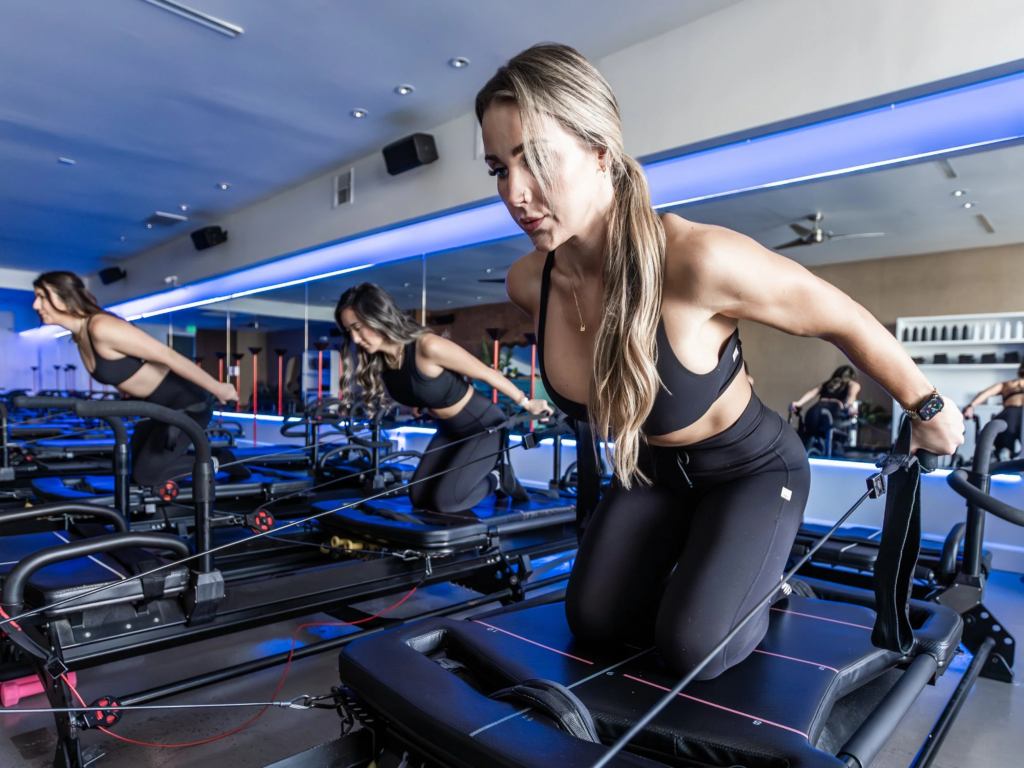
Low-impact strength training provides real, lasting gains without the tradeoff of recurring pain or burnout.
It:
- Protects movement
- Improves daily function
- Makes training sustainable over the years rather than weeks
Smartly, it raises fitness that actually carries into:
- Work
- Parenting
- Commuting
- Sleep quality
How Does It Speed Recovery And Reduce Flare-Ups?
When we prioritise controlled resistance for clients coming back from injury, the common pattern is clearer movement and fewer pain spikes within weeks, not months.
- Circulation around injured tissue
- Helps rebuild scarred or deconditioned muscle
- Retrains motor patterns
This means tasks like climbing stairs no longer provoke soreness.
Think of it like rehabbing a road: you patch the underlying base, not just resurface the asphalt, so the same stresses no longer reopen the damage.
Why Do Women Actually Stick With It?
Most people continue to do what fits into their day, which is why the market is shifting: according to Les Mills, there has been a 50% increase in gym memberships focused on low-impact exercises. In 2023, studios and gyms moved more resources toward programming that balances intensity with joint care.
In practice, that change matters because shorter, repeatable sessions remove the all-or-nothing barrier that kills consistency, and consistency is the single most significant determinant of long-term body transformation.
Can Low-Impact Work Still Change Your Metabolism And Composition?
Yes, when you treat resistance as a metabolic tool, not just a mobility add-on. The combination of sustained muscular tension, short-rest circuits, and progressive loading elevates total daily energy use, improves insulin sensitivity, and preserves lean mass while someone tightens their diet.
This pattern appears reliably when people train 2 to 4 times per week and follow simple progression rules. It explains why many clients experience measurable changes in their waistline and strength within 6 to 12 weeks.
What Happens To Confidence, Posture, And Everyday Movement?
Strength regained under control rewrites how the body negotiates stress. Clients report fewer subconscious compensations, they stand taller, and they stop favoring one side when carrying children or bags.
It’s the difference between a bridge that holds a load by accident and one engineered to bear weight every day; training that prioritises durable mechanics gives you predictable performance.
The Inconsistency Trap: Why Alternating Cardio and Ad-Hoc Strength Training Fails When Life Gets Busy
Most groups manage training by alternating cardio days and ad-hoc strength sessions because it feels simple and familiar, and that works for short-term energy. As life fills up, though, that habit fragments, weeks with missed lifts become months, progress stalls, and niggles creep back in.
Teams find that approaches like Lagree in London consolidate strength, cardio, and mobility into disciplined sessions with consistent coaching and standardized progressions, preserving gains and reducing the friction of scheduling while maintaining high intensity.
How Does This Approach Change The Emotional Relationship With Exercise?
It reduces the dread of workouts. When workouts stop triggering flare-ups, people stop avoiding the room. That relief matters more than we often admit; adherence follows relief. The emotional payoff is immediate: training becomes a source of momentum instead of a recurring punishment.
Picture a tool chest: high-impact workouts are the hammer you swing hard, low-impact strength training is the adjustable wrench you use precisely. Both tighten bolts, but one strips threads over time, while the other allows you to complete the job and use the tool again tomorrow.
That solution works until you hit the one obstacle nobody talks about.
Related Reading
- Body Sculpting for Women
- What Are the Benefits of Pilates Reformer
- Reformer vs Mat Pilates
- Is Reformer Pilates a Good Workout
- How Many Calories Does Reformer Pilates Burn
- How Often Should You Do Reformer Pilates
Who Should Do Low-Impact Strength Training Exercises?
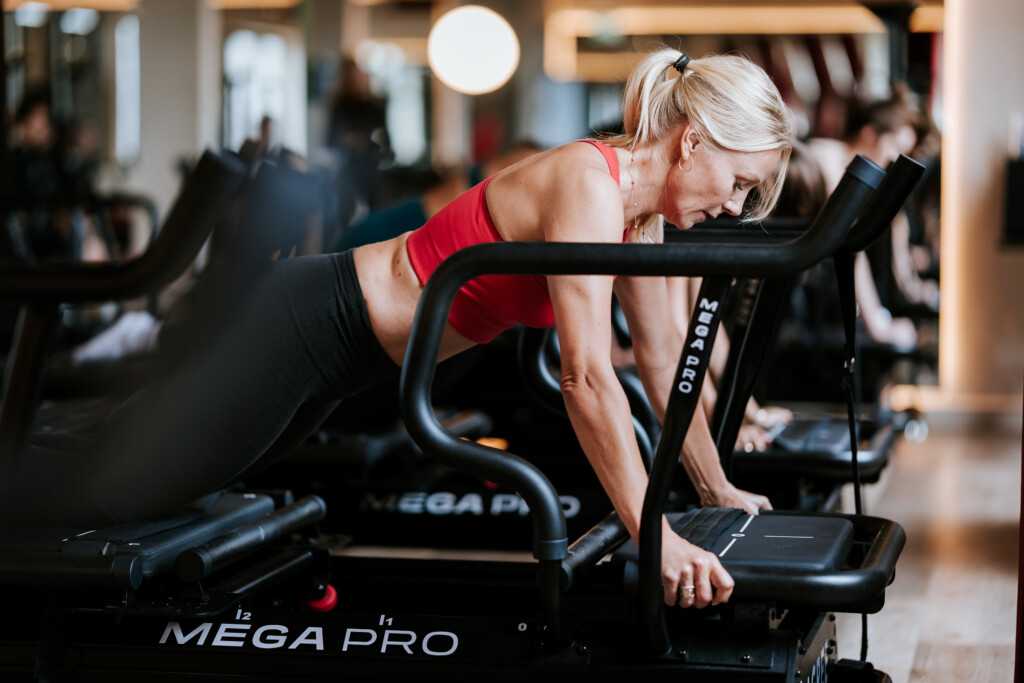
Low-impact strength training suits four distinct groups:
- Beginners and individuals restarting after a break
- Those with joint pain or previous injuries
- High-volume exercisers who require improved recovery
- Time-poor women seeking maximum results without added wear and tear
It builds reliable capacity you can use every day, while preserving the ability to push hard when you choose to.
Who Should Start Here If You Are New Or Nervous?
When we put new clients through a focused four-session introduction:
- The pattern was unmistakable
- Attendance stabilized
- Their confidence grew before measurable strength did
For someone intimidated by high-intensity workouts, low-impact strength training gives small, consistent wins that replace anxiety with competence, and that emotional shift is the single biggest predictor of long-term adherence.
Who Benefits If You Already Train Hard?
Athletes and busy exercisers who pursue HIIT or long runs can maximize their results by enhancing muscular endurance and recovery capacity. According to FitBizWeekly in 2025, a 30% increase in muscle endurance is reported, which translates to fewer performance dips between intense sessions.
In practice, that means you can sustain weekly high-intensity efforts more often, because the low-impact sessions raise the ceiling on how much your body can tolerate.
Who Should Pick Low Impact For Health Reasons?
If you experience chronic joint irritation, have had knee or hip surgery, or flare up with running, this approach reduces repetitive stress through joints, aligning with FitBizWeekly’s 2025 findings, which reported a 20% reduction in joint stress.
This helps reduce daily pain and the need for prolonged recovery windows. When a client reports fewer flare-ups during stair climbs and household tasks within weeks, it is that functional payoff that keeps them training.
When Should You Be Cautious Or Seek Guidance?
If you have uncontrolled cardiovascular conditions, acute inflammation, or are in the immediate postoperative phase, get medical clearance and a phased plan; start with supervised sessions and objective progress markers like tempo control and range-of-motion limits.
If balance or proprioception is the limiting factor, prioritize stability-focused regressions for 2 to 6 weeks before increasing tension or range of motion.
What Most People Do Now, And Why It Fails
Most women patch fitness together with long cardio sessions or sporadic high-intensity classes because those formats feel efficient and familiar. That works short-term, but the hidden cost is fragmented recovery, recurring niggles, and progress that stalls as life gets busier.
Studios such as Lagree in London offer a distinct model, combining precise resistance control, tempo coaching, and standardized progressions, which allow for reliable adaptations without compromising intensity or joint health.
How Does This Change Your Relationship With Exercise
Think of it like learning scales before a concerto, you build the base mechanics so more complex work is safer and more expressive. When clients stop fearing workouts because they stop provoking pain, they continue to show up, performance improves, and change accelerates. That emotional return, with less dread and more momentum, is why this approach suits both beginners and seasoned exercisers.
From Quick Results to Lasting Change: How Women Maintain Lagree Gains Beyond the Studio
BLOOD, SWEAT & TEARS provides a women-focused fitness space that helps clients achieve their goals faster than other workouts, without the risk of injury, through Lagree-based, instructor-led sessions that blend strength and cardio into a single 45-minute class.
Book a class to feel and see why Lagree in London is delivering fast, safe transformation with certified, mentored instructors and measurable results.
That progress sounds final, but the next choice you make will determine whether those gains stick.
Getting the Most from Low-Impact Strength Training Exercises
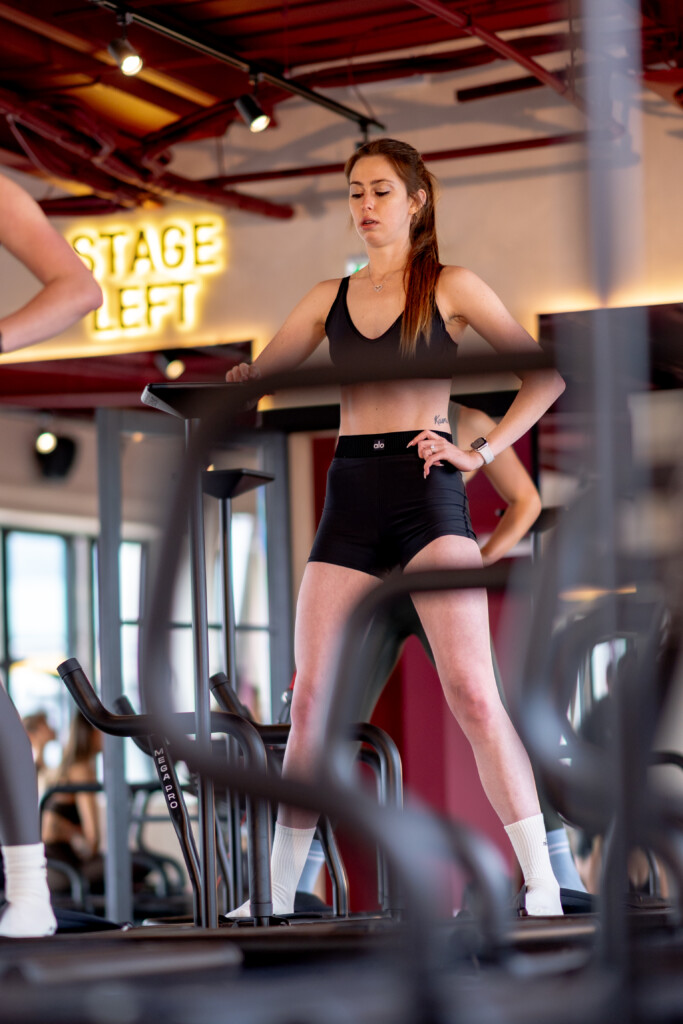
Treat low-impact strength work like precise engineering, not casual movement:
- Push progress with small
- Measurable increases in tension
- Track functional gains
- Schedule recovery as intentionally as your sets
When you do those three things together, sessions stay intense while joints stay reliable.
How Should I Plan Progression to Actually Produce Change?
Start with four-week blocks that isolate one variable, for example, tempo, load, or range of motion. We use a simple rule: change only one thing at a time, then measure it for two sessions before adding another tweak. That might mean adding 5 to 10 seconds of total time under tension across a movement, swapping a shorter rest for an extra 10 to 20 percent of eccentric time, or increasing carriage resistance in small, repeatable increments.
Those microprogressions keep form intact while forcing the body to adapt, so improvements are durable rather than accidental.
What Do You Do When Joints Flare As Intensity Rises?
This pattern consistently appears when people transition from high-impact to higher-volume resistance without adjusting their tempo or contact points: impulse forces sneak back in, and a previously quiet knee or shoulder becomes loud.
When that happens, preserve joint comfort by shortening the range of motion, increasing surface contact with the apparatus or floor, and prioritising slower eccentrics plus controlled isometrics. If pain persists, swap a dynamic set for matched-duration static holds for two to six sessions to re-establish neuromuscular control before reintroducing full ROM work.
Which Recovery Habits Actually Move The Needle?
Not flashy therapies, but consistent, small practices. Complete two sessions per week with a 10- to 12-minute mobility circuit that targets joint-specific stiffness. Regularly sleep 7 to 8 hours. Additionally, incorporate one low-effort movement day focused on breath and slow, loaded carries to maintain posture.
These steps reduce flare-ups and make intensity repeatable. We also observe how nutrition timing affects soreness; consuming a protein-rich meal within 90 minutes of more intense sessions speeds tissue repair and reduces next-day stiffness.
How Should I Measure Progress So It Feels Objective And Motivating?
Forget daily scales. Track hold times, unilateral rep symmetry, controlled eccentric durations, and simple field tests like repeated step-ups or a timed plank progression. Those functional markers map to real life, and they expose weaknesses that scale weight hides.
Controlled resistance programming shows measurable gains, including a 30% increase in muscle endurance, according to FitBizWeekly (2025), which suggests that endurance develops when tempo and load are deliberate, rather than accidental.
You should also expect mobility to improve as strength becomes balanced, reflected in a 15% improvement in flexibility, meaning paired mobility and resistance work pays off for usable range, not just comfort.
Why Do Many Superior Plans Still Fail For Busy Women?
The familiar approach is patching workouts together because it fits a schedule, and that works in the short term. Over time, scattered choices fragment intensity, accountability, and progression; sessions lose their signal and become noisy.
Teams find that solutions like BLOOD, SWEAT & TEARS Lagree classes impose:
- Standardised tempo cues
- Monitored micro-load increments
- Instructor-led corrections
It preserves movement quality as intensity rises, giving consistent progression without added time or confusion.
What Common Mistake Trips People Up At Intermediate Levels?
They trade precision for perceived effort. When movements get faster to “feel” harder, form slips and adaptations stall. Think of your program like tuning a piano: small, precise turns produce harmony across the instrument; big, clumsy swings break strings. Stay deliberate with tempo and use real metrics, not sweat, to judge intensity.
What Immediate Tweaks Produce The Biggest Payoff This Week?
Swap one high-velocity exercise for a matched-duration eccentric focus, add a paired mobility finishing set twice this week, and record two objective measures such as unilateral squat depth or single-leg hold time. These changes take minimal time but force the nervous system to recruit correctly, reducing compensations that cause pain.
That shift feels final, until you discover one scheduling choice that either locks progress in or quietly erodes it.
Book a Lagree Class in London Today

If you want efficient and reliable progress without the guesswork, consider BLOOD, SWEAT & TEARS in Angel, because it is draining to leave a class feeling overlooked or unsure whether the instructor has corrected your form.
That doubt is exactly what makes many women stop returning. With over 500 classes available each month, and the option to join over 1,000 satisfied clients of BLOOD, SWEAT & TEARS, try a session and judge for yourself whether the focused low-impact strength work and consistent coaching finally fit your schedule and goals.