Women over 40 should do strength training on at least two days a week, as the UK Chief Medical Officers recommend for all adults, because it helps keep muscles and bones strong at a time when bone loss speeds up around the menopause. Two sessions of 30 to 45 minutes, covering the whole body and getting gradually harder, is a realistic place to start.
This guide explains why it matters, how much to do, a beginner two-day plan, how to progress safely, how to look after your joints and recovery, and where Lagree fits. If you would rather be coached, you can book a class in Angel.
Why strength training matters from 40
Two things change in midlife: bone and muscle.
Bone first. The NHS explains that you gradually start losing bone from around the age of 35. Oestrogen is essential for healthy bones, and after the menopause oestrogen levels fall, which can lead to a rapid decrease in bone density. Menopause usually happens between 45 and 55, with perimenopause before it, so your 40s are a good time to build the habit.
Exercise is one of the main things you can do about it. The NHS advice for menopause and perimenopause is to exercise regularly, focusing on strength exercises where your feet and legs support your weight, such as walking, running or dancing, and resistance exercises, such as using weights. The NHS osteoporosis prevention page explains why resistance works: the pull of tendons on bones boosts bone strength.
Muscle matters too. Strength tends to fall with age, and resistance training can help. A 2021 meta-analysis of trials in older people with sarcopenia (age-related muscle loss) found resistance training improved grip strength, leg strength and walking speed. Starting in your 40s means you build that reserve before you need it.
How much you need
The Chief Medical Officers’ guidelines for adults are:
- Muscle-strengthening activities on at least 2 days a week. Any strengthening activity is better than none.
- At least 150 minutes of moderate activity, such as brisk walking or cycling, or 75 minutes of vigorous activity, such as running, each week.
- Breaking up long periods of sitting.
The European Menopause and Andropause Society gives the same advice for menopause: muscle-strengthening activities at moderate or greater intensity, involving all major muscle groups, on two or more days a week.
For bones specifically, the Royal Osteoporosis Society says the best approach is to do both impact exercise and strength exercise. So add some impact, such as brisk walking, stairs or heel drops, alongside your strength sessions if your joints allow.
A beginner two-day plan
Do Day A and Day B each week, with at least one day between them. Use dumbbells you can control for every rep. Start with 2 sets of each exercise and build to 3 over a few weeks. Rest 60 to 90 seconds between sets.
| Exercise | Day A | Day B | Notes |
|---|---|---|---|
| Squat | Goblet squat, 8 to 12 reps | Split squat holding a chair, 8 each leg | Sit to a chair first if squats are new |
| Hinge | Dumbbell Romanian deadlift, 8 to 12 | Glute bridge, 10 to 12 | Push the hips back, keep the back long |
| Push | Incline press-up on a bench or counter, 6 to 10 | Seated dumbbell shoulder press, 8 to 10 | Lower the incline to make it harder |
| Pull | One-arm dumbbell row, 8 to 12 each side | Band pull-down or lat pulldown, 10 to 12 | Lead with the elbow |
| Carry or core | Side plank from the knees, 20 to 30 seconds each side | Farmer’s carry, 3 lengths of the room | Brace gently and keep breathing |
| Impact | Heel drops, 10 | Step-ups onto a low step, 8 each leg | Skip if your joints object |
Each session takes about 35 to 45 minutes with a short warm-up, such as 5 minutes of brisk walking and a few bodyweight squats.
How to progress safely
Pick a weight that leaves you with two or three good reps in reserve at the end of each set. When you can do the top of the rep range on every set with good form, increase the weight a little. The Royal Osteoporosis Society describes strength training as gradually building up the weight you lift, and that gradual part is the point.
- Change one thing at a time: reps, then weight, then a harder version of the move.
- Lower slowly. Taking two or three seconds on the way down makes a light weight work harder.
- Keep a simple log of weights and reps so you know you are progressing.
- Every few weeks, take an easier week if you feel run down.
If you have osteoporosis, a history of broken bones or spinal fractures, or you are recovering from a fracture, the Royal Osteoporosis Society says to talk to your doctor or a physiotherapist before you start.
Looking after your joints
The NHS lists muscle aches and joint pains among perimenopause and menopause symptoms, so plan for them rather than pushing through.
- Some muscle soreness a day or two after a new session is normal. Sharp joint pain during a move is not. Swap to a variation that does not hurt, such as a box squat instead of a deep squat.
- Use a range you can control. Depth comes with time.
- Warm up properly, especially on cold mornings.
- If pain lasts, gets worse, or comes with swelling, stop and see your GP or a physiotherapist.
If you leak when you lift, cough or jump, do not ignore it. Our guide to pelvic floor exercises explains the basics, and a pelvic health physiotherapist can assess you. For lower-impact options, see our joint-friendly exercises.
Recovery and sleep
Muscles get stronger between sessions, not during them. Leave at least a day between hard sessions for the same muscles.
Sleep is often the weak link. The NHS notes that not being able to get to sleep or stay asleep is a common symptom of perimenopause and menopause, and that hot flushes can make your face, neck and chest suddenly feel very hot. A few practical adjustments help:
- Train at the time of day you usually have the most energy.
- On a bad night’s sleep, keep the session but drop a set or use lighter weights.
- Wear layers you can take off, and keep water to hand.
- Keep regular sleep routines, as the NHS suggests.
Where Lagree fits
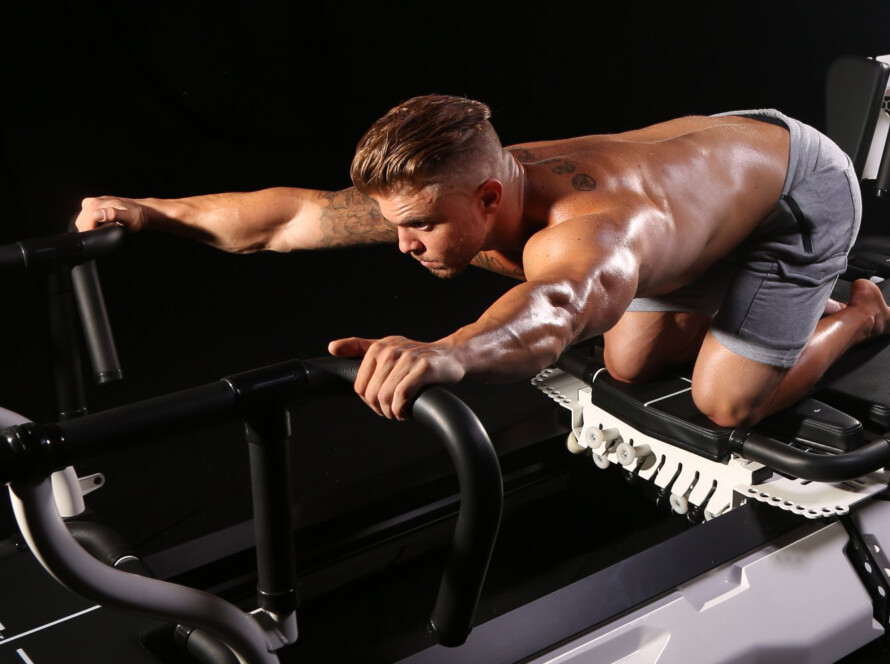
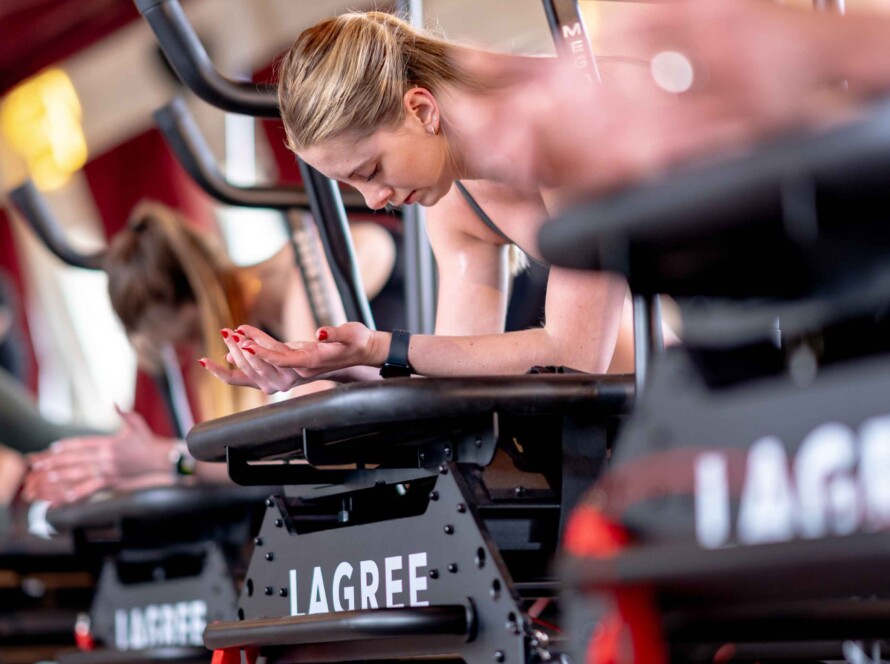
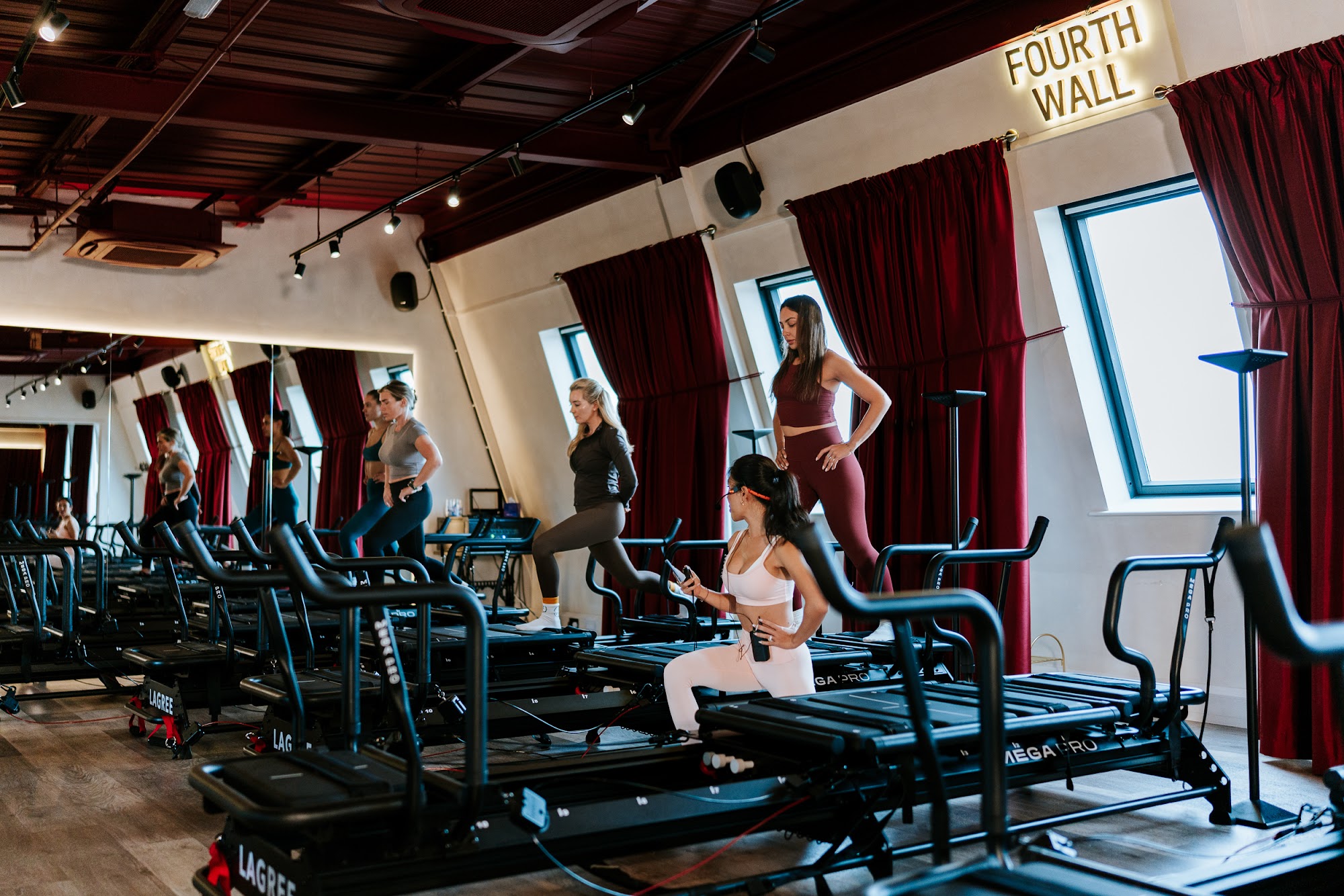
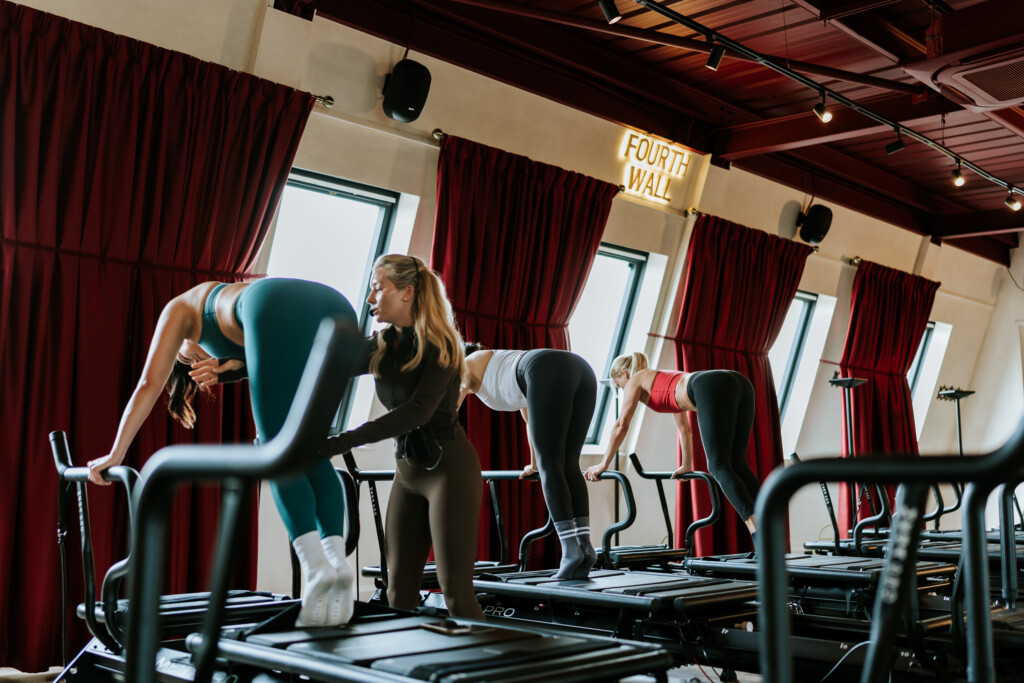
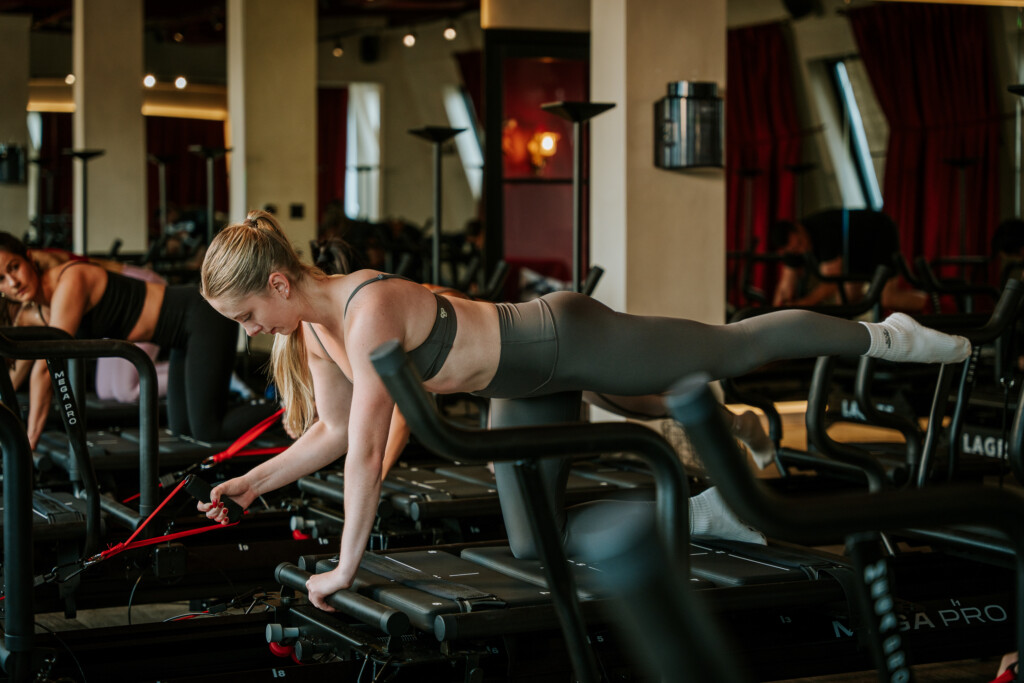
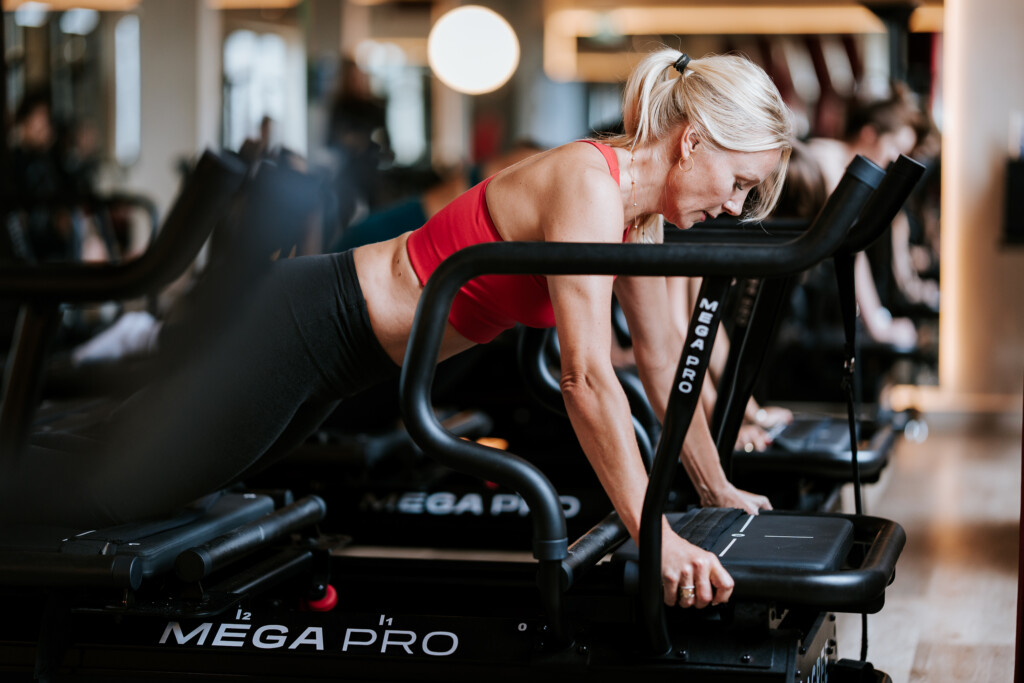
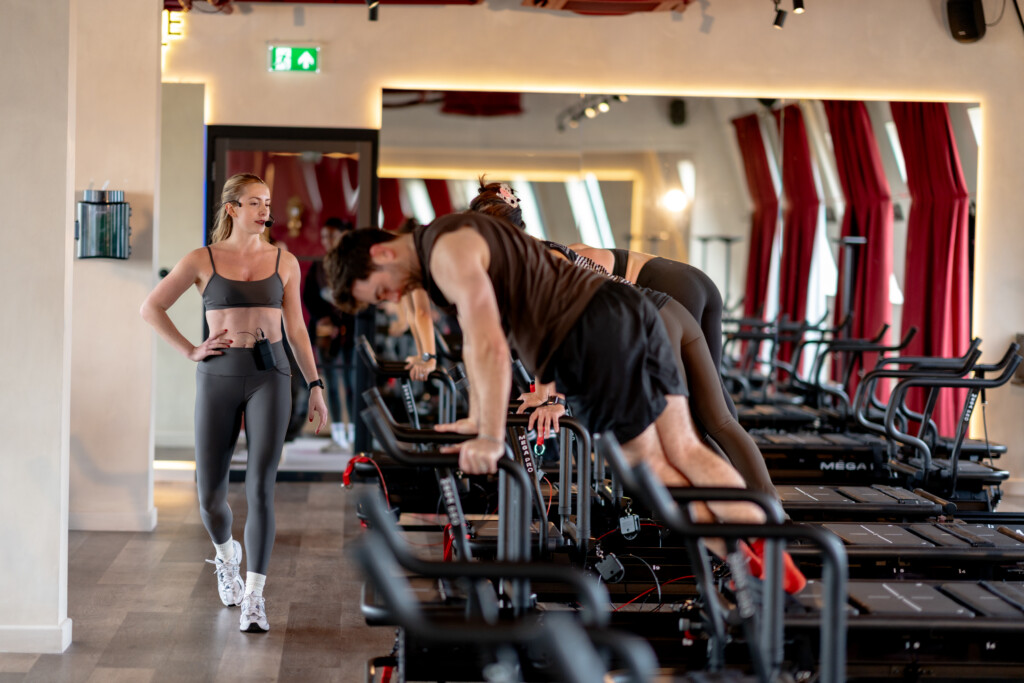
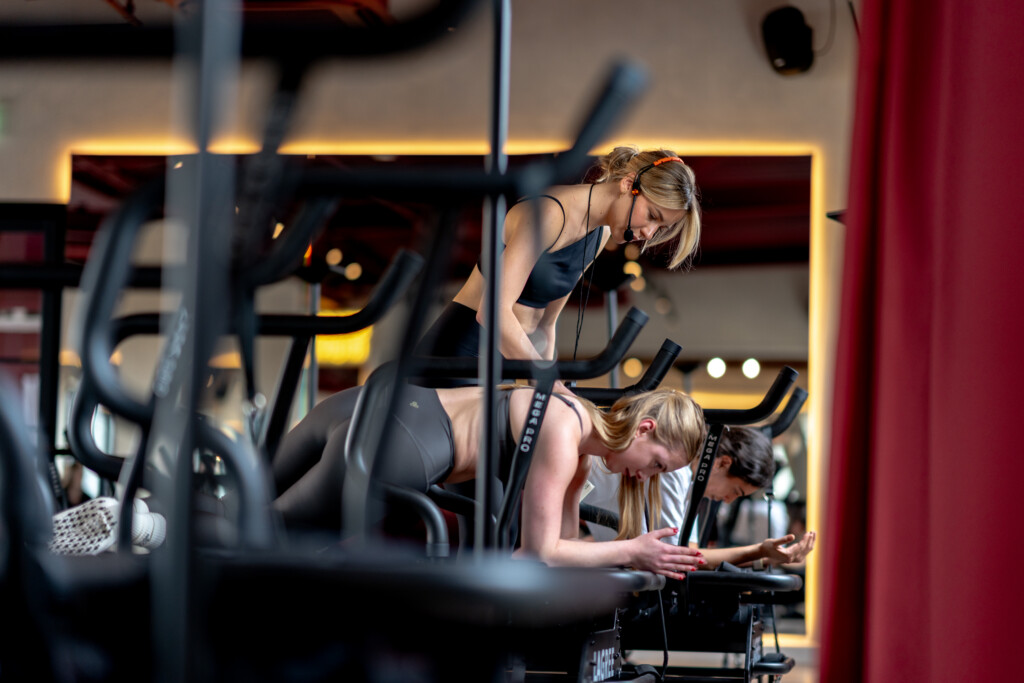
Lagree is strength training. Classes are 45 minutes on the Megaformer, with slow, controlled movement and time under tension. It is low impact and high intensity, so it works your muscles hard without any running or jumping. It’s not Pilates. It’s Lagree.
Lagree counts towards your two strength days. Because it is low impact, pair it with some impact work for your bones, such as brisk walking, stairs or heel drops, as the Royal Osteoporosis Society suggests. One simple week: two Lagree classes, the impact moves from the plan above, and walking on most other days. Or mix one Lagree class with one weights session. Our comparison of Lagree and weight lifting covers the trade-offs, and how often you should do Lagree covers frequency.
FAQs
Is it too late to start strength training at 50 or 60?
No. The Chief Medical Officers say any strengthening activity is better than none, and the 2021 meta-analysis above found benefits in older people who already had age-related muscle loss. Start with the easier versions and build up.
Should women over 40 lift heavy weights?
Heavy is relative. Aim for weights that feel challenging by the last few reps while your form holds, and increase them gradually. If you have osteoporosis or past fractures, get advice from your doctor or a physiotherapist first.
Does strength training help with menopause?
The NHS recommends strength and weight-bearing exercise during menopause and perimenopause because it can help protect against weakening bones. It will not stop symptoms like hot flushes, but it supports your bones and muscles through the change.
How many days a week should I strength train?
At least two, as the UK guidelines recommend. Three is fine if you recover well, with a rest day between sessions that work the same muscles.
Try Lagree in Angel
A Lagree class at Blood, Sweat & Tears is 45 minutes on the Megaformer: full body, low impact and high intensity, with slow, controlled movement that makes it a solid strength session. New clients can start with two weeks unlimited for £139, about three minutes’ walk from Angel tube. Book your first class.