Skip to content Skip to sidebar Skip to footer

4 Phase Post Pregnancy Workout Plan to Strengthen After Birth 

People Exercising - Post Pregnancy Workout Plan

Getting back to exercise after having a baby is rarely straightforward. Between recovering from birth, adjusting to broken sleep, and figuring out what the body can actually handle, the first postpartum workout can feel equal parts exciting and overwhelming. A realistic post pregnancy workout plan meets new mothers where they are, helping them rebuild core strength, restore muscle tone, and move with confidence again.

The key is finding a method that supports recovery without rushing it. Slow, controlled movements that target deep core muscles allow the body to rebuild gradually while protecting joints and healing tissue. For new mothers looking for a structured, low-impact approach that delivers real results, Lagree in London offers exactly that.

Table of Contents

  1. Why Most Post Pregnancy Workout Plans Fail
  2. What Your Body Needs During Postpartum Recovery
  3. A 4-Phase Post Pregnancy Workout Plan
  4. Mistakes That Can Slow Postpartum Progress
  5. How to Stay Consistent When Life With a Newborn Is Unpredictable
  6. How BST Lagree Supports Postpartum Strength and Recovery
  7. Book a Lagree Class in London Today

Summary

  • Postpartum fitness plans frequently fail because they are built around weight loss rather than functional recovery. Pregnancy reorganizes the abdominal wall, loads the pelvic floor for months, and loosens ligament structures through hormonal shifts. Up to 50% of women experience diastasis recti postpartum, a separation of the abdominal muscles that directly affects core stability, yet many return to exercise while this condition remains unaddressed.
  • Pelvic floor dysfunction affects up to 35% of postpartum women who return to high-impact exercise too early, yet most popular plans make no distinction between impact levels or recovery timelines. Running, jumping, and high-intensity circuits are reintroduced weeks after delivery, long before connective tissue and pelvic structures have regained the capacity to absorb that demand. Symptoms such as leakage, pressure, and persistent instability are often dismissed as normal rather than recognized as signs that foundational recovery was skipped.
  • Nutrition is a primary recovery variable, not an afterthought. Breastfeeding women need up to 500 extra calories per day to support milk production and healing. Iron deficiency affects up to 50% of postpartum women, with low iron levels directly reducing exercise tolerance and slowing tissue repair. A body running on a caloric deficit cannot rebuild muscle, regulate hormones, and repair tissue simultaneously, regardless of how well-designed the workout program is.
  • A phased approach to postpartum training consistently produces better outcomes than rushing toward intensity. Women who move carefully through stability and coordination work in the early weeks progress faster and with fewer setbacks than those who skip ahead. Regular physical activity during the postpartum period is also associated with a reduced risk of postpartum depression by up to 50%, giving the case for consistent, phased training a dimension that extends well beyond physical performance.
  • Consistency during postpartum recovery depends on expectation design, not willpower. Up to 80% of new mothers experience the baby blues in the first days after birth, meaning emotional bandwidth is already stretched before a single workout is attempted. Women who measure progress by the week rather than the day, and who count functional wins like improved posture and core response, tend to stay in motion longer and avoid the cycle of guilt that follows missed sessions.
  • BST Lagree’s Lagree in London fits directly into this recovery framework by offering spring-based Megaformer training that delivers genuine muscular challenge without the impact forces that stress an unprepared pelvic floor or healing connective tissue.

Why Most Post Pregnancy Workout Plans Fail

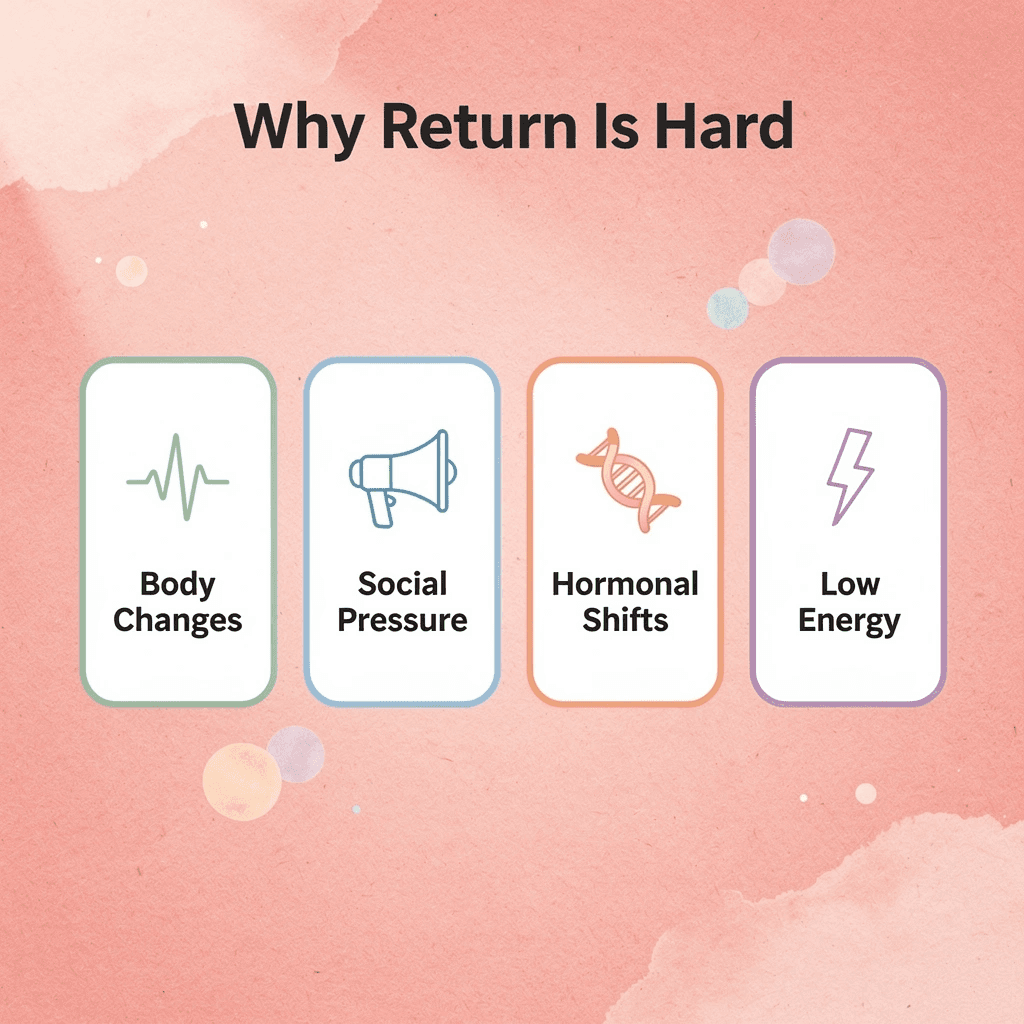
Most post-pregnancy workout plans fail because they treat the postpartum body as one that simply needs to lose weight, when it actually needs to rebuild function from the inside out. Pregnancy reorganizes the abdominal wall, loads the pelvic floor for months, loosens ligament structures through hormonal shifts, and asks muscles to relearn coordination patterns. A workout plan that skips this reality is not just ineffective — it can actively set recovery back.

“A workout plan that ignores postpartum physiology doesn’t just fail to help — it can actively set recovery back by skipping the foundational rebuilding the body actually needs.”

⚠️ Warning: Jumping into a standard weight-loss workout plan too soon after pregnancy is one of the most common — and most damaging — mistakes new mothers make. The postpartum body requires structural rebuilding first, not calorie burning.

💡 Tip: Before starting any post-pregnancy fitness program, prioritize pelvic floor restoration, core reconnection, and ligament stabilization — these are the non-negotiable foundations that determine whether your recovery succeeds or stalls.

What Most Plans Focus OnWhat the Postpartum Body Actually Needs
Weight lossFunctional rebuilding from the inside out
Calorie deficit trainingPelvic floor restoration
High-intensity cardioCore coordination relearning
Aesthetic outcomesLigament and structural stabilization
Generic fitness programmingPostpartum-specific physiological recovery

[IMAGE:

Before and after infographic comparing weight loss focus versus rebuilding function postpartum

What does diastasis recti mean for early postpartum training?

According to research published in the International Journal of Sports Physical Therapy, up to 50% of women experience diastasis recti after giving birth, a separation of the abdominal muscles that affects core stability and weight and force transfer. Many women begin postnatal fitness while this condition remains unaddressed, then wonder why their core feels unreliable or why traditional abdominal exercises cause discomfort instead of building strength.

The same research notes that pelvic floor dysfunction affects up to 35% of postpartum women who return to high-impact exercise too early, yet most popular post-pregnancy workout plans ignore impact levels and recovery timelines. Running, jumping, and high-intensity circuits are reintroduced weeks after delivery, before connective tissue and pelvic structures can handle that demand. Symptoms like leakage, pressure, and ongoing instability are often dismissed as normal rather than recognized as signals that the recovery foundation was skipped.

Why do most women return to exercise without proper guidance?

Most women navigate postpartum recovery without proper guidance. Research published by the Delaware Journal of Public Health found that fewer than 15% of postpartum women receive specific exercise guidance at their six-week clearance visit, leaving them to assemble return-to-fitness plans from social media, pre-pregnancy habits, or programs designed for non-pregnant bodies. BST Lagree, offering Lagree in London, addresses this through slow, controlled resistance work on the Megaformer, which gradually loads the deep core and stabilizing muscles without the joint stress that impedes early postpartum recovery.

The women who rebuild most effectively understand that recovery and performance training are distinct disciplines with different timelines, and rushing the first does not accelerate the second.

Related Reading

What Your Body Needs During Postpartum Recovery

Your body’s postpartum nutrition needs are far more specific than most fitness plans recognize — requiring targeted nutrients, intentional recovery strategies, and a genuine understanding of what healing after birth actually demands.

“Postpartum recovery is not a one-size-fits-all process — nutritional needs shift dramatically in the weeks and months following birth, affecting everything from energy levels to milk production and tissue repair.” — PMC, National Institutes of Health

💡 Tip: Don’t treat postpartum nutrition like a standard diet plan. Your body has just completed one of its most demanding physical events — it needs specialized fuel, not generic advice.

⚠️ Warning: Most mainstream fitness and wellness plans are not designed with postpartum physiology in mind. Following generic guidance too soon can slow recovery and leave critical nutritional gaps.

Postpartum NeedWhy It Matters
Caloric intakeSupports healing tissues and milk production
Iron & folateReplenishes nutrients lost during birth
ProteinEssential for muscle repair and recovery
HydrationCritical for breastfeeding and overall cellular function

[IMAGE:

Heart icon representing postpartum body recovery

Why fuel matters as much as movement

Women who are breastfeeding need up to 500 extra calories per day to support milk production and healing after childbirth, according to News-Medical.net’s reporting on maternal diet after childbirth. When your body is repairing tissue, balancing hormones, and building muscle without sufficient calories, it will slow your progress regardless of workout design.

Iron deficiency affects up to 50% of women after childbirth, and your body requires more iron during this period. Low iron causes fatigue, reduced exercise tolerance, and slower tissue repair. Many women blame their fitness program when the underlying issue is a nutrition gap.

What happens when you train without enough nutritional support?

Most postpartum return-to-fitness approaches neglect nutrition. The body rebuilds from the inside out, and training without adequate nutrition is like renovating a house while removing its structural supports. Women who make real progress eat enough of the right foods to support their training demands.

Does the training environment shape how well early recovery works?

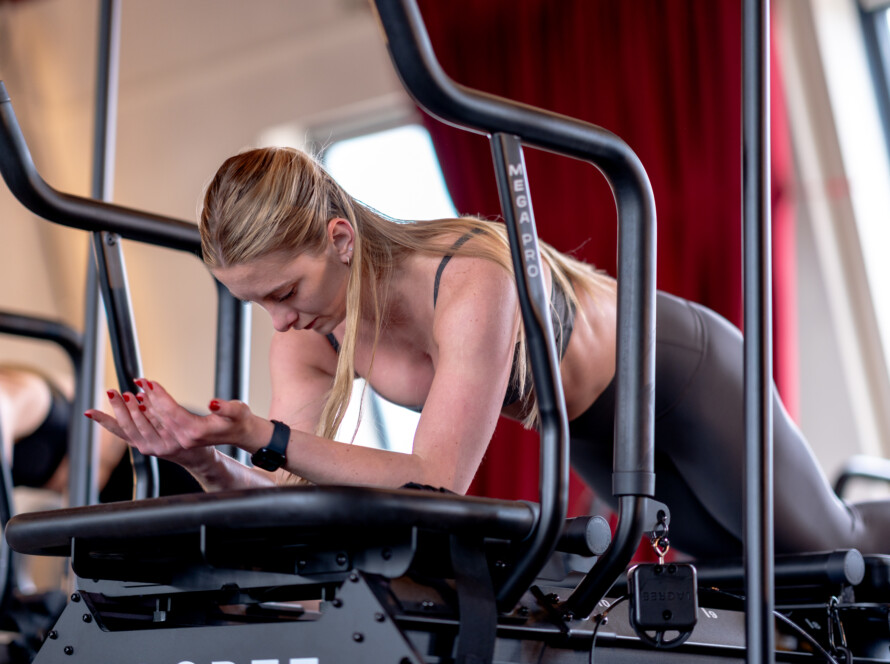
The training environment matters. Generic postnatal fitness routines miss the structural specificity early recovery demands. Progressive resistance training targeting deep stabilizers without joint compression is most efficient as the body rebuilds its load tolerance. BST Lagree in London offers this through our Megaformer’s spring-based resistance system, allowing instructors to precisely adjust the load and meet each woman where her body is.

How do sleep and stress affect postpartum training progress?

Sleep and stress directly affect muscle tissue repair, hormone regulation, and nervous system response to training load. A 30-minute session that leaves a sleep-deprived woman depleted withdraws from an already-low reserve. Effective postpartum fitness plans keep early sessions short, controlled, and restorative rather than exhausting.

A 4-Phase Post Pregnancy Workout Plan

A structured plan requires a framework built around how the postpartum body actually heals, not how quickly a woman wants to feel like herself again.

“Recovery is not a race. A structured, phase-based approach is the foundation of every safe and effective post pregnancy workout plan.” — Postpartum Fitness Principle

💡 Tip: Build your post pregnancy workout plan around your body’s actual healing timeline. Rushing the process can cause setbacks that delay progress far longer than patience would.

⚠️ Warning: Skipping the foundational recovery phases is one of the most common mistakes new mothers make. Your core and pelvic floor need structured, progressive attention before any high-intensity training begins.

[IMAGE:

Infographic showing the 4 phases of post-pregnancy workout progression

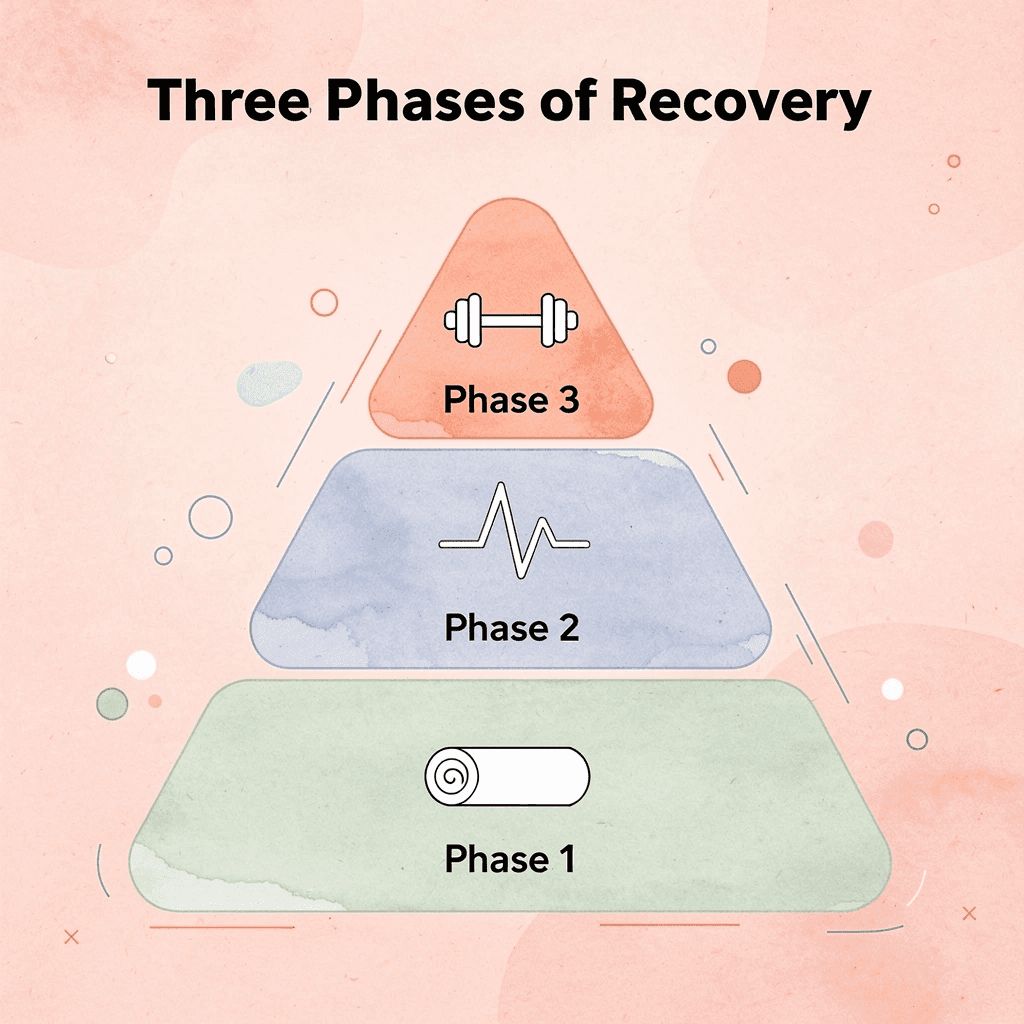
Phase 1: Reconnect and Recover (Weeks 0 to 6)

Phase 1 focuses on healing rather than fitness. The body is recovering from one of the most demanding physical events it experiences. Diaphragmatic breathing, gentle walking, and pelvic floor awareness rebuild the connection between the deep core, diaphragm, and pelvic floor that pregnancy disrupts. Many women underestimate the value of breathing exercises, treating them as optional rather than as the structural foundation they provide.

A 10- to 15-minute walk provides the right amount of activity for a body managing hormonal changes, tissue repair, and sleep deprivation simultaneously. Exceeding this threshold slows recovery rather than accelerating it.

Phase 2: Rebuild Stability (Weeks 6 to 12)

Once basic healing is established and medical clearance is given, attention shifts to restoring coordination between the core, hips, and pelvic floor—systems that lose synchronized function during pregnancy. Rebuilding that coordination before adding load separates sustainable recovery from stalled progress. Exercises like glute bridges, heel slides, and bird dogs reconnect movement patterns that carry everything else forward.

Why do so many women stall out during this phase?

The failure point in postpartum recovery usually occurs here. Women feel better, energy stabilizes, and the temptation to skip ahead to demanding training becomes real. Many setbacks start at week eight when women bypass stability work because it feels too easy, not in later phases.

Phase 3: Build Foundational Strength (Months 3 to 6)

Structured strength training starts here: bodyweight squats, resistance bands, modified planks, and functional movement patterns like hip hinges and lunges. The goal is progressive challenge, not maximum intensity. Quality of movement matters more than the weight on the bar.

Why does early foundational work pay off later in recovery?

Women who moved carefully through Phases 1 and 2 progress faster and with fewer interruptions than those who rushed through earlier phases. The investment in foundational work pays compounding returns. According to a 2025 assessment published in PMC, regular physical activity during the postpartum period reduces the risk of postpartum depression by up to 50%.

What makes low-impact training a smarter choice at this stage?

Many women at this stage rely on general fitness classes not designed for postpartum recovery. Standard high-impact group sessions can reintroduce load patterns the body isn’t prepared to manage. BST Lagree in London offers an alternative: high-intensity, low-impact full-body training on the Megaformer that builds strength without the joint stress or impact forces that can set recovery back.

Phase 4: Return to Higher-Intensity Activity

The final phase brings back activities that feel most like you: running, compound lifting, higher-impact movement, and advanced strength work. Progress depends on how your body responds, not on what the calendar says. A running return, for example, works best as a structured progression from walking intervals to short jogs to sustained effort over several weeks, giving your connective tissue and pelvic floor function time to adapt to impact forces step by step.

Even though postpartum exercise has clear benefits, a 2025 study published in PMC found that only 34.5% of postpartum women exercised regularly. Without a clear, phased plan, women often do nothing or too much, as finding the middle path requires guidance.

Progress Through the Phases, Not Past Them

Each phase prepares your body for the next by addressing specific postpartum needs in the correct order: breathing before stability, stability before strength, strength before impact. This sequence aligns with tissue healing, nervous system recovery, and hormonal normalization after birth.

The goal is to return to exercise with a stronger, tougher, and better-coordinated body than before pregnancy. Every woman can reach this goal by moving through the phases with patience and focus rather than rushing.

But knowing the right plan is only part of it; the part that gives most women trouble is not the phases themselves.

Mistakes That Can Slow Postpartum Progress

The part that trips most women up is when motivation moves faster than the body’s actual readiness, and warning signals get completely ignored.

“The most common postpartum mistake isn’t doing too little — it’s pushing too hard, too soon, before the body has had the chance to truly recover.” — Postpartum Health Experts

⚠️ Warning: Feeling motivated is not the same as being physically ready. Ignoring your body’s warning signals during postpartum recovery can lead to serious setbacks that delay progress far longer than resting would have.

💡 Tip: Always let your body’s readiness cuesnot your motivation level — set the pace for your postpartum recovery journey.

Common MistakeWhat to Do Instead
Pushing through pain or discomfortStop and consult your provider
Ignoring warning signalsTreat every signal as critical feedback
Letting motivation override recoveryFollow a structured, body-led timeline
Icon showing motivation splitting away from body readiness signals

When effort becomes the obstacle

Postpartum setbacks rarely stem from laziness. They stem from effort applied in the wrong direction at the wrong time. A woman who feels good at six or eight weeks often interprets that energy as permission to jump into high-intensity training before her core, pelvic floor, and connective tissue have rebuilt the coordination to support it. The result is a body that sends warning signals, ones that intensify if ignored.

Why do warning signals matter more than fitness culture admits?

Those signals matter more than fitness culture acknowledges. Pelvic heaviness, urinary leakage during exercise, visible abdominal doming, and persistent hip or back pain are not minor inconveniences to push through; they communicate that the load exceeds current capacity. According to research published by Cureus and PMC, untreated postpartum depression is associated with impaired mother-infant bonding in approximately 50% of affected dyads. Emotional pressure to recover quickly, look a certain way, and perform compounds physical strain in ways that are easy to underestimate.

Does pushing harder actually delay postpartum fitness results?

The familiar approach treats weight loss as the primary goal and uses exercise intensity as the lever. But high training volumes during a period already defined by sleep disruption and hormonal flux produce fatigue, not fitness gains. The body under chronic stress struggles to recover between sessions. Pushing harder delays results rather than speeding them up. Women who build on stability and control first, adding load only once movement quality is solid and consistent, consistently reach higher training thresholds than those who sprint toward intensity early.

Lagree in London offers a different path. The Megaformer’s spring-based resistance creates a muscular challenge without the impact forces that stress an unprepared pelvic floor, allowing women to train with real intensity while their bodies rebuild from the inside out.

The mental weight nobody names

According to Frontiers in Global Women’s Health, up to 20% of maternal deaths after giving birth are linked to mental health problems, including depression. Fitness plans that ignore mental stress are incomplete by design. A woman who is tired, anxious, and pressured to “bounce back” operates in survival mode, which responds differently to physical exertion than a rested, supported nervous system does.

Why does psychological load determine whether a postpartum plan actually works?

The critical difference between women who recover well and those who stall is rarely the workout itself, but whether the plan accounts for sleep quality, emotional bandwidth, symptom response, and readiness to progress rather than weeks elapsed since delivery. The body responds to what it can absorb.

But knowing what mistakes to avoid solves only half the problem; the other half proves harder.

Related Reading

How to Stay Consistent When Life With a Newborn Is Unpredictable

Being consistent during postpartum recovery means not giving up completely when the week gets hard. A mother who does three 15-minute sessions in a chaotic week is doing more important work than one who waits for perfect conditions that never come.

“A mother who completes three 15-minute sessions in a chaotic week is doing more important work than one who waits for perfect conditions that never come.”

💡 Tip: Consistency doesn’t mean perfection — it means showing up in whatever way you can, even when your schedule is completely unpredictable. Three short sessions will always beat zero perfect ones.

⚠️ Warning: The biggest mistake new mothers make is treating a missed day as a failed week. One hard day is not a reason to abandon your routine entirely — momentum matters more than streaks.

ApproachOutcome
3 × 15-minute sessions in a chaotic weekBuilds momentum, maintains habit
Waiting for a perfect, uninterrupted hourOften results in zero sessions completed
Skipping entirely after one missed dayBreaks consistency and stalls recovery

🔑 Takeaway: Imperfect consistency is always more powerful than perfect inaction — your postpartum recovery depends on showing up, not on showing up flawlessly.

Icon showing one path splitting into two choices: waiting versus acting

Why do most postpartum fitness plans fall apart?

The failure point is usually expectation design. Most postpartum fitness plans are built around a life that no longer exists. A newborn does not respect your workout window: feedings shift, naps collapse, and planned energy gets redirected to something more urgent. When the plan cannot bend, it breaks, and breaking feels like failure.

How does emotional capacity factor into postpartum training?

According to HealthyChildren.org (American Academy of Pediatrics), up to 80% of new mothers experience the “baby blues” in the first days after birth, meaning emotional capacity is already depleted before any workout begins. The most sustainable postpartum return-to-fitness approach treats emotional capacity as a training variable rather than a distraction from training.

What kind of structure actually works when schedules keep breaking?

Strict workout schedules often fail after the third night without sleep, an unexpected visit to the pediatrician, or a day when everything goes wrong. Studios like BST Lagree use a different approach: high-intensity, low-impact Megaformer sessions deliver full-body results in a format that accommodates a new mother’s physical needs and time constraints. The structure is there, but the method meets a body where it is.

What actually keeps momentum alive

Measure your week, not your day. A week with two short strength sessions and three intentional walks is successful, regardless of your original plan. This shift from daily perfection to weekly consistency sets a realistic standard. Women who adopt this approach stay in motion longer because they avoid the guilt of missed sessions compounded by physical recovery demands.

Why do small functional wins matter more than you think?

Celebrate functional wins that nobody photographs: carrying your baby upstairs without bracing, sitting up from the floor without holding your breath, completing heel slides and feeling your deep core respond. These are the real workouts—the foundation on which everything else is built. A body that learns to move well through small, consistent efforts transforms in ways that last, unlike one pushed hard for two weeks then abandoned.

That quiet, compounding progress turns out to be what most new mothers never expected to feel so good about.

How BST Lagree Supports Postpartum Strength and Recovery

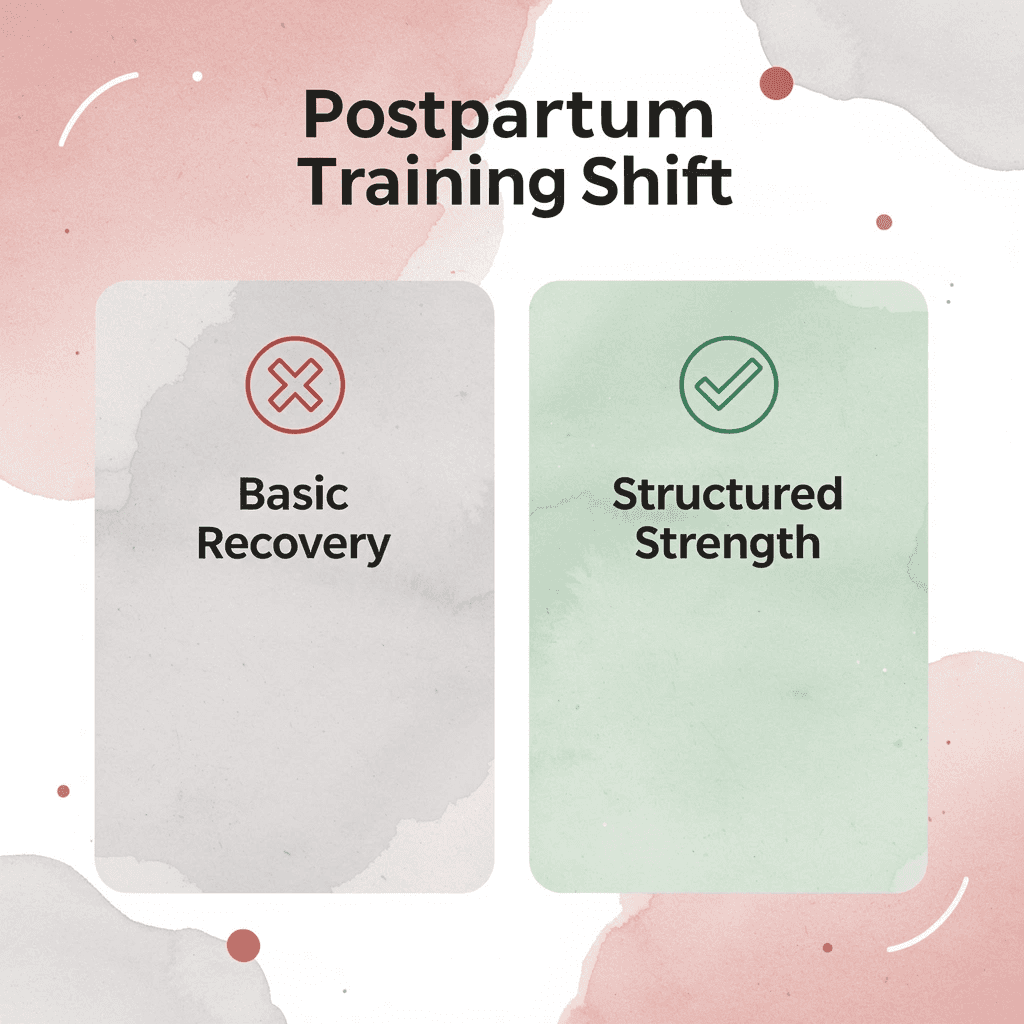
Once the foundations of postpartum recovery are in place, the next step is rebuilding strength safely and sustainably. Many women reach a point where walking, mobility work, and basic stability exercises no longer provide enough challenge. At the same time, jumping directly into high-impact workouts or advanced strength training may place more stress on the body than it is ready to handle. BST Lagree bridges that gap.

“The postpartum body requires a precise balance — enough challenge to rebuild strength, but never so much that it overwhelms a system still in recovery.” — Postpartum Fitness Principle

🎯 Key Point: BST Lagree is specifically designed to meet postpartum women exactly where they are — offering low-impact, high-intensity training that rebuilds deep core strength, pelvic stability, and full-body muscle tone without the risks of conventional high-impact exercise.

💡 Tip: If walking and basic mobility work feel too easy but traditional gym workouts feel too intense, that’s the exact window where BST Lagree delivers its greatest benefit — filling the gap between gentle recovery and full-intensity training.

Training TypeImpact LevelPostpartum Suitability
Walking & Mobility WorkVery Low✅ Early recovery
BST LagreeLow-Impact, High-IntensityIdeal bridge phase
High-Impact CardioHigh⚠️ Requires full clearance
Advanced Strength TrainingHigh⚠️ May stress healing tissue

[IMAGE:

Arrow progression infographic showing postpartum fitness journey from walking to BST Lagree

Why does low-impact training work so well for postpartum recovery?

The Lagree method combines low-impact movement with high-intensity muscular engagement, allowing women to build strength without jumping, running, or other high-impact exercises. This approach is especially beneficial during the postpartum period, when joints, connective tissues, and core muscles are still adapting after childbirth.

A common misconception is that effective workouts must leave you breathless or involve high-impact movements. Strength develops through controlled resistance and precise movement patterns. Lagree workouts use slow, intentional movements that keep muscles under tension while emphasizing proper form and alignment. Rather than relying on momentum to complete exercises, participants move with control, creating a challenging workout that supports strength development while minimizing stress on healing tissues.

How does Lagree build the functional strength new mothers need?

This controlled resistance approach makes Lagree highly effective for full-body strengthening. Motherhood places physical demands on nearly every part of the body: carrying a baby, lifting a car seat, pushing a stroller, and performing daily household tasks all require strength, endurance, and stability. Lagree training targets multiple muscle groups simultaneously, helping women build functional strength that supports both fitness goals and everyday movement.

Another advantage is the emphasis on core engagement throughout the workout. In many traditional programs, core training is a separate activity completed at the end. In Lagree, the core plays a role in nearly every movement. Participants must stabilize their bodies during resistance exercises to encourage consistent activation of the muscles responsible for posture, balance, and spinal support. This integrated approach reinforces the stability and control that many women rebuild after pregnancy.

How does the method adapt to each woman’s postpartum journey?

Movement quality stays a priority. Instead of pushing for maximum repetitions, BST Lagree focuses on alignment, control, and precision. This attention to proper mechanics helps women progress while maintaining the stability and body awareness they developed during earlier recovery stages.

The method’s ability to adapt is equally important. No two postpartum journeys are the same: some women progress quickly, while others need more time to rebuild confidence and strength. Our BST Lagree workouts are tailored to fitness levels and individual needs, allowing women to progress at their own pace. As strength improves, exercises can be modified to provide new challenges without compromising controlled movement and stability.

Professional coaching adds another layer of support for returning to exercise after pregnancy, a process that can feel intimidating. Experienced instructors help participants maintain proper form, make appropriate modifications, and build confidence as they progress.

For example, a mother who has completed early postpartum recovery may be ready for a greater challenge but not yet prepared for high-impact fitness classes. Our BST Lagree method allows her to continue developing strength and endurance while maintaining the stability and movement quality she has restored. Over time, she can build confidence in her body’s capabilities without pressure to pursue more demanding forms of exercise.

Book a Lagree Class in London Today

That quiet sense of progress you’ve built through recovery is worth protecting. Find a method that meets your strengths where they are and builds from there in a smart way—not a generic gym class or high-impact program that undoes what you’ve accomplished.

“Find a method that meets your strength where it is—not a generic gym class or high-impact program that undoes what you’ve accomplished.”

💡 Tip: Your postpartum recovery is an investment. The wrong workout at the wrong time can set you back weeks. Choose a method built around where your body is now, not where it used to be.

⚠️ Warning: High-impact training too soon after recovery can undo your hard-earned progress. Prioritize low-impact, targeted methods that honor your body’s current state.

[IMAGE:

Before and after infographic comparing generic training to smart progress

If you are ready to move beyond recovery, BST Lagree in London is worth your attention. Our Megaformer delivers high-intensity, low-impact full-body training led by Europe’s most experienced Lagree instructors. Every session strengthens your core, restores stability, and drives real change without the strain that sets postpartum bodies back. Book your first class and find out what rebuilding strength on your own terms actually feels like.

🎯 Key Point: The BST Lagree Megaformer is specifically designed to deliver maximum results with minimal joint impact—making it one of the smartest choices for postpartum strength rebuilding in London.

FeatureGeneric Gym ClassBST Lagree Megaformer
Impact LevelHighLow
Core FocusMinimalEvery session
Instructor ExperienceVariesEurope’s most experienced
Postpartum SuitabilityLimitedDesigned for it
Full-Body TrainingInconsistentEvery class

Related Reading

  • Best Postpartum Exercises
  • Best Postpartum Ab Workout
  • Postpartum Gym Workout
  • Postpartum Pilates Workout
  • Pilates Exercises For Post Pregnancy
  • Best Way To Lose Postpartum Belly Fat
  • Best Postpartum Workout App
  • Beginner Postpartum Workout Plan
  • How To Lose Pregnancy Belly After 2 Years

Leave a comment

Contact Us

Receive a Complimentary Coffee with Your First Class

Rated 4.9/5 - 200+ Reviews