Returning to exercise after having a baby is rarely straightforward. The body needs rebuilding from the inside out, and for many new mothers, the first postpartum workout with Pilates exercises for post-pregnancy recovery offers a practical starting point. Pilates targets the deep core and pelvic floor, the foundations most affected by pregnancy and birth, before layering in strength and mobility work that supports long-term recovery.
Not all postpartum fitness approaches are created equal, and finding one that balances precision with progressive challenge matters. A method that combines Pilates principles with resistance training can accelerate recovery without overloading a body that is still healing. Mothers ready to move with intention and structure can explore Lagree in London for sessions built around exactly that goal.
Table of Contents
- Why Postpartum Recovery Requires a Different Approach to Exercise
- Why Pilates Is Popular for Post-Pregnancy Recovery
- 7 Best Pilates Exercises for Post Pregnancy
- Pilates Exercises to Avoid During the Early Stages of Recovery
- What to Look for in a Postpartum Pilates Program
- How BST Lagree Helps Women Rebuild Strength After Pregnancy
- Book a Lagree Class in London Today
Summary
- Up to 35% of postpartum women experience diastasis recti, a separation of the abdominal muscles along the midline, according to the Delaware Journal of Public Health. Standard core exercises like crunches and heavy lifting do not close that gap. They often widen it, which means a significant share of women returning to fitness are loading a structure that cannot yet safely handle that demand.
- The six-week medical clearance is a healing marker, not a fitness benchmark. Reconnecting with the deep core, restoring pelvic floor coordination, and rebuilding postural strength after months of carrying additional anterior weight all require more time and a different kind of attention than most general fitness programs provide. Treating week six as a green light for intensity is where many postpartum setbacks quietly begin.
- Pilates works from the inside out, prioritizing transverse abdominis activation, diaphragmatic breathing, and pelvic floor coordination before adding load or speed. A scoping review published in BMC Pregnancy and Childbirth found that Pilates directly addresses the physiological and psychological changes that require adaptation during pregnancy, reflecting how recovery operates across multiple axes at once, not just the structural one.
- Breathing is not a warm-up ritual in postpartum exercise. It is the mechanism by which the deep core is activated. According to Vaura Pilates, up to 100% of women experience some degree of abdominal separation during pregnancy, meaning almost every postpartum woman is working to restore an internal pressure system, whether she recognizes it or not. Coordinated breath patterns are how that restoration happens deliberately rather than accidentally.
- Depression scores decreased from 10.4 to 7.80 after a 10-week postpartum Pilates and yoga program, according to research published in the SCIRP Open Journal of Nursing. The environment in which a woman moves her body affects how her body responds to that movement. Programs that treat postpartum modifications as a lesser version of the real workout create quiet damage to motivation and consistency over time.
- Postpartum strength is built through accumulated sessions, not peak efforts. A program that is challenging but manageable enough to sustain twice a week for three months will outperform an aggressive program that stalls after two weeks. Soreness is not a reliable indicator of productive work during recovery. Controlled challenge, performed consistently, is.
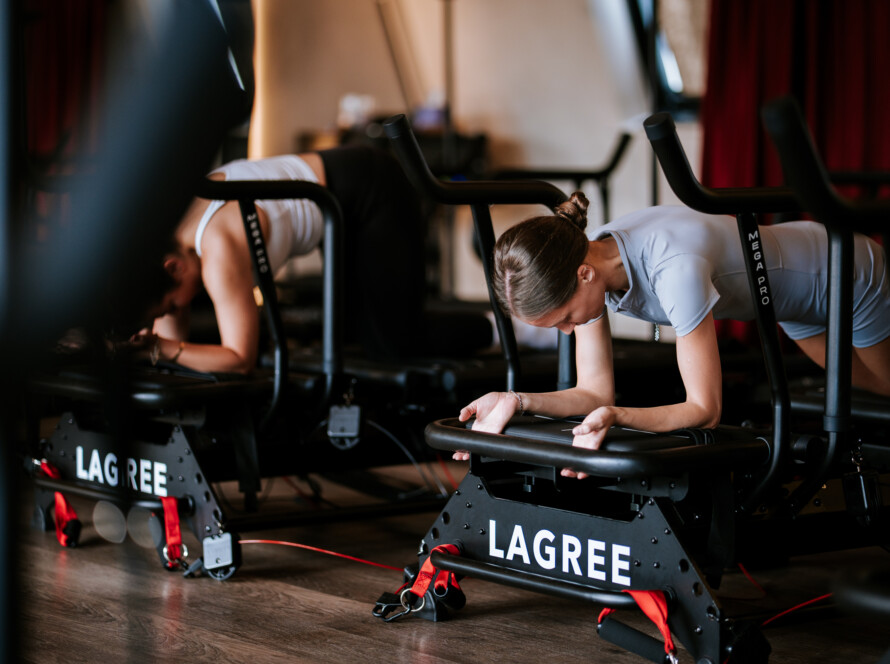
- Lagree in London fits into this framework by offering slow, resistance-based training on the Megaformer that builds deep core stability and progressive strength without the joint stress or intra-abdominal pressure that recovering postpartum bodies are not yet ready to absorb.
Why Postpartum Recovery Requires a Different Approach to Exercise
Getting back to exercise after having a baby requires a completely different approach — not just a slower version of what you did before. Your body has undergone major changes across three critical dimensions: structurally, hormonally, and neurologically — which means you need to rebuild your foundation from the ground up, rather than simply returning to your old habits.
“Postpartum recovery isn’t about going back — it’s about rebuilding smarter, because the body that carried and delivered a baby is fundamentally different from the one that existed before.”
🚨 Warning: Jumping straight back into your pre-pregnancy routine — even at a lower intensity — can lead to serious setbacks like pelvic floor dysfunction, diastasis recti complications, and hormonal disruption. Slower doesn’t automatically mean safer.
| Body System | How It Changes Postpartum | Why It Matters for Exercise |
|---|---|---|
| Structural | Joints, ligaments, and core muscles are weakened or shifted | The foundation must be rebuilt before loading |
| Hormonal | Relaxin and other hormones remain elevated, especially while breastfeeding | Increases injury risk during high-impact movement |
| Neurological | The mind-muscle connection to the core and pelvic floor is disrupted | Requires deliberate retraining, not just movement |
💡 Tip: Think of postpartum exercise as construction, not renovation. You’re not fixing what was there before — you’re laying an entirely new foundation that supports your body’s current reality.
🔑 Takeaway: The goal of postpartum recovery isn’t to return to your old body — it’s to rebuild a stronger, more resilient one by addressing the structural, hormonal, and neurological shifts that pregnancy and birth have created.

What actually changes inside the body
The abdominal muscles stretch to accommodate a growing baby, creating a separation along the midline called diastasis recti. According to Rethinking Prenatal and Postpartum Exercise, Delaware Journal of Public Health, up to 35% of women after pregnancy experience this condition. Crunches, heavy lifting, and high-pressure movements do not rebuild that separation; they often worsen it.
Pelvic floor dysfunction follows a similar pattern. The GSSI Sports Science Exchange reports that up to 1 in 3 women experience pelvic floor dysfunction after pregnancy. Leaking, pressure, or instability during exercise signals that the pelvic supporting structures require step-by-step rehabilitation before intensity increases.
Why does the six-week clearance miss the full picture?
The six-week medical clearance was never designed as a return-to-fitness benchmark. Reconnecting with the deep core, restoring pelvic floor coordination, and rebuilding postural strength after months of anterior weight require longer than six weeks and demand a different kind of attention than most general fitness programs provide.
Lagree in London addresses this gap through our Megaformer’s spring-based resistance system, which allows precise load adjustment. Movements can be calibrated to your body’s current state rather than its pre-pregnancy condition. Our method demands slow, controlled muscular engagement that directly targets the deep stabilizers most affected by pregnancy, including the transversus abdominis and the muscles that support the lumbar spine and pelvis.
Why does stability have to come before intensity
Stability is not a warm-up phase; it’s the entire first chapter of postpartum fitness. Without it, movements that feel manageable rely on compensation patterns, where stronger or less affected muscles take over for those still recovering. Those patterns feel fine until they don’t, and by then the setback is already in motion. Rebuilding from the inside out through breath connection, deep core activation, and controlled range of motion makes later intensity both safer and more effective. One particular approach to movement has addressed these postpartum needs for decades, with reasons more specific than most people expect.
Why Pilates Is Popular for Post-Pregnancy Recovery
Pilates has earned its well-deserved reputation in postpartum recovery through specificity. It addresses the exact physical conditions pregnancy creates: weakened deep core, compromised pelvic floor, altered posture, and joints still softened by hormonal shifts. That precision is rare in fitness, and postpartum women notice it.
“Pilates targets the exact conditions pregnancy creates — from a weakened deep core to a compromised pelvic floor — making it one of the most precisely matched recovery methods available to new mothers.”
🎯 Key Point: Unlike generic fitness programs, Pilates is uniquely suited to postpartum recovery because it targets every specific physical change pregnancy causes — not just surface-level strength.
| Postpartum Condition | How Pilates Addresses It |
|---|---|
| Weakened deep core | Targeted deep abdominal activation exercises |
| Compromised pelvic floor | Pelvic floor engagement and controlled breathing work |
| Altered posture | Spinal alignment and postural correction movements |
| Hormonally softened joints | Low-impact, controlled movements that protect joint stability |
💡 Tip: When choosing a postpartum Pilates program, look for instructors specifically trained in postnatal recovery — that specialization makes a critical difference in safety and results.

What makes it structurally different from other exercises
Pilates works from the inside out, focusing on activating your transverse abdominis, diaphragmatic breathing, and pelvic floor coordination before adding load or speed. Most conventional exercise programs load the outer muscles first, which can mask underlying dysfunction. For a body that has adapted around a growing baby, this order of operations is the right approach. According to a scoping review published in BMC Pregnancy and Childbirth, Pilates addresses the physical and mental changes that require adjustment during pregnancy and directly supports postpartum recovery outcomes. Recovery is structural, hormonal, neurological, and emotional: often all simultaneously.
Why low impact does not mean low demand
Low-impact exercise is often mistaken for being easy or ineffective. Pilates disproves this: controlled, slow movement under resistance demands significant muscular engagement, particularly from stabilizing muscles that high-intensity training bypasses. For postpartum women, rebuilding occurs through sustained, deliberate movements that force the nervous system to reconnect with muscles that have been stretched and deprioritized for months.
How does slow resistance work deliver real results without compromising recovery?
BST Lagree addresses this gap by combining Pilates principles with slow, controlled resistance work on the Megaformer to deliver intensity without impact. This approach helps women avoid setbacks from premature high-intensity training and build sustainable progress instead, delivering results without compromising recovery.
The breathing and alignment piece that most programs skip
Breathing in Pilates activates the deep core by coordinating breath patterns that connect the diaphragm, pelvic floor, and transverse abdominis into a single stabilization system: the system pregnancy disrupts most. According to Vaura Pilates, up to 100% of women experience some degree of abdominal separation during pregnancy. Pilates teaches the body to restore that internal pressure system intentionally rather than by accident. The simplest-looking exercises are often the hardest to do correctly.
Related Reading
- First Postpartum Workout
- When Can I Workout Postpartum
- Is Pilates Good for Postpartum Weight Loss
- Can I Do Pilates 3 Weeks Postpartum
- Bird Dog Exercise Postpartum
- Postpartum Glute Bridge Exercise
- Postpartum HIIT Workout
- Postpartum Kettlebell Workout
- Postpartum Dumbbell Workout
7 Best Pilates Exercises for Post Pregnancy
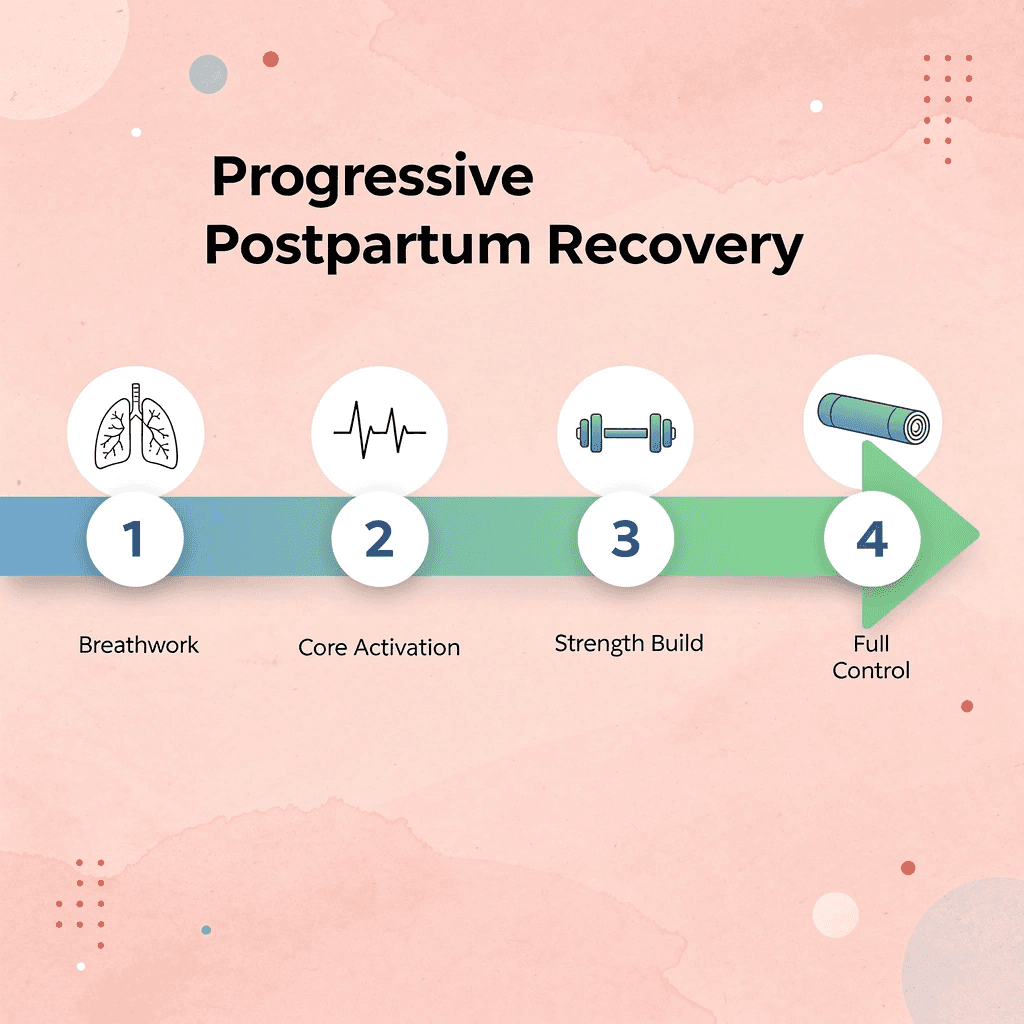
These seven exercises work as a progressive system, with each one building on the last to restore coordination, strength, and control after pregnancy.
“A progressive, structured approach to postpartum Pilates is one of the most effective ways to rebuild core stability, pelvic floor strength, and full-body control after giving birth.” — Pilates & Postpartum Recovery Research
🎯 Key Point: These 7 exercises are not random — they form a deliberate progression designed to safely restore your body’s strength and coordination step by step.
💡 Tip: Follow the exercises in order — each movement intentionally prepares your body for the next, making the full system far more effective than doing them out of sequence.
| Exercise Stage | Primary Focus | Key Benefit |
|---|---|---|
| Early Exercises (1–2) | Breath & pelvic floor activation | Foundation rebuilding |
| Mid Exercises (3–5) | Core strength & stability | Functional control |
| Later Exercises (6–7) | Full-body coordination | Strength integration |
1. Diaphragmatic Breathing
Diaphragmatic breathing is the foundation. It reconnects the diaphragm, pelvic floor, and deep abdominal muscles, which pregnancy can displace. Lie on your back with one hand on your chest and one on your abdomen. Breathe in slowly through your nose until your ribcage expands, then exhale through your mouth while gently drawing your core inward without gripping or sucking in aggressively. The most common mistake is breathing only into the chest, which keeps the pelvic floor disengaged and leaves the pressure system uncoordinated. Treat each breath as a deliberate act of reconnection rather than an automatic habit.
2. Pelvic Tilts
Pelvic tilts help you become aware of your spine and gently engage your abdominal muscles without overloading your core too soon. Lie on your back with your knees bent and feet flat on the floor. Breathe out as you tilt your pelvis backward to flatten your lower back against the floor. Hold for a moment, return to the starting position with control, and repeat. The movement is small by design, and that smallness is what makes it work. Pelvic tilts reduce lower back tension from pregnancy’s postural changes. Your body shifts its center of gravity forward over nine months, forcing your lower spine to compensate. This exercise begins correcting that imbalance, one repetition at a time.
3. Toe Taps
Toe taps are where the challenge becomes real. Start on your back with knees bent at 90 degrees and shins parallel to the floor, then slowly lower one foot to tap the floor while keeping the pelvis still. Return and alternate. The goal is to maintain pelvic stability while a limb moves independently. The failure point is usually the lower back. Once the abdomen bulges outward or the pelvis rocks, the deep core has stopped working. Slow the movement down until the body can hold its position without compensation, then increase the pace.
4. Glute Bridges
Strong glutes are important for your body’s structure during postpartum recovery, not just for aesthetics. Lie on your back with your feet hip-width apart, push through your heels, and lift your hips until your body forms a straight line from your shoulders to your knees. Pause, then lower slowly. Pushing through your heels engages your glutes and hamstrings instead of straining your lower back. Research from PMC shows that Pilates, combining aerobic, strength, and flexibility exercises, is safe and effective for postpartum recovery. Glute bridges deliver the same compound benefit: controlled, multi-muscle engagement without joint stress.
5. Bird Dogs
Bird dogs train your body to stay stable while moving, which mirrors real-life demands better than most gym exercises. Start on your hands and knees, tighten your core to maintain a neutral spine, then extend one arm forward and the opposite leg backward simultaneously. Your spine should not rotate, dip, or arch.
Why does this movement matter for postpartum recovery?
The same instability that makes bird dogs difficult after giving birth causes lower back pain during everyday tasks like carrying a baby or leaning over a stroller. Train the pattern here, and the body transfers it automatically.
What happens when coordination work gets skipped after pregnancy?
Most women returning to exercise after pregnancy stick with familiar routines because new methods feel uncertain, often skipping the coordination work postpartum recovery requires. BST Lagree in London addresses this directly, using the Megaformer to provide controlled, high-intensity movement that builds deep stability without stressing recovering joints or connective tissue.
6. Side-Lying Leg Lifts
Lie on one side with your head, shoulders, hips, and ankles in a straight line. Lift the top leg slowly to hip height, hold briefly, and lower with control. Avoid swinging the leg upward; the hip abductors and glutes need to work through the full range under their own power.
Why do side-lying leg lifts matter for postpartum recovery?
According to VAURA Pilates, up to 1 in 3 women experience diastasis recti after pregnancy, with hip weakness as a common compensation pattern. When the glutes cannot stabilize the pelvis, the body recruits other muscles, creating imbalances that persist long after abdominal separation heals. Side-lying leg lifts address this compensation directly.
7. Modified Planks
Modified planks should come later in an early postpartum progression, not at the beginning. Start from your knees or a raised surface, keep your body aligned from shoulders to knees, and breathe normally while holding the position. Quality matters more than duration—if your hips drop or your abdomen domes outward, you have held it too long. The full plank creates more pressure inside your belly than a recovering core should handle before rebuilding coordination. Move to the full version only when the modified version feels stable and easy to use.
Start With Control, Not Intensity
These seven exercises form the foundation for regaining fitness before pregnancy. The progression from diaphragmatic breathing to modified planks follows the body’s recovery logic: restore coordination first, add load second, increase intensity third. Skipping steps causes most setbacks. A body that cannot stabilize under light load will compensate under heavy load, and compensation is how injuries develop quietly over weeks before announcing themselves loudly. Knowing which exercises to do is only half the picture. Knowing which ones to avoid during early recovery is equally important, and the answer surprises most people.
Pilates Exercises to Avoid During the Early Stages of Recovery
Some exercises actively work against healing during early postpartum recovery by asking too much from tissues and systems that simply aren’t ready yet.
“Returning to exercise too soon after birth can place excessive load on structures that are still in the process of healing — making rest and gradual progression essential during early recovery.”
| Exercise Type | Why It’s Risky Early On | When to Reconsider |
|---|---|---|
| Heavy abdominal work | Strains healing core tissues | After clearance from the provider |
| High-impact movements | Overloads the pelvic floor | Post 6-week check-up |
| Deep spinal flexion | Stresses vulnerable connective tissue | When core stability returns |
⚠️ Warning: Pushing through discomfort or fatigue in the early postpartum period can significantly delay recovery and increase the risk of long-term pelvic floor dysfunction.
💡 Tip: Always consult your healthcare provider before returning to any Pilates routine — even movements that feel gentle or low-impact can be too demanding for tissues that are still in the process of healing.

Which movements pose the greatest risk to postpartum bodies?
Traditional sit-ups, crunches, and advanced Pilates movements such as full roll-ups, teasers, and double-leg lowers generate significant intra-abdominal pressure. When the deep core and pelvic floor don’t work together, that pressure escapes outward through the weakest point in the abdominal wall, causing abdominal doming: a ridge or cone shape along the midline. This signals the need to stop and use easier exercises rather than push harder.
According to SOHL Studio, up to 1 in 3 women experience diastasis recti during or after pregnancy. Exercises like V-sits, jackknifes, and advanced plank variations require core strength that postpartum bodies have not yet rebuilt. Attempting them too early creates compensation patterns that take longer to correct than the original weakness.
Why does high-impact movement quietly fail the postpartum body?
High-impact movements place sudden, repeated stress on the pelvic floor, joints, and connective tissues that are still softened by pregnancy hormones. Jump squats, plyometric lunges, and cardio intervals often cause pelvic heaviness, urinary leakage during movement, or lower back pain. These signs indicate the structural foundation is not ready for that demand.
While ACOG’s Committee Opinion on Physical Activity and Exercise During Pregnancy and the Postpartum Period notes that exercise can begin within days of an uncomplicated vaginal delivery, a gradual return to pre-pregnancy activity over four to six weeks is recommended. The gap between “cleared to move” and “ready for intensity” is where most setbacks occur. Studios like BST Lagree in London address this difference by offering high-intensity, low-impact training on the Megaformer that challenges the body without the jarring stress that joints and pelvic structures are not yet able to tolerate.
What your body is actually telling you
Signs like pelvic pressure, urinary leakage, lower back discomfort, or trouble breathing during exercise indicate the movement is too hard for your body right now. Treat them as information, not failure: return to an easier movement you can perform with full control, build that control, and retry the harder movement when your body can handle it without compensation. Knowing which exercises to avoid is only part of the answer. The harder question—one that determines whether recovery works—is how to select a program with the right exercise order from the start.
What to Look for in a Postpartum Pilates Program
A poorly structured postpartum Pilates program can slow down recovery just as much as doing the wrong movements. The quality of the program matters as much as which exercises you choose — and knowing what to look for can make the difference between genuine healing and setbacks that extend recovery time.
“The structure of a postpartum program is just as critical as the exercises themselves — the right framework protects healing tissue and rebuilds core function safely.” — Postpartum Fitness Principle
🎯 Key Point: A well-designed program should prioritize progressive loading, breath-based core reconnection, and pelvic floor awareness before advancing to more demanding movements.
⚠️ Warning: Not all Pilates programs are created equal — a generic class not tailored to postpartum recovery can place unsafe pressure on a healing core and pelvic floor.
| Program Feature | What to Look For | Red Flag |
|---|---|---|
| Instructor Qualification | Postpartum or prehab/rehab specialization | General fitness certification only |
| Core Progression | Starts with breath and deep core activation | Jumps straight to crunches or planks |
| Pelvic Floor Focus | Includes pelvic floor check-ins throughout | Ignores pelvic floor entirely |
| Diastasis Recti Awareness | Screens and modifies for DR | Uses no modifications |
| Progression Pace | Gradual, symptom-guided advancement | One-size-fits-all timeline |
✅ Best Practice: Always choose a program led by an instructor with specialist postpartum credentials — and never skip the foundational breath and alignment phases, no matter how strong you feel.

Qualified Instruction Changes the Outcome
A postpartum-trained Pilates instructor differs from a general instructor because they can read body compensation patterns, catch them before they become habits, and adjust sessions in real time. According to Beautifully Balanced with Andrea Speir, postpartum recovery should begin no earlier than 6 weeks after vaginal birth: a point that marks the start of a carefully staged process, not a green light for intensity. A qualified instructor treats week six as an invitation to listen, not a signal to increase demands.
Why does sequencing matter more than individual exercises?
The failure point in most postpartum programs is not the individual exercises—it’s the sequencing. Programs that jump from foundational breathing work to loaded movements without building connective tissue create gaps that the body fills with compensation. A well-designed program builds load tolerance in layers: breath and pressure management first, then stability, then strength, then power. Each phase earns the next. Without this structure, women plateau or experience setbacks that reflect a design flaw in the program itself rather than personal failure.
How does a method built for precision support postpartum recovery?
Most women do postpartum fitness through classes not designed for their bodies. A general Pilates class assumes a body that hasn’t undergone structural changes. Lagree in London with BST Lagree offers an alternative: high-intensity, low-impact training on the Megaformer that builds progressive strength through slow, controlled resistance rather than momentum or impact. For women rebuilding after pregnancy, this distinction matters because our method requires precision over speed—precisely what recovering connective tissue needs.
The Emotional Environment Is Part of the Program
Research published in the SCIRP Open Journal of Nursing found that depression scores decreased from 10.4 to 7.80 after a 10-week postpartum Pilates and yoga program. This demonstrates what fitness culture often overlooks: where a woman moves her body shapes how her body responds to that movement. Classes that encourage comparison or frame postpartum changes as diminished versions of standard workouts undermine motivation and adherence. The best programs treat modifications as intentional choices, not compromises.
Consistency Over Intensity, Every Time
Building postpartum strength happens through accumulated sessions, not single efforts. A program that is challenging enough to sustain twice weekly for three months will outperform an intense program that lasts two weeks and then stops. Look for programs that track progress through movement quality and functional capacity rather than soreness. Soreness is not a reliable indicator of effective recovery work; steady, regular challenge is. The right program changes how you understand what your body can do, and this change extends well beyond the postpartum period.
Related Reading
- Kegel Exercises Postpartum
- Postpartum Strength Workout
- Postpartum Diastasis Recti Workout
- Easy Postpartum Workout
- Postpartum Arm Workout
- Postpartum Full Body Workout
- Postpartum Core Workout
- 6 Week Postpartum Workout Plan
- Postpartum Pelvic Floor Exercises
- Postpartum Workout Plan At Home
- Pilates Exercises For Post Pregnancy
- Postpartum Diastasis Recti Workout
- Postpartum Pelvic Floor Exercises
- Postpartum Belly Exercises
How to Turn These Into a Postpartum Pilates Workout
A postpartum Pilates workout is the seven moves above done in order as one short session, starting with breathing and finishing with a gentle stretch. Here is a simple version to start with.
- Diaphragmatic breathing: 5 slow breaths, letting your ribs widen as you breathe in and gently lifting your pelvic floor as you breathe out.
- Pelvic tilts, toe taps and glute bridges: 8 to 10 slow reps of each.
- Bird dogs and side-lying leg lifts: 6 to 8 reps on each side.
- Modified planks: 3 holds of 10 to 20 seconds, on your knees or with your hands on a bench.
- Cat-cow on your hands and knees: 5 slow rounds to finish.
That takes 15 to 20 minutes. Two or three sessions a week is plenty to begin with. It fits the UK Chief Medical Officers’ advice for the year after birth: start gently, do pelvic floor exercises every day, and build up to muscle-strengthening activity twice a week alongside walking and everyday movement (UK Chief Medical Officers).
Progress one thing at a time. Add a couple of reps, then a second round, then a harder version such as a single-leg bridge. Move on only when the current version feels easy, you can breathe normally the whole way through and your tummy stays flat. If you notice doming along the middle of your tummy, leaking, a heavy feeling in your pelvis or pain, go back a step. If it keeps happening, ask your GP to refer you to a women’s health physiotherapist. If you had a caesarean or a difficult birth, check with your GP or midwife before you start.
How BST Lagree Helps Women Rebuild Strength After Pregnancy
After pregnancy, many women want a structured approach that helps them rebuild strength, improve endurance, regain confidence, and feel supported throughout their fitness journey. The postpartum period is crucial for prioritizing intentional, guided movement — not just for physical recovery, but for long-term wellbeing.
💡 Tip: Look for programs that offer progressive structure and a supportive community: both are essential for postpartum success.
While Pilates provides an excellent foundation for postpartum recovery, many women eventually want a bigger challenge. The key is finding a program that prioritizes proper movement mechanics and joint-friendly training while helping them progress toward long-term fitness goals. Not every workout is designed with the postpartum body in mind — which makes finding the right fit absolutely critical.
“The postpartum recovery journey requires progressive, low-impact training that respects the body’s healing process while building toward lasting strength.” — Postpartum Fitness Principle
⚠️ Warning: Jumping into high-impact training too soon after pregnancy can lead to injury and setbacks. Always prioritize joint-friendly movement first.
| Training Priority | Why It Matters Postpartum |
|---|---|
| Proper Movement Mechanics | Protects healing joints and core |
| Joint-Friendly Training | Reduces the risk of injury during recovery |
| Progressive Challenge | Builds sustainable long-term strength |
| Structured Programming | Ensures safe, measurable progress |
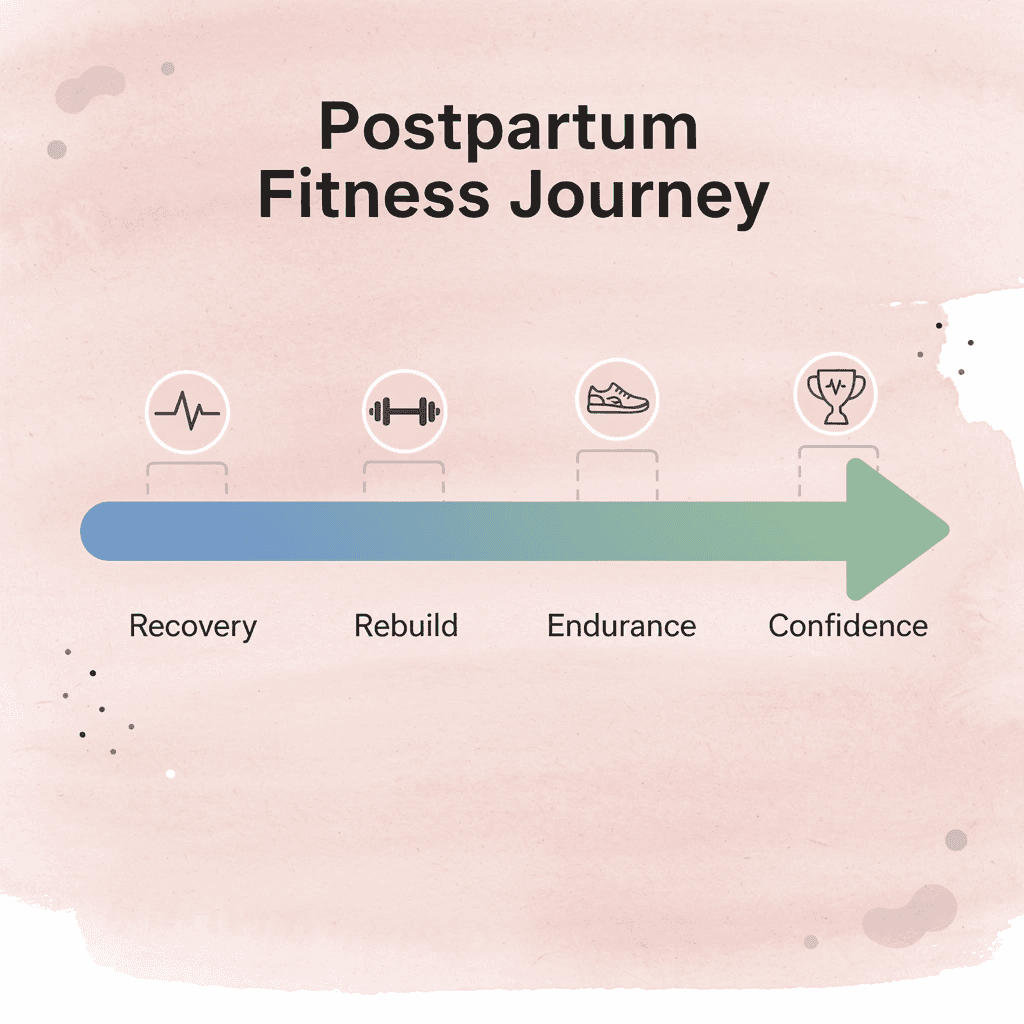
This is exactly where BST Lagree comes in: offering a method specifically designed to bridge the gap between gentle recovery and serious, results-driven fitness. For women ready to move beyond the basics, BST Lagree delivers the structured challenge, expert guidance, and community support needed to thrive.
🔑 Takeaway: BST Lagree is the ideal next step for postpartum women seeking a safe, effective, and empowering path back to peak strength.
How does BST Lagree create a welcoming environment for postpartum women?
Returning to exercise after pregnancy can feel intimidating, particularly in fitness spaces designed for experienced athletes or rapid results. BST Lagree provides a welcoming, women-focused environment where participants build strength without pressure to “bounce back” immediately. The focus is on progress, consistency, and supporting women at every stage of their fitness journey.
Why is Lagree’s low-impact, high-intensity approach ideal for postpartum recovery?
Lagree combines slow, controlled movements with constant resistance to create intense, low-impact workouts. Rather than relying on jumping or high-impact movements, the method focuses on muscular endurance, strength, stability, and control. For women rebuilding fitness after pregnancy, this approach provides an effective way to challenge the body while remaining mindful of recovery and joint health.
How does BST Lagree fit full-body training into just 45 minutes?
BST Lagree’s 45-minute workouts combine strength training, muscular endurance, balance, flexibility, and cardiovascular conditioning into one session. Rather than splitting your time between multiple workouts, you can work your entire body in one structured class, making it easier to stay consistent when you’re a busy mum.
How does resistance-based training protect joints during postpartum fitness?
BST Lagree uses resistance-based training that focuses on controlled movement and continuous muscle engagement, allowing participants to build strength effectively while reducing joint impact. This makes it ideal for sustainable training during and after postpartum recovery.
How does BST Lagree accommodate different recovery stages and fitness levels?
Every woman’s postpartum experience is different. BST Lagree classes can be modified for different fitness levels, movement abilities, and experience levels, allowing women to work at the right intensity while building strength safely. BST Lagree instructors complete a rigorous certification and mentorship program that ensures they understand proper technique, class coaching, and exercise progression. Their expertise helps participants learn movements correctly, make personalized modifications, and build confidence.
What kind of results can women expect from consistent BST Lagree training?
BST Lagree focuses on creating a positive class experience where participants feel encouraged, challenged, and supported. Our studio culture promotes consistency and progress over comparison, helping women focus on their individual goals and achievements. The most meaningful results come from showing up consistently and following a well-designed program. Women who commit to regular Lagree training with BST Lagree often notice improvements in strength, endurance, balance, posture, and overall fitness: changes that translate into greater confidence, improved daily function, and a stronger body capable of handling everyday demands.
Book a Lagree Class in London Today
Knowing things alone does not rebuild strength. Action does: the right environment makes that action sustainable, rather than something you must fight for each week.
“The right training environment transforms recovery into real, lasting strength — not just something you maintain, but something you build on.” — BST Lagree
💡 Tip: Don’t wait until you feel “ready.” The right structured program meets you where you are and builds from there.
If you are ready to move beyond recovery and start building real strength with confidence, Lagree in London offers a structured, low-impact training method on the Megaformer that combines resistance, core activation, and full-body conditioning — without the joint stress that sets postpartum progress back. Book a class at BST Lagree and find out what deliberate, progressive training actually feels like.
| What BST Lagree Offers | Why It Matters |
|---|---|
| Low-impact Megaformer training | Zero joint stress during postpartum recovery |
| Resistance + core activation | Full-body conditioning that rebuilds from the inside out |
🎯 Key Point: BST Lagree isn’t just a workout — it’s a structured, progressive system designed specifically for women who are done with guesswork and ready for real results.
✅ Best Practice: Choose a training method that offers low-impact intensity — so you can train consistently without setbacks, which is the real secret to postpartum strength.