After having a baby, the core rarely feels like it used to. Muscles that once worked together automatically can feel disconnected, weak, or difficult to engage. Knowing where to start with your first postpartum workout is half the battle, especially since many exercises risk making things worse rather than better. The best postpartum core exercises focus on rebuilding deep abdominal function first, targeting the transverse abdominis and pelvic floor before layering on more demanding movement.
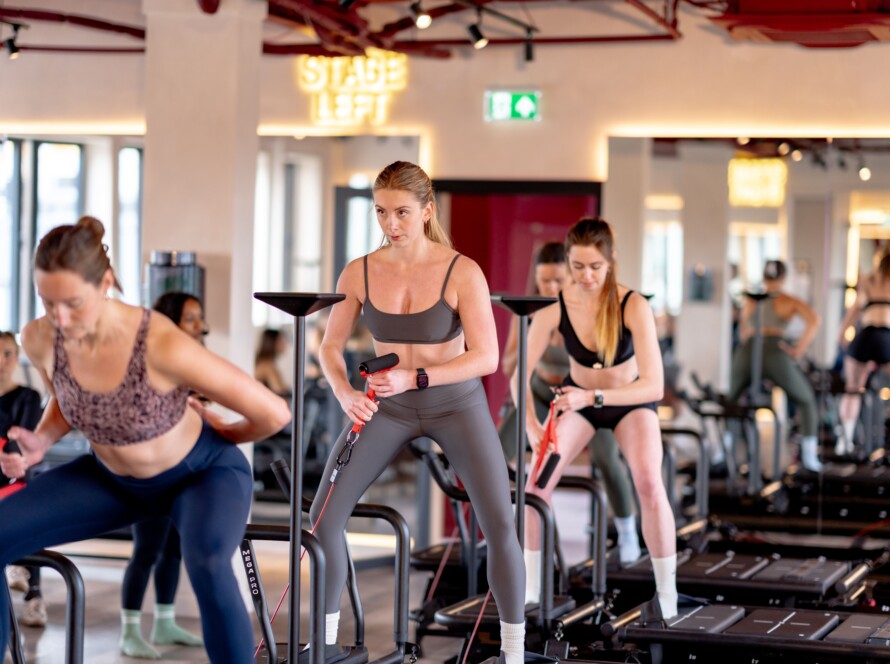
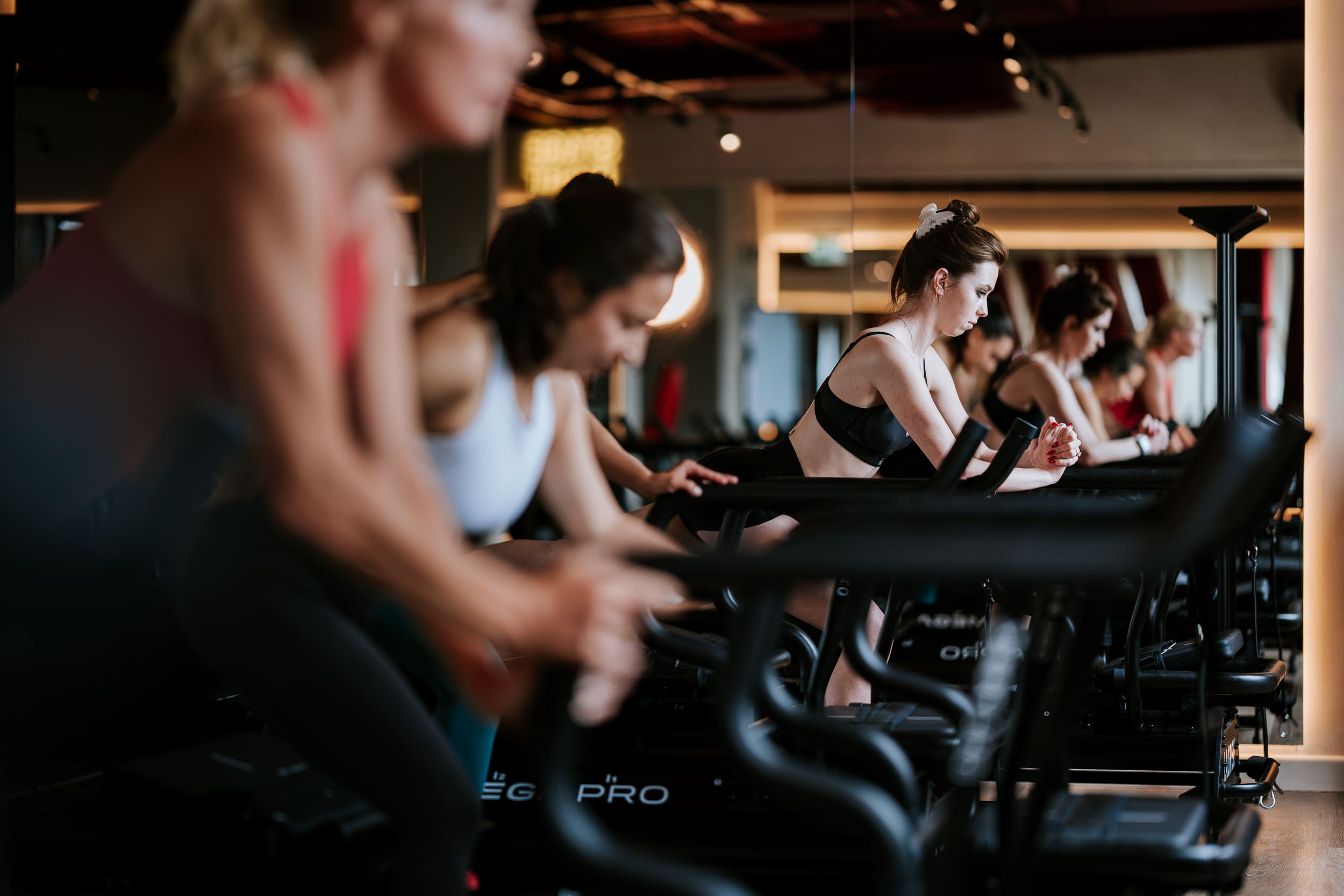
For new mothers who want structured, expert-led support during recovery, a low-impact method like Lagree is worth serious consideration. The Megaformer machine engages stabilizing muscles at a controlled intensity, making it well suited to postpartum rehabilitation, whether someone is managing diastasis recti or simply easing back into consistent movement. Mothers in the UK seeking this kind of guided approach can find it at Lagree in London.
Table of Contents
- Why Your Core Feels Different After Pregnancy
- The Biggest Mistakes Women Make When Training Their Core After Pregnancy
- What Makes a Postpartum Core Exercise Effective?
- 10 Best Postpartum Core Exercises to Start With
- When and How to Progress Your Postpartum Core Training
- How BST Lagree Helps Women Build a Stronger Core After Pregnancy
- Book a Lagree Class in London Today
Summary
- Pregnancy causes near-universal changes to the abdominal wall, with research indicating that up to 100% of women experience some degree of diastasis recti by the third trimester. What varies is how much separation remains after delivery and how well the deeper stabilizing muscles, particularly the transverse abdominis and pelvic floor, can compensate during recovery. The common assumption that postpartum women simply need to get stronger overlooks the actual problem: loss of coordination rather than muscle weakness.
- The six-week postpartum clearance is widely misunderstood as a signal that recovery is largely complete. Research published in BMC Pregnancy and Childbirth found that over 50% of postpartum women reported activity limitations during the first year after birth, and approximately 39% still have measurable diastasis recti at six months. These figures suggest that the body is rebuilding a neuromuscular system over a much longer window than most fitness advice acknowledges.
- The most common mistake in postpartum core training is returning to familiar exercises, such as sit-ups, crunches, and leg raises, before the deeper stabilizing system has regained its baseline coordination. These movements create high intra-abdominal pressure that can widen existing abdominal separation and reinforce poor breathing mechanics, actively working against recovery rather than supporting it. A 2024 systematic review confirmed that diastasis recti persists in roughly 39% of women at six months, meaning a significant portion is still working with compromised abdominal wall integrity when they feel ready to progress.
- Pelvic floor health is consistently undertreated in postpartum fitness programming despite affecting up to 35% of women in the first year after delivery. The pelvic floor and the deep abdominals function as part of the same pressure management system, and training one while ignoring the other limits the effectiveness of any recovery approach. Symptoms like leakage during exercise are not a normal adaptation to postpartum fitness but a signal that the system is not yet managing load effectively.
- Core-stabilizing exercises do more than rebuild visible muscle. A 2026 systematic review published in the Brazilian Journal of Physical Therapy found that core-stabilizing exercises significantly reduced lumbopelvic pain across multiple randomized controlled trials, improving pain, disability, and quality of life in postpartum women. Lumbopelvic pain is one of the most common and least discussed postpartum complaints, and addressing it through targeted core work restores the capacity to move, carry, and train without restriction.
- Progression in postpartum core training should be guided by tissue readiness rather than time elapsed or confidence. Symptoms like abdominal doming, pelvic pressure after a session, or persistent lower back discomfort are signals that load has exceeded current capacity, and reducing intensity at those moments is the most efficient path forward rather than a setback. BST Lagree in London addresses this progression challenge by using spring-based resistance and a slow, controlled tempo to create genuine muscular demand without the joint stress or spinal compression that traditional training methods can cause.
Why Your Core Feels Different After Pregnancy
Pregnancy reshapes your core from the inside out. Over nine months, your abdominal muscles stretch significantly, your posture shifts forward, and your center of gravity changes entirely. By delivery, the muscles, fascia, and connective tissue that once worked together automatically must relearn how to coordinate.
🎯 Key Point: This isn’t about “bouncing back”—it’s about retraining a system that was fundamentally restructured over pregnancy.
⚠️ Warning: Jumping into high-intensity core work too soon can interfere with the natural recoordination process your body needs postpartum.
“Up to 100% of pregnant women experience some degree of diastasis recti by the third trimester.” — Exakt Health Blog
According to the Exakt Health Blog, up to 100% of pregnant women experience some degree of diastasis recti by the third trimester. What varies is how much separation remains after delivery and how well the deep stabilizing muscles — particularly the transverse abdominis and pelvic floor — can compensate during recovery.
🔑 Takeaway: The real question after birth isn’t whether your core was affected — it’s how significantly and which stabilizing muscles need the most targeted support to rebuild functional strength.
| Factor | What It Affects | Key Muscle Involved |
|---|---|---|
| Degree of separation | Abdominal wall integrity | Rectus abdominis |
| Deep muscle compensation | Spinal & pelvic stability | Transverse abdominis |
| Pelvic floor function | Pressure management & control | Pelvic floor complex |
| Postural shift | Load distribution & alignment | Multifidus & glutes |
Why is coordination the real issue, not strength?
The failure point is not strength in the traditional sense, but coordination. The transverse abdominis, which acts like an internal corset wrapping around your spine and pelvis, frequently loses its automatic firing pattern during pregnancy. When that happens, the body recruits other muscles to compensate, causing back discomfort or instability during activities as simple as lifting a car seat or standing at a kitchen counter for twenty minutes.
Why does jumping back to crunches and planks backfire?
The common response is to start crunches or planks at the six-week clearance. Loading the outer abdominals before the deeper stabilizing system is ready can widen existing separation and increase pressure on a pelvic floor still healing. Women who train at BST Lagree in London often find a more effective path. The Megaformer’s spring-based resistance creates slow, controlled tension that engages the transverse abdominis and pelvic floor without the compressive load of traditional ab exercises.
How long does postpartum core recovery actually take?
According to research published in BMC Pregnancy and Childbirth, over 50% of postpartum women reported activity limitations during the first year after birth. This challenges the notion that recovery is complete by week six. The body is rebuilding a neuromuscular system that spent nine months adapting to different demands, a process that requires time, appropriate stimulus, and a prioritization of function over appearance.
Postpartum core recovery is not damage control—it’s the foundation for building a stronger, more resilient body than you had before pregnancy, provided you approach it with the right framework.
The Biggest Mistakes Women Make When Training Their Core After Pregnancy
Training hard and moving backward is real. When women return to wrong exercises at the wrong time, they stress a system that hasn’t rebuilt its internal coordination, creating compensation patterns that become harder to fix the longer they persist.
Why do familiar ab exercises work against postpartum recovery?
The most common mistake is reaching for familiar ab exercises because they feel productive. Sit-ups, crunches, bicycle kicks, and leg raises create visible effort and burn. But during early postpartum recovery, that effort often increases pressure inside the belly, pushing through a connective tissue system that is unprepared to handle it. The abdominal wall responds not by strengthening, but by bracing inefficiently, which can widen any existing separation and reinforce poor breathing mechanics that undermine pelvic floor function.
How common is compromised abdominal wall integrity in postpartum women?
According to a 2024 systematic review and meta-analysis published in PMC, diastasis recti abdominis affects up to 100% of women in the third trimester and persists in about 39% at six months postpartum. Many women beginning postpartum fitness programs have a weakened abdominal wall, often unaware of the condition. Performing inappropriate exercises during this period can hinder recovery.
Why the pelvic floor keeps getting skipped
Pelvic floor disorders, including urinary incontinence, affect up to 35% of postpartum women in the first year after delivery, yet pelvic floor health rarely features in standard fitness advice. Most postpartum workout content prioritizes visible muscles for social media appeal. The pelvic floor is invisible, its dysfunction is embarrassing to discuss, and its exercises don’t photograph well. The pelvic floor and deep abdominal muscles form a single pressure management system. Training one while ignoring the other is like reinforcing one wall of a structure while leaving the foundation cracked.
Why does progressing too fast stall real recovery?
Most postpartum women who plateau aren’t working too little—they’re progressing too fast through sequences never designed for their recovery stage. Online programs advance from beginner to intermediate based on time, not tissue readiness. Feeling strong enough to do something differs from being structurally prepared. The Lagree Method, offered at BST Lagree in London, provides a different path. Its high-intensity, low-impact design lets women work at challenging levels without the joint stress or pressure spikes that traditional ab training creates, making it a natural bridge into real strength.
How does social media comparison distort postpartum recovery expectations?
Social media fitness culture creates a comparison trap. When a postpartum woman watches someone perform advanced core work eight weeks after birth, she’s seeing one person’s outcome stripped of context: birth type, pelvic floor function, sleep, nutrition, and pre-pregnancy fitness all vary. Treating someone else’s highlight reel as a benchmark is one of the most reliable ways to rush a process that rewards patience.
The gap between what looks effective and what is effective turns out to be more significant than most women are told.
Related Reading
- First Postpartum Workout
- When Can I Workout Postpartum
- Is Pilates Good for Postpartum Weight Loss
- Can I Do Pilates 3 Weeks Postpartum
- Bird Dog Exercise Postpartum
- Postpartum Glute Bridge Exercise
- Postpartum HIIT Workout
- Postpartum Kettlebell Workout
- Postpartum Dumbbell Workout
What Makes a Postpartum Core Exercise Effective?
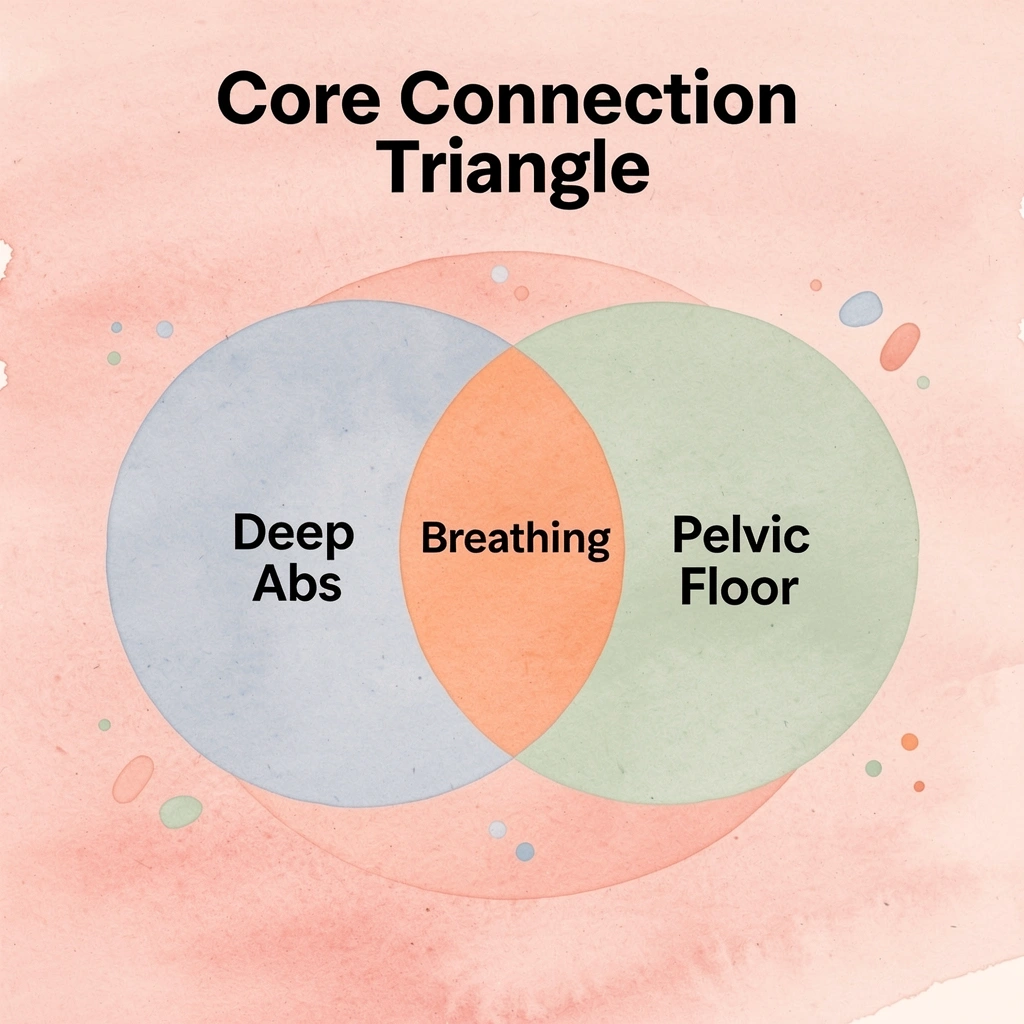
Good postpartum core exercises aren’t about how hard you work or how much visible effort you can see. They help bring back the coordinated connection between your deep abdominals, pelvic floor, and breathing mechanics as one unified system.
“Effective postpartum core recovery isn’t measured by intensity — it’s measured by how well your deep abdominals, pelvic floor, and breath learn to work together again.” — Postpartum Fitness Principle
🎯 Key Point: The goal of postpartum core training is not maximum effort — it’s restoring neuromuscular coordination between systems that were disrupted during pregnancy and birth.
| What Makes an Exercise Effective | What Makes an Exercise Ineffective |
|---|---|
| Targets deep core connection | Focuses only on surface muscles |
| Integrates breathing mechanics | Ignores breath and intra-abdominal pressure |
| Engages the pelvic floor as part of the system | Treats the pelvic floor as separate or secondary |
| Builds coordination progressively | Jumps to high-intensity too soon |
💡 Tip: Before adding any resistance or difficulty, master the breath-to-core connection first — this is the real foundation of postpartum recovery.
What does ‘function first, appearance second’ actually mean for your core?
Your core isn’t a single muscle—it’s a pressure management system. The transverse abdominis, diaphragm, pelvic floor, and multifidus work together to stabilize your spine and pelvis during movement, from lifting a pram to climbing stairs. When pregnancy disrupts that coordination, the goal is to restore proper muscle function, not to increase intensity.
Why does standard fitness programming miss the mark postpartum?
Standard fitness programming misses this. Exercises that create high pressure inside your belly—leg raises, loaded sit-ups—overwhelm a system that hasn’t returned to baseline coordination. Effective exercises train timing and control before adding weight. Heel slides, dead bugs, and diaphragmatic breathing aren’t beginner filler; they’re precision tools for reestablishing the neuromuscular patterns pregnancy interrupted.
Why pain management matters more than people expect
Recovery isn’t about returning to exercise—it’s about solving postpartum physical discomfort. According to a 2026 systematic review and meta-analysis published in the Brazilian Journal of Physical Therapy, core-stabilizing exercises significantly reduced lumbopelvic pain in postpartum women across multiple randomized controlled trials. Lumbopelvic pain is one of the most common and least discussed postpartum complaints, directly limiting a woman’s ability to move, carry, and train with confidence.
What does the research say about pain, disability, and quality of life?
Research confirms that core stabilizing exercises are effective in managing pain, disability, and quality of life in postpartum lumbopelvic pain patients. The right exercises help restore the ability to live without restriction, a different goal than looking better.
Where does structured progressive training fit into postpartum recovery?
When women move beyond basic recovery into organized, progressive training, finding the right environment matters. Lagree in London is built around this change. Our Megaformer’s spring-based resistance system delivers high-intensity, low-impact loading that challenges the deep core without the joint stress or spinal compression associated with traditional gym equipment. For postpartum women ready to build real strength, that difference is rooted in biomechanics, not marketing.
Progression is the variable most programs ignore
Stability before intensity isn’t a careful suggestion—it’s the order that determines whether recovery improves or stalls. The body must demonstrate control at lower demands before safely handling higher ones. A woman who skips to planks or loaded carries isn’t training harder; she’s training out of order, and the results show up months later as a plateau, pain, or dysfunction.
Which exercises to start with and in what order changes everything.
10 Best Postpartum Core Exercises to Start With
Rebuilding postpartum core strength requires doing exercises in the right order — starting from the inside and working outward. You begin with the deepest stabilizing muscles and only move to harder exercises once you have full control. These ten movements do exactly that.
“Postpartum core recovery is not about crunches — it’s about rebuilding from the deepest layer out, restoring stability before strength.”
💡 Tip: Never rush to high-intensity core work before mastering foundational stabilization — skipping ahead is the most common postpartum recovery mistake.
⚠️ Warning: Jumping straight to surface-level exercises like crunches or sit-ups can worsen core dysfunction and increase the risk of diastasis recti.
| Exercise Level | Target Muscles | When to Start |
|---|---|---|
| Level 1 – Foundation | Deep stabilizers, pelvic floor | Immediately postpartum (with clearance) |
| Level 2 – Intermediate | Transverse abdominis, obliques | Once Level 1 control is established |
| Level 3 – Advanced | Full core, functional movement | After consistent stability is achieved |

1. Diaphragmatic Breathing
Breathing doesn’t feel like work, which is why it’s overlooked as exercise—and why it belongs first. Pregnancy reshapes how the diaphragm, abdominal wall, and pelvic floor communicate, and diaphragmatic breathing resets that entire system. Lie on your back with knees bent, one hand on your chest and one on your abdomen. Inhale to expand your rib cage and belly, then exhale slowly while drawing the deep abdominal muscles inward. Ten intentional breaths done well accomplish more than ten rushed repetitions of anything harder.
2. Pelvic Tilts
The pelvic tilt helps you become aware of how the pelvis and lower back move together, a connection pregnancy often disrupts through postural compensation. Slow, controlled repetitions matter far more than range of motion. If you feel strain in your lower back rather than gentle engagement through the abdomen, reduce the movement until you regain control.
3. Heel Slides
The failure point in early postpartum core training is usually load before stability. Heel slides address this by asking the transverse abdominis to hold a neutral spine while one leg extends along the floor. The moment the lower back arches or the breath is held, the leg has gone too far. That boundary is the training stimulus, not full extension.
4. Dead Bugs
Dead bugs teach the core to stabilize the spine while the limbs move independently, mirroring real-world demands such as lifting a car seat or reaching across a cot. Start with one limb at a time before progressing to the opposite arm and leg patterns. Keep movements controlled and deliberate.
5. Bird Dogs
The same stability demand that makes dead bugs effective on the back translates to bird dogs on all fours. This position trains the posterior chain, engaging the glutes and back muscles, as well as deep core stabilizers. Keep the hips level throughout; any rotation signals that the movement has exceeded current capacity.
6. Glute Bridges
Strong glutes support the pelvis, reduce strain on the lower back, and create the foundation for loaded movement. According to Nourish Move Love, postpartum core exercises can safely begin as early as 24 hours after delivery, with the glute bridge among the first appropriate movements. Lift only as high as you can control, focusing on breathing out at the top to reinforce the connection between the glutes and deep core.
A common mistake is skipping foundational work because it feels too easy before the stabilizing system is ready. Staying in the foundational sequence, even when unchallenging, prevents setbacks and enables the next stage.
7. Modified Side Planks
The modified side plank, performed from the knees rather than the feet, builds lateral core stability without excessive pressure on the abdominal wall. The obliques and deep stabilizers work together in ways few early-stage exercises match. Rotational and lateral stability allow the body to carry, twist, and reach without compensation.
When women feel stuck between postpartum recovery and a full return to training, the core’s lateral and rotational lines are often undertrained. The modified side plank closes that gap before the body handles more dynamic demands.
8. Pallof Press
The Pallof press builds anti-rotation strength: your core’s ability to resist unwanted movement rather than create it. Anchor a light resistance band at chest height, stand perpendicular to it, and press both hands straight out while keeping your torso still. This mirrors real demands like carrying a baby on one hip or reaching across your body while holding weight.
9. Marching Glute Bridge
Once standard glute bridges feel controlled and repeatable, the marching variation adds a single-leg stability challenge. Lifting one foot off the floor while keeping a level pelvis demands significantly more from the deep core and hip stabilizers. Master the base movement first; progressing too soon creates a hip-rocking pattern that trains compensation rather than strength.
10. Wall Dead Bug
The wall dead bug uses light hand pressure against a surface to create full-body tension before the limbs move. That tension teaches the nervous system how to brace the core safely, the same mechanism needed for every more demanding exercise that follows. It is especially useful for women who find the standard dead bug difficult to feel, since the wall provides immediate feedback about whether core engagement is occurring.
Why does the sequence across these exercises matter?
The order of these ten exercises is not random. Each movement tests a specific skill before the next demands more. Diaphragmatic breathing fixes the pressure management system. Pelvic tilts and heel slides rebuild neuromuscular awareness. Dead bugs and bird dogs introduce spinal stability under limb load. Bridges and side planks add posterior chain strength and lateral control. The Pallof press and marching variations test control under resistance and single-leg demand. By the time the wall dead bug is mastered, the core functions properly.
What most women don’t realize until they’ve worked through this sequence is that the simplest exercises were doing the most important work. The breathing, tilts, and slow heel slides are not warm-ups; they are the foundation on which everything else is built.
How long does postpartum core recovery actually take?
According to Nourish Move Love, up to 39% of women still have diastasis recti six months postpartum, making the deeper stabilizing work in this list relevant well beyond the early weeks. Recovery is not a short sprint back to pre-pregnancy fitness but a deliberate, sequenced process in which each exercise earns the right to the next.
Knowing which exercises to start with is only part of the picture. Knowing when to move beyond them without losing your foundation is where the real decisions get made.
Where does Lagree fit once the foundation is built?
BST Lagree in London represents a natural next step once these basic movements are well established. Most women, after giving birth, face an unclear gap between recovery and real training. Our Megaformer’s spring-based resistance and slow, controlled speed mean that intensity is earned through precision rather than weight, the right environment for a body that has rebuilt its core from the inside out and is ready to test that foundation under real demand.
Related Reading
- Kegel Exercises Postpartum
- Postpartum Strength Workout
- Postpartum Diastasis Recti Workout
- Easy Postpartum Workout
- Postpartum Arm Workout
- Postpartum Full Body Workout
- Postpartum Core Workout
- 6 Week Postpartum Workout Plan
- Postpartum Pelvic Floor Exercises
- Postpartum Workout Plan At Home
- Pilates Exercises For Post Pregnancy
- Postpartum Diastasis Recti Workout
- Postpartum Pelvic Floor Exercises
- Postpartum Belly Exercises
When and How to Progress Your Postpartum Core Training
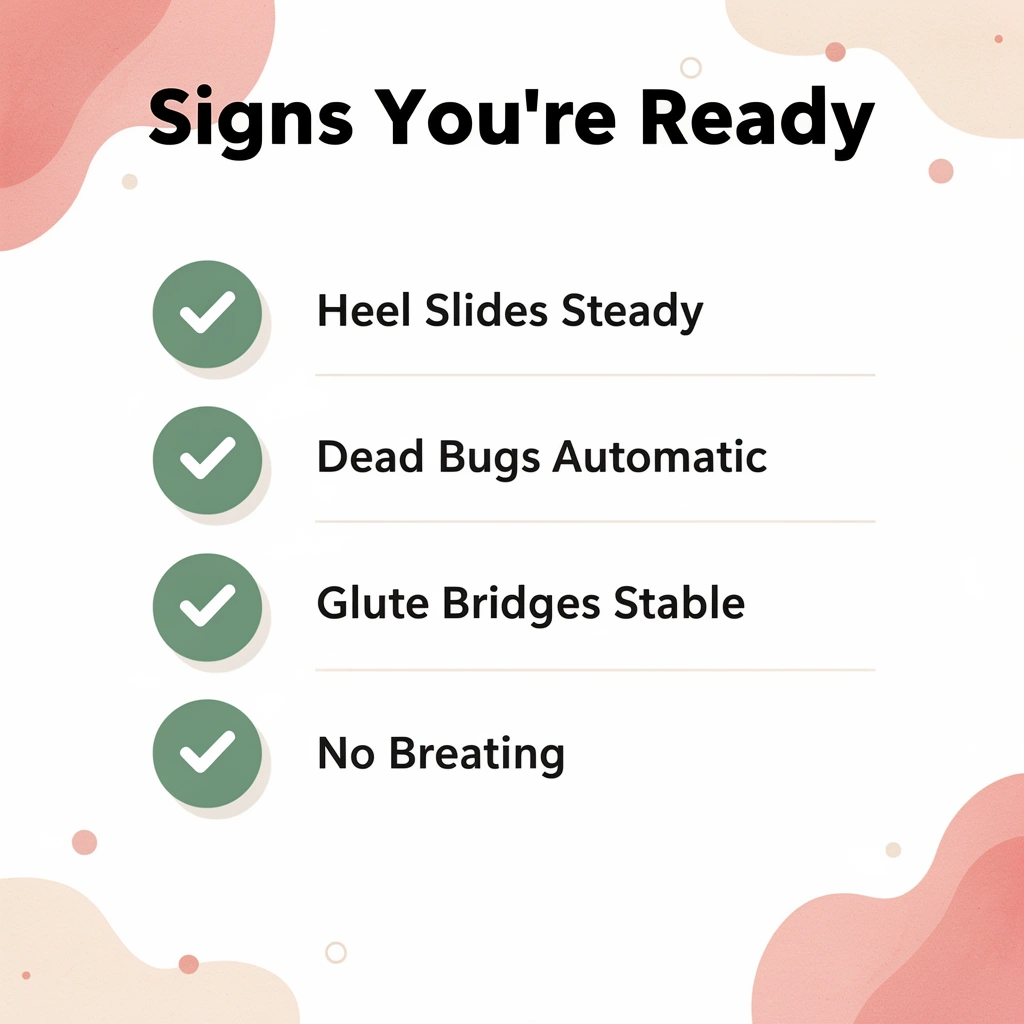
You earn progression—it’s not just about following a schedule. Your core is ready for harder exercises when heel slides, dead bugs, and glute bridges feel steady and automatic, when you can breathe freely through each repetition without bracing or doming. That’s your signal to increase the difficulty.
“Progression in postpartum core training is earned through mastery, not measured by weeks on a calendar — your body’s signals are the real benchmark.”
🎯 Key Point: Your core is ready to progress when foundational movements like heel slides and dead bugs feel completely automatic — not just manageable, but effortless and controlled.
⚠️ Warning: Skipping ahead on a fixed timeline without checking for bracing or doming is one of the most common postpartum mistakes — always let your body’s readiness guide the next step.
| Readiness Signal | What It Means |
|---|---|
| Heel slides feel steady | Foundation is solid — ready to layer difficulty |
| Dead bugs feel automatic | Core coordination is restored |
| Glute bridges feel controlled | The posterior chain supports the core |
| Free breathing through reps | No intra-abdominal pressure issues |
| No bracing or doming | Safe to progress to harder exercises |
What does “more challenging” actually mean for postpartum core training?
The failure point is usually this: women interpret progression as moving to exercises that look harder rather than exercises that feel harder. A marching glute bridge, where you lift one foot at a time while holding the hips level, demands significantly more of the deep stabilizers than a standard bridge, yet it looks almost identical. Adding a resistance band around the thighs during a bird dog or extending a dead bug hold by three seconds creates a genuine neuromuscular challenge without loading a system that isn’t ready for it.
Why does tissue readiness matter more than confidence when progressing?
According to Maximizing Recovery in the Postpartum Period, 39% of women still have diastasis recti at six months postpartum. This matters for progression decisions because a large portion of women who appear ready for planks or loaded ab work may still have unresolved abdominal separation. Moving to high-tension surface exercises before the linea alba has adequate functional integrity slows recovery rather than accelerating it. Progression should be guided by tissue readiness, not confidence.
What does leakage during exercise signal about pelvic floor readiness?
Research shows that 35% of women experience urinary incontinence after giving birth, with symptoms lasting longer than 12 weeks in many cases. Leakage during a jump, heavy squat, or sustained plank signals that your pelvic floor cannot yet manage the pressure effectively. If this occurs while progressing, reduce intensity and return to basic breathing and coordination work before advancing.
How does connecting core training to full-body strength work support progression?
Most women who progress well connect core training to full-body strength work rather than treating them as separate tracks. Squats, single-leg deadlifts, and rows demand core stability under real load in positions that reflect how the body moves. When foundational exercises feel easy, lagree in London becomes a relevant next step. Our Lagree Method on the Megaformer trains the core as part of a full-body system, using slow, controlled resistance that creates high muscular demand without the joint stress or spinal compression of traditional strength training. For women ready to train with intensity again, that combination of challenge and control is exactly what the next phase requires.
Warning signs that progression is moving too fast
Abdominal doming during an exercise, pelvic pressure after a session, or lower back discomfort that lingers into the next day signals that the load has exceeded current capacity. Reducing intensity at those moments is not a setback; it is the most efficient path forward. A week spent reinforcing stability at a lower level costs far less than six weeks managing a setback from advancing too soon.
The real measure of postpartum core progress is how well your body holds together when life demands more of it than any workout does.
A Simple Postpartum Core Workout, and What to Do About Diastasis Recti
A postpartum core workout is the exercises above done as a short, regular routine, not one hard session. Pick four that feel comfortable: diaphragmatic breathing, heel slides, glute bridges and dead bugs work well together. Do 6 to 10 slow reps of each, breathe out as you work, and go round twice. That takes 10 to 15 minutes, and because the load is low you can do it on most days. The UK Chief Medical Officers’ guidance for women after childbirth says to start pelvic floor exercises straight away, keep them up daily, and build up to muscle-strengthening activity twice a week (UK Chief Medical Officers).
If you were looking for the best postpartum ab workout, it is this same list, in this order. Add the side plank and Pallof press only when the first four feel easy and your tummy stays flat through every rep. Crunches and sit-ups come last, if at all.
Diastasis recti is a widening of the seam that joins the two halves of your front tummy muscle. The pelvic health physiotherapy team at Leeds Teaching Hospitals says up to one third of women still have a separation 12 months after giving birth, and that it may not close on its own (Leeds Teaching Hospitals NHS Trust). Their advice is gentle core strengthening and avoiding sit-ups or anything that makes your tummy bulge. If you can feel a gap wider than two fingers, or see a bulge along the middle of your tummy, more than eight weeks after birth, see your GP and ask to be referred to a women’s health (pelvic health) physiotherapist. Do the same if you have leaking, a heavy feeling in your pelvis or pain, and stop any exercise that hurts.
How BST Lagree Helps Women Build a Stronger Core After Pregnancy
Basic postpartum core exercises like diaphragmatic breathing, heel slides, bird dogs, and glute bridges help women reconnect with their core, rebuild stability, and establish healthy movement patterns. Eventually, many women want to move beyond rehabilitation exercises and build greater strength, endurance, and confidence.
“Postpartum recovery is not just about healing — it’s about rebuilding a foundation strong enough to support everything that comes next.” — Postpartum Fitness Specialists
💡 Tip: If you’ve mastered the basics like diaphragmatic breathing and glute bridges, your body may be ready to progress to a more structured, strength-focused program like BST Lagree.
🔑 Takeaway: Postpartum core recovery follows a clear progression — from foundational rehabilitation to functional strength building — and knowing when to advance is essential for long-term results.
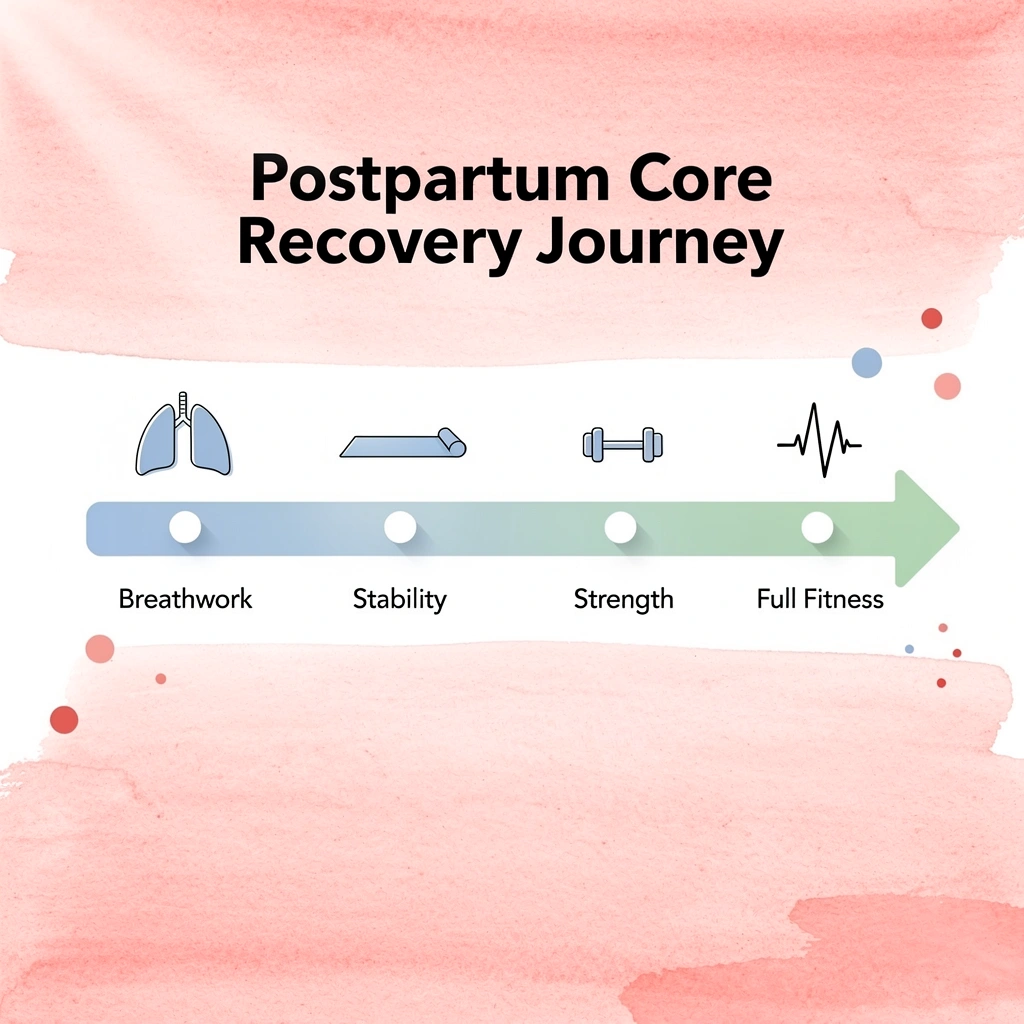
| Recovery Stage | Key Exercises | Primary Goal |
|---|---|---|
| Early Rehabilitation | Diaphragmatic breathing, heel slides | Reconnect with core |
| Mid Recovery | Bird dogs, glute bridges | Rebuild stability |
| Strength Building | BST Lagree, progressive training | Endurance & confidence |
What kind of environment does BST Lagree offer postpartum women?
BST Lagree gives women a fitness space designed to help them reach their goals without feeling intimidated by traditional gyms. Women can train in a supportive environment focused on real, lasting results, rather than navigating crowded workout floors or piecing together random online programs.
Every BST Lagree instructor is certified and completes a rigorous mentorship program to ensure classes are safe, motivating, and effective. For postpartum women, expert guidance is particularly valuable because core training requires careful progression. Understanding when to advance, how to modify movements, and how to challenge the body safely significantly impacts long-term results.
How does Lagree challenge the core differently from traditional workouts?
Unlike traditional workouts where core training is limited to a few exercises at the end, Lagree challenges the core throughout nearly every movement. Whether working legs, arms, glutes, or upper body, the core remains continuously engaged to provide stability and control. A strong core develops through learning to stabilize and support movement throughout the body, not through endless ab workouts.
BST Lagree’s low-impact approach benefits postpartum women seeking to rebuild strength without high-impact stress on recovering joints and connective tissues. The method combines strength and cardio in a challenging way while protecting long-term joint health.
Why is the 45-minute format well-suited for busy moms?
Each 45-minute session combines strength training and cardio into one workout, allowing busy moms balancing childcare and work to make meaningful progress without spending hours exercising.
One limitation of online workout programs is that they often leave women guessing about how to progress. At BST Lagree, we’ve designed a proven system to help women build strength over time. Rather than relying on trial and error, they can focus on showing up, following expert instruction, and progressing safely.
How does community support help women stay consistent and see results?
Having a supportive community is important for staying consistent. It’s easier to stick with your goals when you’re around encouraging instructors and other women with shared objectives. That accountability and motivation help women maintain the consistency needed to see results.
Many women start to feel and see changes within two weeks of regular attendance. Expert coaching, structured programming, and full-body training create an environment that makes progress easier to achieve.
For women ready to move beyond basic postpartum core recovery, BST Lagree offers a more efficient and guided alternative to random online routines. Instead of wondering what exercise to do next, you can follow a system that strengthens your entire body while building a stronger, more functional core after pregnancy.
Book a Lagree Class in London Today
If you’re ready to move beyond basic recovery and build real, lasting strength, lagree in London at BST Lagree offers a structured, high-intensity, low-impact environment designed specifically with women in mind. Our Megaformer challenges your entire body with controlled, slow-twitch resistance that demands deep core engagement without the joint stress that impedes postpartum progress.
“A structured, high-intensity, low-impact environment designed specifically with women in mind: where deep core engagement meets intelligent, controlled resistance.” — BST Lagree
🎯 Key Point: BST Lagree’s Megaformer is not a generic workout. It’s a precision-engineered system built to support postpartum recovery without compromising your joints or progress.
💡 Tip: Low-impact doesn’t mean low results. Slow-twitch resistance training on the Megaformer delivers deeper muscle activation than traditional high-impact methods, making it ideal for women rebuilding core strength after pregnancy.

Book a class at BST Lagree and experience intelligent intensity replacing guesswork. This is the beginning of something stronger.
✅ Best Practice: Don’t wait until you feel “ready” — BST Lagree’s structured classes meet you exactly where you are and guide you toward real, measurable strength from your very first session.
| What You Get at BST Lagree | Why It Matters |
|---|---|
| High-intensity, low-impact training | Protects joints during postpartum recovery |
| Megaformer resistance system | Targets slow-twitch muscle fibers for deep core engagement |
| Women-focused environment | Designed specifically around female physiology |
| Structured class format | Replaces guesswork with intelligent progression |
Related Reading
- Best Postpartum Exercises
- Pilates Exercises For Post Pregnancy
- Best Way To Lose Postpartum Belly Fat
- Postpartum Pilates Workout
- Beginner Postpartum Workout Plan
- How To Lose Pregnancy Belly After 2 Years
- Post Pregnancy Workout Plan
- Best Postpartum Ab Workout
- Best Postpartum Workout App
- Postpartum Gym Workout