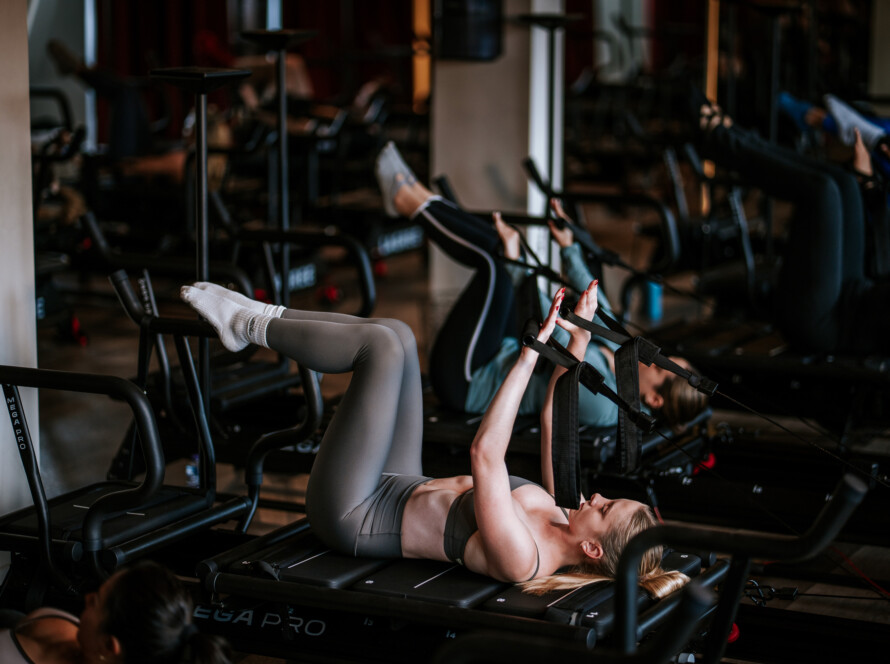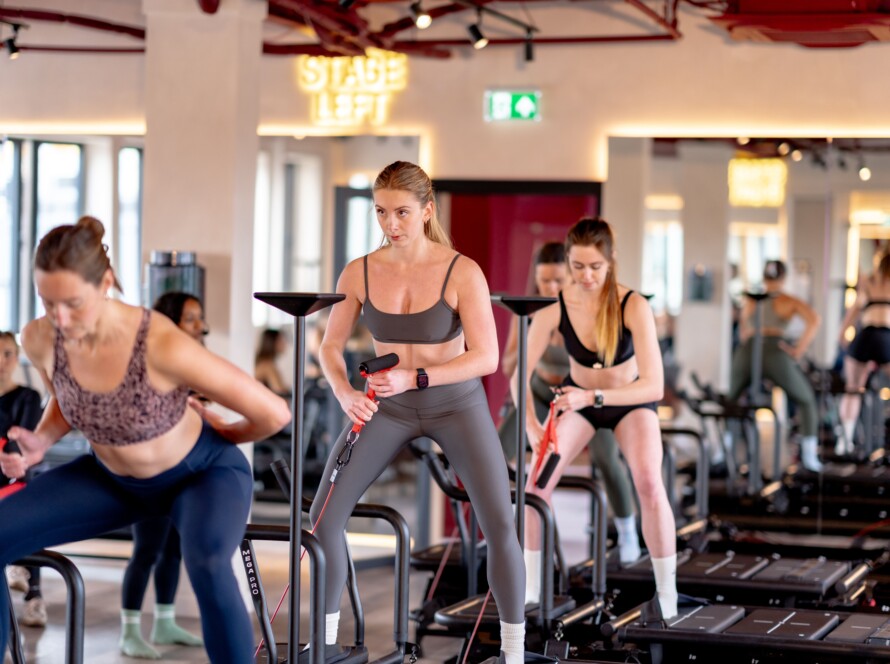
After pregnancy, the core rarely feels like it belongs to the same body. Muscles stretch, shift, and lose their connection, leaving many new mothers unsure where to begin rebuilding strength. The first postpartum workout can feel daunting, particularly when the goal is restoring deep abdominal function without aggravating a body still in recovery.
Postpartum belly exercises work best when they prioritize controlled, low-impact movement that targets the deep core and pelvic floor before adding intensity. This approach reduces the risk of worsening abdominal separation and builds a foundation that supports long-term strength. For new mothers looking for structured, expert-guided training, Lagree in London offers a method built around exactly that kind of thoughtful, progressive recovery.
Table of Contents
- Why Losing the Postpartum Belly Is Not Just About Exercise
- What Causes a Postpartum Belly to Persist?
- Postpartum Belly Exercises to Avoid in the Early Stages
- 7 Best Postpartum Belly Exercises for Rebuilding Core Strength
- What to Look for in a Postpartum Workout Program
- How BST Lagree Helps Women Rebuild Strength After Pregnancy
- Book a Lagree Class in London Today
Summary
- Postpartum belly changes are primarily a structural recovery issue, not a fitness one. Nearly 50% of women still have abdominal muscle separation at six months postpartum, and 100% of pregnant women experience some degree of diastasis recti during pregnancy. A rounded belly that persists after birth often reflects an abdominal wall that has not yet regained the tension needed to hold everything in place, not excess fat storage.
- The wrong exercises can actively slow recovery. Crunches, burpees, and high-impact movements increase intra-abdominal pressure and place downward force on a pelvic floor that is still healing. A 2024 systematic review found that diastasis recti persists in approximately 39% of women at six months postpartum, meaning a significant portion of new mothers are loading a midline that is still in active repair every time they return to familiar workouts too soon.
- Hormones extend the recovery timeline well beyond what most programs acknowledge. Relaxin, the hormone that loosens ligaments during pregnancy, remains elevated for months after birth, particularly in breastfeeding women. The uterus itself takes 6 to 8 weeks to return to its normal size, and during that period, the entire musculoskeletal system remains less stable. High-intensity training during this period places a load on a foundation that is not yet ready to support it.
- Sleep deprivation compounds every physical recovery factor. A 2025 study found that first-time mothers averaged just 4.4 hours of sleep per day in the first postpartum week, with the longest uninterrupted stretch dropping to 2.2 hours. Elevated cortisol from chronic sleep loss slows tissue repair, disrupts hormonal regulation, and reduces the body’s ability to respond to training, meaning a belly that is not shifting despite consistent effort may have less to do with the workouts themselves.
- Deep core stability exercises produce measurable structural results when performed consistently. A randomized controlled trial found that 100% of participants in a deep core stability program showed a significant reduction in inter-recti distance after just 8 weeks. Movements like dead bugs, bird dogs, and diaphragmatic breathing rebuild coordination among the diaphragm, transverse abdominis, and pelvic floor before intensity is added, which is the sequencing that actually closes the gap between rehabilitation and functional strength.
- Program design and qualified instruction matter as much as exercise selection. Lindsay Brunner Physical Therapy’s 2025 postpartum guidelines identify the first six weeks as a critical recovery window before progressing exercise intensity, and the CDC recommends at least two days of muscle-strengthening activity per week without specifying which movements or at what load. That gap is where programming quality and instructor expertise become the deciding factors in whether recovery advances or stalls.
- BST Lagree in London addresses this gap by delivering sustained muscular challenge through slow, spring-based resistance on the Megaformer, which engages the deep core and stabilizing muscles without the compressive forces or impact loading that a postpartum body is not yet ready to absorb.
Why Losing the Postpartum Belly Is Not Just About Exercise
Losing a postpartum belly is a recovery problem, not mainly a fitness one — and those need completely different approaches.
💡 Tip: Before jumping into any postpartum workout plan, understand that your body is in active recovery mode — treating it like a pure fitness challenge can slow your progress or cause injury.
“The postpartum belly is shaped by hormonal shifts, core muscle separation, and internal healing — factors that no amount of crunches can fix on their own.” — Postpartum Recovery Experts
⚠️ Warning: Skipping the recovery-first mindset and going straight to intense exercise is one of the most common — and costly — mistakes new mothers make.
| Recovery Approach | Fitness-Only Approach |
|---|---|
| Addresses hormonal balance | Focuses on calorie burn |
| Heals diastasis recti | May worsen core separation |
| Supports pelvic floor repair | Often neglects internal healing |
| Requires rest and nutrition | Prioritizes workout intensity |

Why is the postpartum belly a structural problem, not a fat problem?
Your body has been structurally reorganized after carrying a baby for nine months. The uterus expanded, the abdominal wall stretched, connective tissue shifted, and hormones rewired the entire musculoskeletal system. According to Hideout Fitness, nearly 50% of women still have abdominal muscle separation at six months postpartum. The belly many women are trying to exercise away is a structural problem, not a fat storage problem; crunches will not fix it. The wrong exercises can worsen diastasis recti by increasing intra-abdominal pressure before the tissue is ready to handle a load.
Does more exercise mean faster results?
It makes sense to want to do more—working hard feels productive. But postpartum recovery doesn’t work the same way as regular fitness training. Your body produces hormones like relaxin, which loosen ligaments during pregnancy. These hormones remain elevated for months after birth, especially if you are breastfeeding. Your joints and connective tissue stay loose and less stable during this time, making intense, high-impact exercise risky.
Why do familiar workouts fall short after birth?
Most new mothers return to familiar workouts—running, gym classes, ab circuits—because they know these tools well. The hidden cost is that these tools were designed for a body that no longer exists in the same form. Our Lagree in London at BST Lagree offers a different path: slow, controlled resistance work on the Megaformer that activates deep stabilizing muscles, including the transverse abdominis and pelvic floor, without the compressive forces that can slow recovery.
What actually drives postpartum belly changes?
Body composition after birth is shaped by sleep deprivation, cortisol levels, hormonal changes, feeding choices, tissue healing, and exercise. You could lose 10 pounds and still have the belly pooch if diastasis recti is not addressed, which fundamentally changes the conversation. The goal is not to burn more calories but to restore the structure that holds everything together. When that foundation is rebuilt, visible changes follow naturally. Most people underestimate the patience this process demands and what happens when the body finally signals it is ready to do more.
Related Reading
- First Postpartum Workout
- When Can I Workout Postpartum
- Is Pilates Good for Postpartum Weight Loss
- Can I Do Pilates 3 Weeks Postpartum
- Bird Dog Exercise Postpartum
- Postpartum Glute Bridge Exercise
- Postpartum HIIT Workout
- Postpartum Kettlebell Workout
- Postpartum Dumbbell Workout
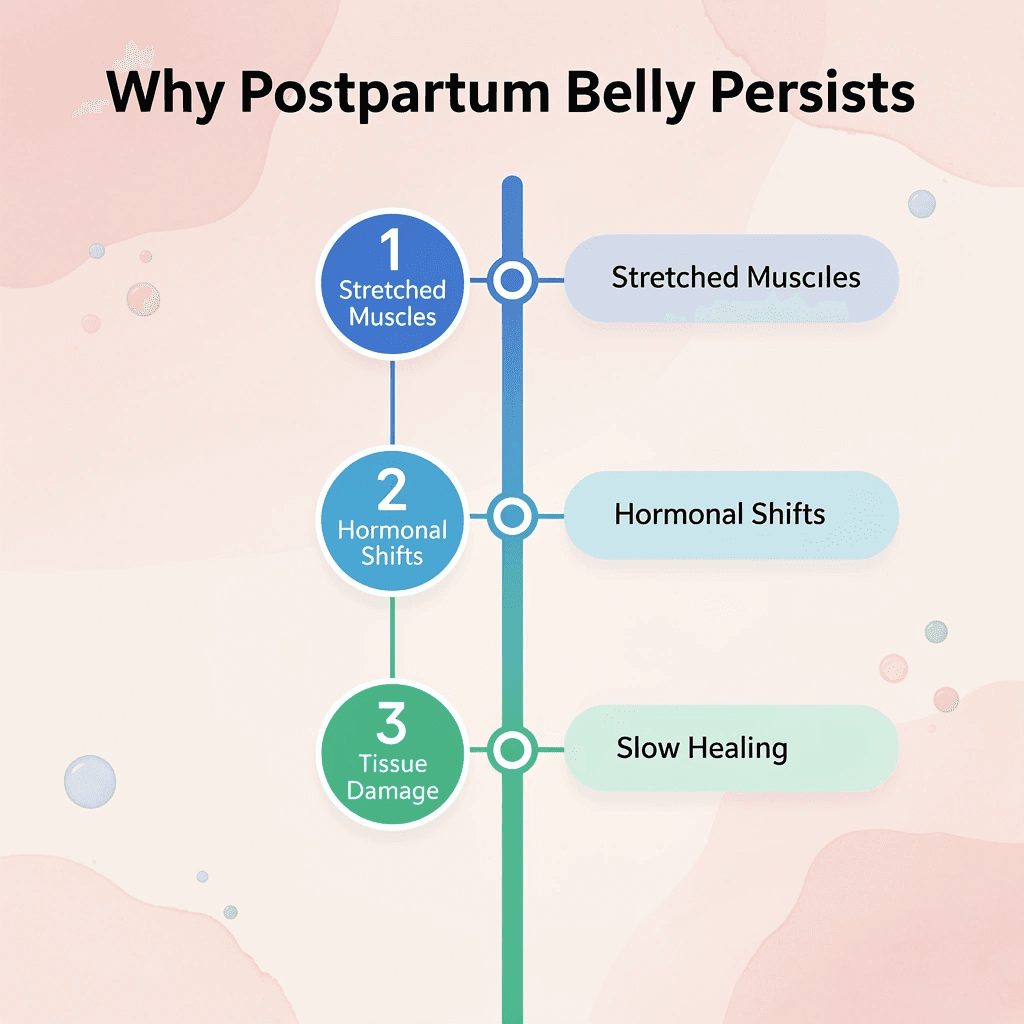
What Causes a Postpartum Belly to Persist?
Being patient during recovery after giving birth means letting your body heal before pushing yourself too hard. The body signals readiness, but only if you understand what was actually damaged — and ignoring those signals can lead to serious setbacks in your postpartum journey.
“The postpartum body undergoes massive structural changes during pregnancy and birth — rushing recovery without understanding the damage is one of the most common mistakes new mothers make.” — Postpartum Health Experts
💡 Tip: Your body will tell you when it’s ready to return to movement — learning to listen to those signals is the most critical step in postpartum recovery.
⚠️ Warning: Pushing too hard, too soon can worsen core damage, delay healing timelines, and increase the risk of long-term complications like diastasis recti or pelvic floor dysfunction.
| What Was Damaged | Why It Matters for Recovery |
|---|---|
| Abdominal muscles | Stretched and separated during pregnancy |
| Pelvic floor | Strained during labor and delivery |
| Connective tissue | Weakened by hormonal and physical changes |
| Core stability | Compromised, requiring gradual rebuilding |
Does abdominal separation affect every postpartum woman?
According to The Bloom Method, all pregnant women experience some degree of abdominal muscle separation, a normal starting point rather than a risk factor. What varies is the severity of separation, the way surrounding tissue responds, and the healing duration. A rounded belly six months after pregnancy often reflects body structure rather than fat storage: the abdominal wall lacks the tightness needed to hold everything in place.
How long does structural healing actually take?
Research from The Bloom Method shows that diastasis recti affects up to 60% of women after giving birth. A study in the British Journal of Sports Medicine found nearly one in three women still had measurable abdominal separation at twelve months postpartum. This timeline reshapes our understanding of progress: feeling stronger at eight weeks doesn’t mean the muscles are fully healed. The difference between functional strength and structural healing is significant, and most recovery plans don’t address this gap.
Why hormones slow the timeline more than most people realize
Your uterus needs 6 to 8 weeks to return to normal size after delivery. During this time, your body manages hormonal shifts, connective tissue repair, and changes in intra-abdominal pressure. Relaxin, the hormone that loosened ligaments throughout pregnancy, doesn’t switch off at birth. Joints and connective tissue remain more flexible than usual, so loading them too aggressively before stability is restored can set recovery back rather than push it forward.
The common approach treats the postpartum belly as a fitness problem and reaches for the most intense option available. High-impact classes, heavy lifting, and aggressive cardio load a system still rebuilding its foundation. Women who train at BST lagree find a different entry point: the Megaformer’s spring-based resistance creates full-body intensity without the compressive forces that recovering tissue cannot handle. High effort without high impact fits where the body actually is in early recovery.
How does sleep deprivation slow postpartum recovery?
Physical recovery is already difficult. Add insufficient sleep, and your body’s ability to repair itself slows considerably. A 2025 study tracking first-time mothers found they averaged 4.4 hours of sleep per day in the first week after giving birth, with the longest uninterrupted sleep dropping to 2.2 hours. When sleep decreases, cortisol rises, and elevated cortisol impairs tissue repair, hormone regulation, and exercise response. A postpartum belly that isn’t changing despite consistent workouts often reflects what happens during sleep rather than during the workouts themselves.
Why is postpartum recovery different for every person?
Getting better after having a baby is not the same for everyone. How the baby was born, your genes, how fit you were before pregnancy, how well your pelvic floor works, and how much sleep you get all affect recovery in ways no single program can fully predict. Understanding why your belly changes is only part of the answer; what you do with that understanding matters equally.
Postpartum Belly Exercises to Avoid in the Early Stages
Crunches seem like the obvious place to start—they target the abs and look like they should work. The real problem is that this logic doesn’t apply to a body that just grew and delivered a human being.
“The postpartum body requires intentional recovery — jumping into high-intensity core exercises too soon can cause more harm than healing.” — Pelvic Health Specialists
⚠️ Warning: Crunches and sit-ups are among the most common postpartum mistakes new moms make. These movements place excessive pressure on a healing core and can worsen conditions like diastasis recti — a separation of the abdominal muscles that affects a significant number of postpartum women.
💡 Tip: Before returning to any core exercise, consult your healthcare provider or pelvic floor therapist to assess your core stability and muscle recovery — especially in the first 6–12 weeks postpartum.
| Exercise | Why to Avoid Early Postpartum |
|---|---|
| Crunches | Increases intra-abdominal pressure, worsens diastasis recti |
| Sit-ups | Strains the healing core and pelvic floor |
| Leg raises | Places intense load on a weakened abdominal wall |
| Planks | Can cause coning or doming in the midsection |
Why familiar exercises can work against you
The abdominal wall after birth is not simply “weak.” It has been stretched, separated, and reorganized under hormonal influence that loosened connective tissue throughout the body. According to a 2024 systematic review and meta-analysis published in PMC, diastasis recti abdominis affects up to 100% of women at 35 weeks of gestation and persists in approximately 39% at 6 months postpartum. Loading a crunch onto a midline that hasn’t regained tension pressurizes a structure still trying to close rather than training the core. The doming or ridge along your abdomen during a sit-up signals that the exercise exceeds what the tissue can currently handle.
Why does high-impact movement carry real risk so soon after birth?
High-impact movements carry significant risk. Running, jump squats, burpees, and box jumps create substantial downward force through the pelvic floor, which is still recovering from pregnancy and delivery. ACOG’s Committee Opinion on physical activity during the postpartum period notes that women with uncomplicated vaginal deliveries may begin pelvic floor exercises within the first few days after delivery, with a gradual return to exercise over four to six weeks. The pelvic floor works with your diaphragm, deep abdominals, and spinal stabilizers on every rep. Push it too hard, too soon, and you’ll experience pressure, leaking, or that heavy, unsettled feeling that signals something is wrong.
What does the postpartum body actually need instead?
Most women who start intense workouts too early after having a baby follow the same fitness logic that worked before pregnancy, but apply it to a body that no longer operates by those rules. The postpartum body is not undertrained—it is under-stabilized. That difference matters more than almost anything else in early recovery.
Lagree in London approaches this differently. Rather than asking a recovering body to absorb impact or generate force through an unstable core, our Megaformer creates resistance through slow, controlled movement that demands deep muscular engagement without compressive loading. It builds the stability layer first: the coordination between breath, core, and pelvic floor, before intensity is layered on top. This sequencing is not a modification—it is the method.
Warning signs worth taking seriously
Your body sends clear messages when an exercise exceeds its current capacity. Bulging or doming along the midline, breath-holding during movement, pelvic heaviness, urinary leakage, or lower back discomfort during core work indicates you’ve progressed faster than your tissue has healed. These signs don’t mean permanent damage—they mean your foundation isn’t ready to support the load. Backing down is the fastest way forward. The exercises that rebuild a postpartum core are less dramatic than most people expect, and this gap between expectation and reality determines whether recovery succeeds or stalls.
7 Best Postpartum Belly Exercises for Rebuilding Core Strength
Rebuilding your postpartum core requires exercises that focus on control over intensity and stability over speed. The seven movements below form a progressive sequence, with each one building the foundation for the next.
💡 Tip: Always prioritize form and breath control over reps or resistance — especially in the early postpartum weeks. Your core needs reconnection, not punishment.
“Postpartum core recovery is not about bouncing back — it’s about building forward with intention, patience, and the right progressive movements.” — Pelvic Health Specialists
⚠️ Warning: Never skip the foundational steps in this sequence. Jumping ahead to high-intensity movements before your core is ready can worsen conditions like diastasis recti or pelvic floor dysfunction.
| Exercise Level | Focus | Key Benefit |
|---|---|---|
| Beginner | Breath & activation | Reconnects deep core muscles |
| Intermediate | Stability & control | Builds functional strength |
| Advanced | Strength & endurance | Restores full core capacity |

🎯 Key Point: This 7-exercise progression is designed so that each movement unlocks the next — skipping steps means missing the critical foundation your postpartum body needs to heal safely and rebuild lasting core strength.
1. Diaphragmatic Breathing
Most people skip diaphragmatic breathing because it doesn’t look like exercise, which is why many postpartum recovery programs stall. Diaphragmatic breathing reconnects the diaphragm, deep abdominals, and pelvic floor as a coordinated system, restoring the pressure management your core lost during pregnancy. Without this foundation, every exercise above it is built on unstable ground.
How do you perform diaphragmatic breathing correctly?
Lie on your back or sit upright with one hand on your chest and one on your abdomen. Breathe in through your nose and let your belly and rib cage expand outward. Breathe out slowly while gently drawing the deep abdominal muscles inward; the movement should feel like a wave, not a grip.
2. Pelvic Tilts
Pelvic tilts teach your body where the neutral spine is and why it matters. After months of carrying extra weight forward, the pelvis often tilts forward, compressing the lower back and disengaging the deep core muscles that should stabilize. This movement reverses that pattern. Lie on your back with knees bent and feet flat. Exhale as you gently flatten your lower back against the floor by tilting your pelvis, then return slowly to neutral. The goal is awareness and control, not range of motion: two things that disappear during pregnancy and require deliberate practice to rebuild.
3. Heel Slides
The problem in early postpartum core training is adding weight before stability is built. Heel slides add movement without adding pressure: one leg slides slowly away from the body while the core keeps the pelvis completely still. Begin lying on your back with both knees bent and core gently engaged. Slide one heel along the floor until the leg is nearly straight, then return. If your lower back arches or your abdomen domes, the movement has exceeded your current capacity. Stop, reset, and try a shorter range.
4. Glute Bridges
Weak glutes after having a baby and lower back pain both stem from underusing your posterior chain. You can learn more about the posterior chain to better understand this. Glute bridges address both issues: strong glutes reduce strain on your lower back during daily movement, and the hip-hinge pattern supports lifting, carrying, and rising from the floor. Lie on your back with your feet about hip-width apart. Push through your heels and lift your hips until your body forms a straight line from your knees to your shoulders. Pause at the top, then lower yourself with control. Avoid excessive lower back arching; you should feel the work in your glutes, not your spine. Learn more about the lower back arch to ensure proper form.
5. Bird Dogs
Bird dogs train your core to resist rotation, exactly what daily life demands when carrying a baby on one hip, reaching across your body, or climbing stairs. This exercise rebuilds that capacity in a controlled, low-load environment before real-world demands test it. Start on your hands and knees with a neutral spine. Extend one arm and the opposite leg simultaneously, keeping your hips level and your back flat. Move slowly and hold briefly. The moment your hips shift or your lower back arches, your range of motion is reduced. Smaller range, better control.
6. Dead Bugs
According to a randomized controlled trial published in the PMC research database, 100% of participants in a deep core stability exercise program showed a significant reduction in inter-recti distance after 8 weeks of training. Dead bugs load the deep abdominals under controlled limb movement without placing direct pressure on the midline.
How do you perform a dead bug correctly?
Lie on your back with your arms extended toward the ceiling and your knees bent at 90 degrees. Engage your core. Lower one arm and the opposite leg toward the floor, keeping your lower back pressed flat. Return to the starting position and alternate sides. If your back lifts or your abdomen domes outward, stop: the load has exceeded your current deep core capacity.
Why do dead bugs bridge the gap between rehab and gym training?
Women who have recently given birth often finish pelvic floor physical therapy feeling stronger, then struggle when returning to gym-level training. Dead bugs bridge that gap: they challenge women who were previously fit while remaining controlled enough to protect healing tissue. BST Lagree in London takes a different approach: our Megaformer’s spring-based resistance system delivers high-intensity muscle engagement without the joint loading or intra-abdominal pressure spikes of traditional gym movements. For women rebuilding core strength after delivery, that distinction matters.
7. Modified Planks
Modified planks require everything the previous six exercises built: breathing mechanics, pelvic stability, glute activation, anti-rotational control, and deep core endurance. Performed too early, they reinforce compensation patterns. Performed at the right time, they bring everything together.
How do you perform a modified plank correctly?
Start with an incline plank against a wall or bench, or a plank from your knees on the floor. Keep a straight line from your shoulders to your knees. Breathe steadily throughout. Stop immediately if you notice abdominal doming, lower back strain, or breath-holding. How well you hold the position is what matters.
Why does timing matter before progressing to this exercise?
BabyCenter reports that up to 60% of women experience diastasis recti after pregnancy. Performing this exercise without a strong foundation can significantly slow your recovery.
Progress Is Built, Not Rushed
The seven exercises above are not a shortcut; they are a sequence. Each one earns the next: diaphragmatic breathing earns pelvic tilts; pelvic tilts earn heel slides. The chain continues until modified planks become accessible without compensation. Skipping steps does not save time; it creates setbacks that cost weeks, not days.
Why do the least impressive exercises do the most structural work?
Functional goals—lifting without back pain, carrying a baby without hip instability, returning to sport with confidence—are built on this foundation. The exercises that look least impressive on paper often do the most structural work underneath. That gap between expectation and actual recovery is where most programs lose women and where the right program keeps them. Knowing which exercises to do is only half the equation.
Related Reading
- Kegel Exercises Postpartum
- Postpartum Strength Workout
- Postpartum Diastasis Recti Workout
- Easy Postpartum Workout
- Postpartum Arm Workout
- Postpartum Full Body Workout
- Postpartum Core Workout
- 6 Week Postpartum Workout Plan
- Postpartum Pelvic Floor Exercises
- Postpartum Workout Plan At Home
- Pilates Exercises For Post Pregnancy
- Postpartum Diastasis Recti Workout
- Postpartum Pelvic Floor Exercises
- Postpartum Belly Exercises
What to Look for in a Postpartum Workout Program
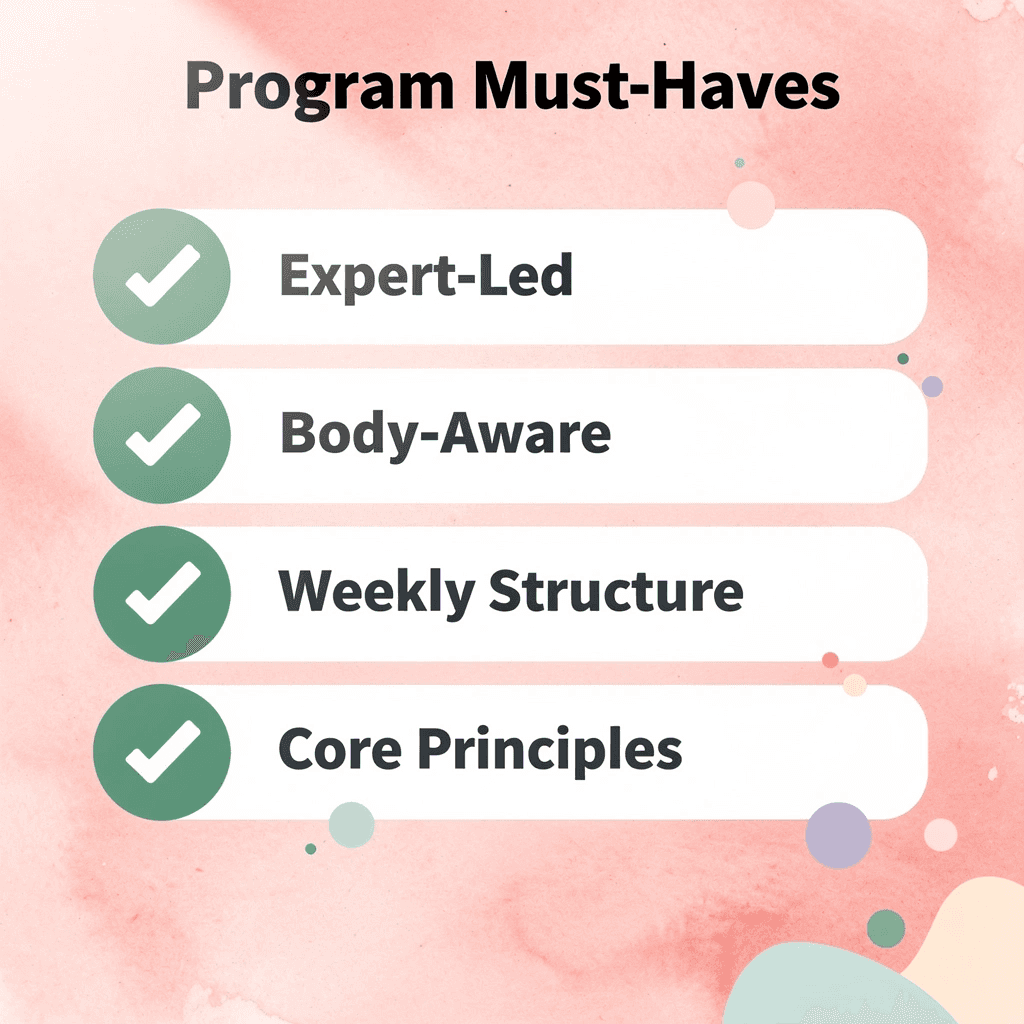
The harder part of postpartum recovery is finding a program built around the right principles, led by people who truly understand what a postpartum body needs, and structured in a way you can realistically follow week after week.
“The best postpartum workout program isn’t the most intense one — it’s the one built for your body’s specific recovery needs and structured so you can actually stick with it.” — Postpartum Fitness Principle
💡 Tip: When evaluating a postpartum workout program, look for three non-negotiables: qualified instructors, progressive structure, and realistic scheduling that fits your life as a new parent.
| What to Look For | Why It Matters |
|---|---|
| Qualified postpartum instructor | Ensures exercises are safe for healing bodies |
| Progressive weekly structure | Builds strength gradually without overloading recovery |
| Core & pelvic floor focus | Addresses the most critical postpartum recovery areas |
| Realistic time commitment | Makes it possible to stay consistent week after week |
⚠️ Warning: Avoid programs that treat postpartum fitness as simply a return to pre-pregnancy workouts — your body has undergone significant changes that require a specialized, intentional approach.
What the program prioritizes tells you everything
A program’s values show up in its design. If the first thing it promises is a flatter stomach or a faster return to your pre-pregnancy weight, that’s worth noting. Programs built for genuine recovery lead with function: restoring deep core stability, rebuilding pelvic floor coordination, and progressing load only when the body is ready. The difference between a program that helps and one that hinders often comes down to whether it treats your abdominal wall as something to flatten or something to rehabilitate.
Without a structured, progressive framework, postpartum women who piece together workouts from multiple sources often skip foundational work that makes everything else possible. According to Lindsay Brunner Physical Therapy’s 2025 guidelines for exercise in the first year postpartum, the first six weeks represent a critical recovery window before progressing exercise intensity. Program sequencing matters as much as content.
Does the method match the moment?
Most postpartum women return to familiar exercise: group fitness classes, running, or gym circuits from before pregnancy. These were not designed for a recovering pelvic floor or healing abdominal wall, and making them easier does not automatically make them appropriate. Movements that feel manageable can quietly overload tissues still rebuilding strength. Low-impact does not mean low-intensity, and that distinction matters enormously. A method that delivers real muscular challenge without repetitive joint loading is not a lesser version of fitness; it is a more precise one.
That precision draws postpartum women to Lagree in London. The Megaformer’s slow, controlled resistance work places sustained demand on the deep core, glutes, and stabilizing muscles without the impact forces that stress a recovering pelvic floor. It aligns with what postpartum recovery requires: progressive overload, full-body integration, and load management that respects the body’s current state.
Qualified instruction changes the outcome
The CDC recommends at least two days per week of muscle-strengthening activities for postpartum women, though the guideline doesn’t specify which movements, intensity, or technique. A program led by someone who understands postpartum biomechanics, breathing mechanics, and pelvic floor function can catch subtle signs of overloading that a generic class instructor would miss. This distinction separates a program that moves you forward from one that merely tires you out. The right program meets you where you are, moves you forward steadily, and is led by someone who can distinguish between productive challenge and counterproductive strain. That environment makes recovery safer and something you want to show up for. And what happens when you find that environment and feel ready to take the first step?
How BST Lagree Helps Women Rebuild Strength After Pregnancy
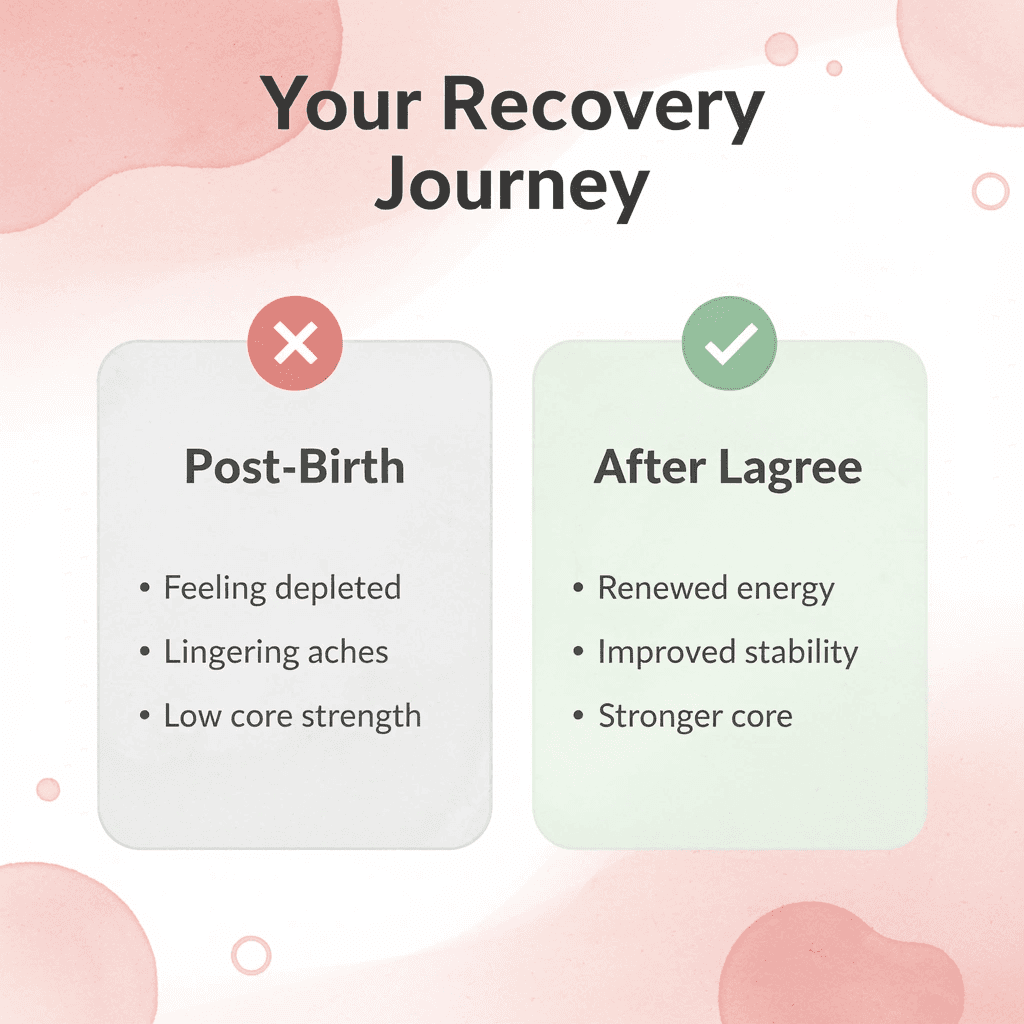
Getting your body back after pregnancy means so much more than aesthetics — it means building up your strength, having more energy, feeling good about yourself, and being truly comfortable in your body again. There is a lot of different fitness advice online, so many women decide to work with a professional or follow a structured plan instead of trying to figure out postpartum fitness on their own.
“Postpartum recovery is not just physical — it’s about rebuilding confidence, strength, and energy from the inside out.” — Postpartum Fitness Experts
💡 Tip: Working with a structured program designed specifically for postpartum recovery removes the guesswork and helps you progress safely and effectively.
🎯 Key Point: Postpartum fitness is not one-size-fits-all. The right approach focuses on rebuilding core strength, restoring energy levels, and supporting your overall well-being — not just losing weight.
| Postpartum Goal | Why It Matters |
|---|---|
| Rebuilding strength | Supports daily movement and reduces injury risk |
| Boosting energy | Helps you keep up with the demands of new motherhood |
| Improving confidence | Reconnects you with your body on your own terms |
| Structured guidance | Removes guesswork and ensures safe progression |
What kind of environment does BST Lagree offer postpartum women?
BST Lagree provides a supportive environment where women build strength without pressure to meet unrealistic expectations. Our studio offers a welcoming space designed to help women progress at their own pace.
How does Lagree combine intensity with joint-friendly movement?
BST Lagree combines intensity with joint-friendly movement. Unlike traditional high-impact workouts that rely on jumping, BST Lagree uses slow, controlled movements under constant resistance, allowing participants to challenge their muscles while reducing joint impact. This makes it an effective alternative for women rebuilding strength after pregnancy.
What does a 45-minute BST Lagree workout include?
BST Lagree’s 45-minute workouts combine strength training, muscular endurance, balance, flexibility, and cardiovascular conditioning into a single session, making it easier to fit exercise into a busy schedule while achieving meaningful results.
Why is resistance-based movement valuable for postpartum recovery?
Resistance training rebuilds strength, supports healthy movement patterns, and improves overall function. BST Lagree’s resistance-based approach emphasizes controlled movement and muscular engagement rather than momentum, challenging the entire body while remaining gentle on joints, especially for women returning to fitness.
How does BST Lagree accommodate different recovery stages and fitness levels?
No two postpartum journeys are the same. BST lagree classes can be modified to fit different fitness levels and recovery stages, allowing participants to work within their current abilities and support safe, sustainable progress.
What role do certified instructors play in the BST Lagree experience?
BST Lagree instructors complete rigorous certification and mentorship to ensure they understand proper technique, exercise progression, and class coaching. Their expertise helps participants perform movements safely and effectively while building confidence, particularly valuable for women returning to exercise after pregnancy.
How does BST Lagree support motivation and long-term consistency?
BST Lagree fosters a positive atmosphere where participants feel supported as they make progress. Rather than seeking quick fixes, the approach emphasizes consistent effort, building strength, and celebrating improvements. This supportive environment helps women stay motivated and committed to their goals. Results come from consistency rather than perfection. Women who commit to regular Lagree training often notice improvements in strength, endurance, posture, balance, and overall fitness. BST Lagree encourages a sustainable approach that supports long-term progress instead of extreme workouts or rapid transformations.
Why do many postpartum women choose structured guidance over online programs?
Getting better after having a baby can feel overwhelming when navigating advice from social media and online programs. A clear plan removes that confusion. Instead of wondering which exercises to do or if you’re making progress, women can follow a system supported by professionals. For many, the combination of expert coaching, solid programming, and community makes BST Lagree a valuable partner in rebuilding strength after pregnancy.
Book a Lagree Class in London Today
Book a class at BST Lagree to rebuild core strength through a method specifically designed for postpartum recovery. Our Megaformer introduces a full-body workout that works your deep abdominals, glutes, and stabilizers without the impact your postpartum body isn’t ready to handle.
“The Megaformer targets deep stabilizing muscles that conventional gym equipment simply cannot reach — making it one of the most effective tools for postpartum rehabilitation.” — BST Lagree
🎯 Key Point: The Megaformer delivers a low-impact, high-precision workout — exactly what your body needs in the postpartum phase.
| What BST Lagree Targets | Why It Matters Postpartum |
|---|---|
| Deep abdominals | Rebuilds core integrity after pregnancy |
| Glutes & stabilizers | Restores pelvic and spinal support |
| Full-body engagement | Prevents muscle imbalances |
| Zero high-impact movement | Protects a body still in recovery |
Women training at BST Lagree notice real changes in how they feel and move within weeks. Led by Europe’s most experienced Lagree trainer, every class targets the right muscles with the right intensity because real results come from precision, not punishment.
💡 Tip: Consistency matters—even one to two classes per week produces noticeable improvements in strength, posture, and core stability within your first month.
✅ Best Practice: Trust the process. Lagree’s slow, controlled movements are intentionally challenging. The burn you feel signals your deep muscles activating, not a sign to push harder.
Related Reading
- Best Postpartum Exercises
- Pilates Exercises For Post Pregnancy
- Best Way To Lose Postpartum Belly Fat
- Postpartum Pilates Workout
- Beginner Postpartum Workout Plan
- How To Lose Pregnancy Belly After 2 Years
- Post Pregnancy Workout Plan
- Best Postpartum Ab Workout
- Best Postpartum Workout App
- Postpartum Gym Workout