Rebuilding core strength after having a baby is a top priority for many new mothers, but knowing where to begin is rarely straightforward. Your first postpartum workout sets the tone for recovery, and choosing the right ab exercises can make the difference between real progress and a potential setback. The best postpartum moves focus on deep core activation rather than surface-level effort, helping the body heal and strengthen from the inside out.
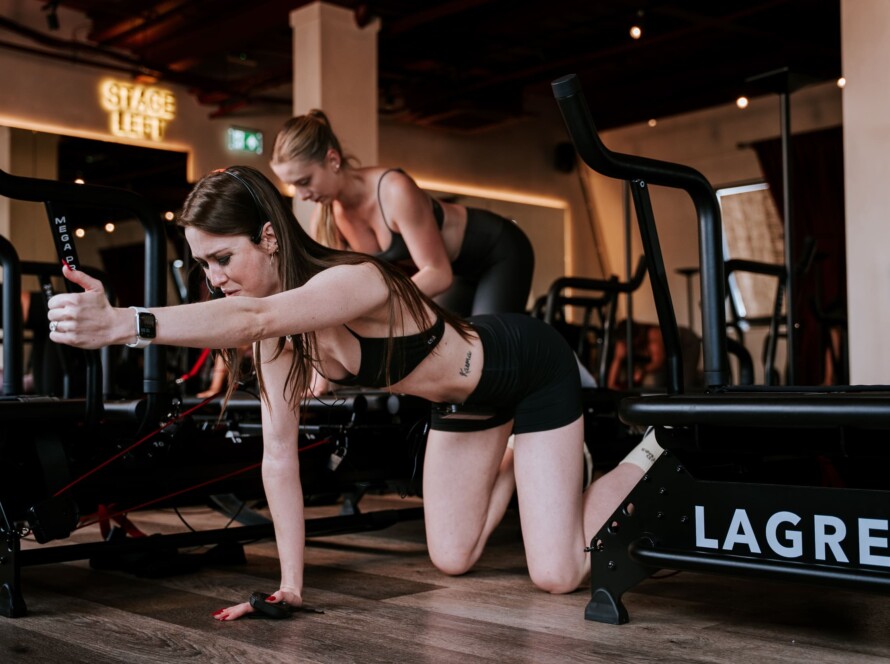
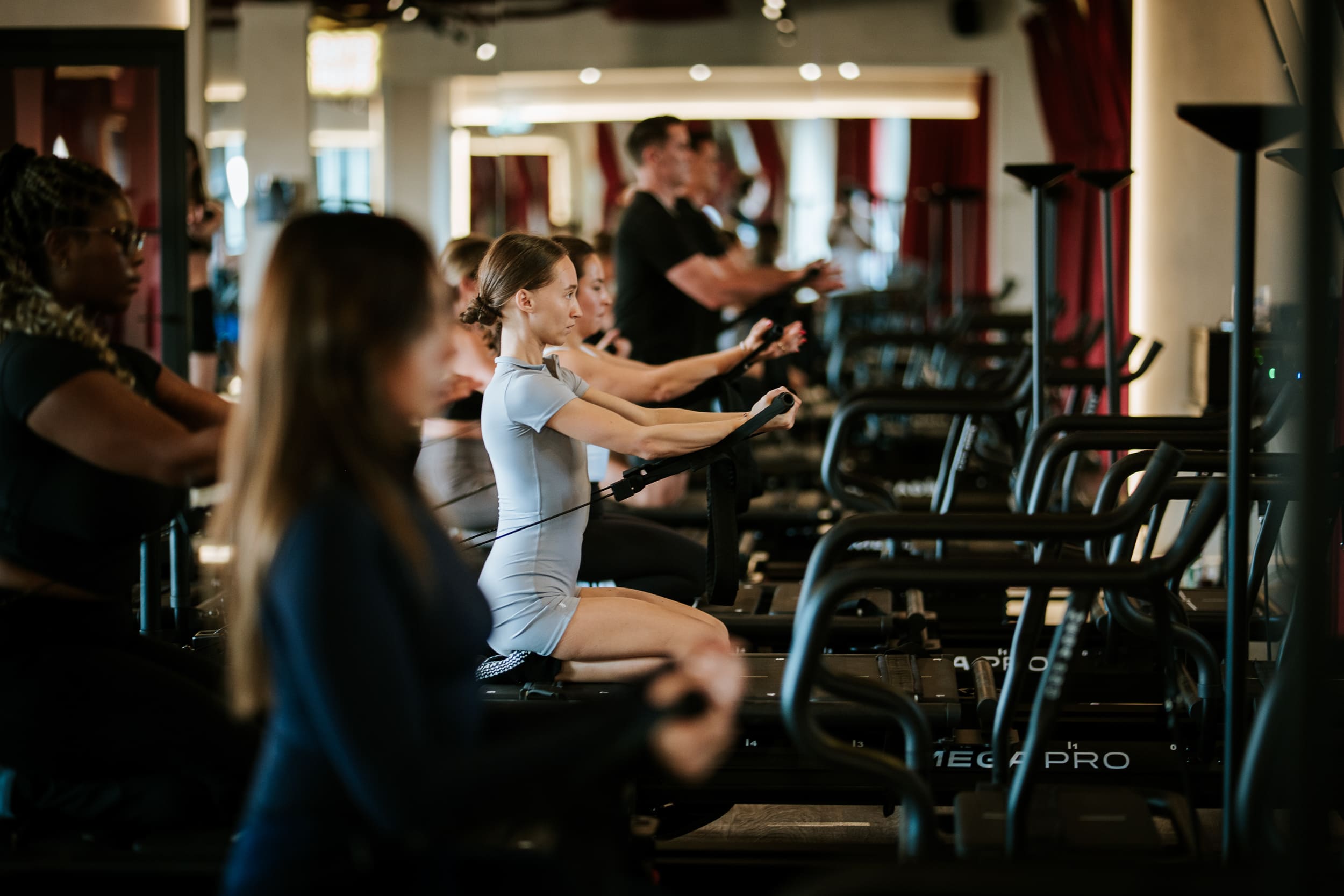
For mothers who want a structured, low-impact approach to rebuilding abdominal strength, the Lagree method offers slow, controlled movements that target exactly the deep core muscles the postpartum body needs to rebuild. It provides a clear, progressive path from gentle activation to lasting strength without placing unnecessary strain on a recovering body. New mothers in the UK can take that first step toward real results with lagree in London.
Table of Contents
- Why Finding the Best Postpartum Ab Workout Is Hard
- Why Postpartum Ab Workouts Can Go Wrong
- What Makes a Postpartum Ab Workout Effective?
- 8 Best Postpartum Ab Exercises to Rebuild Core Strength
- How to Build a Postpartum Core Routine That Fits Your Recovery
- How BST Lagree Helps Women Rebuild Strength After Pregnancy
- Book a Lagree Class in London Today
Summary
- Postpartum core recovery is harder to get right than most fitness content suggests, and the difficulty is structural, not motivational. Up to 100% of pregnant women experience some degree of diastasis recti by the third trimester, meaning virtually every postpartum body arrives at recovery with an abdominal wall that has been physically stretched and separated. Exercises that feel manageable, like crunches, sit-ups, and leg raises, can increase intra-abdominal pressure in ways that worsen this condition and strain the pelvic floor before it has recovered.
- Low participation rates in postpartum exercise reflect confusion, not a lack of effort. Research published in 2025 found that only 34.5% of postpartum women exercised during the postpartum period. When guidance is contradictory, and the consequences of getting it wrong feel significant, inactivity can seem like the safer choice, even though prolonged inactivity works against recovery.
- Diastasis recti is more common than many new mothers realize, and no single exercise fixes it. A 2024 systematic review and meta-analysis found that diastasis recti abdominis affects approximately 30 to 60% of women during the postpartum period, and the research does not point to one universally superior exercise for addressing it. The evidence instead supports a progressive approach that integrates deep abdominal muscles, pelvic floor function, and breathing strategies rather than treating them as separate concerns.
- The pelvic floor is part of the same system as the abdominal muscles, and training one while ignoring the other limits recovery. The same 2024 meta-analysis found that pelvic floor muscle training significantly improved urinary incontinence symptoms in up to 70% of postpartum women. Separately, research on maximizing postpartum recovery found that pelvic floor muscle training reduces urinary incontinence by up to 56%, signaling how responsive this system is when it receives direct, appropriate training.
- The timeline for returning to movement after childbirth is wider than most new mothers expect. ACOG guidance indicates that women can resume exercise as early as a few days after an uncomplicated vaginal delivery, and recommends accumulating at least 150 minutes per week of moderate-intensity aerobic activity across shorter sessions, including bouts as brief as 10 minutes. That flexibility matters considerably when a newborn, not a gym schedule, governs the day.
- Effective postpartum core training follows a specific sequence: breathing mechanics and deep core activation first, then functional stability, then strength under load. Most generic workout content skips the first two stages entirely, where most setbacks begin. BST Lagree’s Lagree in London addresses this with slow, controlled Megaformer movements that engage deep stabilizing muscles without the intra-abdominal pressure spikes conventional ab exercises can create too early in recovery.
Why Finding the Best Postpartum Ab Workout Is Hard
Getting your core strength back after having a baby is hard because your body after childbirth works fundamentally differently than it did before, and most fitness advice was never made with that in mind.
“The postpartum body undergoes profound structural and hormonal changes that make standard fitness programming not just ineffective — but potentially harmful without proper modification.” — Medical Perspective on Postpartum Recovery
⚠️ Warning: Generic workout programs are designed for the average body — not a postpartum one. Following standard core advice too soon can worsen conditions like diastasis recti and pelvic floor dysfunction.
💡 Tip: Before starting any postpartum ab routine, understand that your core system — including your pelvic floor, deep abdominals, and diaphragm — needs a specialized approach, not a one-size-fits-all fix.
| Challenge | Why It Makes Postpartum Fitness Harder |
|---|---|
| Body changes after birth | Core muscles are stretched, weakened, and structurally altered |
| Generic fitness advice | Built for pre-pregnancy bodies with no postpartum modifications |
| Hormonal shifts | Affect joint stability, muscle recovery, and overall readiness to train |

Why does diastasis recti make standard ab exercises risky?
According to the Exakt Health Blog on core training after pregnancy, up to 100% of pregnant women experience diastasis recti by the third trimester. Your abdominal wall enters the postpartum period physically stretched and separated. Traditional ab exercises that don’t account for this condition don’t rebuild your core; they put pressure on a structure unprepared for that load.
Most new mothers search for the “best postpartum ab workout,” find a routine they can handle, and start. But exercises like crunches, sit-ups, and leg raises increase abdominal pressure in ways that worsen diastasis recti and strain the unhealed pelvic floor. The problem isn’t effort—it’s timing and exercise order.
Why do so many postpartum women end up doing nothing at all?
Research published in a 2025 assessment of postpartum exercise practices found that only 34.5% of postpartum women exercised during the postpartum period. This gap reflects unclear and contradictory guidance. When conflicting information abounds, and your body sends confusing signals, doing nothing can feel safer than risking the wrong choice.
What does the right postpartum ab progression actually look like?
Postpartum abdominal recovery requires a specific progression: breathing mechanics and deep core activation first, then functional stability, then strength under load. Most generic workout content skips the first two stages. Studios like BST Lagree in London use slow, controlled Megaformer movements that engage deep stabilizing muscles without spiking the pressure that impedes pelvic floor recovery. Success depends on working in the right sequence, with appropriate resistance, at the correct depth.
Finding the best postpartum ab workout is difficult because the question assumes a universal answer exists. There isn’t one. What works at six weeks differs from twelve weeks, and what’s appropriate after vaginal birth differs from a cesarean. The real skill is understanding which stage of recovery you’re in and choosing movement that meets you there.
Why Postpartum Ab Workouts Can Go Wrong
After-pregnancy ab training has specific points where you might struggle that aren’t immediately clear until you’ve already gone past them — and that’s exactly what makes postpartum core recovery so uniquely risky.
⚠️ Warning: Many new moms dive back into ab workouts too soon, not realizing the hidden dangers that can set their recovery back weeks or even months.
💡 Tip: Understanding why postpartum ab training can go wrong is the first — and most critical — step toward doing it safely and effectively.
“Returning to core exercise without proper guidance is one of the most common postpartum mistakes — and one of the most consequential for long-term recovery.” — Pelvic Health Specialists
| What You Expect | What Can Actually Happen |
|---|---|
| Fast return to pre-baby fitness | Diastasis recti worsening |
| Flat stomach from crunches | Increased intra-abdominal pressure |
| Feeling stronger quickly | Pelvic floor dysfunction |
🔑 Takeaway: The postpartum body is fundamentally different — and treating it like a standard fitness comeback is where most ab workouts go wrong.

The problem with intensity as a proxy for progress
After having a baby, training isn’t about demonstrating how much hard work you can handle. The toughest ab workout won’t deliver the fastest results—rebuilding strength as your body recovers requires a different approach.
The problem usually happens this way: women return to exercises they did before pregnancy, using their pre-baby routine as a starting point rather than a goal they may not be ready for. For anyone recovering from a cesarean section, belly wound healing adds a constraint that motivation cannot override. Current expert guidance is clear: gradual progression isn’t cautious, it’s necessary.
Why crunches alone won’t rebuild your core
Your abdominal muscles work together with the muscles that support your pelvis and spine, your breathing patterns, and your deep stabilizer muscles. Research on strengthening abdominal muscles after pregnancy consistently examines programs that integrate deep and superficial abdominal muscles, pelvic floor function, and breathing strategies. More crunches do not build a stronger core after pregnancy.
What does the evidence say about diastasis recti recovery?
According to a 2024 systematic review and meta-analysis, diastasis recti abdominis affects 30 to 60% of women after childbirth. No single exercise emerges as clearly superior for treatment. The evidence supports a thoughtful, progressive approach tailored to your current physical state.
Why does the pelvic floor matter when training your abs?
The pelvic floor is part of the same system you’re rebuilding, and ignoring it while training your abs is like reinforcing one wall while the foundation stays unsupported. The same 2024 meta-analysis found that pelvic floor muscle training significantly improved urinary incontinence symptoms in up to 70% of postpartum women. Women who approach postpartum recovery through Lagree in London find that the Megaformer’s slow, controlled resistance work naturally combines trunk stability and deep core engagement without the joint load or intra-abdominal pressure spikes that conventional ab exercises can create early in recovery.
Aesthetics versus actual strength
Chasing a smaller stomach instead of rebuilding functional strength is the most understandable and limiting mistake in postpartum fitness. Your core contributes to posture, movement efficiency, and the physical demands of new parenthood: carrying, lifting, feeding, and getting up from the floor repeatedly. A training goal anchored only in appearance prioritizes surface muscles over the deeper stabilizers that govern how your body moves and feels. Pain during exercise is information, not proof a workout is working. Postpartum guidance is clear: if exercise causes pain or increasing bleeding, stop and seek appropriate medical advice.
The more interesting question is what “effective” looks like when you get it right.
Related Reading
- First Postpartum Workout
- When Can I Workout Postpartum
- Is Pilates Good for Postpartum Weight Loss
- Can I Do Pilates 3 Weeks Postpartum
- Bird Dog Exercise Postpartum
- Postpartum Glute Bridge Exercise
- Postpartum HIIT Workout
- Postpartum Kettlebell Workout
- Postpartum Dumbbell Workout
What Makes a Postpartum Ab Workout Effective?
Good postpartum ab training is about picking movements that match where your body is right now, then building from there with purpose—not about exercises that feel hardest. The goal is intentional progression, not intensity for its own sake.
💡 Tip: Start with movements that meet your body where it is — progressive, purposeful training will always outperform pushing too hard, too fast.
The framework matters more than the exercise list. According to the ACOG Committee Opinion on Physical Activity and Exercise During Pregnancy and the Postpartum Period, women can resume exercise as early as a few days postpartum following an uncomplicated vaginal delivery. The return to movement is a graduated process that responds to your body’s signals—starting earlier means starting smarter, not harder.
“Women can resume exercise as early as a few days postpartum following an uncomplicated vaginal delivery — the return to movement is a graduated process that responds to the body’s signals.” — ACOG Committee Opinion, 2020
🔑 Takeaway: When you start matters less than how you start. A structured, graduated approach to postpartum core training is what separates effective recovery from setbacks.
⚠️ Warning: Skipping the graduated framework and jumping straight to high-intensity core work is one of the most common — and costly — mistakes new moms make in postpartum recovery.
Why do so many women stall when rebuilding core strength?
The failure point is usually this: women jump to pre-pregnancy exercises, skipping the foundational work that makes those exercises safe and effective. An effective postpartum core routine begins with controlled, low-load movements that rebuild the connection between breath, deep abdominal muscles, and the pelvic floor. Progression means increasing complexity or resistance only when your body handles the current demand without compensation. That might look like moving from diaphragmatic breathing with gentle abdominal engagement to dead bugs to modified planks over several weeks, not days.
What does treating early training as skill acquisition actually mean?
The women who rebuild the strongest postpartum strength are rarely those who pushed hardest earliest. They treated early training as skill-building, not performance. BST Lagree in London operates on this principle. The Megaformer’s spring-based resistance system allows instructors to adjust load precisely, so postpartum clients can work at challenging intensities without the joint stress or intra-abdominal pressure spikes that heavier, impact-based training creates. High effort doesn’t have to mean high risk.
How much movement is actually enough?
The ACOG Committee Opinion on Physical Activity and Exercise During Pregnancy and the Postpartum Period recommends at least 150 minutes per week of moderate-intensity aerobic activity for postpartum women. You can accumulate these minutes across shorter sessions, including workouts as brief as 10 minutes.
This means building a steady movement pattern that combines core strengthening, cardiovascular conditioning, and pelvic floor awareness across multiple sessions. Consistency across the week matters more than intensity in any single session.
A routine you can repeat next week is more effective than one that leaves you unable to move for three days.
The more useful question is which specific exercises deliver on these principles.
8 Best Postpartum Ab Exercises to Rebuild Core Strength
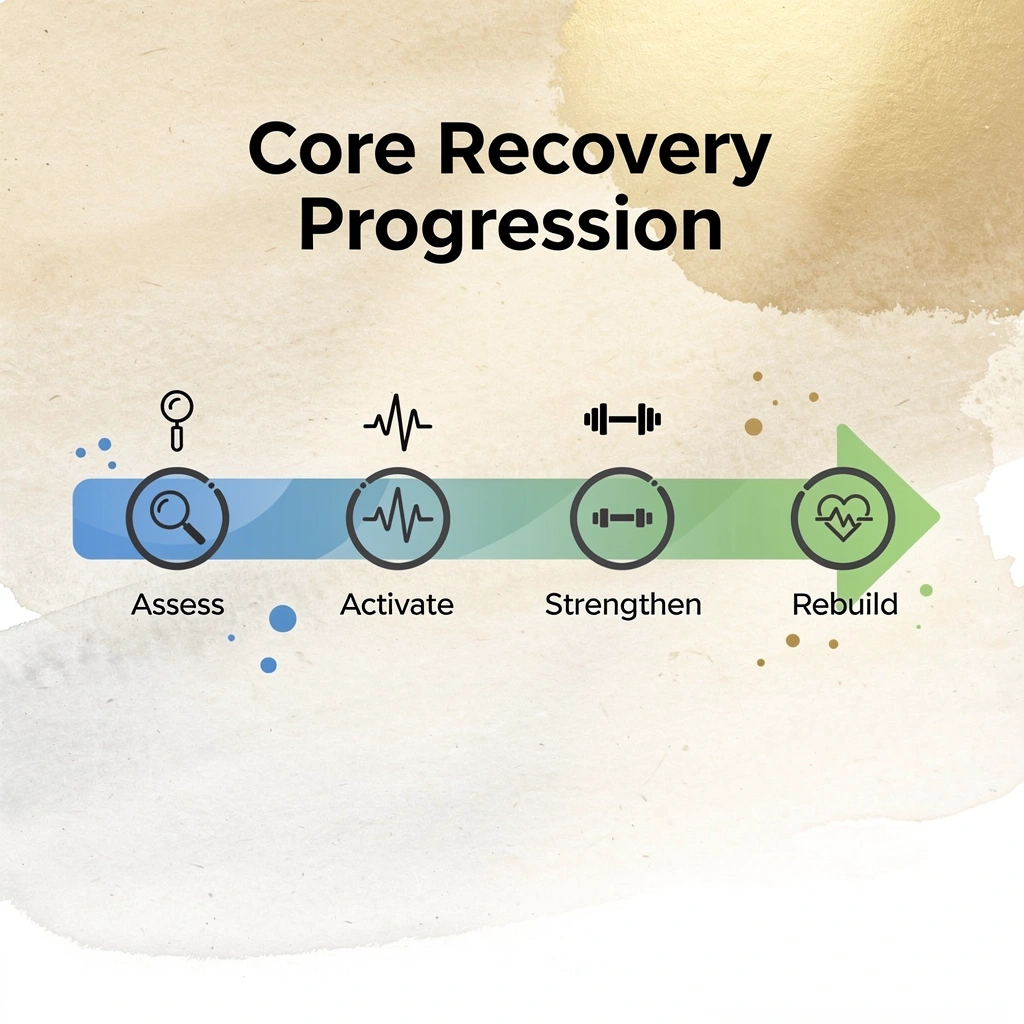
Eight exercises after pregnancy can help rebuild core strength, but the order you do them in matters just as much as the exercises themselves. Where you start depends on where your body is right now — not on how ambitious you are or how fast you want to get better.
“The sequence of postpartum core exercises is critical — starting too aggressively can set recovery back significantly, while a progressive, structured approach rebuilds strength safely and effectively.” — Postpartum Fitness Specialists
💡 Tip: Always begin with the most foundational movements first. Your postpartum core needs gradual reactivation, not intensity.
⚠️ Warning: Skipping ahead to advanced ab exercises too soon is one of the most common postpartum mistakes — it can worsen conditions like diastasis recti and delay your overall recovery.
| Exercise Level | When to Start | Key Focus |
|---|---|---|
| Foundational (breathing, pelvic floor) | Immediately postpartum | Reconnection & healing |
| Intermediate (gentle activation) | 6–8 weeks postpartum | Stability & control |
| Advanced (full core work) | 12+ weeks postpartum | Strength & endurance |
🎯 Key Point: Your starting point is determined by your body’s current state — not your pre-pregnancy fitness level or your personal timeline goals.
1. Breathing and deep-core engagement
Controlled breathing is the foundation of core recovery. Before your abdominal wall can create meaningful force, it must relearn how to work together with your diaphragm and pelvic floor as one system. Lie on your back, breathe in slowly to expand your ribcage, then exhale while gently pulling your lower abdomen inward. That subtle contraction on the exhale signals your deep core waking back up.
How does the pelvic floor connect to your core foundation?
According to TODAY.com, postpartum core work should start with pelvic floor exercises like Kegels, holding contractions for 3 to 5 seconds, before progressing to loaded or dynamic movement. The pelvic floor and deep abdominals function as a pressure management system; without engagement, every subsequent exercise is built on an unstable base.
2. Heel slides
Heel slides look deceptively simple, which is why they work so well in early recovery. Lie on your back with knees bent, then slowly extend one heel along the floor before returning it. The real challenge is keeping your lower back from arching and your abdominal wall engaged as the limb moves away from your body.
Why does this movement rebuild core control so effectively?
Your core needs this demand for trunk stability with minimal load to reconnect neurologically after pregnancy. The movement teaches your body to maintain abdominal control while your limbs create a destabilizing pull, the same demand placed on your core during carrying, bending, or lifting.
3. Glute bridges
The glute bridge earns its place here because it refuses to let you isolate. When you press your hips upward from a bent-knee position, your glutes, hamstrings, and trunk work together. The pelvis must remain neutral, which means your abdominal wall works continuously to prevent your lower back from taking over.
Why does a slow glute bridge do more than a rushed set?
After giving birth, women often say that even short, controlled movements feel surprisingly hard in the early weeks. That reaction reflects accurate information, not weakness. Your body is rebuilding its communication pathways, not just muscle mass. A controlled bridge held for three to five seconds at the top will do more for recovery than a rushed set of twenty.
4. Bird dogs
Bird dogs teach your body to coordinate opposite sides: stretching out the opposite arm and leg from a hands-and-knees position requires your trunk to stay steady and resist twisting while your limbs move in opposite directions. This anti-rotation demand reveals the stability your core needs for everyday life.
The most common mistake is lifting too high instead of focusing on control. Lifting the arm and leg as high as possible usually causes the lower back to arch and the pelvis to tilt, which defeats the purpose. Keep the movement small, the spine long, and the tempo slow.
5. Dead bugs
Dead bugs are harder. You lie on your back with arms extended toward the ceiling and knees bent at ninety degrees. As you lower an opposite arm and leg toward the floor, your lower back must stay pressed into the ground. The moment it lifts, the exercise has exceeded your current capacity.
Why is the dead bug considered self-limiting by design?
This feedback mechanism is one of the dead bug’s most useful features: it’s self-limiting by design. If you cannot maintain the position, reduce the range of motion rather than powering through with compensation. Start with a range of motion that keeps you honest, and expand it only when the smaller version feels fully controlled.
6. Incline planks
A full floor plank is not appropriate for most postpartum women. An incline plank, with hands on a stable elevated surface like a bench or kitchen counter, reduces abdominal wall load while maintaining full-body tension and trunk stability.
How do you progress an incline plank over time?
You can adjust the angle incrementally as your strength returns. Moving your hands slowly lower over weeks helps you work toward a floor plank without pushing your body into positions it is not ready for.
Why does matching load to recovery stage matter?
Many women after giving birth do the hardest version of an exercise they can finish, assuming harder means better results. At BST Lagree, we believe in a different approach. Our Megaformer’s spring-based resistance system lets instructors adjust the load and range of motion to match each woman’s recovery stage. This enables high-intensity work without the joint stress of traditional gym equipment.
7. Side planks and modified variations
Side planks work the side muscles of your trunk: the quadratus lumborum and obliques, which often receive insufficient attention in standard postpartum exercise plans. A modified version, supported on your knees instead of your feet, reduces intensity while still challenging your side muscles.
How well you do the exercise matters more than how long you do it. A fifteen-second side plank with proper control beats a forty-five-second version with sagging hips and collapsed shoulders. Focus on control, not time.
8. Resistance-based core work
Once basic control is established and a doctor approves, resistance-based core training adds progressive overload that bodyweight exercises cannot provide. Cable pull-throughs, band-resisted dead bugs, and machine-based anti-rotation presses require the trunk to stabilize against an external force: a meaningfully different demand than stabilizing against gravity alone.
The Output by Peloton notes that postpartum core exercises can begin as early as 24 hours after vaginal delivery with gentle movements. The same framework that starts with breathing in the first days after delivery can eventually include loaded resistance training, as long as each step earns the next.
Choosing your starting point honestly
Most women after giving birth know naturally where they are in their recovery. The problem is external pressure—from social media, advice, or the desire to feel able again—pushes them toward exercises two or three steps ahead of where their body actually is. That gap is where injuries and setbacks occur.
How do you know which exercise is right for where you are?
The eight exercises above aren’t a fixed sequence, but options across a spectrum of difficulty. Your starting point should reflect your delivery, symptoms, medical guidance, and honest assessment of what you can control well. Some women begin with breathing and heel slides; others with uncomplicated recoveries and prior fitness may start further along. Both approaches are valid.
What is not valid is treating exhaustion as evidence of effectiveness. A postpartum ab workout that leaves you unable to function the next day interrupts recovery rather than accelerating it.
What comes after knowing which exercises to choose?
Knowing which exercises to do is one thing. Organizing them into a routine that fits your life, recovery stage, and week is where the real work begins.
Related Reading
- Kegel Exercises Postpartum
- Postpartum Strength Workout
- Postpartum Diastasis Recti Workout
- Easy Postpartum Workout
- Postpartum Arm Workout
- Postpartum Full Body Workout
- Postpartum Core Workout
- 6 Week Postpartum Workout Plan
- Postpartum Pelvic Floor Exercises
- Postpartum Workout Plan At Home
- Pilates Exercises For Post Pregnancy
- Postpartum Diastasis Recti Workout
- Postpartum Pelvic Floor Exercises
- Postpartum Belly Exercises
How to Build a Postpartum Core Routine That Fits Your Recovery
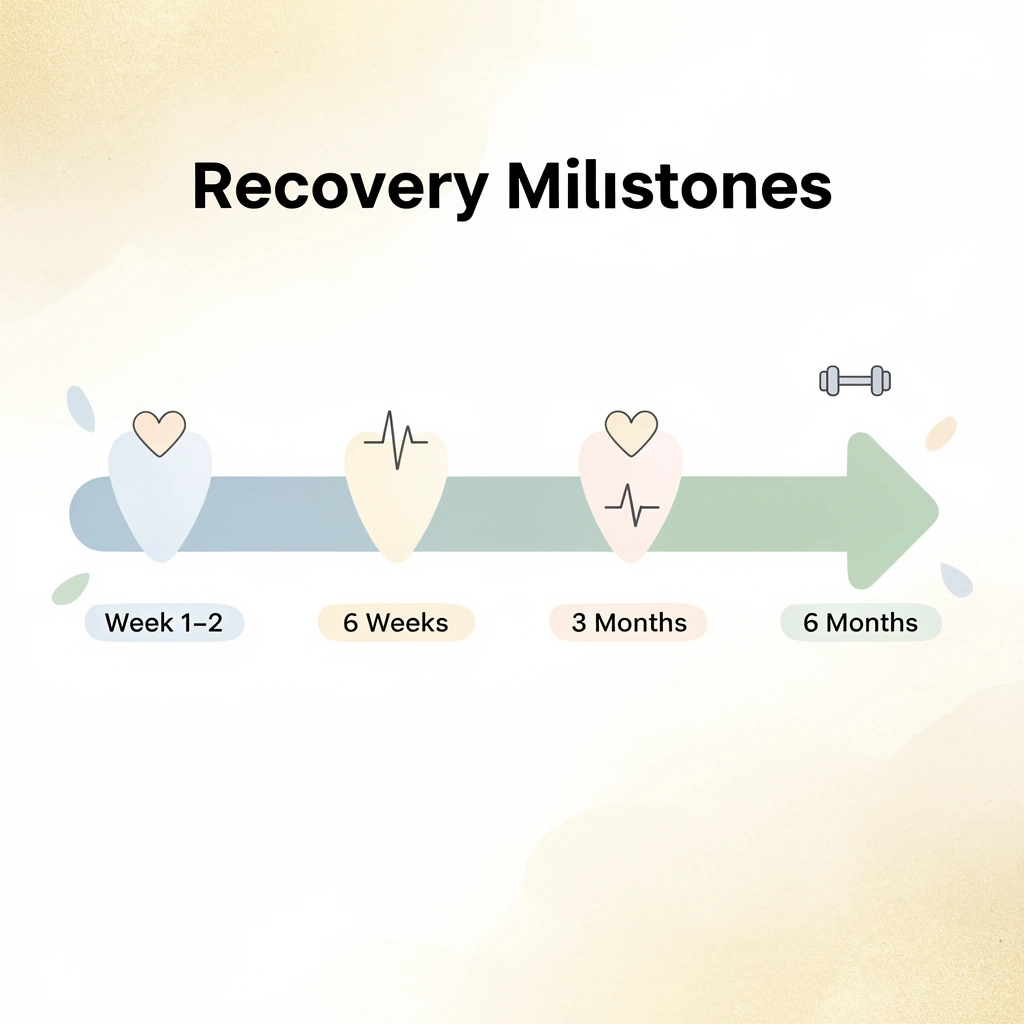
Progression is the foundation of postpartum recovery. Your routine should change from six weeks to six months — and that change itself shows the process is working. Your body leads; the plan follows.
“Postpartum recovery is not a fixed destination — it’s a dynamic process where your routine must evolve as your body heals, rebuilds, and strengthens over time.”
| Recovery Phase | Timeframe | Core Focus |
|---|---|---|
| Early Recovery | Weeks 1–6 | Breathing, gentle activation, rest |
| Building Phase | Weeks 6–12 | Progressive loading, stability work |
| Strengthening Phase | Months 3–6 | Functional movement, full core engagement |
🎯 Key Point: Your postpartum core routine isn’t a one-size-fits-all plan — it’s a living, evolving structure that must adapt to where your body is right now.
⚠️ Warning: Rushing progression is one of the most common mistakes new moms make. Skipping phases or returning to high-intensity core work too soon can worsen conditions like diastasis recti and pelvic floor dysfunction.
Where do you actually begin?
The first stage is not about exercise selection but reestablishing communication between your brain and deep core muscles, a connection pregnancy and delivery disrupt. Once your healthcare provider clears you for movement, begin with comfortable activity: walking, diaphragmatic breathing, pelvic floor work, and controlled core engagement. According to Maximizing Recovery in the Postpartum Period, pelvic floor muscle training reduces urinary incontinence by up to 56% in postpartum women, a symptom far more common than most new mothers expect. This foundation is precise, not modest.
How do you know when to progress?
The signal to move forward is not a date on a calendar, but the absence of symptoms during what you are already doing. When bridges, bird dogs, and modified planks feel controlled and pain-free, you are ready to increase one variable at a time: repetitions, range of motion, or resistance. Never increase everything at once; setbacks cost more time than patience does.
Why is sequenced progression safer than guesswork?
Most women handle progression independently, piecing together exercises from online sources and making changes through trial and error. The problem is that postpartum core rehabilitation is sequenced work, not a collection of individual moves. BST Lagree in London addresses this directly. The Megaformer’s spring-based resistance system allows instructors to scale every movement to exactly where a woman is in her recovery, with certified coaches who understand the difference between appropriate challenge and harmful load.
What does a realistic weekly structure look like?
Once you get medical clearance for structured training, a practical framework includes two strength-focused sessions per week with appropriately scaled core work, two to three days of moderate cardiovascular activity such as brisk walking, and daily movement as your body allows. According to Maximizing Recovery in the Postpartum Period, ACOG recommends at least 150 minutes of moderate-intensity aerobic activity per week for postpartum women. You can spread these minutes across shorter sessions rather than doing them in one block, which matters when your schedule is governed by a newborn, not a gym timetable.
How do you know when your body is ready for more?
This framework is a destination you approach gradually, adding one layer of demand each week as your body confirms readiness. Persistent pain, pressure, or leaking during exercise signals the need to stop, reassess, and seek guidance before continuing.
What does success actually look like in postpartum training?
A successful postpartum routine is not about how quickly you return to your pre-pregnancy training. Instead, it’s about steadily rebuilding strength, movement confidence, and physical capacity at a pace your body can handle.
How BST Lagree Helps Women Rebuild Strength After Pregnancy
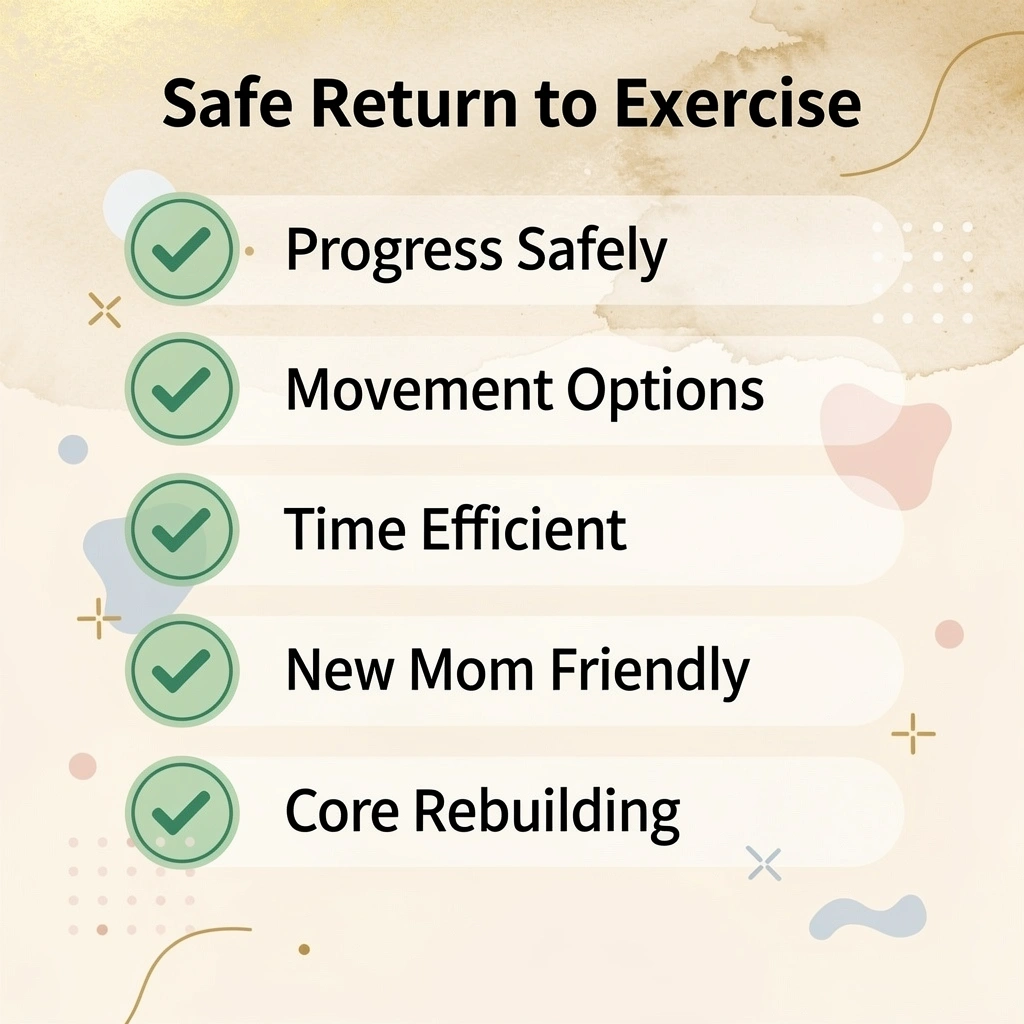
Getting back to exercise after pregnancy takes more than just a list of postpartum ab exercises. You need a workout space that helps you progress safely, gives you different options for movements, and fits effective training into the limited time you have as a new mother.
“Returning to fitness postpartum isn’t just about movement — it’s about finding the right environment that supports safe progression, movement variety, and time efficiency for new mothers.”
💡 Tip: When evaluating a postpartum workout program, look for three non-negotiables — safety, variety, and time efficiency. Missing even one can slow your recovery and rebuilding process.
| What You Need | Why It Matters |
|---|---|
| Safe progression | Protects healing tissues and prevents setbacks |
| Movement variety | Addresses multiple muscle groups for full-body recovery |
| Time efficiency | Fits into the demanding schedule of a new mother |
🎯 Key Point: BST Lagree is designed to meet all three of these postpartum needs — making it one of the most effective options for women rebuilding strength after pregnancy.
Why is coached programming useful for postpartum workouts?
Working out after having a baby can be difficult to plan independently. Creating your own routine means choosing exercises, selecting appropriate weight or resistance, timing progression, and modifying movements to suit your needs. BST Lagree employs certified instructors who complete rigorous training programs. They guide clients through workouts and refine movement quality. For postpartum clients, this coaching proves invaluable because the right challenge level varies from person to person.
Building your core doesn’t require spending your entire workout on stomach exercises. Our Lagree training combines resistance-based movements with cardio, so you can work your whole body in 45 minutes. This full-body approach supports the broader goal of fitness: becoming stronger and more capable rather than focusing solely on appearance.
How does the BST environment support new mothers returning to exercise?
Going back to exercise after pregnancy can feel daunting in a crowded or impersonal gym. BST Lagree offers a women-focused fitness environment built around coaching, motivation, and community, designed to feel more supportive and intentional than navigating equipment and programming alone. For someone building a new routine around postpartum demands, that environment makes showing up more manageable.
Postpartum fitness shouldn’t focus on pushing hard to return to your pre-pregnancy body quickly. Consistency matters more than maximum effort in every workout. BST Lagree encourages clients to build regular routines, though recovery, fitness level, body composition, and results vary from person to person, particularly after pregnancy.
What should you know before starting postpartum classes at BST?
A coached workout helps with technique and exercise modifications, but an instructor cannot assess medical readiness. Your healthcare provider should guide your return to exercise, particularly after cesarean delivery, complications, or ongoing postpartum symptoms. ACOG recommends gradual return to physical activity and advises women with cesarean deliveries or complications to discuss exercise timing with their OB-GYN. Once cleared, our certified instructors can help you work within an appropriate challenge level rather than assuming everyone performs the same movements at the same intensity.
For women with limited time, one of our biggest advantages is efficiency. Our 45-minute Lagree classes combine strength and cardiovascular training, allowing you to work your whole body in a single coached session. This makes it easier to fit exercise into a schedule already filled with caring for a newborn, work, family responsibilities, and recovery.
Book a Lagree Class in London Today
Once your healthcare provider has cleared you for exercise, a BST Lagree class gives you a coached 45-minute full-body workout on the Megaformer. It is designed to be high intensity without the joint load that postpartum bodies cannot yet absorb. Controlled, slow movement does more work than speed ever could: that’s exactly what makes it effective for recovery. The instruction is specific enough to keep your form honest from the first rep.
“Controlled, slow movement does more work than speed ever could — and for postpartum bodies, that distinction is everything.”
💡 Tip: Look for a class that prioritizes low-impact intensity over speed — your postpartum joints will thank you for it.
⚠️ Warning: Never return to high-impact exercise without full healthcare clearance — even if you feel ready, your body may not be.
You do not need to arrive ready. You need to arrive. Lagree in London is built around women who are rebuilding, not performing. The all-Lagree certified instructors will meet you at the level your body is at today: no expectations, no pressure, just real, expert-led progress.
🎯 Key Point: BST Lagree is designed for women at every stage of recovery. Your instructors are trained to adapt every session to your body’s current needs.
✅ Best Practice: Show up as you are. The certified coaching team will handle the rest, ensuring every rep, tempo, and transition fits where you are today.