After having a baby, rebuilding strength and feeling at home in your body again takes more than good intentions. The first postpartum workout is a meaningful step, but the approach matters as much as the effort. Many new mothers want to address postpartum belly fat without committing to long cardio sessions, which they simply do not have time for.
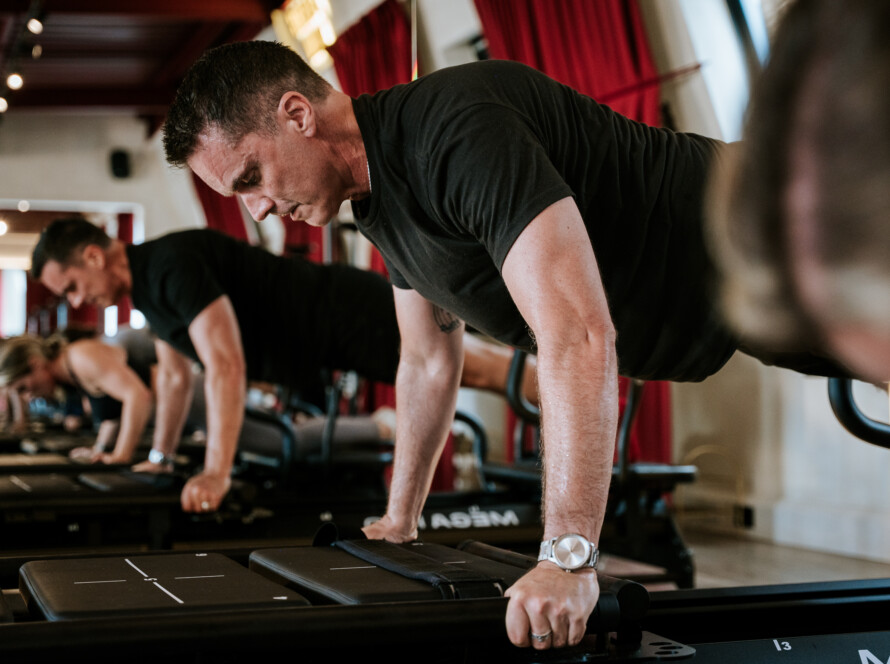
Lagree offers a more targeted path forward. Using slow, controlled movements on the Megaformer activates the deep core muscles most affected by pregnancy, supporting genuine abdominal recovery without high-impact strain. For mothers ready to rebuild efficiently and sustainably, Lagree in London is worth a closer look.
Table of Contents
- Why Postpartum Belly Fat Is So Difficult to Lose
- The Biggest Mistakes Women Make When Trying to Lose Postpartum Belly Fat
- What Actually Drives Postpartum Fat Loss
- Why Strength Plus Cardio Works Better Than Cardio Alone
- A Sustainable Postpartum Belly Fat Loss Plan
- How BST Lagree Helps Women Lose Postpartum Belly Fat Safely and Efficiently
- Book a Lagree Class in London Today
Summary
- Postpartum belly fat is primarily a physiological problem, not a motivation problem. Up to 60% of women experience diastasis recti after giving birth, a separation of the abdominal muscles that makes traditional core exercises like crunches and sit-ups ineffective and potentially harmful. When the connective tissue running down the center of the abdomen is weakened, the core cannot generate the tension needed to support fat loss or functional movement.
- Hormones play a larger role in postpartum fat retention than most fitness advice acknowledges. Elevated cortisol from sleep deprivation and the demands of new parenthood signal the body to hold onto fat, particularly around the midsection. These hormonal forces do not respond to harder workouts or stricter eating. They respond to recovery, stability, and movement that works with the body’s current state rather than against it.
- Rebuilding lean muscle is the most direct driver of lasting postpartum fat loss, yet most advice aimed at new mothers focuses on cardio. Muscle tissue burns more energy at rest, improves body composition over time, and responds well to the postpartum hormonal environment. Research from the European Journal of Midwifery notes that breastfeeding mothers burn approximately 500 extra calories per day producing milk, making adequate fueling and resistance training a more effective combination than calorie restriction and cardio alone.
- Combined strength and cardio training consistently outperforms cardio alone for postpartum fat loss. Participants in combined training programs lost an average of 2 kg of fat mass more than those doing cardio only, according to NHLBI research. Adults who combined both training types also showed a 41% lower risk of dying from any cause compared to those who did neither, reflecting how broadly the body benefits from being challenged across multiple physical demands at once.
- Structure and method matter more than motivation when it comes to sustained postpartum results. Women who followed a 12-week postpartum diet and exercise intervention achieved 12% weight loss after one year, compared to just 5% in a control group with no structured support. Generic fitness routines designed for pre-pregnancy bodies tend to produce frustration rather than results when applied to a body still in recovery, regardless of how consistently a new mother shows up.
- Progress in postpartum recovery is nonlinear, and measuring it by scale weight alone misses what is actually changing. Hormones shift week to week, sleep is fragmented, and energy fluctuates in ways that make daily metrics unreliable. The women who achieve lasting results tend to prioritize movement quality, pelvic floor integrity, and consistency over time rather than intensity in individual sessions.
- BST Lagree in London addresses the gap between the need for results and the need to protect a body still in recovery, offering Megaformer-based resistance training that combines strength, cardio, and deep core rehabilitation in a single low-impact session.
Why Postpartum Belly Fat Is So Difficult to Lose
After pregnancy, belly fat is hard to lose because pregnancy fundamentally changes how your body is built, your hormones, and what your body needs to recover. This isn’t about not trying hard enough — it’s about how your body works at a biological level. Treating it like a simple calorie equation is where most people make a critical mistake.
“Postpartum belly fat isn’t a willpower problem — it’s a physiological problem rooted in hormonal shifts, structural changes, and the immense demands of postpartum recovery.”
⚠️ Warning: Approaching postpartum fat loss the same way you’d approach ordinary weight loss ignores the unique biological changes pregnancy causes — and can actually slow your progress.
🔑 Takeaway: Your body went through a massive transformation over 9+ months. The path back isn’t a simple calorie equation — it requires understanding the real reasons postpartum belly fat is so resistant to conventional methods.
| Factor | Why It Makes Fat Loss Harder |
|---|---|
| Hormonal shifts | Elevated cortisol and prolactin promote fat retention |
| Structural changes | Stretched abdominal muscles reduce core metabolic efficiency |
| Recovery demands | Your body prioritizes healing over fat burning |
| Sleep deprivation | Disrupts hunger hormones like ghrelin and leptin |

How does muscle separation make postpartum belly fat harder to lose?
According to Healthline, up to 60% of women experience diastasis recti after giving birth. This occurs when abdominal muscles separate, making it harder to lose belly fat. When the connective tissue running down the center of your abdomen stretches and weakens, your core cannot create the tension needed to work properly. Crunches, sit-ups, and high-intensity ab work often worsen the separation.
Why do postpartum hormones keep the body holding onto fat?
Hormones worsen the problem in powerful, invisible ways. Cortisol, the stress hormone, spikes during postpartum recovery due to physical healing, sleep deprivation, and newborn care. Elevated cortisol signals your body to retain fat, particularly around the abdomen. Simultaneously, breastfeeding alters estrogen levels, affecting how your body stores and releases fat. These hormonal shifts don’t respond to harder workouts or stricter diets—they respond to recovery, stability, and appropriate movement.
Why does the standard approach of more cardio and less food backfire?
The most common approach of more cardio and eating less directly conflicts with what a postpartum body needs. Most women following this path end up tired and frustrated, with no closer to a flatter stomach. Our BST Lagree studio in London addresses this differently. The Megaformer’s slow, controlled resistance work rebuilds deep core function and restores muscular integrity without the joint stress or cortisol spike that high-impact training creates.
Ovation OB/GYN reports that up to 20% of women retain more than 10 pounds one year after delivery, reflecting a mismatch between effort and method. A new mother managing feeding schedules, broken sleep, and emotional demands has little time or energy for lengthy gym sessions. The fitness approach must fit her reality, not the other way around.
How do all these factors combine to make postpartum belly fat so stubborn?
What makes postpartum belly fat stubborn is that every factor reinforces the others: muscle separation weakens core stability, hormonal shifts encourage fat retention, sleep deprivation increases hunger and reduces fat regulation, and stress keeps cortisol elevated. These form an interconnected recovery challenge requiring a method built around rebuilding the body from the inside out.
The Biggest Mistakes Women Make When Trying to Lose Postpartum Belly Fat
Familiar fitness habits—logging treadmill miles, cutting carbs, grinding through ab circuits—feel productive but often stall postpartum recovery. The postpartum body needs a different approach, not more effort.
⚠️ Warning: More effort within the wrong framework delays results rather than accelerates them. Working harder differs from working correctly for a postpartum body.
💡 Tip: Before adding workouts or cutting calories, ask whether your current approach was designed for postpartum recovery or general weight loss.

Research published by the National Institutes of Health found that up to 20% of women retain more than 5 kg of weight at six months postpartum, even when actively trying to lose it. This isn’t a motivation problem—it’s a method problem. Women are working hard inside frameworks not designed for what their bodies are actually experiencing.
“Up to 20% of women retain more than 5 kg of weight at six months postpartum, even when actively trying to lose it.” — National Institutes of Health
🔑 Takeaway: That 20% figure is not a reflection of effort or discipline—it’s evidence that standard weight-loss methods fail to account for the unique hormonal, structural, and metabolic shifts of the postpartum body.
| The Common Assumption | The Postpartum Reality |
|---|---|
| More cardio = faster fat loss | Excess cardio can spike cortisol and slow recovery |
| Cutting carbs = fewer calories retained | Underfueling disrupts hormones critical to fat metabolism |
| Ab workouts target belly fat | Core dysfunction (e.g., diastasis recti) makes many ab exercises counterproductive |
| Slow progress = low motivation | Up to 20% of women stall despite high effort—it’s a method issue |
Where the effort goes wrong
The most common mistake isn’t laziness—it’s misdiagnosis. Women treat postpartum belly fat as a calorie equation when the body operates under a completely different program. Aggressive cardio raises cortisol, which is already elevated by sleep deprivation and the demands of new parenthood. Adding physiological stress to a stretched system delays fat loss rather than accelerating it. According to Healthline’s review of postpartum health research, women sleeping fewer than five hours per night are significantly more likely to retain baby weight at six months. No amount of morning runs can compensate for what happens during sleep, when the body repairs itself.
Why is core recovery treated as aesthetic rather than functional?
The second major error is treating core recovery as something that looks good rather than something that works well. Crunches and sit-ups feel productive, but they skip the deep stabilizing muscles that need rebuilding. For women with abdominal separation, traditional ab exercises can increase intra-abdominal pressure and slow healing. The fix is smarter core work: starting with the transverse abdominis and pelvic floor before loading the superficial muscles.
Most postpartum fitness plans are built for pre-pregnancy bodies, leaving women feeling stuck despite following them correctly. BST Lagree in London addresses this gap directly. The Megaformer’s slow, controlled resistance training targets deep stabilizing muscles without the joint stress or cortisol spike that high-impact workouts produce.
Why does expecting linear progress slow postpartum recovery?
The third mistake is expecting linear progress in nonlinear recovery. Hormones shift week to week, especially during breastfeeding. Sleep fragments. Energy fluctuates. Measuring success by the scale is like checking the weather forecast during a storm. Progress appears first in how the body moves, how stable it feels, how much less it aches—signals that matter long before numbers shift. What drives postpartum fat loss is far less obvious than these mistakes suggest.
Related Reading
- First Postpartum Workout
- When Can I Workout Postpartum
- Is Pilates Good for Postpartum Weight Loss
- Can I Do Pilates 3 Weeks Postpartum
- Bird Dog Exercise Postpartum
- Postpartum Glute Bridge Exercise
- Postpartum HIIT Workout
- Postpartum Kettlebell Workout
- Postpartum Dumbbell Workout
What Actually Drives Postpartum Fat Loss
Building lean muscle back up is the key to lasting fat loss after pregnancy, and most fitness advice for new mothers doesn’t focus on this. Your body has changed in structure, hormones, and metabolism after pregnancy — and these are not minor shifts. Trying to lose fat without dealing with those changes is exactly why many women work hard but don’t see much progress.
“Trying to lose fat without addressing postpartum changes in structure, hormones, and metabolism is why so many women work hard and see so little results.” — Core Postpartum Fitness Principle
🎯 Key Point: Lean muscle mass is your most powerful metabolic tool after pregnancy — without rebuilding it, fat loss stalls no matter how hard you try.
💡 Tip: Before jumping into cardio-heavy routines, prioritize strength-based training that targets muscle rebuilding — this is what actually drives postpartum fat loss long-term.
| What Most Advice Focuses On | What Actually Drives Results |
|---|---|
| Calorie restriction alone | Rebuilding lean muscle mass |
| High-volume cardio | Hormonal and metabolic reset |
| Generic weight loss plans | Postpartum-specific structural changes |
| Short-term fat burning | Lasting metabolic adaptation |
Why does muscle matter more than cardio for postpartum fat loss?
Muscle tissue requires significant energy for your body to maintain. A body with more lean muscle burns more energy at rest, moves more efficiently when carrying weight, and responds better to the hormonal changes of early motherhood. Resistance-based training—which gradually challenges your whole body rather than targeting one area—consistently outperforms cardio-heavy approaches for postpartum body composition. According to the European Journal of Midwifery, breastfeeding improves insulin sensitivity after childbirth, creating a better metabolic window for building and maintaining lean muscle. The priority is building a body that burns more calories between workouts, not burning calories during them.
Many postpartum women describe feeling “squishy” even after losing weight through walking or light cardio. This occurs when the scale weight drops without preserving muscle mass. When lean mass declines, body composition worsens despite weight loss. The goal is to carry more functional muscle and less stored fat, which requires different strategies.
Why does the walk-and-eat-less approach backfire postpartum?
The most common postpartum fitness approach—walking daily and eating less—often backfires. When walking is your primary exercise and calorie intake drops too low, your body protects fat stores (especially while breastfeeding) and breaks down muscle instead. This slows metabolism, reduces strength, and diminishes muscle tone despite your effort. BST Lagree in London addresses this directly. Our Megaformer delivers high-intensity, low-impact full-body resistance training that challenges muscles without stressing recovering joints or the pelvic floor—exactly what postpartum bodies need to reshape effectively.
How do progressive overload and consistency drive real body composition changes?
Progressive overload matters more than most people think. Your body only changes when you ask it to do something harder than before. The program needs to improve over time through increased resistance, better movement quality, or greater time under tension, rather than repeating the same workout. Consistency without progression leads to a plateau; progression without consistency leads to injury. Real postpartum body composition changes come from finding a method you can sustain week after week, then slowly making it harder.
How does breastfeeding fit into the postpartum fat loss picture?
Breastfeeding mothers burn about 500 extra calories per day making milk, creating caloric demand without extra exercise. This energy output supports fat loss when the body receives adequate fuel and resistance training. Eating too little while breastfeeding and exercising disrupts this balance, triggering the protective hormonal response that halts progress. Working with the body’s natural processes is the most direct path forward. Knowing what drives postpartum fat loss is only half the picture.
Why Strength Plus Cardio Works Better Than Cardio Alone
Cardio alone burns calories during the session but does little to change your metabolism in the other 23 hours of the day. Strength training changes that because muscle tissue built through resistance work keeps your metabolism elevated long after the workout ends.
💡 Tip: Think of strength training as installing a metabolic upgrade: your body keeps burning long after you’ve left the gym.
🔑 Takeaway: Cardio works during your workout. Strength training works around the clock.

Research supports this. According to the NHLBI and NIH, participants who did combined training lost an average of 2 kg more fat mass than those who did cardio alone — a gap that shows a fundamental difference in how the body responds to varied physical demands.
“Participants who did combined training lost an average of 2 kg more fat mass than those who did cardio alone.” — NHLBI, NIH, 2024
| Training Type | Calorie Burn | Metabolic Impact After Workout | Fat Mass Lost |
|---|---|---|---|
| Cardio Only | During the session only | Minimal | Baseline |
| Strength Only | Moderate during session | Elevated for hours | Moderate |
| Combined Training | High during session | Maximized, long-lasting | +2 kg more |
⚠️ Warning: Relying on cardio alone feels productive but leaves 23 hours of metabolic potential completely untapped.
Why does postpartum fat loss require more than burning calories?
After pregnancy, losing fat requires rebuilding your body rather than burning calories. Pregnancy changes muscle tone, joint stability, and core strength in ways that cardio cannot address. Strength training rebuilds the structural foundation that supports every movement you make as a mother, from lifting a car seat to carrying a toddler up stairs, while creating the body composition changes you want.
Most women choose cardio because the effort feels measurable: sweat, elevated heart rate, calories on a screen. But this ignores what happens at the tissue level. Resistance work signals the body to preserve and build lean mass—the tissue that makes fat loss sustainable rather than temporary. BST Lagree in London offers this through our Megaformer, which combines strength, cardio, and deep core work in a single session, delivering the structural challenge postpartum bodies need without the joint stress of high-impact exercise.
How does combined training fit the reality of new motherhood?
Combined training matters for efficiency. According to the Cleveland Clinic, adults who combined cardio and strength training had a 41% lower risk of dying from any cause compared to those who did neither. For a postpartum woman managing feeding schedules, broken sleep, and limited workout windows, a method that delivers strength, cardiovascular conditioning, and fat loss simultaneously is the only practical approach. Knowing that combined training works is one thing. Knowing how to structure it around the realities of new motherhood is where most plans fail.
A Sustainable Postpartum Belly Fat Loss Plan
Most fitness plans don’t think about whether they can last a long time. A plan that falls apart by week four hasn’t really helped anyone. Real postpartum fat loss needs habits that a new mother can actually do in real life — not just in perfect situations.
“A sustainable plan that survives the chaos of new motherhood is worth infinitely more than a perfect plan that lasts four weeks.”
💡 Tip: When building your postpartum fat loss plan, ask yourself one question — “Can I still do this on my worst, most exhausted day?” If the answer is no, the plan needs to be simpler and more flexible.
⚠️ Warning: Avoid overly aggressive or restrictive fitness programs in the postpartum period. Plans that demand perfect conditions are the #1 reason new mothers abandon their health goals entirely.
| Unsustainable Plan | Sustainable Plan |
|---|---|
| Requires 1+ hour daily workouts | Works in 10–20-minute sessions |
| Demands perfect nutrition at every meal | Focuses on consistent small habits |
| Falls apart under stress or sleep loss | Designed for real-life chaos |
| Results last weeks | Results last a lifetime |
What the research actually shows
A Two-Year Follow-Up of a Postpartum Weight Loss Intervention found that women who followed a 12-week postpartum diet intervention achieved 12% weight loss after one year, compared to 5% in the control group. This gap illustrates the difference between a repeatable system and an unstructured approach. Structure removes the daily decision fatigue that undermines progress.
Why method matters more than motivation
The failure point is usually not effort. Most postpartum women work hard, managing feeding schedules, disrupted sleep, and the physical demands of caring for a newborn while rebuilding their bodies. Generic gym routines were never designed for postpartum recovery: they assume a fully healed, fully rested body training without a baby on the hip. When the method does not align with the body, even high motivation yields poor results.
Why does the wrong workout method create setbacks instead of progress?
Many women choose whatever fitness class or workout video is easiest to access. Over time, workouts that neglect pelvic floor strength, core rehabilitation, and joint recovery lead to setbacks that impede progress. BST Lagree in London addresses this directly: the Megaformer’s slow, controlled resistance work delivers high-intensity output without the impact load that postpartum bodies are not yet ready to handle.
Building habits that compound over time
Staying consistent across months matters far more than working hard for a few days. Three full-body strength sessions per week with controlled tempo and adequate recovery time will outperform six exhausting workouts that leave your body too tired to adapt. Protein at every meal, daily low-intensity movement like walking with the pram, and sufficient sleep are unglamorous strategies that compound into visible, lasting change in abdominal tone, energy, and strength.
Postpartum fat loss is a series of small, repeatable decisions made consistently over weeks and months, each building on the last. Women who choose methods that fit their actual lives rather than ideal ones tend to achieve and maintain their goals. The next question most women ask at this point determines whether any of this becomes real.
Related Reading
- Kegel Exercises Postpartum
- Postpartum Strength Workout
- Postpartum Diastasis Recti Workout
- Easy Postpartum Workout
- Postpartum Arm Workout
- Postpartum Full Body Workout
- Postpartum Core Workout
- 6 Week Postpartum Workout Plan
- Postpartum Pelvic Floor Exercises
- Postpartum Workout Plan At Home
- Pilates Exercises For Post Pregnancy
- Postpartum Diastasis Recti Workout
- Postpartum Pelvic Floor Exercises
- Postpartum Belly Exercises
How BST Lagree Helps Women Lose Postpartum Belly Fat Safely and Efficiently
Losing postpartum belly fat requires rebuilding strength, improving core stability, staying consistent, and choosing workouts that fit your lifestyle—not doing more cardio, spending more time in the gym, or following strict, unsustainable programs.

💡 Tip: The real key to postpartum fat loss isn’t doing more — it’s doing the right kind of movement that supports your recovering body while delivering real, lasting results.
“Core stability and progressive strength training are foundational to safe and effective postpartum recovery — not high-intensity cardio or extreme caloric restriction.” — National Institutes of Health (PMC)
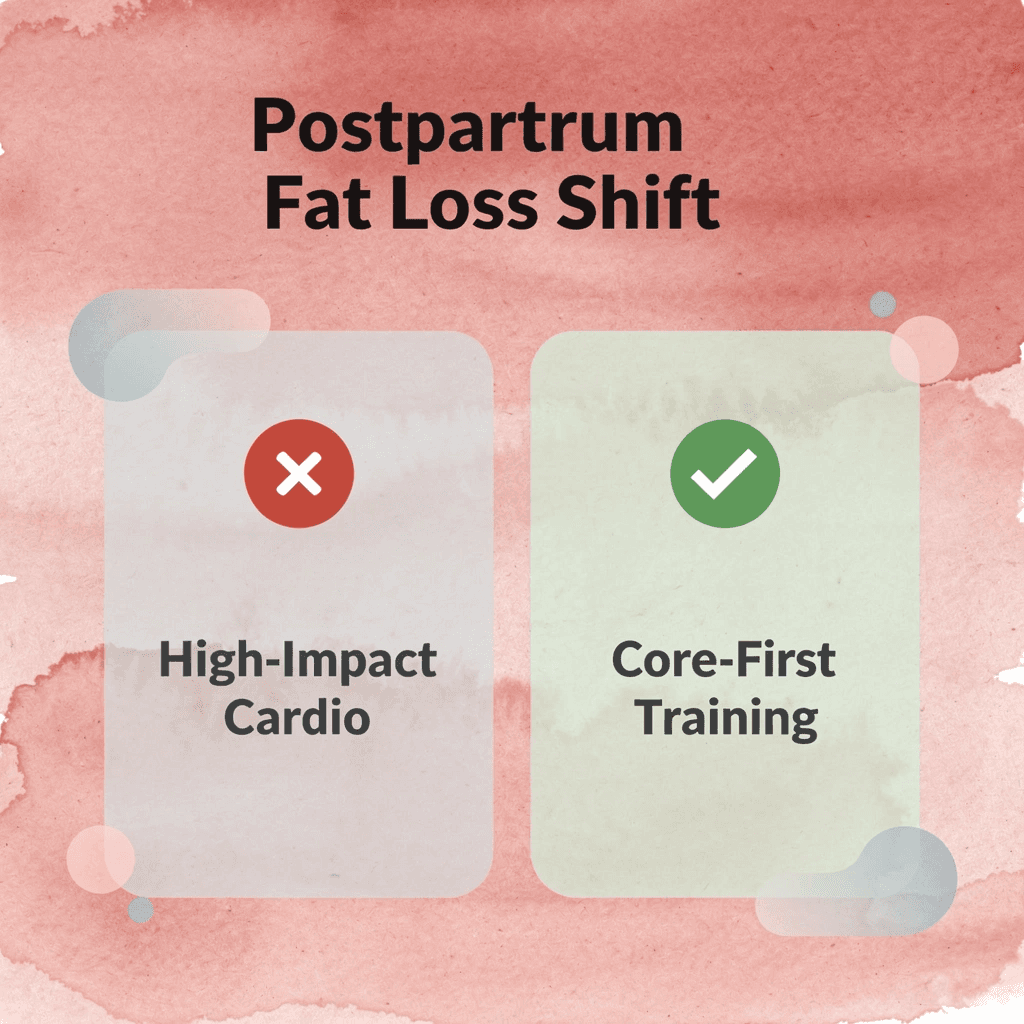
⚠️ Warning: Many new moms make the mistake of jumping into high-impact workouts too soon. Prioritizing low-impact, core-focused training like BST Lagree is the smarter, safer path to rebuilding your postpartum body.
| Common Postpartum Mistake | BST Lagree Approach |
|---|---|
| More cardio to burn fat | Strength-based slow-twitch muscle training |
| Long gym sessions | Efficient, focused workouts |
| Ignoring core stability | Core rebuilding as the foundation |
| Following strict programs | Lifestyle-friendly consistency |
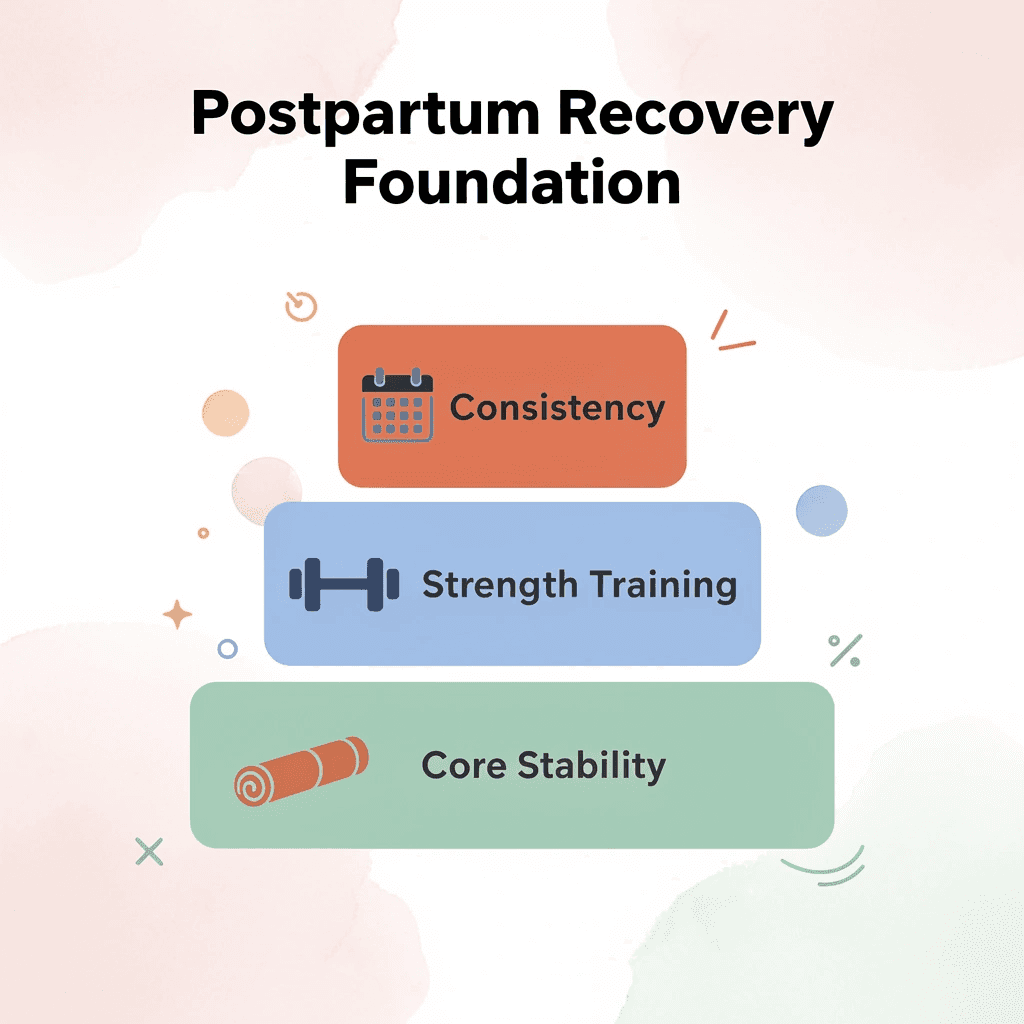
How does combining strength and cardio support postpartum fat loss?
BST Lagree combines strength training and cardio into a single 45-minute, low-impact workout, allowing women to address multiple postpartum fitness goals simultaneously. Research shows that combining resistance and aerobic training reduces body fat while preserving or increasing lean muscle mass, which matters for postpartum women seeking fat loss without sacrificing the strength needed for recovery and daily life. The low-impact nature of Lagree is especially helpful for new mothers whose recovering joints and connective tissues aren’t ready for high-impact workouts. Our Lagree workout creates intense muscular engagement while remaining gentler on the body.
How does Lagree build the core strength new mothers need?
Core strength is built into the whole workout. Instead of endless crunches, BST Lagree challenges your core during full-body movements, building the stability and strength that support both function and appearance. Every class is led by certified instructors who have completed a rigorous mentorship process. Women receive guidance from professionals who help them train effectively and safely, rather than assembling workouts from social media.
Why does an all-in-one session help busy mothers stay consistent?
For mothers balancing childcare, work, and other responsibilities, a workout only works with consistency. By combining strength training, cardio, core engagement, and expert instruction into a single session, our BST Lagree classes eliminate the guesswork that keeps women from staying on track.
Book a Lagree Class in London Today
BST Lagree in London offers a structured, expert-led way to get started. A single 45-minute Megaformer session combines the strength, cardio, and core rehabilitation work that postpartum recovery needs without the joint stress that can slow down new mothers.
🎯 Key Point: A 45-minute Megaformer session delivers strength, cardio, and core rehab in one low-impact workout suited to postpartum bodies.
Your first class gives you more than just a workout — you’ll experience what consistent, method-driven training feels like when it’s designed for your body, not taken from someone else’s program. That clarity is where lasting postpartum fat loss begins.
💡 Tip: Don’t wait until you feel “ready” — your first session is where the real transformation starts.
“Your first class gives you more than just a workout — it shows you what method-driven training designed for your body truly feels like.” — BST Lagree
| What You Get in Your First Class | Why It Matters |
|---|---|
| Expert-led Megaformer session | Guided technique from day one |
| 45-minute full-body workout | Strength, cardio & core in one |
| Low-impact movement | Zero unnecessary joint stress |
| Method-driven programming | Built for postpartum recovery |