Two years after having a baby, a stubborn postpartum belly is more common than most people realize. Hormonal shifts, weakened deep core muscles, and diastasis recti can all keep progress stalled long after the initial recovery period. A first postpartum workout often marks a hopeful starting point, but without the right method, results stay frustratingly out of reach.
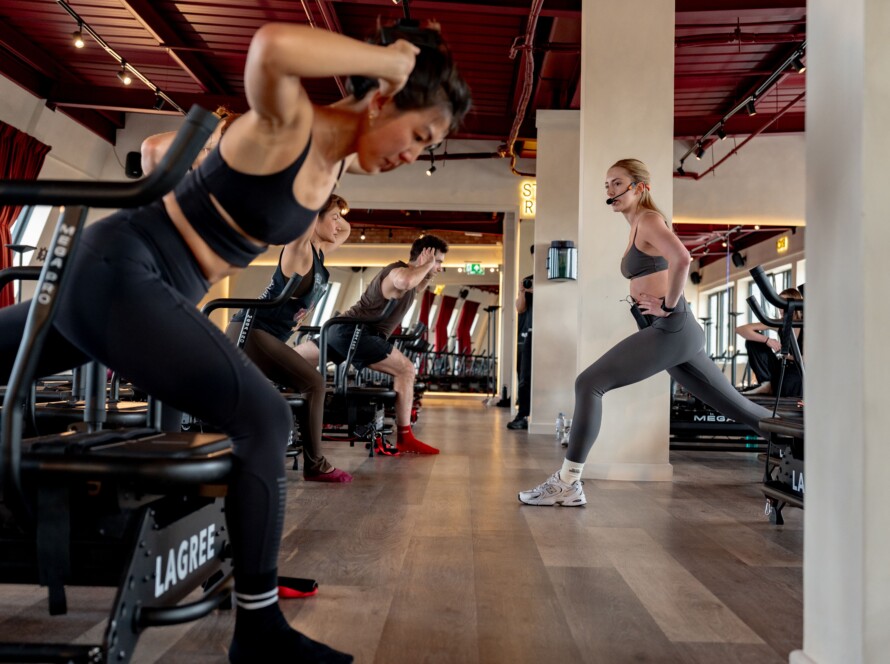
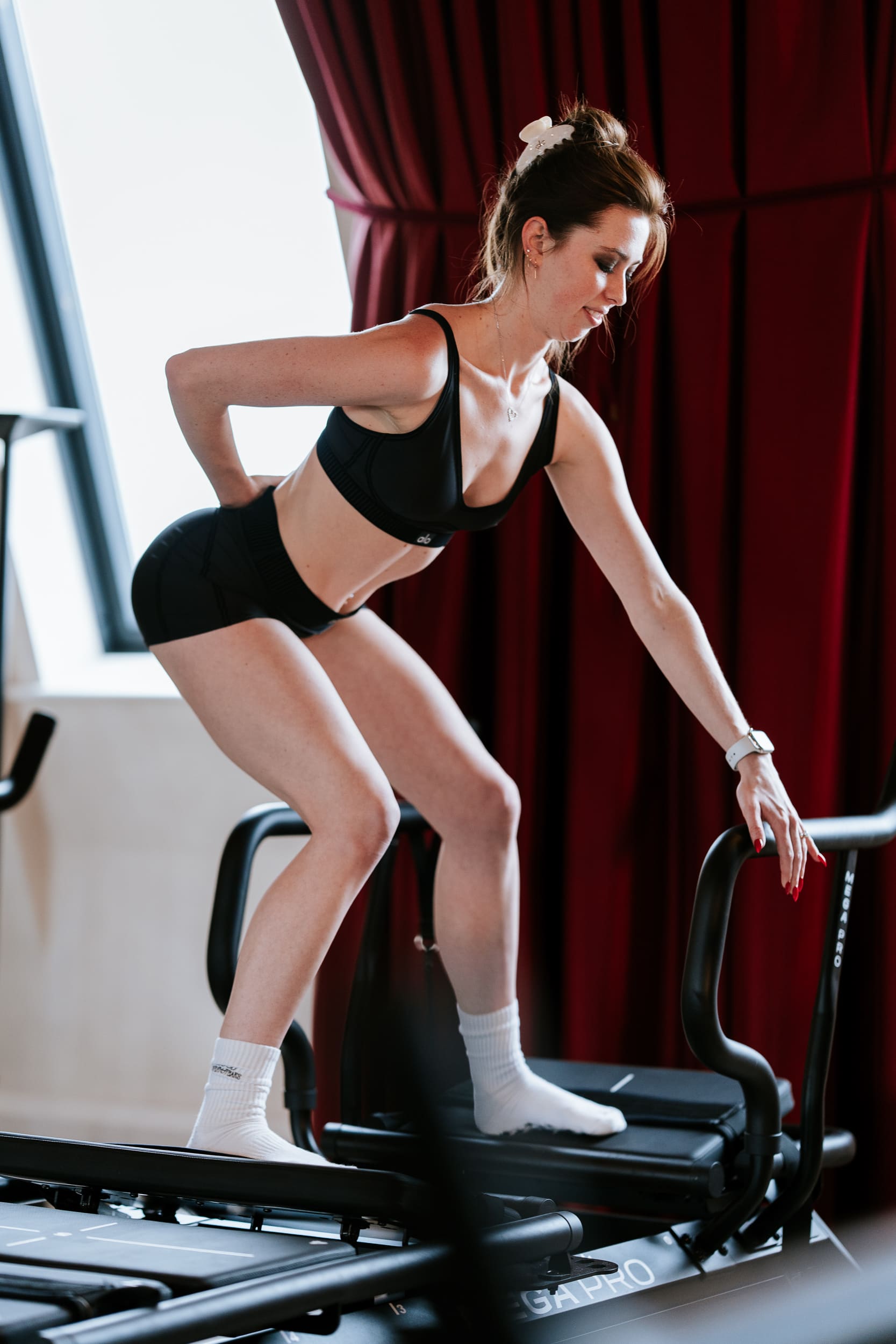
The Lagree method offers postpartum bodies a smarter path forward by targeting the deep abdominal muscles most affected by pregnancy with slow, controlled movements that build real strength without burnout. It addresses the root causes of a lingering belly rather than masking them, making genuinely achievable visible, lasting progress. For those ready to move forward, Lagree in London provides exactly that kind of targeted, results-driven training.
Table of Contents
- Why You May Still Have a Pregnancy Belly 2 Years Later
- Can You Still Lose a Pregnancy Belly After 2 Years?
- 5 Most Effective Strategies for Reducing a Postpartum Belly
- Common Mistakes That Can Make a Postpartum Belly Harder to Lose
- Why Low-Impact Strength Training Works Well for Postpartum Fitness
- How BST Lagree Supports Women Working Toward Postpartum Fitness Goals
- Book a Lagree Class in London Today
Summary
- 100% of women experience some degree of abdominal separation by the third trimester, and up to 60% go on to develop diastasis recti that persists well beyond the six-week postpartum check-up. This separation weakens the linea alba, the connective tissue between the abdominal muscles, meaning two women at identical weights can look completely different because of structural differences underneath the surface, not fat levels.
- Weight loss alone does not resolve a postpartum belly when the underlying issue is core dysfunction. Returning to pre-pregnancy weight without rebuilding deep core stability, muscle coordination, and connective tissue integrity can leave the abdomen rounded and protruding regardless of what the scale shows. The structural problem requires a structural solution, not just a caloric one.
- Cortisol levels can remain elevated for up to 12 months postpartum, contributing to visceral fat retention around the abdomen. Chronic sleep deprivation and caregiving stress can keep cortisol elevated well beyond that window, meaning aggressive training with inadequate recovery can reinforce the hormonal environment that makes abdominal fat stubborn rather than reduce it.
- Approximately 75% of women retained at least 1 kg of weight five to ten years after their first delivery, according to research published in PMC. This confirms that postpartum body changes are a long-term reality for most women, not a short-term phase, and that the goal of returning to a pre-pregnancy body is often the wrong target. Building a stronger, more functional body from the current starting point is both more achievable and more meaningful.
- Structured postpartum exercise is associated with a 30% improvement in cardiovascular fitness within 12 weeks and up to a 50% reduction in depressive symptoms, according to the Delaware Journal of Public Health. These findings reframe what results actually mean in postpartum fitness, since physical and psychological recovery are not separate goals.
- The best training method is the one a person can repeat for months without injury, burnout, or dread, and most programs fail postpartum women by prioritizing maximum short-term intensity over long-term adherence. BST Lagree in London addresses this by delivering high-intensity, low-impact resistance work on the Megaformer that scales with strength improvements, making it a format women can return to consistently across months rather than abandon after weeks.
Why You May Still Have a Pregnancy Belly 2 Years Later
Pregnancy changes your abdominal wall, alters connective tissue, shifts your posture, and redistributes muscle function in ways that a number on the scale cannot measure or reverse. A lingering postpartum belly is rarely about effort — it’s about biology that most fitness advice never accounts for.
“A lingering postpartum belly is rarely about effort — it’s about biology that most fitness advice never accounts for.”
💡 Tip: If your postpartum belly hasn’t changed despite diet and exercise, the issue is likely structural — not a lack of willpower or consistency.
⚠️ Warning: Treating a postpartum belly like ordinary weight gain is one of the most common mistakes new mothers make. The real problem is often abdominal wall dysfunction, not excess fat.
| What Changes During Pregnancy | Why It Lingers |
|---|---|
| Abdominal wall structure | Muscles stretch and separate, disrupting core stability |
| Connective tissue (linea alba) | Takes months to years to regain tension |
| Posture and alignment | Shifted center of gravity rewires muscle recruitment |
| Muscle function redistribution | Deep core muscles become underactive postpartum |
What pregnancy actually does to your core
When a baby grows inside you, your rectus abdominis muscles are pushed apart to make room, and the connective tissue between them, called the linea alba, stretches thin. According to University of Utah Health, 100% of women have some degree of abdominal separation by the third trimester. The question is never whether separation happened, but whether recovery followed.
Why does recovery after separation matter so much?
Recovery is not guaranteed. University of Utah Health reports that diastasis recti affects up to 60% of postpartum women, meaning many mothers contend with a weakened core well after their six-week check-up. A weakened linea alba cannot hold the abdominal wall flat regardless of weight, which is why two women at the same weight can appear completely different from the front.
Why does weight loss alone miss the point?
Most advice about getting fit after having a baby focuses on calories: eat less, move more, lose the weight you gained. This approach can help you lose fat, but it doesn’t rebuild how your muscles work together, restore deep core strength, or repair connective tissue. A mother who weighs the same as before pregnancy but hasn’t done targeted core recovery may still have a rounded, protruding abdomen because the underlying muscles aren’t functioning properly.
Why does jumping into high-intensity training often backfire?
Jumping into high-intensity cardio or general gym workouts often backfires: wrong muscles compensate, intra-abdominal pressure increases, and abdominal separation stalls or worsens. Studios like BST Lagree use the Megaformer to engage deep stabilizing muscles at slow, controlled tempos, building genuine core strength without the pressure that can aggravate separation—a precision that general fitness classes rarely offer.
The role of muscle loss and posture
Pregnancy and early motherhood reduce activity, disrupt sleep, and demand significant physical energy, all of which lead to significant muscle loss, particularly in the posterior chain and core. This muscle loss shifts posture forward, tilts the pelvis, and causes the lower abdomen to protrude, independent of any fat gain.
Rebuilding lost muscle is both structural and aesthetic. Stronger glutes, a stable pelvis, and a properly functioning transverse abdominis improve how the abdomen looks and functions.
Sleep, stress, and the recovery window nobody talks about
Two years after giving birth often means two years of broken sleep, high stress levels, and a schedule that leaves little time for regular exercise. Long-term stress and poor sleep directly affect how your body stores fat, controls hunger, and recovers from workouts. Research shows that full postpartum recovery—physical, hormonal, and metabolic—can extend well beyond the first year.
This means the conditions surrounding recovery matter as much as the workout itself.
Understanding why the belly persists is only half the story. Research shows the deeper mechanisms at play.
Can You Still Lose a Pregnancy Belly After 2 Years?
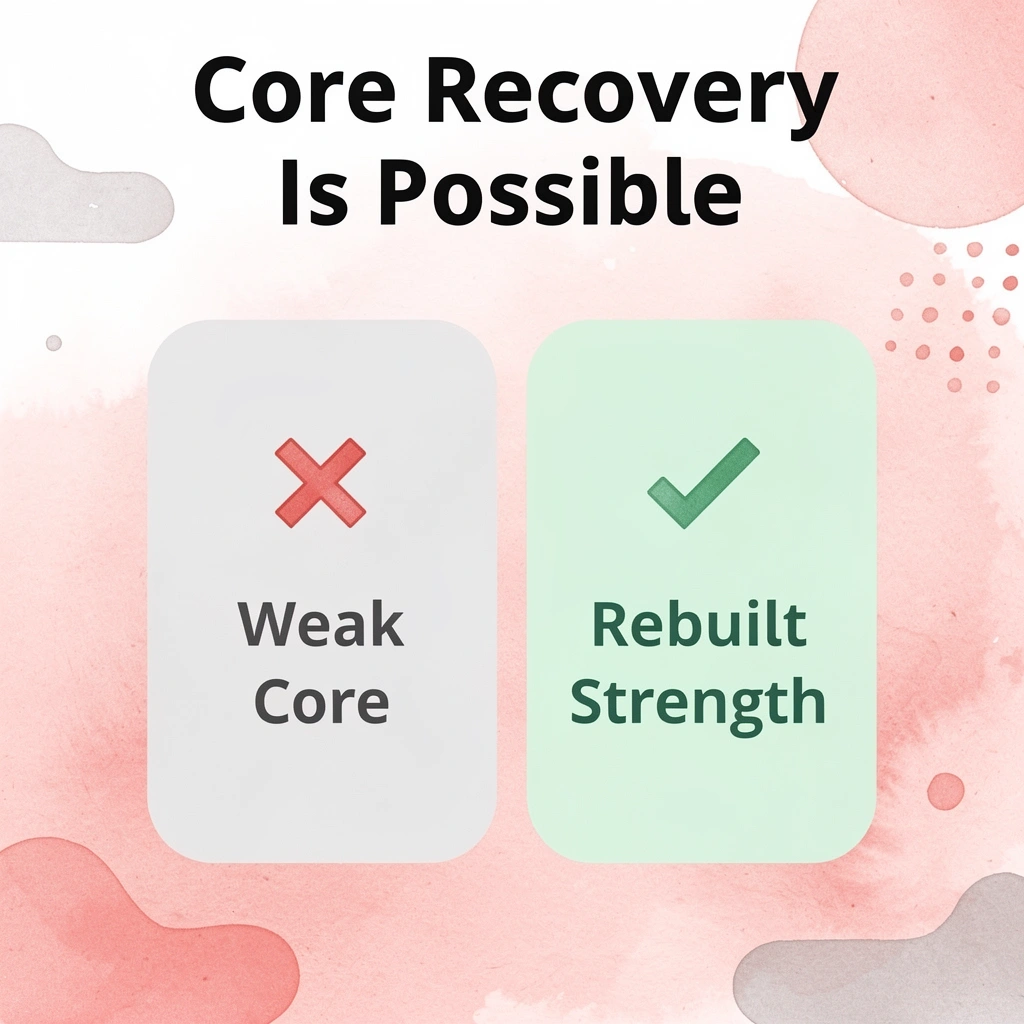
Yes. Two years after giving birth, your muscles can still be trained, your body composition is still changeable, and your core can still rebuild functional strength. The idea that recovery closes like a window after some invisible deadline is not supported by physiology.
“The human body retains the ability to remodel muscle tissue and reduce fat long after pregnancy — there is no fixed expiration date on postpartum recovery.” — Exercise Physiology Research
💡 Tip: If you’re 2+ years postpartum and feel like you’ve “missed your window,” you haven’t. Your body is still responding to the right stimulus — it’s never too late to start.
⚠️ Warning: The biggest myth in postpartum fitness is that recovery has a deadline. Believing this can stop you from even trying — and that’s the real barrier to results.
| Recovery Factor | Still Possible After 2 Years? |
|---|---|
| Core muscle retraining | ✅ Yes |
| Body composition change | ✅ Yes |
| Functional strength rebuild | ✅ Yes |
| Diastasis recti improvement | ✅ Yes |
What the research actually shows
WebMD reports that it can take six to twelve months or longer to lose pregnancy weight, and some women never fully return to their pre-pregnancy shape. Pursuing your pre-pregnancy body is often the wrong goal. Building a stronger, more capable body from where you are now is both easier to achieve and more meaningful.
Research published in PMC found that about 75% of women retained at least 1 kg of weight five to ten years after their first delivery. Postpartum body changes are a long-term reality requiring a sustained approach, not a quick return to your pre-pregnancy appearance.
Why body composition beats the scale
Weight is a single number. Body composition shows the complete picture. Two women can weigh the same and look, move, and feel completely different depending on how much of that weight is muscle versus fat. Rebuilding lean muscle through resistance training shifts that ratio in ways cardio alone rarely does. The midsection begins to change not because fat disappears overnight, but because the underlying structure strengthens and firms up.
Most postpartum fitness approaches default to high-intensity cardio or calorie restriction, but these strategies show their limits as weeks stretch into months without visible change. Methods combining strength, endurance, and deep core engagement without stressing a still-recovering body produce more consistent results. BST Lagree in London works on this principle, using the Megaformer to deliver high-intensity, low-impact training that targets deep stabilizing muscles and full-body composition without the joint stress that can impede postpartum recovery.
The habits that actually drive change
Many women are in a better position two years after giving birth than at six weeks. The confusion of early motherhood has lifted, sleep is often more predictable, and they can train with a plan rather than out of desperation. This shift in conditions is a genuine advantage.
But knowing that change is possible and knowing which strategies produce it are two different things.
Which habits consistently move the needle?
Making lasting progress two years after giving birth requires consistent strength training, adequate protein intake, quality sleep, and stress management—all of which affect how your body stores fat, builds muscle, and repairs connective tissue. Neglecting any one of these consistently undermines the effectiveness of the others.
Related Reading
- First Postpartum Workout
- When Can I Workout Postpartum
- Is Pilates Good for Postpartum Weight Loss
- Can I Do Pilates 3 Weeks Postpartum
- Bird Dog Exercise Postpartum
- Postpartum Glute Bridge Exercise
- Postpartum HIIT Workout
- Postpartum Kettlebell Workout
- Postpartum Dumbbell Workout
5 Most Effective Strategies for Reducing a Postpartum Belly
Reducing a postpartum belly requires combining multiple strategies that address the structural, metabolic, and hormonal realities of a body that has been through pregnancy — not generic weight loss approaches.
“Postpartum recovery is not one-size-fits-all — it demands a multi-layered approach targeting the body’s structural, metabolic, and hormonal changes unique to pregnancy and birth.” — Postpartum Health Experts
| Strategy Focus | Why It Matters | Approach Type |
|---|---|---|
| Structural Recovery | Addresses core muscle separation (diastasis recti) | Targeted rehab exercises |
| Metabolic Reset | Restores hormonal balance and energy use | Nutrition & sleep optimization |
| Hormonal Alignment | Manages postpartum hormone shifts affecting fat storage | Lifestyle & stress reduction |
| Cardiovascular Activity | Supports calorie burn without overtaxing recovery | Low-impact movement |
| Mindset & Consistency | Most overlooked factor in long-term results | Habit-building strategies |
💡 Tip: Always consult a postpartum specialist before starting any belly-reduction plan — your body’s unique recovery timeline is essential to getting results safely.
⚠️ Warning: Applying generic weight loss tactics to a postpartum body can be counterproductive and even harmful — structural changes like diastasis recti require specialized attention, not standard ab workouts.
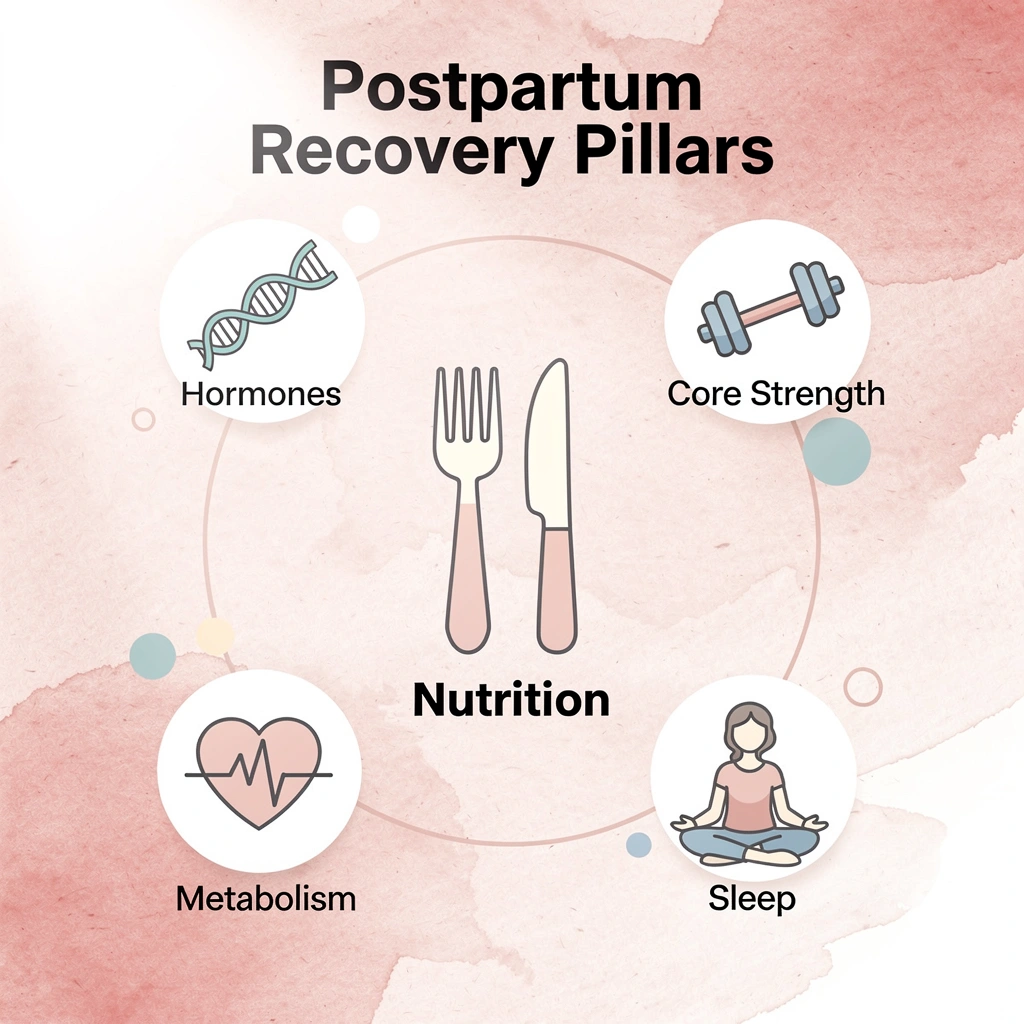
Why does deep core activation come before crunches and planks?
The failure point is almost always the same: women return to crunches and planks before their deep core is ready. Pregnancy restructures how your abdominal muscles fire, and according to the Natal App Blog, up to 60% of postpartum women experience diastasis recti, a separation of the abdominal muscles that surface-level ab exercises can worsen. The smarter starting point is deep core activation: diaphragmatic breathing, transverse abdominis engagement, and pelvic floor coordination. These are prerequisites for every other movement to work properly.
What functional core work actually changes how your midsection looks?
Once that foundation is stable, functional core work like dead bugs, Pallof presses, and bird dogs builds strength that changes how your midsection looks and performs in daily life: a core that functions correctly under load.
Prioritize Strength Training Over Cardio
The natural instinct is to run, cycle, or attend high-intensity cardio classes to lose weight after having a baby. Building lean muscle through full-body strength training improves your body composition at rest, making your body more metabolically efficient even when you’re not exercising.
Why do compound movements produce results that cardio alone cannot?
Compound movements—squats, hip hinges, rows, and presses—engage multiple muscle groups simultaneously and trigger a hormonal response that cardio alone cannot match. Three to four sessions per week, sustained over months, produce measurably different results. Consistency matters more than intensity.
Why does high-impact cardio often set back postpartum recovery?
Most postpartum fitness plans use high-impact formats, but high-impact loading on a body managing pelvic floor recovery or connective tissue repair often creates setbacks rather than progress. BST Lagree in London addresses this directly: our Megaformer delivers high-intensity, full-body strength training through slow, controlled resistance work that builds muscle without the joint stress or impact that can derail postpartum recovery.
Manage Cortisol, Not Just Calories
Stress is a physical factor in postpartum fitness. Research from The Bloom Method shows that cortisol levels can remain elevated for up to 12 months after giving birth, leading to fat storage around the belly. Insufficient sleep and caregiving stress can keep cortisol levels elevated for more than two years.
If your training is intense and you don’t recover well, you create the hormonal environment that makes belly fat difficult to lose. Shorter, focused workouts with adequate rest often outperform longer workouts when stress is high. Recovery is part of training, not separate from it.
Build Nutrition Habits That Support Muscle, Not Just Weight Loss
Restrictive diets reduce the calories and protein your body needs for muscle repair and hormonal function. Cutting calories without prioritizing protein often results in losing muscle alongside fat, which worsens body composition.
Build consistent habits around protein intake at every meal, whole-food density, and adequate hydration. Protein supports muscle synthesis, stabilizes appetite, and improves recovery between training sessions. Aim for a target that reflects your body weight and activity level, rather than a generic low-calorie prescription. Nutrition should feel like fuel management, not punishment.
Make Consistency the Non-Negotiable
The pattern across women who make real progress two or more years after giving birth is not that they found a harder program, but that they stopped stopping. Three strength sessions per week, done regularly across six months, produce more measurable change than six weeks of daily intense effort followed by a complete reset.
Why does steady effort outperform short bursts of motivation?
Consistency enables progressive overload: gradually increasing resistance, range of motion, or training volume. This is how the body adapts and changes. It requires showing up regularly so changes build on each other. Short bursts of motivation cannot create what steady, intentional effort builds over time.
But knowing the right strategies is only half of what you need; what undermines them is often something far less obvious than effort or discipline.
Common Mistakes That Can Make a Postpartum Belly Harder to Lose
Many women who struggle to reduce a postpartum belly months or even years after birth aren’t failing because they don’t try hard enough — they’re using an approach that works against what their body actually needs to fully recover.
“The problem isn’t effort — it’s strategy. Most postpartum women are working hard with the wrong tools, fighting their body’s recovery process instead of supporting it.” — Postpartum Recovery Research
⚠️ Warning: Pushing harder with the wrong approach doesn’t speed up recovery — it can actively slow it down and make your postpartum belly harder to lose over time.
💡 Tip: Before ramping up exercise intensity or slashing calories, understand exactly what your postpartum body needs — the answer may surprise you.
| Common Mistake | Why It Backfires |
|---|---|
| Jumping into intense core workouts | Can worsen diastasis recti and delay healing |
| Severe calorie restriction | Disrupts hormonal balance and slows metabolism |
| Skipping rest and recovery | Elevates cortisol levels, promoting belly fat retention |
| Ignoring pelvic floor health | Undermines core stability and long-term results |
🔑 Takeaway: Recovery-first strategies — not harder workouts — are the critical foundation for losing a postpartum belly effectively and safely.

Why do crunches fail to flatten a postpartum belly?
Crunches are the most commonly performed incorrectly exercise in postpartum fitness. They strengthen surface abdominal muscles but neglect deep core stability, connective tissue integrity, and the coordination between the pelvic floor and diaphragm that determines how the abdomen looks and functions. For women with abdominal separation, crunch work can increase intra-abdominal pressure in ways that slow healing rather than accelerate it.
Does spot reduction actually work for losing a pregnancy belly?
Spot reduction follows the same logic. Doing hundreds of abdominal exercises may build muscular endurance, but fat distribution is governed by genetics, hormones, and total energy balance, not by which muscles you use most often. Full-body strength training consistently outperforms targeted belly workouts for visible changes in body composition.
When restriction backfires
Extreme calorie restriction often backfires. According to the HealthPartners Blog, it takes six to twelve months to return to pre-pregnancy weight under normal, sustainable conditions. Aggressive dieting reduces muscle mass alongside fat, lowering metabolic rate and making future fat loss harder. The scale may move, but the abdominal appearance can worsen if muscle tone decreases faster than fat does.
What happens when you push harder instead of smarter?
The instinct is to push harder when results stall: more restriction, more exercise, more urgency. But when the underlying issue is core dysfunction, postural change, or unresolved diastasis recti, that approach adds pressure to a system that needs rebuilding. Women who train through a Lagree-based method at BST Lagree work within a low-impact, high-intensity framework that progressively loads the deep core without the joint stress or intra-abdominal pressure spikes that high-impact exercise creates. That distinction matters when recovery, not performance, is the goal.
Why does the scale fail to show real postpartum progress?
Focusing only on body weight is one of the most emotionally costly mistakes in postpartum recovery. A woman can lose significant weight and still feel unhappy with her midsection if posture, muscle tone, and core coordination remain unchanged. Conversely, a woman who gains muscle while losing fat may see little change on the scale but notice visible changes in how her body holds itself. Body composition tells a more complete story than weight alone.
What should you do when effort and results do not match?
It is tiring to work hard and still feel like your body is not responding. That frustration is real, and it is not a reflection of discipline or character. It is a signal that the strategy needs adjusting, not that the effort needs increasing. The type of training that closes the gap between effort and outcome is more specific than most people realize.
Why Low-Impact Strength Training Works Well for Postpartum Fitness
Low-impact strength training works well for postpartum fitness because it directly challenges muscles and metabolism without placing excessive stress on joints, connective tissue, or a rebuilding pelvic floor. This distinction is critical for new mothers: intensity and impact are not the same thing — you can work hard and see real, meaningful results without pounding your body through high-stress movement.
“Intensity and impact are not the same — you can work hard without pounding.” — A foundational principle of postpartum recovery training
| Training Factor | High-Impact Exercise | Low-Impact Strength Training |
|---|---|---|
| Joint Stress | High | Minimal |
| Pelvic Floor Demand | Excessive | Controlled |
| Muscle & Metabolism Challenge | High | High |
| Connective Tissue Risk | Elevated | Low |
| Postpartum Suitability | Often too soon | ✅ Recommended |
💡 Tip: If you’re postpartum and unsure where to start, low-impact strength training is almost always the safest and most effective entry point — it protects your body while still delivering serious fitness gains.
🎯 Key Point: The rebuilding of the pelvic floor is one of the most overlooked factors in postpartum exercise selection. Choosing low-impact movements removes unnecessary pressure from this essential structure while your body heals.
Why does full-body loading outperform targeted ab work for the postpartum belly?
The postpartum belly is rarely a single-muscle problem, which is why single-muscle solutions keep failing. When you load the entire body through compound movements, you recruit the glutes, legs, back, and shoulders simultaneously, and the core must stabilize throughout. That integrated demand builds functional strength in the same pattern the body uses when lifting a toddler off the floor or carrying groceries up three flights of stairs. Spot-focused training cannot replicate that metabolic or structural outcome.
How does posterior chain weakness affect the way your midsection looks?
Posture is the overlooked factor here. Pregnancy shifts the body’s center of gravity forward for months, and caregiving tasks like feeding, carrying, and bending perpetuate those postural changes well into the postpartum years. Weakness in the posterior chain—glutes, upper back, and deep spinal stabilizers—allows the pelvis to tilt and the lower abdomen to protrude even when body fat is relatively low. Strengthening these muscles changes how the midsection sits and moves, sometimes visibly, before body composition shifts significantly.
Why the joint-friendly argument is more than just comfort
The most common reason postpartum women stop doing fitness programs is that the program demands more than their bodies can handle. High-impact training increases ground reaction forces through the knees, hips, and pelvic floor. For women managing pelvic floor symptoms or early-stage diastasis recti recovery, that load can set progress back rather than speed it up. Low-impact strength training removes that barrier without removing the challenge, enabling more women to stay consistent long enough to see results.
What does the research say about low-impact training after pregnancy?
According to the Delaware Journal of Public Health, structured exercise after childbirth improves heart and lung fitness by 30% within 12 weeks. Strength-focused, low-impact sessions deliver meaningful fitness gains without excessive demands on recovery. The Megaformer at BST Lagree exemplifies this approach: slow, controlled resistance work keeps muscles under tension longer than typical gym circuits, without impact.
The sustainability factor that most programs ignore
Research shows the best training method is one a person can repeat for months without injury, burnout, or dread. Most fitness programs prioritize maximum short-term intensity over long-term adherence. Low-impact strength training scales naturally because resistance, range of motion, and tempo adjust as strength improves: the same framework works at week two and month twelve. The Delaware Journal of Public Health reports that postpartum women who engage in structured exercise experience up to a 50% reduction in depressive symptoms, reframing what “results” means. Physical transformation and psychological recovery are inseparable.
The women who make the most consistent progress over a postpartum year are not those who pushed hardest at the start, but those who found a method worth returning to.
Related Reading
- Kegel Exercises Postpartum
- Postpartum Strength Workout
- Postpartum Diastasis Recti Workout
- Easy Postpartum Workout
- Postpartum Arm Workout
- Postpartum Full Body Workout
- Postpartum Core Workout
- 6 Week Postpartum Workout Plan
- Postpartum Pelvic Floor Exercises
- Postpartum Workout Plan At Home
- Pilates Exercises For Post Pregnancy
- Postpartum Diastasis Recti Workout
- Postpartum Pelvic Floor Exercises
- Postpartum Belly Exercises
How BST Lagree Supports Women Working Toward Postpartum Fitness Goals
For many women, losing a postpartum belly is about so much more than aesthetics — it’s about rebuilding strength, improving core stability, increasing confidence, and finding a fitness routine they can stick with. Many traditional workout programs are too intense, take too much time, or are simply hard to keep up with while being a mom. BST Lagree offers a different approach through low-impact, full-body workouts that build strength and challenge the core without stressing your joints.
💡 Tip: If you’ve struggled to stay consistent with postpartum fitness, the problem may be the program — not your motivation. A low-impact, sustainable approach like BST Lagree is designed to meet you where you are.
“Rebuilding core strength postpartum isn’t just a fitness goal — it’s a foundational health priority that supports everything from posture and stability to long-term injury prevention.” — Postpartum Fitness Insight
🎯 Key Point: BST Lagree stands out because it addresses the three biggest barriers postpartum women face — intensity, time, and consistency — all in one full-body, low-impact workout format.
| Common Postpartum Fitness Challenge | How BST Lagree Addresses It |
|---|---|
| Too intense for recovering bodies | Low-impact movements protect healing joints and muscles |
| Takes too much time | Efficient, full-body workouts maximize results in less time |
| Hard to stay consistent | An approachable format builds a routine that moms can actually maintain |
| Weak or unstable core | Targeted core challenges rebuild strength safely and progressively |
How does BST Lagree fit into a busy postpartum schedule?
BST Lagree’s 45-minute classes deliver efficient, full-body workouts that target multiple muscle groups in a single session. Rather than isolating individual body parts, our Lagree training engages your upper body, lower body, core, and stabilizing muscles throughout, creating a time-efficient experience for busy schedules.
Lagree combines strength training and cardio through slow, controlled movements performed under constant tension. This challenges your muscular strength while raising your heart rate, enabling you to build strength and improve muscular endurance in a single session.
How does Lagree training support postpartum core recovery?
Core strength is important for postpartum recovery. Unlike workouts that spend only a few minutes on abdominal exercises, BST Lagree training engages your core throughout the entire class. Your core acts as a stabilizer during many movements, building functional strength while supporting balance, posture, and overall movement quality.
Is Lagree a good option for women not ready for high-impact exercise?
Many postpartum women want demanding workouts but may not feel ready for high-impact activities like running or jumping. BST Lagree provides a low-impact alternative that challenges muscles while minimizing joint stress.
No two postpartum journeys are the same. Our BST Lagree workouts use adjustable resistance, allowing participants to modify exercises based on their current strength and fitness levels. This flexibility challenges both beginners and advanced participants.
How do instructors and community support long-term postpartum fitness?
Choosing the right exercises and using correct form matter when building strength after pregnancy. BST Lagree classes are led by certified instructors who provide guidance on movement patterns, technique, and adjustments, which is particularly helpful for women returning to structured exercise after a long break.
Fitness is easier to maintain with support. BST Lagree provides an environment where women work toward their goals alongside others pursuing similar journeys. For many mothers, a consistent training space and supportive community strengthen long-term commitment.
Lagree training challenges the core, lower body, upper body, and stabilizing muscles simultaneously, helping women build strength and improve body composition without placing stress on the joints. For women pursuing postpartum fitness goals, BST Lagree offers a structured, supportive, and efficient way to rebuild strength and establish sustainable exercise habits that support long-term health.
Book a Lagree Class in London Today
Finding a method worth returning to requires smarter structure, not harder effort. Rebuilding deep core function, restoring muscle tissue, and training sustainably across months—not days—is what works.
“Sustainable progress comes from intelligent structure: rebuilding deep core function and muscle tissue over months, not days.” — BST Lagree Training Philosophy
🎯 Key Point: The difference between results and burnout is not effort but training structure. A method you can return to consistently will always outperform one that pushes you to your limit once.

Lagree in London at BST Lagree delivers exactly that. Our Megaformer combines full-body, high-intensity, low-impact work with strength, endurance, and core activation, designed specifically for women’s bodies. Book a class and experience consistent, intelligent training.
💡 Tip: If you’re ready to commit to a method built around your body — book your first Lagree class at BST Lagree today and feel the difference intelligent training makes.
| Training Feature | What It Delivers |
|---|---|
| Full-body Megaformer work | Simultaneous strength + endurance |
| High-intensity, low-impact | Maximum results, minimal joint stress |
| Core activation focus | Deep core function rebuilt from within |
| Designed for women’s bodies | Targeted, intelligent programming |