Having a baby reshapes the body in ways that make returning to exercise feel daunting. Energy is low, the core feels unfamiliar, and the pressure to bounce back can make the whole process more stressful than it needs to be. A first postpartum Pilates workout offers a practical starting point, focusing on rebuilding deep core strength and restoring muscle tone without pushing the body beyond what it is ready for.
The Lagree method is well-suited to postpartum recovery because it is low-impact yet genuinely effective at targeting the muscles most affected by pregnancy and childbirth. It supports better posture, gradual strength gains, and a return to movement that feels sustainable rather than forced. Whether someone is six weeks or several months postpartum, the approach adapts to where the body is right now, and new mothers in the UK can explore it through Lagree in London.
Table of Contents
- Why Returning to Exercise After Pregnancy Feels So Difficult
- What Is a Postpartum Pilates Workout?
- Benefits of Postpartum Pilates for New Moms
- 7 Safe Postpartum Pilates Exercises to Start With
- Common Postpartum Workout Mistakes to Avoid
- How BST Lagree Helps Women Rebuild Strength After Pregnancy
- Book a Lagree Class in London Today
Summary
- Returning to exercise after childbirth is structurally difficult, not motivational. Up to 50% of women experience diastasis recti postpartum, a separation of the abdominal muscles that directly undermines core stability and makes standard exercise progressions unreliable. An additional 1 in 3 women face pelvic floor dysfunction that limits their ability to safely return to high-impact movement, affecting breathing mechanics, spinal stability, and force generation through the lower body.
- Despite the clear benefits of structured postpartum movement, only 39.4% of postpartum women actually practiced physical exercise during the postpartum period, according to a 2025 assessment of postpartum exercise practices. The gap between knowing exercise helps and having a method that feels safe and appropriate is where most women stall, not because of motivation, but because of a lack of accessible structure.
- Postpartum Pilates targets the deep stabilizing system, specifically the diaphragm, transverse abdominis, multifidus, and pelvic floor, rather than surface-level abdominal muscles. A Singapore Medical Journal study examining 80 women in a structured postpartum Pilates program found measurable reductions in maternal fatigue, suggesting the benefits extend beyond musculoskeletal recovery to energy regulation and daily functioning.
- Pelvic floor recovery carries some of the strongest evidence for Pilates-based postpartum training. A 2025 scoping review published in BMC Pregnancy and Childbirth found that Pilates was associated with up to 30% gains in pelvic floor muscle strength in postpartum women. Those gains influence how load is transferred through the pelvis during walking, lifting, and rotation, making pelvic floor rehabilitation a long-term structural investment rather than a short-term fix.
- Returning to exercise too soon creates measurable risk. Research published in the Delaware Journal of Public Health found that postpartum women who return to high-intensity exercise before six weeks postpartum face a significantly increased risk of pelvic floor dysfunction. The same source reports that up to 45% of postpartum women experience diastasis recti, a condition that worsens with premature return to exercises like crunches, where increased intra-abdominal pressure can widen the gap rather than close it.
- Most postpartum fitness errors are not reckless but logical, driven by social comparison, cultural pressure, and pre-pregnancy habits applied to a body operating under different rules. Progress measured against an individual’s own baseline, week over week, yields more useful information than benchmarking against someone else’s recovery timeline, since every recovery is shaped by sleep quality, hormonal shifts, delivery method, and individual healing rates that never appear in a before-and-after photo.
- Lagree in London addresses the gap between postpartum rehabilitation and genuine strength training by using the Megaformer to deliver high-intensity, low-impact full-body work that builds on foundational core and pelvic floor principles without the joint loading and pelvic pressure that make traditional high-impact formats risky for postpartum bodies.
Why Returning to Exercise After Pregnancy Feels So Difficult
Going back to exercise after having a baby is hard — and not for the reasons most people think. The problem is not about motivation. It is about how your body is structured. Your body spent nine months reorganizing itself around a growing baby, and after delivery, it does not simply return to its previous state.
“The postpartum body has undergone one of the most profound physical transformations in human biology — returning to exercise requires understanding that nothing about your body is the same as it was before.” — Postpartum Fitness Research
🚨 Warning: Assuming that low motivation is the barrier to postpartum exercise is one of the most common and costly mistakes new mothers make. The real issue is physiological restructuring — and pushing through without understanding it can cause serious setbacks.
💡 Key Insight: Your body spent nine full months in a state of continuous physical transformation. Expecting it to reset immediately after delivery ignores the biological reality of what your body has endured and what it still needs to recover.
What physical barriers make postpartum recovery so unpredictable?
Physical recovery after childbirth is uneven, unpredictable, and deeply individual. According to the GSSI Sports Science Exchange, up to 50% of women experience diastasis recti postpartum, a separation of abdominal muscles that weakens core stability and makes standard exercise progressions unreliable. You cannot build on a shifting foundation.
The same research source notes that pelvic floor dysfunction affects approximately 1 in 3 women after childbirth, limiting their ability to safely return to high-impact movement. This structural barrier affects breathing mechanics, spinal stability, and force generation through the lower body. Many women don’t connect their back discomfort, leaking, or sense of physical fragility to pelvic floor dysfunction because no one directed them to look there.
Why do the two most common postpartum approaches both fall short?
The familiar postpartum approach tends toward two extremes: complete rest until the six-week clearance, followed by resuming pre-pregnancy routines, or pushing through discomfort due to pressure to “get your body back.” Both create problems. The first overlooks that foundational recovery work, such as diaphragmatic breathing, gentle core reconnection, and pelvic floor activation, can begin much earlier and significantly improve long-term outcomes. The second risk is aggravating healing tissues. Our Lagree in London classes offer a third path: real workout intensity with carefully controlled impact on healing structures, allowing postpartum women to rebuild genuine strength without setbacks from premature loading.
Why does losing access to exercise hit so hard in the postpartum period?
What makes returning to exercise emotionally complicated is that fitness often serves as a coping mechanism. For women who trained consistently before and during pregnancy, losing that outlet when physical and emotional demands peak constitutes its own loss. Back pain, fatigue, and an unfamiliar body converge at the moment when the one tool that historically helped manage stress becomes unavailable.
Where does a strong postpartum recovery actually begin?
The strongest recoveries start with reconnection: learning to feel which muscles are working, restoring the coordination between breath and core, and rebuilding the pelvic floor before asking it to absorb load. That foundation changes everything that follows.
Related Reading
- First Postpartum Workout
- When Can I Workout Postpartum
- Is Pilates Good for Postpartum Weight Loss
- Can I Do Pilates 3 Weeks Postpartum
- Bird Dog Exercise Postpartum
- Postpartum Glute Bridge Exercise
- Postpartum HIIT Workout
- Postpartum Kettlebell Workout
- Postpartum Dumbbell Workout
What Is a Postpartum Pilates Workout?
Postpartum Pilates is a recovery-focused movement practice that rebuilds the deep structural muscles, breath coordination, and pelvic floor control that pregnancy disrupts. It emphasizes reconnection before adding resistance and function before performance: a critical distinction that sets it apart from general fitness training.
💡 What Makes It Different: Postpartum Pilates is not simply “gentle Pilates”—it is a structured rehabilitation approach that prioritizes restoring neuromuscular coordination before any load or intensity is introduced.

Traditional Pilates classes assume a baseline of core stability that postpartum bodies cannot take for granted. Roll-ups, planks, and loaded rotational movements require the transverse abdominis and pelvic floor to work together under tension. When that coordination has been disrupted by nine months of structural change and delivery, these exercises can actively work against recovery by recruiting the wrong muscles to compensate for those not yet firing properly.
“When the deep core system has been disrupted by pregnancy and delivery, loading movement patterns too early causes compensatory recruitment — the body finds a way, but not the right way.” — Pelvic Health Research
⚠️ Warning: Jumping into standard Pilates exercises like planks or roll-ups too soon can reinforce dysfunction rather than restore it. Always prioritize pelvic floor readiness before progressing to loaded movements.
| Exercise Type | Traditional Pilates | Postpartum Pilates |
|---|---|---|
| Starting Point | Core stability assumed | Core reconnection first |
| Key Focus | Strength and control | Breath + pelvic floor coordination |
| Planks & Roll-Ups | Standard inclusion | Introduced only when ready |
| Progression | Performance-driven | Function-driven |
🎯 Key Point: Postpartum Pilates works with your body’s recovery timeline — not against it. The goal is rebuilding the foundation, not rushing back to pre-pregnancy performance.
What postpartum Pilates actually trains
The goal is not visible abdominal muscles but the deeper stabilizing system: the diaphragm, the transverse abdominis, the multifidus, and the pelvic floor working together as a unit. When you breathe correctly during a heel slide or supine leg lift, you retrain the pressure management system of the entire trunk—the foundation that every movement in life, from picking up a car seat to returning to high-intensity training, depends on.
How does postpartum Pilates address posture and fatigue?
Posture is another way postpartum Pilates helps your body after pregnancy. After months of carrying extra weight forward, followed by hours each day of feeding and holding a newborn, the upper back rounds, the chest tightens, and the neck accumulates chronic tension. Targeted mobility work for the thoracic spine and strengthening for the mid-back muscles counteracts these patterns before they become entrenched. According to a Singapore Medical Journal study examining 80 women in a Pilates postpartum fatigue program, a structured Pilates intervention produced measurable reductions in maternal fatigue, suggesting that benefits extend beyond musculoskeletal recovery to energy regulation and daily functioning.
Why does cautious movement alone leave recovery gaps?
Most women start postpartum Pilates with gentle walks and stretching, waiting until they feel ready for more. Without a structured approach to reactivate deep core function, this caution can extend for months without addressing the actual gaps. Studios like BST Lagree in London operate on the principle that postpartum recovery need not remain in the rehabilitation lane indefinitely. The Lagree Method uses the Megaformer to deliver high-intensity, low-impact full-body work that progresses naturally from foundational core engagement into genuine strength, toning, and endurance, without the joint stress that prevents many postpartum women from advancing.
Research published in a 2025 assessment of postpartum exercise practices found that only 39.4% of postpartum women engaged in physical activity. The gap between knowing exercise helps and finding a method that feels safe, structured, and appropriate is where most women stall. Postpartum Pilates closes that gap by offering a clear entry point where success is measured not by intensity but by whether the right muscles are working.
Benefits of Postpartum Pilates for New Moms
Postpartum Pilates gives transformative benefits to your whole body. When the deep stabilizing system starts working again, your posture, pain tolerance, and physical confidence get measurably better.
“When the deep stabilizing system is restored postpartum, the ripple effects touch every aspect of a new mom’s physical recovery — from core strength to pain management to body confidence.” — PMC, 2025
🎯 Key Point: Postpartum Pilates is not just about getting your body back — it’s about rebuilding your foundation from the inside out, targeting the deep stabilizing muscles that support everything you do as a new mom.
| Benefit | What It Means for You |
|---|---|
| Improved Posture | Reduces the hunching and strain from feeding and carrying your baby |
| Better Pain Tolerance | Strengthens the muscles that protect your spine and pelvis |
| Physical Confidence | Helps you feel strong and capable in your postpartum body |
💡 Tip: Start gentle Pilates movements as early as your healthcare provider clears you — even small activations of the deep stabilizing system can accelerate your full-body recovery.
What changes when your foundation is restored
The most immediate change most women notice is not strength, but ease. Movements that felt hard—picking up a car seat or rising from the floor while holding a baby—require less focus and bracing. That is neuromuscular coordination returning. Pilates-based training rebuilds this coordination through slow, controlled loading that forces the nervous system to learn sequencing again rather than compensate around weak links.
How does pelvic floor recovery reshape the whole body’s movement?
Pelvic floor recovery is where the evidence becomes particularly compelling. According to a 2025 scoping review published in BMC Pregnancy and Childbirth, Pilates was associated with up to 30% gains in pelvic floor muscle strength among postpartum women. Pelvic floor strength directly affects how loads are transmitted through the pelvis during walking, lifting, and rotation. Rebuilding it constitutes structural repair that protects the body across decades of movement.
Most postpartum back pain stems from loss of coordinated support around the lumbar spine combined with relentless physical demands: feeding positions, repetitive lifting, and asymmetric carrying. Pilates addresses the root cause by restoring the deep spinal stabilizers that absorb and distribute load before it reaches the joints. Women who commit to consistent postpartum Pilates typically report less pain and better movement quality overall.
Why does the line between rehab and real training matter?
The traditional approach treats recovery and performance as separate phases: rehabilitation first, then training later. Lagree in London challenges that separation. Our Megaformer delivers high-intensity, low-impact full-body training that builds on the same deep core and pelvic floor principles as postpartum Pilates, but with progressive resistance, cardio integration, and strength demands that continue to challenge the body beyond basic rehabilitation.
What does consistent postpartum movement do for daily energy and fatigue?
Fatigue reduction is one of the least discussed, most meaningful benefits of structured postpartum movement. Consistent, appropriately dosed Pilates improves sleep quality, reduces physical tension, and builds functional strength that makes daily caregiving less draining. The body stops working against itself. As Red Rock Physio notes, up to 1 in 3 women experience diastasis recti postpartum, a separation that, when left unaddressed, undermines energy, stability, and movement quality for years. Knowing exactly where to start—which movements, in which order, and at what intensity—is what most women are searching for.
7 Safe Postpartum Pilates Exercises to Start With
These seven exercises form the practical foundation of postpartum core recovery. The sequence matters because you’re retraining your deep core, pelvic floor, and breathing mechanics to work together again after months of being stretched and reorganized around a growing baby.
“The postpartum body requires a systematic, sequenced approach to core recovery — rushing the process or skipping foundational steps is one of the most common mistakes new mothers make.” — Postpartum Fitness Specialists
💡 Tip: Always follow the exercise sequence as written — each movement builds on the last, progressively reawakening your neuromuscular connection between breath, pelvic floor, and core.
⚠️ Warning: Never jump straight into high-intensity core work postpartum. Your deep stabilizing muscles need to be re-educated before any surface-level ab exercises are introduced.
| Exercise Focus | Primary Target | Why It Comes First |
|---|---|---|
| Diaphragmatic Breathing | Breath mechanics | Resets the pressure system |
| Pelvic Floor Activation | Deep core foundation | Rebuilds neuromuscular control |
| Dead Bug Variations | Core stability | Trains anti-rotation strength |
| Glute Bridges | Posterior chain | Supports pelvic alignment |
| Bird Dog | Spinal stability | Restores functional movement |
| Side-Lying Leg Lifts | Hip stabilizers | Reduces pelvic floor load |
| Modified Plank | Full core integration | Builds total system strength |

1. Start Here: Diaphragmatic Breathing
Diaphragmatic breathing is the first exercise because it establishes the coordinated rhythm on which all other movements depend. With each controlled inhale, your rib cage expands, and your pelvic floor gently descends. With each exhale, both recoil.
How do you practice diaphragmatic breathing correctly?
Lie on your back with your knees bent, one hand on your chest and one on your belly. Breathe in slowly through your nose, letting your ribcage and belly expand without forcing your chest to rise. Breathe out gently through your mouth while lightly pulling your deep abdominals inward and lifting your pelvic floor. Five to ten breaths are enough to start. Many women are surprised by how disconnected this feels at first; that disconnection is the information you need.
2. Restore Spinal Awareness Pelvic Tilts
Pelvic tilts build on diaphragmatic breathing, adding gentle spinal movement while activating the transverse abdominis. Lie on your back with knees bent, inhale to prepare, then exhale as you tilt your pelvis backward and flatten your lower back into the floor. Return to neutral on the inhale. Perform ten to fifteen repetitions at a slow, deliberate pace. The goal is awareness, not range of motion. Many postpartum women discover they’ve held their pelvis in a fixed position for weeks, compensating for abdominal weakness with tension elsewhere. Pelvic tilts unwind that pattern.
3. Build Stability: Heel Slides
Heel slides present the first real challenge to your core stability, requiring it to remain steady while a limb moves. Lie on your back with knees bent, engage your deep core, and slowly slide one heel along the floor until the leg is nearly straight. Alternate sides for eight to ten repetitions each. Watch for your lower back arching away from the floor as the leg extends; if that happens, shorten the slide distance. The exercise only works when your core stabilizes, not when momentum or compensation takes over.
4. Strengthen the Posterior Chain: Glute Bridges
Glute bridges strengthen weak glutes and hamstrings, which can force your lower back to compensate. Push through your heels, lift your hips off the floor, pause at the top, and lower yourself slowly. Perform ten to fifteen repetitions.
Why do glute bridges matter for pelvic floor recovery?
Capitol Physical Therapy notes that pelvic floor dysfunction affects up to 50% of postpartum women. Glute bridges restore muscle balance around the pelvis, reducing strain on the pelvic floor during standing, walking, and lifting.
What is the most common mistake to avoid during glute bridges?
The real challenge is maintaining a neutral pelvis at the top of the movement rather than hyperextending the lower back. Smaller lifts performed well, outperforming full bridges, which performed poorly.
5. Coordinate and Control: Bird Dogs
Bird dogs test the system across multiple planes at once. Start on your hands and knees with a neutral spine. Extend one arm forward while extending the opposite leg behind you; hold briefly, then return. Alternate sides for eight to ten repetitions. Slow the movement until you feel your core actively resisting the rotation created by the extending limbs. That resistance is the point: rushing turns it into a balance exercise rather than a stability exercise.
6. Build Lateral Strength: Modified Side Planks
Modified side planks target the obliques and lateral hip stabilizers, muscles that rarely receive adequate attention in early postpartum recovery but are central to functional movement. Lie on your side with knees bent, support yourself on your forearm, and lift your hips while keeping your knees on the floor. Hold for ten to twenty seconds per side. Women who practice diaphragmatic breathing find it significantly easier to maintain tension through the lateral chain without holding their breath or gripping through the neck and shoulders.
7. Restore Mobility: Cat-Cow Stretches
Cat-cow closes the sequence by addressing spinal tension built up by the other exercises. Start on your hands and knees. Inhale as you gently arch your back and lift your chest; exhale as you round your spine and draw your navel inward. Perform eight to ten slow repetitions. Postpartum bodies develop stiffness in the thoracic spine from months of feeding, carrying, and hunching forward. Cat-cow reintroduces spinal segmentation, teaching each vertebra to move independently rather than locking into a single compensatory position.
Progressing Beyond the Basics
These seven exercises are a starting point, not a limit. According to Capitol Physical Therapy, most women can begin gentle postpartum exercises within six weeks of delivery, though many stop at rehabilitation and never reach transformation. That gap is where the Lagree Method becomes important. Traditional Pilates provides the foundation. BST Lagree in London builds on it, using the Megaformer to add slow, controlled resistance through foundational movement patterns with progressive load, time under tension, and full-body integration that rehabilitation exercises alone cannot replicate, delivering real intensity with minimal joint impact.
Knowing When to Stop
Exercise after having a baby should feel challenging, not concerning. Stop and consult a doctor if you notice your belly bulging during core exercises, increased vaginal bleeding, pelvic heaviness or pressure, worsening urinary leakage with movement, dizziness, or persistent pelvic, hip, or lower back discomfort.
What does abdominal doming mean for your recovery?
These are not signs of weakness; they are signals that your body needs more time or a different approach. Abdominal doming is a warning many women miss. If your belly visibly peaks or ridges along the midline during a core exercise, the load exceeds what your system can currently manage. Reduce it.
When to Bring in Professional Support
A general six-week clearance is a minimum starting point, not permission for all exercise. Women recovering from C-sections, those with suspected diastasis recti, or anyone experiencing ongoing pelvic floor symptoms should seek a pelvic floor physical therapist assessment before progressing. Structured professional guidance removes the worry that keeps many women stuck between doing too little and risking too much. Knowing exactly what your body can handle and why provides clarity that self-directed routines cannot match. Getting the exercises right is only half the equation. The other half, knowing what not to do, is more complicated than most people expect.
Related Reading
- Kegel Exercises Postpartum
- Postpartum Strength Workout
- Postpartum Diastasis Recti Workout
- Easy Postpartum Workout
- Postpartum Arm Workout
- Postpartum Full Body Workout
- Postpartum Core Workout
- 6 Week Postpartum Workout Plan
- Postpartum Pelvic Floor Exercises
- Postpartum Workout Plan At Home
- Pilates Exercises For Post Pregnancy
- Postpartum Diastasis Recti Workout
- Postpartum Pelvic Floor Exercises
- Postpartum Belly Exercises
Common Postpartum Workout Mistakes to Avoid
The most damaging postpartum fitness errors aren’t reckless — they’re logical. They come from motivation, cultural pressure, and a genuine desire to feel like yourself again. But the body after childbirth works under entirely different rules, and applying pre-pregnancy logic to a postpartum body is where recovery quietly goes wrong.
“The postpartum body operates under a fundamentally different set of rules — what worked before pregnancy can actively undermine healing after it.” — Postpartum Fitness Research
⚠️ Warning: The most common postpartum mistakes don’t come from carelessness — they come from doing too much, too soon, driven by the pressure to “bounce back” quickly.
💡 Tip: Before returning to any pre-pregnancy workout routine, recognize that postpartum recovery is a unique physiological process that demands a completely fresh approach — not a continuation of where you left off.
| Common Mistake | Why It Feels Logical | Why It’s Harmful |
|---|---|---|
| Returning to intense exercise too soon | Motivation to regain fitness fast | Delays core and pelvic floor healing |
| Ignoring pelvic floor symptoms | Symptoms seem minor or temporary | Can lead to long-term dysfunction |
| Following pre-pregnancy programs | Familiar and proven to work before | The body has different needs post-birth |

Why does the six-week clearance miss the full picture?
According to Rethinking Prenatal and Postpartum Exercise, published in the Delaware Journal of Public Health, women who resume intense exercise before six weeks postpartum have significantly higher rates of pelvic floor dysfunction. Medical clearance at six weeks marks a starting point, not permission for all types of exercise. Your connective tissue, pelvic floor, and deep core continue healing well beyond that appointment. Treating clearance as a finish line rather than a starting point delays recovery by months.
What happens when core work is sequenced too early?
The same research reports that up to 45% of postpartum women experience diastasis recti, a condition that worsens with premature exercises like crunches. When the abdominal wall lacks structural integrity, such exercises increase intra-abdominal pressure, widening the gap rather than closing it. The solution is sequenced core work: deep activation before surface muscle engagement.
Which training approach actually rebuilds the postpartum foundation?
Most women making these mistakes follow advice designed for a different body at a different stage. HIIT classes, boot camp formats, and heavy compound lifts assume a structural baseline that postpartum recovery has not yet restored. The smarter path is precise: controlled resistance, slow tempo, full range of motion through stabilized positions. These tools rebuild the foundation without skipping steps. BST Lagree in London delivers high-intensity, low-impact training on the Megaformer, creating genuine muscular challenge without the joint loading and pelvic pressure that make traditional high-impact formats risky for postpartum bodies.
Why does comparing your recovery to others backfire?
The failure point is usually psychological, not physical. When a woman uses someone else’s six-week transformation as her benchmark, she compresses her timeline to match someone else’s biology. Every pregnancy, delivery, and recovery is shaped by sleep quality, hormonal shifts, delivery method, and individual healing rates—none of which appear in a before-and-after photo. Progress measured against your own baseline, week over week, is the only comparison that yields useful information.
What is the real cost of rushing your return to postpartum fitness?
The real cost of rushing is not injury alone, but the setback that follows: weeks of forced rest, lost momentum, and the frustration of starting over. Patience in postpartum fitness is not passivity. It is the strategic choice that keeps you moving forward without interruption. Sometimes the most important shift is not in the workout itself, but in where you do it.
How BST Lagree Helps Women Rebuild Strength After Pregnancy
Many women want more than basic postpartum recovery exercises. They seek to build strength, improve endurance, increase confidence, and feel strong again without high-impact workouts that stress recovering muscles and joints. Traditional gyms often feel intimidating, with classes that move too quickly or generic programs that don’t address postpartum challenges.
💡 Tip: If traditional gym classes feel overwhelming postpartum, you’re not alone. Most women need a program specifically designed around postpartum recovery, not a scaled-down version of standard fitness.
“Women deserve more than generic fitness programs after pregnancy—they need targeted, low-impact training that meets them where they are and builds them back stronger.” — BST Lagree
⚠️ Warning: Jumping into high-impact workouts too soon after pregnancy can stress healing core muscles and pelvic floor tissues. Always prioritize proper movement over intensity.
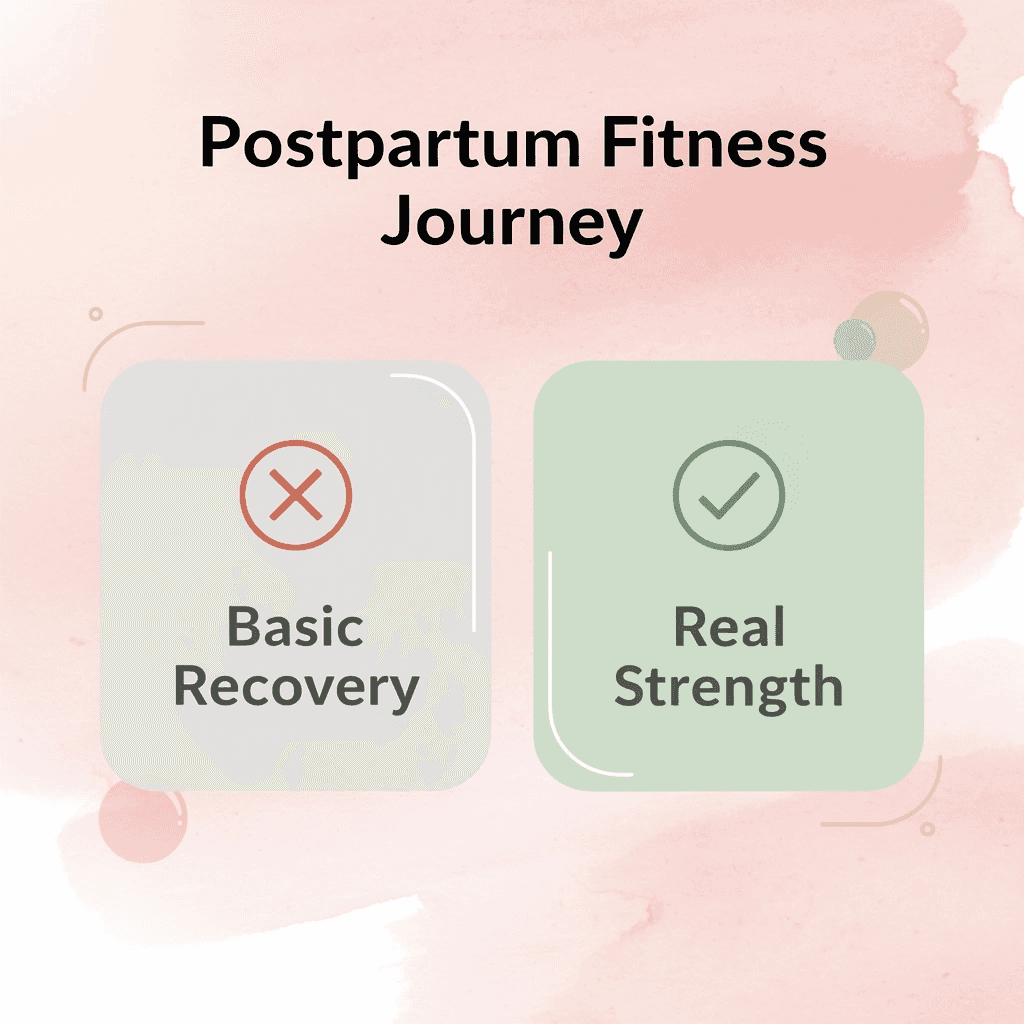
BST Lagree offers a different approach. Our low-impact, high-intensity training helps women progress beyond early recovery while focusing on proper movement, strength development, and long-term sustainability.
🎯 Key Point: Low-impact does not mean low results—BST Lagree’s method delivers high-intensity strength gains without the joint stress of traditional workouts.
| Training Approach | Traditional Gym | BST Lagree |
|---|---|---|
| Impact Level | High-impact | Low-impact |
| Postpartum Focus | Generic programs | Targeted recovery |
| Pace | Fast-moving classes | Controlled, intentional movement |
| Sustainability | Risk of overexertion | Long-term progression |
Why does the training environment matter for new moms?
For many new mums, where they exercise matters as much as how they exercise. BST Lagree provides a women-focused fitness space where clients can focus on their goals without the distractions of traditional gym environments. Women are guided through structured classes designed to be motivating, effective, and supportive, allowing them to rebuild confidence and strength at their own pace.
How does low-impact training deliver an intense workout?
One of the biggest misconceptions in fitness is that effective workouts must involve jumping, sprinting, or high-impact movements. BST Lagree challenges that belief. Our method uses slow, controlled movements under continuous tension to create a challenging workout without the pounding of traditional programs. Because movements are controlled and deliberate, participants can challenge their muscles intensely while minimizing unnecessary impact.
How does BST Lagree fit into a busy new mother’s schedule?
Finding time to exercise is one of the biggest challenges for new mothers. BST Lagree combines strength training and cardiovascular conditioning into a single 45-minute workout. Rather than separating cardio days from strength days, clients work on both simultaneously, making each session highly efficient. Postpartum recovery often requires more attention to movement quality than intensity. Our Lagree method’s emphasis on slow, controlled movement encourages proper alignment and muscle engagement throughout each exercise. By maintaining control rather than rushing through repetitions, participants build strength while reinforcing healthy movement patterns.
How do certified instructors support individual postpartum needs?
Every postpartum journey is different. Some women progress quickly, while others need more time to rebuild strength and confidence. At BST Lagree, all instructors are certified and complete a rigorous mentorship program to ensure classes are safe, effective, motivating, and supportive. Instructors provide modifications based on experience level, fitness background, and individual needs. Fitness is easier to maintain with support. BST Lagree emphasizes a positive, uplifting atmosphere where clients focus on progress rather than perfection. For women navigating the physical and emotional changes of motherhood, that supportive environment is as valuable as the workout itself.
Why does postpartum fitness require full-body strength training?
After having a baby, fitness should not focus only on the core. While rebuilding core function is important, daily life demands strength throughout the entire body: carrying a baby, lifting strollers, climbing stairs, and managing household tasks all require coordinated, full-body strength. BST Lagree workouts engage multiple muscle groups simultaneously, helping women develop core, lower-body, and upper-body strength, balance, stability, and muscular endurance.
How does BST Lagree support women beyond the recovery phase?
Recovery is not the final goal; it is the starting point. Once foundational strength and stability have been restored, many women want a workout that continues challenging them without abandoning the principles that supported their recovery. BST Lagree bridges that gap by allowing women to progress with increasing strength and endurance while maintaining a low-impact approach that prioritizes control and proper movement. This creates a sustainable path forward: women can build strength effectively without having to choose between gentle recovery and high-impact fitness.
Book a Lagree Class in London Today
Lagree in London at BST Lagree offers purposeful progression beyond foundational training. Our Megaformer delivers high-intensity, low-impact full-body training that challenges strength, toning, and endurance without straining a postpartum body still rebuilding. This is not generic fitness: it’s a method designed for meaningful results at the right stage of your recovery.
“High intensity, low impact training on the Megaformer challenges strength, toning, and endurance without straining a postpartum body still rebuilding.” — BST Lagree
💡 Tip: The Megaformer is engineered to deliver a full-body challenge while protecting joints and connective tissue, making it one of the smartest postpartum training tools available in London.
BST Lagree is led by Europe’s most experienced Lagree trainer and built with women in mind: coaching, pacing, and environment designed around how your body works. Every class reflects a deep understanding of female physiology, ensuring you’re pushed at the right intensity for progress. Book a class and experience what happens when the right method meets the right moment.
🎯 Key Point: BST Lagree is a specialist environment where expert coaching and a women-first approach combine to deliver results that generic gyms cannot match.
✅ Best Practice: Ready to start? Book your first Lagree class at BST Lagree and let London’s leading Lagree trainer guide your next chapter.