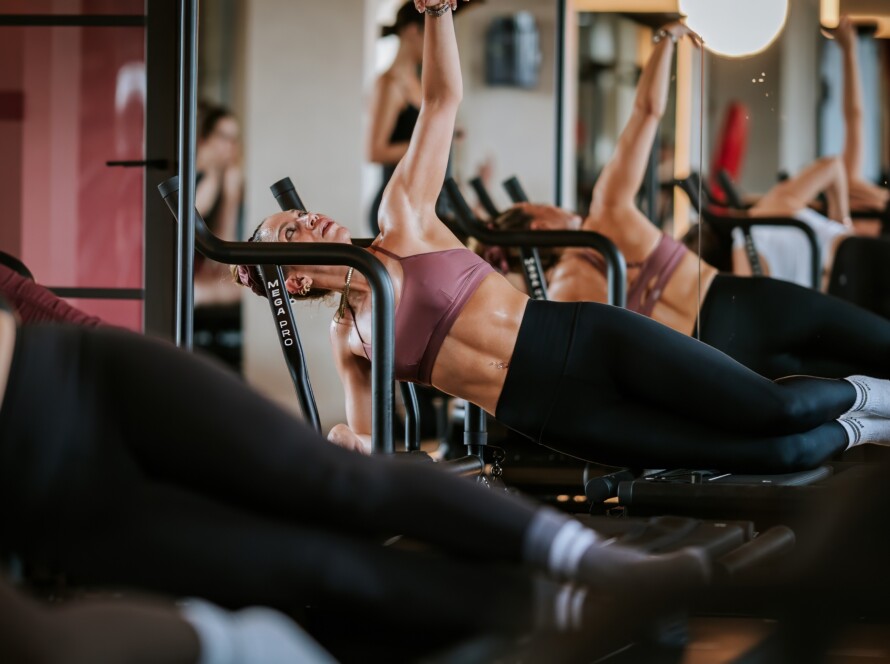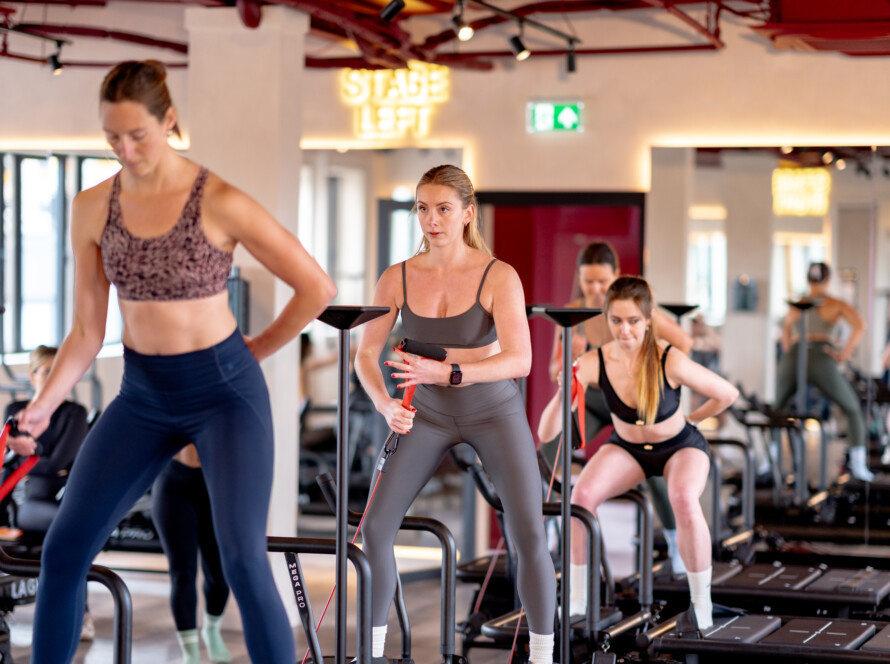
After childbirth, returning to exercise can feel uncertain, especially when the core feels absent and the pelvic floor is struggling to keep up. Weakness, leakage, and a loss of connection to the deep abdominal muscles are common experiences for new mothers, but they respond well to the right approach. A structured first postpartum workout built around pelvic floor exercises helps rebuild strength and control through movement patterns that are both gentle and effective.
The Lagree method is particularly well suited to postpartum recovery because its slow, controlled movements on the Megaformer engage deep core and pelvic floor muscles without high-impact stress on a healing body. This makes it a practical option for mothers working toward restored function, better stability, and a renewed sense of physical confidence. For those ready to take that step, Lagree in London offers a supportive studio environment designed to meet you where you are.
Summary
- Pelvic floor dysfunction affects 35% of women after vaginal delivery, according to the Journal of Prenatal Medicine, with symptoms including urinary leakage during everyday activities like sneezing, laughing, or lifting. Many women also experience pelvic heaviness, reduced sensation, or difficulty controlling their bladder during routine movements. These physical symptoms create uncertainty about what the body can handle, leading women to avoid exercises they once enjoyed or decline activities involving physical exertion. Research shows that 20% of women still have persistent pelvic floor dysfunction three months postpartum, demonstrating that waiting for spontaneous recovery often leaves symptoms unresolved.
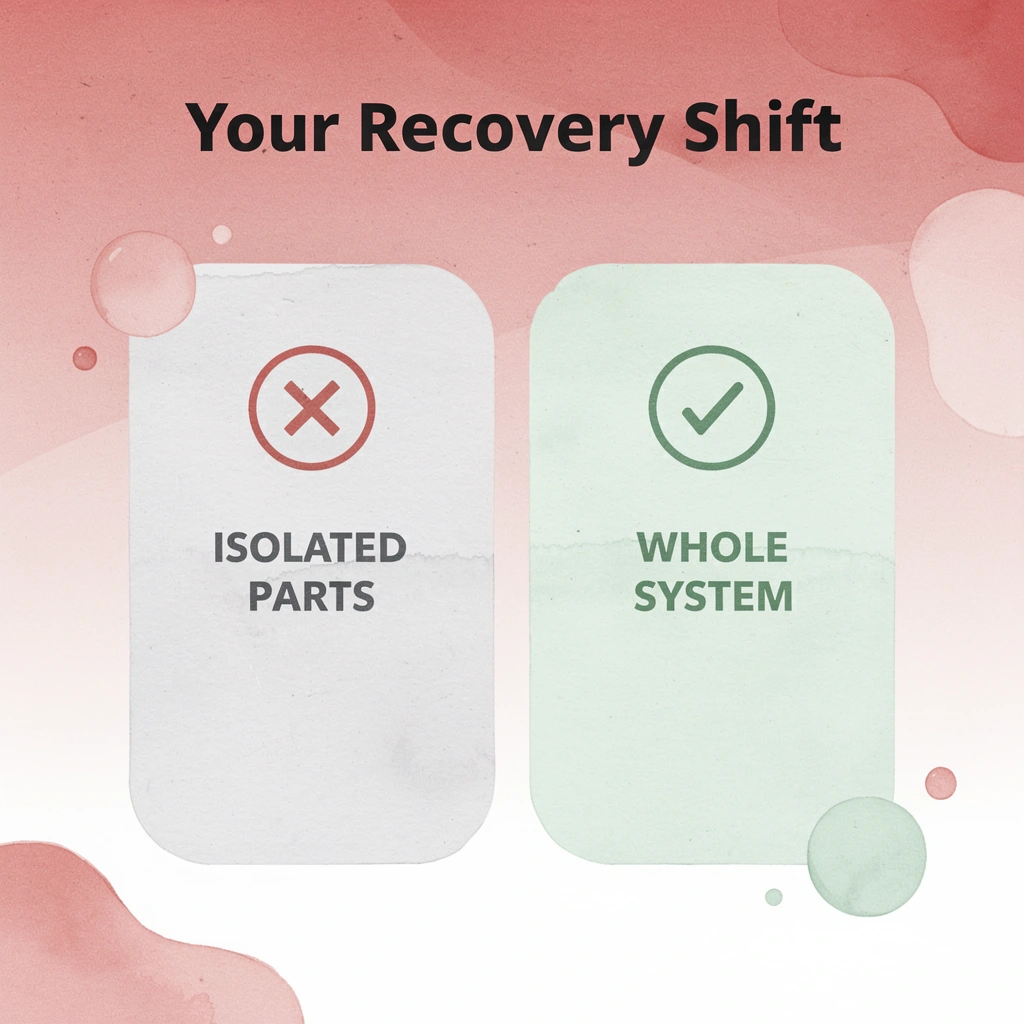
- The most common recovery mistake is treating pelvic floor weakness as an isolated strengthening problem rather than a coordination issue across multiple muscle systems. Research published in the British Journal of Sports Medicine confirms that effective pelvic floor rehabilitation requires coordination among the pelvic floor, deep core muscles, diaphragm, and hip stabilizers, rather than localized contractions alone. Women often excel at performing isolated exercises while lying down yet still experience leaking during jumps or instability when carrying groceries because controlled Kegels don’t prepare the system for unpredictable real-world demands. According to Vitality Women’s PT, 1 in 3 women experience pelvic floor dysfunction, with many continuing to struggle because their recovery approach addresses only one component of a multi-system problem.
- Effective postpartum recovery rebuilds the relationship between breathing, core stability, and movement control rather than perfecting individual exercises. The diaphragm and pelvic floor move together with every breath, and when this rhythm is disrupted during pregnancy or childbirth, the entire pressure-management system loses coordination. Training must focus on movements that challenge multiple muscle groups simultaneously to teach the body to distribute effort efficiently during real-life activities, such as carrying shopping bags upstairs or bending to pick up toys while holding a baby. Slow, controlled exercises that require stability throughout the entire trunk build the kind of functional strength that carries over from the gym into daily confidence.
- Functional strength matters more than isolated muscle development because the pelvic floor operates within a larger system during everyday movements. According to Inquiry: A Journal of Medical Care Organization, Provision and Financing, postpartum pelvic floor dysfunction has persisted as a significant concern for over a decade despite widespread promotion of isolated exercises, suggesting that Kegels alone are insufficient. Every time you lift a child from the crib or carry groceries, force must move efficiently throughout your body, and the pelvic floor relies entirely on surrounding muscle groups to distribute load safely. Real confidence comes from training the entire system together through movements that mimic real-world demands, rather than perfecting contractions in positions you’ll never use.
- Progress in pelvic floor recovery often appears first in how you move rather than how you look, with functional improvements signaling better coordination between the pelvic floor, core, and hips before symptoms fully resolve. Women notice themselves carrying babies upstairs without bracing for discomfort, standing up from the floor without hesitation, or automatically maintaining better posture during long walks and daily activities. Fear often lingers longer than physical limitations, with many women avoiding running or jumping due to anticipated symptoms even after improvement begins. This shift in confidence often precedes complete symptom resolution and is just as important as physical changes because it enables consistent training that builds lasting strength.
- Lagree in London addresses postpartum pelvic floor recovery through controlled, low-impact movements on the Megaformer that engage the pelvic floor alongside deep core, glutes, and stabilizing muscles in coordinated patterns rather than isolation.
Why Pelvic Floor Problems Often Continue After Pregnancy
Your body doesn’t automatically fix pelvic floor function after childbirth. Pregnancy stretches and weakens the muscles, fascia, and connective tissue that support your bladder, uterus, and bowel. Birth adds more strain, whether vaginal or cesarean. Without purposeful retraining, those structures may never regain their pre-pregnancy coordination and strength.
“Without purposeful retraining, the muscles, fascia, and connective tissue supporting the bladder, uterus, and bowel may never recover their pre-pregnancy coordination and strength.” — Key Clinical Insight
⚠️ Warning: Many women assume the body heals automatically after childbirth, but pelvic floor dysfunction won’t resolve without intentional rehabilitation.
💡 Tip: Whether your birth was vaginal or cesarean, both delivery types strain pelvic structures. Don’t assume a C-section spared your pelvic floor.
The Symptoms That Linger
Urinary leakage is one of the most frustrating problems. According to the Journal of Prenatal Medicine, 35% of women develop urinary incontinence after vaginal delivery. You might notice it when you sneeze, laugh, lift something heavy, or run. Some women experience constant pelvic heaviness, reduced sensation, or difficulty controlling their bladder during everyday movements.
Core instability makes the problem worse. Your pelvic floor works together with your deep abdominal muscles, diaphragm, and spinal stabilizers. When one part weakens, the entire network loses efficiency, making once-effortless movements feel awkward and uncontrolled.
How does pelvic floor dysfunction affect your confidence and daily life?
The physical symptoms are only half the story. Pelvic floor dysfunction creates uncertainty about what your body can handle: whether certain exercises are safe, whether pushing yourself will worsen the problem, or whether you should avoid physical activity altogether. Instead of feeling empowered by movement, you feel cautious and disconnected from your former confidence.
That hesitation spreads into daily life. You might skip workouts you enjoyed, avoid playing with your children, or decline invitations that involve physical activity. What begins as precaution becomes avoidance. Research from the Journal of Prenatal Medicine shows that 20% of women have persistent pelvic floor dysfunction 3 months postpartum, a reminder that waiting for spontaneous recovery often leaves symptoms unresolved.
Why doesn’t time alone heal the pelvic floor?
Many people believe that time alone heals the pelvic floor, but tissues may repair themselves while strength, coordination, and movement patterns require intentional rebuilding. Your pelvic floor is part of a larger support system that controls posture, breathing, and stability. Without retraining this system with precision and control, symptoms persist regardless of how much time has elapsed. BST Lagree in London addresses this gap through slow, controlled movements on the Megaformer, engaging deep stabilizing muscles without the jarring impact that aggravates weakened pelvic floor tissues.
But knowing you need to rebuild is one thing; knowing how to do it safely is another.
The Common Mistake Many Women Make With Postpartum Pelvic Floor Exercises
The most common mistake women make with postpartum recovery is treating the pelvic floor as a problem that just needs strengthening. Women are told to do Kegels throughout the day, but this overlooks something critically important: the pelvic floor doesn’t work in isolation, and strengthening a single muscle group rarely translates to real-world stability when you’re actually moving.
“The pelvic floor doesn’t work by itself — isolated strengthening without addressing the surrounding system misses the point of functional postpartum recovery.”
⚠️ Warning: Doing Kegels alone without addressing how the pelvic floor integrates with the rest of your body is one of the most widespread — and least talked about — postpartum mistakes.
💡 Tip: Instead of focusing only on isolated pelvic floor contractions, look for approaches that train the pelvic floor as part of a connected system — including your core, breath, and movement patterns — for lasting stability.
| Approach | What It Targets | Limitation |
|---|---|---|
| Kegels only | Isolated pelvic floor contraction | Misses full-body integration |
| Breath + core work | Diaphragm, deep core, pelvic floor together | More aligned with functional movement |
| Movement-based training | Stability during real daily activities | Addresses how the body actually works |

Why do isolated exercises miss the bigger picture?
According to research published in the British Journal of Sports Medicine, effective pelvic floor rehabilitation requires coordination among multiple muscle systems rather than localized contractions. The pelvic floor communicates constantly with the deep core muscles that stabilize your spine, the diaphragm that regulates intra-abdominal pressure during breathing, and the hips and glutes that generate force during everyday activities like climbing stairs or lifting your child. Focusing exclusively on squeezing one muscle group trains a single instrument while ignoring the entire orchestra.
What happens when strength alone isn’t the problem?
Pelvic floor dysfunction isn’t always about insufficient strength. Sometimes the muscles are overactive, gripping too tightly and unable to relax properly. Sometimes they’ve lost coordination with surrounding structures. A woman might excel at isolated contractions while lying down, yet still experience leaking when she jumps, heaviness during prolonged standing, or instability when carrying groceries. The controlled environment of a Kegel doesn’t prepare the system for the unpredictable demands of daily life.
The coordination problem no one mentions
Real movement creates complex pressure shifts throughout your body. When you bend to pick up your baby, your diaphragm descends, your core engages to protect your spine, your hips hinge to create the movement pattern, and your pelvic floor responds to manage the change in pressure. These actions happen in milliseconds, without conscious thought. Training one muscle in isolation doesn’t teach this coordinated response—it’s the difference between practicing piano scales and playing a complete piece where timing, dynamics, and rhythm all matter simultaneously.
Why does isolating one muscle leave so many women struggling?
Many women discover this gap the hard way: they do the prescribed exercises but still struggle with everyday activities. According to Vitality Women’s PT, 1 in 3 women experience pelvic floor dysfunction, often because their recovery approach addresses only one part of a multi-system problem. Effective recovery means rebuilding how your entire core system works together under pressure, during movement, and throughout your breathing cycle.
What does rebuilding full-body coordination actually look like in practice?
Places like BST Lagree solve this problem using controlled, full-body movements on the Megaformer. The equipment and method work your pelvic floor alongside your deep core, glutes, and stabilizing muscles. The slow, deliberate nature of the work lets women rebuild strength without impact while training the muscular coordination that isolated exercises cannot provide. Sustainable recovery occurs when the entire support system functions as a single, integrated unit.
But knowing you need whole-body coordination is only the beginning. The real question is what that looks like in practice.
Related Reading
- First Postpartum Workout
- When Can I Workout Postpartum
- Is Pilates Good for Postpartum Weight Loss
- Can I Do Pilates 3 Weeks Postpartum
- Bird Dog Exercise Postpartum
- Postpartum Glute Bridge Exercise
- Postpartum HIIT Workout
- Postpartum Kettlebell Workout
- Postpartum Dumbbell Workout
What Effective Pelvic Floor Recovery Should Actually Include
Good recovery rebuilds how your breathing, core stability, and movement control work together. The work involves teaching your body to coordinate pressure, support, and strength across multiple systems so that everyday movements feel stable rather than uncertain.
“Effective pelvic floor recovery is not just about isolated muscle exercises — it’s about restoring whole-body coordination across breathing, pressure, and movement systems.” — Pelvic Health Specialists
🎯 Key Point: True pelvic floor recovery goes far beyond simple exercises — it means retraining your entire movement system from the ground up.
💡 Tip: Focus on coordinating breath with movement during every exercise. This is essential for rebuilding genuine core stability and avoiding setbacks.
| Recovery Component | What It Rebuilds | Why It Matters |
|---|---|---|
| Breathing patterns | Diaphragm and pelvic floor sync | Manages internal pressure safely |
| Core stability | Deep abdominal coordination | Supports everyday movement control |
| Movement control | Full-body neuromuscular patterns | Makes daily activities feel stable |
⚠️ Warning: Skipping the coordination phase of recovery and jumping straight to high-intensity training is one of the most common mistakes — and one of the most damaging to long-term pelvic health.
Breathing That Supports Movement
Your diaphragm and pelvic floor move together with every breath: the diaphragm descends and your pelvic floor releases when you breathe in, while both lift for stability when you breathe out. When this rhythm breaks during pregnancy or childbirth, your entire pressure management system loses coordination.
Breathing correctly during movement changes how your body distributes force. Instead of holding your breath while lifting or bracing, exhale during the effort while maintaining the necessary tension. This coordination reduces strain on recovering tissues while building strength that translates beyond the gym.
Core Integration, Not Isolation
Your pelvic floor works constantly with deep abdominal muscles, back stabilizers, and hip muscles to control movement and manage load. Training these systems separately misses how they operate during real life: carrying shopping bags up stairs or bending to pick up toys while holding a baby on your hip.
Coordinated training focuses on movements that challenge multiple muscle groups to work as a team. Slow, controlled exercises requiring trunk stability teach your body to distribute effort efficiently, building confidence through practiced control.
Why does full-body strength matter for pelvic floor recovery?
According to NPR, 1 in 3 women experience pelvic floor dysfunction, yet many receive only basic exercises that ignore how weakness in surrounding areas increases pelvic floor stress. Your glutes, hips, and back muscles determine how force travels through your body during movement. When these lack strength, your pelvic floor compensates in ways it wasn’t designed to handle.
How does progressive strength training support pelvic floor function?
Building strength throughout your entire body supports pelvic floor function rather than overloading it. Methods like Lagree training use slow, controlled resistance on specialized equipment to rebuild strength while maintaining precise form. Our BST Lagree method’s sustained tension develops both strength and muscular endurance, which matters when carrying a child for extended periods or repeating movements throughout the day.
Why does slowing down improve how you move?
Controlled movement teaches body awareness that fast repetitions cannot. When you slow down, you notice where you’re compensating, where you’re holding unnecessary tension, and where you’ve lost connection to specific muscle groups. This awareness forms the foundation for better movement patterns that reduce strain and improve efficiency.
How does movement quality train your nervous system?
Quality movement creates space to practice proper breathing and alignment simultaneously. You’re training your nervous system to coordinate multiple elements at once, which is what your body needs to do when moving through daily activities without conscious thought.
But understanding what recovery should include matters only if you know why these elements work together differently from traditional approaches.
Why Functional Strength Matters More Than Isolated Exercises
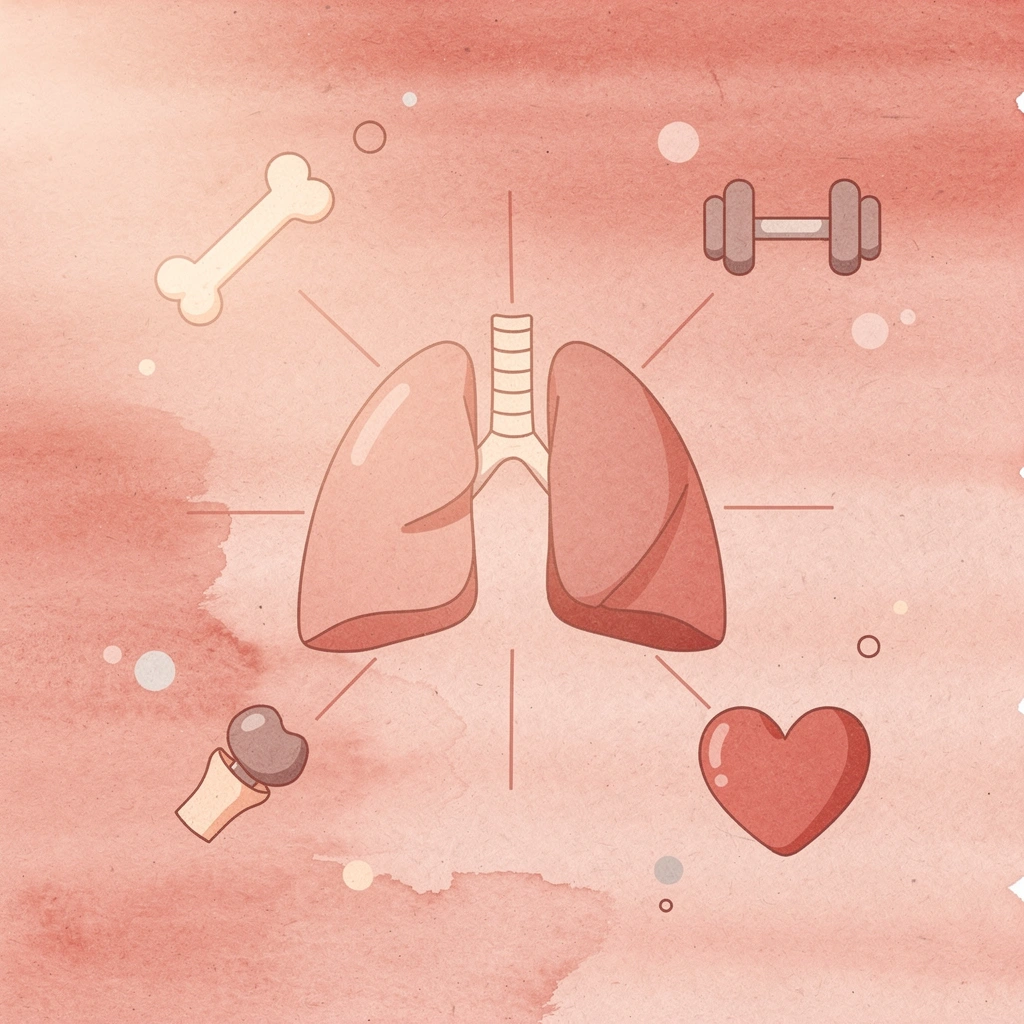
The pelvic floor works as one part of a bigger system that includes the deep belly muscles, diaphragm, hips, glutes, and spinal stabilizers. During everyday movements like lifting a car seat, climbing stairs with a baby carrier, or bending to pick up toys, these muscles must work together to stay in control and handle force. Strengthening the pelvic floor by itself may improve contractions during exercise without changing how your body responds during real-life movement.
“The pelvic floor does not work in isolation — it is always part of a coordinated system of deep stabilizers that must respond together during functional, everyday demands.”
🎯 Key Point: Functional strength means training your pelvic floor alongside the diaphragm, glutes, and core stabilizers — not as a standalone muscle group.
💡 Tip: Instead of only doing isolated contractions, prioritize compound movements like squats, carries, and step-ups that force your entire stabilizing system to work as a coordinated unit.
| Training Approach | What It Targets | Real-Life Carry-Over |
|---|---|---|
| Isolated pelvic floor contractions | Single muscle activation | Limited — improves squeeze, not coordination |
| Functional movement training | Full stabilizing system | High — mirrors real-life demands |
| Integrated core + glute work | Diaphragm, deep belly, hips | High — builds whole-body force control |
Stability Depends on Multiple Systems Working Together
According to Inquiry: A Journal of Medical Care Organization, Provision and Financing, pelvic floor dysfunction after childbirth has persisted for over a decade despite recommendations for isolated exercises. The pelvic floor requires adequate support from surrounding muscles for stability. Poor posture from feeding, carrying, and lifting causes compensatory patterns across the pelvic floor, core, hips, and back that isolated training cannot address.
Force Transfer Requires Coordinated Movement
Every time you lift your child from the crib, carry groceries up the stairs, or stand from the floor, force must move efficiently throughout your body. The pelvic floor plays a role in this process, but it relies on the coordination of surrounding muscle groups to distribute load safely. Balance while carrying a child on uneven surfaces, stability during a lunge to retrieve a dropped toy, control when transitioning from sitting to standing with a baby in your arms—these capabilities come from training the entire system together, not from perfecting isolated contractions.
Real Confidence Comes From Real-World Capability
Most women want to feel confident carrying their children without fear, exercising without hesitation, and moving comfortably throughout the day. These outcomes come from functional strength development rather than isolated exercises alone. The Lagree Method addresses this through controlled, precise movements on the Megaformer that train multiple muscle systems simultaneously under tension, building coordinated strength that transfers directly to daily activities without the joint stress that deters many postpartum women from returning to traditional exercise.
Postpartum pelvic floor recovery means rebuilding a body that can stabilize, balance, and generate force effectively during the movements you need to perform. Training the body as a complete system develops the strength and confidence needed to return to activity with greater comfort and control.
But knowing your training approach is effective only matters if you can recognize when it’s working.
Related Reading
- Kegel Exercises Postpartum
- Postpartum Strength Workout
- Postpartum Diastasis Recti Workout
- Easy Postpartum Workout
- Postpartum Arm Workout
- Postpartum Full Body Workout
- Postpartum Core Workout
- 6 Week Postpartum Workout Plan
- Postpartum Workout Plan At Home
- Best Postpartum Core Exercises
- Pilates Exercises For Post Pregnancy
- Postpartum Diastasis Recti Workout
- Postpartum Pelvic Floor Exercises
- Postpartum Belly Exercises
Signs Your Pelvic Floor Is Getting Stronger
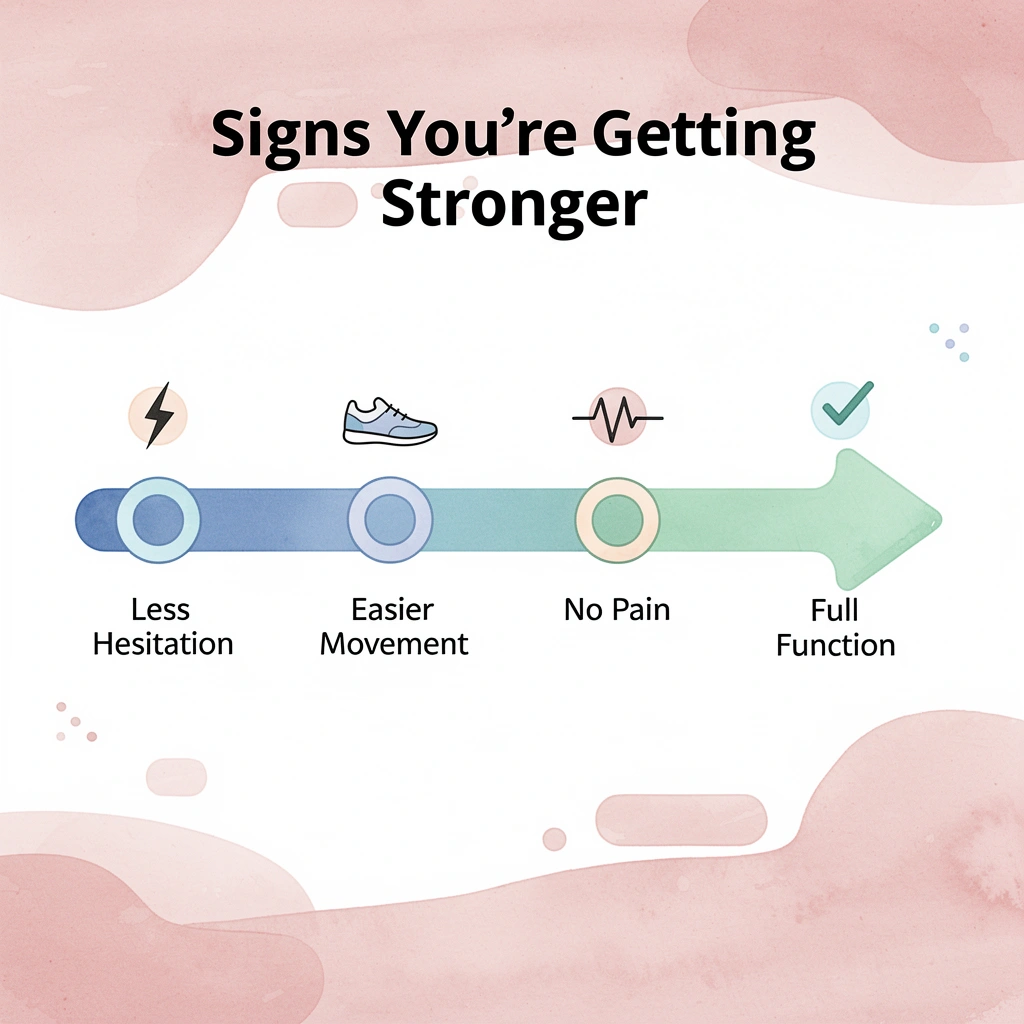
Progress in getting better after giving birth often shows up first in how you move. You might notice yourself carrying your baby up the stairs without preparing for pain, or standing from the floor without hesitation. These functional improvements signal that your pelvic floor is coordinating better with your core and hips, even before symptoms fully resolve.
“Functional movement improvements — like climbing stairs or rising from the floor without hesitation — are among the earliest and most meaningful signs of pelvic floor recovery after childbirth.” — Pelvic Health Research
🎯 Key Point: You don’t need to wait for zero symptoms to know you’re making real progress — your daily movements will tell you first.
💡 Tip: Pay attention to everyday tasks like lifting, standing, and climbing stairs. These functional milestones are your body’s way of showing that your pelvic floor, core, and hips are finally working as a coordinated system again.
| Movement Signal | What It Indicates |
|---|---|
| Carrying a baby upstairs without bracing for pain | Improved load-bearing coordination |
| Rising from the floor without hesitation | Better core and pelvic floor integration |
| Walking without discomfort | Restored hip and pelvic stability |
Greater ease during everyday tasks
The clearest sign of improvement shows up in everyday tasks: lifting your child from the car seat without thinking, carrying shopping bags without dragging your pelvis, and bending to pick up toys while holding your baby with stability rather than strain.
These moments show coordinated strength across multiple muscle systems. Your pelvic floor fires in sync with your deep abdominals, glutes, and diaphragm to support the movement patterns you need throughout your day.
Reduced anxiety around physical activity
Fear often lasts longer than physical limitations. Many women avoid running, jumping, or lifting heavier weights because they expect leaking or pelvic pressure, even when symptoms have improved. As your pelvic floor rebuilds coordination and strength, that anxiety fades.
You stop mentally rehearsing worst-case scenarios before workouts. Exercise feels less like a test you might fail and more like movement you control. This shift in confidence often precedes complete symptom resolution and enables consistent training.
Improved posture without conscious effort
Sitting and standing taller becomes automatic rather than forced. Your body maintains better alignment during walks, floor play, or meal prep because the muscles supporting your spine and pelvis work together more effectively.
Methods like Lagree in London with BST Lagree build integrated strength through controlled, low-impact movements on the Megaformer. Rather than isolating muscles, the training emphasizes slow, precise exercises that engage the pelvic floor, core, and stabilizers simultaneously, creating coordinated strength that translates into better posture and movement control throughout daily life.
Increased capacity during training sessions
You notice you can exercise longer before tiring. Resistance that once felt challenging becomes easier to handle. Recovery between sessions shortens. These improvements show real adaptation: your body is getting stronger and more efficient at generating and controlling force.
This growing capacity proves your training approach is working. When you consistently do more than you could last month, you’re rebuilding the physical foundation needed to return to the activities you’ve been missing.
But recognizing these signs helps only if the training creating them matches what postpartum bodies need.
How BST Lagree Helps Women Rebuild Pelvic Floor Strength After Pregnancy
Many women after giving birth know they need to rebuild pelvic floor strength, but they face real uncertainty about how to progress, worry about making symptoms worse, or feel frustrated with isolated exercises that don’t translate into functional improvement. A structured, full-body approach makes all the difference.
“The pelvic floor doesn’t exist in isolation — rebuilding it effectively requires integrating it into full-body movement patterns that mirror real life.” — Pelvic Health Specialists
💡 Tip: If you’ve been relying solely on Kegel exercises postpartum and still feel like you’re not progressing, it may be time to shift to a structured, full-body method that trains the pelvic floor in context — not in isolation.
⚠️ Warning: Jumping into high-impact exercise too soon after birth — without rebuilding foundational pelvic floor strength first — can worsen symptoms like leakage, prolapse, or pelvic pressure.
| Common Postpartum Challenge | Why It Happens | What Helps |
|---|---|---|
| Uncertainty about progression | No clear roadmap after birth | Structured programming with guided milestones |
| Fear of making symptoms worse | Lack of professional guidance | Full-body approach with intentional pelvic floor integration |
| Frustration with isolated exercises | Kegels alone don’t build functional strength | Lagree-based movement that trains the body as a whole |
🎯 Key Point: Pelvic floor recovery isn’t just about doing more exercises — it’s about doing the right exercises in the right sequence, within a program designed to build real, functional strength.
Why does full-body training support pelvic floor recovery?
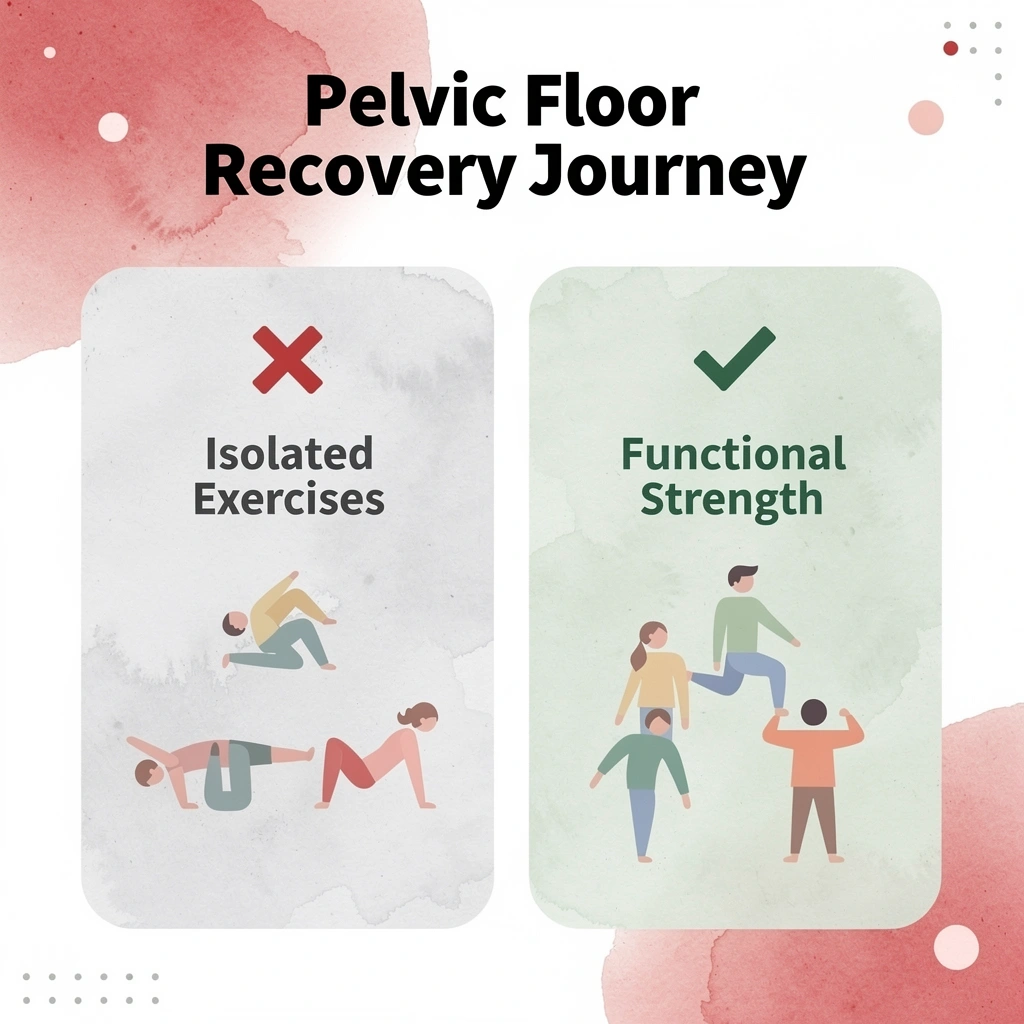
BST Lagree focuses on building whole-body strength, improving stability, and keeping your core muscles active throughout each workout. This matters because your pelvic floor muscles connect to your deep core, hips, glutes, and other muscles that support posture, balance, and movement. Training these muscle groups together helps women build practical strength for everyday tasks like lifting car seats or climbing stairs while carrying a baby.
Why does low-impact training matter for postpartum recovery?
This method is low impact, which is especially helpful for women returning to exercise after pregnancy. According to research published in the International Journal of Sports Physical Therapy, between 17% and 50% of women experience pelvic floor dysfunction after pregnancy. Low-impact training lets participants challenge their muscles without the repeated joint stress of higher-impact activities, allowing women to build strength and confidence at their own pace.
Efficient Training for Time-Constrained Mothers
Time is a common obstacle for postpartum mothers juggling childcare, work, and household demands. Women returning to exercise after a C-section or extended rest often feel eager to move but constrained by recovery timelines and newborn logistics. BST Lagree combines strength training and cardiovascular conditioning into a focused 45-minute workout, enabling efficient training without sacrificing effectiveness. Each class emphasizes controlled movement patterns, proper alignment, and continuous core engagement, reinforcing the stability, coordination, and body awareness essential for rebuilding confidence in movement after pregnancy.
Expert Guidance and Structured Progression
Expert guidance reduces uncertainty about correct form and safe progression. At BST Lagree, our certified instructors complete a rigorous mentorship program, ensuring classes remain effective and appropriately structured for different fitness levels. Women follow a structured progression to build strength gradually and confidently, reducing fear of overtraining while creating meaningful progress.
A Women-Focused Environment
Many women, after giving birth, feel scared in traditional gym settings or discouraged about recovering on their own. BST Lagree provides a supportive atmosphere where clients focus on their own progress while being encouraged by knowledgeable instructors and a motivating community. This combination of expert instruction, efficient programming, and supportive environment transforms postpartum recovery from uncertain to intentional.
But knowing how the method works differs from taking the step to start.
Book a Lagree Class in London Today
BST Lagree offers guided recovery with Lagree-certified instructors and Europe’s most experienced trainer, who has taught over 5,000 classes. Your first 45-minute session introduces controlled movements on the Megaformer, engaging your core, stabilizing through your hips, and coordinating breath with effort to build strength that translates to daily movements.
“With over 5,000 classes taught, BST Lagree’s lead trainer brings unmatched experience to every postpartum recovery session in London.” — BST Lagree
🎯 Key Point: Your first session is carefully designed to introduce your body to the Megaformer at a controlled pace. No prior Lagree experience required.

Booking your first class means choosing a method that treats your body as a system, not isolated parts. You’ll move through exercises designed for bodies needing both intensity and care, surrounded by women who understand the postpartum journey.
💡 Tip: Look for a studio that offers community alongside coaching — training alongside women who share your experience makes the recovery process significantly more sustainable and motivating.
| What You Get | Why It Matters |
|---|---|
| Lagree-certified instructors | Expert guidance tailored to postpartum needs |
| Megaformer training | Full-body engagement with low joint impact |
| Supportive community | Surrounded by women on the same journey |
| 45-minute sessions | Time-efficient without sacrificing results |
Postpartum recovery isn’t about returning to who you were before: it’s about becoming stronger, more capable, and more confident in what your body can do now. Book your session today and start building the foundation that carries you forward.
✅ Best Practice: Commit to your first session as an investment in long-term strength. The Lagree method is built for sustainable progress, not quick fixes.
⚠️ Warning: Delaying your return to structured movement can slow postpartum recovery. A guided, low-impact method like Lagree is one of the safest ways to rebuild core strength and stability.
Related Reading
- Best Postpartum Exercises
- Pilates Exercises For Post Pregnancy
- Best Way To Lose Postpartum Belly Fat
- Postpartum Pilates Workout
- Beginner Postpartum Workout Plan
- How To Lose Pregnancy Belly After 2 Years
- Post Pregnancy Workout Plan
- Best Postpartum Ab Workout
- Best Postpartum Workout App
- Postpartum Gym Workout