Returning to exercise after having a baby is not as simple as picking up where things left off. The body has changed significantly; the core needs rebuilding from the inside out, and knowing how to approach a first postpartum workout can feel genuinely overwhelming. The best postpartum exercises focus on pelvic floor recovery, gentle core rehabilitation, and progressive full-body movement that supports healing rather than rushing it.
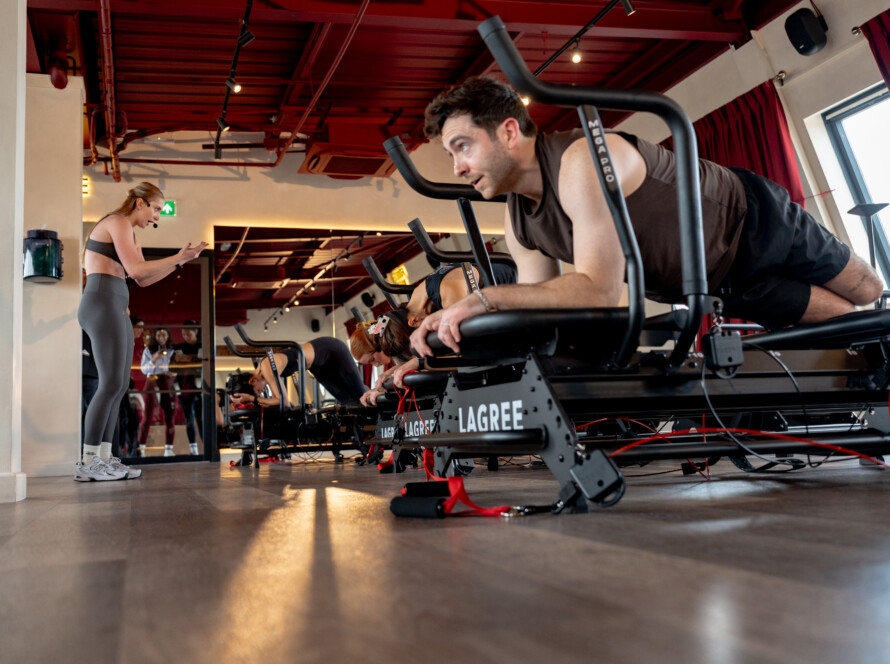
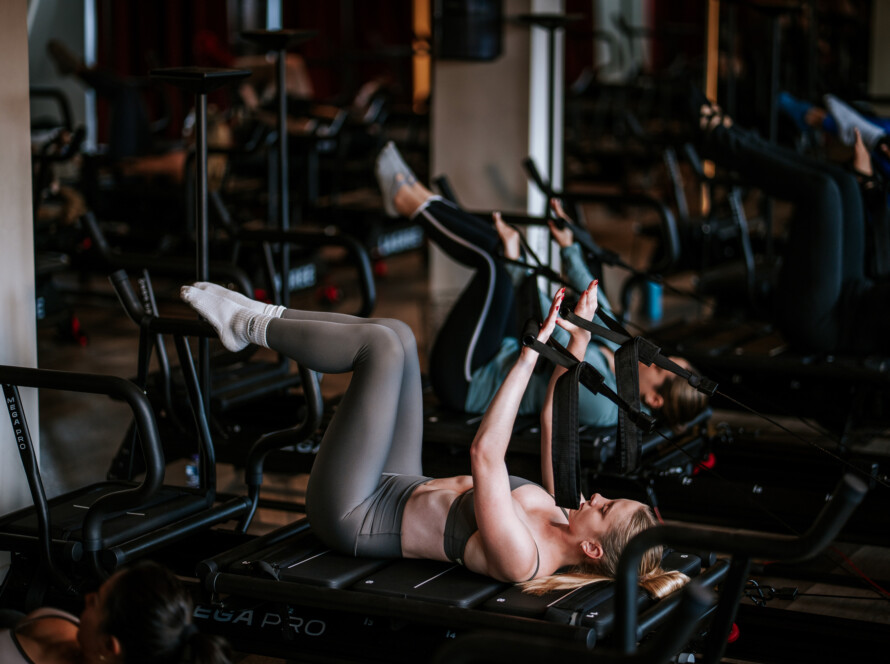
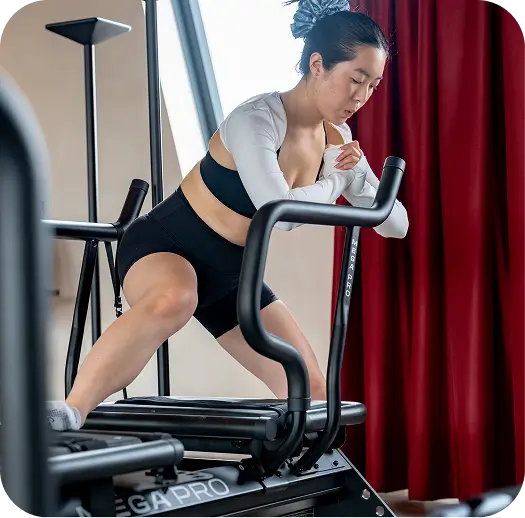
For those looking for a structured, low-impact environment to put that into practice, Lagree Fitness is a strong fit. Its slow, controlled movements rebuild muscle tone and restore core stability without placing unnecessary stress on a body that is still recovering. BST Lagree offers exactly that kind of supportive training through Lagree in London.
Table of Contents
- Why “Getting Your Body Back” Is the Wrong Postpartum Fitness Goal
- What Makes an Exercise Good for Postpartum Recovery?
- 7 Best Postpartum Exercises for Rebuilding Strength Safely
- Exercises Many New Moms Start Too Soon
- How to Build a Sustainable Postpartum Fitness Routine
- How BST Lagree Supports Postpartum Strength and Recovery
- Book a Lagree Class in London Today
Summary
- Postpartum exercise participation drops significantly after birth, even among women who were active before and during pregnancy. Research from BMJ Open Sport and Exercise Medicine confirms this decline is not a motivation problem but a structural one, with most women navigating genuine physical barriers and limited guidance on how to return safely. The fitness industry tends to fill that gap with appearance-focused content rather than evidence-based recovery frameworks, which makes safe re-entry harder to find.
- The pelvic floor is a measurable clinical priority, not a minor inconvenience to work around. Research from GSSI Sports Science Exchange found that pelvic floor muscle training reduces urinary incontinence by up to 70% in postpartum women. Effective recovery requires training both activation and release, since tension without relaxation creates its own dysfunction and incomplete pelvic floor rehabilitation delays progress across every other area of postpartum fitness.
- Abdominal separation is nearly universal in late pregnancy, with up to 100% of women experiencing some degree of diastasis recti by the third trimester. Approximately 60% still have it at six weeks postpartum, according to research published in the British Journal of Sports Medicine. This makes early core loading through crunches, sit-ups, or loaded spinal flexion counterproductive, as those movements increase intra-abdominal pressure precisely when the abdominal wall needs a controlled, graduated load rather than force.
- The mental health case for structured postpartum movement is as strong as the physical one. Research published in the Delaware Journal of Public Health found that postpartum women who exercise report up to 50% lower rates of postpartum depression symptoms. Movement that restores physical function also appears to support emotional regulation, which matters in a period defined by hormonal volatility, sleep disruption, and identity adjustment.
- Only 34.5% of postpartum women practice physical exercise during the postpartum period, according to a 2025 study in Frontiers in Public Health. The barrier is rarely desire and almost always structure. The same research found that women who received health education about exercise were 2.1 times more likely to follow through, suggesting that understanding the reasoning behind a method changes behavior more reliably than motivation alone.
- Lagree in London addresses this by offering Megaformer-based resistance training that builds full-body intensity through slow, controlled movement rather than impact or momentum, making it a practical fit for postpartum women who need progressive challenge without the joint load or intra-abdominal pressure spikes that can stall recovery.
Why “Getting Your Body Back” Is the Wrong Postpartum Fitness Goal
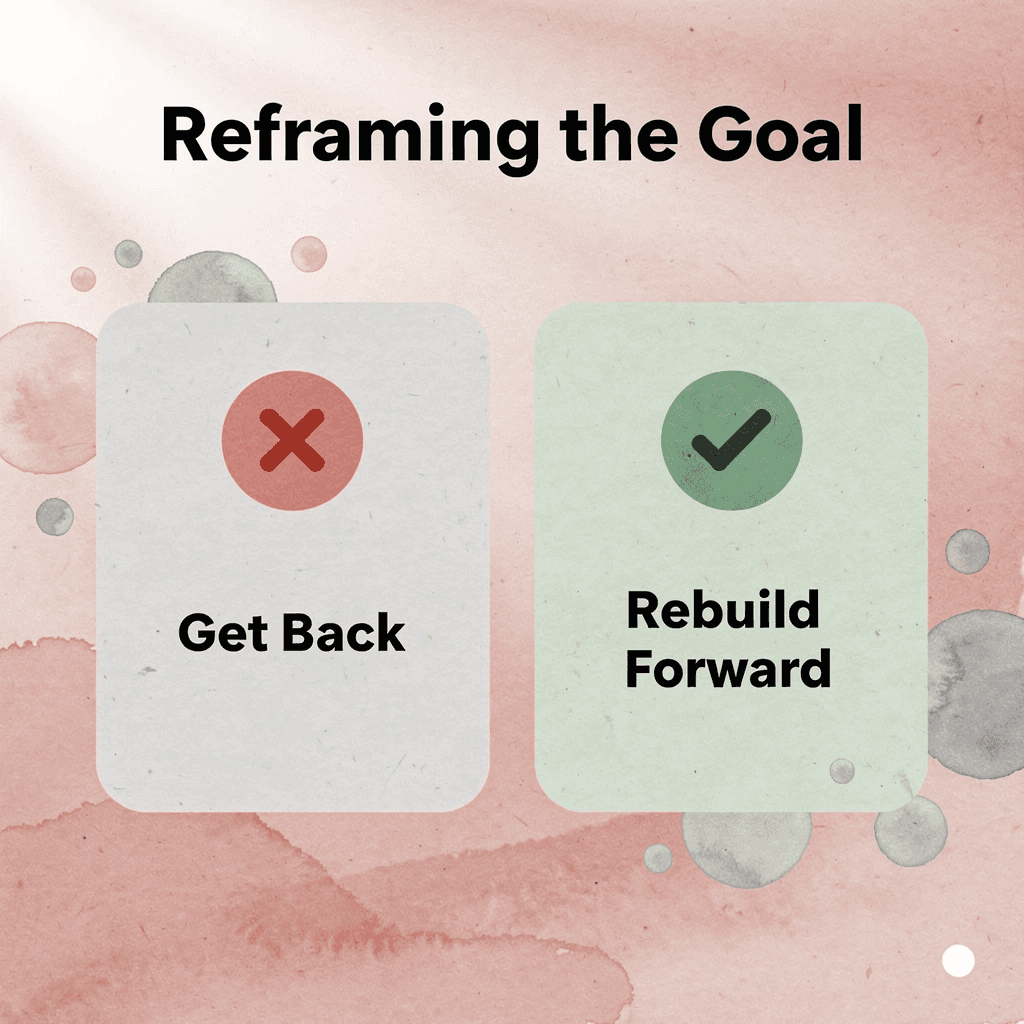
The phrase “getting your body back” makes it sound like your body went away. It did not. It did something amazing, and now it needs to be rebuilt, not found again.
“Your body didn’t disappear after pregnancy — it transformed. The goal isn’t recovery to what you were, but rebuilding from what you’ve done.” — Postpartum Fitness Perspective
🎯 Key Point: The language we use around postpartum fitness shapes how new mothers approach recovery. “Getting your body back” sets the wrong expectation from the start.
Pregnancy changes the body’s structure in ways that are profound and far-reaching. The abdominal muscles stretch and separate — a condition known as diastasis recti. The pelvic floor handles months of extra weight and pressure. Joints become looser because of hormonal shifts, and posture shifts dramatically to balance a constantly changing center of gravity. These structural changes to the body require focused, intentional recovery before it is safe to return to exercise.
| Body System | What Changes | Why It Matters |
|---|---|---|
| Abdominal Muscles | Stretch and separate | Must heal before core training |
| Pelvic Floor | Bears months of extra load | Needs targeted rehabilitation |
| Joints & Ligaments | Loosen due to hormones | Higher injury risk during exercise |
| Posture & Alignment | Shifts with the center of gravity | Affects safe movement patterns |
⚠️ Warning: Jumping back into high-intensity exercise before addressing these structural changes can worsen conditions like pelvic floor dysfunction and diastasis recti — making recovery longer, not shorter.
💡 Tip: Before returning to any fitness routine postpartum, prioritize a pelvic floor assessment with a qualified physiotherapist to understand your body’s specific recovery needs.
Why do so many postpartum women lack guidance on safe return to exercise?
According to BMJ Open Sport and Exercise Medicine, exercise participation drops significantly during the postpartum period for previously active people. This decline reflects physical barriers combined with inadequate guidance on safe return to exercise. The fitness industry fills this gap with before-and-after content rather than evidence-based recovery frameworks.
What goes wrong when appearance is the postpartum fitness goal?
The failure point is usually the goal itself. When the target is appearance, the method follows: caloric restriction, high-intensity training restarted too soon, and abdominal exercises that pressure an unprepared core. This sequence can worsen diastasis recti, overload a recovering pelvic floor, and stress joints still carrying elevated relaxin levels. The same BMJ Open Sport and Exercise Medicine research notes that recreational exercisers face significant barriers to returning postpartum, with evidence on safe return-to-exercise pathways lagging behind the scale of need.
What does a smarter postpartum fitness goal actually look like?
The smarter approach treats postpartum recovery as a performance project, not weight loss. The goal is restored function: a core that stabilizes under load, a pelvic floor that coordinates properly, hips and spine that move without compensation. When those foundations are in place, strength and body composition follow naturally. Women who train Lagree in London find that the Megaformer’s slow, controlled resistance work rebuilds foundational movement patterns without the joint strain or intra-abdominal pressure spikes of high-impact training. What you pursue after childbirth shapes how quickly you recover and how well your body functions for years afterward.
What Makes an Exercise Good for Postpartum Recovery?
The best exercises after having a baby rebuild the body’s internal support systems before asking the body to do hard work. Fixing the structure comes first, and working harder comes second.
“The best postpartum exercises rebuild the body’s internal support systems before asking it to perform — structure before strength, always.” — Postpartum Recovery Principle
🎯 Key Point: Postpartum exercise isn’t about pushing harder — it’s about rebuilding smarter. The body’s internal support systems (core, pelvic floor, and stabilizers) must be restored first before any high-intensity work begins.
| Exercise Priority | Focus | When to Apply |
|---|---|---|
| Phase 1 — Restore | Internal support systems, pelvic floor | Immediately postpartum |
| Phase 2 — Rebuild | Core stability, structural alignment | After the foundation is set |
| Phase 3 — Perform | Strength, endurance, and hard work | Once the structure is solid |
💡 Tip: Never skip the structural foundation phase — jumping straight to hard work without restoring internal support is one of the most common and costly postpartum recovery mistakes.

What does the body actually need rebuilt after pregnancy?
Your core is a coordinated system: the transverse abdominis, the pelvic floor, the diaphragm, and the deep spinal stabilizers working together to manage pressure and support movement. Pregnancy stretches and disrupts that coordination. Early postpartum exercise restores it through exercises such as 360 diaphragmatic breathing, dead bugs, bird dogs, and glute bridges, which target this system directly. They are unglamorous but perform the most important work happening in your body right now.
Why does pelvic floor health sit at the center of postpartum recovery?
Pelvic floor health is central to that restoration. According to GSSI Sports Science Exchange, pelvic floor muscle training reduces urinary incontinence by up to 70% in postpartum women. This is a measurable physical problem with a measurable solution. Most women don’t realize that pelvic floor recovery requires both activation and release: tension without relaxation creates dysfunction. Good postpartum exercises train the full cycle, not just the contraction.
Why does progressive resistance matter more than effort?
Many women, after giving birth, move from gentle breathing work to YouTube videos to whatever feels manageable that week. That instinct toward movement is right, but the structure often lacks the gradual increase in resistance that drives tissue adaptation. Resistance must increase gradually for muscles and connective tissue to rebuild with stability rather than strain.
How does controlled resistance training support a postpartum body?
A standard group fitness class is built for already-stable bodies and doesn’t account for joint looseness, changed intra-abdominal pressure mechanics, or a pelvic floor relearning its role. BST Lagree in London addresses this directly: the Megaformer delivers high-intensity, low-impact resistance training through slow, controlled movement rather than impact or momentum. For a postpartum body that needs challenge without compromise, this distinction matters.
The benefit that goes beyond the physical
Structured postpartum exercise does more than help tissues heal. Research published in the Delaware Journal of Public Health found that postpartum women who exercise report up to 50% lower rates of postpartum depression symptoms. Movement that restores physical function also supports emotional regulation during a period marked by exhaustion, identity adjustment, and hormonal changes. The specific exercises that meet the criteria of core restoration, pelvic floor coordination, joint stability, and progressive load are more targeted than most people realize.
Related Reading
- First Postpartum Workout
- When Can I Workout Postpartum
- Is Pilates Good for Postpartum Weight Loss
- Can I Do Pilates 3 Weeks Postpartum
- Bird Dog Exercise Postpartum
- Postpartum Glute Bridge Exercise
- Postpartum HIIT Workout
- Postpartum Kettlebell Workout
- Postpartum Dumbbell Workout
7 Best Postpartum Exercises for Rebuilding Strength Safely
These seven exercises target the specific systems that need precision during postpartum recovery. Effort spread across random movements won’t deliver results — strategic, sequenced movements will.
“Strategic, sequenced movement is the difference between random effort and real postpartum recovery — targeting the right systems in the right order is what rebuilds lasting strength.” — Postpartum Fitness Principle
💡 Tip: Don’t just move — move with intention. These seven exercises are chosen for a reason: they address the core, pelvic floor, and stabilizing muscles that take the biggest hit during pregnancy and delivery.
⚠️ Warning: Jumping into high-intensity or random workouts too soon is one of the most common postpartum mistakes. Sequenced, targeted movement is essential for safe and effective recovery.
| Approach | Outcome |
|---|---|
| Random, unfocused movement | Minimal recovery, risk of injury |
| Strategic sequenced exercises | Targeted strength rebuilding, safer results |
| These 7 specific exercises | Precision recovery of key postpartum systems |
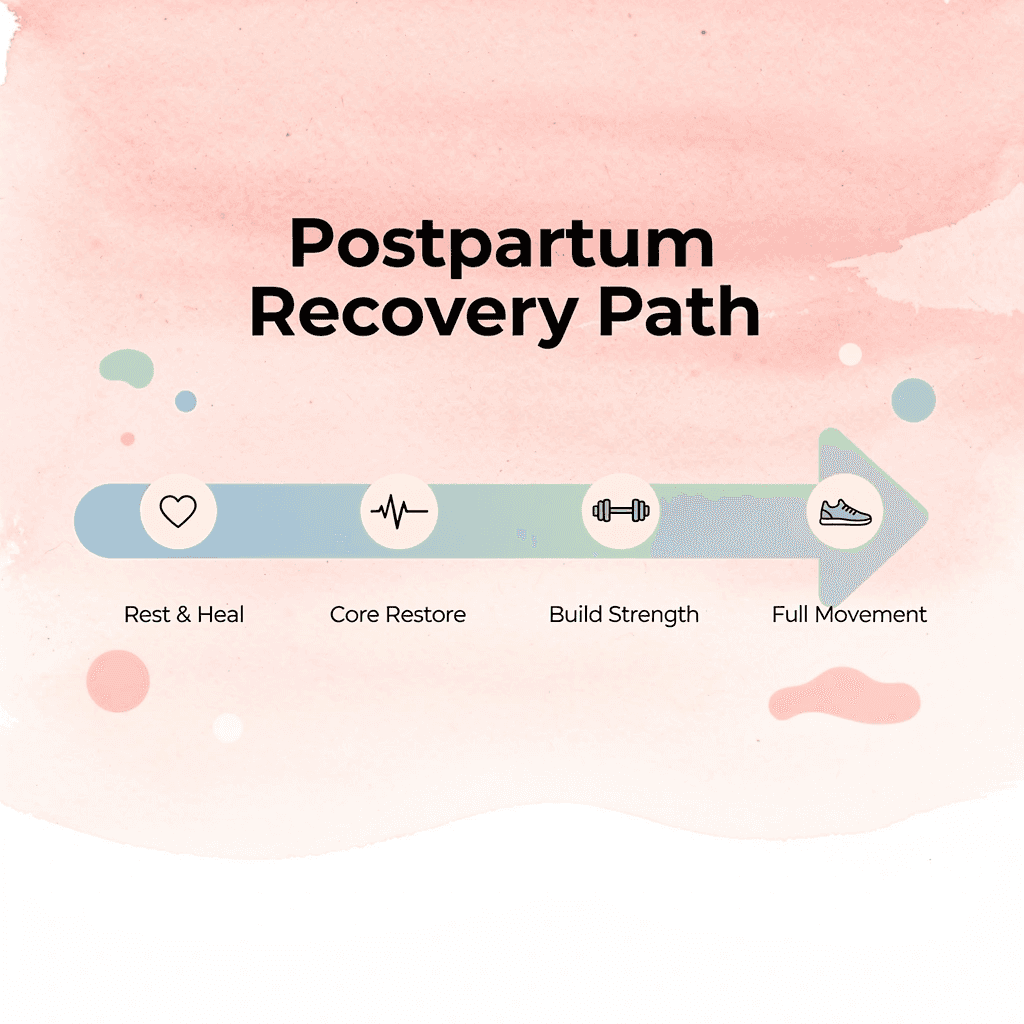
1. Diaphragmatic Breathing
During pregnancy, the expanding uterus presses the diaphragm upward, reorganizing the core’s entire pressure-management system. After birth, many women continue breathing in patterns that create downward pressure on an already-stressed pelvic floor. Diaphragmatic breathing resets this coordination, reconnecting the diaphragm, transverse abdominis, and pelvic floor into a functioning unit before other movements demand they work together.
How do you perform diaphragmatic breathing correctly?
Lie on your back or sit upright. Breathe in slowly through your nose, letting your rib cage expand outward and your belly rise naturally. As you exhale, gently pull the deep abdominals inward and lift the pelvic floor. Avoid forcing your belly in or holding your breath, as this creates the internal pressure you’re trying to manage.
2. Heel Slides
The failure point in early postpartum core work is the load arriving before control. Heel slides solve this by introducing movement without adding weight. Lying on your back with knees bent, you slowly slide one heel along the floor while keeping your pelvis still. The challenge is maintaining deep abdominal engagement while the leg creates a lever that pulls the lower back into extension. According to BST Lagree’s research on postpartum core exercises, up to 100% of pregnant women experience abdominal separation by the third trimester, making controlled, low-load movements like heel slides safer than crunches or sit-ups, which can compress the already stressed abdominal wall.
3. Glute Bridges
Pregnancy shifts the pelvis forward and stretches the glutes into a lengthened position where they remain stretched. Stretched muscles function poorly, which is why postpartum women often experience lower back fatigue during simple activities like standing at a counter or carrying a baby. Glute bridges activate the posterior chain through a controlled, supported range of motion.
How do you perform a glute bridge correctly?
Lie on your back with your feet flat and hip-width apart. Push through your heels and lift your hips until your body forms a straight line from your shoulders to your knees, then lower slowly. A common mistake is pushing too high and relying on your lower back instead of your glutes. Keep the movement controlled and feel the contraction in your glutes, not your lower spine.
4. Bird Dogs
Bird dogs introduce the next challenge: keeping your spine stable while your arms and legs move in opposite directions. Start on your hands and knees with a neutral spine. Stretch one arm forward and the opposite leg back simultaneously, hold briefly, then return with control. The goal is to prevent your hips from rotating and your lower back from moving.
Many new mothers find out that their stability is not even on both sides: one side stays steady while the other rotates or hikes up. That imbalance is useful information, not a mistake. It tells you exactly where you need to focus.
5. Bodyweight Squats
The squat pattern is one of the most repeated movements in a new mother’s day, from picking up a baby to lowering into a feeding chair to lifting a car seat. Training it purposefully builds strength where life already demands it. Stand with feet hip-width apart, sit the hips back and down as if toward a chair, then return to standing with control.
What should you watch for when starting postpartum squats?
Most women who start postpartum squats benefit from keeping the movement shallow initially, building depth gradually as hip mobility and pelvic floor tolerance improve. Knees collapsing inward usually signal weak hip abductors rather than a squat technique problem.
6. Side-Lying Leg Work
The hip abductors and glute medius keep the pelvis level during each stride. When weak, the pelvis drops to one side with every step, creating compensation patterns that extend from the hip through the lower back and into the shoulder. Side-lying leg lifts, clamshells, and leg circles rebuild lateral stability without loading the spine or demanding pelvic floor control that may not yet be available.
How do you perform side-lying leg work correctly?
Lie on your side with your body aligned and core engaged. Lift the top leg slowly and lower it with control, resisting momentum and backward rolling. The movement should feel like work at the outer hip, not a swing.
7. Modified Planks
The plank feels like a return to real training, but a full plank before the core is ready results in a specific failure: the abdomen domes outward under load, signaling that the internal pressure system isn’t meeting the demand. Modified versions performed against a wall or from the knees reduce load while training whole-core engagement and shoulder stability.
What does a correct starting point actually look like?
Most women find that a wall plank held for 20 to 30 seconds with full breathing and zero breath-holding is challenging when done correctly. This is the right starting point. Progress comes from quality work over time, not from reaching the floor before your body is ready.
Focus on Quality Before Difficulty
These seven movements will feel easy to anyone who has trained hard before, and that’s intentional. Postpartum recovery means building the foundation before testing the structure. A common pattern among women returning to fitness after birth is pushing through early discomfort, mistaking effort for progress, and delaying recovery by weeks or months. Healthline recommends 30 minutes of moderate exercise daily for postpartum women. Moderate, regular exercise outperforms intense, sporadic activity, especially in the first months after birth.
Why do these exercises feel too easy at first?
The gap between what you can do now and what you could do before pregnancy feels discouraging, but these exercises are the foundation, not the final goal. Building strong core control, restoring hip stability, and reactivating the posterior chain create the structural conditions that allow more demanding training to land safely later.
Jumping back into pre-pregnancy classes or routines often backfires. The body, still managing hormonal shifts, tissue repair, and postural reorganization, responds with pain, leaking, or exhaustion rather than adaptation. BST Lagree in London offers an alternative: high-intensity, low-impact, full-body training on the Megaformer that combines strength, endurance, and Pilates principles, delivering challenge without the joint load or ballistic impact that can derail postpartum recovery.
How does precision in early movements build a safer foundation?
Every controlled heel slide, glute bridge, and bird dog held with precision teaches your nervous system to coordinate the muscles that pregnancy disrupted. That coordination makes harder exercises safer as you progress. But knowing which exercises to start with is only half the equation; the exercises that seem harmless are sometimes the ones doing the most damage.
Exercises Many New Moms Start Too Soon
Some exercises can slow down postpartum recovery, and it’s frustrating because they’re often the ones that feel easiest to go back to.
“Returning to exercise too soon after birth can worsen conditions like diastasis recti and pelvic floor dysfunction, delaying full recovery by weeks or even months.” — Pelvic Health Specialists
⚠️ Warning: Just because an exercise feels manageable doesn’t mean it’s safe for postpartum recovery — some of the most common moves can cause serious setbacks if reintroduced too early.
💡 Tip: Before returning to any pre-baby workout routine, consult a pelvic floor physiotherapist to get a personalized clearance plan tailored to your postpartum body.
| Exercise | Why It’s Risky Too Soon |
|---|---|
| Crunches & Sit-Ups | Increases intra-abdominal pressure, worsening diastasis recti |
| Heavy Weightlifting | Strains a weakened core and pelvic floor |
| High-Impact Cardio | Risks of pelvic organ prolapse before tissues have healed |
| Planks | Places an excessive load on an unstable core too early |

🔑 Takeaway: The exercises that feel easiest are not always the safest — prioritizing proper postpartum progression over speed is the real key to a strong, lasting recovery.
The exercises that look safe but aren’t
High-impact movements create a significant force that travels upward through the pelvis and core. Jump squats, burpees, and box jumps involve repeated ground contact that the pelvic floor—still rebuilding after childbirth—may not yet be able to absorb. When capacity is exceeded, the body signals through urinary leakage, pelvic heaviness, or pressure during movement. These aren’t minor inconveniences; they’re signals that demand exceeds current capacity.
Why does abdominal training carry hidden risks postpartum?
Hard abdominal training carries similar risks. Research published in the British Journal of Sports Medicine found that approximately 60% of women experience diastasis recti at six weeks after giving birth. Sit-ups, crunches, and loaded spinal flexion increase abdominal pressure when the abdominal wall needs controlled, gradual loading instead. These exercises feel productive because they’re familiar and produce muscle fatigue, but that fatigue doesn’t indicate that the right tissues are being trained.
Running requires hip stabilizers, deep core, and pelvic floor to work together under load with every stride. Without clear strength markers in place, repetitive impact builds stress on tissues that haven’t developed the ability to handle it. According to an ASICS Report shared by Dr. Margie Davenport, 67% of mothers are less physically active than before having children, suggesting the goal is to build a sustainable return rather than rush back.
What happens when motivation outpaces readiness?
The most common pattern is a mismatch between motivation and readiness. Many women return to group fitness classes, HIIT sessions, or pre-pregnancy programs because those environments feel familiar and compelling. But a format designed for a body that hasn’t recently grown and delivered a human doesn’t work for one that has. Methods like Lagree in London offer an alternative: the Megaformer’s spring-based resistance creates full-body intensity without ground-impact forces that challenge a recovering pelvic floor.
Heavy lifting without restored core control creates additional risk. The weight itself isn’t the problem; managing a significant load before the pressure management system—the coordinated relationship between the diaphragm, the transverse abdominis, and the pelvic floor—is re-established is the problem. Without this coordination, compensation patterns develop: the lower back compensates for what the core cannot manage, movement quality deteriorates, and pain often surfaces weeks later. None of these exercises is permanently off-limits. They’re sequencing problems, not permanent prohibitions. The question is whether the foundation is solid enough to support them when you return.
How to Build a Sustainable Postpartum Fitness Routine
Building lasting progress is based on structure, not willpower. Mothers who rebuild strength most effectively have a realistic plan that works with short sleep, lengthy feedings, and unpredictable days.
“A sustainable postpartum fitness routine isn’t built on motivation — it’s built on a realistic structure that bends without breaking.” — Postpartum Fitness Principle
🎯 Key Point: The most effective postpartum plans are designed around real-life constraints: short sleep windows, unpredictable feeding schedules, and days that rarely go as planned. Structure beats willpower every time.
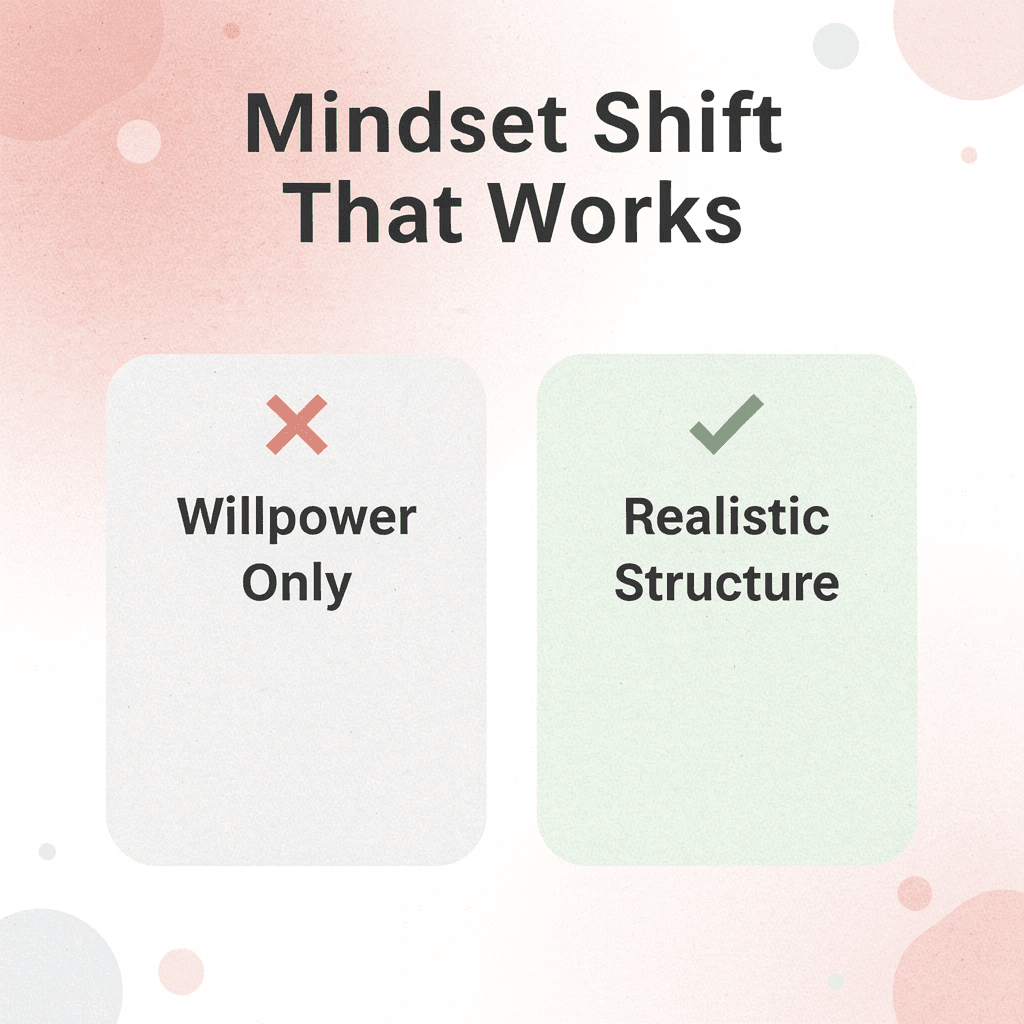
The failure point is usually big goals without a plan to reach them. A new mother sets a goal to train five days a week, misses two sessions because of a fussy night, and thinks that means she failed. A ten-minute session of intentional core work, glute activation, and controlled breathing — done four times a week — builds more real strength over three months than an aggressive program that gets abandoned after three weeks.
⚠️ Warning: Setting an all-or-nothing training schedule is one of the most common postpartum fitness mistakes. Missing one session should never mean abandoning the entire plan.
💡 Tip: Swap volume for consistency. A shorter, intentional session completed regularly will always outperform an ambitious program done sporadically.
| Approach | Weekly Sessions | Completion Rate | 3-Month Outcome |
|---|---|---|---|
| Aggressive Program | 5 days/week | Low — easily disrupted | Often abandoned by week 3 |
| Sustainable Routine | 4 days/week | High — built around real life | Consistent strength gains over 3 months |
| 10-Minute Focused Sessions | 4 days/week | Very high — low barrier to entry | Core + glute strength rebuilt steadily |
Why does a realistic plan matter more than motivation?
According to a 2025 study published in Frontiers in Public Health, only 34.5% of postpartum women exercised during the postpartum period. A plan that fits your life gets followed; one that demands perfect conditions collapses at the first obstacle.
The body after birth is not a paused version of the pre-pregnancy body. It is a different system that responds best to movement quality, progressive load, and adequate recovery between sessions. Rushing that process creates complications that take months to fix. Research shows that postpartum women who received health education were 2.1 times more likely to exercise than those who did not. Understanding why the method works changes behavior more reliably than motivation alone.
What kinds of exercise formats support postpartum recovery?
High-impact exercises that increase abdominal pressure, or programs focused on burning calories rather than maintaining good form, can slow recovery even when they feel effective. Studios like BST Lagree in London offer an alternative: the Megaformer delivers an intense full-body workout through slow, controlled resistance instead of impact or fast movements. For a postpartum body seeking challenge without extra strain, this distinction matters significantly.
How do you know when your body is ready to progress?
Progress should be earned, not assumed. As pelvic floor control improves, the core moves with greater load efficiency and energy stabilizes, signaling the body’s readiness for more. Those signals are specific: no leaking, no pressure, no doming during effort, and the ability to maintain form throughout the full range of motion. When these markers are present, adding resistance, duration, or complexity becomes safe and productive. The question most women never think to ask is not whether they are working hard enough, but whether they are working in the right direction.
Related Reading
- Kegel Exercises Postpartum
- Postpartum Strength Workout
- Postpartum Diastasis Recti Workout
- Easy Postpartum Workout
- Postpartum Arm Workout
- Postpartum Full Body Workout
- Postpartum Core Workout
- 6 Week Postpartum Workout Plan
- Postpartum Pelvic Floor Exercises
- Postpartum Workout Plan At Home
- Pilates Exercises For Post Pregnancy
- Postpartum Diastasis Recti Workout
- Postpartum Pelvic Floor Exercises
- Postpartum Belly Exercises
How BST Lagree Supports Postpartum Strength and Recovery
Successful postpartum fitness is about rebuilding strength in a way that respects how your body recovers. The most effective programs focus on restoring core function, improving stability, developing muscular strength, and progressing gradually as your body becomes ready. BST Lagree aligns with these goals by using controlled resistance and slow, deliberate movement patterns to create muscular demand while maintaining focus on alignment and stability.
“The most effective postpartum programs prioritize restoring core function and progressing gradually — rebuilding from the inside out before adding intensity.”
💡 Tip: If you’re returning to fitness after birth, always prioritize alignment and stability before increasing resistance — this is the foundation that prevents setbacks and supports long-term strength.
🔑 Takeaway: BST Lagree’s approach of slow, controlled movement is especially well-suited to postpartum recovery because it builds muscular demand without sacrificing the core stability your body needs most during this phase.
| Postpartum Recovery Goal | How BST Lagree Supports It |
|---|---|
| Restoring core function | Controlled resistance targets deep stabilizing muscles |
| Improving stability | Slow movement patterns reinforce alignment and balance |
| Developing muscular strength | Progressive resistance builds strength without high impact |
| Gradual progression | Movements adapt as the body becomes ready for more demand |

Why does low-impact training still deliver real results?
One of the biggest misconceptions about postpartum exercise is that low impact means low effectiveness. BST Lagree training challenges muscles intensely without requiring repetitive jumping, running, or other high-impact activities that stress recovering joints and pelvic floor structures. Instead of relying on impact to increase difficulty, our method uses resistance, time under tension, and controlled movement to create a demanding workout.
A key principle of postpartum recovery is progressive overload: gradually increasing demands on the body as strength improves without overwhelming healing tissues. Our resistance-based system allows participants to adjust the difficulty while maintaining control throughout each movement. Because exercises are performed slowly and intentionally, participants can focus on technique, breathing, and body awareness.
How does Lagree support core restoration after pregnancy?
Pregnancy and childbirth stress your core muscles, making rebuilding essential during recovery. Unlike workouts that target the abdominal muscles with repeated crunches, BST Lagree engages your core through a variety of movements. The method keeps your body stable while your arms and legs move, continuously activating your deep stabilizing muscles. This supports your core’s primary function: stabilizing your spine and pelvis.
Many new mothers experience discomfort in their hips, lower back, knees, and shoulders during recovery. BST Lagree training works multiple muscle groups simultaneously, supporting the movement patterns you use daily: lifting, carrying, bending, and standing upright. Because the exercises are low-impact, you can challenge your muscles without stressing your joints through jumping or running.
How does BST Lagree adapt to different recovery journeys?
No two postpartum recovery journeys are the same. Some women return to exercise after uncomplicated pregnancies, while others rebuild strength after months of inactivity, cesarean birth, or ongoing challenges. Our flexibility allows resistance levels, exercise variations, range of motion, and movement complexity to be adjusted to individual abilities and comfort levels, accommodating different fitness levels and recovery stages.
Movements that work for one person may not work for another depending on recovery status, strength levels, and ongoing symptoms. Professional instruction helps participants identify appropriate modifications, maintain proper technique, and progress safely, especially for women returning to exercise after a long break.
What makes BST Lagree a sustainable approach to postpartum recovery?
Many postpartum fitness challenges stem from a loss of stability rather than a lack of effort. BST Lagree emphasizes maintaining proper alignment and developing functional strength through controlled movement. This focus reinforces healthy movement patterns while building the muscular endurance needed for daily activities: lifting children, carrying supplies, pushing strollers. Benefits extend well beyond the workout itself.
The postpartum period is a time to rebuild, not punish your body. BST Lagree supports this through low-impact training, controlled resistance, full-body strengthening, core engagement, and an emphasis on stability and alignment. Rather than high-impact workouts or rapid weight-loss programs, our method rebuilds strength through controlled, resistance-based movements that challenge muscles while minimizing stress on recovering joints and tissues. This prioritizes long-term strength, movement quality, and sustainable progress: exactly what matters most during postpartum recovery.
Book a Lagree Class in London Today
Lagree in London provides a structured, low-impact environment where controlled resistance replaces guesswork. Our Megaformer classes apply the principles covered throughout this guide: progressive load, full-body stability, and core engagement that supports rather than strains a recovering body.
“Controlled resistance and progressive load are the cornerstones of safe postpartum recovery: replacing guesswork with a structured path back to strength.” — Lagree Method Principles
🎯 Key Point: Lagree’s Megaformer delivers high-intensity results without the high-impact risk that can set back postpartum recovery.

Book a class with us to experience high-intensity training without high-impact risk. Your first session introduces carefully sequenced movement patterns that rebuild pelvic floor coordination, postural strength, and functional endurance at a pace your body can truly absorb — that is training smarter.
💡 Tip: Your first Megaformer session is the ideal starting point — it’s designed to meet you exactly where you are, building strength, stability, and confidence from the ground up.
| What You Build | How Lagree Delivers It |
|---|---|
| Pelvic floor coordination | Slow, controlled resistance movements |
| Postural strength | Full-body Megaformer stability work |
| Functional endurance | Progressive load at a sustainable pace |
| Core engagement | Low-impact, high-intensity sequencing |
✅ Best Practice: Start with your first introductory session to learn the movement patterns before progressing — this is the smartest way to return to fitness safely.