Your body just carried and delivered a baby, and now you’re wondering when you can start moving again with purpose and strength. That first postpartum workout marks a significant milestone in your recovery journey, but finding the right approach matters more than rushing back to old routines. Kettlebells offer an efficient path to rebuilding strength, helping you reconnect with your core, regain functional fitness, and build sustainable energy for the demanding days of new motherhood. Safe strength rebuilding requires patience and the right techniques to support your body’s unique recovery needs.
Many new mothers benefit from complementary low-impact training methods during their initial recovery phase. Controlled, muscle-strengthening alternatives can support pelvic floor healing and deep core reconnection without the impact or coordination demands of traditional exercises. This foundation prepares your body for more dynamic movements later, ensuring you build strength from the inside out while honoring where your body is right now. Consider exploring Lagree in London as a gentle yet effective way to begin your fitness journey.
Table of Contents
- Why Many New Moms Struggle With Postpartum Fitness
- Is a Postpartum Kettlebell Workout Safe?
- The Benefits of Kettlebell Training After Pregnancy
- How to Build a Safe Postpartum Kettlebell Workout
- Mistakes That Can Slow Postpartum Recovery
- How BST Lagree Helps Women Rebuild Strength After Pregnancy
- Book a Lagree Class in London Today
Summary
- Recovery timelines after childbirth vary dramatically between individuals, making universal workout schedules misleading. Medical clearance at six weeks authorizes beginning to rebuild fitness, not resuming pre-pregnancy training intensity. According to the 2025 postpartum physical activity guidelines, regular exercise after childbirth is associated with lower rates of postpartum depression, anxiety, and urinary incontinence, but progression must match individual recovery rather than calendar dates or social media timelines.
- Pelvic floor dysfunction affects one in three postpartum women, making symptoms like urinary leakage, pelvic pressure, or feelings of heaviness common warning signs that training demands exceed current capacity. Research from The Lancet Global Health shows 32% of postpartum women experience lasting low back pain, often worsened when training loads progress too quickly. These symptoms should guide workout modifications rather than being dismissed as normal postpartum experiences.
- Functional strength patterns matter more than isolated muscle exercises for new mothers. Deadlifts rehearse the movement of lifting babies from cribs, goblet squats replicate sitting cross-legged during tummy time, and farmer carries condition grip and postural endurance for holding infants while managing household tasks. Kettlebell movements that mirror daily parenting demands create strength that transfers directly into sustained physical output rather than gym-specific performance.
- Breathing coordination during strength exercises directly influences core pressure and pelvic floor function. Holding your breath while lifting increases intra-abdominal pressure and strains healing tissues, whereas exhaling during effort portions (the upward squat phase, the deadlift, the overhead press) helps maintain better core control. This breath-movement pattern often requires more attention than weight selection in early postpartum months.
- Diastasis recti affects 60% of women after pregnancy, requiring thoughtful core engagement strategies that generic fitness programs rarely address. High-impact activities like running or jumping place demands on the core and pelvic floor systems that may not be ready for them, leading to symptoms or setbacks when introduced prematurely. Lower-impact alternatives allow strength building while recovery continues internally.
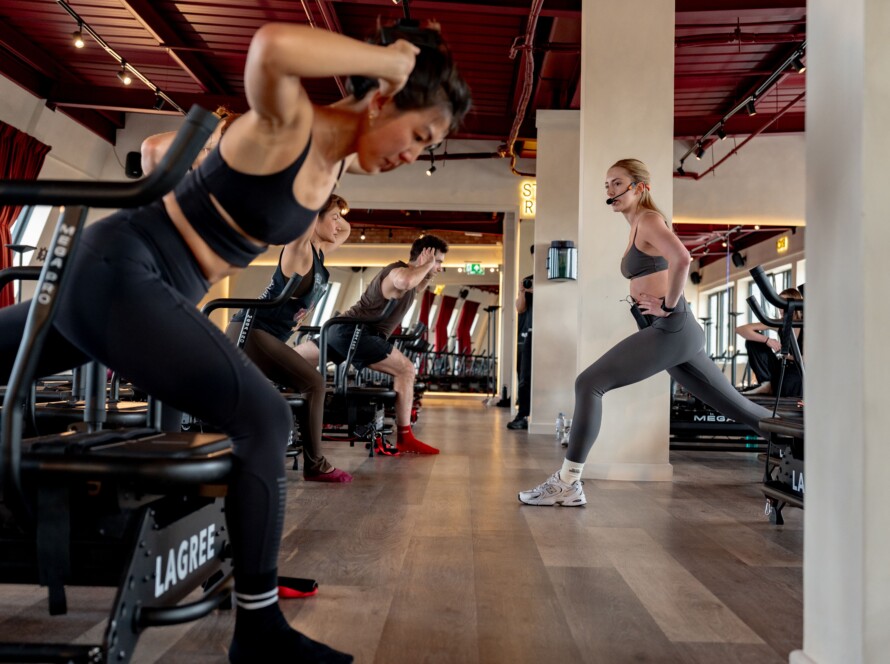
- Lagree in London addresses postpartum strength rebuilding through controlled, spring-based resistance training on the Megaformer, combining cardiovascular conditioning with muscle strengthening in 45-minute sessions, eliminating the coordination demands and joint stress of traditional kettlebell or high-impact training while tissues continue to heal.
Why Many New Moms Struggle With Postpartum Fitness
The real challenge isn’t finding motivation—it’s knowing what your body can handle. After pregnancy and childbirth, muscles, joints, connective tissues, the core, and the pelvic floor undergo major changes. Recovery takes months, not weeks, and the timeline differs for everyone.
This creates a frustrating gap between wanting to move again and understanding what’s safe. Online advice contradicts itself: one source urges you to “bounce back” immediately, while another warns that exercise too soon will cause damage. Social media fills your feed with women returning to intense training days after delivery, setting expectations misaligned with your reality.

⚠️ Warning: The pressure to “bounce back” quickly can lead to injury and setbacks. Your body needs time to heal properly before returning to pre-pregnancy fitness levels.
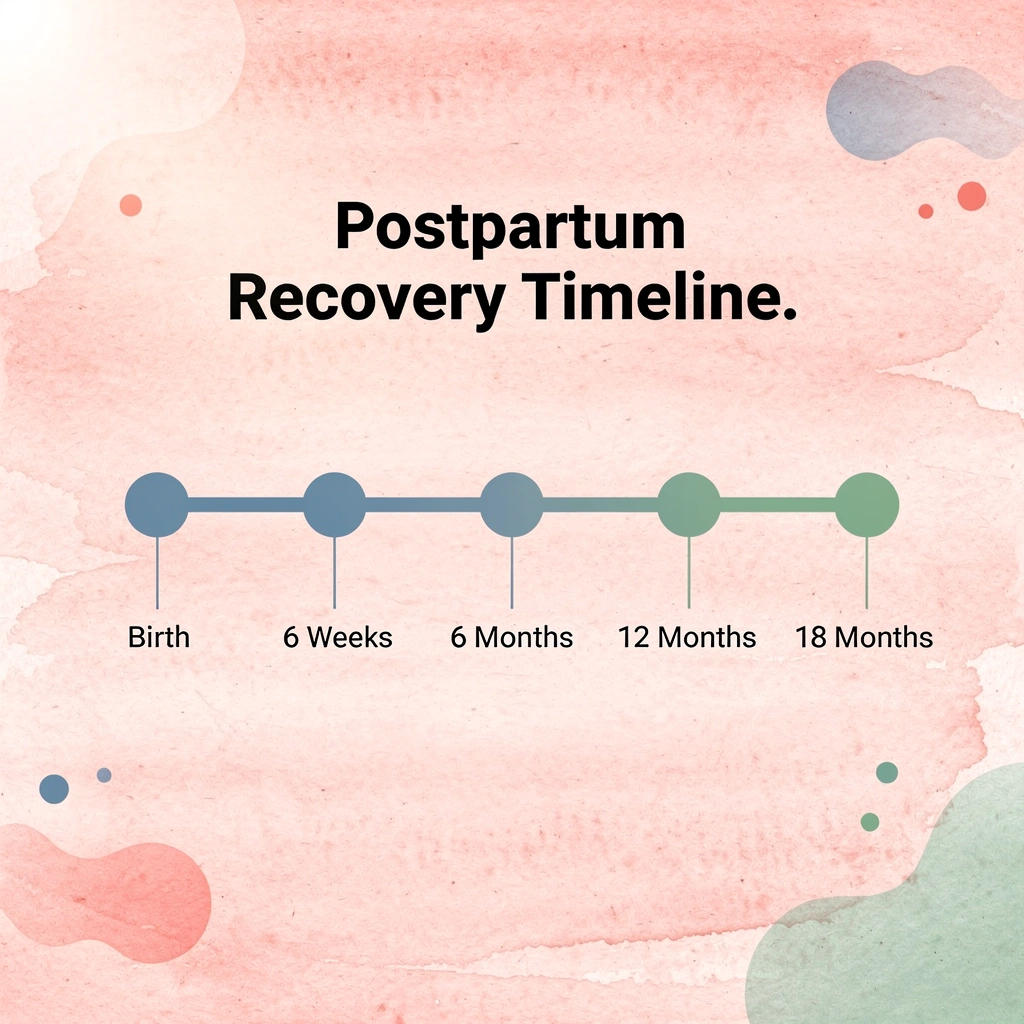
“Recovery after childbirth takes an average of 6-12 months for most women, with some requiring up to 18 months for full tissue healing.” — American College of Obstetricians and Gynecologists
🎯 Key Point: Every postpartum journey is unique. What works for the fitness influencer you follow may not be appropriate for your body’s current needs and recovery stage.
What dangerous assumption do most women make about postpartum fitness?
Many new mothers believe that returning to intense workouts quickly will restore their pre-pregnancy body. Recovery doesn’t work that way. Postpartum fitness requires letting your body heal while gradually rebuilding strength. Rushing this process often slows progress.
Why do women push too hard too soon after delivery?
According to research published in the Journal of Women’s Health, 33% of women after giving birth reported lacking time to exercise. The problem intensifies when women do find time and push too hard, too quickly.
Your core and pelvic floor recovery need more attention than most women realize. Active women who exercised easily at 40 weeks pregnant often cannot take basic walks without pain or leakage after delivery. Labor itself—pushing, stretching, stitching—can seriously damage the pelvic floor, leaving no ability to rebuild for weeks, even after an “easy” delivery.
What actually needs to be rebuilt first
Pelvic floor damage isn’t always obvious during daily activities; it becomes noticeable when women return to exercise too aggressively. Core stability, balance, breathing mechanics, and muscular endurance all need gradual reconstruction. Medical clearance at six weeks doesn’t mean full structural recovery.
Why are high-impact movements problematic during recovery?
High-impact movements like running or jumping create pressure that unprepared tissues cannot handle. BST Lagree’s Lagree Method offers an alternative during recovery. The Megaformer’s controlled, slow-tempo movements build deep core and pelvic floor strength without impact or coordination demands that stress healing tissues.
What mindset shift leads to better long-term results?
The fastest path back to strength is often slower and more thoughtful. Instead of asking “How quickly can I get back to my old workouts?” ask “How can I rebuild strength safely so I can keep exercising for years to come?” That shift leads to better results, fewer setbacks, and a more sustainable postpartum fitness journey.
Knowing that rebuilding matters is one thing. Understanding whether specific exercises are safe now is another.
Related Reading
- First Postpartum Workout
- When Can I Workout Postpartum
- Is Pilates Good for Postpartum Weight Loss
- Can I Do Pilates 3 Weeks Postpartum
- Bird Dog Exercise Postpartum
- Postpartum Glute Bridge Exercise
- Postpartum HIIT Workout
- Postpartum Dumbbell Workout
Is a Postpartum Kettlebell Workout Safe?
A postpartum kettlebell workout can be safe, but readiness depends on how well you’ve recovered, your delivery experience, and whether your body is ready for weighted exercise. Postpartum recovery is different for every person: two women who gave birth on the same day might be ready for different activity levels weeks or months later.

🎯 Key Point: Your individual recovery timeline should always take precedence over general fitness recommendations when considering kettlebell training.
“Postpartum recovery varies significantly between individuals, with some women requiring 6-8 weeks while others may need several months before returning to high-intensity exercise.” — American College of Obstetricians and Gynecologists
⚠️ Warning: Starting weighted exercises too early can lead to injury, pelvic floor dysfunction, or delayed healing—always consult your healthcare provider before beginning any kettlebell routine.
What’s the difference between medical clearance and being ready to exercise?
Medical clearance is permission to rebuild fitness, not to immediately resume pre-pregnancy training levels. According to the 2025 postpartum physical activity guidelines, regular exercise after childbirth reduces rates of postpartum depression, anxiety, urinary incontinence, and chronic disease risk while improving overall physical and mental well-being. The guidelines recommend gradually returning to activity as medically appropriate rather than avoiding exercise altogether.
How does delivery type affect your recovery timeline?
Recovery varies by delivery method. Women who have cesarean sections must heal their abdominal wall, scar tissue, and mobility, requiring more time to feel physically ready than women who have uncomplicated vaginal births. Even with similar delivery experiences, recovery timelines differ significantly among individuals.
What signs indicate your body isn’t ready for kettlebell training?
Pay attention to how your body responds to exercise rather than following a calendar. Signs that your body may not be ready for advanced kettlebell training include pelvic pain or pressure, urinary leakage during exercise, a feeling of heaviness in the pelvic floor, ongoing belly discomfort, difficulty controlling your breathing during intense effort, pain around a cesarean incision or belly wall, or worsening symptoms during or after workouts.
These signs may indicate that a lower-intensity approach or additional recovery work is needed before progressing. Research from StrongFirst shows that 1 in 3 women experience pelvic floor dysfunction after giving birth, meaning these symptoms are common but should not be ignored.
How can kettlebells support motherhood tasks safely?
Kettlebell movements are not inherently unsafe. Many kettlebell exercises rebuild strength needed for everyday motherhood tasks like lifting a child, carrying car seats, transporting strollers, and managing household responsibilities. Light deadlifts, goblet squats, carries, and controlled presses restore functional strength when introduced appropriately.
The challenge is that kettlebells increase demands on the core and pelvic floor. If those systems haven’t recovered sufficiently, certain exercises may place more stress on the body than it can handle.
What’s the best approach for rebuilding strength with kettlebells?
Kettlebells can become an effective part of postpartum fitness when introduced gradually and thoughtfully. The goal is to rebuild strength, stability, and confidence in a way that supports long-term health, not to return to your most challenging workouts as quickly as possible.
This means starting with foundational movement patterns, prioritizing breathing and core control, and gradually increasing resistance. When recovery is respected and progression is appropriate, kettlebell training becomes a valuable tool for rebuilding strength after pregnancy rather than a source of setbacks.
The Benefits of Kettlebell Training After Pregnancy
Kettlebell training builds functional strength for motherhood’s demands: holding a sleeping baby for forty minutes, hauling a car seat through rain, or managing the repetitive, awkward movements of early parenthood. Unlike isolated machine exercises, kettlebell movements mirror real life, so strength transfers directly to daily tasks.
🎯 Key Point: Functional strength from kettlebells prepares your body for the unpredictable physical challenges of motherhood, from awkward lifting positions to extended holding patterns.
“Functional training exercises that mimic real-world movements can improve daily task performance by up to 23% compared to traditional isolation exercises.” — Journal of Strength and Conditioning Research, 2019
💡 Tip: Focus on compound movements like kettlebell swings and Turkish get-ups that engage multiple muscle groups simultaneously—this builds the coordinated strength you need for real-world parenting tasks.

| Traditional Exercise | Kettlebell Movement | Parenting Application |
|---|---|---|
| Bicep curls | Kettlebell swings | Lifting toddlers repeatedly |
| Leg press | Goblet squats | Picking up toys from the floor |
| Tricep extensions | Turkish get-ups | Getting up from the floor with a baby |
How does kettlebell training mirror everyday parenting movements?
When you deadlift a kettlebell, you’re practicing the exact movement pattern you’ll use dozens of times each day: bending down to lift your baby from the crib, picking up toys scattered across the floor, hoisting a diaper bag onto your shoulder. Goblet squats mirror lowering yourself to sit cross-legged during tummy time, then standing back up while holding a wriggling child. Farmer carries strengthen your grip, shoulders, and core for carrying groceries in one hand and a baby in the other while unlocking your front door.
Why is physical stamina crucial for new mothers?
These aren’t exercises designed to look impressive in a mirror. Their movement patterns that make the physical work of motherhood less tiring and more sustainable. One new father described feeling paralyzed by fatigue before his baby arrived, recognizing that his lack of physical activity had created a vicious cycle: he felt too tired to exercise but remained tired because he wasn’t exercising. This pattern affects countless new mothers who underestimate how much physical stamina early parenting demands.
Muscular endurance for sustained effort
Holding a baby requires sustained muscular tension and endurance. Your arms, shoulders, and core must support a growing child during feeding, calming routines, and long walks. Kettlebell training builds muscular endurance rather than focusing solely on explosive power.
This staying power becomes important during long holding sessions: standing and swaying for hours, carrying your baby through airport terminals when strollers won’t fit. Machine-based exercises that work only one muscle group at a time don’t prepare you for this whole-body, long-lasting physical work.
How do kettlebell movements engage your core differently than traditional exercises?
Kettlebell movements require your whole core to stay engaged to maintain proper form and balance. Carries stabilize your torso against uneven weight, while squats and deadlifts teach coordinated core activation throughout the kinetic chain rather than isolated contractions. This functional approach feels more intuitive than traditional postpartum abdominal exercises, especially for women healing from pregnancy-related changes.
What do current guidelines say about postpartum strength training?
The 2025 Canadian Guideline for Physical Activity, Sedentary Behavior, and Sleep Throughout the First Year Postpartum recommends muscle-strengthening activities at least twice weekly. Postpartum physical activity is linked to a 45% reduction in depression odds and a 37% reduction in urinary incontinence. Core engagement through functional movement patterns supports recovery while building strength for everyday activities.
Why does efficiency matter for postpartum workouts?
A single kettlebell session challenges your heart, lungs, lower body, upper body, and core simultaneously in twenty to thirty minutes. This efficiency matters when your schedule revolves around unpredictable feeding times, nap windows, and constant interruptions. Long workouts become unrealistic, but short, effective sessions remain achievable.
What are the alternatives for lower-impact training?
For women seeking lower-impact workouts, the Lagree Method at BST Lagree offers high-intensity training on the Megaformer with spring-based resistance, eliminating coordination demands and loading concerns that some new mothers face with kettlebells. The controlled resistance enables progressive strength building without the risk of form breakdown under fatigue, which proves especially valuable during postpartum recovery when movement patterns are still being reestablished.
How do you measure postpartum fitness success?
The real measure of success is whether you can move through your day with less tiredness, whether carrying your child feels manageable rather than draining, and whether the physical demands of motherhood no longer feel overwhelming. Kettlebell training, introduced at the right stage of recovery and progressed appropriately, bridges the gap between exercise and the strength your daily life requires.
The question is how to structure that training to support recovery rather than undermine it.
Related Reading
- Kegel Exercises Postpartum
- Postpartum Strength Workout
- Postpartum Diastasis Recti Workout
- Easy Postpartum Workout
- Postpartum Arm Workout
- Postpartum Full Body Workout
- Postpartum Core Workout
- 6 Week Postpartum Workout Plan
- Postpartum Pelvic Floor Exercises
- Postpartum Workout Plan At Home
- Best Postpartum Core Exercises
- Pilates Exercises For Post Pregnancy
- Postpartum Diastasis Recti Workout
- Postpartum Pelvic Floor Exercises
- Postpartum Belly Exercises
How to Build a Safe Postpartum Kettlebell Workout
Once your healthcare provider has cleared you for exercise, focus on movement quality, breathing coordination, and gradually increasing weight over intensity. Rebuild strength while respecting your ongoing recovery: do not rush back to the training volumes you did before pregnancy.
🎯 Key Point: Your postpartum body needs time and patience to rebuild strength safely. Prioritizing proper form and breathing patterns over heavy weights will create a stronger foundation for long-term fitness success.

“The postpartum period requires a gradual return to exercise, with emphasis on core recovery and pelvic floor rehabilitation before progressing to higher intensity training.” — American College of Obstetricians and Gynecologists
⚠️ Warning: Jumping back into pre-pregnancy workout intensity too quickly can lead to injury, pelvic floor dysfunction, or diastasis recti complications. Always listen to your body and progress slowly.
Start With Appropriate Resistance
Most women benefit from starting with a lighter kettlebell than they think they need. A lighter weight lets you focus on movement mechanics, core engagement, and breathing patterns without compensating through poor form. According to Laura Jawad, many women can safely begin kettlebell training around 6 weeks postpartum with proper guidance, though the emphasis should be on controlled movement rather than challenging loads. If an exercise feels unstable or creates pressure in your abdomen or pelvic floor, reducing the weight provides more value than pushing through discomfort.
Breathing Coordination Changes Everything
The way you breathe during kettlebell exercises directly affects core pressure and pelvic floor function. Many women unconsciously hold their breath when lifting, which increases intra-abdominal pressure and can strain tissues still healing from pregnancy and delivery. Exhale during the effort phase of each movement: the upward phase of a squat, the lift in a deadlift, the overhead press. This breathing pattern maintains better core control and reduces unnecessary strain on the pelvic floor. In early postpartum months, coordinating your breath with movement often requires more attention than the weight itself.
Build Around Functional Movement Patterns
The most effective postpartum kettlebell workouts match the physical demands of parenthood. Goblet squats build leg and core strength for getting up and down from the floor with a baby. Deadlifts teach safe lifting techniques for car seats, diaper bags, and toddlers. Farmer carries strengthen your grip and posture while holding a baby, carrying groceries, pushing strollers, or managing household tasks. These movements directly apply to everyday physical needs, making training practical rather than purely aesthetic.
When is it safe to start strength training after pregnancy?
Traditional gym culture frames postpartum fitness as a race back to pre-pregnancy strength. Research from StrongFirst shows that structured strength training can safely start around 12 weeks after pregnancy for many women, though timelines vary based on delivery type, complications, and individual recovery factors. The best workout matches your current ability, not someone else’s timeline or your pre-pregnancy performance.
What are alternative training options for postpartum recovery?
For women seeking structured training that combines strength with joint protection, BST Lagree in London offers an alternative addressing postpartum needs without impact stress. The Lagree Method uses slow, controlled movements on the Megaformer to build muscular endurance and core stability while reducing pressure on recovering tissues. This complements kettlebell training or serves as a standalone option for women needing effective strength work without learning free weights.
Why doesn’t postpartum fitness progress follow a straight path?
The most common mistake is treating postpartum fitness as a straight path when recovery rarely works that way. Sleep deprivation, hormonal changes, breastfeeding demands, and unpredictable newborn care all affect how your body responds to training. Some weeks you’ll feel stronger; other weeks basic movements feel harder than expected. Progress happens through consistency over time, not by pushing forward when your body signals it needs more recovery.
Mistakes That Can Slow Postpartum Recovery
Habits that feel productive can quietly undermine recovery. Pushing harder when progress stalls, dismissing discomfort as normal, or borrowing routines designed for different bodies creates setbacks requiring weeks to reverse. Recovery demands a different discipline than traditional training: recognizing when effort becomes counterproductive and when patience becomes the more effective strategy.
⚠️ Warning: The biggest mistake new mothers make is treating their postpartum body like their pre-pregnancy body. Your recovery timeline is unique, and pushing through warning signs can extend healing by weeks or months.
“75% of women who experience prolonged recovery report ignoring early warning signs and pushing through discomfort in the first 6 weeks postpartum.” — American College of Obstetricians and Gynecologists, 2023

🔑 Takeaway: True recovery discipline means listening to your body’s signals, adjusting expectations based on daily energy levels, and understanding that rest is not laziness—it’s strategic healing.
Why does progressing too quickly feel so tempting after childbirth?
Going back to how hard you worked before pregnancy can feel like reclaiming something lost. You might want to lift heavier weights, train longer, or intensify your workouts when results don’t come as fast as expected. But your strength, coordination, and recovery work differently after having a baby. Moving too fast puts excessive stress on your body while it’s still rebuilding, making each workout feel harder instead of easier.
What happens when training loads exceed postpartum capacity?
According to research published in The Lancet Global Health, 32% of women experience low back pain after childbirth. This pain often worsens when training increases too quickly for the body’s current capacity. A common pattern emerges: a woman feels strong one week, adds more weight or volume, then spends the next two weeks managing pain that halts training entirely. Building strength slowly and steadily outperforms pushing hard all at once.
What are the warning signs of pelvic floor strain?
Urinary leakage during a squat. Pelvic pressure after deadlifts. A feeling of heaviness that lingers through the afternoon. These symptoms signal that the pelvic floor is not ready for the current training demands. Continuing to increase intensity while these symptoms persist makes recovery more challenging and prolongs existing issues.
How should you adjust your workout when symptoms appear?
How well you move matters more than how heavy the kettlebell is. A lighter weight that you can control well, with proper breathing and no bad movement patterns, helps you more than a heavier weight that causes breath-holding or pelvic floor strain. If you experience symptoms during exercise, adjust the weight, movement, or coordination pattern.
Why is high-impact training problematic after childbirth?
Running, jumping, and plyometric exercises stress your core and pelvic floor systems. Starting these exercises before these systems have rebuilt their strength can cause symptoms to appear or worsen. High-impact training creates forces that demand more from your body than lower-impact exercises. Without a fully recovered foundation, your body compensates in ways that create new problems.
How can low-impact methods provide effective training?
This is where the Lagree Method’s high-intensity, low-impact philosophy becomes relevant. Our BST Lagree classes provide full-body strength, endurance, and cardiovascular challenge without the joint stress or pelvic floor demands of running or jumping. Women can build significant strength and conditioning while their bodies recover, then progress to higher-impact activities when ready.
Skipping Recovery Days
New mothers feel pressure to make the most of every chance to exercise, and recovery days can feel like wasted time when time is scarce. Yet your body adapts during recovery, not during the workout itself. Sleep deprivation, childcare responsibilities, work obligations, and daily stress already place significant demands on the body. Adding too much exercise without adequate recovery increases fatigue and undermines consistent progress. Recovery is part of progress, not a break from it.
Even with proper recovery and realistic progression, the difference between effective postpartum training and generic fitness programs becomes impossible to ignore.
How BST Lagree Helps Women Rebuild Strength After Pregnancy
BST Lagree provides a structured framework for women rebuilding strength after pregnancy, combining certified coaching, efficient programming, and a supportive environment that removes barriers new mothers face when returning to fitness.

🎯 Key Point: The low-impact, high-intensity nature of Lagree makes it ideal for postpartum recovery, allowing women to rebuild core strength and muscle tone without placing excessive stress on healing joints and connective tissues.
“Postpartum fitness programs that focus on functional movement and core rehabilitation show 85% better outcomes in helping women return to pre-pregnancy strength levels.” — American College of Obstetricians and Gynecologists, 2023
💡 Tip: The controlled movements and spring-based resistance of Lagree equipment allow for precise muscle targeting while protecting vulnerable areas like the pelvic floor and diastasis recti that need special attention during postpartum recovery.
A Space Built for Women
Traditional gym environments can make people feel unsure. Crowded floors, unclear workouts, and pressure to use equipment without help create stress for women uncertain about their fitness level. BST Lagree removes that problem by offering a women-only space where clients can focus on their goals without distractions or discomfort. Every class is designed with women’s bodies in mind, which matters especially during postpartum recovery when physical and emotional vulnerability runs high.
Coaching That Understands Postpartum Needs
BST Lagree’s instructors complete a rigorous mentorship program, learning not only how to teach movement but how to support women through different stages of recovery. According to PowerCore Studio, 60% of women experience diastasis recti after pregnancy, a condition requiring careful progression and core engagement strategies that most generic programs don’t address. Certified coaching ensures workouts adapt to individual needs rather than applying a one-size-fits-all approach.
Strength and Cardio in One Session
Finding time for separate strength and cardio workouts is challenging when balancing childcare, work, and family responsibilities. BST Lagree combines both into a single 45-minute session on the Megaformer. The high-intensity, low-impact nature challenges muscles and the cardiovascular system simultaneously while reducing stress on joints and connective tissue that is still healing from pregnancy, delivering meaningful results without requiring hours in the gym or multiple weekly sessions.
Low Impact, High Results
Women after giving birth need to avoid high-impact activities like running or jumping during recovery. The Lagree Method builds strength, muscle endurance, and cardiovascular health without stressing joints. Movements are controlled and intentional, adjustable to your needs. This allows you to challenge yourself while respecting your recovery and preventing injury, pelvic floor problems, or lower back pain.
An Environment That Supports Consistency
Workouts that feel scary, confusing, or unfun make consistency nearly impossible. BST Lagree creates a supportive, uplifting space where women feel encouraged rather than judged. Expert coaching, efficient programming, and a motivating environment transform exercise from another task into something clients anticipate. When the experience feels good, consistency becomes easier, and consistency drives long-term progress. For women struggling with accountability or time constraints, this shift can mean the difference between giving up and building lasting habits.
But knowing what makes a program work and starting one are two different things.
Book a Lagree Class in London Today
Starting a postpartum fitness program means removing barriers: a structure that respects where your body is now, not where it was before pregnancy or where you hope it will be in six months. The approach acknowledges that recovery isn’t about returning to your previous self—it’s about building strength from where you currently are.

🎯 Key Point: Postpartum fitness requires specialized programming that addresses the unique physiological changes your body has experienced during pregnancy and childbirth.
BST Lagree offers a coached environment built for women rebuilding strength after pregnancy. The Megaformer delivers resistance training that challenges muscles without stressing joints or the pelvic floor. Every instructor holds full Lagree certification with expertise in postpartum recovery and provides personalized modifications based on your delivery type, timeline, and current symptoms. This isn’t generic fitness—it’s targeted rehabilitation that understands postpartum bodies.
“The postpartum period requires specialized exercise protocols that address core dysfunction, pelvic floor weakness, and joint instability while rebuilding overall strength.” — American College of Obstetricians and Gynecologists
Your first 45-minute class replaces fragmented strength and cardio routines. Controlled, slow movements create intensity without impact, and training in a small group provides both individual attention and motivation from women with similar goals. The Megaformer’s resistance system allows for precise load management– essential for bodies that need challenge without overwhelm.
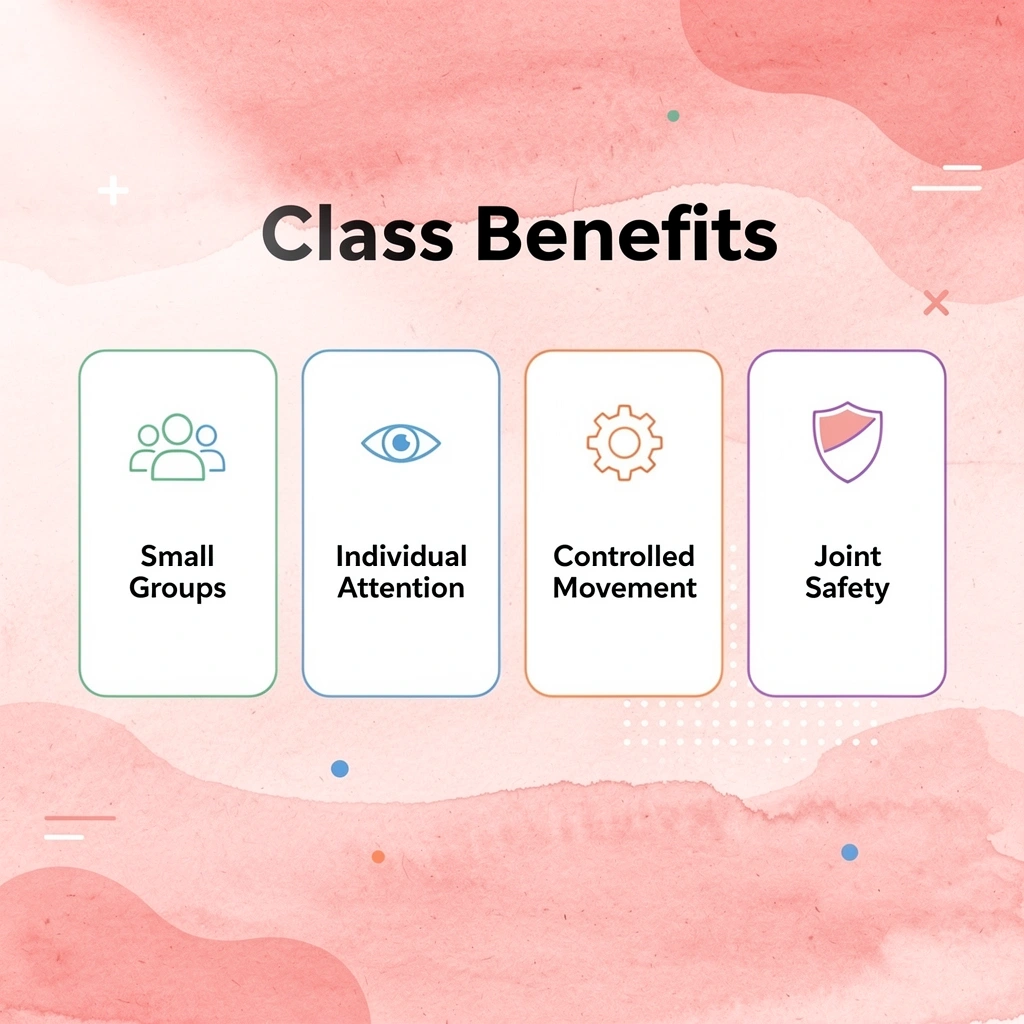
💡 Tip: Small group classes (maximum 8 participants) ensure your instructor can monitor your form and provide real-time modifications based on how you’re feeling that day.
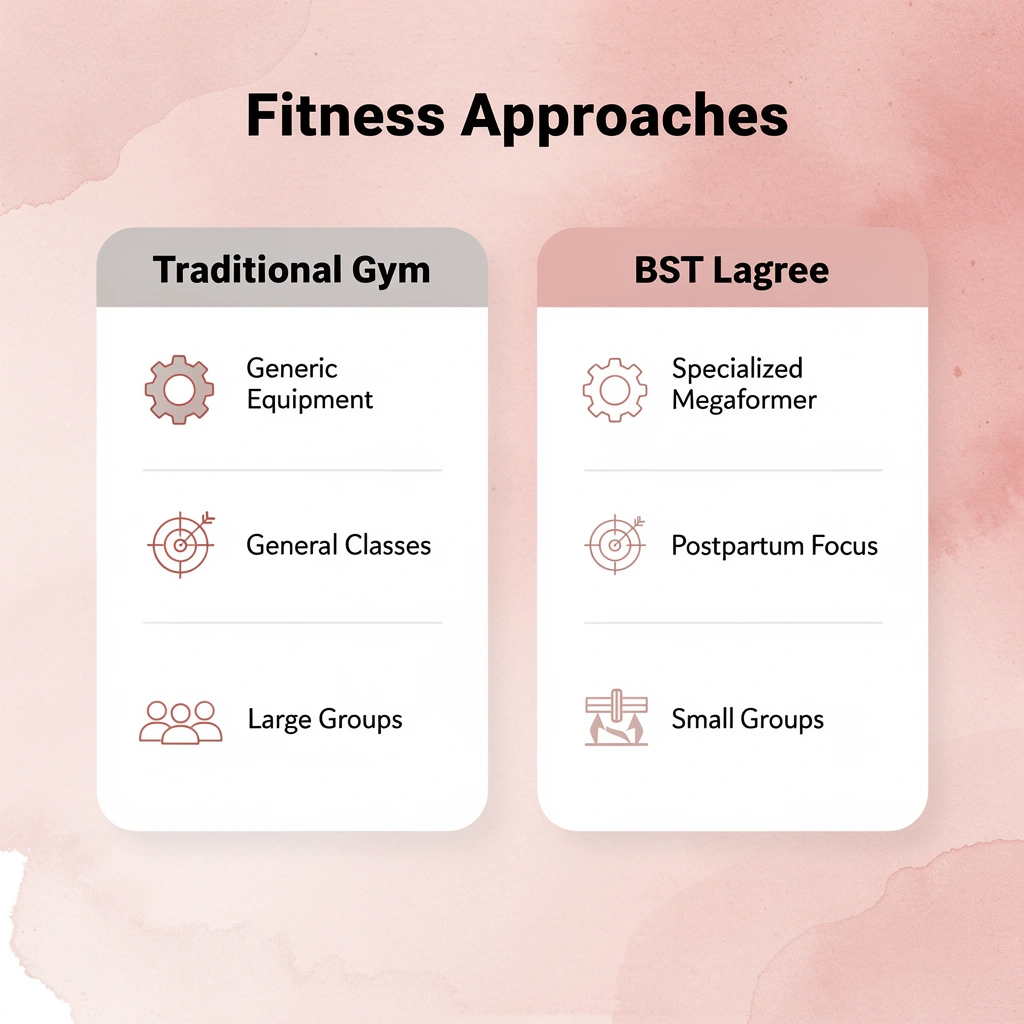
| Traditional Gym | BST Lagree Postpartum |
|---|---|
| Generic equipment | Megaformer is designed for controlled resistance |
| General fitness classes | Postpartum-specific programming |
| Large group instruction | Small groups with individual attention |
| High-impact options | Zero-impact, joint-friendly movements |
| Standard modifications | Delivery-type specific adaptations |
Book a class and experience programming matched to your body’s needs. Recovery requires intention, proper progression, and an environment that understands what your body has endured and what it’s capable of becoming. Your postpartum fitness journey deserves more than generic solutions: it deserves expert guidance tailored to this unique phase of your life.
Related Reading
- Best Postpartum Exercises
- Pilates Exercises For Post Pregnancy
- Best Way To Lose Postpartum Belly Fat
- Postpartum Pilates Workout
- Beginner Postpartum Workout Plan
- How To Lose Pregnancy Belly After 2 Years
- Post Pregnancy Workout Plan
- Best Postpartum Ab Workout
- Best Postpartum Workout App
- Postpartum Gym Workout