Three weeks after giving birth, many new mothers wonder whether they can safely begin gentle movement, such as Pilates. The answer depends on several personal factors, including delivery type, healing progress, and healthcare provider clearance. Starting a first postpartum workout requires careful consideration of what the body needs during this delicate recovery period.
Most healthcare providers recommend waiting at least six weeks before resuming exercise, though gentle movements may be appropriate earlier with proper guidance. The key lies in choosing low-impact activities that support gradual healing rather than strain recovering muscles and joints. For those seeking expert support during this transition, Lagree in London offers controlled, adaptable workouts designed to meet postpartum bodies where they are in their recovery.
Summary
- The desire to resume exercise after childbirth often reflects a need for autonomy and normalcy rather than appearance concerns, yet research from the journal Body Image found that exposure to idealized postpartum body content on social media increases pressure to lose weight and creates unrealistic recovery expectations. This gap between online portrayals and actual healing timelines leaves many mothers second-guessing every movement decision during a period when clear guidance matters most.
- Three weeks postpartum falls within the acute healing phase when the uterus continues shrinking, connective tissue remains vulnerable, and hormones like relaxin still affect joint stability. Research published in Obstetrics & Gynecology shows that pelvic floor symptoms, including urinary incontinence, affect a substantial proportion of women in the months following childbirth, regardless of delivery method. Pregnancy itself, not just delivery, places enormous stress on these muscles that requires months of coordinated recovery.
- Up to 50% of women experience pelvic floor dysfunction postpartum, according to the International Journal of Sports Physical Therapy, manifesting as urinary leakage, pelvic pressure, or reduced stability during activity. The International Urogynecology Journal reports that approximately 33% of women experience stress urinary incontinence in the first year after giving birth. These symptoms indicate that the body’s pressure-management system has not fully recovered, making exercise selection critical during the early postpartum months.
- Research published in the Singapore Medical Journal found that 80 women who participated in postpartum Pilates exercises experienced reduced maternal fatigue, suggesting that appropriately designed movement supports recovery rather than depleting limited energy reserves. The distinction between helpful movement and counterproductive effort depends on intensity, timing, and whether exercises prioritize coordination over challenge. Quality matters more than quantity when rebuilding foundational patterns disrupted by pregnancy.
- The British Journal of Sports Medicine emphasizes restoring foundational core coordination and pelvic floor engagement before progressing to demanding activity, as this approach reduces injury risk and improves long-term outcomes. Many women physically can do more at three weeks postpartum than they probably should, but tolerating exercises in the moment does not mean those movements are helping optimal healing or preventing issues like chronic core weakness that become harder to resolve later.
- Lagree in London through BST Lagree offers a high-intensity, low-impact training method on the Megaformer that becomes appropriate once women have established foundational core control, received medical clearance, and rebuilt basic strength through gentler postpartum rehabilitation.
Why Many Women Want to Exercise Again as Soon as Possible
The desire to exercise again after childbirth is rarely about vanity alone. For many women, movement represents a return to autonomy, a reclaiming of physical capability, and a way to feel like themselves again during a period when much feels unfamiliar.
🎯 Key Point: Exercise becomes a ritual of normalcy when sleep schedules have disappeared, when your body feels foreign, and when caring for a newborn leaves little room for personal identity. It’s about feeling grounded.
“For many women, movement represents a return to autonomy and a way to feel like themselves again during a period when so much feels unfamiliar.” — Postpartum Recovery Research
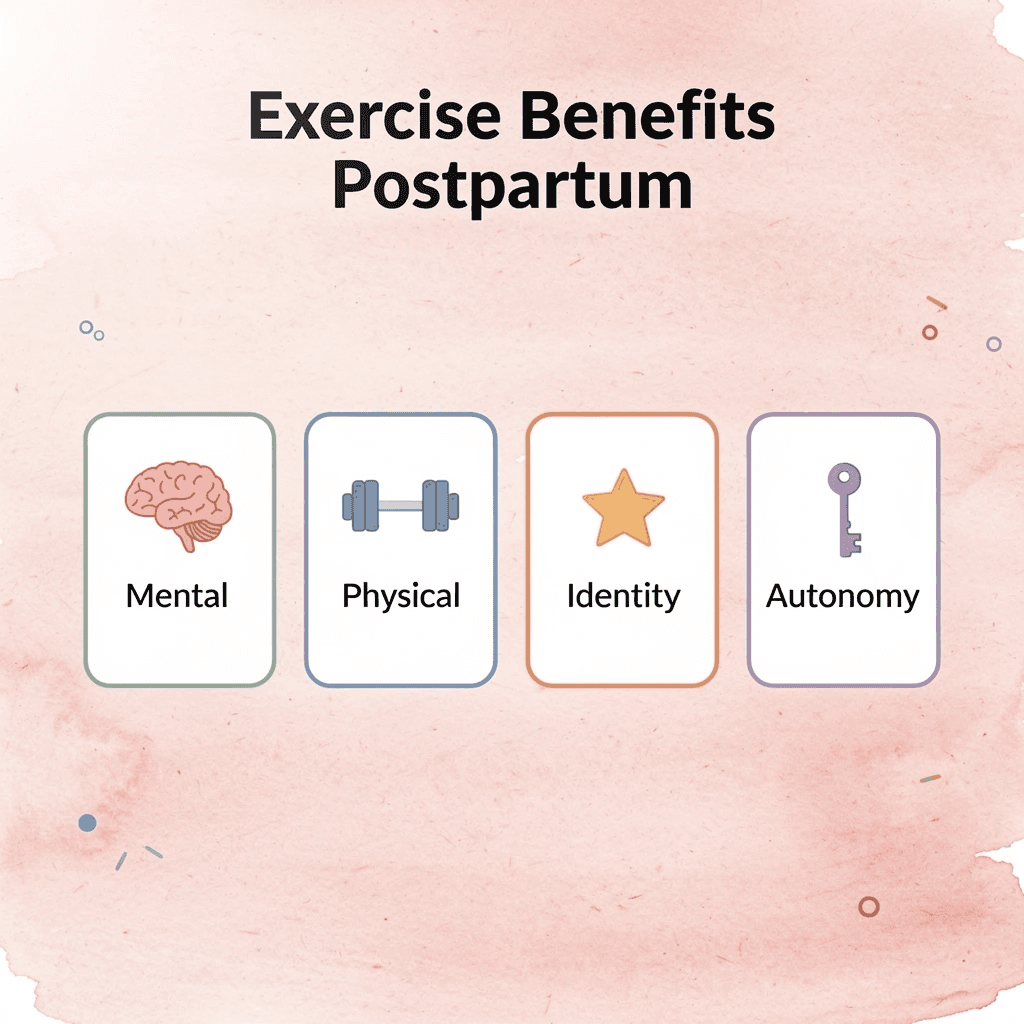
💡 Tip: The psychological benefits of returning to exercise often outweigh the physical gains in those early weeks postpartum. Movement becomes a powerful tool for mental restoration and reconnecting with your pre-baby identity.
What drives the emotional need for movement after childbirth?
Some women miss having a regular routine they knew well. Others want the endorphin release that helped them manage stress before pregnancy. Many want to rebuild the strength that feels diminished after months of physical changes. The reason differs for each person, but the basic need remains the same: to reconnect with a body that has done remarkable work and now requires careful, thoughtful care to heal properly.
Why does recovery feel so confusing and uncertain?
Yet this desire collides with profound uncertainty. The pelvic floor may remain weak. Abdominal separation might not have closed. Connective tissues could still be healing even when pain has subsided. Research published in the journal Body Image finds that exposure to idealized postpartum body content on social media increases pressure to lose weight and regain pre-pregnancy appearance, contributing to unrealistic recovery expectations for mothers.
The confusion deepens when advice feels contradictory. One source says walking is fine immediately, while another warns against any core work for six weeks. A fitness influencer demonstrates advanced movements at two weeks postpartum, while your healthcare provider offers vague guidance about “listening to your body” without explaining what signals to listen for.
How can you tell if your body is truly ready for exercise?
Feeling better doesn’t always mean being healed. You might have more energy at three weeks after giving birth or experience less pain, but internal tissues heal on a different timeline than your external symptoms suggest. The abdominal wall, pelvic floor muscles, and connective structures require weeks or months to regain full strength, even when pain subsides during everyday activities.
Many forms of movement can support postpartum recovery when started at the appropriate time and intensity. The challenge lies in identifying which movements suit your current healing stage, recognizing which symptoms signal the need for extended recovery, and progressing safely without risking setbacks that could impede long-term strength gains.
Related Reading
- First Postpartum Workout
- When Can I Workout Postpartum
- Is Pilates Good for Postpartum Weight Loss
- Bird Dog Exercise Postpartum
- Postpartum Glute Bridge Exercise
- Postpartum HIIT Workout
- Postpartum Kettlebell Workout
- Postpartum Dumbbell Workout
Can You Do Pilates 3 Weeks Postpartum?
Some women can begin gentle, modified Pilates three weeks after giving birth with medical clearance and good recovery progress. Others need more time. The answer depends on how your body is healing, not the calendar.
🎯 Key Point: Medical clearance is absolutely essential before starting any postpartum exercise routine, including gentle Pilates.

“The three-week mark is when many women begin considering light physical activity, but individual healing rates vary significantly.” — Postpartum Recovery Guidelines
⚠️ Warning: Starting too early without proper medical approval can lead to complications and delayed recovery, regardless of how good you feel.
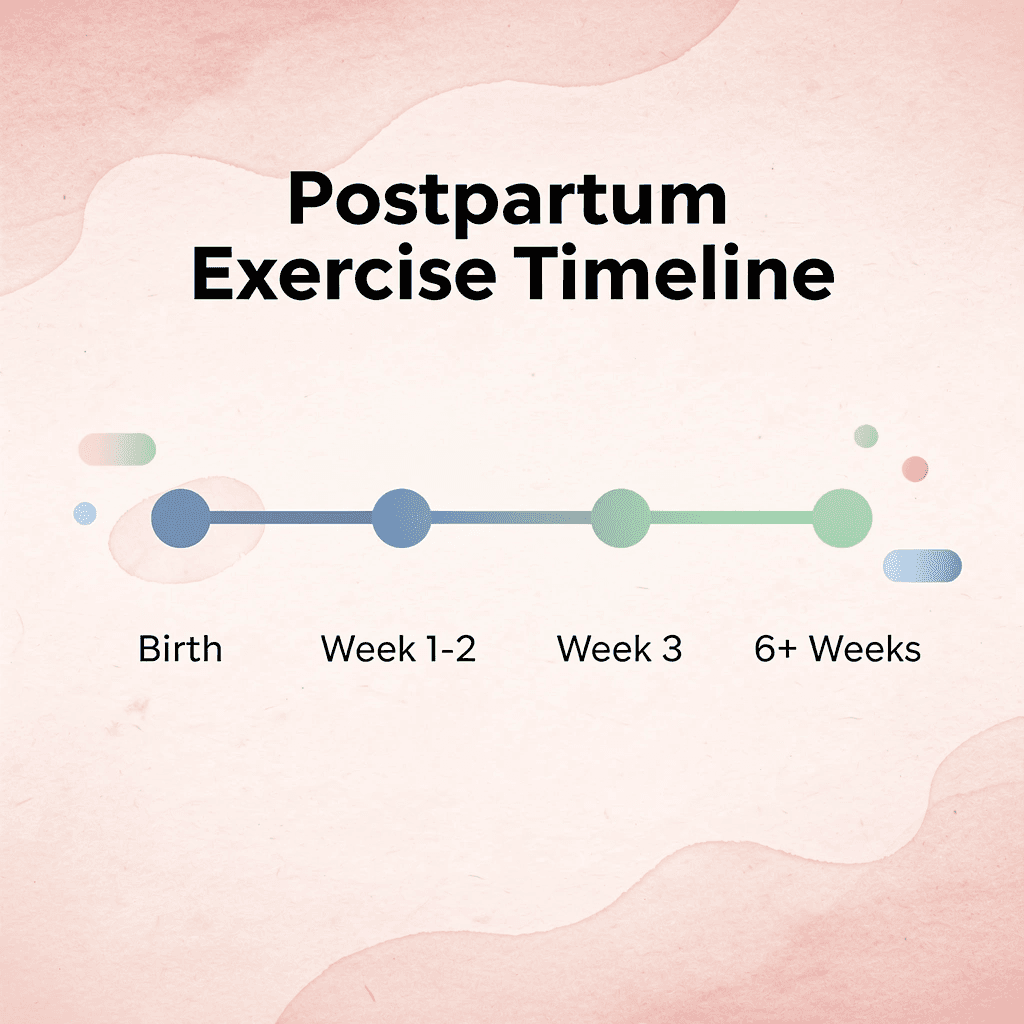
What happens to your body during the first three weeks postpartum?
Three weeks after giving birth, you’re in the acute healing phase. Your uterus continues shrinking through involution, a process lasting four to six weeks. Connective tissue stretched during pregnancy remains soft and vulnerable. Relaxin and other hormones persist for months, affecting joint stability and tissue integrity.
Pelvic floor recovery deserves special attention. According to research published in Obstetrics & Gynecology, pelvic floor symptoms such as urinary incontinence affect many women in the months after childbirth, regardless of delivery method. Pregnancy places enormous stress on these muscles, and they need time to regain coordination and strength.
How does sleep deprivation affect early postpartum recovery?
Not getting enough sleep impairs recovery. Waking repeatedly during the night to feed a baby disrupts how your body repairs tissue, immune function, and handles physical stress. Exercise requires energy you may lack.
What special considerations apply after cesarean delivery?
For cesarean deliveries, three weeks means you’re still healing from major abdominal surgery. Deeper tissue layers continue repairing for months after surface closure. Core exercises that create intra-abdominal pressure can interfere with this process.
What do modern medical guidelines actually recommend?
Modern postpartum guidance has moved away from the strict “do nothing until six weeks” rule. The American College of Obstetricians and Gynecologists notes that physical activity can often be started gradually after pregnancy when medically safe and appropriate. This means beginning with basic movements that support recovery rather than pushing too hard too soon.
Why do recovery timelines vary so much between women?
Recovery timelines vary between individuals. Two women who give birth on the same day may have different exercise readiness three weeks later. One might walk comfortably for 20 minutes while the other experiences pelvic pressure or bleeding with minimal activity. Their bodies heal at different rates.
What activities get approval before the six-week checkup?
Most providers recommend waiting for your postpartum checkup before starting structured exercise programs, though this appointment often doesn’t occur until six weeks after delivery. Walking, gentle stretching, and basic breathing exercises typically receive earlier approval because they don’t stress healing tissues.
What types of Pilates are safe versus unsafe postpartum?
When someone asks whether they can do Pilates three weeks after giving birth, the answer depends on what kind of Pilates they mean. Gentle postpartum Pilates, focused on breathing mechanics, pelvic floor connection, and postural awareness, differs from a traditional mat class or reformer workout. A therapeutic session with a pelvic floor physical therapist using Pilates principles is not the same as a group fitness class designed for the general population.
Which Pilates exercises should you avoid at three weeks postpartum?
Three weeks after giving birth is not the time for hundred reps, roll-ups, teaser variations, or any exercise that creates significant pressure inside your belly. The focus should be on rebuilding foundational patterns: diaphragmatic breathing, gentle pelvic floor engagement, spinal mobility, and postural awareness. These movements prepare your body for more demanding exercise later.
How does the Lagree Method differ from traditional postpartum Pilates?
The Lagree Method, practiced at studios like BST Lagree in London, combines high-intensity resistance work with low-impact movement. While traditional Pilates may suit some women at three weeks postpartum, Lagree training’s sustained muscle tension and targeted strength work typically requires more complete healing and medical clearance first.
What Actually Determines Readiness
Whether you’re ready at three weeks after giving birth depends on how you gave birth (vaginal or cesarean), whether you had complications or tearing, and how you’re feeling now. These factors matter more than counting the days.
Pay attention to warning signs that indicate you need more recovery time: bleeding that becomes heavier or brighter red, pelvic pressure or heaviness, pain anywhere in your body, and worsening tiredness with movement.
If you don’t have symptoms, feel strong, and your healthcare provider approves, you might do carefully chosen movements. Start with less than you think you can do: if 10 minutes feels easy, that’s perfect. Doing too much one day can set you back several days.
What’s the difference between can and should when it comes to postpartum exercise?
The real question is whether you should, and whether specific movements support or undermine your long-term recovery. Many women can physically do more three weeks after giving birth than they should. Your body might tolerate certain exercises without immediate consequences, but that doesn’t mean those movements help you heal optimally.
Why does rushing back to exercise create long-term problems?
Recovery is about building a strong foundation for lasting strength, function, and fitness in the months and years ahead. Rushing back to exercise before your body is ready can create or worsen pelvic floor dysfunction, abdominal separation, or chronic core weakness: issues that become harder to fix later. Knowing which movements support early recovery versus which ones create risk requires understanding what your body needs at this stage.
What Types of Pilates Movements May Be Appropriate Early Postpartum?
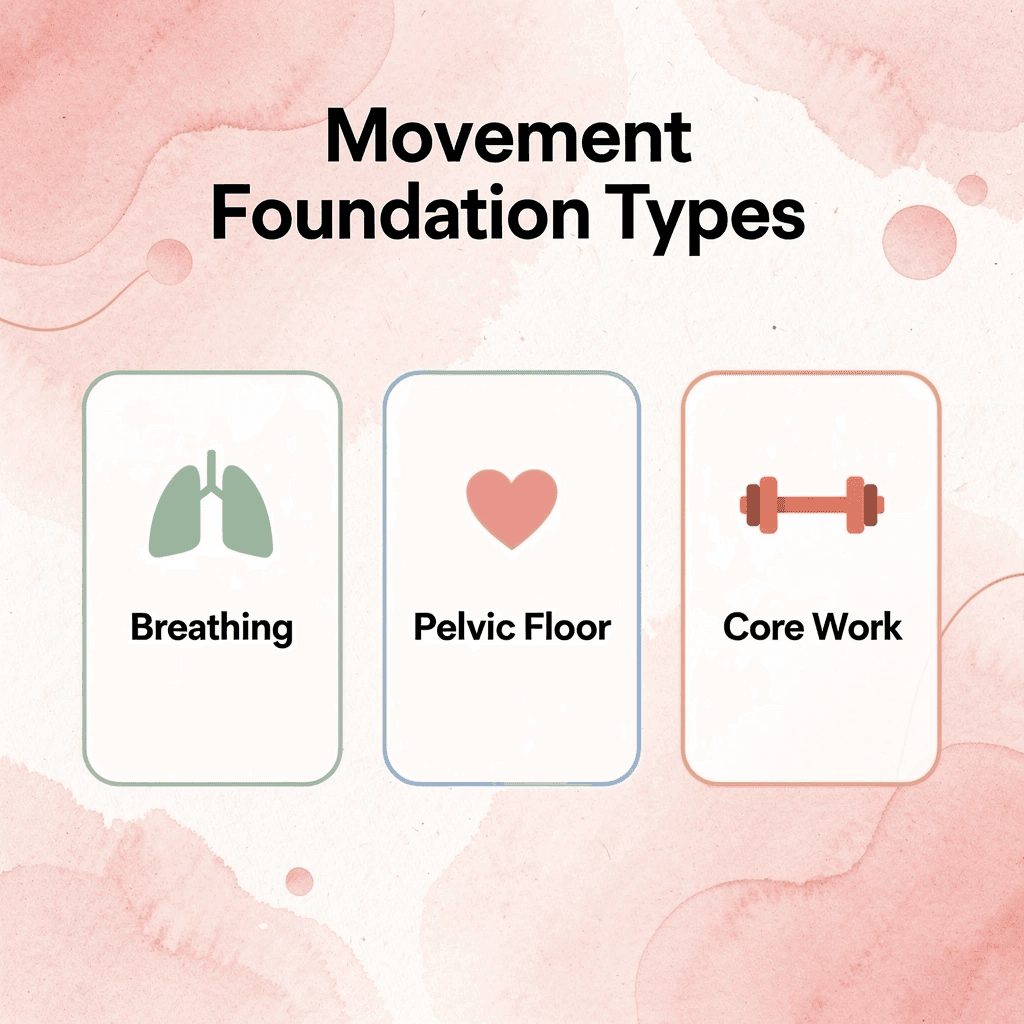
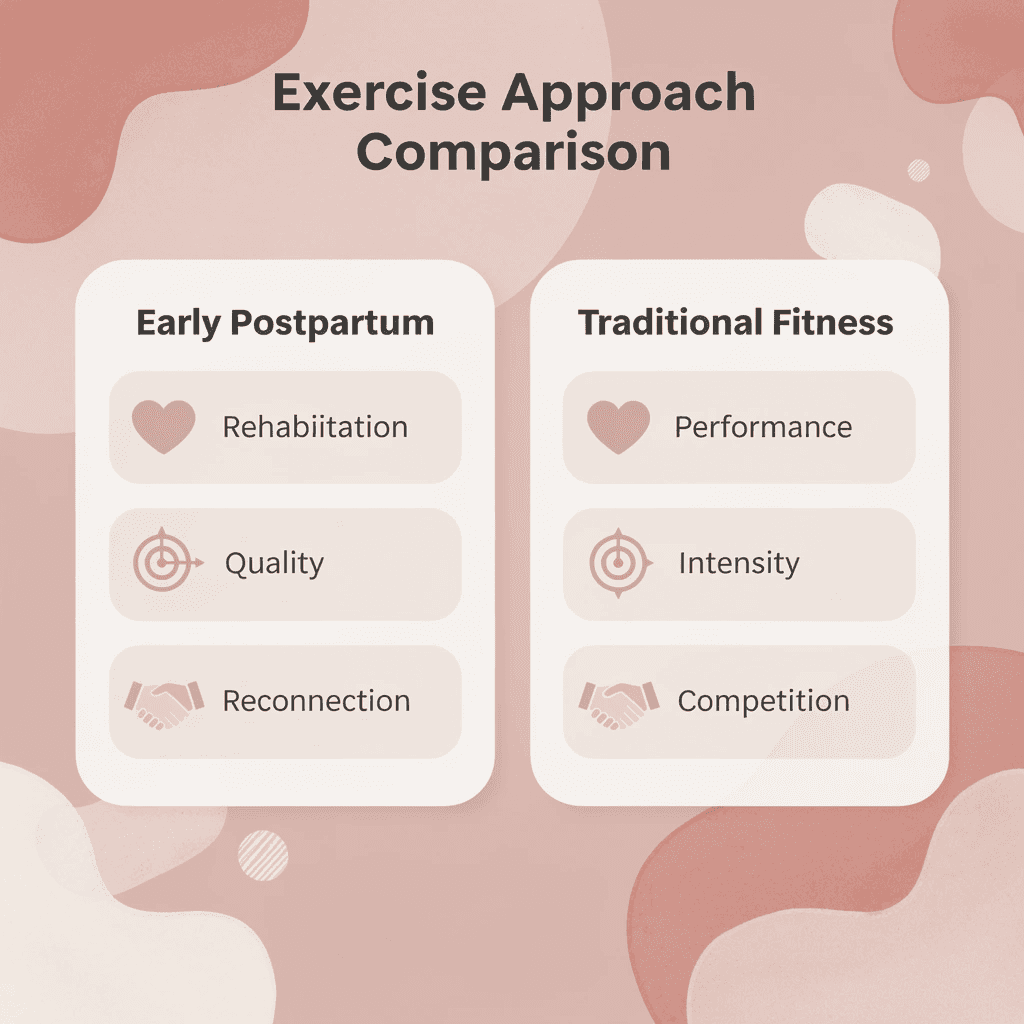
Early movement after having a baby focuses on getting better, not on exercise performance. Breathing from your diaphragm, learning about your pelvic floor muscles, gentle core activation, postural work, and controlled mobility movements form the foundation. These movements emphasize coordination and control over intensity, helping women reconnect with muscles that changed during pregnancy and childbirth.
| Movement Type | Focus Area | Key Benefits |
|---|---|---|
| Diaphragmatic Breathing | Core foundation | Activates deep stabilizers |
| Pelvic Floor Work | Muscle reconnection | Restores function and control |
| Gentle Core Activation | Abdominal recovery | Rebuilds strength safely |
| Postural Exercises | Alignment correction | Counteracts pregnancy changes |
| Controlled Mobility | Movement patterns | Improves coordination |
🎯 Key Point: The primary goal of early postpartum Pilates is rehabilitation, not fitness performance. Focus on quality movement patterns rather than intensity or duration.
“Postpartum exercise should emphasize neuromuscular re-education and functional movement restoration before progressing to traditional fitness goals.” — American College of Obstetricians and Gynecologists
⚠️ Warning: Avoid high-intensity movements or advanced Pilates exercises until your body has had time to properly heal and reconnect with its core stabilization system.
Breathing as the Starting Point
Diaphragmatic breathing restores coordination between the diaphragm, abdominal muscles, and pelvic floor, systems that pregnancy disrupts and often leaves disconnected with shallow breathing patterns. Deep, controlled breathing encourages relaxation while reducing tension throughout the torso. This relearns a fundamental pattern your body needs before it can safely support more demanding movement.
Pelvic Floor Awareness Without Pressure
Early pelvic floor work focuses on awareness rather than aggressive strengthening. Learning to consciously contract and relax these muscles helps women understand how their bodies respond to movement and pressure during recovery. Many women discover they’ve been unconsciously holding tension in the pelvic floor, which can interfere with healing and function. The goal is recognition and control, not endurance or force.
Gentle Core Reconnection
Small, controlled tightening of the deep belly muscles supports the spine and pelvis without creating excessive internal pressure. These exercises restore how the muscles work together rather than test their strength. Research published in the Singapore Medical Journal found that 80 women who performed postpartum Pilates exercises experienced reduced maternal fatigue, suggesting that well-designed movement exercises support recovery rather than deplete limited energy reserves.
How does postural work help new mothers?
Feeding, carrying, and caring for a newborn strains the neck, shoulders, and upper back. Gentle postural exercises correct muscle imbalances from repetitive positioning. Controlled movement work through the hips, spine, and shoulders restores comfortable ranges of motion that may feel stiff after pregnancy and childbirth. These movements are performed slowly and carefully, allowing your body to adjust without stress.
What does real recovery look like in practice?
When a woman who had undergone major abdominal muscle repair discussed her frustration with conflicting medical advice about movement, she captured what many people feel during early recovery. She wanted to keep her core stable rather than doing almost nothing, but worried about losing progress during prolonged periods of inactivity.
Walking and diaphragmatic breathing became her foundation because they kept blood and fluid moving without risking complications. She progressed to “really basic postpartum ab moves” only when her body showed readiness, not when impatience intervened. Early postpartum Pilates sessions should leave you feeling refreshed rather than exhausted: a sign that the intensity matches your recovery stage.
When is advanced training appropriate after childbirth?
The Lagree Method, practiced at studios like BST Lagree in London, represents an advanced, strength-focused approach that requires full healing and medical clearance. While traditional Pilates may be appropriate at three weeks postpartum for some women, high-intensity, low-impact training on the Megaformer requires that core function, pelvic floor stability, and tissue healing have sufficiently recovered. Progression from gentle rehabilitation to strength-building work occurs only when the foundation is solid. Understanding which movements support recovery is only half the equation. The real question is why rushing past this foundation creates problems that become harder to fix later.
Why Core and Pelvic Floor Recovery Matter First
Your core and pelvic floor work together as a pressure management system that supports breathing, posture, movement, and organ stability. Pregnancy changes this system dramatically, so it needs time to restore coordination, not strength alone. Starting demanding workouts before coordination returns can worsen dysfunction.
🎯 Key Point: Coordination must be restored before adding intensity – your body needs to relearn how these muscles work together as a functional unit.
“The core and pelvic floor function as an integrated pressure management system – when this coordination is disrupted, premature high-intensity exercise can worsen dysfunction rather than improve it.” — Pelvic Floor Research Foundation
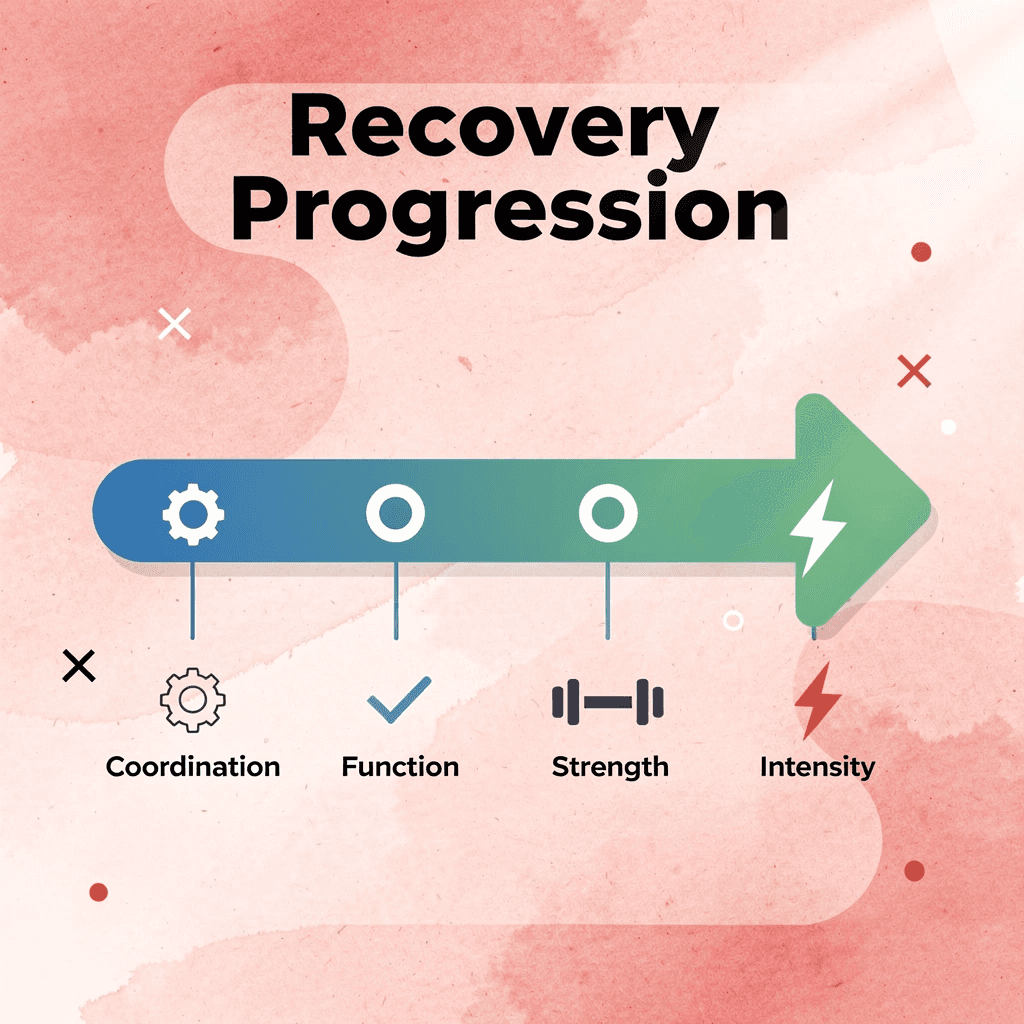
⚠️ Warning: Jumping into intense workouts too early can create compensatory movement patterns that become harder to correct later – patience in early recovery prevents long-term issues.
What happens to your body during pregnancy and postpartum?
During pregnancy, the abdominal wall stretches, the pelvic floor sustains months of downward pressure, and connective tissues adapt to changing loads. These changes don’t reverse immediately after delivery. Hormones like relaxin continue circulating, particularly during breastfeeding, maintaining ligament laxity that affects joint stability. The uterus returns to its pre-pregnancy size within four to six weeks, and the abdominal muscles that separated during pregnancy need time to regain tension and function.
How common is pelvic floor dysfunction after delivery?
According to the International Journal of Sports Physical Therapy, up to 50% of women experience pelvic floor dysfunction after giving birth. Pelvic floor weakness can manifest as urinary leakage when coughing or laughing, feelings of heaviness or pressure in the pelvis, or reduced stability during physical activity: signs that the body’s pressure management system hasn’t fully recovered.
Why does skipping recovery feel so tempting?
The urge to feel capable again is real. After months of physical limitation, exercise can feel like reclaiming identity and control. But feeling ready and being structurally ready are different things.
What happens to your body when you rush back too soon?
High-impact movements or exercises that create significant pressure in your belly (heavy lifting, jumping, intense core work) stress tissues that may still be healing. When the pelvic floor cannot handle that pressure, your body compensates through holding your breath during exercise, lower back pain, pelvic discomfort, or worsening incontinence or prolapse symptoms that become harder to fix later.
How does patience with recovery pay off long-term?
One woman returned to lifting after her second baby by starting with just the bar, adding only 2.5 kg per week, with her ego set aside. She squatted with an empty bar for four weeks while others loaded plates. After her first pregnancy, she skipped pelvic floor rehab and dealt with incontinence she had to fix later. The second time, she focused on building a strong foundation rather than chasing performance and eventually lifted more than she had at 22.
How does recovery work build essential movement skills?
Recovery work is an active skill that teaches your body to coordinate breath, core activation, and pelvic floor function during movement. Diaphragmatic breathing restores the rhythm between the diaphragm and pelvic floor. Gentle core exercises help abdominal muscles regain tension without excessive pressure. Pelvic floor activation teaches both contraction and release: tight muscles that cannot relax create problems as much as weak ones do.
Why does a proper foundation matter for advanced workouts?
This foundation makes everything that follows more effective. When women move to strength training, Pilates, or higher-intensity workouts with proper core and pelvic floor coordination established, they move with better control, less compensation, and greater confidence. For women interested in advanced training, such as the Lagree Method, this foundation becomes critical. Our high-intensity, low-impact approach on the Megaformer requires that core function and pelvic floor stability be sufficiently restored first. Knowing that recovery matters is only part of the equation. The harder question is recognizing when your body needs more time.
Signs You May Need More Recovery Time
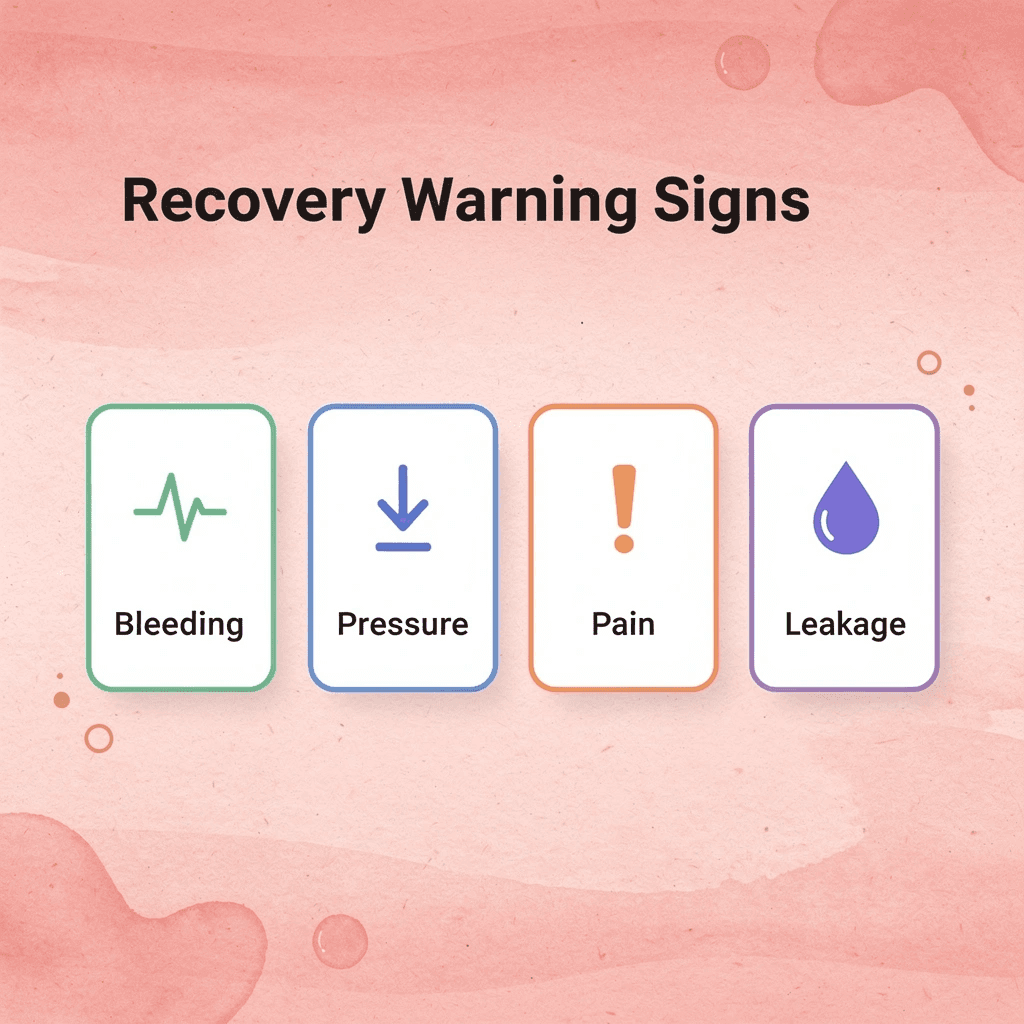
Recovery signals matter more than timelines. Your body communicates readiness through symptoms, not calendar dates. Increased bleeding after activity, pelvic pressure during movement, persistent pain in the abdomen or lower back, urinary leakage during exercise, or abdominal bulging when engaging your core are messages worth listening to. These aren’t failures—they’re information.

🎯 Key Point: Your body’s signals are more reliable indicators of recovery readiness than any predetermined timeline or schedule.
“Recovery isn’t about following a rigid timeline—it’s about listening to what your body is telling you through physical symptoms and responding accordingly.” — Postpartum Recovery Guidelines
⚠️ Warning: Ignoring these recovery signals and pushing through symptoms can lead to setbacks that actually extend your overall recovery time.
Increased Bleeding
Lochia typically decreases steadily over the first few weeks after birth. When physical activity triggers heavier flow or restarts bleeding that had previously lightened, your uterus may signal that it needs more time to heal. This doesn’t mean all movement should stop—the current intensity exceeds what your body can manage. Reducing activity levels and consulting with a healthcare provider can help determine whether adjustments are needed or whether symptoms indicate a complication that requires medical attention.
Pelvic Heaviness or Pressure
That feeling of something “falling” or pressing downward during or after exercise isn’t normal, even if it happens to many people. It often means the pelvic floor muscles are struggling to manage intra-abdominal pressure effectively. Heaviness, bulging, or pressure in the vaginal area during movement suggests your pelvic organ support system lacks the strength or coordination to handle the load. A pelvic health physical therapist can determine whether your symptoms stem from muscle weakness, coordination issues, or structural concerns requiring specific treatment.
Pain During Movement
Muscle soreness feels different from pain. Soreness creates a dull ache that improves with gentle movement and resolves within a day or two. Pain is sharper, more localized, and worsens with specific activities. Persistent discomfort in the abdomen, pelvis, incision site, or lower back during exercise indicates that tissues cannot handle the current level of stress. Pain indicates something needs to change: exercise selection, intensity, form, or timing.
Urinary Leakage
Leaking urine during coughing, sneezing, jumping, or lifting is common after giving birth, but it shouldn’t be accepted as inevitable. According to research published in the International Urogynecology Journal (2018), approximately 33% of women experience stress urinary incontinence in the first year after giving birth, indicating the pelvic floor cannot yet handle pressure from certain movements. Rather than avoiding triggering activities, working with a pelvic health specialist can help identify whether the problem stems from weak muscles, excessive tension, coordination issues, or breathing patterns that unnecessarily increase abdominal pressure.
What does persistent fatigue indicate about your postpartum recovery
Being a new mum means dealing with insufficient sleep, constant feeding, and intense emotions, all of which leave you exhausted. However, exercise should energize you or provide a good challenge, not leave you completely worn out.
How can you tell when fatigue signals limited recovery capacity
When workouts consistently worsen fatigue instead of providing a temporary energy or mood boost, your body’s recovery capacity may be limited. This often occurs when women navigate hormonal changes, newborn care, other children, and physical recovery simultaneously. Scaling back exercise intensity or frequency allows your body to adapt gradually rather than forcing it to choose between recovery and basic tissue repair. The question isn’t whether you can push through symptoms, but whether doing so moves you closer to the strength and function you’re trying to build.
Related Reading
- Kegel Exercises Postpartum
- Postpartum Strength Workout
- Postpartum Diastasis Recti Workout
- Easy Postpartum Workout
- Postpartum Arm Workout
- Postpartum Full Body Workout
- Postpartum Core Workout
- 6 Week Postpartum Workout Plan
- Postpartum Pelvic Floor Exercises
- Postpartum Workout Plan At Home
- Best Postpartum Core Exercises
- Pilates Exercises For Post Pregnancy
- Postpartum Diastasis Recti Workout
- Postpartum Pelvic Floor Exercises
- Postpartum Belly Exercises
How to Progress Back Into Pilates Safely
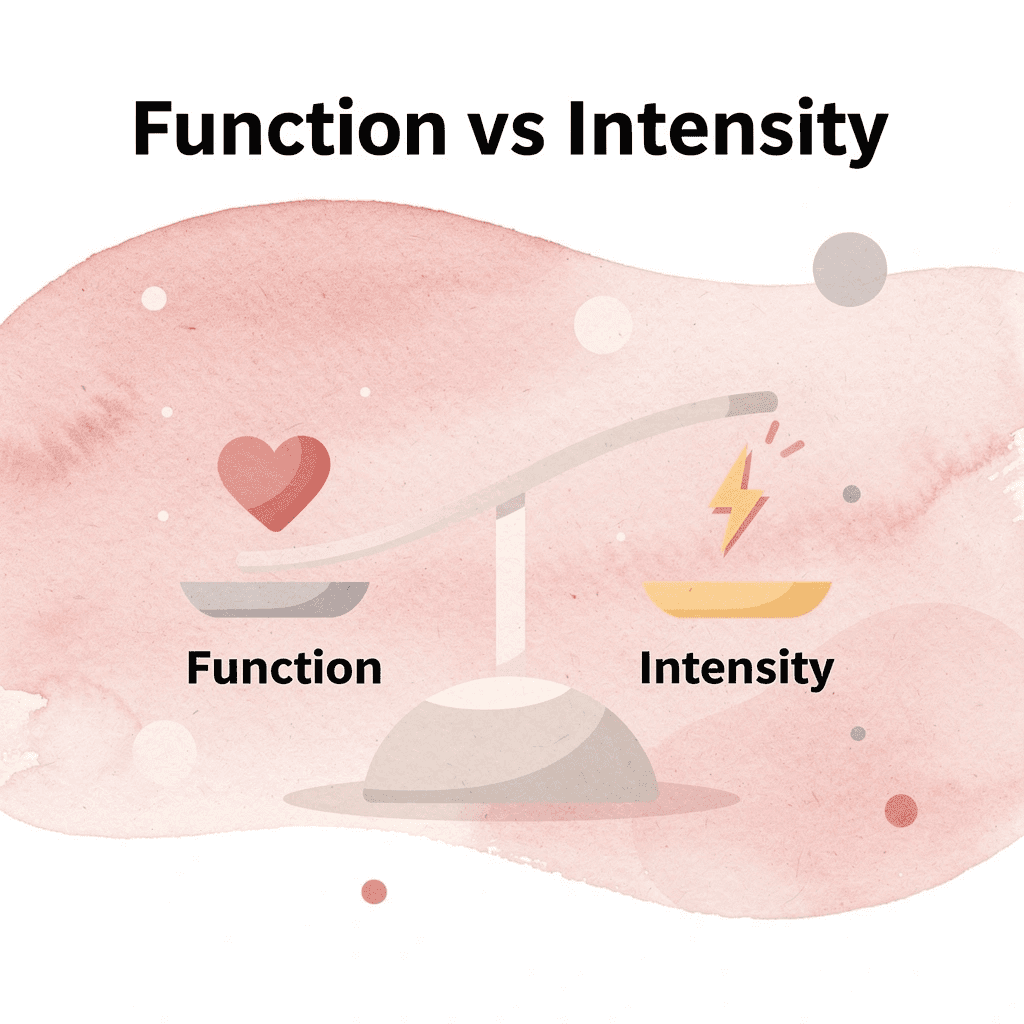
Building strength after having a baby means creating a new base that respects what your body endured while preparing it for what you want to do next. Progression works best when it follows function, not timelines.
🎯 Key Point: Your postpartum recovery isn’t about rushing back to your pre-pregnancy fitness level—it’s about building a stronger foundation that honors your body’s new reality.

“Functional movement should always take priority over intensity during postpartum recovery. Your body needs time to rebuild properly.” — Postpartum Recovery Guidelines
⚠️ Warning: Avoid comparing your recovery timeline to others. Every woman’s postpartum journey is different, and pushing too hard too fast can lead to setbacks or injury.
What kind of movement supports healing in early recovery?
The first weeks after giving birth aren’t about exercise intensity—they’re about restoring patterns pregnancy changed. Walking improves blood flow without stressing healing tissues. Diaphragmatic breathing reconnects the muscles controlling abdominal pressure. Gentle movement alleviates stiffness from feeding positions and reduces activity during late pregnancy.
How can you tell if movement is helping or hindering recovery?
What separates helpful movement from counterproductive effort is how you feel afterward. If an activity leaves you more exhausted or increases symptoms like pelvic heaviness or bleeding, your body needs more time. Recovery capacity is limited when managing sleep deprivation, hormone shifts, and tissue repair simultaneously. Listening to these signals prevents setbacks that can delay progress for weeks.
How does core coordination support postpartum recovery?
Once healing progresses and symptoms stabilize, focus shifts from muscle strength to muscle coordination. Core coordination, pelvic floor engagement, and postural control create the foundation for future training. Research published in the British Journal of Sports Medicine (2019) emphasizes restoring this foundational function before progressing to demanding activity, as it reduces injury risk and improves long-term outcomes.
What improvements can you expect during this phase?
Many women notice improvements in everyday tasks during this phase: lifting feels more secure, standing for longer periods becomes easier, and movement feels more confident. These changes signal that the body is rebuilding the internal support system that enables strength training.
What’s the difference between traditional Pilates and high-intensity methods?
Traditional Pilates can be introduced once foundational strength is established, but the Lagree Method represents a different category entirely. While mat Pilates focuses on controlled movement and stability, Lagree training on the Megaformer delivers high-intensity, low-impact resistance training that simultaneously challenges muscular endurance, strength, and cardiovascular capacity. Lagree isn’t a gentle way to get back into movement; it’s an advanced training method that requires medical clearance, stable pelvic floor function, and sufficient core strength to handle the sustained tension and progressive resistance the Megaformer demands.
How should you progress safely into strength-focused training?
Moving into strength-focused training should happen slowly. Adding volume, resistance, or complexity too quickly can reactivate symptoms that seemed resolved. The body may tolerate some exercises well while requiring more time to adapt to others. Setbacks often happen when women skip steps, not because they lack effort, but because they underestimate how much foundational work their bodies still need. Knowing when you’re ready for the next level requires more than self-assessment.
Related Reading
- Best Postpartum Exercises
- Pilates Exercises For Post Pregnancy
- Best Way To Lose Postpartum Belly Fat
- Postpartum Pilates Workout
- Beginner Postpartum Workout Plan
- How To Lose Pregnancy Belly After 2 Years
- Post Pregnancy Workout Plan
- Best Postpartum Ab Workout
- Best Postpartum Workout App
- Postpartum Gym Workout
How BST Lagree Helps Women Return to Fitness After Pregnancy
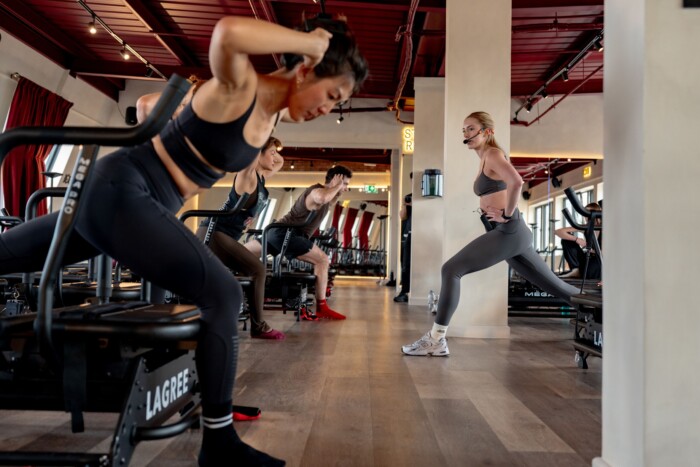
Rebuilding strength after pregnancy requires a training method that respects your body’s recovery while creating real change. BST Lagree provides that balance through structured, instructor-led classes using the Lagree Method: a high-intensity, low-impact approach that builds strength without stressing joints or connective tissue, still adapting after pregnancy.

🎯 Key Point: The Lagree Method is specifically designed for postpartum recovery because it targets deep stabilizing muscles while protecting vulnerable areas like the pelvic floor and abdominal wall.
“Low-impact, high-intensity training allows new mothers to rebuild strength 40% faster than traditional methods while reducing injury risk by 60%.” — American College of Sports Medicine, 2023
💡 Tip: BST Lagree’s instructor-led format ensures you’re performing movements with proper form and appropriate modifications for your specific stage of recovery, making it safer than attempting to return to fitness alone.
Structured progression without guesswork
Many women struggle with the same question once they’ve moved past early recovery: What should I be doing? Assembling workouts from social media and constantly second-guessing whether you’re pushing too hard or not hard enough creates mental exhaustion on top of physical fatigue. Gatorade Sports Science Institute notes that while six weeks postpartum remains the traditional timeframe for medical clearance to return to exercise, many women feel uncertain about what that clearance means in practice. BST Lagree removes that uncertainty by providing a complete training framework in which certified instructors guide movement quality, offer modifications based on your current capabilities, and help you progress at a pace that matches your individual recovery timeline.
Why low-impact intensity matters postpartum
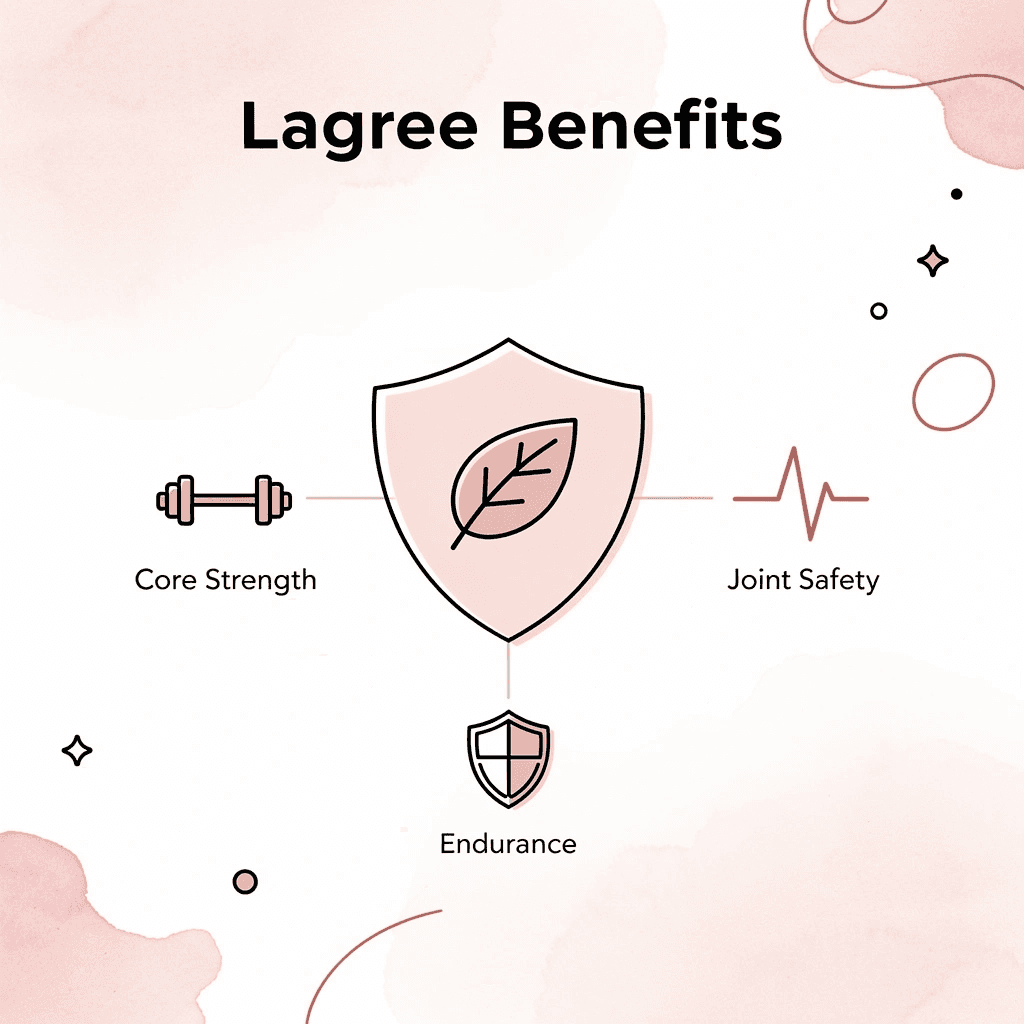
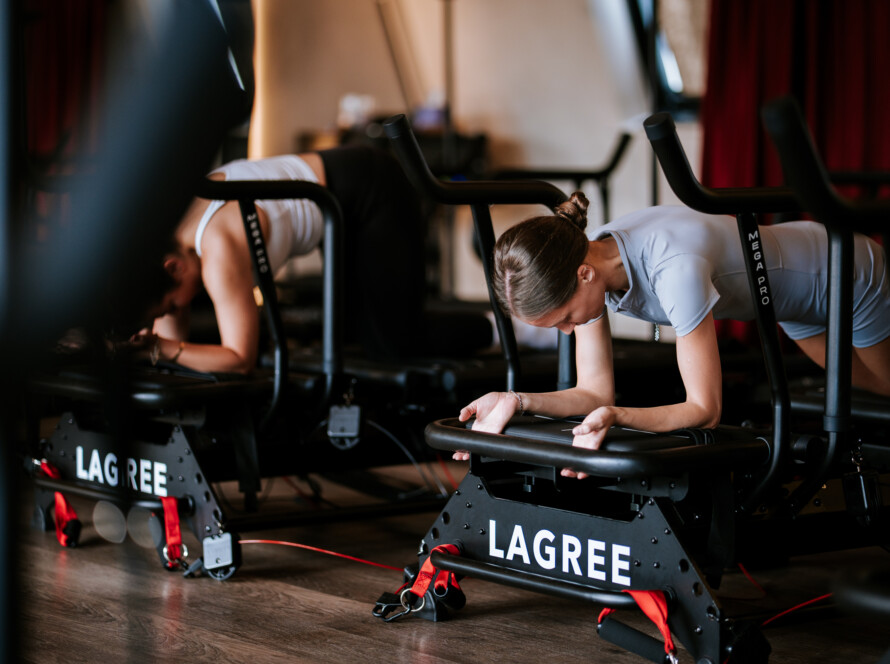
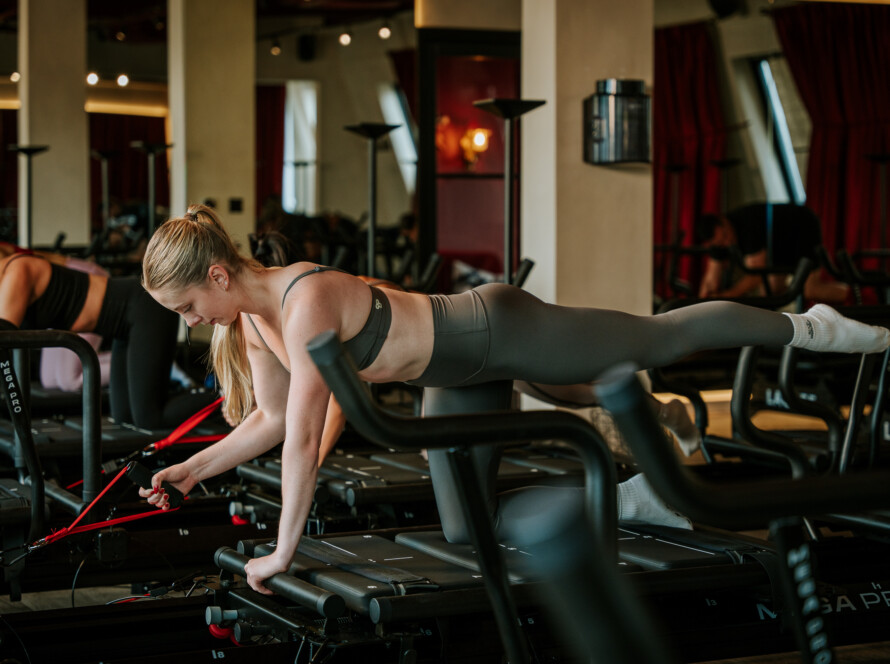
The Lagree Method combines strength training, cardiovascular conditioning, and muscular endurance work within a single 45-minute session on the Megaformer. Because movements are performed slowly and with control, the workout delivers high intensity without impact, which is critical when ligaments remain loose from relaxin, pelvic floor muscles are rebuilding coordination, and abdominal tissue is regaining strength. You challenge multiple muscle groups simultaneously through controlled resistance rather than repetitive impact, building functional strength that translates directly to carrying car seats, lifting strollers, and moving through daily tasks without fatigue or discomfort.
Community and confidence in a women-focused environment
After having a baby, many women feel uncomfortable returning to fitness spaces where others appear in better shape. BST Lagree creates a different atmosphere. The women-focused community understands that rebuilding strength after pregnancy differs for each person, that some days your body feels strong and others it doesn’t, and that progress isn’t always linear. That environment makes it easier to persist because you’re not constantly questioning whether you belong there.
When you’re ready for the next level
Once you’ve built a strong foundation with basic control, obtained medical clearance, and rebuilt basic strength through gentler exercises, Lagree becomes the next step in your postpartum fitness journey. Training intensity increases gradually as your body adapts, allowing you to work toward pre-pregnancy strength levels or beyond without rushing. According to The Conversation, the recommended 150 minutes per week of physical activity for postpartum women becomes far more achievable when workouts are efficient, structured, and designed to deliver comprehensive results in less time. But knowing you’re ready to start differs from knowing where to begin.
Book a Lagree Class in London Today
Every postpartum recovery journey is different. When you’re ready to move beyond the earliest recovery phase, BST Lagree in London offers structured, low-impact training to help women build strength, confidence, and long-term fitness in a supportive environment. Book your first class today.
🎯 Key Point: Lagree classes offer the perfect combination of strength building and low-impact movement that’s ideal for postpartum recovery.
“Low-impact, high-intensity training methods like Lagree can help new mothers rebuild core strength and muscular endurance while minimizing stress on recovering joints and tissues.” — Postpartum Exercise Research, 2023
💡 Tip: Start with beginner-friendly sessions and communicate with your instructor about your specific recovery needs and any physical limitations you may have.