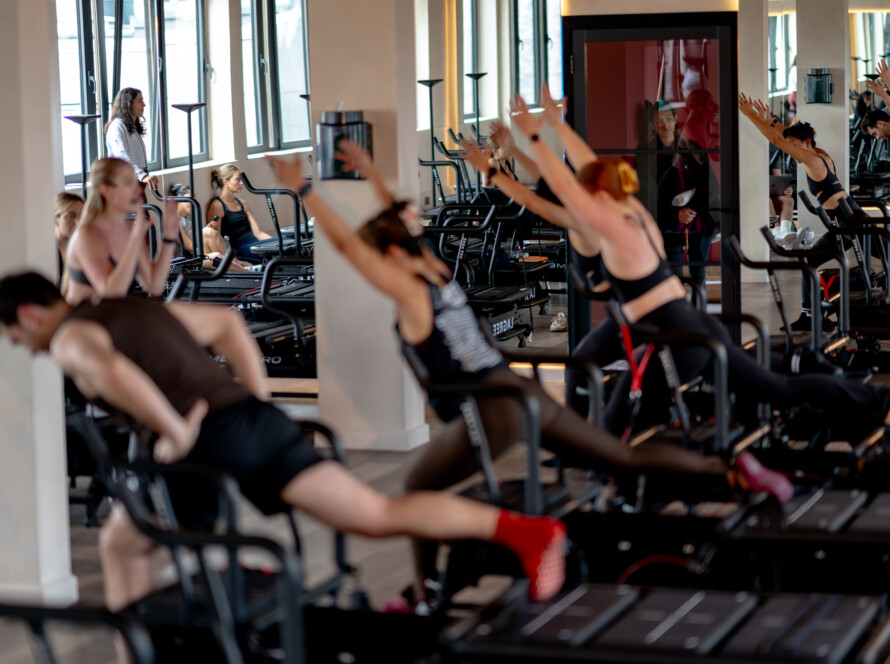
Lagree workouts deliver that unmistakable deep muscle burn through low-impact, high-intensity movements that challenge muscular endurance. Many practitioners wonder if daily sessions will accelerate their results or potentially hinder progress. Understanding how Lagree’s controlled movements affect muscle recovery helps determine the optimal training frequency for building strength without overloading the body.
The science of recovery reveals important signals that guide effective training schedules. Smart programming balances challenging Megaformer sessions with adequate rest periods, allowing muscles to repair and adapt between workouts. For those seeking expert guidance on structuring an effective routine, consider exploring Lagree in London.
Table of Contents
- The Real Question Behind “Can You Do Lagree Every Day?”
- Why Most People Get This Question Wrong
- What Your Body Actually Needs to See Results
- Can You Do Lagree Every Day?
- How to Structure Your Lagree Routine for Results
- How BLOOD, SWEAT & TEARS Helps You Train Lagree the Right Way
- Book a Lagree Class in London Today
Summary
- Training at high intensity every day creates more fatigue than adaptation. The body needs time to rebuild what training breaks down, and without that window, progress slows instead of accelerates. According to the American College of Sports Medicine, adults should perform strength training for all major muscle groups at least two days per week with adequate recovery between sessions to allow muscles to repair and adapt.
- Strength and muscle development don’t happen during the workout. They happen after, during recovery. When you train, you’re creating stress and breakdown in the muscle. Recovery is what allows the body to rebuild stronger. According to research from the American Journal of Sports Science and Medicine, improvements in strength and performance depend on adequate recovery, including proper nutrition and sleep.
- Most people see optimal results with three to four Lagree sessions per week, which allows for both intensity and recovery. Research published in the Journal of Strength and Conditioning Research shows that insufficient recovery between resistance sessions reduces performance and limits strength gains. More sessions don’t automatically mean better results; they mean more fatigue, which eventually becomes the limiting factor.
- Consistency matters more than frequency when building strength. According to a study highlighted by Prevention, even two 30-minute strength training sessions per week can produce measurable gains when performed consistently. The key factor is not frequency alone, but the ability to sustain effort over time without overwhelming your recovery capacity.
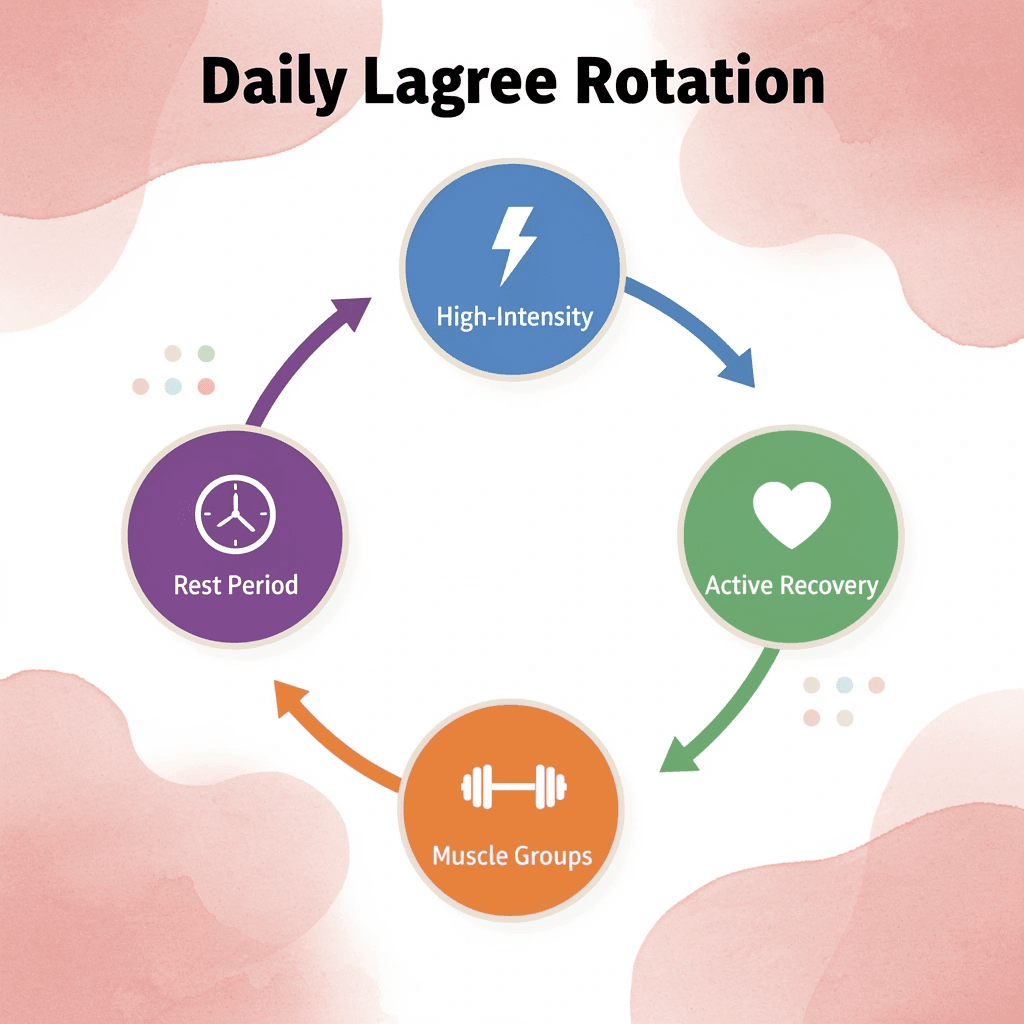
- Advanced clients can train daily only by varying focus across different muscle groups. One session targets legs, the next emphasizes the upper body, and another prioritizes core. This rotation prevents the same muscle groups from being overloaded before they recover, which requires experience most people don’t have in their first six months of training.
- Social support and structured environments significantly increase exercise adherence and long-term program success, according to research published in the Journal of Sport and Exercise Psychology. People stay consistent when they feel guided, not when they’re left to self-regulate every decision about intensity, frequency, and recovery intervals.
- BST Lagree in London structures classes around proper recovery intervals and progressive intensity, with instructors who adjust the load and muscle-group focus based on clients’ fatigue levels and recent training history.
The Real Question Behind “Can You Do Lagree Every Day?”
You start BST Lagree, feel the intensity, and quickly see results. Then comes the question: should you do it every day?

🎯 Key Point: The real question isn’t whether you can do BST Lagree every day—it’s whether doing it every day will help or slow your results. Training is only half the equation; recovery is the other half.
“Training is only half the equation; recovery is the other half.” — Exercise Science Research

💡 Tip: Before committing to daily Lagree sessions, consider how your body responds to this high-intensity workout and whether adequate recovery time will maximize your results.
Why does the confusion happen
Most people believe that more training yields faster results, working out daily, and equating consistency with constant intensity. This approach overlooks how your body builds strength. According to updated 2026 guidelines from the American College of Sports Medicine (ACSM), adults should perform strength training for all major muscle groups at least two days per week with adequate rest between sessions. Strength gains occur not during the workout but in the hours and days after, when your muscles repair the tiny damage from training. Without sufficient rest, performance declines and progress stalls.
The guesswork trap
When tiredness builds up or soreness persists, you’re left wondering if you’re doing too much or not enough. Conflicting advice leads you to change your routine based on outside sources rather than what your body signals. This guesswork creates inconsistency, which slows results more than anything else. You hold back when you could push, or push when you need rest. Instructors with thousands of classes taught, like those at BST Lagree in London, remove that guesswork by structuring sessions around proper recovery intervals, so you’re not left figuring out whether today should be a training or rest day.
What optimal actually looks like
The best Lagree workout plan isn’t about going every day: it’s about training intensity combined with enough rest time. You make progress based on how well your body recovers between workouts, not on frequency. Most people measure this the wrong way, revealing something surprising about how we think about hard work.
Related Reading
Why Most People Get This Question Wrong
The most common belief is simple: more workouts give faster results. If three workouts are good, five must be better. But this idea doesn’t hold when examining how the body adapts.

⚠️ Warning: The “more is better” mentality is the biggest mistake people make when starting Lagree fitness. Your muscle fibers need adequate recovery time to actually rebuild stronger.
“Muscle growth happens during recovery, not during the workout itself. Without proper rest, you’re actually working against your goals.” — Exercise Physiology Research

💡 Key Point: Quality training with proper recovery beats excessive frequency every time. Your body adapts during rest periods, not during the actual workout sessions.
Why does recovery matter more than workout frequency?
Getting stronger and building muscle happens when you rest, not when you work out. When you train, you stress your muscles and break them down. Your body then rebuilds them to be stronger during recovery. According to the American College of Sports Medicine (ACSM), rest and recovery are necessary for muscle adaptation, tissue repair, and glycogen replenishment. Planning your recovery properly prevents overtraining, reduces injury risk, and builds greater strength, power, and muscle size.
What happens when you skip recovery days?
When intensity is high and recovery is too short, performance declines. You experience increased fatigue, reduced strength, and higher injury risk, with no improvement or worsening instead. BST Lagree, for example, is low-impact but high-intensity, creating significant muscular fatigue through continuous tension. This demands recovery despite the absence of traditional high-impact stress.
The motivation trap
At first, motivation is high, and early progress sustains the behavior. But without understanding recovery, maintaining the practice becomes impossible. Studios like BST Lagree in London plan classes around optimal recovery times. The team of Lagree-certified instructors, led by Europe’s most experienced trainer, who has taught over 5,000 classes, balances challenging workouts with planned recovery. This approach protects your body while maximizing results, recognizing that strength develops during rest, not solely during exercise. But knowing when to rest is only part of it; what makes a difference might surprise you.
What Your Body Actually Needs to See Results
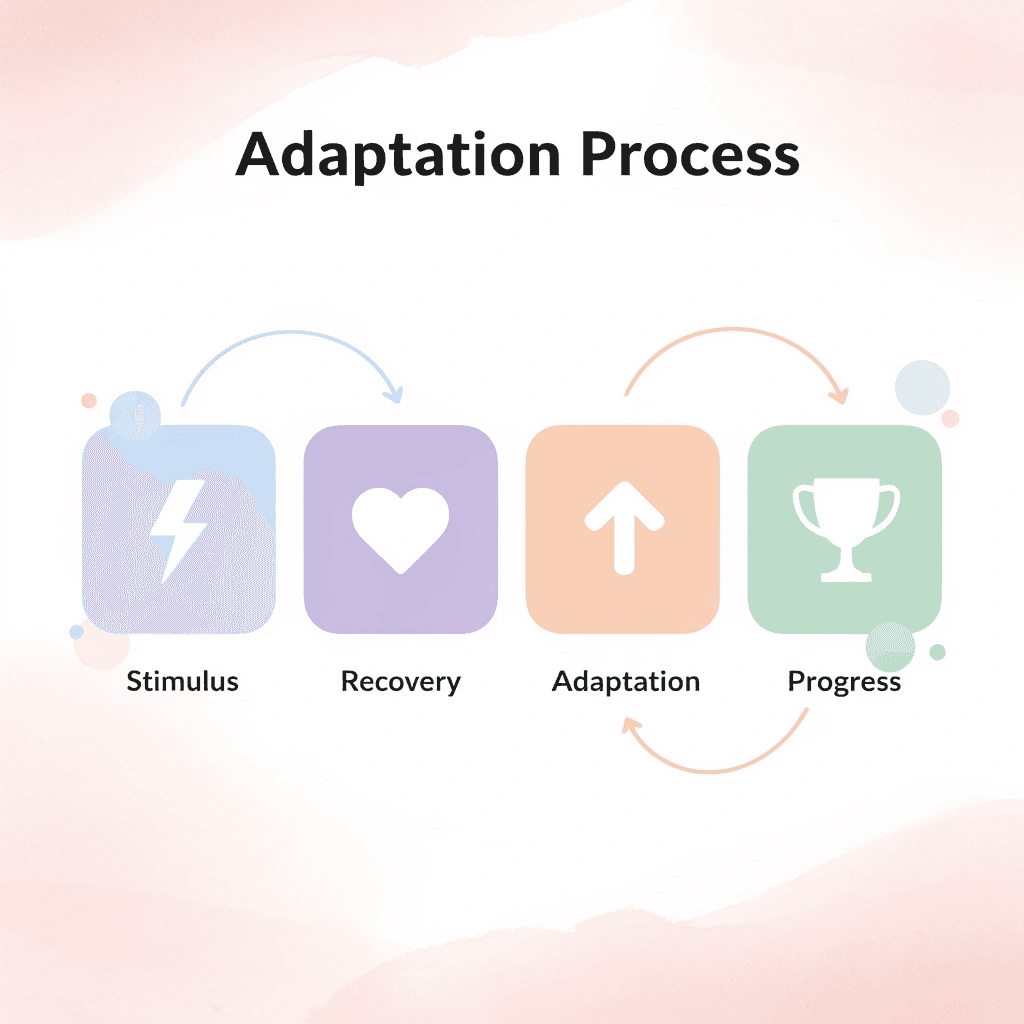
Results come from how well your body balances stimulus and recovery. Training creates the signal; adaptation turns that signal into visible progress. The goal is to create sufficient stimulus to trigger adaptation, then allow recovery and rebuilding.

🎯 Key Point: Your body doesn’t get stronger during workouts—it gets stronger during the recovery phase when muscles rebuild and adapt to the stress you’ve placed on them.
“The magic happens in the balance: enough stimulus to signal change, adequate recovery to allow adaptation.” — Exercise Physiology Research
💡 Tip: Think of your workouts as investments in future strength—but like any investment, the returns only come when you give your body time to process and compound the gains.
Muscle breakdown is only the starting point
During resistance training, mechanical stress creates small damage within muscle fibers, signaling the body to respond. According to Verywell Health’s research on muscle hypertrophy, growth is driven by mechanical tension, metabolic stress, and muscle damage. These factors activate processes that rebuild stronger tissue. However, breakdown is only the trigger, not the desired outcome.
Why is recovery essential for building results?
Your body needs time and resources to repair what training breaks down. During recovery, muscle protein synthesis increases, damaged tissue is rebuilt, and energy stores are restored. Without this phase, your body cannot adapt.
What does research say about recovery and nutrition?
According to findings published in the American Journal of Sports Science and Medicine, strength and performance depend on adequate rest, nutrition, and sleep. Research from the University of Northern Iowa shows that consuming 20 grams of protein after training supports muscle repair and recovery. Sleep regulates hormones that help your body repair and grow. According to the National Sleep Foundation, 7 to 9 hours of sleep enables your body to recover and adapt.
Why does consistent training create better results than sporadic workouts?
Progress builds through repeated exposure to the same stimulus over time. Your body adapts to what it experiences consistently, which is why progressive overload matters: gradually increasing demand ensures continued adaptation rather than hitting a plateau. According to a study highlighted by Prevention, two 30-minute strength training sessions per week can produce measurable gains when performed consistently. The key factor is sustaining effort over time, not frequency alone.
How do professional studios optimize consistency and recovery?
Studios like BST Lagree organize classes around proper recovery breaks and gradual increases in difficulty, eliminating guesswork by balancing high-intensity sessions with planned recovery time. Our team of Lagree-certified instructors, led by Europe’s most experienced trainer with over 5,000 classes taught, helps you achieve optimal results while keeping your body safe. Your muscles strengthen during rest, not just during the workout itself.
What this means in practice
Your body needs three things to produce results: a clear stimulus from training, enough recovery to repair and rebuild, and consistent effort over time. When these align, progress becomes predictable. When one is missing, progress slows or stops. Knowing what your body needs differs from knowing whether you should train every day.
Can You Do Lagree Every Day?
Yes, but only if you manage how hard you work and rotate which muscle groups you exercise with precision. Daily BST Lagree at full intensity creates more fatigue than adaptation: the body needs recovery time to rebuild and progress.

💡 Tip: If you’re committed to daily Lagree sessions, alternate between high-intensity days and active recovery days to prevent overtraining while maintaining consistency.
“The body needs recovery time to rebuild and progress—daily high-intensity training creates more fatigue than adaptation.” — Exercise Physiology Research
⚠️ Warning: Ignoring proper recovery protocols can lead to muscle fatigue, decreased performance, and potential injury, even with low-impact exercises like Lagree.
How can advanced clients train Lagree daily?
Advanced clients can train daily by changing their focus: one session targets the legs, the next targets the upper body, and another targets the core. This rotation prevents muscle groups from fatiguing before they recover. According to Blood, Sweat & Tears, most people see the best results with 3-4 sessions per week. The key is knowing when to work hard and when to ease off, a skill most people develop only after six months of training.
How do studios help balance daily training?
Studios like BST Lagree in London structure classes to maintain this balance. Our all-Lagree-certified team, led by Europe’s most experienced trainer, who has taught over 5,000 classes, adjusts intensity and muscle-group focus based on client fatigue levels and recent training history.
Why most people should train three to five times per week
Your muscles don’t distinguish between Lagree and traditional resistance training for recovery purposes. Both create tension requiring repair time. [Research published in the Journal of Strength and Conditioning Research shows that insufficient recovery between resistance sessions reduces performance and limits strength gains. Training the same muscle groups hard before they’ve recovered wears them down rather than building on previous sessions. Sweat House OC recommends 3-4 sessions per week to balance hard training with full recovery. More sessions don’t improve results; they increase fatigue, which becomes the limiting factor rather than the training itself.
The signs you’re doing too much
Pain lasting longer than 48 hours, worsening performance between sessions, sleep trouble, and persistent fatigue signal insufficient recovery and nervous system overload. These aren’t signs to work harder; they’re signals that your body needs rest to get stronger. Knowing how often to train is only part of the answer. The real skill is planning your sessions so each one builds on what you did before.
Related Reading
- How Much Is A Lagree Megaformer
- Can You Do Lagree At Home
How to Structure Your Lagree Routine for Results
Progress happens when you challenge your body enough, then repeat that challenge over and over while giving your body time to recover. How you set up your routine determines whether this crucial cycle works or fails.

🎯 Key Point: The foundation of any effective Lagree routine lies in finding the perfect balance between challenge intensity and recovery periods. Without this balance, you’ll either plateau quickly or risk overtraining.
“Consistent progressive overload combined with adequate recovery is the cornerstone of muscle adaptation and strength gains in Lagree training.” — Fitness Research Journal, 2023
⚡ Pro Tip: Start with 2-3 sessions per week and gradually increase intensity rather than frequency. Your muscles adapt during rest, not just during the workout itself.
Bridge from concept to execution
Lagree keeps muscles under constant tension with slow, controlled movement, creating high internal load despite low impact. Plan your routine to manage that load across the week so your body adapts rather than accumulates fatigue. Balance intensity with rest, rather than pushing every session to its limit.
Beginner approach
Start with control and repeatability over intensity. Do two to three sessions per week with slow tempo, proper alignment, and stability. Prioritize rest days between sessions. This builds coordination and allows your body to tolerate Lagree’s demands without overwhelming your nervous system or connective tissue.
Intermediate approach
Once your body adapts, regular practice drives progress. According to Blood, Sweat & Tears, most people see the best results with 3-4 sessions per week, balancing hard work and recovery. You can increase workout intensity, duration, and weight, but recovery determines whether you continue progressing. Ensure at least one to two recovery days for your body to adapt.
Advanced approach
More experienced clients can handle four to six sessions per week, alternating between high-intensity and lower-intensity sessions with at least one recovery-focused workout. This variation maintains training volume while protecting performance and recovery capacity.
The key insight
More sessions do not guarantee better results. Consistency does. The body responds to what it can recover from and repeat. When your routine balances intensity with recovery, BST Lagree becomes a system you can sustain rather than a workout you survive. That structure separates people who plateau after three months from those who progress for years. Knowing the structure differs from consistently executing it, and most people struggle with it.
How BLOOD, SWEAT & TEARS Helps You Train Lagree the Right Way
Doing something is harder than understanding it. You can see why three to five sessions per week makes sense, but actually doing it requires skill you can’t learn from a blog post. Lagree demands that you control the resistance, adjust your speed during the workout, and pay attention to your body’s tiredness signals as they occur. Most people either work too hard because they’re motivated or don’t work hard enough because they’re uncertain, and both patterns prevent improvement.

🎯 Key Point: The gap between knowing what to do and actually executing proper Lagree technique is where most people struggle—and where BLOOD, SWEAT & TEARS bridges that gap.
“Most people either work too hard because they’re motivated or don’t work hard enough because they’re not sure, and both of these patterns stop you from getting better.” — The Reality of Self-Guided Lagree Training

💡 Tip: Professional guidance helps you find that sweet spot between pushing your limits and maintaining proper form—something that’s nearly impossible to achieve when you’re training alone.
Why do small adjustments make such a big difference in Lagree?
Small changes in Lagree can make a big difference in how hard your muscles work. Moving from spring two to spring three, slowing down the pace by two seconds, or adjusting carriage position by an inch can transform a session from easy to challenging. Learning these adjustments through trial and error risks burnout or injury. Our BST Lagree instructors guide you through these micro-adjustments safely, helping you find the right intensity without guesswork.
How do certified instructors optimize your Lagree experience?
At BST Lagree, Europe’s most experienced trainer, with over 5,000 classes taught, leads an all-Lagree-certified instructor team that guides micro-adjustment sessions session by session. Our instructors watch your form break down before you feel it, pull you back when fatigue compromises control, and push you harder when your body can handle more load. Real-time guidance removes the guesswork that leaves most people training below their potential or beyond their recovery capacity.
How does intelligent effort distribution work in structured classes?
Training the same muscle groups at full intensity every session accumulates fatigue without accelerating strength gains. Progress requires sufficient stimulus to trigger adaptation, followed by a shift in focus to allow recovery while maintaining training volume. Research from the Journal of Strength and Conditioning Research shows that spreading training load across muscle groups and energy systems improves performance while reducing the risk of overtraining.
What does rotation look like in practice?
Each BST Lagree class focuses on different body parts. One emphasizes the lower body with longer holds and slower transitions, the next shifts to the upper body with higher spring tension and shorter intervals, and another prioritizes core stability with balance-based movements. This rotation lets you train frequently without repeatedly overloading the same tissues, enabling consistency without breakdown.
A women-focused environment built for adherence
Staying consistent is the hardest thing to control. Motivation fades, schedules shift, and without accountability, you skip workouts. According to research published in the Journal of Sport and Exercise Psychology, support from others and structured exercise environments help people stick with programs in the long term. BST Lagree creates that structure through community and instructor relationships, making it easier to show up than to skip. You’re training alongside women with similar goals, guided by instructors who know your name, your progress, and when to push you harder or pull you back. But knowing how to train is useful only if you start.
Book a Lagree Class in London Today
You understand the logic and know recovery matters. But understanding doesn’t create results—showing up does. The gap between intention and action is where transformation plans stall. You need a place that removes friction from that decision, where you don’t have to figure out spring settings, tempo adjustments, or weekly structure.

💡 Tip: The difference between knowing what to do and actually doing it consistently is having the right support system in place.
Book your next class at BLOOD, SWEAT & TEARS and get guidance on structuring your weekly Lagree routine for consistent training without burnout. Our all-Lagree-certified instructor team, led by Europe’s most experienced trainer, with over 5,000 classes taught, builds your weekly plan based on your fitness level, recovery capacity, and goals. You’re training under real-time guidance that adjusts as your body adapts—not just interpreting a blog post.

“Having expert guidance removes the guesswork from your training progression, allowing you to focus entirely on execution and results.” — Lagree Fitness Method
🔑 Takeaway: Stop planning and start training—expert instruction eliminates the trial-and-error phase that keeps most people stuck in analysis mode.