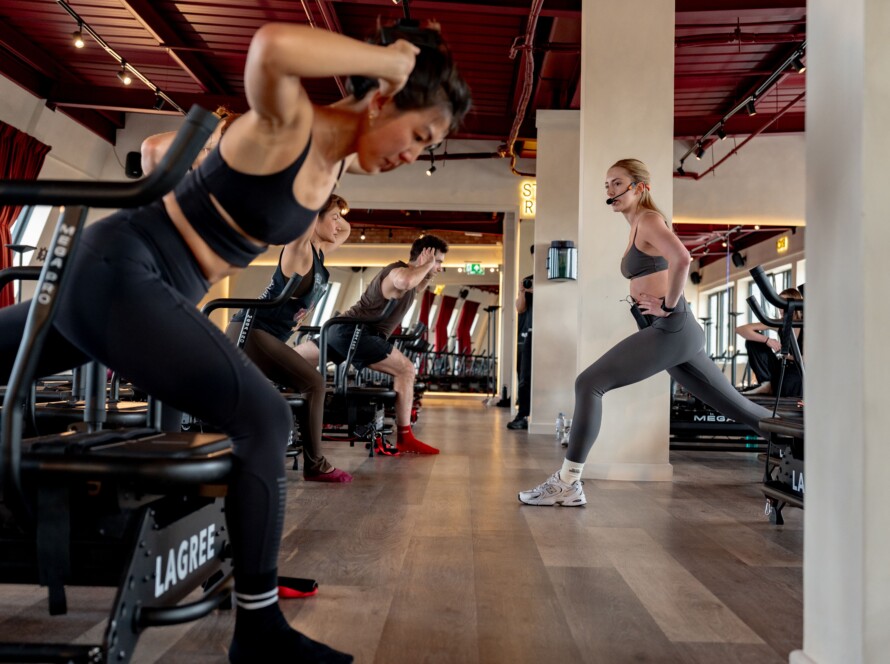
Most first-timers get turned away or catch off guard by the wrong kit. Here is exactly what to bring, and why the machine you booked changes everything about that list.
The common assumption is that Reformer Pilates is just another fitness class and that what you already own will do fine. Getting turned away at the door of a premium studio is a specific kind of awful. You’ve paid, you’ve psyched yourself up, you’ve found something that fits in your diary, and then a front-desk conversation you never expected unravels the whole thing before you’ve even seen the machine.
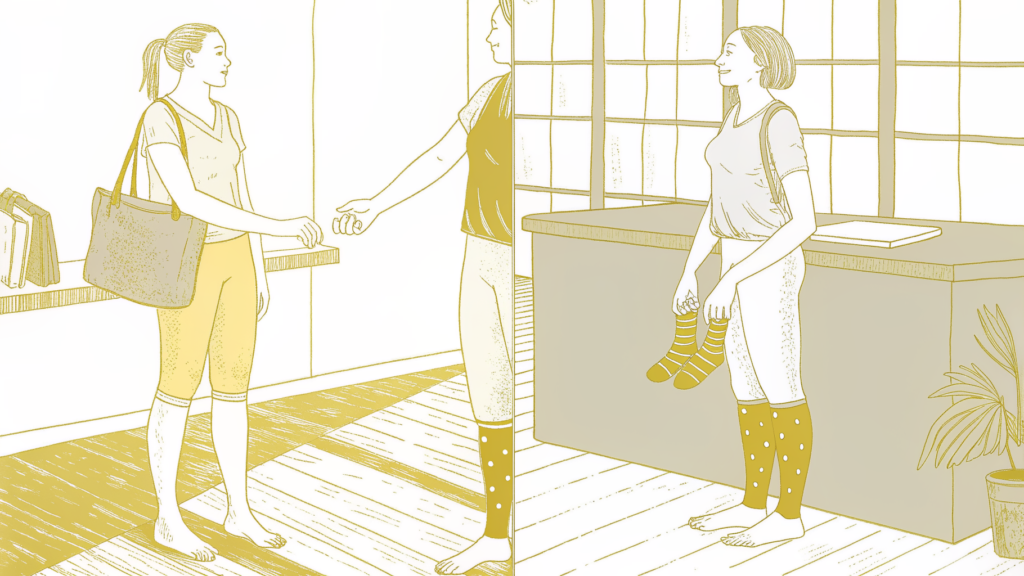
The single most preventable first-class mistake is arriving without grip socks. Most reformer studios treat grip socks as a mandatory condition of entry, not a suggestion, so no socks means no class, or an overpriced pair bought at reception while everyone watches. DeadSoxy’s March 2026 guide confirms this is standard studio policy: arriving without them can result in being turned away or embarrassed at the door.
See our Lagree London for how this works in practice. The studio’s position is not arbitrary. Grip socks exist because the reformer’s moving carriage is a fundamentally different surface from a gym floor or yoga mat.
Studios carry hygiene and safety liability for every person on that equipment, which is why the rule has no exceptions. A baggy top rides up the moment you lie back. Flared trousers catch on the foot bar.
Standard gym socks provide zero grip on a surface that slides under your weight. The kit that felt sufficient in every other fitness context was designed for static surfaces, not for equipment that moves with you. The packing list most first-timers find online was written for a machine that may not even be in the studio they just booked.
The moving carriage changes everything.
Key takeaways
- Most first-timers pack for a Pilates class and book a Lagree class, those are two different machines, two different demands, and two different packing lists.
- Grip socks aren’t optional etiquette; on a spring-loaded carriage under sustained resistance, a regular sock is a safety problem.
- The studio provides the machine, its attachments, and the environment, the anxiety spiral about over-packing is almost always misplaced before you even arrive.
- Knowing what to leave at home matters as much as knowing what to bring, most pre-class nerves come from not knowing what’s unnecessary, not from forgetting something.
- You’ve used a reformer. Now it’s time for the Megaformer, and everything on your packing list changes when the machine is built for constant muscular tension, not controlled flexibility work.
- BST Angel in Islington runs 45-minute Lagree classes that combine strength building and cardio on the Megaformer, the packing list, the machine, and the method are all accounted for before you walk through the door.
When the Machine You Booked Isn’t the Reformer You Imagined
That assumption is precisely what makes the gap between the machine they booked and the machine they imagined so costly, because every expectation carried in from a mat Pilates class, about intensity, about clothing, about what the body is about to do, was built for entirely different equipment. The Megaformer, designed by Sebastien Lagree as a formally distinct training system, is architecturally different: longer, heavier, with front and rear platforms, multiple cable configurations, and a spring system engineered for sustained muscular tension at cardio-level output. As The Core Collab confirms, the Megaformer is engineered specifically for the Lagree method rather than classical or contemporary Pilates, and Sweat House OC underscores that the two systems are distinct enough that conflating them is a genuine preparation error, not a minor detail.
A reformer session is typically moderate in cardiovascular demand; the Megaformer class at BST Lagree combines strength building and cardio in one 45-minute format, sustaining muscular load across transitions that a reformer simply does not replicate. The clothing, the mindset, and the kit that felt appropriate for reformer Pilates are now working against you before the first rep lands. The machine changes everything, so the packing list becomes a functional toolkit built specifically for what a Megaformer demands of your body.

The 8 Things to Bring to Your Pilates Reformer Class
Slip on a regular sock, step onto a moving carriage under spring tension, and you will understand immediately why this list exists. The Megaformer runs at sustained resistance levels that a classical reformer rarely reaches, and every item below earns its place through a specific mechanical or physiological reason, not habit, not studio aesthetics, not fashion. One of the most common frustrations beginners bring to their first Lagree session is arriving underprepared, not because they were careless, but because many studios simply fail to communicate what a class actually demands before you walk through the door. That gap is not a character flaw; it is just information nobody gave you before today. Here it is.
1. Grip Socks – Full-Sole Rubber Nubs, No Bare Feet or Regular Socks
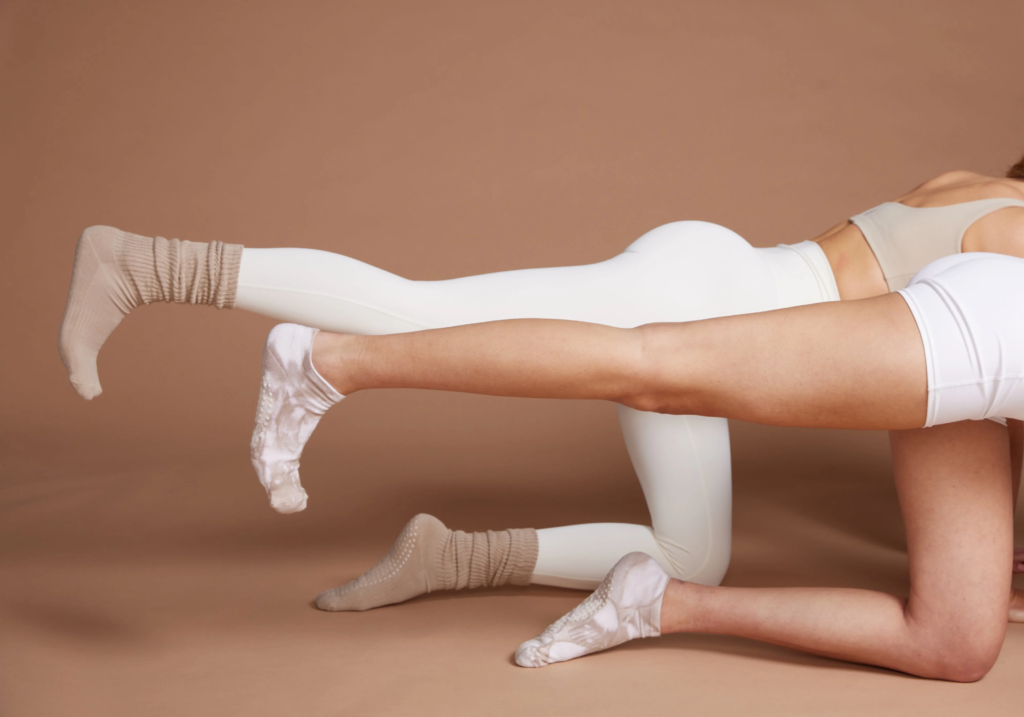
Grip socks are not merely a studio policy box to tick; they are the foundational interface between your body and the Megaformer’s moving carriage. Because the Megaformer runs at higher sustained tension and instability than a classical reformer, the slip risk is proportionally greater, meaning the rubber-soled grip that standard socks or bare feet cannot provide is not a hygiene preference but an active safety mechanism that makes the machine’s resistance feedback legible to your body in the first place. This is the same platform that, with consistent attendance, delivers the visible strength and tone Lagree is known for, while preserving the low-impact feel that makes it accessible.
That outcome starts with safe traction on session one. That is why grip socks are the single non-negotiable on this list. As Stepzz’s 2025 guide to reformer footwear explains, the moving carriage creates a slip risk that bare feet or regular socks simply cannot manage, and the rubber nubs provide traction on the carriage surface that no other sole replicates.
ReformME Formby reinforces this: grip socks are a safety essential, not a studio aesthetic choice. Brands like Toesox and Tavi Noir offer full-sole coverage. Grip socks with only toe or heel dots are not sufficient; full-sole rubber nubs only.
BST Lagree stocks grip socks for purchase at reception in Angel, so arriving without a pair is not a reason to miss your first session.
2. High-Waist Compression Leggings – Fitted, Sweat-Wicking, No Baggy Fabric
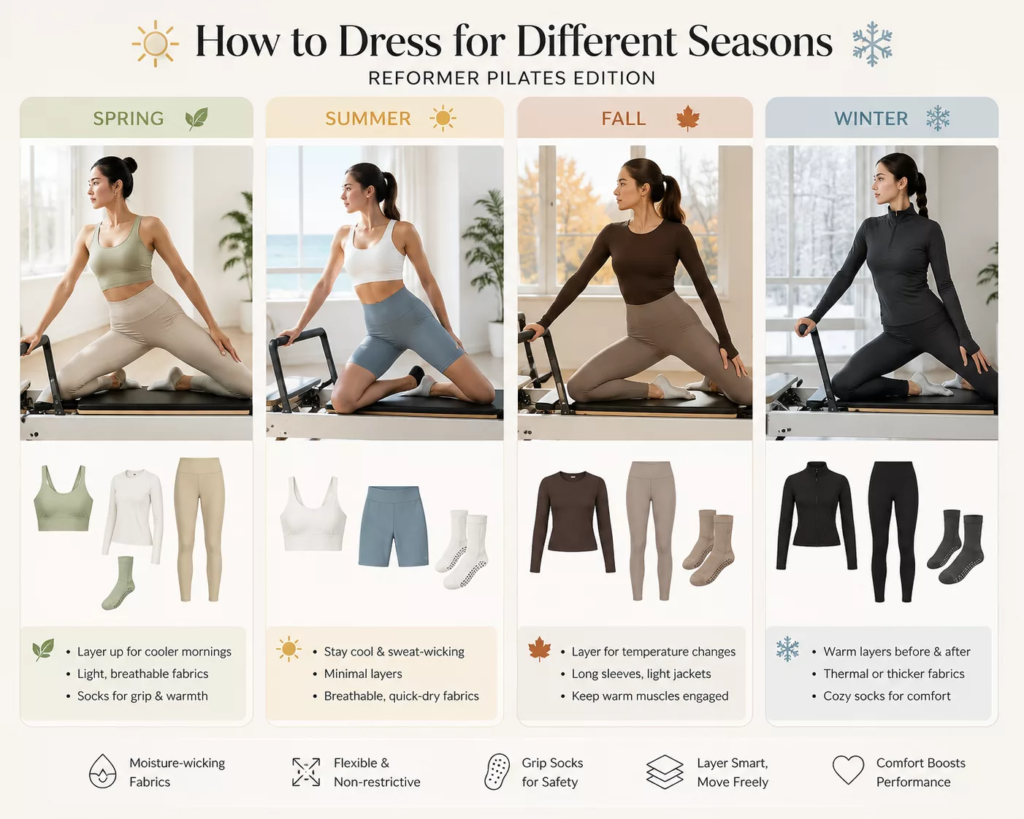
The waistband matters more here than in any other fitness class you have taken. Stepzz’s 2025 reformer clothing guide is specific: fitted, high-waist compression leggings are recommended because loose or baggy fabric can catch on the carriage, springs, or foot bar during movement. A high waistband stays put through inverted positions and split-leg carriage work without needing a mid-set adjustment. A 7/8-length cut in moisture-wicking fabric is the practical gold standard. One honest trade-off: compression leggings with a very thick waistband can feel restrictive during deep pike positions, so test the waistband’s flexibility before class day.
3. Close-Fitting Sweat-Wicking Top – Cropped, Tucked, or Fitted Long-Sleeve
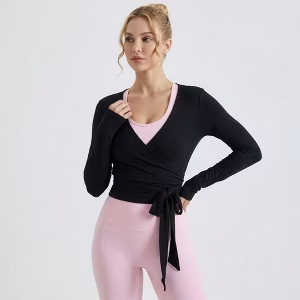
A baggy top does two things on the Megaformer, and neither is useful. It obscures your instructor’s view of your spine alignment, which means cues get missed at exactly the moment they matter most. It also rides up during plank-based carriage work, leaving fabric bunched around your shoulders.
Stepzz’s same figure guide flags sweat-wicking fabric as essential given the intensity differential between Lagree and classical reformer work. A cropped tank, a fitted long-sleeve, or a top you can tuck stays in place and keeps your instructor’s corrections accurate. Avoid anything with a drawstring hem; it snags.
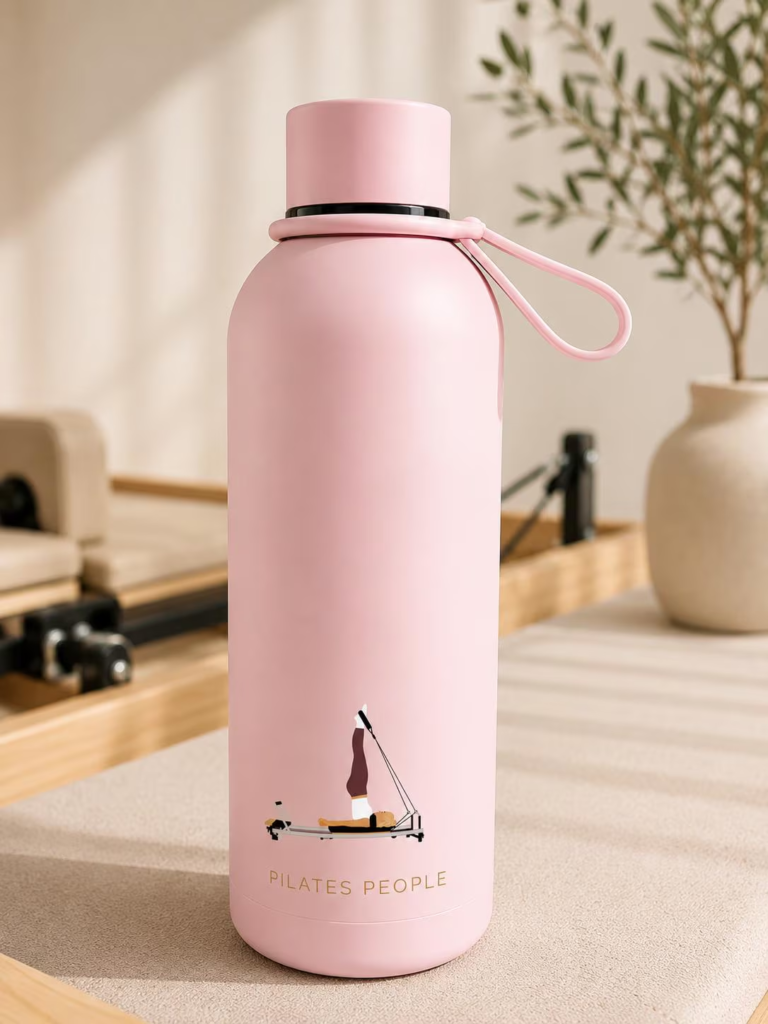
4. Insulated Water Bottle – At Least 500 ml, Leak-Proof Lid
500 ml
Minimum water to bring per session
Lagree combines cardio and strength in a single 45-minute session, which means your fluid loss is closer to a moderate-intensity run than a reformer stretch class. A 500 ml minimum keeps you hydrated through the full session without requiring a mid-class refill trip. Insulated is worth the slight extra weight because cold water is meaningfully more palatable when your core temperature is elevated. Leak-proof lids are a practical studio courtesy; a bottle that rolls off the carriage shelf mid-exercise is a distraction for the whole room. Screw-cap lids are safer than flip-tops on a moving platform.
5. Hair Tie or Secure Hair Clip – No Bulky Buns That Hit the Headrest

45
Minutes: full Lagree session length
A high bun sounds like the obvious solution, but it creates a real problem the moment you lie back on the carriage headrest. The bulk forces your neck into flexion, which shifts your cervical spine out of neutral alignment and puts pressure on muscles you are not trying to work. Anyone who has finished a reformer class with an unexplained neck ache and a perfect workout has usually traced it back to this. A low, flat ponytail or two secure flat clips keep your head flush with the headrest and your neck in the position your instructor is cueing. Avoid anything with a large decorative clasp that sits proud of the skull.
6. Small Sweat Towel – Microfibre, Compact Enough to Tuck Under the Carriage
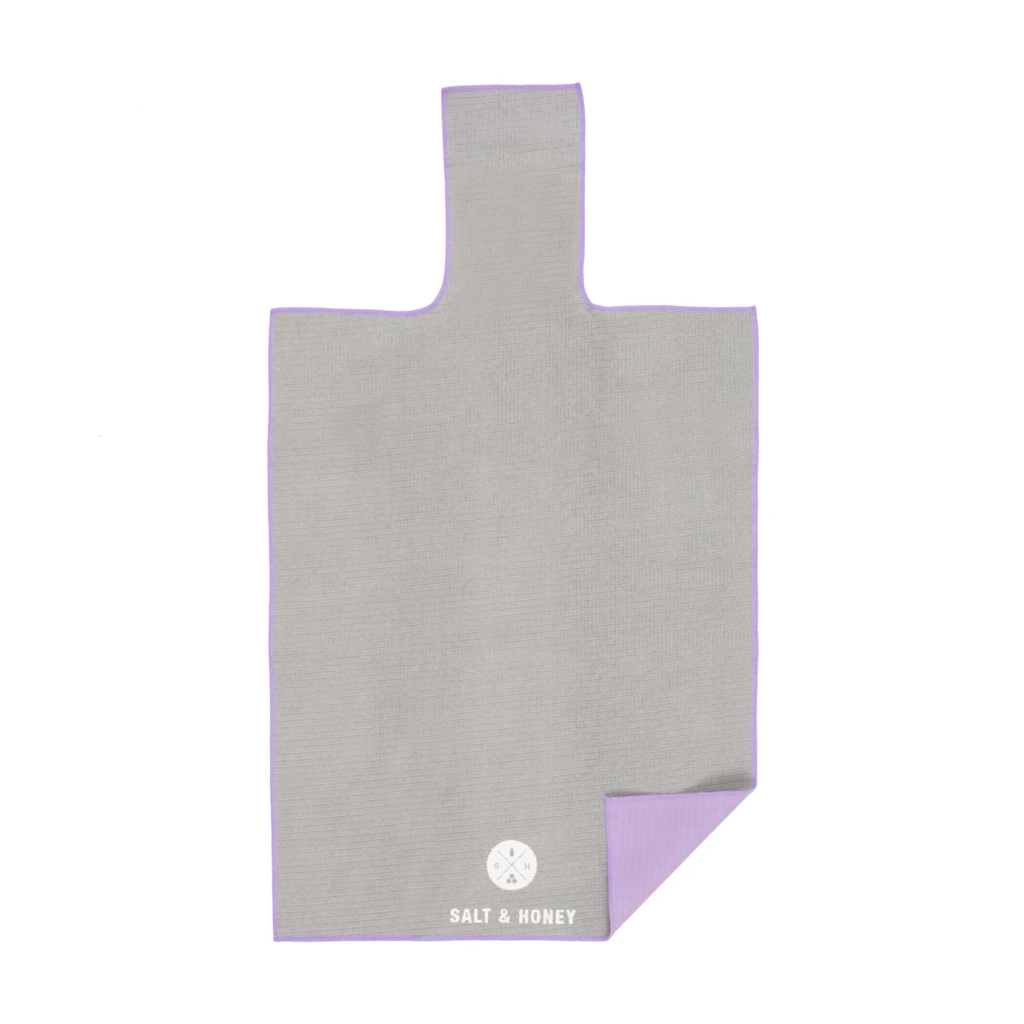
Lagree’s intensity differential over classical reformer Pilates is not marginal, and your towel choice should reflect that. Microfibre fabric absorbs moisture faster and dries faster than cotton, which matters when you are using the towel repeatedly across a 45-minute session rather than once at the end. A compact gym-towel size tucks flat under the carriage or into the platform frame without getting underfoot. A full-size gym towel is overkill and becomes a tripping hazard in the tight space beside the Megaformer. Pack one you would not mind getting genuinely damp.
7. Light Layer for Warm-Up and Cool-Down – Zip-Up or Loose Pullover
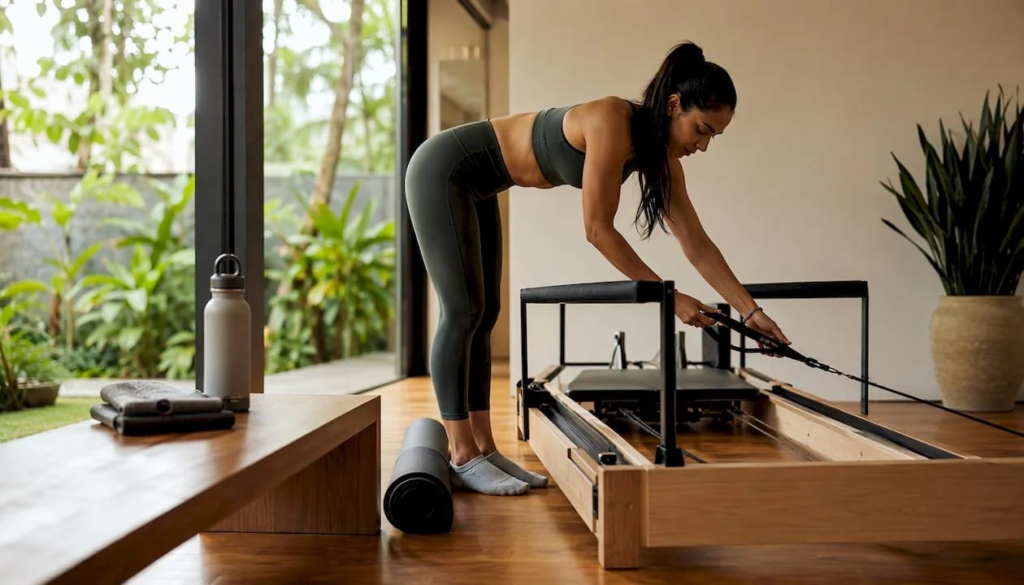
The studio is climate-controlled for peak-session intensity, which means it will feel cool when you arrive and cool again in the final stretch sequence. Muscles that start cold take longer to reach working temperature, and a light zip-up or loose pullover worn for the first five minutes of warm-up makes a practical difference to how quickly your body settles into the first exercise. The same layer goes back on during the cool-down, when your core temperature drops quickly and a static stretch in a cold room is less effective. A zip-up is easier to remove mid-warm-up than a pullover.
8. Pre- or Post-Class Fuel Plan – Light Snack Timing or Recovery Meal Strategy
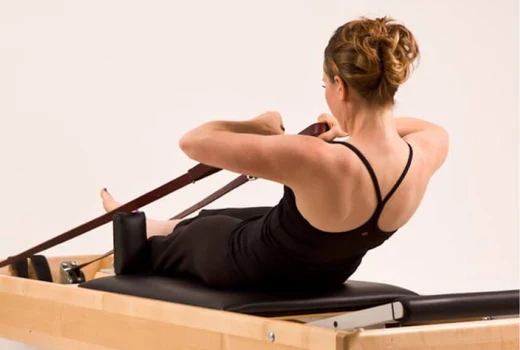
Timing matters more for Lagree than for a classical reformer session because the slow-twitch muscle demand is sustained across the full 45 minutes rather than punctuated by rest. Sports nutrition guidance consistently points to leaving a meaningful gap before sustained endurance-style exercise as the optimal time for a light carbohydrate and protein snack, enough to top up glycogen without causing digestive discomfort on a moving carriage. A banana and a small portion of nut butter, or a light yoghurt, covers that window without weighing you down.
The post-class recovery meal is equally important: protein consumed soon after finishing supports the muscle repair that Lagree’s slow-twitch loading triggers. BST Lagree’s on-site health café at the Angel studio means that post-class protein window is handled the moment you step off the Megaformer; the recovery plan is built into the building. Many beginners arrive having attended studios that provided little onboarding or preparation guidance, leaving them unsure what to bring, what the class truly demands, or even whether the session would genuinely use the carriage and springs throughout.
That uncertainty ends here. If you want to experience the format properly before committing to a pack, the free intro workshop class for new clients via the on-site form is the clearest starting point: a full guided Lagree session, a complimentary coffee, and every question answered before you invest further. When you are ready to build consistency, which is when the visible strength and tone Lagree delivers actually materialise, the Speakeasy Class Packs step down in per-class cost as you commit to more sessions.
One final note on jewellery: rings, bracelets, and dangling earrings snag on springs, straps, and cables on a moving carriage. Stepzz’s same figure reformer preparation guide lists jewellery as a specific safety risk to leave at home or in the locker. Leave it all behind.
Pack these eight items and you have covered everything the carriage demands of you. Before you start second-guessing whether to add more, the next section maps exactly what your studio already provides, so you can confidently leave half your bag at home.
What Your Studio Provides So You Don’t Over-Pack
The machine itself is the studio’s opening statement. Boutique studios are defined by their equipment-inclusive, experience-led format: the proprietary machine, its attachments, and the curated environment are the product.
The Megaformer Is Already Set Up for You
Every carriage, spring set, strap, handle, and padded platform surface on the Megaformer is fixed, calibrated, and waiting for you. The Market.us Boutique Fitness Studio Market Report confirms that proprietary equipment is inseparable from the boutique method’s results, which is precisely why studios provide it in full rather than expecting clients to approximate it with general gym gear. Showing up with your own resistance bands or a spare strap is a category error.
Consistency Across Visits, and a Format That Fits Your Schedule
Transformation-focused training at BST Lagree is built on exactly this kind of consistency: results materialise through ongoing class attendance over time, not through any single session.
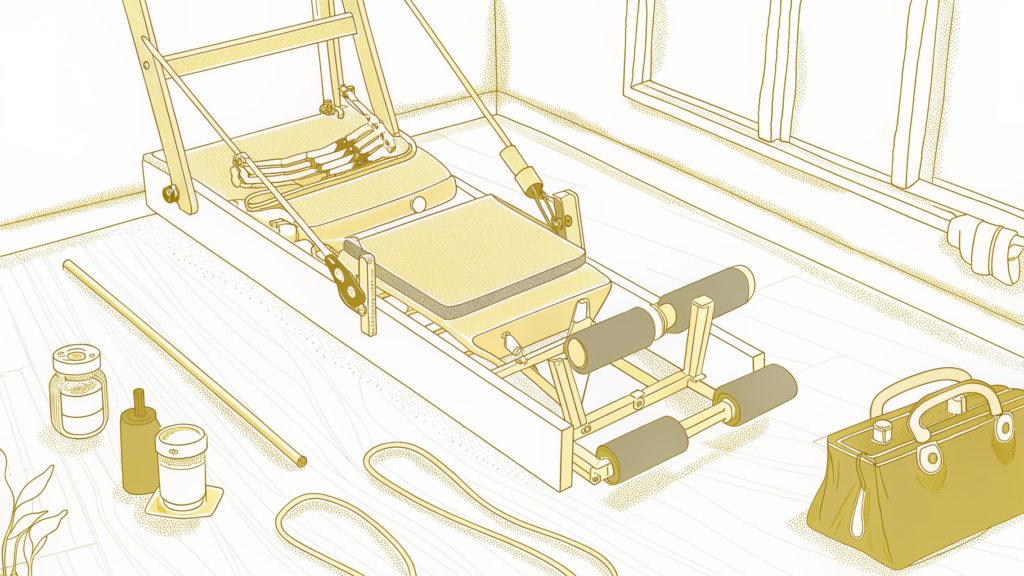
- Grip socks
- A hand towel
- A filled water bottle
Those three items are all you need to bring, though it is worth confirming whether grip socks are available to purchase on-site if you forget yours. One call or a quick check of the studio’s confirmation email before your first visit costs thirty seconds and saves you a barefoot standoff at the carriage. At BST Lagree in Angel, your first session comes with a complimentary coffee after class, a deliberate studio-side choice that extends the experience past the last rep. The welcome, like the equipment, is already taken care of. So is the coffee.
Related Reading
- Is Reformer Pilates Strength Training
- Is A Pilates Reformer Worth It
- Pilates Reformer Footwork
- Tower Vs Reformer Pilates
- Pilates Reformer Moves Names
- Does Pilates Reformer Build Muscle
What to Leave at Home and How to Prepare the Night Before
A substantial share of first-time gym-goers report feeling anxious or underprepared before walking into a new studio, and the anxiety almost never comes from forgetting something. For a Lagree class, that distinction carries real weight: rings, loose layers, and standard trainers are not just inconvenient on a Megaformer, they are structurally incompatible with its springs, cables, and moving carriage in ways that can end your session before the warm-up does.
Four Things That Stay Home Before Your First Lagree Class
Knowing what to leave behind matters as much as knowing what to pack. Rings and bracelets catch on straps and spring clips with enough force to cause genuine injury; research on resistance equipment consistently flags jewellery as a snag risk that reformer pilates beginners routinely underestimate. Bulky trainers are next: thick soles prevent the foot-to-carriage feedback the Megaformer’s spring resistance depends on, and grip socks replace them entirely. Heavy fragrance in a small, climate-controlled studio is a courtesy issue that instructors notice immediately, so leave it at home alongside everything else on this list.
Timing your arrival well rounds out the preparation. FS8 research shows that arriving early for an orientation improves both the first-class experience and the likelihood of returning, a finding consistent with BST’s early-arrival window, which instructors use to walk newcomers through spring settings before the session starts. Claim your free class and find out what it feels like to start prepared.
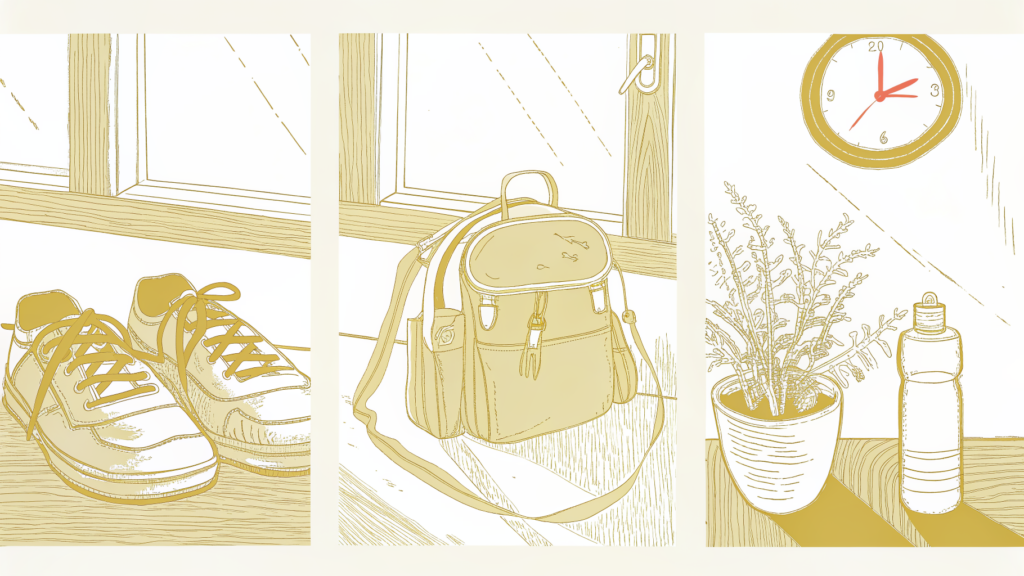
Why Your First Lagree Class Feels Unlike Any Reformer Class You’ve Read About
Reading about Pilates reformer classes will not prepare you for your first session on a Megaformer, and that gap matters when you are deciding what to pack. The machine operates on a different physical logic entirely, combining sustained muscular tension, cardiovascular demand, and moving-platform instability in a way that changes what your body actually needs from your kit. Understanding that difference before you arrive at BST Angel means your choices land right from the moment you walk in.
Why Everything on Your Packing List Changes When the Machine Is a Megaformer
The classical reformer was designed for controlled, low-intensity movement and flexibility work. The Megaformer’s spring-loaded carriage and instability platform demand constant muscular tension throughout every exercise, producing metabolic stress and muscle fatigue that a standard reformer session does not replicate. This is the core synthesis: Lagree doesn’t simply intensify what Pilates does, it combines simultaneous slow-twitch endurance, cardiovascular stress, and moving-platform instability into a single method that no amount of reformer experience actually prepares you for.
Being fit isn’t the same as being ready for this specific stimulus. The honest trade-off: if you are recovering from injury or need a genuinely gentle session, the Megaformer’s sustained-tension format is not the right call that week. It is low-impact on the joints, not low-intensity on the body.
What to Expect at BST Angel So Your Kit Choices Land Right
“First-time Lagree students often come from little to no structured exercise background, making the intensity and format feel jarring and unlike anything they’ve encountered before, even from reading about reformer Pilates.”
— what we hear from Lagree fitness instructors
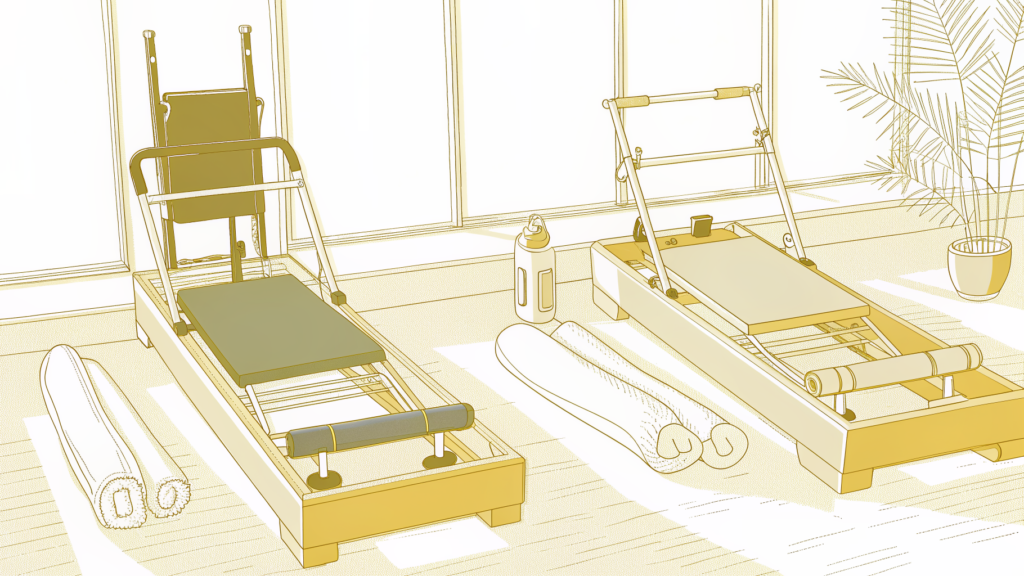
A dedicated Lagree studio in Angel, London, like BST, is built around that reality: natural light, city views, and Lagree-certified instructors who walk you through the method before the session starts. BST’s free intro workshop class exists precisely because showing up cold to a Lagree class, expecting a reformer session, is the fastest route to feeling out of place and underprepared. With the list covered, the machine understood, and a clear picture of what to expect, all that remains is getting yourself booked in. Next, we’ll tell you exactly how to book a Lagree class at BST and claim your complimentary intro session before you leave this page.
Related Reading
- Pilates Reformer Leg Exercises
- Pilates Reformer Glute Exercises
- Pilates Reformer Ab Exercises
- Best Pilates Reformer App
- Pilates Reformer Springs Explained
Next steps
If you arrived assuming your usual gym kit would carry you through, the packing list in this guide has already closed that gap. The grip socks, the fitted layers, the compact towel: each item exists because the Megaformer’s moving carriage creates a specific set of demands that no static surface ever has.
Grip socks are not a studio policy formality; they are the foundational interface between your body and a machine running at sustained tension levels a classical reformer rarely reaches, which means traction is a safety mechanism, not an aesthetic preference. The studio, in turn, provides the machine, the calibrated springs, and the certified instruction; you supply only the personal-contact layer. Those two facts together make the packing list short, specific, and non-negotiable: nail it once and every future session starts without friction.
See Lagree classes in London to book your first session at BST Angel. New clients can claim a free intro workshop class, with a complimentary coffee after, so the first visit costs nothing and answers every question the carriage will ask of you.
Frequently Asked Questions
Do I really need grip socks, or can I just go barefoot?
Grip socks are mandatory, not optional, most reformer studios treat them as a condition of entry, meaning no socks means no class. On a Megaformer the moving carriage creates a slip risk that bare feet or regular socks simply cannot manage, making full-sole rubber nubs an active safety mechanism, not a studio aesthetic choice. BST Lagree stocks grip socks for purchase at reception, so arriving without a pair is not a reason to miss your first session.
What’s the best fabric to wear to a reformer or Lagree class?
Sweat-wicking fabric is essential given the intensity differential between Lagree and classical reformer work, and fitted high-waist compression leggings in a moisture-wicking material are the practical gold standard. A 7/8-length cut keeps fabric clear of the carriage, springs, and foot bar, and a close-fitting sweat-wicking top, cropped, tucked, or fitted long-sleeve, keeps your instructor’s alignment cues accurate throughout the session.
What’s the difference between a reformer Pilates class and a mat Pilates class?
Every expectation carried in from a mat Pilates class, about intensity, about clothing, about what the body is about to do, was built for entirely different equipment. A classical reformer is a spring-loaded sliding carriage on rails, whereas mat Pilates takes place on a stationary surface, meaning the clothing, grip requirements, and physical demands of a reformer session do not translate directly from mat work.
How quickly will I see results from Lagree classes?
The visible strength and tone Lagree is known for materialise with consistent attendance over time, not from a single session. BST Lagree’s Speakeasy Class Packs are structured to support that consistency, with the per-class rate stepping down meaningfully as you commit to more sessions.
Is a Megaformer class the same as a reformer Pilates class?
No, the two machines are distinct enough that conflating them is a genuine preparation error. A classical reformer is a single sliding carriage built for classical or contemporary Pilates, while the Megaformer is architecturally different: longer, heavier, with front and rear platforms, multiple cable configurations, and a spring system engineered for sustained muscular tension at cardio-level output across a 45-minute format. If you want to experience the difference in a supported setting before committing, BST Lagree offers a free intro workshop class for new clients.