Reformer footwork is not a warm-up. It is the most diagnostic five minutes of your session, and what happens here determines everything that follows.
Most Reformer practitioners and wellness explorers assume that footwork is simply a gentle way to get the legs moving, and that adding more foot positions, heavier springs, or more sessions will break through any plateau, because the method still has room to grow them. It is not that straightforward. Reformer footwork is the most diagnostic five minutes of any Reformer session, and understanding what it actually does changes how you experience every exercise that follows.
See our Lagree London for how this works in practice. As a Footwork Series entry, the sequence is the foundational opening of every Reformer session precisely because it functions as a diagnostic and alignment anchor. If misalignment or compensation exists, it will show up here, in a controlled, low-stakes position, before heavier or more complex work can entrench it further.
A tucked pelvis spotted during footwork is a problem solved early. The same pattern left uncorrected through a full session of loaded exercises becomes a habit. The setup itself does real work before a single repetition happens.
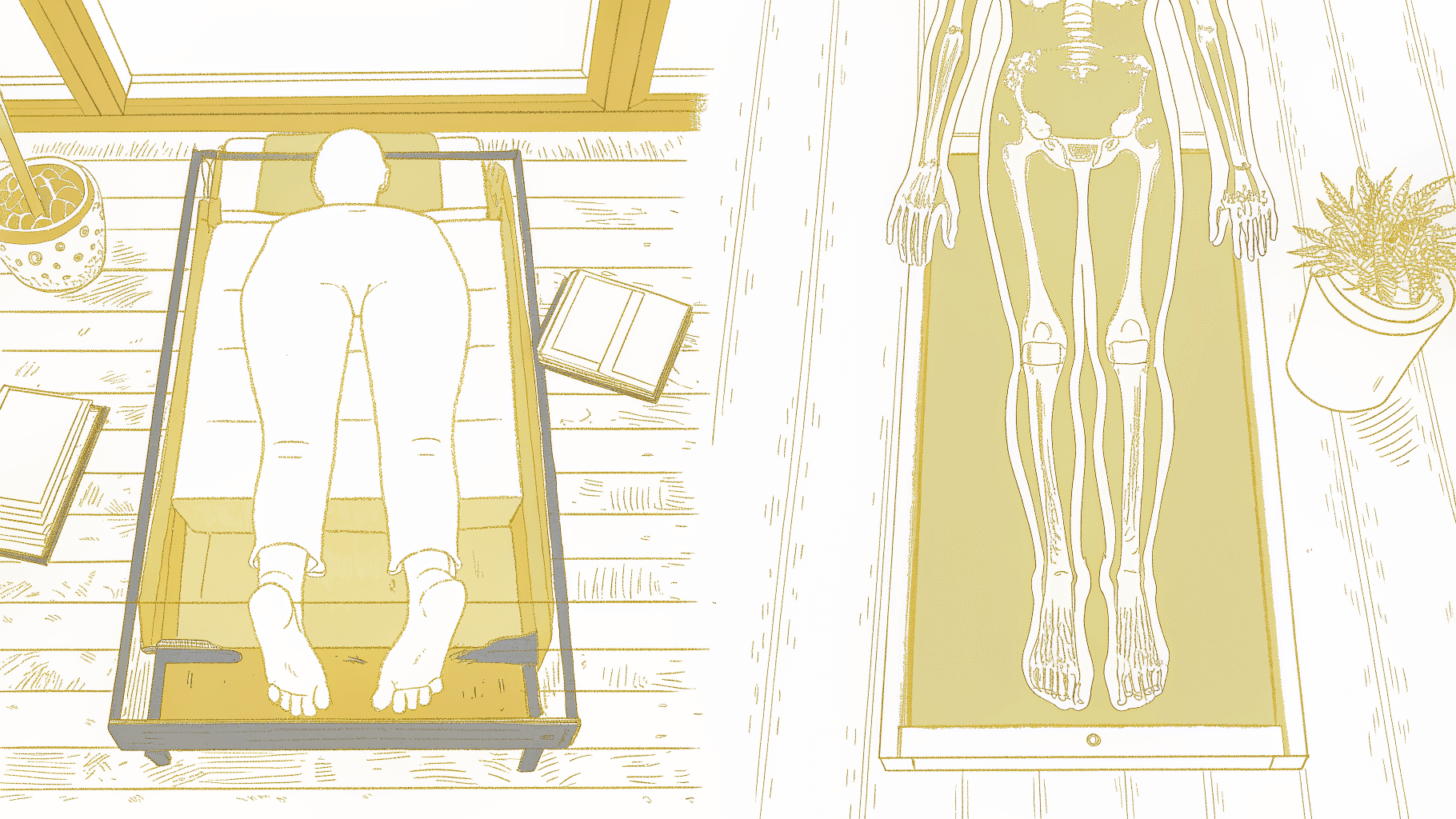
As Pilatesology notes, the standard position places the practitioner supine, head on the headrest, shoulders against the shoulder blocks, and pelvis in neutral. Each element has a specific mechanical purpose: the shoulder blocks prevent the upper body from being pulled toward the footbar under load; neutral pelvis positions the lumbar spine in its natural curve, which is the condition under which deep core stabilisers, particularly the transversus abdominis and multifidus, can fire properly. The Pilatesology Footwork Series identifies the primary foot positions as toes, arches, heels, and tendon stretch variations, each placing a different demand on the ankle, knee, and hip complex.
They are not interchangeable options but a structured sequence that progressively maps the full range of lower-limb mechanics the body will rely on throughout the session. Toes challenge calf and ankle stability; heels shift demand into the tibialis anterior; the tendon stretch introduces ankle mobility under load. Footwork is a framework the rest of the session is built on top of.
Reformer footwork is the most diagnostic five minutes of any Reformer session, and understanding what it actually does changes how you experience every exercise that follows.
Key takeaways
- Reformer footwork is not a warm-up filler, it is a closed-chain diagnostic that reveals how your body stacks joints, distributes load, and recruits stabilisers before any other exercise demands those things.
- The muscles doing the most consequential work during footwork are not the quads, they are the posterior chain and deep stabilisers most practitioners never consciously feel firing.
- Shift your foot placement by five centimetres on the footbar and you change which muscle fibres are doing the work entirely, knee angle alone alters the gastrocnemius-to-soleus contribution significantly, according to research published in Biology Open (2024).
- Knee valgus during footwork is not a technique flaw to correct and forget, it is your body signalling how it actually loads under pressure, and that information is more useful than a clean rep count.
- A Reformer plateau is not a failure of effort, it is exercise physiology confirming that your body has fully absorbed the method’s stimulus, which means the method has reached its mechanical ceiling, not you.
- Continuous spring tension on a Reformer is fixed and predictable; the body adapts to predictable stimulus and stops responding, and no amount of added foot positions or heavier springs changes that fundamental constraint.
- BST Lagree in Angel, Islington takes the lower-body vocabulary you already own from Reformer footwork and runs it through the Megaformer, 45 minutes of strength building and cardio in one session, with continuous tension and full-body instability a reformer spring cannot replicate. Classes, a health-focused café, and official Lagree instructor certification are all at bstlagree.com.
The Muscles Reformer Footwork Targets and the Setup That Makes It Work
Knowing which muscles are supposed to fire, and why the ones you cannot feel are often doing the most important work, gives you something concrete to act on inside a 45-minute BST Lagree class rather than simply moving through it.
Every Muscle Actually Working During Reformer Footwork
Whether you are coming to a class at BST Lagree after a gap in training or squeezing a session into a packed London work day, understanding what is actually happening inside a single 45-minute class changes how you use every minute of it. The push-out phase recruits the quads and calves as primary movers. Everything that has to hold still while that happens is doing substantial work: the glutes stabilising the pelvis, the hamstrings co-contracting to protect the knee joint, the hip flexors managing carriage speed, the pelvic floor and deep core bracing to keep the lumbar spine out of the movement entirely.
Research on spring resistance and proprioception in Pilates Reformer training supports the idea that load selection shapes neuromuscular patterning, not just force output. At a medium-to-heavy spring load, the resistance demands genuine muscular effort on the eccentric return while keeping the knees tracking over the second and third toes without conscious policing.
That return phase carries more physiological weight than it might appear to. A systematic review confirmed that eccentric contractions generate higher force output at lower metabolic cost than concentric contractions, producing superior gains in both strength and mass. Industry research reinforces that eccentric-focused training produces meaningful improvements in maximal voluntary strength across eccentric, concentric, and isometric measures, making the return phase of footwork more than just the recovery portion of the rep. For those ready to commit to consistent attendance, the 10 Class Speakeasy Pack is the most cost-effective way to accumulate the sessions that produce results; a 5 Class Pack or 3 Class Pack suits a lighter schedule, and a single drop-in Speakeasy Class works for those testing the studio on a work trip before committing further.
Foot Position Selects Muscles, It Does Not Progress Training
Because changing knee angle shifts mechanical advantage between the gastrocnemius and soleus without adding structural overload, and because early strength gains from any novel movement are driven by neural adaptation rather than muscle growth, the logic that a new foot position equals new progress collapses once those neural patterns are established. With the muscle map and mechanics established, the next question is how each foot position shifts that activation, and why the sequence is anything but arbitrary.
8 Pilates Reformer Footwork Exercises and What Each One Does
Shift your foot placement by five centimetres on the footbar and you change which muscle fibres are doing the work entirely. That is not a minor tweak. According to Kovács et al.
Writing in Biology Open in December 2024, knee angle alone significantly alters the relative contribution of the gastrocnemius versus the soleus during dynamic plantarflexion, which means every reformer footwork position is making a specific physiological request of your body, not a general one. The eight positions below are that request, spelled out. One thing worth naming before you begin: a lot of people who come through the door at BST Lagree’s Angel studio arrive carrying shoulder and neck tension that they assume is just part of Reformer training.
It almost never is. In the majority of cases it comes down to setup, headrest height, shoulder-rest position, and the degree of gripping tension people hold through their upper body when the lower body is working hard. A good instructor catches this in the first few minutes. If you want to experience that kind of hands-on correction before committing to a pack, the free intro workshop class is exactly the right place to start: it is open to new clients via the on-site form at no cost, and your first visit comes with a complimentary coffee.
1. Toes / Balls of the Feet – Calf Strength and Full-Range Leg Press
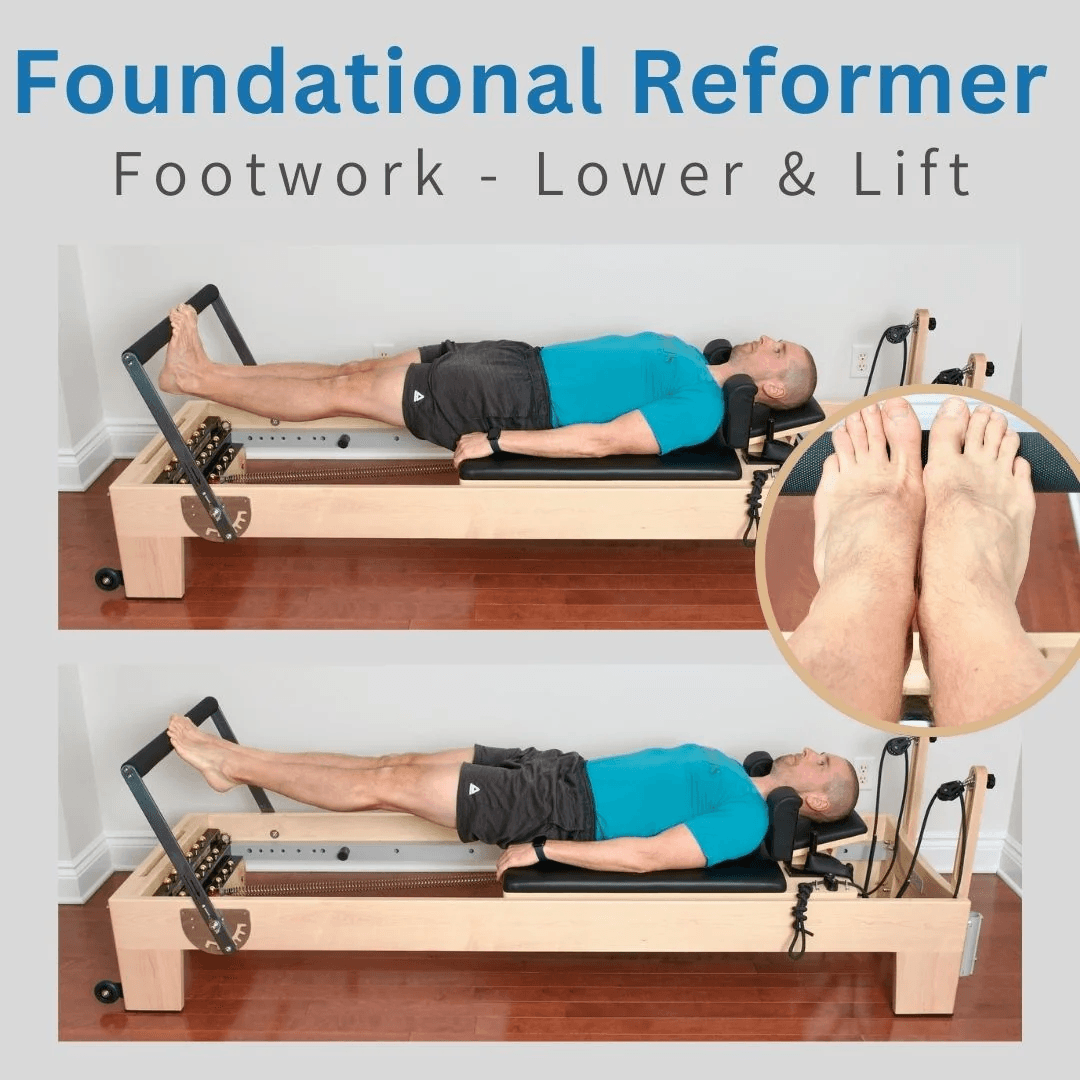
Place the metatarsal heads on the footbar with heels lifted and legs extended. This Toes / Balls of the Feet position recruits the gastrocnemius maximally because the knee moves through its fullest range while the ankle works against spring resistance. Kovács et al. (2024) confirm that medial gastrocnemius EMG activation is significantly higher in the knee-extended condition, so this is the most calf-intensive variation in the sequence. It also builds ankle stability under load. Clients with Achilles sensitivity will feel this position most acutely and should reduce spring load before adding repetitions.
2. Arches – Intrinsic Foot Strength and Proprioceptive Feedback
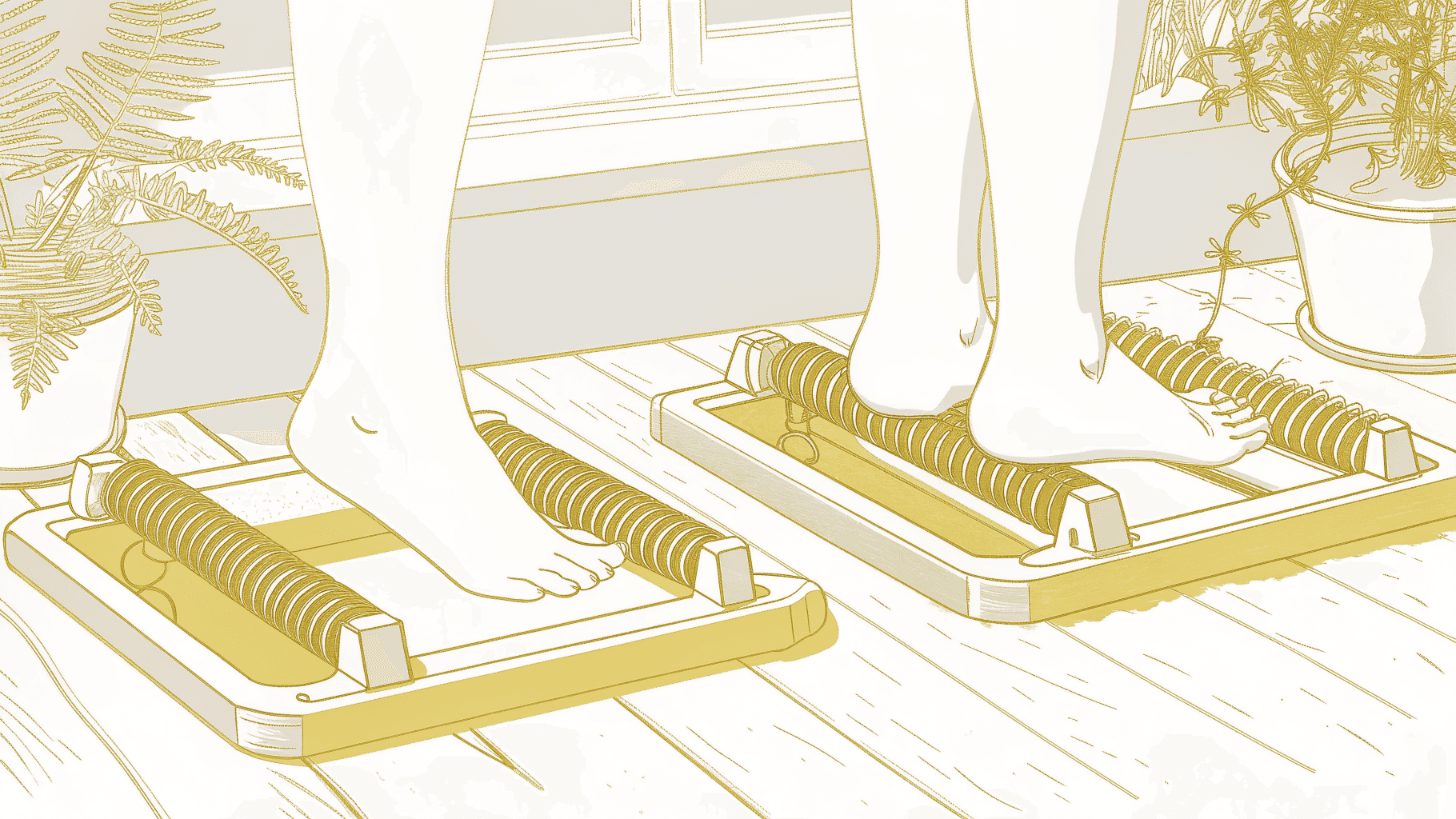
The mid-arch sits directly on the bar in the Arches position, a placement that feels immediately unfamiliar because the foot has no rigid bony contact point to grip. That instability is the point. The intrinsic foot muscles, including the tibialis posterior and the small muscles responsible for arch integrity, are forced to work continuously to stabilise the foot against the bar.
Research into tibialis posterior function confirms its role in dynamic arch support, making this position particularly valuable for clients with flat feet or poor arch control. It is not a comfortable position for everyone, and that discomfort is information. This is also a position where neck and shoulder tension shows up most visibly: when the foot feels unstable, many people brace through the upper body as compensation. That is a setup and cueing problem, and it is exactly the kind of detail that gets addressed in a properly coached session.
3. Heels – Anterior Chain Activation and Dorsiflexion Reinforcement
£199
10 classes, just £19.90 each
Heels rest on the bar with toes lifted in the Heels position, which shifts load away from the calves and toward the hamstrings, glutes, and the muscles of the anterior shin. The ankle is held in dorsiflexion throughout, reinforcing range of motion that most people lose from years of wearing shoes with any heel elevation. Industry research documents how ankle angle shifts the mechanical contribution between the gastrocnemius and soleus, which helps explain why this position produces a distinctly different muscular demand compared with the toes position despite the movement pattern looking broadly similar.
Runners and cyclists who add this position consistently report improved dorsiflexion and posterior-chain awareness, because their training rarely demands sustained ankle flexion under load. The limitation is that clients with tight Achilles tendons may find the position uncomfortable before their mobility improves.
Heels together, toes turned outward to form the classic Pilates V. The external rotation at the hip activates the deep lateral rotators and draws the adductors into the movement in a way that parallel footwork does not. This is the reformer footwork sequence position most associated with classical ballet alignment, and it targets the inner-thigh line that standard leg-press patterns miss. The caution worth naming: forcing the turnout from the knee rather than the hip is a common error that places shear stress on the joint. The rotation must originate at the hip socket.
4. Pilates V – Inner-Thigh Engagement with External Hip Rotation
Place the balls of both feet together at the center of the footbar with heels touching, rotating from the hip so feet form a small V shape, typically 45 degrees of turnout. Press out and return for 8-10 reps while maintaining the rotation through the full range. The adductors, deep external rotators, and inner-quad fibers are the primary targets. This position is a hallmark of classical Pilates footwork, though excessive turnout forced from the knee rather than the hip is a common and injurious error.
5. Wide / Second Position – Hip Abductor Loading and Lateral Stability
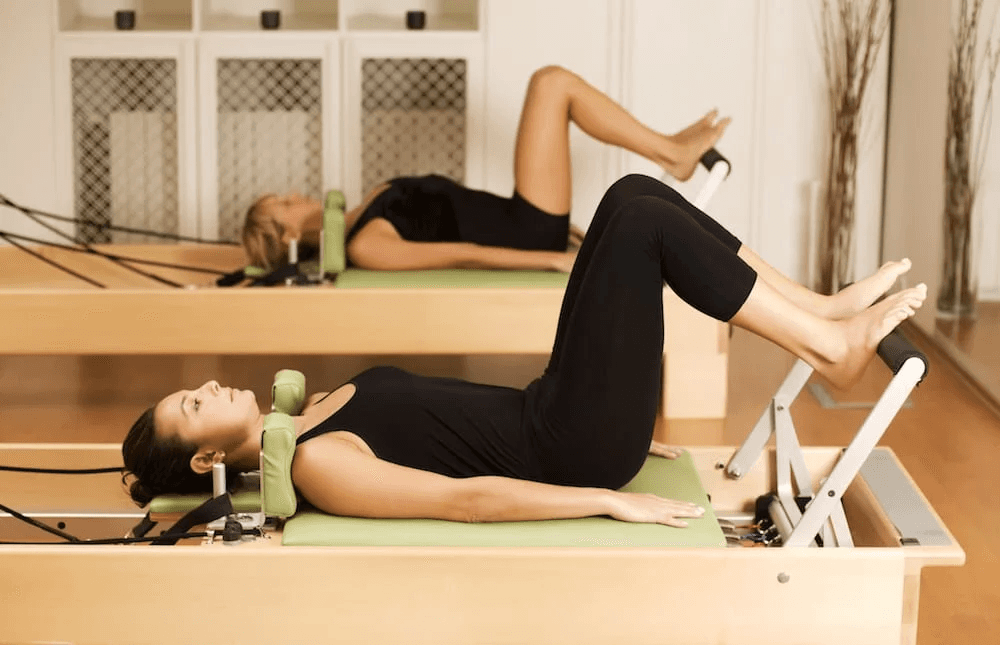
Feet placed wider than hip-width, toes tracking outward, which opens the stance enough to shift emphasis toward the gluteus medius and the lateral hip stabilisers. EMG research on wide-stance versus narrow-stance leg press consistently shows greater gluteus medius recruitment in wider positions, and the gluteus medius is chronically undertrained in people whose exercise history is dominated by parallel, bilateral movements. This Wide / Second Position tends to reveal weakness fastest. Clients who feel their knees drifting inward here are getting a direct readout of lateral hip instability, which is exactly the kind of diagnostic information that makes the reformer footwork variations sequence worth taking seriously.
6. Tendon Stretch / Heels Lower and Lift – Deep Calf Stretch and Ankle Mobility
The carriage is pressed out and the heels drop below the level of the footbar before rising back onto the toes. This Tendon Stretch / Heels Lower and Lift variation is the only position in the eight that includes an active stretch component, and it introduces an eccentric calf loading phase that the other positions do not. Kovács et al. (2024) note that the gastrocnemius and soleus respond differently depending on knee position throughout the movement arc, which is directly relevant here: as the heel drops and the knee angle shifts, the relative demand on each muscle changes within a single repetition.
Evidence on eccentric calf training supports its use for improving ankle mobility and managing Achilles tendinopathy, making this variation both the most therapeutic and the one requiring the most care. Clients with existing Achilles issues should treat this as a mobility exercise at low spring load rather than a strengthening drill at full resistance.
7. Single-Leg Footwork – Unilateral Strength, Balance, and Asymmetry Correction

One foot on the bar, one leg either bent or extended in the air. The bilateral positions allow the stronger leg to quietly compensate for the weaker one, and most people do not notice this is happening until they isolate each side. Unilateral loading in rehabilitation research is recognised as a reliable method for both detecting and correcting left-right strength asymmetries, and single-leg footwork on the reformer is one of the clearest ways to surface those gaps in a controlled setting.
Anyone who has discovered mid-set that one leg fatigues significantly faster than the other knows exactly how much information this position carries. Single-leg work is also where shoulder and neck gripping tends to return: when balance is suddenly in question, the upper body often tries to help. One supervised session can break that pattern faster than months of solo practice.
Heels on the bar in a parallel stance, with deliberate attention to the relationship between the pelvis and the lumbar spine through each repetition. This variation uses the leg-press movement as a vehicle for lumbar articulation and glute-hamstring integration rather than pure calf or quad work. It is particularly useful for clients whose lower back tightens during the other positions, because it makes spinal position the primary feedback mechanism.
The limitation is that it requires enough body awareness to feel the difference between a neutral pelvis and a tucked one, which is a skill that takes time to develop. Run through all eight positions and you have a complete lower-body diagnostic. Once that intelligence is built into the body, though, the fixed spring load and supine stability of the Reformer stop providing a new challenge.
The body has learned the conversation and stops adapting. BST Lagree at Angel takes every muscular conversation footwork opens, from calf recruitment to adductor firing to unilateral stability, and rebuilds it under continuous slow-twitch tension, cardio demand, and full-body instability. Because the Megaformer’s design removes the mechanical lockout that gives standard Reformer spring systems their brief rest point, muscles remain under constant tension throughout every repetition, a structural difference that produces a meaningfully different muscular stimulus once the nervous system has mapped a Reformer’s fixed resistance range. That is exactly what the next section unpacks: the compounding benefits of footwork that have nothing to do with leg strength.
8. Parallel Heels with Pelvic Tilt Focus – Lumbar Mobility and Glute-Hamstring Integration
Place both heels on the footbar in a parallel, hip-width stance. As the carriage presses out, consciously perform a posterior pelvic tilt to imprint the lumbar spine; on the return, allow a gentle anterior tilt to restore neutral. Perform 8-10 reps with deliberate pelvic articulation. This variation layers spinal mobility onto the standard heels position, integrating glute and hamstring activation with lumbar awareness. It is especially effective for clients with chronic lower-back stiffness, though those with disc issues should keep the tilt subtle.
Benefits of Reformer Footwork Beyond Leg Strength
Consistent Reformer footwork produces a chain of functional benefits that most practitioners never fully clock until they stop doing it. The foot is the first point of contact with any surface you stand on, and the position it takes shapes every joint above it. Research published in BMC Geriatrics confirms that intrinsic foot muscles play a significant role in postural control, with their function directly linked to balance and stability outcomes. In practical terms, how your arch loads the footbar during each rep sends alignment information up through the ankle, knee, hip, and lumbar spine simultaneously. At BST Lagree, coaching on spring selection is built into the session, because getting that detail right is precisely what separates a workout that looks like low-impact from one that delivers real intensity, cardio, and full-body strength.
Intrinsic Foot Muscles, Proprioception, and Gait as the Functional Payoff
Research published in Frontiers in Aging identifies intrinsic foot muscle weakness as a contributing factor to unintentional falls, the leading cause of injury-related hospitalisation in adults over 65, and finds that isolated intrinsic foot muscle strengthening produces measurable improvements in balance, gait, and proprioception that general lower-limb training does not fully replicate. That specificity is exactly what makes coached Reformer footwork worth experiencing in person, and the free intro workshop class, available to new clients via the on-site form and paired with a complimentary coffee, is the clearest way to do so here, in the Angel studio, before committing to a pack.
Common Reformer Footwork Mistakes and How to Fix Them with Modifications
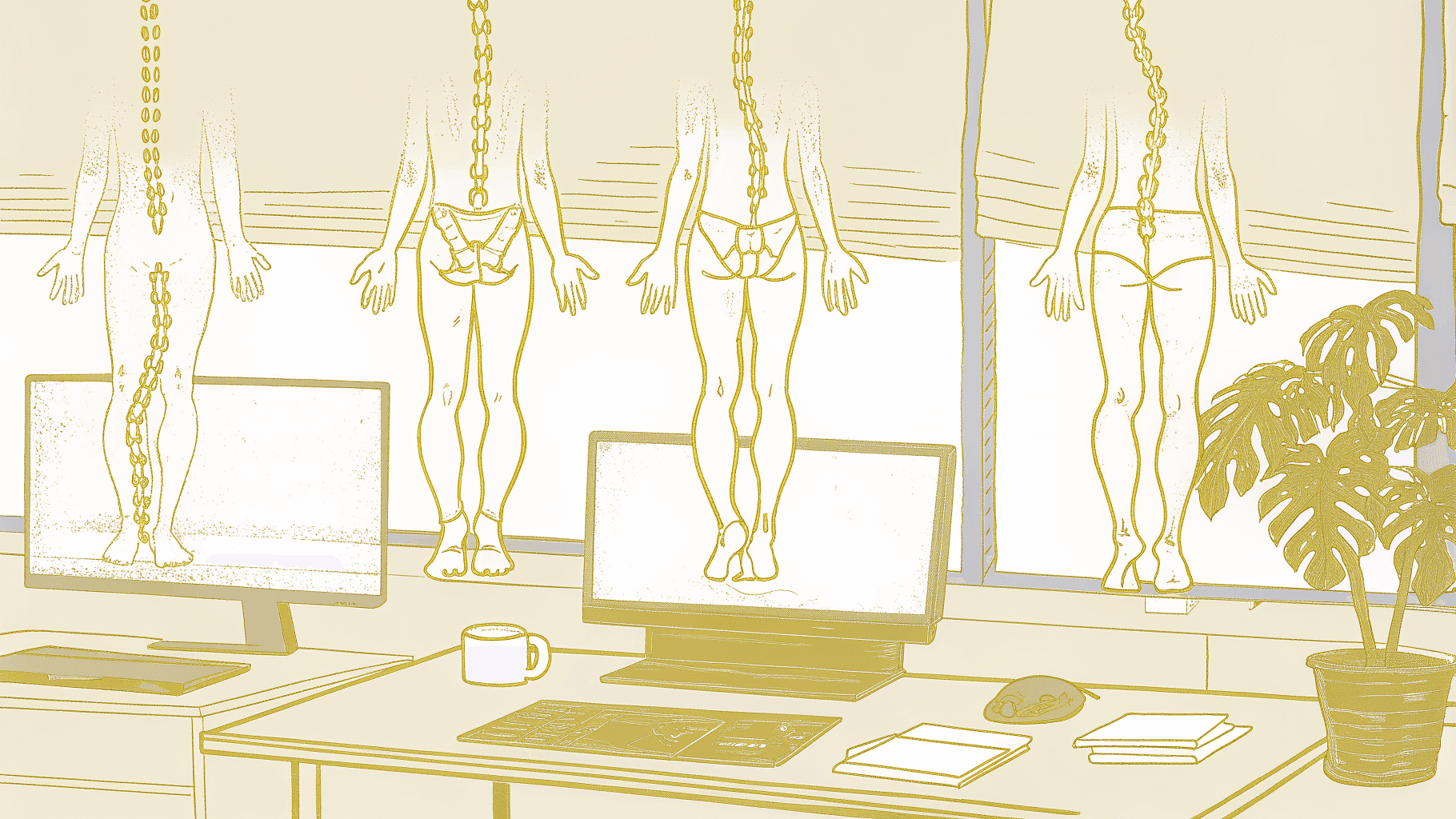
Knee valgus during Reformer footwork is not a technique flaw you correct and forget. The three most common Reformer footwork mistakes, knee valgus, tucked pelvis, and carriage slamming, each signal a specific root cause and call for a specific fix. – Knee valgus is the most clinically significant fault in closed-chain loading. – In Reformer footwork, this pattern appears most clearly in the Toes position: the knee drifts inward not because the foot is wrong, but because the glute medius is not firing before the press begins. – The fix is not “track your knee over your second toe.”
- The fix is activating the hip external rotators before the carriage moves at all.
- A tucked pelvis tells a different story.
- When the pelvis tucks under load, the lumbar spine loses its natural curve and the deep stabilisers disengage.
- Footwork was architecturally designed to surface this compensation.
- One pattern we see frequently at BST Lagree, particularly among newer clients, is unintended shoulder and neck tension during Reformer footwork.
- This is almost never a shoulder problem; it is nearly always a setup or positioning issue.
- When the pelvis is already tucked and the deep stabilisers are offline, the upper body compensates by bracing through the neck and traps.
- Resetting the pelvis to neutral before each rep resolves it far more reliably than any amount of shoulder-focused cueing.
- Carriage slamming is the third signal, and it points to the most undervalued stimulus in the entire exercise.
- Slamming almost always means the eccentric phase has been abandoned entirely, and with it, a significant portion of the visible strength and tone that consistent Lagree training is specifically designed to build.
How to Modify Footwork for Knee or Lower-Back Sensitivity Without Losing the Work
Spring load is the first variable to consider, though neither extreme is without cost. The trade-off is honest: lighter springs will not build meaningful leg strength over time, and heavier springs can mask the core and alignment work that makes footwork therapeutically valuable.
| Mistake | What It Signals | Immediate Fix |
| Knee valgus (inward drift) | Glute medius not firing pre-movement | Activate hip external rotators before the carriage moves; reduce to a lighter spring load |
| Tucked pelvis on return | Deep stabilisers disengaged; lumbar curve lost | Place folded towel under sacrum for proprioceptive feedback; reset neutral before each rep |
| Shoulder and neck tension | Positioning or setup fault, not a shoulder issue | Recheck carriage height and pelvis position; release grip pressure before each rep |
| Carriage slamming | Eccentric phase abandoned | Slow the return deliberately against spring tension, taking several controlled seconds; treat the return as the primary stimulus |
| Knee pain in Toes position | Excessive compressive load at patellofemoral joint | Limit carriage travel to a comfortable partial range; reduce to a lighter spring load |
| Arch discomfort | Intrinsic foot muscles undertrained | Reduce reps in Arches position; build tolerance progressively across sessions |

Related Reading
- Lagree Before and After 3 Months
- What to Bring to Pilates Reformer Class
- How Many Times a Week Should You Do Pilates Reformer
- Can You Do Reformer Pilates While Pregnant
- Pilates Reformer Moves Names
- Is Reformer Pilates Strength Training
- Is A Pilates Reformer Worth It
- Tower Vs Reformer Pilates
- What Reformer Does Club Pilates Use
Why Even Perfect Reformer Footwork Stops Delivering Results After a While
According to Adaptations to Endurance and Strength Training, Cold Spring Harbor Perspectives in Medicine (Hughes, Ellefsen & Baar), the rate of strength gain is steepest in the first weeks of a programme and decelerates substantially as the trainee becomes more experienced. EMG research demonstrates that lying flat on a supported carriage reduces the instability demand on stabilising muscles compared to upright or unsupported surfaces, so the recruitment challenge decreases as technique improves. Progressive overload is therefore the missing variable.
Resistance training research is consistent on this point: without progressively increasing the demand placed on the body, adaptation stalls and strength gains plateau regardless of how consistently a method is practised. The transformation-focused training at BST Lagree’s Angel studio is built to answer that exact gap: the Megaformer’s variable spring resistance and constant instability demand mean the progressive overload signal is structural to the method, not something you have to engineer around a fixed machine. Sessions (90 per class) are designed so that fitting in regular sessions around a demanding London schedule is a practical reality, not an aspiration. The question is not whether to leave Reformer Pilates behind; it is whether there is a format that picks up precisely where the spring resistance runs out.
How Lagree Builds on Reformer Footwork Instead of Replacing It
“Many find Lagree less core-focused than expected, leading them to seek supplemental reformer or mat Pilates to fill the gap, suggesting Lagree alone does not fully replace the foundational core work of reformer footwork.”
— what we hear from Pilates & fitness enthusiasts
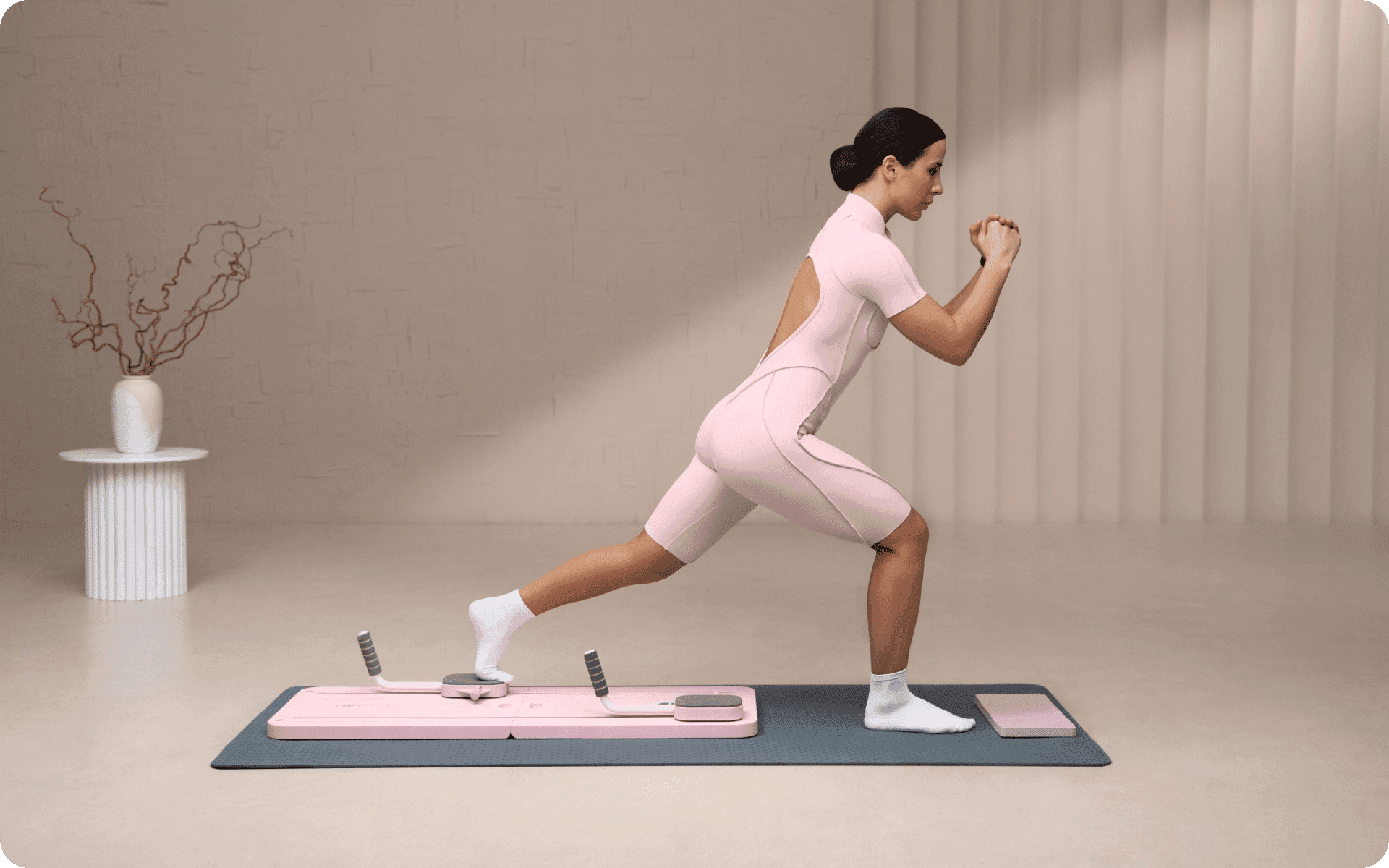
Lagree preserves the foundational lower-body activation principles that Reformer footwork establishes:
- Posterior-chain engagement
- Controlled eccentric loading
- The precise co-contraction of glutes, hamstrings, and deep core
What it removes is the one structural feature that limits the Reformer’s ability to keep producing results: the rest point. A Reformer footwork plateau is a method graduation. Because the Reformer was designed as a diagnostic alignment anchor rather than a progressive loading system, it has no structural mechanism to supply the overload that continued strength adaptation requires, and no variation in foot position changes that fundamental constraint. The Megaformer’s spring system eliminates lockout entirely, so muscles remain loaded with constant spring tension throughout every repetition, with no relaxation phase between reps. For anyone who has exhausted what the Reformer can structurally offer, the Megaformer is the natural next step.
Why Instruction Quality Matters When You’re Already Reformer-Literate
Precise posterior-chain mechanics, proprioception under load, and alignment cues are technical competencies that transfer directly from classical movement disciplines into Lagree coaching, and they are the same competencies that make slow, continuous-tension sequences effective. At BST Lagree London, that coaching precision shapes every cue in every 45-minute class, which is why clients who arrive Reformer-literate tend to feel the Megaformer’s demand from the first rep rather than spending several sessions calibrating.
Low-Impact Does Not Mean Low-Intensity, the Joint-Safety Case for Lagree
Lagree’s spring-based resistance absorbs impact forces that higher-impact training imposes on joints while still producing a comparable metabolic and muscular stimulus, a profile that the method’s design documentation and independent studio analyses consistently identify as its primary joint-safety advantage. The moving carriage adds full-body instability that forces the core, stabilisers, and lower-body muscles to co-contract simultaneously throughout every pressing movement, something the Reformer’s fixed frame cannot provide. For a cardiovascular and lower-body strength stimulus inside 45 minutes without elevated joint impact forces, the cited analysis supports that case. Your existing movement literacy is exactly what makes you ready for the bridge from Reformer footwork to Lagree.
Related Reading
- Pilates Reformer Leg Exercises
- Pilates Reformer Glute Exercises
- Pilates Reformer Ab Exercises
- Best Pilates Reformer App
- Pilates Reformer Springs Explained
Next steps
If your Reformer footwork has stopped producing visible change despite months of consistent practice, the path forward starts with recognising that the plateau is a graduation, not a gap in effort. Start with our Lagree classes in London.
Foot-position variation is a muscle-recruitment selector, not a progressive training tool: once the neural patterns are established, no new arrangement of heels, toes, or arches adds the structural overload the body needs to keep adapting. That ceiling is built into the Reformer’s fixed-frame design. At the same time, the eccentric return against spring tension is where the most productive stimulus lives in every single rep, and Lagree’s constant-tension architecture, with no mechanical rest point between reps, keeps that stimulus running continuously in a way the Reformer structurally cannot replicate. Together, they point to one obvious next step: the same lower-body vocabulary you already own, rebuilt under a genuinely different tension system.
Start with Lagree classes in London at BST’s Angel studio. Your alignment awareness and eccentric control transfer directly, which means you feel the Megaformer’s demand from the first rep rather than spending sessions learning to hold your hips still.
Frequently Asked Questions
What is the starting position for Reformer footwork?
You lie supine with your head on the headrest, shoulders against the shoulder blocks, and pelvis in neutral. The shoulder blocks prevent your upper body from being pulled toward the footbar under load, while the neutral pelvis positions the lumbar spine in its natural curve so the deep core stabilisers, the transversus abdominis and multifidus, can fire properly.
Does it matter which springs I use for footwork?
Yes, a medium-to-heavy spring load is the therapeutic sweet spot because the tension creates constant proprioceptive feedback that tells your body where the carriage is in space and enforces alignment throughout the movement. Drop to one spring and that alignment cue disappears; the movement becomes easier but less corrective.
Is footwork actually doing anything for my core, or is it just a leg exercise?
It does a lot for your core. While the quads and calves drive the push-out phase, the pelvic floor and deep core brace throughout every rep to keep the lumbar spine out of the movement entirely. On the return phase in particular, keeping the tailbone heavy and the spine long is what lets the posterior chain do its job and prevents load shifting into the lower back.
Why does changing foot position feel so different, are the positions just variations of the same thing?
They are not interchangeable, each position is a specific muscle-recruitment selector rather than a progressive training step. For example, the toes position maximally recruits the gastrocnemius, heels shifts demand toward the anterior chain and reinforces dorsiflexion, and the arch position activates the intrinsic foot muscles and tibialis posterior for arch stability. Changing knee angle alone significantly alters which muscle fibres do the work.
What does single-leg footwork add that the regular bilateral positions don’t?
Single-leg footwork exposes strength asymmetries that bilateral positions mask, because the stronger leg can quietly compensate for the weaker one without you noticing. Isolating each side is a reliable way to identify and address those imbalances directly.