Yes, reformer Pilates is resistance training. But its spring ceiling is real, and understanding exactly where the method ends is what tells you when to level up.
Resistance training, by the definition used across exercise science, means any movement that requires muscles to work against an external load. The reformer qualifies on those grounds. Its spring-and-pulley system creates genuine mechanical tension that muscles must overcome to complete each movement.
FOLD Reformer’s March 2025 technical breakdown confirms that spring resistance is variable and progressive: the further the carriage extends from the springs, the greater the force applied to the working muscles. That is a measurable, adjustable load. See our Lagree London for how this works in practice.
It counts. According to the same source, Align-Pilates reformer springs span a resistance range of 1 to 30 kg depending on spring colour and carriage extension distance, accommodating beginners and advanced practitioners alike.
1 to 30 kg
Reformer spring resistance range, start to finish
Qualifying as resistance training does not mean the reformer delivers strength outcomes identically to other resistance tools. The spring mechanism creates a force curve that changes as the carriage moves, which differs from the constant gravitational load of a barbell or cable stack. Effort can feel identical.
The mechanical stimulus is different. FOLD Reformer’s analysis also notes that spring resistance is not standardised across reformer brands, meaning the load a practitioner works against varies widely between studios and machines and may not be progressing even when effort feels consistent. Once your stabilising muscles have adapted to the spring-load range your studio’s reformer provides, the method cannot generate a meaningfully new stimulus without a different resistance type.
That is physics.
Once your stabilising muscles have adapted to the spring-load range your studio’s reformer provides, the method cannot generate a meaningfully new stimulus without a fundamentally different resistance type. The instinct that brought you to the reformer is sound.
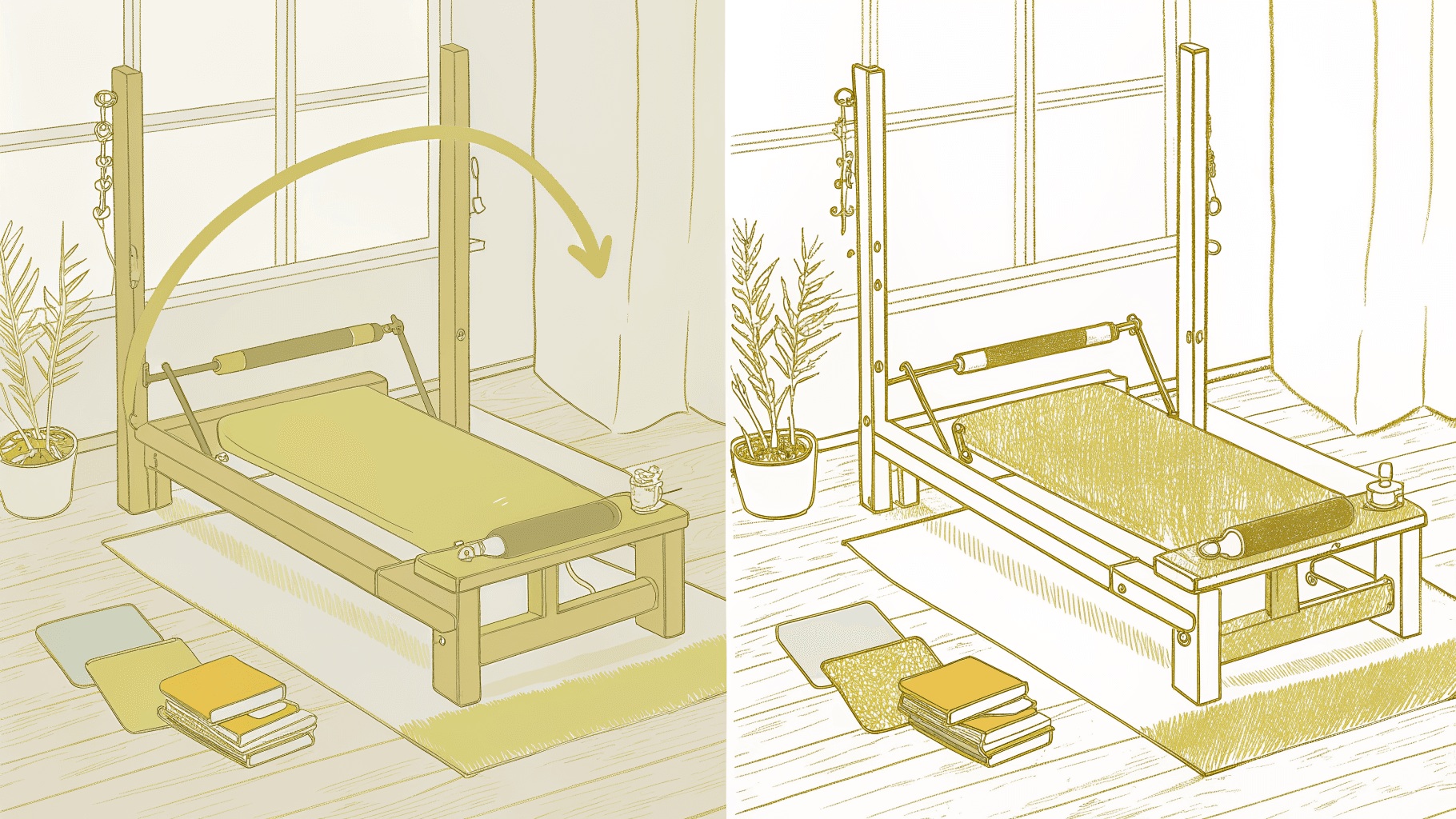
Lagree at BST is built on that same instinct, then layers in the slow, sustained time-under-tension and functional strength demand that the reformer’s spring design cannot structurally deliver. It builds on what you have already developed, as the logical next step.
Key takeaways
- Reformer Pilates meets the technical definition of resistance training, muscles work against an external load, but spring resistance and free weights send different biological signals to muscle tissue, and that difference is why your results stalled.
- The three drivers of muscle growth are mechanical tension, metabolic stress, and progressive overload. The reformer delivers all three at a ceiling that most consistent practitioners hit within months.
- A plateau after four classes a week for six months is not a consistency problem. It is a physics problem, the spring system that makes the reformer low-impact also caps the load your muscles can be forced to adapt to.
- Reformer Pilates is genuinely the right tool for rehabilitation, early-stage conditioning, and movement quality. It is the wrong tool for anyone whose body has already adapted to it and wants to keep changing.
- Lagree uses the same low-impact principles as the reformer and adds the slow, sustained time-under-tension and cardio demand that the spring system cannot produce, which is why it became Hollywood’s most popular workout.
- BST Lagree in Angel, Islington delivers that stimulus in a 45-minute group class, strength building and cardio in one session, with a health-focused café on site and official Lagree instructor certification for those who want to take the method further.
Why Reformer Pilates Builds Strength in Ways Most Gym Work Misses
Mechanical tension, metabolic stress, and progressive overload are the three primary drivers of muscle fibre breakdown and rebuilding. According to the International Journal of Environmental Research and Public Health, Krzysztofik et al. ‘Maximizing Muscle Hypertrophy: A Systematic Review of Advanced Resistance Training Techniques and Methods’, effective hypertrophy-oriented resistance training must combine mechanical tension and metabolic stress to stimulate real structural change in muscle.
It is the same biological pathway that underpins any legitimate strength modality. One concern that genuinely comes up for beginners weighing up a Lagree or Reformer-only studio is whether a single-method approach can cover all their strength-building bases, the kind of full-spectrum conditioning they associate with a conventional gym programme. It is a fair question, and the honest answer is that the mechanisms above do meaningful structural work, but understanding how they work clarifies both what you gain and where complementary training might still have a role.
At BST Lagree in Angel, instructors calibrate resistance and position in every 45-minute class so that stimulus keeps climbing; the method is not passive, and the progression is real.
Progressive Overload on a Reformer Is Real, It Just Works Differently Than Adding Plates
“Some people feel that reformer-only or lagree-only studios are not sufficient as a complete fitness solution, suggesting reformer Pilates alone may not address all strength-building needs that gym work covers.”
— what we hear from Pilates & boutique fitness enthusiasts
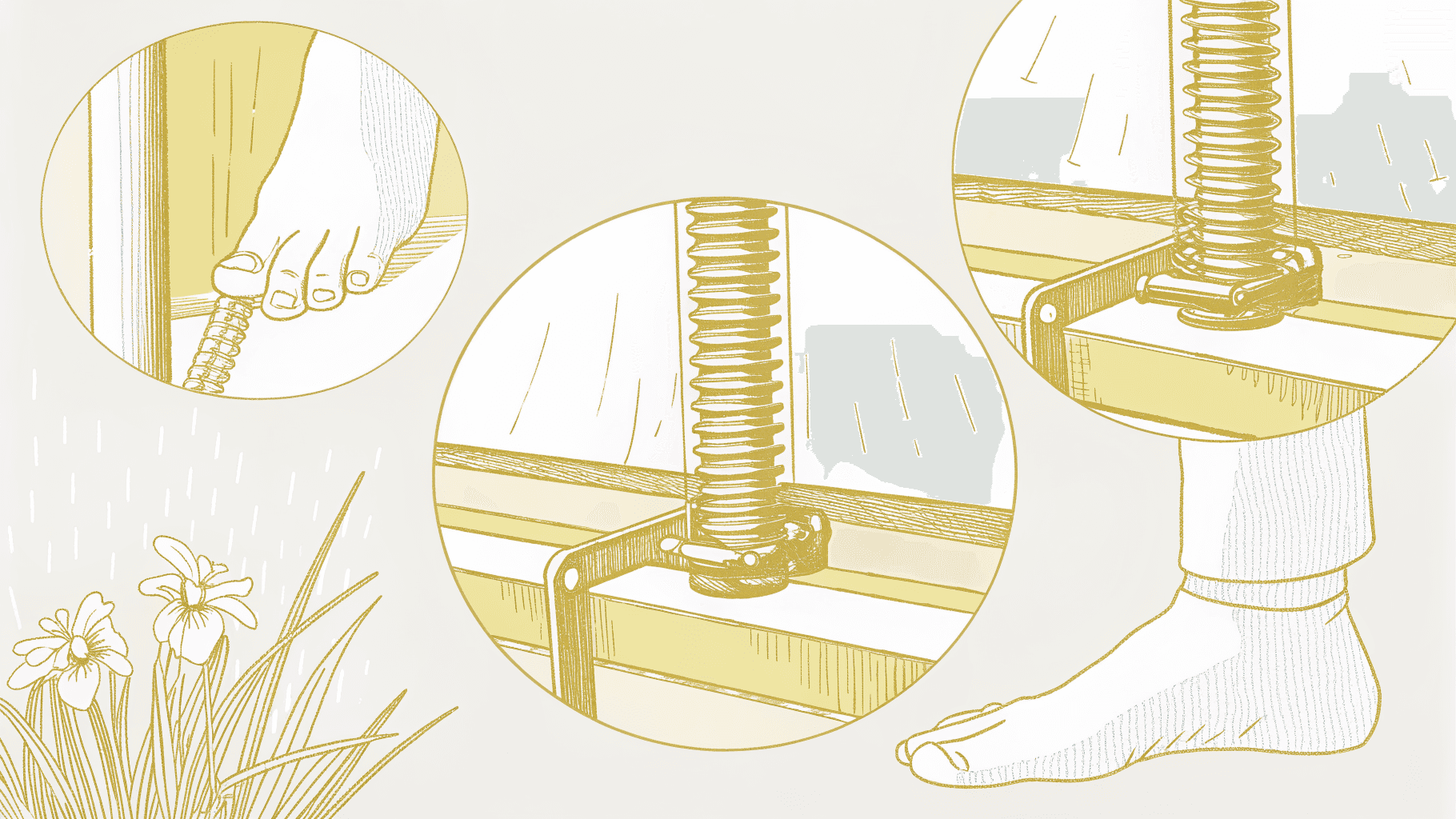
The same Krzysztofik et al. review identifies progressive overload as a fundamental requirement for continued strength gains; without it, adaptation plateaus regardless of how consistently you show up. On a Reformer, that overload is achieved through:
- adding springs
- shifting body position to increase mechanical disadvantage
- reducing points of contact
Moving footwork from two springs to four over eight weeks is a genuine progressive stimulus. The load increments are smaller than barbell plates, and the ceiling is lower, but the principle is identical. That progression is also what makes the method particularly valuable for people returning to training after a knee or hip injury.
Where standard gym loading or even mat-based work can aggravate structural weaknesses by placing force through an unsupported joint, the carriage absorbs impact and the spring resistance allows instructors to dial load precisely to what the tissue can tolerate, building the surrounding musculature back before asking the joint to work harder. The transformation that members at BST Lagree experience materialises through consistent class attendance over time, and having an instructor in the room to calibrate that overload session by session means you are not figuring out the progression alone.
Time Under Tension – Why Slow Reformer Reps Tear Down and Rebuild Muscle Fibre
Slow is the point. Time under tension is the governing principle here: Krzysztofik et al. confirm that controlled repetitions increase the duration muscles are exposed to mechanical tension, which is a primary stimulus for fibre remodelling. Research published in the Journal of Physiology (Burd et al.) further demonstrates that slower, lower-load contractions sustained over longer durations elevate muscle protein synthesis comparably to heavier, faster loading, so the biology of a slow Reformer rep is a legitimate stimulus in its own right.
A single-leg arabesque held on a moving carriage for an extended duration keeps the posterior chain under continuous load in a way that a fast gym rep cannot replicate, and that sustained demand accumulates across every exercise in the session. All of that happens inside 45 minutes, which matters for anyone trying to fit effective training into a packed London workday without sacrificing output.
The Bone Density Benefit Most Reformer Converts Never Hear About
Spring resistance pulls on tendons during each loaded movement, transmitting tensile force to the bone at its attachment point and stimulating osteoblast activity. A randomised controlled trial published in the Journal of Orthopaedic and Sports Physical Therapy found significant improvements in lumbar spine bone density among postmenopausal women following a structured Pilates programme compared to controls. That said, spring-based loading does diverge from free-weight and impact training in ways that are worth understanding clearly.
If you are based in or near Angel and want to experience how these mechanisms feel in practice, BST Lagree offers a free intro Lagree workshop class for new clients, claimed via the on-site form, and your first class includes a complimentary coffee. The next section maps that divergence row by row, so you can see precisely what you are getting and what you are not.
£19.90
Lowest per-class price on 10-class pack
Reformer Pilates vs Traditional Strength Training Side by Side
The biological signals they send to muscle tissue are genuinely different, and understanding that difference is the fastest way to stop blaming your effort when your body simply stops changing.
The Five-Dimension Comparison Table Where Reformer and the Weight Room Actually Diverge
| Dimension | Reformer Pilates | Traditional Strength Training |
| Resistance source | Adjustable springs and body weight | Free weights, cables, and weight stacks |
| Muscles targeted | Deep core stabilisers, intrinsic muscles, full-body alignment | Major global muscle groups (biceps, quads, chest) |
| Contraction type | Eccentric-dominant (muscle lengthens under tension) | Concentric-dominant (muscle shortens to lift the load) |
| Joint impact | Low-impact; horizontal alignment reduces spinal and joint stress | Higher impact; loads the spine and joints vertically |
| Primary goal | Flexibility, posture, balance, and lean muscle endurance | Muscle hypertrophy (growth) and maximal raw power |
The reformer’s adjustable springs create resistance that is inherently variable and body-weight-anchored, making it exceptionally versatile for rehabilitation, posture correction, and core stability work. The trade-off is real: spring tension cannot match the absolute load magnitudes that barbells, dumbbells, and kettlebells deliver, which matters when the goal shifts from muscular endurance to structural muscle remodelling.
Eccentric vs Concentric – Why the Direction of the Load Changes Everything
Most gym movements are concentric-dominant, whereas the reformer reverses that emphasis. As the carriage returns under spring tension, the working muscle lengthens while still resisting load. That is eccentric contraction, and the physiology behind it is meaningfully different.
Proske and Morgan’s research in the Journal of Physiology demonstrates that eccentric contractions produce greater mechanical stress per muscle fibre than concentric contractions, because the same or greater force is generated with fewer active cross-bridges, placing higher load per unit of contractile machinery. A complementary review in Frontiers in Physiology further details both the adaptive benefits and the structural demands that eccentric loading places on muscle and connective tissue, underscoring why this contraction type produces resilient, endurance-capable muscle with strong tendon integrity. The weight room, by contrast, drives the structural remodelling and maximal neural recruitment that produce visible size and raw strength.
When either modality is used exclusively for long enough, the stimulus can grow familiar and the sessions feel repetitive, motivation erodes, and the routine becomes something to endure rather than return to. That is not a willpower problem; it is a design problem. Eccentric-dominant, full-body movement that simultaneously carries a cardiovascular demand simply feels different in the body, and that novelty has real adherence value over a training career.
Deep Stabilisers vs Global Movers – The Alignment-First vs Load-First Design Philosophy
The reformer’s horizontal carriage design removes the vertical gravitational load that forces the body to recruit large, superficial muscle groups first. Instead, the nervous system finds stability through the deep core stabilisers, particularly the transversus abdominis and multifidus, before any limb movement can happen cleanly. This alignment-first philosophy is what makes the reformer so effective for postural correction and injury resilience.
Free weights operate on a load-first philosophy. Gravity is constant and vertical, and the body recruits whatever global movers are strong enough to shift the load, which is exactly why traditional resistance training builds the biceps, quads, and chest so effectively. The reformer’s alignment-first design is its greatest strength for stability and rehabilitation, yet that same design, however, caps the resistance ceiling and keeps the contraction cycle in a narrow band.
It is also why some practitioners who have trained on reformers elsewhere find studio classes underwhelming, not challenging enough to feel like genuine work, particularly if their fitness baseline is already high. The issue is rarely the modality; it is whether the studio is programming enough intensity, time-under-tension, and progressive overload to keep a conditioned body adapting. It is also worth noting that combining modalities introduces a recovery consideration, since running, lifting, and a reformer class can all compete for the same recovery budget.
For clients travelling through London or away from their home studio, the single drop-in Speakeasy class at £25 makes it straightforward to maintain training consistency without committing to a pack. The question worth sitting with is whether the reformer’s ceiling is already where you are, and that is exactly what the next section examines.
The Limitations of Reformer Pilates for Anyone Chasing Hypertrophy
Four sessions a week for six months. No missed classes, no half-hearted effort. And yet the mirror has stopped changing. The common assumption is that if she just stays consistent and works harder in class, the results will come back, the plateau is her fault, not the method’s ceiling. In reality, the problem is not you. It is the physics of the machine you are standing on.
Reformer Pilates alone will not build significant muscle mass or raw power. The structural reason is load magnitude., ‘Loading Recommendations for Muscle Strength, Hypertrophy, and Local Endurance: A Re-Examination of the Repetition Continuum’, Sports confirms that while hypertrophy can be stimulated across a wide rep range, absolute mechanical tension remains a key driver, and spring-based systems have a fixed maximum load ceiling.
Once you have adapted to that ceiling, no further progressive overload of mechanical tension is possible without changing the resistance type entirely. This is a pattern we see consistently with beginners who come to us after stalling elsewhere: the reformer delivered real, visible change in months one and two, then quietly stopped delivering it. Instructors who are doing their job eventually run out of novel spring combinations to offer, not because they lack skill, but because the equipment has a physics ceiling, not a creativity ceiling.
You can add springs, adjust foot position, slow the tempo. But you cannot add a plate. The reformer’s resistance architecture simply does not extend into the load ranges that research associates with sustained hypertrophy in trained individuals.
Why Your CNS Stops Responding and Springs Cannot Fix It
Heavy compound loading triggers a specific neural adaptation that spring resistance cannot replicate. Schoenfeld et al. show that loads above 85 percent of one-rep max produce superior motor unit recruitment and rate coding, the two mechanisms that drive maximal strength gains. These high-threshold motor units stay dormant under light spring loads.
The signal the CNS needs is not effort, and springs cannot manufacture it., ‘Maximizing Muscle Hypertrophy: A Systematic Review of Advanced Resistance Training Techniques and Methods’, International Journal of Environmental Research and Public Health reinforces this further: advanced techniques for sustaining hypertrophy, drop sets, rest-pause, mechanical drop sets, all presuppose a resistance medium that can be progressively and meaningfully loaded. Spring carriages are not that medium for a trained body. The gap between what the reformer can load and what a trained neuromuscular system needs grows wider the fitter you become.
The Plateau Is a Physics Problem, Not a Personal Failing
Progress on the reformer stalls because the method is structurally confined to the high-rep, low-load zone of the resistance continuum. Schoenfeld et al. map this clearly: low-rep, high-load training drives maximal strength; moderate-rep training drives hypertrophy; high-rep, low-load training drives local muscular endurance. Reformer springs operate almost exclusively in that third zone.
For a beginner whose stabilisers are untrained, that zone produces real, visible change. For someone who has already adapted, it produces maintenance at best. The plateau is mathematically inevitable, not motivationally optional. Understanding why the ceiling exists is only half the picture, and knowing whether you have genuinely hit it is the question worth answering next. The next section gives you an honest self-diagnostic to answer exactly that.
Related Reading
- Lagree Before and After 3 Months
- What to Bring to Pilates Reformer Class
- How Many Times a Week Should You Do Pilates Reformer
- Can You Do Reformer Pilates While Pregnant
- Pilates Reformer Moves Names
- Is A Pilates Reformer Worth It
- Pilates Reformer Footwork
- Tower Vs Reformer Pilates
- What Reformer Does Club Pilates Use
Who Reformer Pilates Is Actually Best For and Where Its Ceiling Sits
A systematic review of randomised controlled trials published in the Journal of Physical Therapy Science found Pilates superior to minimal intervention for reducing pain and improving functional disability in patients with chronic non-specific low back pain. Its core emphasis on stabilisation, postural alignment, and controlled movement makes it particularly well-suited for joint protection and functional movement quality in daily life. That evidence maps to a clear population: post-injury recovery, post-partum core rebuilding, older adults protecting mobility, and anyone whose primary goal is moving without pain.
For these groups, the reformer’s resistance ceiling is completely irrelevant. However, when the same review compared Pilates against other active exercise interventions rather than minimal care, it did not consistently outperform them. The reformer earns its place in rehabilitation; it sits outside the top of the strength-stimulus hierarchy.
The Self-Diagnostic, Have You Outgrown It?

- Are you still recovering, rebuilding, or managing pain?
- If yes, stay.
- Has your DOMS disappeared?
- Are you leaving class feeling stretched rather than genuinely worked?
- Has your body composition stopped changing despite consistent attendance?
- That second pattern is the adaptation signal.
- Once your stabilisers have fully adjusted to spring load, the stimulus is exhausted.
- No extra sessions override that.
- If you recognise yourself in the “outgrown it” column, the question is whether your next workout is designed to take you further.
Why Lagree Is the Next Step When Reformer Pilates Stops Progressing You
The Megaformer looks like a reformer the way a racing bike looks like a commuter bicycle. If you’ve quietly noticed that the soreness has faded, that your body stopped changing three months ago despite four classes a week, the honest explanation isn’t that you’re not trying hard enough. Lagree doesn’t ask you to start over or abandon the movement environment you’ve built your routine around. It solves the specific deficits spring resistance creates, on a machine purpose-built to exceed what springs can do.
The Megaformer Is Not a Reformer With the Dial Turned Up
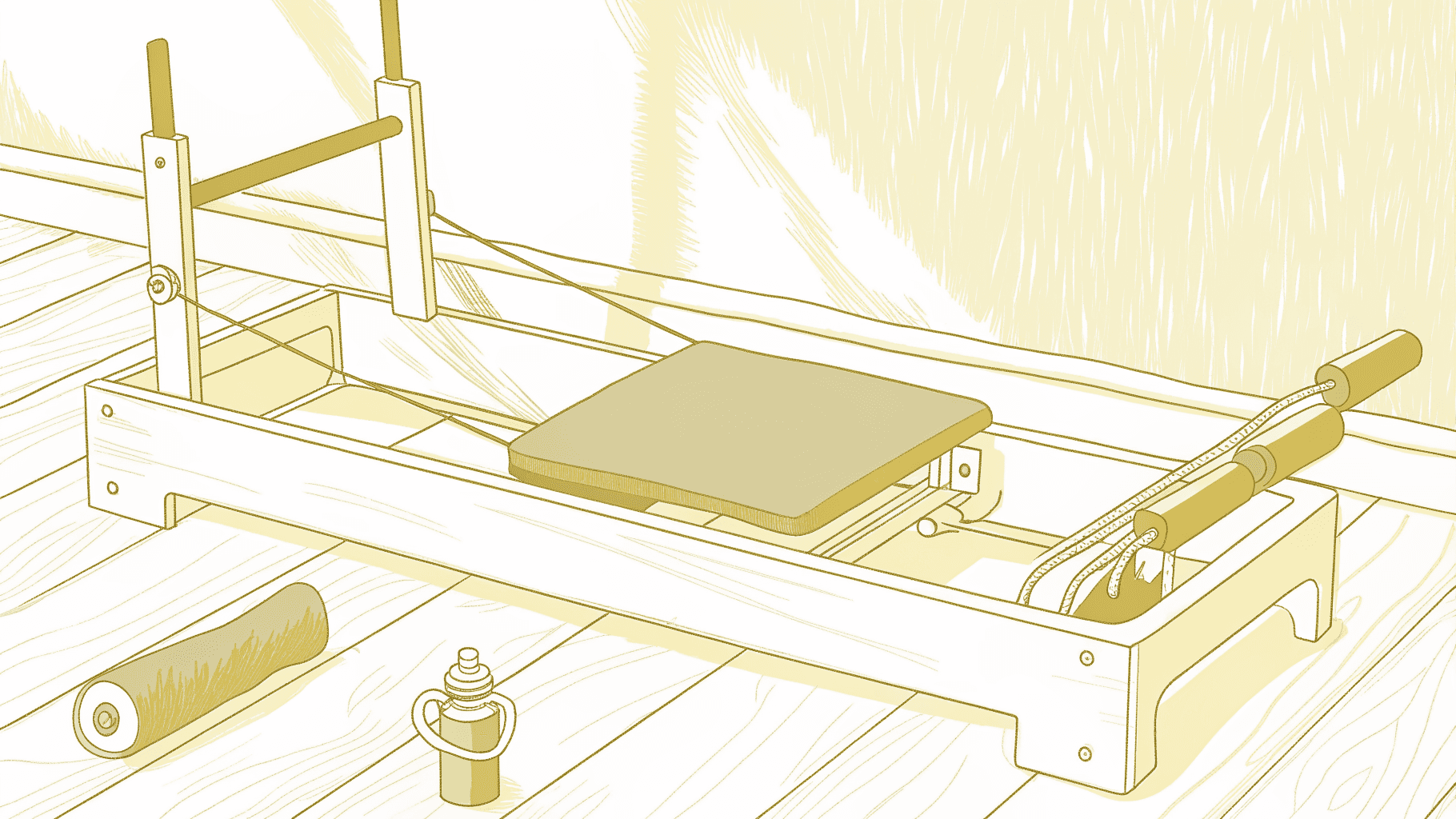
The Pilates reformer uses a spring-and-pulley system where resistance lightens as the carriage moves away from the springs, so the muscle works hardest at the start of the movement and easiest at the end. The Megaformer reverses that dynamic. Its resistance system maintains load through the full range of motion, so the muscle never gets a mechanical rest at the top or bottom of a rep. The Megaformer also carries more moving platforms and handles positioned for multi-plane loading, and a frame built for continuous transitions that keep the cardiovascular system engaged between exercises. The reformer’s rest-between-movements structure does not attempt this.
How Slow, Sustained Tension on the Megaformer Breaks the Ceiling Reformer Springs Cannot
The mechanism is time under tension. Research on hypertrophy consistently identifies mechanical tension and metabolic stress as the two primary drivers of muscle fibre remodelling, and both require the muscle to stay loaded long enough for those processes to begin. Lagree’s prescribed tempo, a slow, deliberate cadence with no pause at either end, keeps a muscle group under continuous load for an extended duration per set.
For a woman who has already mastered the reformer’s movement vocabulary, this is the same movement logic taken to the threshold the reformer’s spring system was never designed to reach. The reformer is designed around intentional rest between exercises. Sweat House OC’s July 2025 comparison describes Lagree as generating “a cardio metabolic demand that reformer Pilates does not produce,” a structural difference, not a marketing claim.
On the Megaformer, exercises transition within seconds, large muscle groups remain loaded continuously, and the cumulative oxygen demand across a 45-minute session pushes heart rate into ranges that reformer classes, by design, never reach. That combination is the direct consequence of how the machine and method were engineered. Sebastian Lagree developed the method in Los Angeles, and the depth of instruction available at a given studio is tied to how close its teachers trained to that origin.
Karley trained and taught in LA, where the method was built, before bringing it to Lagree classes in London at Blood, Sweat and Tears in Angel. The difference between a generic Lagree class and one taught by someone who has spent years in both a professional dance career and LA-trained Lagree instruction shows up in the specificity of the correction, the timing of the tempo call, and the ability to read when a client is compensating rather than loading.
BST members who transitioned from reformer Pilates consistently report delayed-onset soreness in muscle groups that had stopped responding to spring resistance. That response is the body’s signal that it has finally met a stimulus it couldn’t absorb and ignore. One class, 45 minutes, and the morning after closes that gap.
Related Reading
- Pilates Reformer Leg Exercises
- Pilates Reformer Glute Exercises
- Pilates Reformer Ab Exercises
- Best Pilates Reformer App
- Pilates Reformer Springs Explained
Next steps
If your body has stopped changing despite four classes a week, the path forward starts with recognising that the plateau is a physics problem, not a personal failing. The reformer’s spring-resistance system operates almost exclusively in the high-repetition, low-load endurance zone, and once your stabilisers have fully adapted to that ceiling, no amount of consistency can override the fact that the stimulus itself has been exhausted. Start with our Lagree classes in London.
The reformer earns its resistance-training label, but its spring-load architecture cannot sustain the mechanical tension and metabolic stress that research identifies as the twin primary drivers of muscle fibre remodelling. That means the deficit is structural. Lagree solves it directly, layering sustained time under tension and a genuine cardiovascular demand into the same low-impact, horizontal carriage format your body already knows, producing the progressive overload that spring resistance structurally cannot. Together, those two realities point to one logical next step: a machine purpose-built to exceed what springs can do.
Start with Lagree classes in London at BST in Angel. New clients can claim a free intro workshop class via the on-site form, complimentary coffee included. Check in with your body the morning after. That is all the information you need.
Frequently Asked Questions
Can you actually build muscle with Reformer Pilates?
Yes, but within limits. The reformer delivers the three primary drivers of muscle growth, mechanical tension, metabolic stress, and progressive overload, through its spring-and-pulley system, slow tempo protocol, and sustained muscular effort. The ceiling is lower than with barbells or cables, and once your stabilising muscles have adapted to the spring-load range your studio’s reformer provides, the method cannot generate a meaningfully new stimulus without a fundamentally different resistance type.
Is Reformer Pilates enough on its own, or do I need to add other training?
The reformer does meaningful structural work, but it has a real resistance ceiling, spring tension cannot match the absolute load magnitudes that barbells, dumbbells, and kettlebells deliver, which matters when the goal shifts from muscular endurance to structural muscle remodelling. For many practitioners, particularly those chasing hypertrophy or who have already adapted to their studio’s spring range, a complementary method that layers in slower, sustained time-under-tension and a cardiovascular demand will keep the stimulus climbing past the point where a standard reformer runs out of range.
Is Reformer Pilates as good as lifting weights?
They are genuinely different tools rather than direct equivalents. The reformer is eccentric-dominant, low-impact, and targets deep core stabilisers and intrinsic muscles, while traditional strength training is concentric-dominant, loads major global muscle groups, and produces greater muscle hypertrophy and raw power. Both are legitimate; neither does the other’s job.
What are the core stability benefits of Reformer Pilates?
The reformer’s horizontal carriage design removes vertical gravitational load, which means the nervous system is required to find stability through the deep core stabilisers, particularly the transversus abdominis and multifidus, before any limb movement can happen cleanly. These are intrinsic muscles that most conventional gym programmes never directly target, and the benefits are clinically meaningful, particularly for people managing back pain or returning from injury.
Does Reformer Pilates help with bone density?
Yes. Spring resistance pulls on tendons during each loaded movement, transmitting tensile force to the bone at its attachment point and stimulating osteoblast activity. A randomised controlled trial published in the Journal of Orthopaedic and Sports Physical Therapy found significant improvements in lumbar spine bone density among postmenopausal women following a structured Pilates programme compared to controls, and for women in their twenties and thirties the post notes it is one of the most underappreciated returns on consistent Reformer attendance.
How long does it take to build muscle with reformer Pilates?
Expect to feel stronger within a few weeks and to see measurable change in about two months if you train consistently and keep making it harder. In a 2025 randomised controlled trial, 47 women with overweight or obesity were split into two groups; those who did supervised reformer Pilates three times a week for 8 weeks improved their strength, muscular endurance and body composition compared with a group who did no exercise (Gökalp and Kirmizigil, Scientific Reports, 2025). The programme progressed every few weeks by moving to harder exercises and adding reps, which is the part most people miss. To keep building muscle, add springs or harder variations once a set feels easy, and eat enough protein to support the work.