Your outfit isn’t a style choice on the reformer. It’s a safety and coaching decision, and getting it wrong slows your results from the very first rep.
The outfit question feels small. It isn’t. The common assumption is that as long as the clothes are stretchy and sporty, any activewear should work fine for any Pilates-style class. According to the PureGym UK Fitness Report (2024), over 50% of people interested in fitness have never booked a class, with intimidation and not knowing what to do cited among the top reasons. The clothing question is rarely just about clothing. For anyone who has found a studio they’re curious about and is hovering over the booking button, that pre-class spiral is real: What if I show up in the wrong thing?
The PureGym UK Fitness Report (2024) found that beginners consistently rank “not knowing what to wear” and “not knowing the etiquette” among their top anxieties before attending a new fitness class.
50%
of people interested in fitness have never booked a class
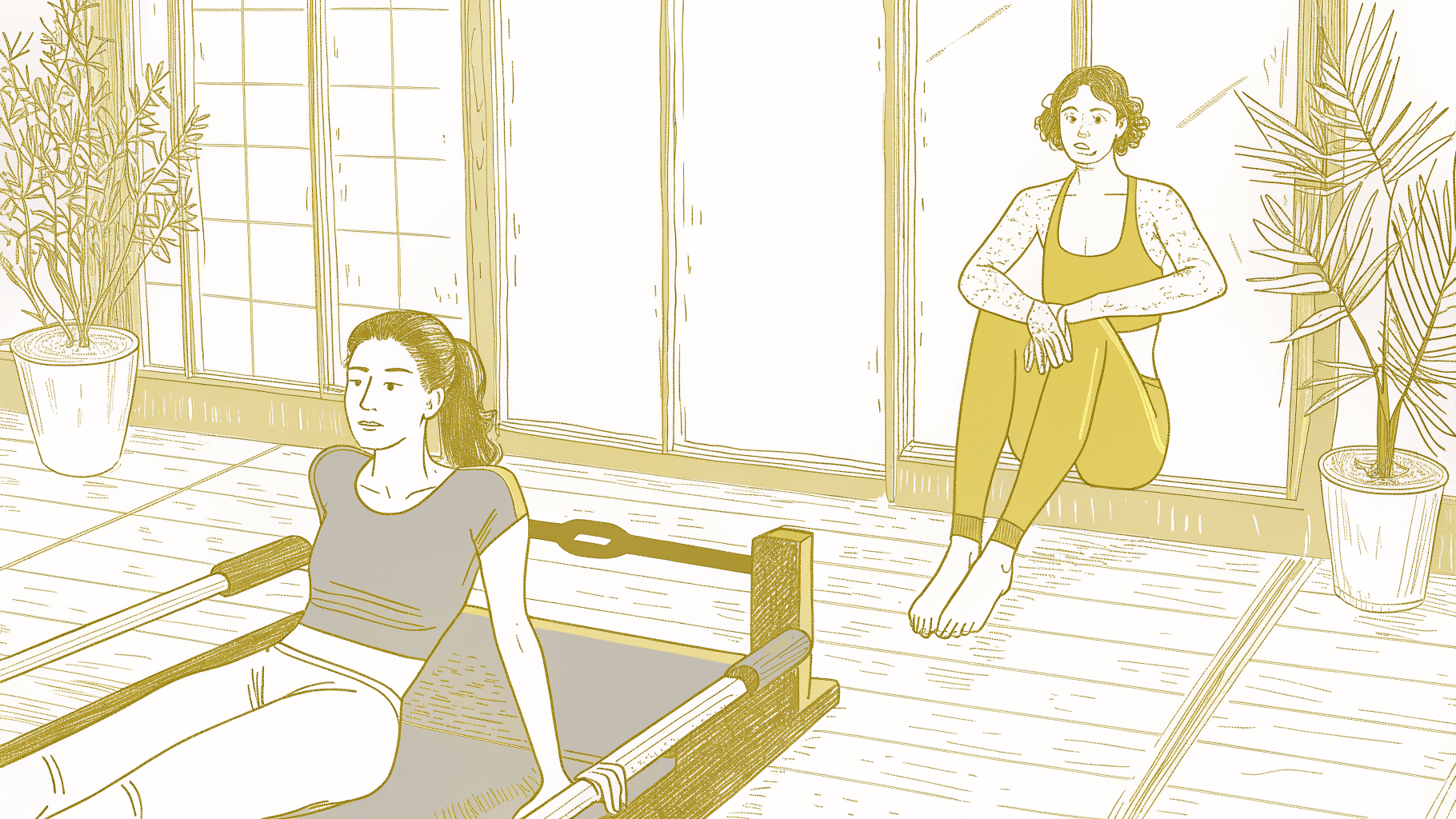
That fear is sharper in specialist studio environments. Premium reformer studios carry an implicit social code, and first-timers read the room fast. The worry is about belonging.
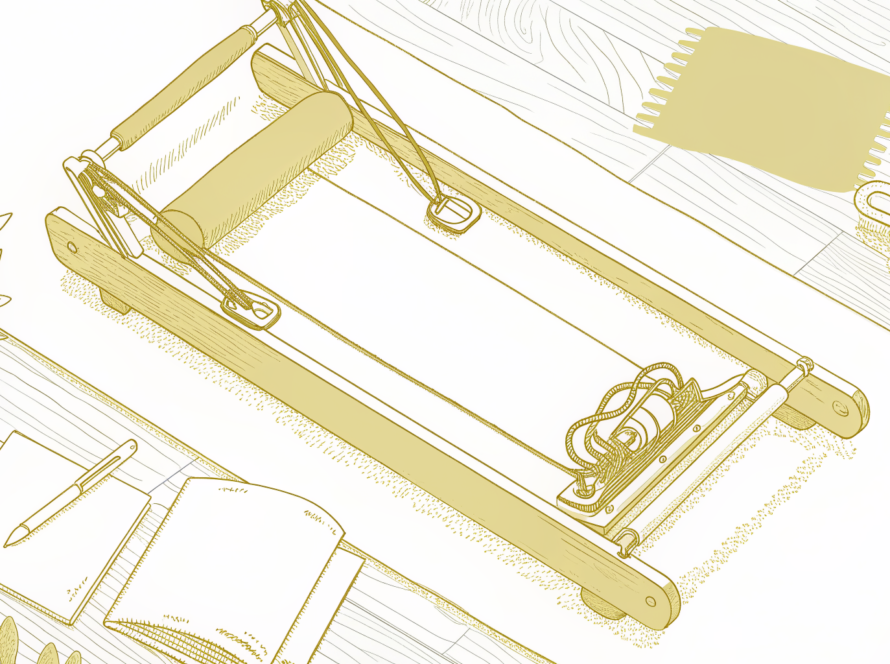
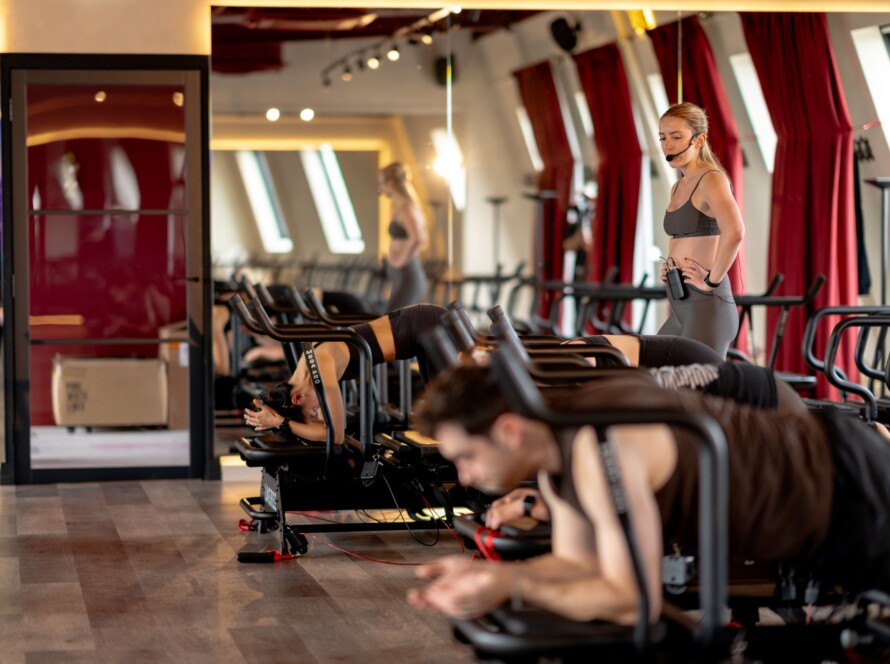
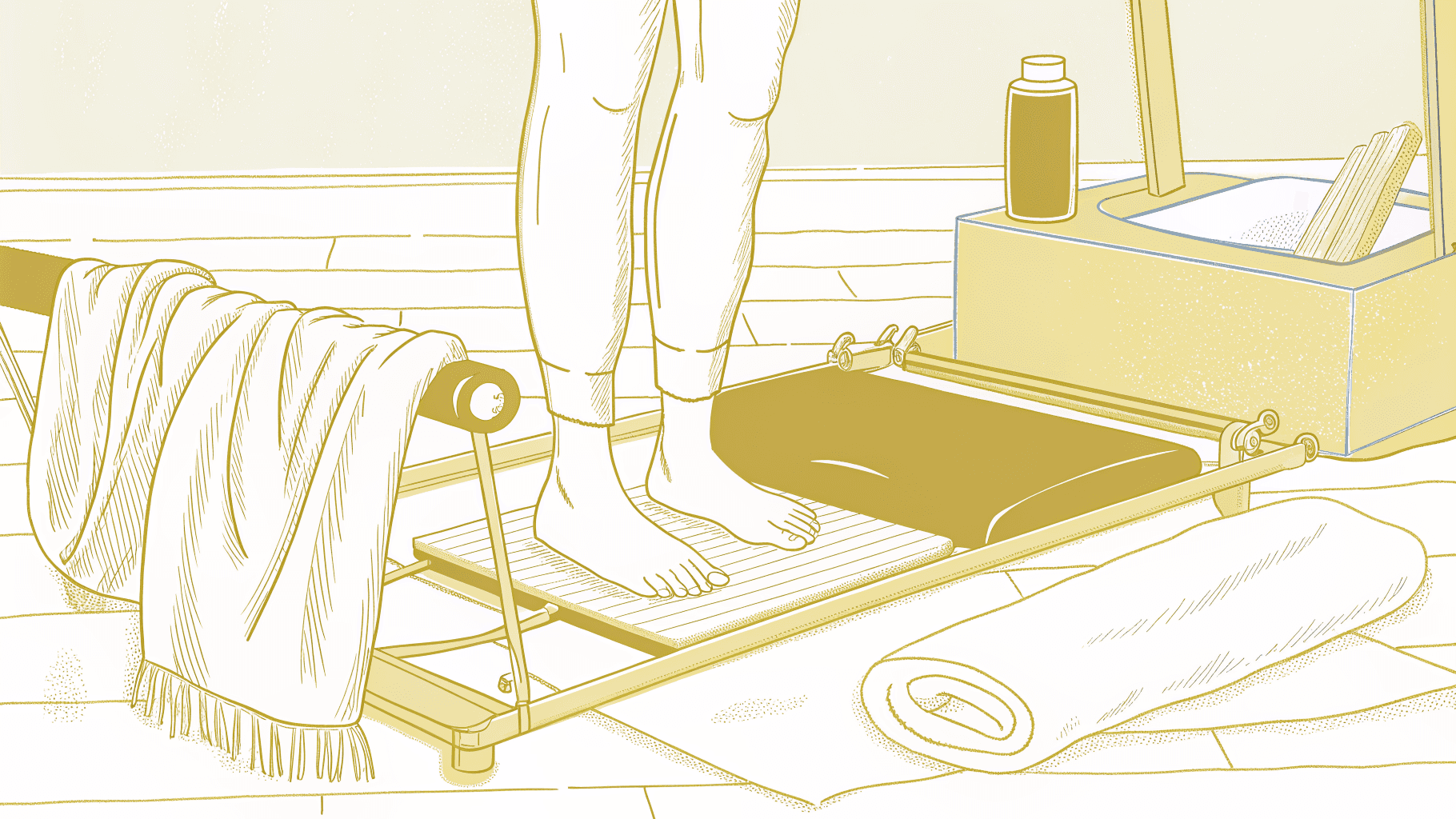
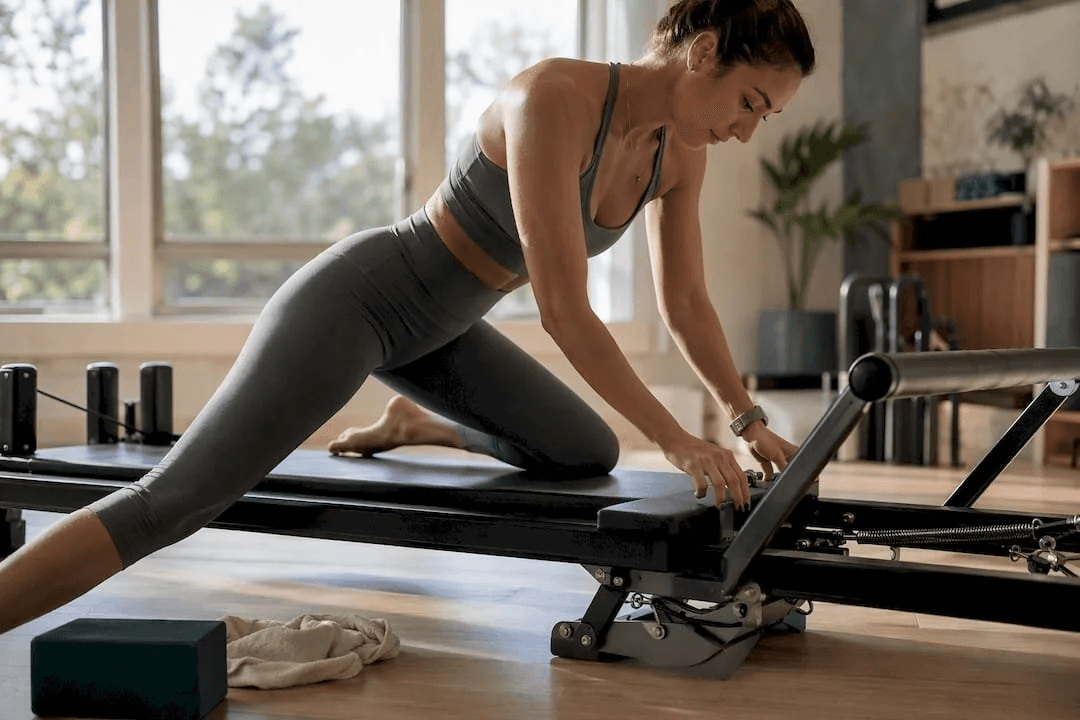
The reformer is a piece of resistance equipment: a moving carriage, adjustable springs, a footbar, shoulder blocks. Loose fabric can catch on springs or bunch against the carriage mid-movement. A baggy top flops forward during footwork, obscuring the hip and spine alignment your instructor is trained to correct.
Getting the outfit wrong on a reformer is a mechanics problem that affects how safely and effectively you move from the very first rep. Once you understand the machine, the clothing logic stops feeling arbitrary and starts making sense.
Key takeaways
- Lagree and Pilates reformer are not the same workout, the machine, the intensity, and what your clothing needs to do are all different, and conflating them is where most first-timers go wrong.
- Loose fabric near reformer springs and shoulder blocks is an equipment hazard, not a style preference, form-fitting clothing is a safety rule, not an aesthetic one.
- High-waisted leggings beat shorts on a vinyl carriage: bare skin peels away mid-movement, and the waistband keeps your alignment visible to your instructor when you go horizontal.
- Grip socks are the item most likely to get you turned away at the door, studios require them, and buying a pair at reception markup is the most avoidable first-class tax.
- Lagree’s slow, loaded tempo demands compression fabric specifically, fitted is the floor, not the ceiling, because the slower the movement, the more your instructor needs to read your body through the fabric.
- Long necklaces, dangling earrings, and oversized jewellery catch on loop straps during arm work, leave them in your bag before you walk in.
- BST Lagree in Angel, Islington offers 45-minute group Lagree classes that combine strength building and cardio in one session, new clients can claim a free first class, which means the outfit is sorted and the financial barrier is gone.
Why Form-Fitting Clothing Is a Safety Rule on the Reformer
On the Megaformer, fit is a safety requirement before it is anything else, because the springs, shoulder blocks, and footbar create real snagging hazards that loose fabric will find. Understanding exactly where those risks sit and why form-fitting clothing eliminates them makes the dress code make sense rather than feel arbitrary.
Loose Fabric Near Springs and Shoulder Blocks Is an Equipment Hazard Not a Style Note
Form-fitting, flexible, and functional clothing is the non-negotiable standard for reformer work, and the reason starts with the hardware itself. As American Pilates Reformer Outlet notes, loose or baggy clothing can snag on the reformer’s springs, footbar, and shoulder blocks, creating a genuine safety hazard during movement rather than merely a studio aesthetic preference. Any excess fabric near those points is a liability, and it’s one of the first things the instructors at BSTL’s 4th-floor studio at 9 White Lion Street, Angel, Islington (N1 9PD), minutes from Angel tube, will flag. At a Lagree class, where slow isometric loading means real-time corrections are the primary driver of results, clothing that obscures your alignment actively limits the coaching you’re paying for.
That’s also why clients who are serious about their results tend to move quickly from a single drop-in Speakeasy Class (£25) to a class pack once they’ve found their rhythm. 90 per class) all reflect the reality that transformation-focused training requires consistency, and that consistency is where the coaching investment compounds.
Wide Range of Motion on a Moving Carriage Means Bunching Fabric Actively Fights You
American Pilates Reformer Outlet confirms that the wide range of motion required on a moving carriage means fabric that bunches or shifts mid-movement actively interferes with exercise execution, making fit a functional requirement rather than a cosmetic one. Megacore Pilates reinforces this point in the context of spring resistance: because the reformer loads your body through variable tension across its full range of motion, any external interference, including shifting fabric, disrupts the precise positioning that makes each rep effective. Now that you know why fit is non-negotiable, the next question is which specific pieces actually deliver it, because not all leggings and shorts are built for the demands of a moving carriage.
Related Reading
- Lagree Before and After 3 Months
- What To Bring To Pilates Reformer Class
- How Many Times A Week Should You Do Pilates Reformer
- Can You Do Reformer Pilates While Pregnant
- What Reformer Does Club Pilates Use
The Best Leggings and Shorts for Reformer Pilates
Vinyl carriages expose the gap between what looks fine in a mirror and what actually functions under load.
| ✓ Pros | ✗ Cons |
| Crop tops can work with proper fit | A crop at the ribcage exposes lower back on extension |
| Sits at or just above natural waist for coverage | Gap breaks coverage instructor needs to read spinal alignment |
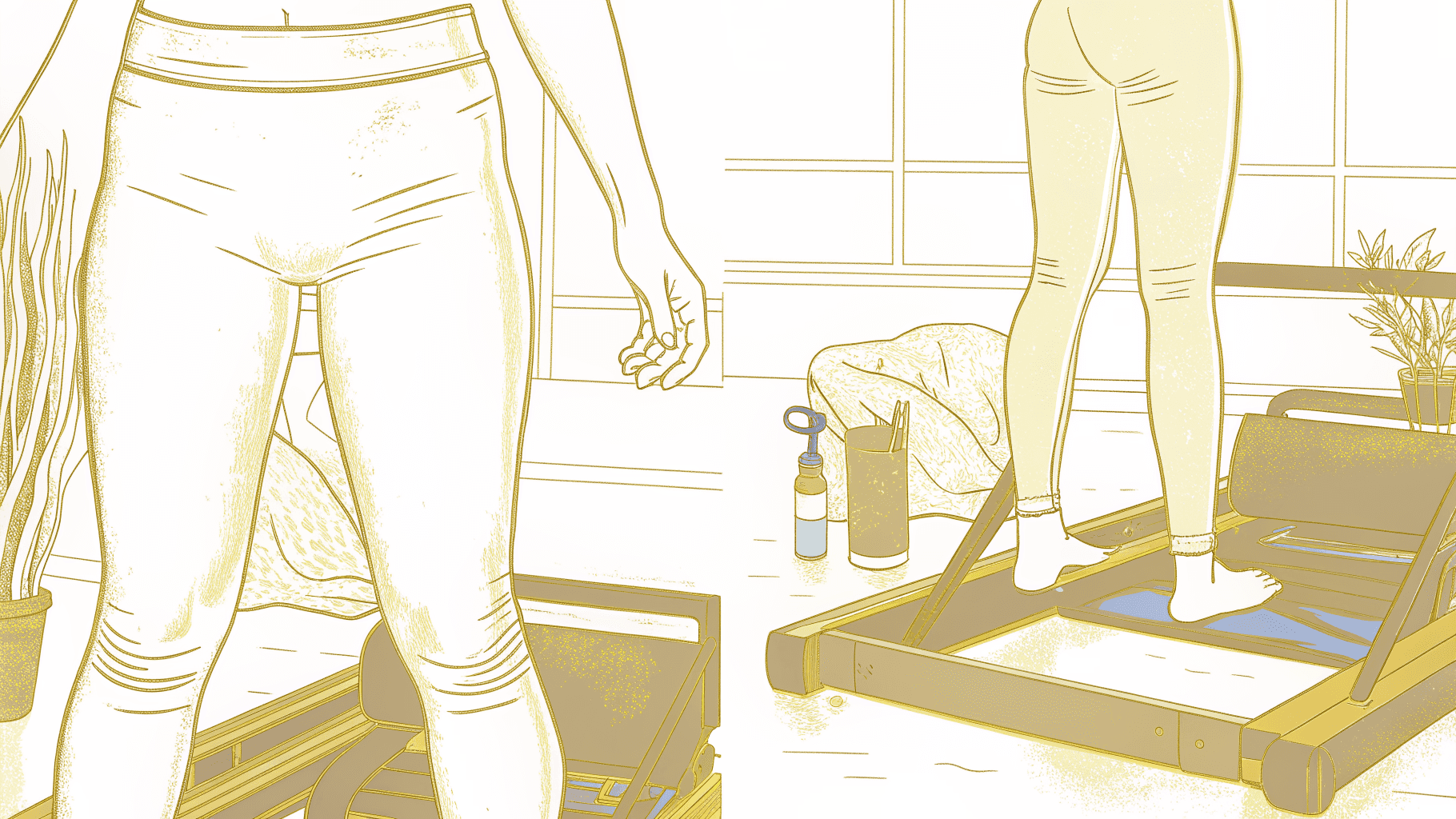
High-waisted full leggings are the most reliable bottom for reformer Pilates because they solve two problems at once: carriage contact and waistband stability. The high waistband stays put during core work and doesn’t roll down mid-exercise, which matters most during spinal articulation sequences where your torso is curling, extending, and rotating in slow succession. Bike shorts need a 7 to 8 inch inseam minimum to keep bare skin off the vinyl carriage and the loops during supine work.
Capri leggings are a sound warm-weather alternative, providing enough coverage to prevent carriage-vinyl chafing without causing overheating during longer sessions. If you want to work all of this out before committing to a class pack, BST Lagree’s free intro workshop, available to new clients via the on-site form and paired with a complimentary coffee, is the right environment to test your kit on a real carriage with a coach watching your alignment.
Bottoms That Fail the Reformer, Jeans, Short-Shorts, Wide-Legs, and Baggy Sweats
The specific offenders are well established: jeans restrict hip flexion and can scratch the carriage surface; short-shorts leave too much bare skin in contact with vinyl; wide-leg pants and baggy sweatpants bunch unpredictably on the carriage and create a genuine snagging risk near the springs and footbar. Once your bottoms are sorted, the next question is what’s happening above the waist, and the reformer has an equally specific opinion about that.
What Top to Wear So It Stays Out of Your Way
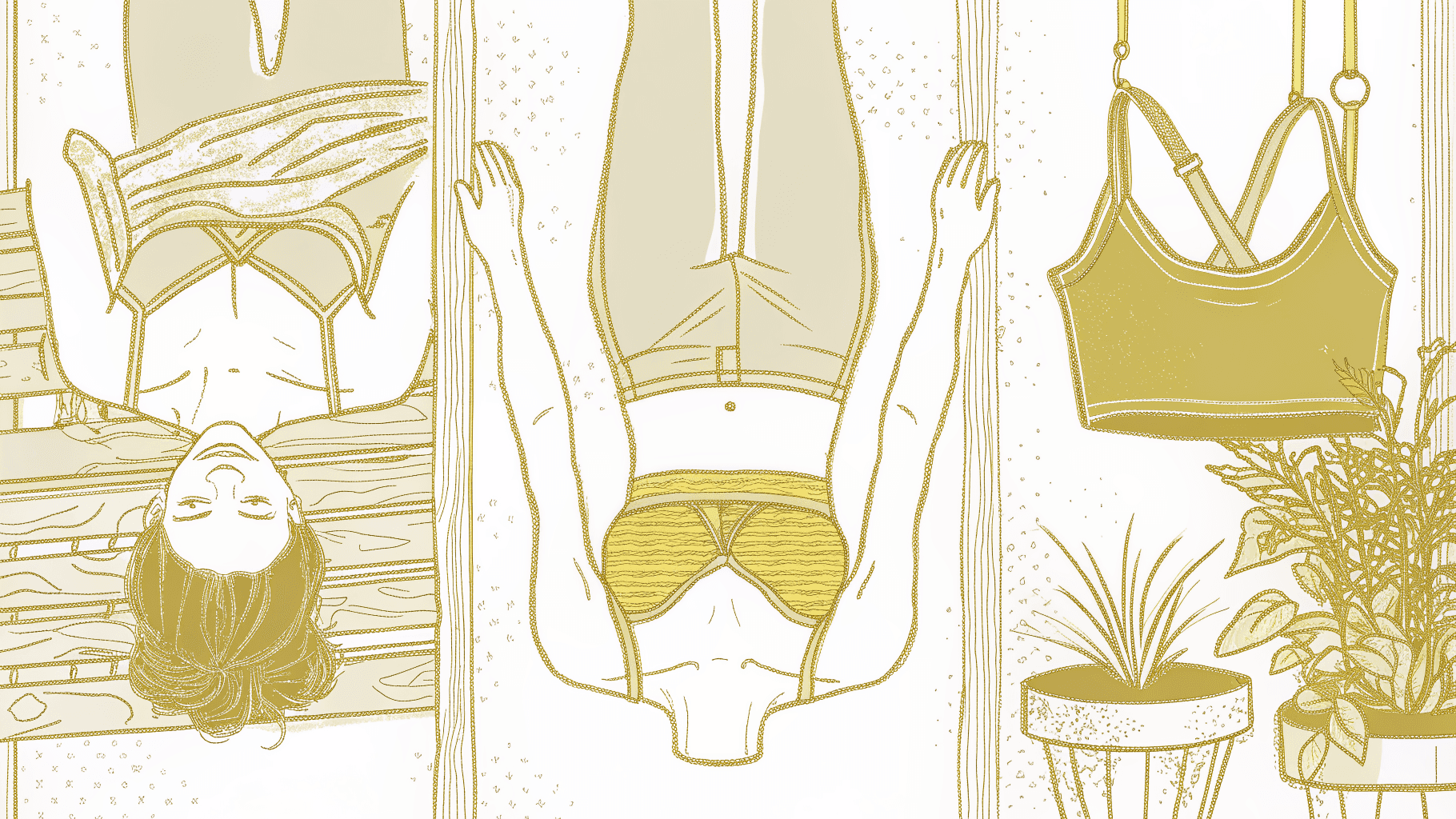
When you move into supine, inverted, or pike positions on a moving carriage, a loose or oversized shirt doesn’t just flop over your face; it simultaneously obscures your instructor’s view of your spinal alignment and creates loose fabric that can interact with springs and shoulder blocks. That coaching gap is exactly what the free intro workshop class is designed to close: it gives new clients a low-stakes first experience, at no cost, via the on-site form, where the focus is entirely on getting the method right.
Key takeaway: Gökalp and Kirmizigil’s 2025 research in Scientific Reports confirms that reformer sessions involve supine, inverted, and carriage-based positions where garment stability directly affects both safety and the instructor’s ability to observe form.
Form Fitness notes that fitted racerback tanks and close-cut tees stay in place through inversions and supine movements, unlike loose or oversized shirts that flop over the face during footwork. That transformation materialises with consistent attendance over time, and it starts with arriving in kit that lets your instructor actually do their job.
The Hardware Rule – Why Zips, Hooks, and Metal Clasps Are a Carriage Hazard
A smooth fitted tank with no hardware is the lowest-risk option, and the simplest way to ensure nothing stands between you and the full coaching experience your instructor is there to deliver.
Grip Socks for Reformer Pilates and Why Bare Feet Won’t Cut It
It’s your socks.
What Grip Socks Actually Are and What the Traction Dots Do on a Reformer
Grip socks are socks with rubber or silicone traction dots on the sole, purpose-built to lock your foot against the reformer carriage surface and footbar during movement. The silicone dots create friction at the exact contact point where your foot is pushing, pressing, or stabilising against the machine, which is precisely why studios treat them as equipment, not accessories. If you’re investing in Lagree, a method that keeps the low-impact feel of Pilates while building visible strength and tone, a well-fitted, quality-made grip sock is the one piece of kit worth buying properly the first time.
Why Regular Socks and Bare Feet Are Banned at Most Studios
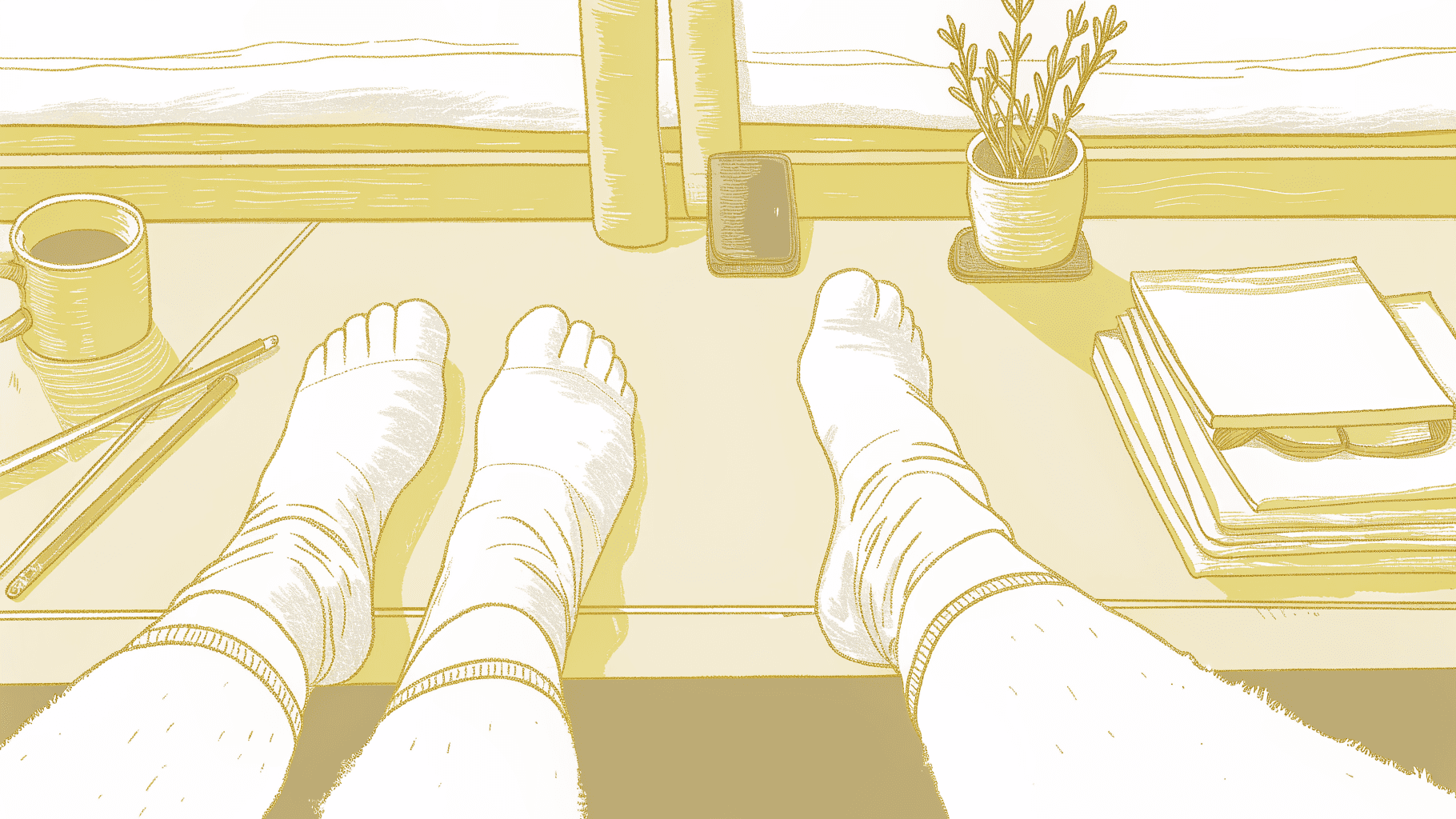
- Slippery surfaces create a genuine slip risk under loaded, slow-tempo movement, where neither bare feet nor regular socks provide rubber-to-vinyl grip against the carriage.
- Shared equipment hygiene is a separate concern entirely: bare feet carry a real risk on shared vinyl, as plantar warts spread easily on warm, shared surfaces and are painful, stubborn, and notoriously difficult to clear.
Key takeaway: Grip socks are unusual among fitness kit; they are simultaneously a hygiene rule, a safety device, and an equipment-performance requirement, and unlike most activewear guidance, the consequence of ignoring them isn’t discomfort but being turned away at the door.
- Regular socks solve the hygiene problem but fail the safety one entirely.
- Both regular socks and bare feet fail on the carriage surface for the same mechanical reason: neither provides rubber-to-vinyl grip under loaded, slow-tempo movement.
Studio Policy Varies and Here Is How to Confirm Before You Walk In
Some sell them at reception; others require you to bring your own and will not let you borrow a pair.
When the Class Is Lagree or Heated – How Clothing Needs Shift
Why Lagree’s Slow Burn Demands Compression, Not Just Fitted
As British Vogue notes, Lagree is a distinct method from standard reformer Pilates, characterised by slower, loaded, multi-planar movements that place significantly greater demands on muscular endurance and stability. That tension between what works mechanically and what feels comfortable to wear is real, and it is worth naming honestly: the goal is to find the middle ground, not to force anyone into a silhouette that makes them dread walking through the door. Research in proprioception and sportswear supports that compression garments enhance positional awareness during loaded movement; in a Lagree context, compression-grade leggings can help you feel a hip drift or core disengagement that a merely fitted legging would not signal.
At BST Angel’s Lagree classes, instructors use visible muscle engagement as a real-time coaching signal, as Blood, Sweat & Tears explains in its breakdown of what separates the Lagree method from standard Pilates. Compression is the mechanism by which a 45-minute class delivers the strength results that standard reformer Pilates stopped providing. For heated or cardio-Pilates formats, swap any cotton-blend layer for a moisture-wicking, four-way-stretch fabric before you walk in.
Get both right and the fabric question is settled for heated and standard formats alike, leaving you free to focus on the work that actually drives results over the long term at a premium London studio like BST Angel.

Related Reading
- Pilates Reformer Moves Names
- Is Reformer Pilates Strength Training
- Is A Pilates Reformer Worth It
- Pilates Reformer Footwork
- Tower Vs Reformer Pilates
- Does Pilates Reformer Build Muscle
Accessories and Fabrics to Leave at Home Before Class
A chunky chain necklace catching on a loop strap during arm work isn’t a hypothetical. It’s the kind of thing that stops a class, damages equipment, and leaves you wishing you’d left it in your bag.
1. Long Necklaces, Dangling Earrings, and Chunky Bracelets – Leave Every Piece at Home
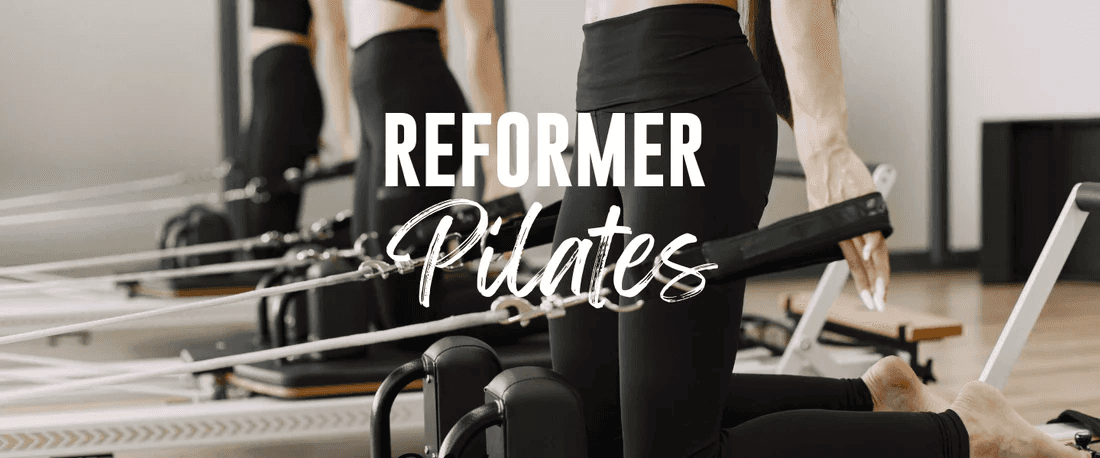
Rings, dangling earrings, long necklaces, and chunky bracelets are the most common culprits for scratching reformer upholstery, gouging carriage surfaces, and catching on straps or springs mid-movement. Studios increasingly enforce strict no-jewellery policies after noticing punctures and small gouges on equipment. The real tradeoff: sentimental pieces like engagement rings feel hard to leave behind, but the risk of damage to both the jewellery and the reformer is genuine.
2. Large Rings and Watches – Hard Metal That Punctures Reformer Upholstery

Large rings and watches belong off your hands before you step onto the carriage. Basi Systems identifies jewellery as a primary driver of reformer upholstery scratching and surface degradation, and a wide-band ring or watch case pressing into vinyl during a plank or side-lying series creates exactly that contact point on every rep. Studios treat removal as a maintenance and liability rule. The engagement ring dilemma is real, but the answer is the same: leave it in your locker.
3. Loose, Unsecured Long Hair – A Safety and Comfort Hazard Near Springs and Pulleys
Loose hair near reformer springs and pulleys is a genuine mechanical risk, not a studio aesthetic preference. Sentry Pilates Solutions lists securing long hair in a ponytail or bun as a class requirement because contact with moving components can happen faster than you can react. Pack a spare hair tie. It weighs nothing, takes up no space, and is the one item most first-timers forget until they’re already on the carriage, a detail worth locking in before your free intro workshop class so the session stays entirely about movement.
4. Cotton Blends and Non-Stretch Fabrics – Sweat-Saturated, Movement-Restricting Choices
Cotton blends absorb sweat and stay wet, causing fabric to sag and pull away from the body. According to Pilates Solutions, fabrics without four-way stretch also restrict range of motion in ways that matter during hip flexion and spinal articulation work. On the Megaformer, where your body holds sustained tension against the carriage for the full 45 minutes, a top that sags away from the torso removes the proprioceptive feedback your instructor reads to correct form. Moisture-wicking synthetics stay put; cotton blends don’t. For clients building consistency across a 5 Class or 10 Class Speakeasy Pack, arriving session after session in the right kit is part of what lets transformation-focused training accumulate rather than stall.
5. Jeans, Baggy Sweatpants, Loose Shirts, and Crop Tops with Hardware – The Complete Clothing Avoid List
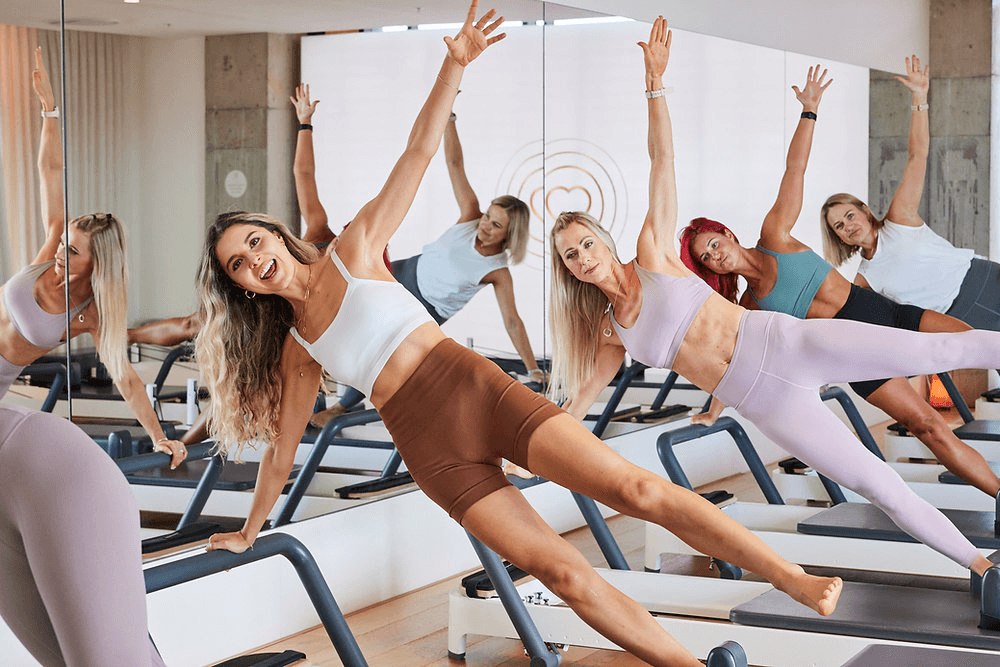
Sentry Pilates Solutions groups jeans, short-shorts, baggy sweatpants, loose shirts, and hardware crop tops as a single avoid category because each fails the reformer’s basic mechanical test: they either restrict movement, snag equipment, or bunch unpredictably on the carriage during transitions. Jeans have rigid seams and metal rivets that press into vinyl. Baggy fabric obscures the hip and spine alignment your instructor needs to see.
Crop tops with zip closures or metal clasps create the same upholstery-damage risk as a bracelet. The rule is simple: if it has a hard edge, a loose hem, or a metal fastener, it stays home. Sorting this before your first drop-in, whether that’s a single £25 Speakeasy class or a free intro workshop, means the session is entirely about the work, not the kit.
What to Bring to Your Reformer Pilates Class Beyond the Outfit
Sorting the outfit eliminates the hard edges, loose hems, and metal fasteners that fail the reformer’s mechanical test, but a clean outfit and a well-packed bag are two separate problems, and conflating them is what leaves first-timers standing at reception, card out, buying studio socks at a markup. One thing worth flagging early: the bag itself matters. A standard everyday handbag or oversized tote is genuinely awkward in a studio changing room, too bulky, too unstructured, and full of things you do not need.
Beginners who arrive with a dedicated, smaller gym bag find the pre-class routine smoother from day one, and it is one of those small logistics wins that compounds quietly over time as attendance becomes habit. The four items worth making permanent bag fixtures are grip socks, a water bottle, a small towel, and a spare hair tie. As Curve MCR notes, most UK reformer studios require grip socks and will turn you away or sell you a pair on the spot if you arrive without them.
- Check the studio’s booking confirmation before you leave home.
- Some sell them at reception; others expect you to bring your own.
- One quick email saves the door-step panic.
Slow, loaded, continuous tension for 45 minutes taxes your muscles far harder than the pace suggests, and Curve MCR’s guide flags hydration as genuinely important rather than optional for reformer and Lagree formats. – A 500ml bottle is the practical minimum. – A BST Lagree session at the Angel studio keeps muscles under tension from the first spring to the last, so you will reach for it at every transition.
- That intensity is also why the transformation results that members experience materialise through consistent attendance over time; the physical demand is real from class one.
- Carriage sweat is a real grip hazard, not a hygiene afterthought.
- Curve MCR’s guide specifically flags that sweat on the reformer carriage affects grip and comfort, particularly in dynamic or Lagree-format sessions.
- A compact microfibre towel folds flat, dries fast, and takes up almost no bag space, which, again, argues for the smaller dedicated gym bag rather than fishing through a regular handbag mid-class.
- A standard gym towel is too bulky and too slow-drying to be practical here.
- Long hair loose during footwork, supine pulls, or any movement that puts your head near the shoulder blocks is a genuine distraction and a minor safety concern.
- A spare hair tie weighs nothing and costs nothing, but mid-class you cannot pause to hunt for one.
- Pack two.
- If you already wear your hair up, keep a spare anyway: ties snap, slip, and disappear with impressive consistency.
Pack these four items once, make them permanent bag fixtures, and the logistics of showing up to class become invisible, which means your entire focus can shift to what actually happens inside the studio. If you are a new client and want to find out what that feels like without any financial risk, BST Lagree’s free intro workshop class is available via the on-site lead form at no cost, and your first class comes with a complimentary coffee. Consistent attendance is exactly where the real results begin to accumulate.
1. Grip Socks – Confirm Whether the Studio Provides Them Before You Show Up
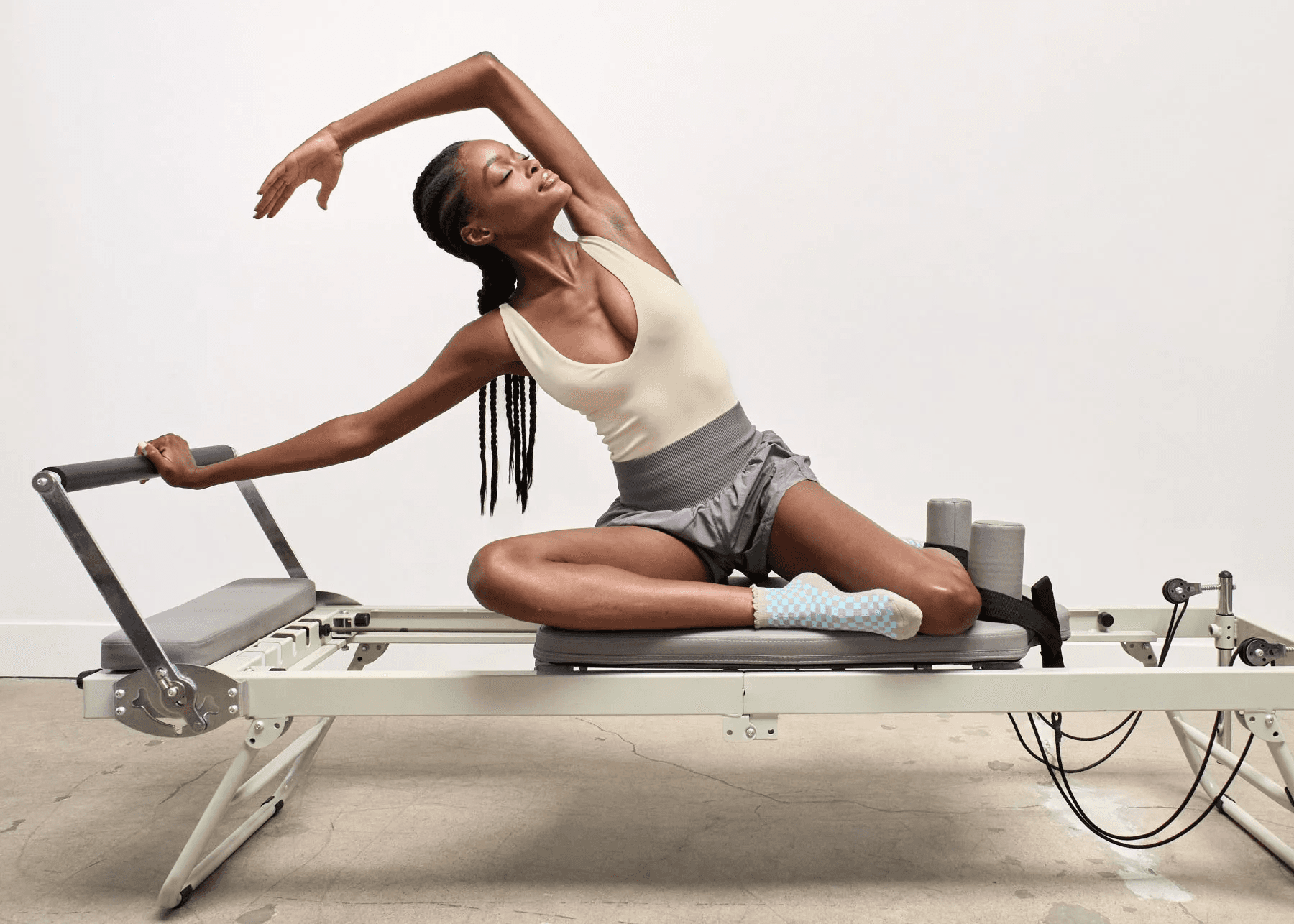
Most reformer studios either require grip socks or strongly recommend them for hygiene and safety, shared footloops and carriages carry real transmission risk. Call ahead so you’re not caught buying a studio pair at inflated prices on arrival. The tradeoff is minor: grip socks reduce barefoot sensory feedback, but the stability and hygiene gains outweigh that for almost every class format.
2. Water Bottle – Because Reformer Work Is More Intense Than It Looks
Sustained slow-tension work across 45 minutes taxes your muscles without the obvious cardio cues that remind you to drink. Bring a bottle you can sip between transitions, a thermal option keeps water cold through a full session. The limitation: most studios don’t allow drinking mid-exercise on the reformer, so hydrate well before class and use breaks strategically rather than expecting to drink continuously.
3. Small Towel – Essential for Sweat on the Carriage, Especially in Lagree or Dynamic Formats
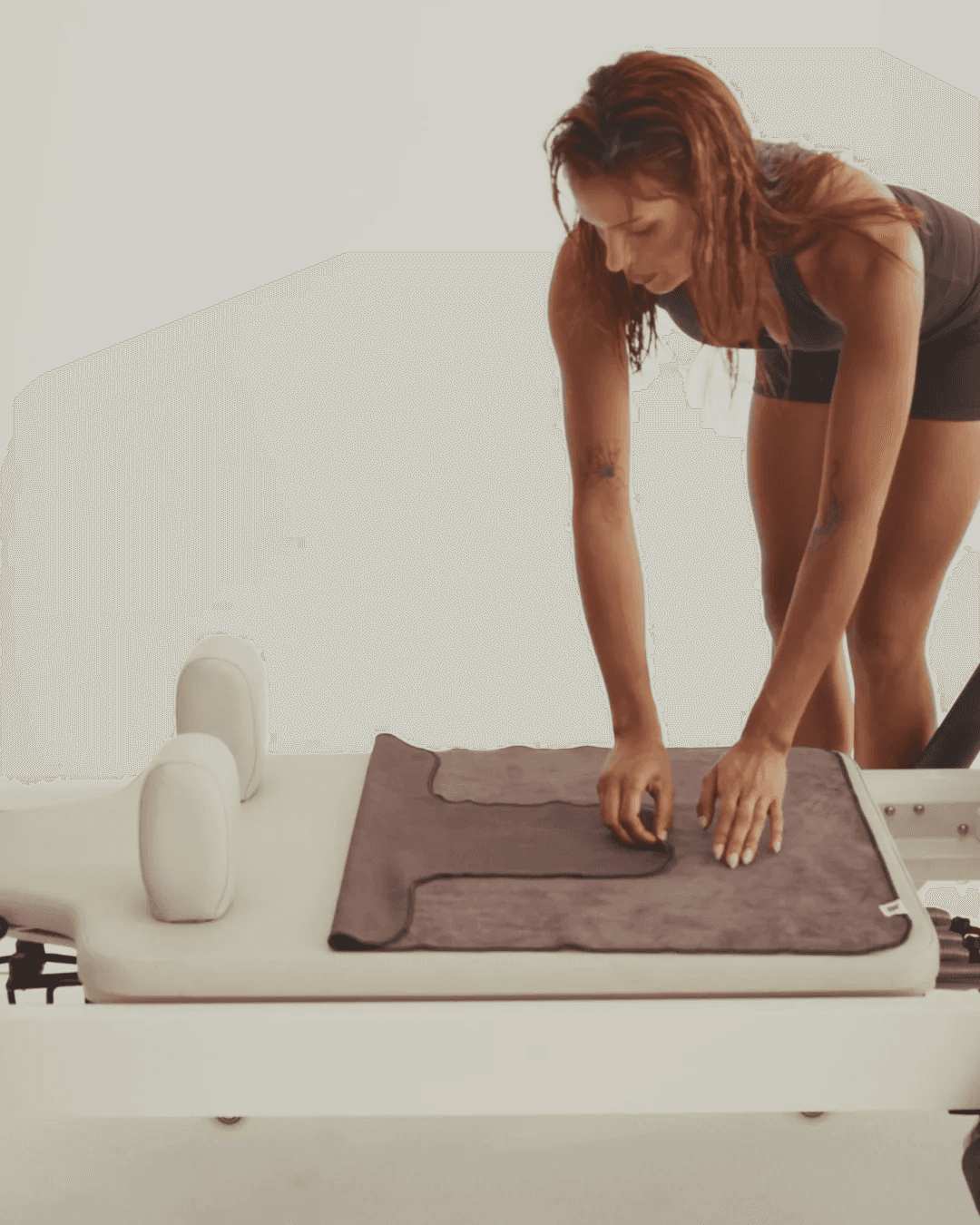
Even if you don’t feel like you’re sweating heavily, moisture on the carriage surface degrades grip during footwork and plank-based movements. A compact microfibre towel lets you wipe down between exercises without disrupting flow. The tradeoff is minimal, it’s one more item to pack, but skipping it in a dynamic or Lagree-style class means sliding through the exact movements that demand the most stability.
4. Spare Hair Tie – The Easiest Thing to Forget and the Hardest to Work Around
Loose hair during reformer work isn’t just annoying, it’s a genuine safety issue when your head is on the headrest or you’re inverting through exercises like short spine. A spare elastic tucked into your bag costs nothing and takes up no space. The only real limitation is remembering to restock it; once it’s a permanent bag fixture rather than something you grab fresh each time, it stops being a problem.
You Know What to Wear – Now Try a Lagree Class in London
Getting dressed for a reformer class is a practical problem with a practical answer, and by this point you have solved it. What tends to keep people from booking is not confusion about kit but the quiet sense that something is still unresolved. This section closes that gap and makes the case for where your preparation is best put to use.
Your Outfit Is Sorted Which Means the Last Barrier to Booking Is Gone
The grip socks are bought. The high-waisted leggings are chosen. The fitted top that stays put when you go horizontal is ready. What remains is not more research. It is a decision. As Pilates Nosara’s 2024 results guide notes, preparation removes the practical barriers that most commonly cause people to postpone booking their first class. You have done that work. The last barrier is gone.
Why Lagree at BST in Angel Is Worth Trying Once You Know How to Show Up
Reformer Pilates builds a foundation. Lagree is where that foundation gets tested. Lagree rewards people who already understand how to brace, breathe, and move with control. If you have done the reformer research, you are exactly that person. The kit you have already sorted transfers directly to your first Lagree classes in London without a single additional purchase.
Related Reading
- Pilates Reformer Leg Exercises
- Pilates Reformer Glute Exercises
- Pilates Reformer Ab Exercises
- Best Pilates Reformer App
- Pilates Reformer Springs Explained
Next steps
If your outfit anxiety has been the quiet reason you haven’t booked yet, the path forward starts with understanding that the reformer’s springs, carriage, and footbar make fit a functional requirement, not a fashion call. Start with our Lagree classes in London.
High-waisted leggings that pass the three-way carriage test (skin coverage, waistband stability, instructor sightlines) mean your first class runs on coaching, not adjustments. Grip socks being a hygiene rule, a safety device, and a door policy simultaneously means showing up without them doesn’t just risk discomfort but cancels the session before it starts. Together, those two decisions eliminate every practical barrier between you and a class that actually delivers what the method promises.
Start with Lagree classes in London at BST in Angel, where new clients can claim a complimentary introductory class via the on-site form. Your kit question is already answered. The grip socks are sorted. The only thing left is showing up.
Frequently Asked Questions
Should I wear shorts or leggings to a reformer Pilates class?
High-waisted full leggings are the most reliable choice because they prevent bare skin from contacting the vinyl carriage, keep the waistband anchored through core work, and give your instructor a clear read on your alignment. Bike shorts can work if they have a 7 to 8 inch inseam minimum, but anything shorter leaves the back of your thigh in direct contact with the carriage surface, which disrupts smooth, controlled movement. Capri leggings are a sound warm-weather alternative.
What kind of top should I wear to my first reformer class?
A form-fitting racerback tank or close-cut tee is the safest choice because it stays in place through supine and inverted carriage positions, unlike a loose or oversized shirt that flops over your face during footwork and obscures your instructor’s view of your spinal alignment. Cropped tops can work, but only if the hem sits at or just above the natural waist so it doesn’t gap away from your leggings and expose your lower back mid-movement.
Why can’t I just wear my usual baggy gym gear to a reformer class?
Loose fabric, baggy sweatpants, wide-leg trousers, or an oversized tee, can snag on the reformer’s springs, footbar, and shoulder blocks, creating a genuine safety hazard on a machine whose carriage is under constant spring tension. Beyond the snagging risk, baggy clothing hides the millimetre-level alignment cues your instructor needs to see, things like a slight forward pelvic tilt or a shoulder creeping toward the ear, so you lose coaching value in every single rep.
Is intimidation about clothing normal before a first reformer class?
Yes, and it’s more common than most people admit, the PureGym UK Fitness Report found that beginners consistently rank ‘not knowing what to wear’ and ‘not knowing the etiquette’ among their top anxieties before attending a new fitness class. The clothing question is often a proxy for a deeper worry about belonging, especially in a specialist studio environment.
Does fabric type matter, or is any stretchy activewear fine for the reformer?
Fabric choice matters as much as cut. Four-way stretch activewear moves with your body across the reformer’s full range of motion, whereas generic gym leggings that are merely ‘stretchy’ often bunch at the knee during footwork, ride up during supine movements, and shift at the waistband during lateral work. Fully synthetic fabrics can also trap body odour during the open-leg positions that Lagree programming uses frequently, so a breathable fabric blend is worth the small upgrade.