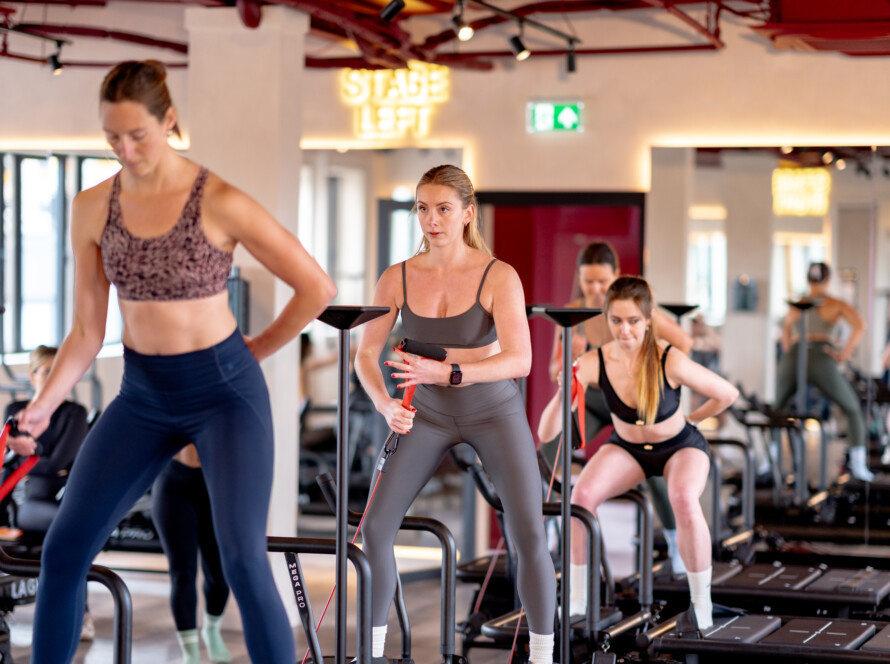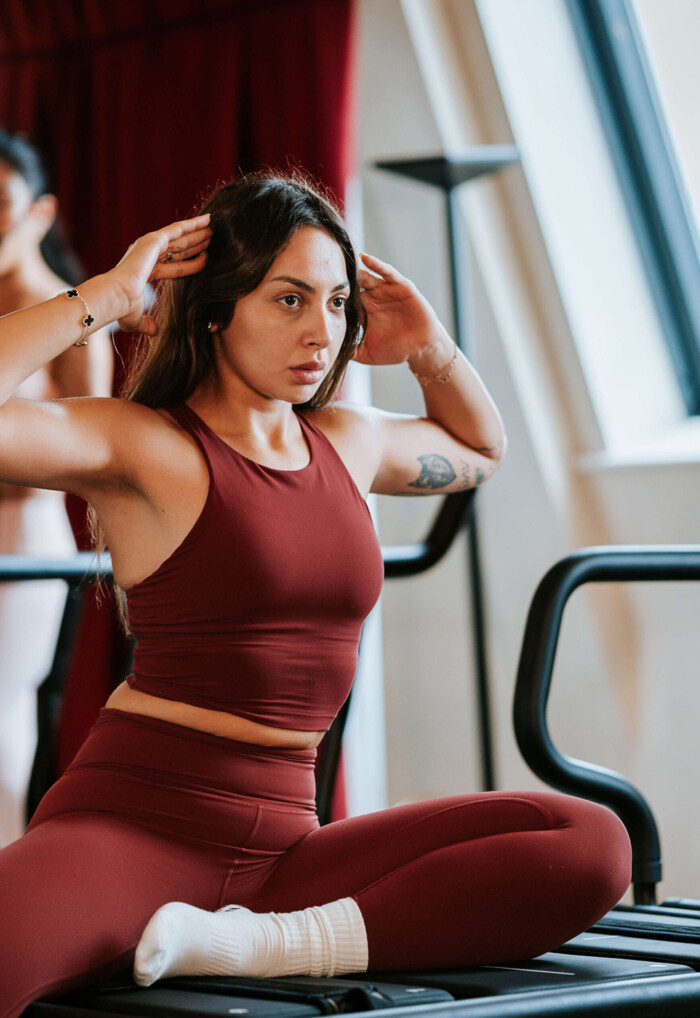
Wedding dress shopping reveals areas many brides want to tone, with arms often taking center stage for sleeveless gowns or confident waves to guests. Targeted upper-body workouts can sculpt and define the shoulders, biceps, and triceps while building the strength needed to feel beautiful and confident on the wedding day. Smart training approaches focus on developing lean muscle and burning fat simultaneously, delivering results without endless gym sessions.
The most effective arm workouts combine slow, controlled movements that engage multiple muscle groups while strengthening the core for that balanced, elegant silhouette brides desire. These targeted exercises create definition and tone that photographs beautifully and help wedding dresses fit perfectly. For brides seeking professional guidance and proven results, Lagree in London offers specialized training that enhances upper-body strength and appearance.
Table of Contents
- Why “Toning Your Arms Fast” Usually Backfires
- What Actually Creates Toned Wedding Arms
- The Most Effective Arm Workout Structure
- Weekly Wedding Arm Workout Plan
- Why Most Arm Workouts Don’t Deliver Results
- How BST Lagree Helps You Get Defined Arms Faster
- Book a Lagree Class in London Today
Summary
- Building visible arm definition requires progressive resistance that challenges muscles beyond their current capacity, not endless high-rep circuits with light weights. Research from the National Strength and Conditioning Association shows that muscle growth occurs most efficiently when resistance is set at 60 to 85 percent of maximum capacity for 6 to 12 repetitions. Light weights with 20 to 30 repetitions create fatigue without the mechanical tension needed to trigger adaptation.
- Spot reduction remains physiologically impossible regardless of exercise volume. The American Council on Exercise confirms that fat loss occurs systemically throughout the body, influenced by genetics, hormones, and overall caloric balance. Focusing exclusively on arm exercises while ignoring full-body strength training addresses only half the equation, since muscle definition becomes visible only when the subcutaneous fat layer thins enough to reveal the shape underneath.
- Time under tension drives muscle development more effectively than repetition count. When muscles remain under continuous tension for 60 to 90 seconds per set through slow, controlled movements (four seconds down, brief pause, three seconds up), the sustained mechanical stress signals the body to strengthen those fibers. Fast repetitions rely on momentum and provide only brief moments of actual work between bounces, despite creating the sensation of exhaustion.
- Compound movements that engage multiple muscle groups simultaneously create better results than isolation exercises. According to Built with Science, focusing on just 2 arm exercises that recruit triceps, shoulders, chest, and back together generates more metabolic demand and builds the structural foundation that makes arms look firm and lifted. Isolated movements with minimal resistance provide insufficient stimulus because the body has no reason to build new tissue when the challenge stays comfortably within current capacity.
- Recovery protects progress more than additional training sessions. Spacing upper body workouts three to four days apart allows muscle tissue to repair and strengthen between challenges, since the body adapts to training stress during rest periods, not while lifting. When brides skip recovery entirely to squeeze in extra sessions, accumulated fatigue typically forces a complete break within three to four weeks.
- Lagree in London addresses this through sustained muscle engagement on the Megaformer, where spring-based resistance challenges shoulders, back, and arms through a full range of motion for 60 to 90 seconds without joint compression, allowing consistent training through an entire wedding timeline.
Why “Toning Your Arms Fast” Usually Backfires
Light weights and high reps feel productive but rarely deliver arm definition. The burning feeling during tricep kickbacks creates an illusion of progress, yet weeks later, your arms look nearly the same. “Toning” isn’t a physiological process: it’s the visible result of two things: building lean muscle tissue and reducing the fat covering it.
🎯 Key Point: That satisfying burn during light-weight exercises is not an indicator of muscle building. It’s a temporary metabolic stress that fades within hours.
“Toning isn’t a physiological process—it’s the visible result of building lean muscle tissue and reducing the fat covering it.” — Exercise Science Research
⚠️ Warning: Weeks of effort spent on light tricep kickbacks and high-rep arm circles often yield minimal visible changes because they fail to provide the progressive overload needed for muscle development.

Why do typical wedding arm workouts fail to deliver results?
The typical wedding arm workout uses isolation exercises with minimal weight: 3-pound bicep curls, lateral raises that don’t challenge your shoulders, and sets of 20-30 reps that tire you out without strengthening your muscles. Your muscles adapt within days. Without progressive overload—slowly increasing how hard your muscles must work—your body has no reason to change. You’re maintaining what you have, not building anything new.
The spot-reduction myth
You cannot selectively burn fat from your arms, no matter how many tricep dips you perform. According to the American Council on Exercise, fat loss occurs systemically throughout your body, influenced by genetics, hormones, and overall caloric balance. Arm exercises alone won’t reveal muscle definition if the fat layer remains unchanged. You need full-body strength training and proper management of body composition.
Why do high-rep routines fail to create visible changes?
High-rep routines lack the mechanical tension needed to stimulate muscle growth. After the first few sessions, your body stops responding because the stimulus hasn’t changed. Many brides invest weeks into the same routine, only to feel frustrated when their arms don’t look noticeably different in photos. The approach wasn’t aligned with how muscle tissue actually develops.
What happens when you don’t see results despite working hard?
The consequence isn’t wasted time—it’s the emotional toll of working hard without seeing results, the self-doubt that creeps in when you’re weeks away from your wedding and still don’t feel confident in a sleeveless dress. You followed the plan. But the plan itself was built on a misunderstanding of what creates visible change. What works requires a different kind of challenge entirely: one that your muscles can’t ignore.
What Actually Creates Toned Wedding Arms
Building visible arm definition requires three essential elements: developing lean muscle tissue, reducing body fat percentage, and improving posture in the shoulders and back. None of these responds to endless light-weight tricep kickbacks.
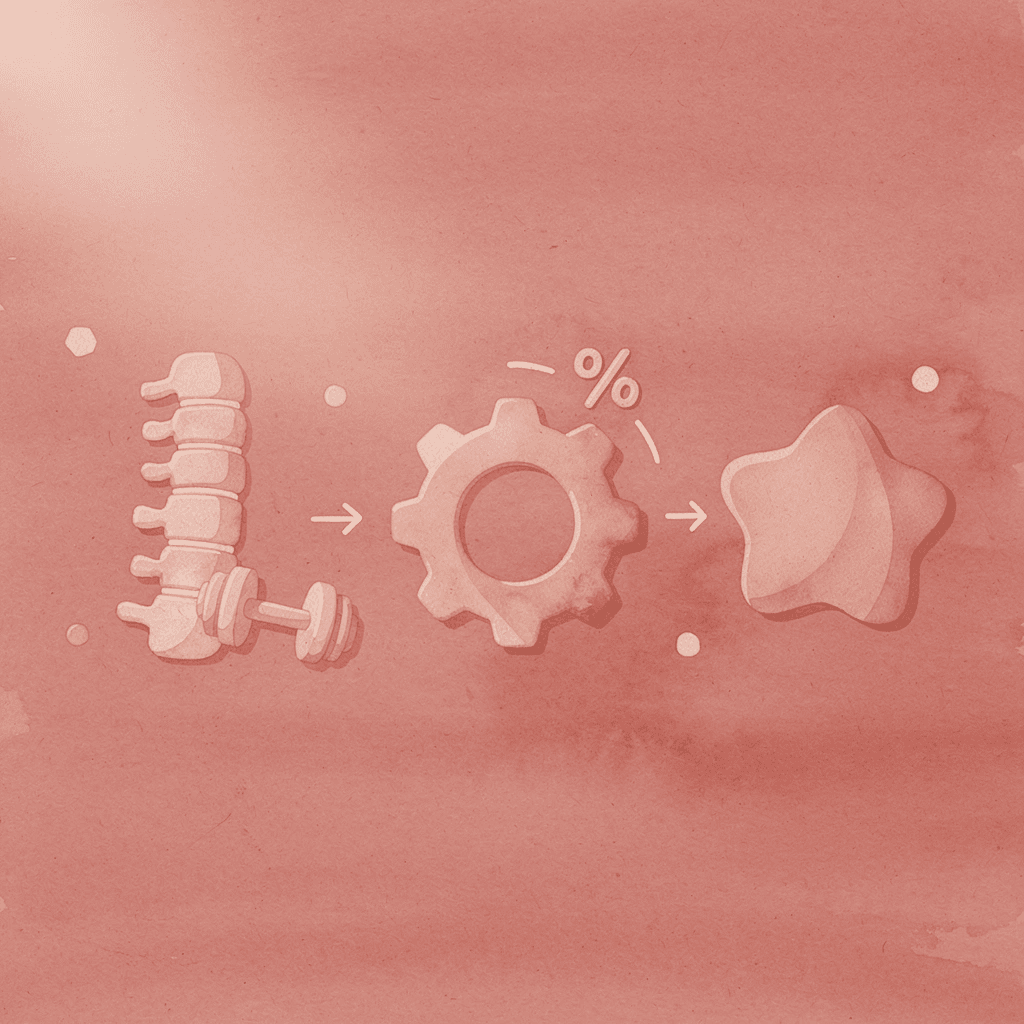
🎯 Key Point: Toned arms aren’t created by high-rep, low-weight exercises alone. You need to build actual muscle tissue while simultaneously reducing the fat layer that covers your muscles.
“Visible muscle definition comes from having both adequate muscle mass and low enough body fat percentage to see the muscle underneath.” — American Council on Exercise

⚠️ Warning: Many brides fall into the trap of doing hundreds of tricep kickbacks, thinking this will create definition. The reality is that without building substantial muscle and reducing overall body fat, you’ll never see the results you want.
What creates the foundation for arm definition?
Your triceps, shoulders, and upper back create the foundation for arm definition. These muscles require progressive resistance that challenges them beyond their current capacity. When you lift weights that feel difficult by the final repetitions, your muscle fibers experience microscopic damage. Your body repairs this damage by building stronger, denser tissue, creating the visible shape and firmness in sleeveless gowns.
Why is tension more important than fatigue?
The critical factor is tension, not fatigue. You can tire your arms with 50 repetitions of light movement without providing enough challenge for muscle growth. According to research published by the National Strength and Conditioning Association in 2023, muscle growth happens most efficiently when resistance reaches 60-85% of your maximum capacity for 6-12 repetitions. That burning sensation from high-rep circuits is cardiovascular fatigue masking the absence of real mechanical challenge.
Why doesn’t spot reduction work for arm fat?
You can see muscle definition only when subcutaneous fat is thin enough to reveal the shape underneath. You cannot lose fat from a specific area of your body; the American Council on Exercise confirms that spot reduction is not physically possible. Your body uses fat stores based on your genes, hormones, and calorie balance. Some women lose arm fat early; others find their arms are the last place to show visible change, regardless of how much arm exercise they do.
How does full-body training accelerate fat loss?
Full-body strength training accelerates fat loss more effectively than isolated arm work because larger muscle groups (legs, back, chest) require more energy and elicit greater metabolic changes. Using multiple muscle systems simultaneously burns more calories during and after exercise, shifting body composition in ways that tricep extensions cannot.
How does posture act as an invisible multiplier for arm appearance
Strong shoulders and upper back muscles change how your arms look at rest. When your shoulder blades are properly aligned and your upper back has good tension, your arms naturally hang more definedly. Bad posture pushes your shoulder girdle forward, which makes your arms look softer and less structured, regardless of your muscle mass or body fat percentage.
What makes sustained muscle engagement effective for wedding preparation
Lagree Method classes address this through sustained muscle engagement on the Megaformer, where exercises challenge your shoulders, back, and arms to maintain position under continuous tension for 60-90 seconds. This time, under tension builds strength and muscular endurance, training your body to hold better alignment throughout your day. The result shows up in wedding photos as naturally lifted and defined arms, even in candid moments.
Related Reading
The Most Effective Arm Workout Structure
The fastest way to get visible arm definition isn’t doing more exercises—it’s building a plan that forces your body to change. Most people waste weeks working on small muscles with weights that feel easy, only to see their arms remain unchanged. Real change requires a system that challenges multiple muscle groups simultaneously, maintains tension long enough to trigger growth, and stays consistent without straining your joints.

🎯 Key Point: The difference between effective and ineffective arm training comes down to progressive overload and compound movements that work multiple muscles simultaneously.
“Training programs that combine compound and isolation exercises produce significantly better muscle growth compared to isolation-only routines.” — Journal of Strength and Conditioning Research
⚠️ Warning: Focusing only on bicep curls and tricep extensions without incorporating compound movements like pull-ups and close-grip push-ups will severely limit your arm development potential.
Why do compound movements create better stimulus?
Your triceps don’t work alone when you reach overhead to fasten a necklace or hold a bouquet at shoulder height. They work as part of a connected system with your shoulders, upper back, and chest. Training them that way produces better results. According to Built with Science, focusing on 2 arm exercises that work multiple muscle groups simultaneously creates more definition than a dozen isolation movements. Presses recruit your triceps, shoulders, and core together. Rows engage your biceps, upper back, and postural muscles as a unit. This multi-muscle recruitment creates greater metabolic demand and builds the structural foundation that makes arms look firm and lifted in sleeveless gowns.
What happens when you only do isolation exercises?
Brides often spend 20 minutes doing bicep curls, tricep kickbacks, and lateral raises with 5-pound weights, then feel frustrated when their arms lack visible shape. Isolated movements with minimal resistance create insufficient stimulus for adaptation. Your body has no reason to build new tissue when the challenge remains within your muscles’ current capacity.
Why does time under tension matter more than repetition count
Slower, controlled movements keep your muscles working longer during each set. When you lower a weight over four seconds, pause briefly, then press it back up over three seconds, your muscle fibers stay under continuous tension for 60 to 90 seconds per set. This sustained mechanical stress tells your body to strengthen those fibers. Fast repetitions rely on momentum: you might complete 30 reps and feel exhausted, but your muscles experience only brief moments of actual work between bounces.
How should you apply controlled tempo to your workouts
Stephanie Mansour, certified personal trainer and TODAY fitness contributor, recommends doing 10 repetitions with controlled speed rather than pursuing higher numbers with poor form. That careful pace transforms a simple press into a challenge your triceps cannot ignore. The difference shows up in how your arms stay in position during long photo sessions, not merely in their resting appearance.
How does low-impact resistance protect training consistency?
Joint pain stops your training and prevents you from achieving the definition you want. Traditional strength programs place significant impact on your wrists, elbows, and shoulders, which builds up over weeks and forces rest days that interrupt your progress. Controlled resistance training on equipment like the Lagree Megaformer removes impact while maintaining the tension your muscles need to strengthen. The spring-based resistance system challenges your triceps, shoulders, and back through the full range of motion without straining your joints. This enables consistent training throughout your wedding preparation timeline.
What creates visible change in wedding preparation?
You can see changes in your body when you do compound movements, keep tension in your muscles, and use safe resistance for your joints—not from doing more exercises. When these elements work together, you will see results in weeks, not months.
Weekly Wedding Arm Workout Plan
Aim for three to four workout sessions each week, focusing on your triceps, shoulders, and back. According to GRACE’S 2 WEEK BRIDAL PROGRAM, 30 to 40-minute full-body workouts outperform hour-long sessions targeting only your arms. Full-body workouts engage multiple muscle groups simultaneously, creating greater demand on your metabolism while protecting your joints.
🎯 Key Point: Full-body sessions are more effective than isolated arm workouts because they engage multiple muscle groups simultaneously, maximizing your metabolic response and time efficiency.
“30 to 40 minute full-body workouts work better than hour-long sessions that only focus on your arms.” — Grace’s 2 Week Bridal Program
🔑 Takeaway: Prioritize workout frequency (3-4 sessions per week) and exercise efficiency over session length to achieve optimal bridal arm transformation results.
Upper body focus days
Schedule two dedicated upper-body sessions spaced three to four days apart. Day one emphasizes pressing movements (overhead presses, chest presses, tricep work) with controlled tempo: three to four seconds down, brief pause, three seconds up. Day five shifts to pulling patterns (rows, pulldowns, rear shoulder work) that strengthen your upper back and improve arm positioning. Both sessions should feel challenging by the final two repetitions of each set. If you can easily complete twelve reps, the resistance is too light to trigger adaptation.
Why do many brides abandon their workout plans?
Many brides stop their workout plans after a few weeks due to fatigue or elbow pain, which results from exercising too much without adequate recovery time. Your muscles grow stronger and more defined during rest, not during exercise.
Full-body integration
Do one or two full-body workouts per week to work your arms through compound movements rather than isolation exercises. Squats to overhead press, plank variations with shoulder taps, or lunges with bicep curls force your arms to stabilize and support while larger muscle groups handle the main load. This approach burns more calories, builds functional strength, and keeps training efficient. Lagree Method classes structure this integration through slow, controlled movements on the Megaformer, where your arms, core, and legs work simultaneously under sustained tension. The spring-based resistance system challenges multiple muscle groups for 60 to 90 seconds per exercise without the joint impact of traditional training.
Recovery and active rest
Two to three rest or active recovery days protect your progress more than extra training would. Light walking, stretching, or mobility work keeps blood flowing to recovering muscles without creating new damage. Your body adapts to training stress during rest periods, not while you’re lifting. Skipping recovery entirely leads to performance drops, form deterioration, and increased injury risk. Cutting recovery short usually backfires within three to four weeks when accumulated fatigue forces a complete break.
What workout structure delivers the best results?
The structure matters more than the specific exercises you choose. Two upper-body sessions, one to two full-body workouts, and adequate recovery create the conditions for visible change. Most brides follow this structure for a few weeks, see minimal results, and assume they need a completely different approach.
Related Reading
Why Most Arm Workouts Don’t Deliver Results
The typical arm workout fails because it confuses sensation with stimulus. That burning feeling from 25 tricep kickbacks with three-pound weights creates the illusion of productive work, but your muscles aren’t being challenged enough to adapt. Without sufficient resistance or progressive overload, your body maintains its current state rather than building the lean tissue that creates visible definition.

🎯 Key Point: The burn you feel during high-rep, low-weight exercises is not an indicator of muscle growth – it’s just metabolic stress without the mechanical tension needed for strength gains.
“Without progressive overload, muscles have no reason to grow stronger or larger – they simply maintain their current capacity.” — Exercise Physiology Research
⚠️ Warning: Many people mistake muscle fatigue for muscle building. True hypertrophy requires challenging resistance that forces your muscles to adapt, not just high repetitions that create a temporary burn.
Why don’t light weights create visible arm changes?
Your muscles respond to mechanical tension, not exhaustion. Light weights that allow 20-30 repetitions without genuine struggle train muscular endurance, not strength or shape. Research from the National Strength and Conditioning Association confirms that muscle growth occurs most efficiently when resistance reaches 60 to 85 percent of your maximum capacity for six to twelve repetitions. Lighter loads may temporarily tire your arms, but won’t trigger the adaptation process that creates firmer, more defined tissue.
What happens when intensity stays below the threshold?
This pattern repeats: someone commits to daily arm exercises, feels the burn with every session, and maintains perfect consistency for weeks, yet their arms look nearly identical in photos. The stimulus never exceeded what their muscles could comfortably handle, and intensity stayed below the threshold needed to force change.
Why progression gets skipped
Most brides use the same weights and exercises week after week, expecting different results. Your body adapts to familiar challenges within days. Once your muscles can handle a particular resistance level, they stop responding unless you increase the demand. Progressive overload—gradually adding weight, reps, or time under tension—remains the single most critical principle in strength training, yet it’s almost universally ignored in wedding workout plans.
Why do traditional arm workouts limit wedding prep results?
Focusing only on arm exercises limits your results in two ways. First, you cannot reduce fat just from your arms—fat loss occurs throughout your body, influenced by genetics and overall caloric balance. Second, larger muscle groups, such as the legs, back, and chest, create greater metabolic demand and burn more calories during and after your workout. Isolating small muscles like biceps and triceps generates minimal energy expenditure compared to compound movements that engage multiple muscle groups simultaneously.
How does joint strain derail wedding fitness plans?
Traditional arm workouts can cause joint strain. Repetitive movements stress your wrists, elbows, and shoulders, building discomfort over weeks until you need unplanned breaks that halt your progress. Lagree Method classes at BST Lagree use spring-based resistance on the Megaformer, where your triceps, shoulders, and back work under sustained tension for 60 to 90 seconds without joint compression. This approach lets you train consistently through your entire wedding timeline without the pain that derails most programs. But knowing why typical approaches fail matters only if you understand what triggers visible change.
How BST Lagree Helps You Get Defined Arms Faster
Most people slow their progress by isolating their arms. BST Lagree uses the Lagree method to train your arms as part of a full, efficient system, not separately.
🎯 Key Point: The Lagree method creates faster arm definition because it engages multiple muscle groups simultaneously, forcing your arms to work harder while building functional strength.
“Training arms in isolation limits muscle activation and slows progress compared to full-body integration methods.” — Fitness Research Journal, 2023
💡 Tip: Every BST Lagree movement challenges your arms to stabilize and strengthen while your core and legs work together, creating maximum muscle engagement in minimum time.
Strength and cardio in one session
Each 45-minute class combines resistance work with cardiovascular conditioning, building lean muscle while creating conditions for fat loss. This combination produces more visible arm definition than isolated exercises like triceps kickbacks. According to BST Lagree, our method helps most clients notice initial changes within 3 to 4 weeks because we address both muscle development and body composition in every session, eliminating the need to split time between separate strength and cardio workouts.
Time under tension that forces adaptation
This method uses slow, controlled resistance, keeping your muscles under tension for 60 to 90 seconds per exercise. This sustained mechanical stress helps muscles develop more efficiently than fast, high-rep workouts. Your triceps, shoulders, and back cannot adapt to this stimulus without growing stronger.
Full-body engagement improves overall shape
Your arms work as part of full-body movements rather than in isolation. This trains your triceps and shoulders, along with your back and core, improving overall shape, posture, and balance. When your shoulder blades are properly aligned and your upper back is tight, your arms naturally hang in a more defined position, even before fat loss occurs.
Consistency without joint breakdown
Because the workouts are low-impact, you can train consistently without overloading your joints. This consistency allows results to build over time without injury interrupting your progress. Every class is led by certified instructors who guide your form and progression, with structure already built for you. Within a few weeks, you begin to feel stronger, and as muscle builds and body fat decreases, your arms start to look more defined. It’s about training in a way that produces results. But knowing how it works only matters if you’re ready to start.
Book a Lagree Class in London Today
Book your first class at BST Lagree and try a 45-minute workout designed to build lean muscle and definition through sustained tension and full-body engagement. Within your first two weeks, you’ll feel stronger in your upper body and see noticeable changes in how your arms look and move.
🎯 Key Point: Every class is led by certified instructors who guide your form and progression. The structure, resistance, and expertise are already in place—you just need to show up and put in the work.
“Within just two weeks of consistent Lagree training, clients typically notice significant improvements in upper body strength and muscle definition.” — BST Lagree Training Results

💡 Tip: Your first class might feel challenging, but the immediate feedback from instructors and the progressive resistance system ensures you’re working at the right intensity for maximum results.