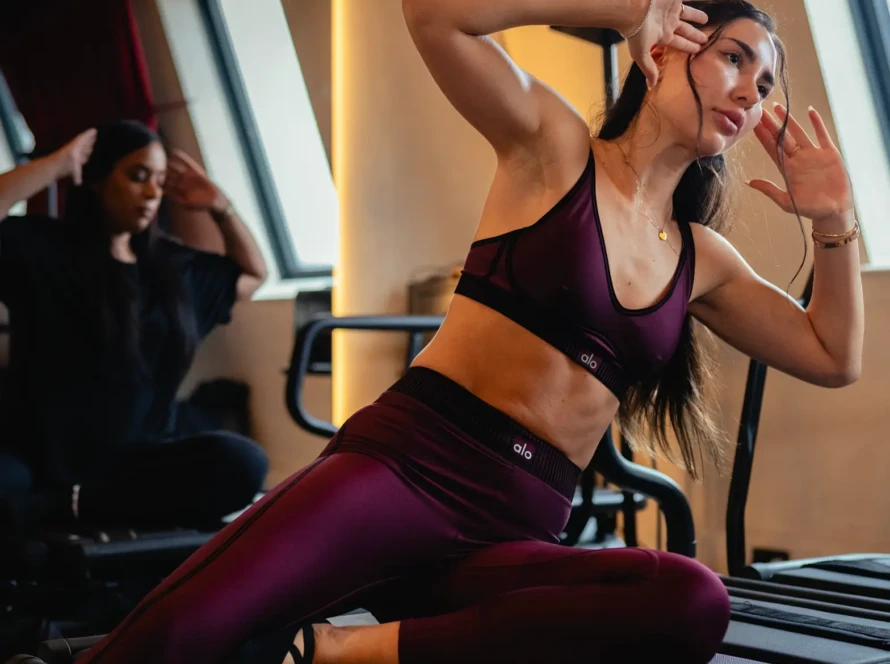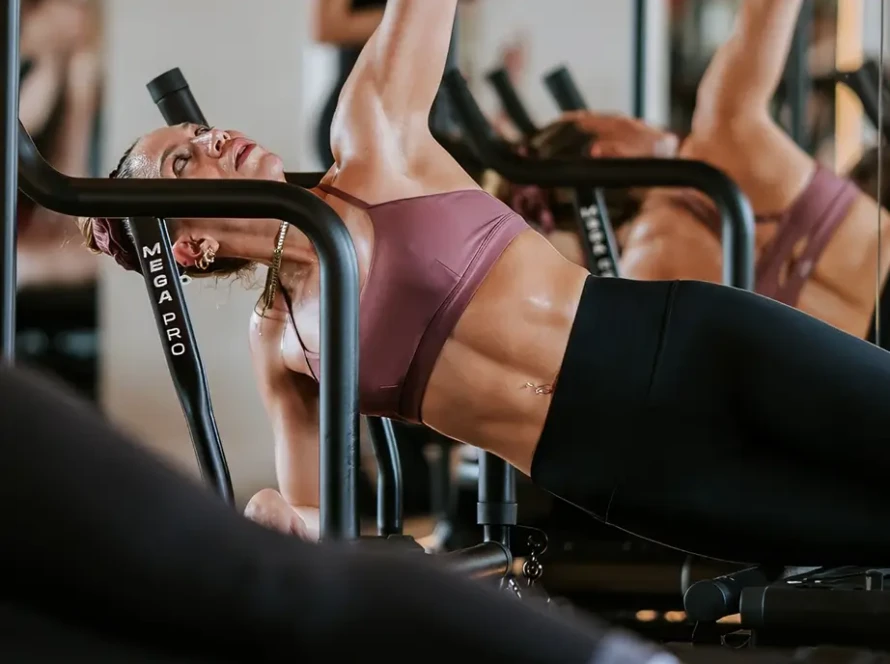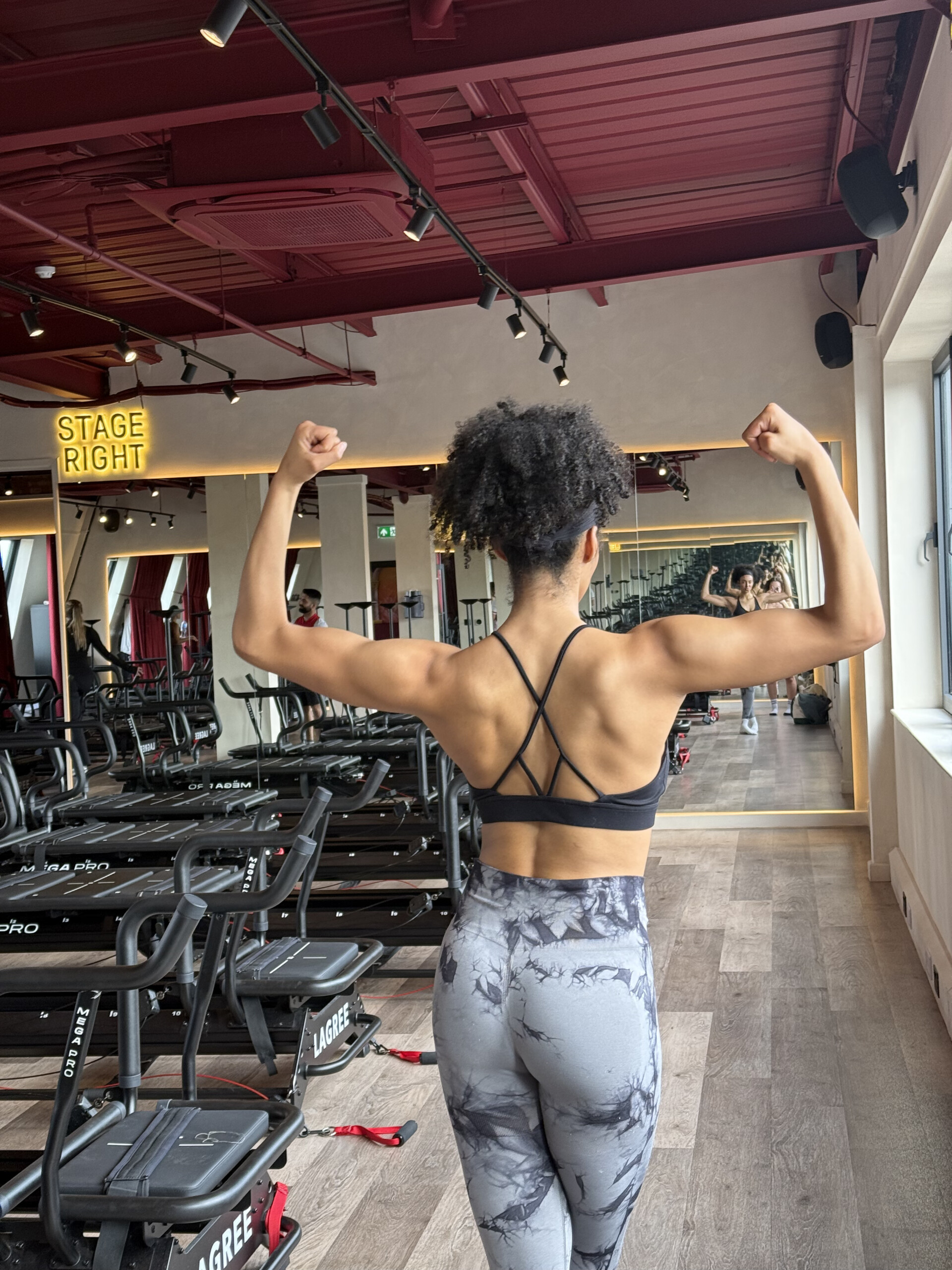
The Reformer builds real core strength, then quietly stops. Here is exactly why it plateaus, and how to extract every last result before it does.
The Reformer earns its reputation. If you have spent months on one, you have built something real: a deeper connection to your core, better posture, and a body that moves with more control. The common assumption among Pilates plateau-ers is that “if I just do more sessions or add harder spring resistance, the results will come back,” but there is a ceiling most Reformer devotees hit quietly, and understanding exactly where it sits, and why, is what separates the practitioners who keep progressing from those who keep showing up and wondering why the mirror looks the same. See our Lagree London for how this works in practice.
The Reformer’s spring carriage creates resistance in both the concentric and eccentric phases of movement. That bidirectional tension is exactly what makes the Reformer so effective at recruiting the transverse abdominis (TrA), the deep belt-like muscle that wraps your midsection and stabilises your spine before your limbs even move. A 2017 randomised trial published in the International Journal of Sports Physical Therapy confirmed that controlled, low-load core stability training produces measurable improvements in TrA activation and contraction timing. Critically, it is activation and timing, not load or volume, that drive deep core adaptation. A 2024 study in Frontiers in Physiology reinforced this, finding that proficiency level significantly influences the degree of muscle activation.
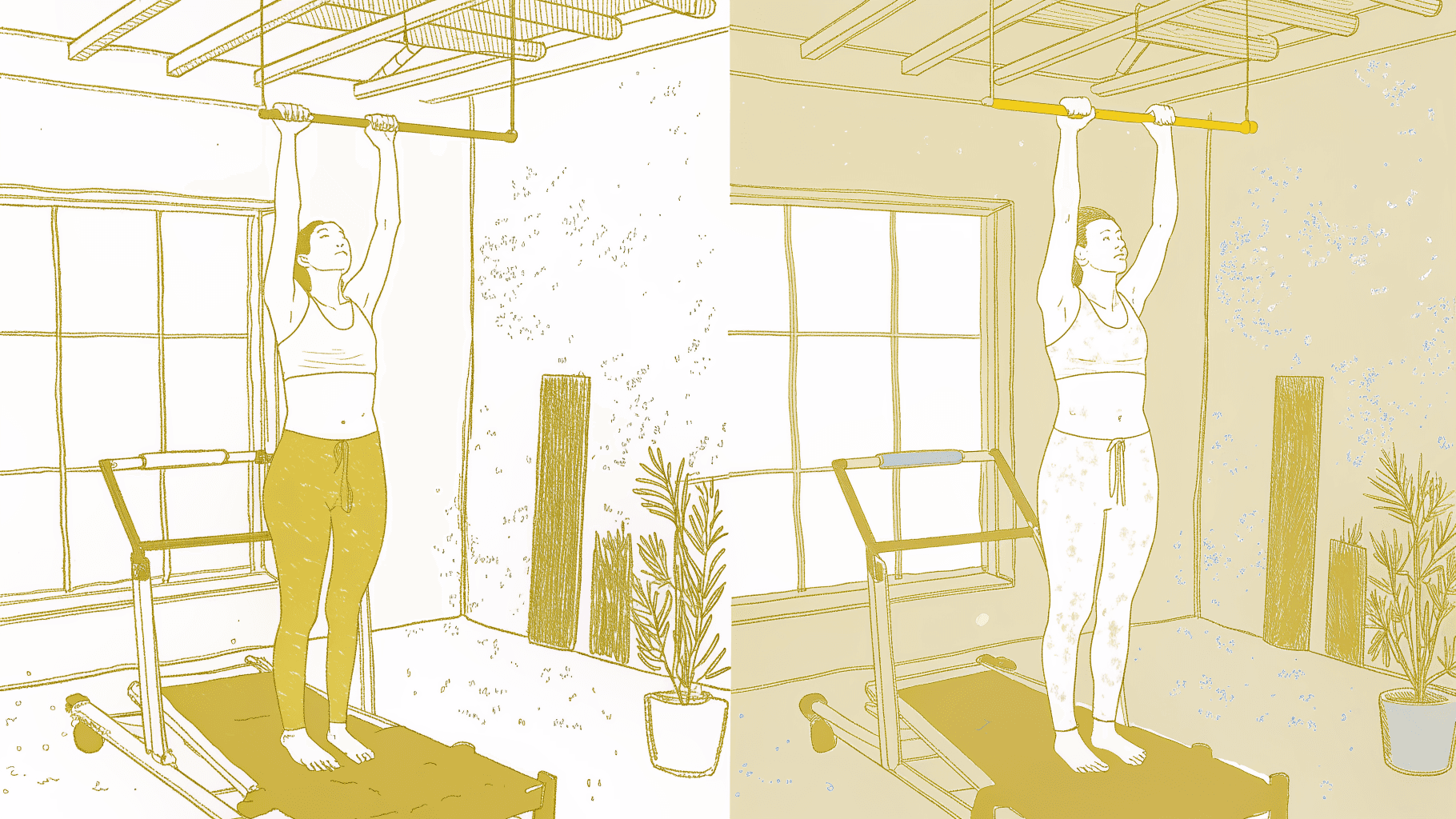
Here is where the same research becomes inconvenient. The International Journal of Sports Physical Therapy study also noted that once neuromuscular adaptation is achieved, the stimulus stops driving further change. The Reformer’s spring system has a fixed resistance range.
Once your body has learned to activate the TrA efficiently within that range, the training signal plateaus. This is not a failure of discipline; the machine simply cannot escalate the demand beyond its mechanical ceiling. Before you hit that ceiling, there are ten Reformer ab exercises that extract every last result the method can deliver. Here is exactly how to do each one.
Key takeaways
- Reformer Pilates builds a real foundation, better posture, deeper core connection, genuine control, but it has a ceiling, and most dedicated practitioners hit it quietly around the three-month mark.
- Hip flexors taking over from deep abdominals is not a technique error you can coach away; it is the structural reason lower-belly definition stalls even when attendance and effort stay consistent.
- Spring resistance is the most consequential variable in a Reformer ab session, and setting it by feel rather than function means the lower back and hip flexors absorb the load while the deep abs barely engage.
- Visible core change does not stall because you need more sessions, it stalls because a standard Reformer was never designed to keep building the core indefinitely once adaptation sets in.
- The mechanical gap between a Reformer and the Lagree Megaformer is not about difficulty; it is about sustained tension at end range, the exact stimulus a Reformer cannot produce and the reason Reformer-trained women transform on Lagree when they had plateaued for months.
- BST Lagree in Angel, Islington offers 45-minute group Lagree classes that combine strength building and cardio in one session, new clients get a free introductory workshop before their first class, so the spring resistance, footbar position, and tempo are set to your body before you begin.
The 8 Best Pilates Reformer Ab Exercises to Maximise Your Core Work
Hip flexors firing when your abs should be working is a technique problem. It is the single most common reason Reformer ab exercises stop producing visible change, even when you are showing up three times a week and genuinely trying hard. It is also why dedicated practitioners, people who have been consistent for months, often find their lower belly definition stalls even as their functional core strength keeps climbing. The fix is knowing exactly how each exercise should feel, what spring load makes that feeling possible, and which one form fault silently reroutes the effort away from your rectus abdominis and obliques before you even complete the first rep.
“Lifters adding reformer Pilates ab and core work report unexpected drops in compound lift performance (e.g. squat and deadlift), suggesting that increased core training volume can interfere with overall strength progression.”
— what we hear from strength training enthusiasts
As research published in Frontiers in Physiology, ‘Comparisons of functional movements and core muscle activity in women according to Pilates proficiency’ confirms, more experienced Pilates practitioners show measurably greater activation of deep stabilising muscles during the same exercises that beginners perform with minimal core engagement. The movement looks identical from the outside. The muscular intent is completely different. That gap is what this list closes.
For practitioners who also train while travelling, a studio that feels immediately familiar, same equipment logic, same cues, same standard, removes the anxiety of losing progress on the road. BST Lagree in Angel is built to be that reference point: a Lagree studio in London where the technique principles below are coached consistently, so the work you put into internalising this list translates directly into class. From there, drop-in credits start at £25 for a single Speakeasy Class, with per-class cost falling progressively across packs:
- £23 per class across a 3 Class Speakeasy Pack
- £21.80 per class across a 5 Class Speakeasy Pack
- £19.90 per class across a 10 Class Speakeasy Pack
Consistent attendance is when the visible transformation materialises, and these packs make it progressively more accessible. Each card below gives you the setup, the spring, the movement, the breath, and the one watch-out that matters most. Beginner modifications are folded into each item so you can adjust on the spot rather than guessing. For those managing chronic tendon issues or injury-related inflexibility, each modification note flags the adjustment that keeps you working the right muscles without loading the tissues that need protecting.
1. The Hundred – Supine Arm Pumping with 5-Count Breathing

The breathing pattern is the mechanism, not the decoration. Rhythmic, percussive breath cycles actively prime core musculature by raising intra-abdominal pressure through the trunk with each exhale. The watch-out: if your neck strains before count 20, lower the head to the headrest and keep the arm pumping. Cervical tension is the clearest sign the abs have switched off.
2. Stomach Massage Round – Seated Spinal Flexion with Leg Press
Sit at the front edge of the carriage, feet placed on the footbar hip-width apart, and round your spine into a deep C-curve so the lower back presses into an imaginary wall behind you. Use two to three springs. Press the carriage out by extending the legs, then draw it back in without losing the curve.
The obliques and transverse abdominis hold the C-shape against the pull of the returning carriage; the moment the spine flattens, the load transfers to the hip flexors. This is widely considered one of the most uncomfortable exercises in the Reformer repertoire. Even practitioners with decades of Pilates experience find it genuinely difficult, and that discomfort is information: it means the abs are actually working. The watch-out is allowing the pelvis to tip forward as the carriage travels out. If you are managing tendon sensitivity around the hip, reducing to two springs and shortening the press range keeps the abdominal demand high while reducing shear at the hip joint.
3. Knee Stretches – Rounded Back Carriage Pull with Deep Abdominal Scoop
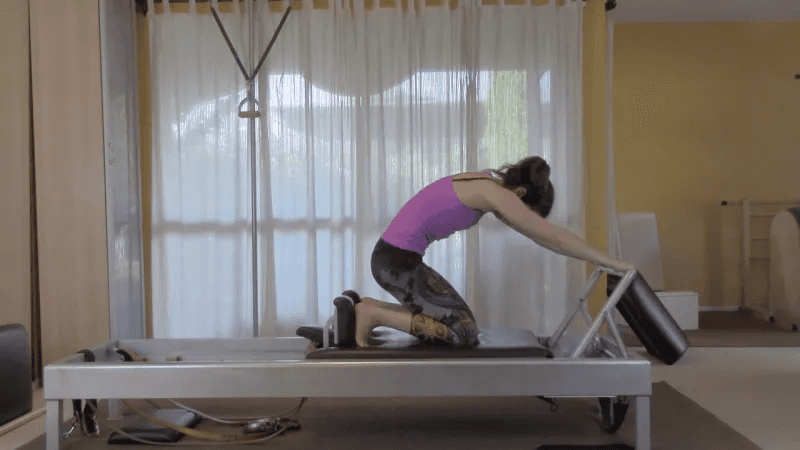
Kneel on the carriage with hands on the footbar, toes tucked under, and round the spine into a full C-curve from tailbone to crown. Set two springs. The movement is a rhythmic pull of the carriage toward the footbar using only the lower abdominals, without changing the spine shape at all. The spine is the fixed point; the carriage moves around it. The watch-out is the most common fault in this exercise: the hips hinge back as the carriage travels, which turns a deep abdominal drill into a hip-flexor stretch. If the hips move, reduce the spring and slow down until the pelvis stays completely still.
4. Elephant – Standing Posterior Tilt with Abdominal Lift
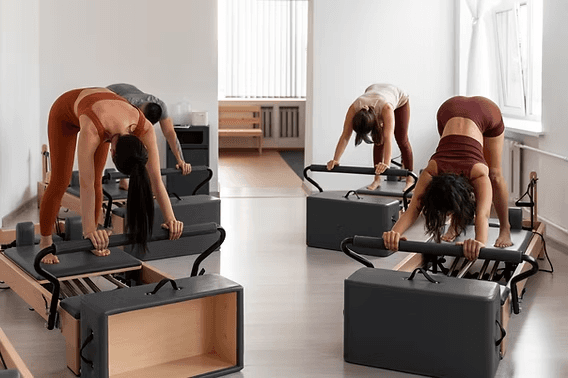
Stand with feet on the shoulder rests or platform edge, hands flat on the footbar, and hinge into an inverted V shape. Set one to two springs. The movement is a posterior pelvic tilt combined with an abdominal lift that draws the carriage toward the footbar without bending the knees. The abs initiate the movement; the legs follow passively. Beginners often bend the knees to cheat the range, which shifts the load immediately to the hamstrings. Keep the legs as straight as your hamstring flexibility allows and think about pulling the navel up toward the ceiling. The watch-out: if the carriage jerks rather than glides, the abdominals have disengaged and momentum is doing the work.
5. Footwork with Lower Ab Engagement – Heel Press with Imprinted Lumbar Spine

Standard footwork becomes a transverse abdominis drill the moment you imprint the lumbar spine before pressing the carriage. Evidence published in the Muscles, Ligaments and Tendons Journal on lumbar spine positioning during leg press movements shows that actively imprinting the lower back onto the pad significantly increases transverse abdominis activation compared to a neutral spine position, turning what looks like a quad-dominant exercise into a deep core stability drill. Set three to four springs. Press through the heels, maintain the imprint throughout the full travel of the carriage, and draw the navel to the spine on each exhale. The watch-out: the lower back lifting off the pad the moment the carriage reaches full extension, which is the exact point most people lose abdominal contact.
6. Abdominal Series with Straps – Single and Double Leg Stretch in Supine
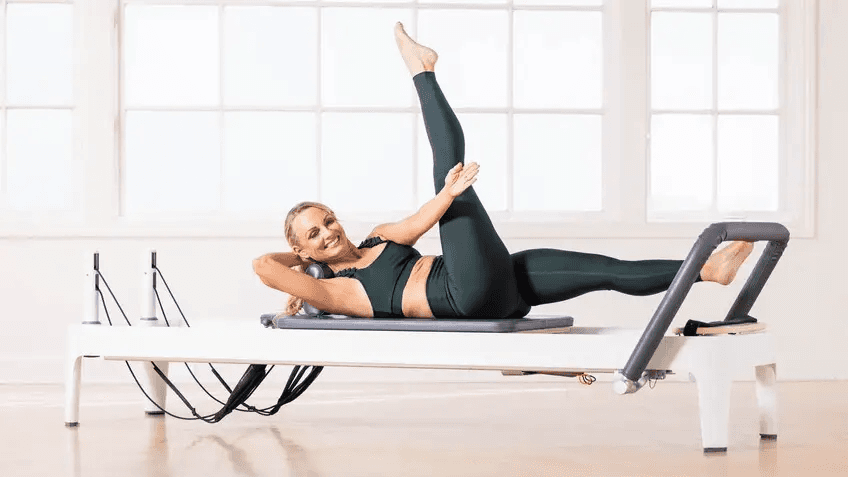
Lie supine, loop the straps around the arches of the feet, and begin with legs at a higher angle for beginners, progressively lowering them as strength builds. Set one light spring. For single leg stretch, alternate lowering one leg while the other stays lifted; for double leg stretch, lower both legs together while keeping the lower back anchored to the carriage.
The obliques and rectus abdominis work isometrically to resist the weight of the legs throughout the range. If chronic tendon issues make the foot-loop position uncomfortable, placing a soft wrap around the strap reduces direct pressure without changing the abdominal demand. The watch-out: the lower back arching away from the carriage as the legs descend, which means the working range has exceeded current core strength. Raise the legs until the back stays flat, then build from there.
7. Short Box Flat Back – Seated Hinge with Eccentric Abdominal Control

Sit on the short box with feet strapped in, spine long and neutral. No spring is needed for the stability version. Hinge the torso back to a moderate angle, drawing the navel to the spine throughout.
The return to upright is where the real work happens: the abdominals load eccentrically as they control the descent, then concentrically pull the torso back up. Research on eccentric loading consistently shows that training muscles through their lengthened range produces greater strength gains than concentric-only work, which is precisely why this exercise builds abdominal strength that floor crunches cannot replicate, and why it contributes to the visible definition that practitioners sometimes find stalls when their programme lacks eccentric demand. The watch-out: hinging from the hips rather than maintaining a long spine, which collapses the exercise into a hip flexor drill.
8. Reverse Crunches on Reformer – Supine Hip Curl with Light Spring Resistance
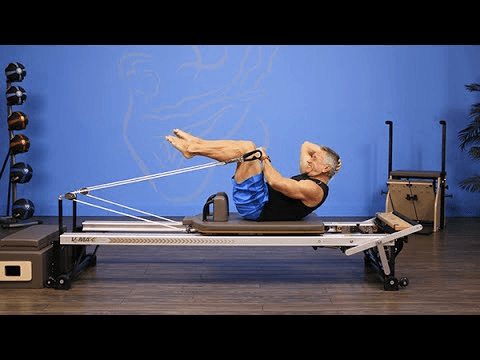
Lie supine, loop the straps around the arches of both feet, and begin with legs at 90 degrees. Set one very light spring. The movement is a controlled posterior pelvic tilt that curls the tailbone up off the carriage, drawing the knees toward the chest without using momentum.
The lower back stays in contact with the carriage throughout; only the pelvis moves. This isolates the lower rectus abdominis in a way that almost no other Reformer exercise achieves, and it is one of the most direct routes to the lower belly definition that dedicated practitioners often find elusive despite months of consistent training. The watch-out: using the hip flexors to swing the legs rather than curling through the pelvis. If the movement feels like a leg swing, slow the tempo significantly, counting deliberately through each curl and lower, until the pelvic initiation becomes automatic.
Mastering all 8 of these exercises is a genuine achievement. The Lagree Megaformer at BST replicates every one of these movement patterns under slow, sustained tension that a standard Reformer’s spring range cannot produce, so practitioners who have refined their Reformer technique often find the Megaformer delivers the next level of stimulus their core has been waiting for.
Each of these 10 exercises will only deliver its full abdominal stimulus if the spring resistance is dialled in correctly. Too heavy and the legs take over; too light and the carriage offers no meaningful challenge. The next section breaks down exactly how to set spring load for every stage of your core training, so you stop guessing and start feeling the right muscles work.
Related Reading
- Lagree Before and After 3 Months
- What To Bring To Pilates Reformer Class
- How Many Times A Week Should You Do Pilates Reformer
- Can You Do Reformer Pilates While Pregnant
- What To Wear To Pilates Reformer Class
- What Reformer Does Club Pilates Use
How to Set Spring Resistance for Pilates Reformer Ab Exercises
Spring resistance is the most consequential variable in your Reformer ab workout setup, and most people set it by feel rather than function. The result is weeks of hard sessions where the hip flexors and lower back quietly absorb the load while the deep abdominals barely show up to work.
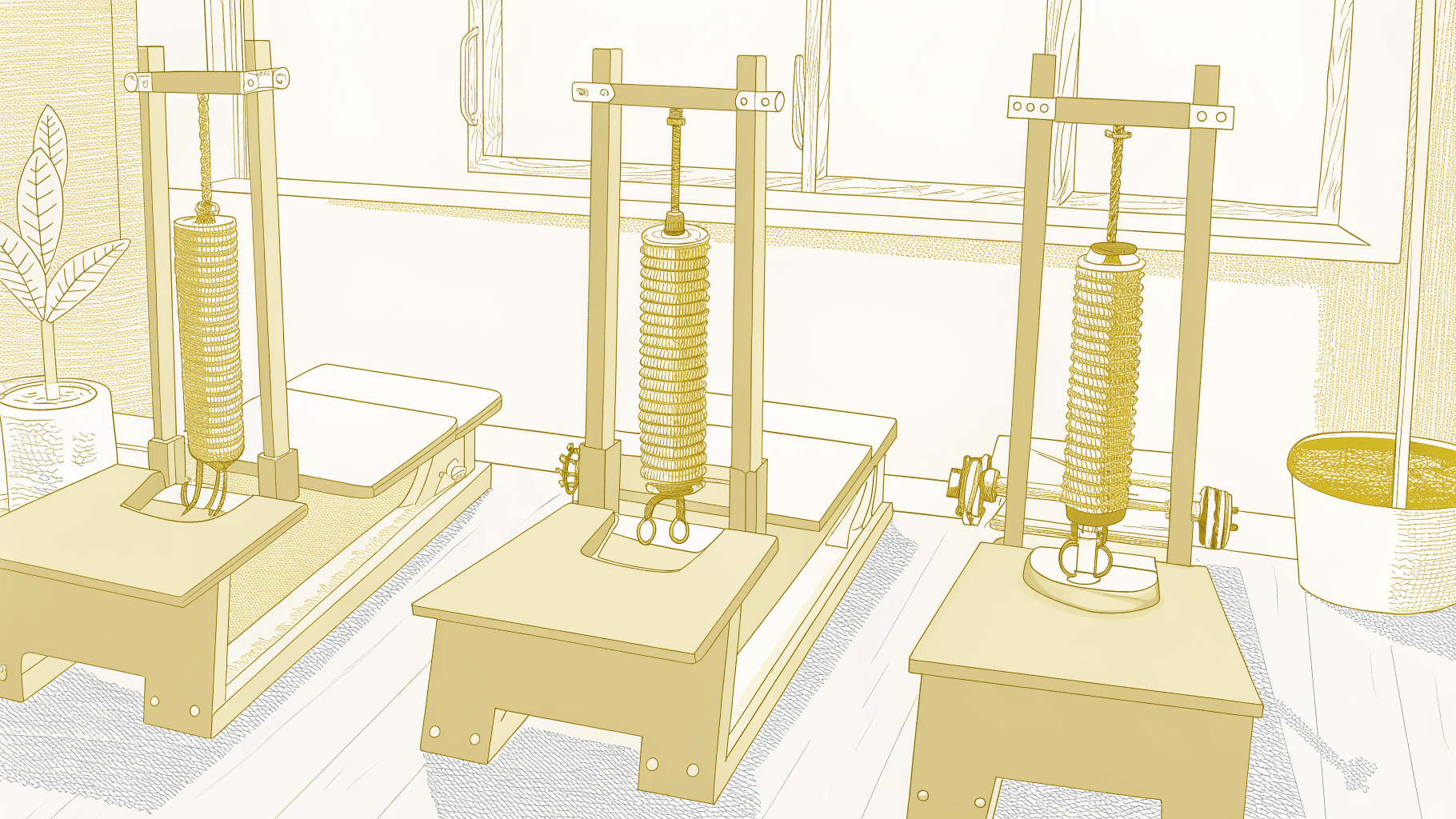
Lighter Springs for Flexion and Rotation, Heavier Only for Footwork-Based Ab Variations
For flexion and rotation exercises, lighter spring resistance is correct. Across the market, findings consistently show that higher Reformer spring resistance does not uniformly produce greater core muscle activity across all exercise types, and that optimal resistance selection depends entirely on the movement pattern being performed. Elephant, for example, is typically performed on one light spring so abdominal compression drives the movement.
Add a second spring and the hip flexors take over before the transversus abdominis has a chance to engage. Footwork-based ab variations are the exception. These movements use the legs as a load anchor, so heavier resistance settings are appropriate because the spine stays neutral and the core stabilises rather than flexes.
The rule is simple: if the spine is curling or rotating, go lighter. If the spine is fixed and the limbs are moving, heavier springs are fair game.
The Carriage-Jerk Test for Real-Time Resistance Feedback
If the carriage snaps back rather than glides, your spring resistance is too heavy for that exercise. What most teams in the field report is that platform instability created by spring changes is a key factor in how the core is loaded; a jerky return phase signals that resistance has exceeded what your stabilisers can control. The lumbar spine compensates by extending, the lower back grips, and the deep core switches off entirely. The practical test: on any exercise involving spinal flexion, pause at maximum abdominal engagement and check whether you can hold that position for two seconds without your lower back lifting. If you cannot, reduce by one spring before your next set.
Why Even a Perfectly Dialled Spring Has a Mechanical Ceiling
Even when your setup is technically perfect, spring resistance mechanics cap the sustained muscular tension your deep core can experience. Broader industry trends make clear that indiscriminate resistance increases undermine movement quality rather than compounding it. The Reformer’s spring system assists and resists in a reciprocal arc, so tension drops at the points in the range of motion where you need it most. That ceiling is structural, not a technique problem you can fix.
Key takeaway: The Reformer’s spring system drops tension precisely where you need it most. That ceiling is structural, not a technique problem you can fix.
The Reformer’s spring system drops tension precisely where you need it most. That ceiling is structural, not a technique problem you can fix. Getting your spring resistance right is the highest-leverage technical adjustment you can make on a Reformer. But it also exposes a harder question: once your form is dialled and your springs are perfect, how much visible change can you actually expect, and by when? That is exactly what the next section unpacks.
Quick-Reference – Spring Resistance Decision Table for Reformer Ab Exercises
| Movement Type | Spine Position | Recommended Springs | Why |
| Flexion (e.g. Stomach Massage, Knee Stretches, Elephant) | Curling / C-curve | Light (1 spring) | Keeps load on TrA; prevents hip-flexor takeover |
| Rotation (e.g. Short Box Twist) | Rotating / neutral | Light (0-1 spring) | Obliques need freedom of movement; extra load collapses the thoracic curve |
| Supine strap work (e.g. Abdominal Series, Reverse Crunch) | Neutral / flat | Very light (1 spring) | Leg weight is the primary load; spring assists, not drives |
| Footwork-based ab variations (e.g. Footwork Ab Curl) | Neutral / imprinted | Heavy (3-4 springs) | Spine is fixed; core stabilises, legs provide anchor |
| Short Box Flat Back | Neutral hinge | No spring (stability) | Eccentric load comes from bodyweight only |
Carriage-jerk rule: If the carriage snaps back rather than glides on any exercise, reduce by one spring before your next set.
Can You Get Abs from Reformer Pilates – and What Honest Progress Actually Looks Like
Six weeks in, most Reformer practitioners feel genuinely stronger. By week twelve, something quieter happens: the exercises feel controlled, the breath feels easy, and the visible change in the core simply stops arriving. The common assumption is that if you just do more sessions or add harder spring resistance, the results will come back. That gap between effort and outcome is a physiology problem, and understanding it changes everything about how you train next.

Yes, Reformer Pilates Builds Real Core Strength Here Is the Evidence
The Reformer produces real, measurable abdominal work. Industry research confirms that resistance training drives meaningful neuromuscular adaptation in weeks one through four, with motor unit recruitment, firing rate, and synchronisation all improving rapidly in response to a new movement pattern. For Reformer-trained practitioners, this is exactly what those early sessions deliver: the transverse abdominis and obliques fire with increasing precision, posture shifts, and the core feels more connected.
That is genuine progress. It also shows up in a very specific, frustrating way that many practitioners with strong cores experience: core and plank segments on the Reformer start to feel too easy, and when they step onto a mat without the foot strap, they discover their roll-ups collapse, a clear signal that the Reformer’s assistance has been compensating for underlying glute and deep core weakness the machine was quietly masking. Real strength is the kind that transfers.
The 80/20 Rule Explains Why Your Progress Stalled
The 80/20 pattern holds across strength training: a concentrated stimulus drives the majority of early adaptation, and returns diminish sharply once the body has processed that stimulus. According to research published in Cold Spring Harbor Perspectives in Medicine, when training stimulus remains constant, the anabolic signal attenuates even if session volume increases, because the muscle has already adapted to that specific mechanical demand. More sessions do not fix this. A different stimulus does.
Key takeaway: When training stimulus stays constant, the anabolic signal attenuates, and a different stimulus, not more sessions, is what breaks the plateau.
This is also the point where the question of visible muscle definition becomes confusing. Practitioners who have been consistent for months, who feel strong, who are clearly fitter, often cannot understand why the visible change in their abdomen has stopped arriving. The answer is the nature of the stimulus itself.
Recognising the Plateau as a Mastery Signal, Not a Failure
Muscle protein synthesis returns to near-baseline within 24 to 48 hours after resistance exercise in trained individuals, meaning that without progressive overload or a novel stimulus, each additional session produces a progressively smaller anabolic response. Contrast that with a training format built around sustained, slow time-under-tension that keeps the muscle loaded through the full range of movement: the variable the Reformer’s spring mechanics cannot replicate.
BST Lagree’s Megaformer classes in Angel are built around exactly that principle, which is why women who have maxed out their Reformer stimulus tend to feel the difference in their first Lagree session, not their tenth. Visible body transformation with Lagree materialises with consistent class attendance over time. It is not a single-session event. But it does happen, and it happens precisely because the Megaformer imposes a stimulus the adapted Reformer body has never encountered: continuous, slow, loaded movement through a full range with no rest at the top or bottom of each repetition.
BST Lagree’s studio in Angel is designed to make that process feel like something you want to return to, a real strength and cardio workout delivered in an inclusive, comfortable, beautifully considered space where you feel looked after, not lost. For new clients who want to experience that difference without committing to a pack, BST Lagree offers a free intro workshop class, booked via the on-site form, and it comes with a complimentary coffee. The pack structure is also designed for people who train across cities. If maintaining fitness consistency while travelling is important to you, the Speakeasy credits are there when you need them. Plateauing on the Reformer is a sign your core has outgrown the stimulus.
What the Lagree Megaformer Adds to Your Core Training That a Reformer Cannot
A Reformer builds your core beautifully. But it was never designed to keep building it forever. The mechanical difference between a standard Reformer and the Lagree Megaformer comes down to what happens to your muscles at the exact moment a movement reaches its furthest point. That single distinction explains why Reformer-trained women stop seeing change, and why Lagree core exercises keep producing results past the point where the Reformer runs out of road.
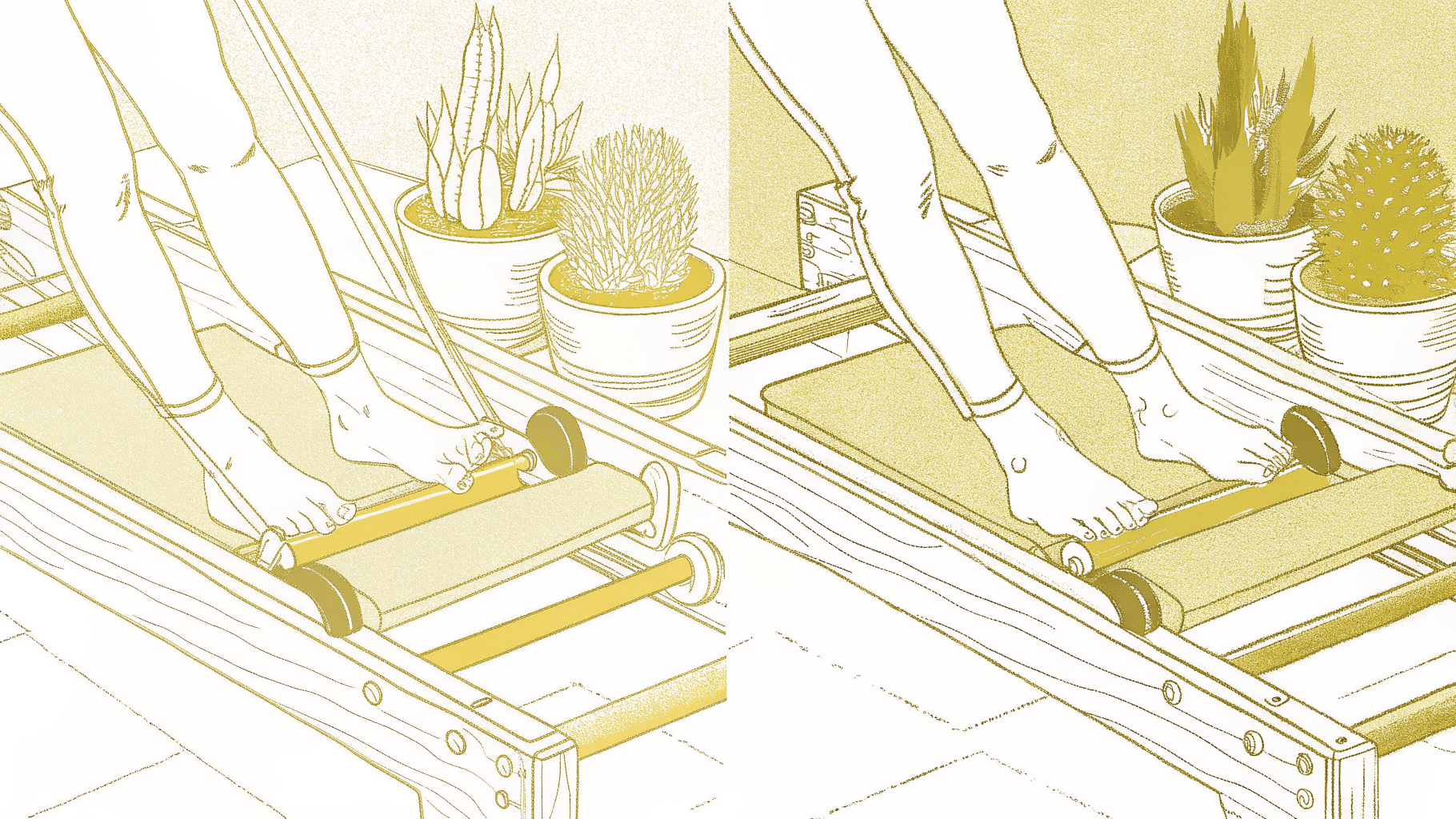
Why the Megaformer’s Resistance Curve Keeps Your Abs Working When a Reformer Lets Them Rest
A Reformer spring follows a predictable load curve: resistance builds through the middle of the movement, then drops as the carriage reaches full extension. Your muscles get a rest precisely when they should be working hardest. On the Megaformer, a dual-cable coil system maintains constant load through the complete range of motion, including end range. Take the Knee Stretch as an example: on a Reformer, the posterior chain and deep core unload at full extension; on the Megaformer, they stay loaded at that same endpoint.
Key takeaway: Sustained, continuous muscular loading through the full range of motion maximises mechanical tension. Movements that allow muscles to unload at end range reduce the cumulative tension signal. This sustained loading is the physics of why your Reformer plateau is structural, not personal.
Lagree Adds a Cardiovascular Demand That a Reformer Session Never Produces
The cardio hit surprises almost every Reformer practitioner in their first Lagree class. The movements are deliberately slow, yet sustained muscular effort under continuous load drives metabolic stress in a way spring-assisted movement cannot. Across the broader exercise science landscape, metabolic stress is recognised as a distinct and additive driver of muscle adaptation alongside mechanical tension. Training that generates both within the same session produces a superior response to training that generates only one. A full Lagree session delivers strength stimulus and cardiovascular demand simultaneously, where a Reformer session delivers the first without reliably producing the second.
Why Instructor Pedigree Matters More on the Megaformer
Reformer practitioners adapt to the Megaformer faster than complete beginners. The movement vocabulary overlaps enough that your body already knows the shapes; what changes is the load profile underneath them. Instructor quality matters more on the Megaformer than on the Reformer, because continuous tension removes the natural rest that would otherwise mask a cueing gap.
At BST Lagree in Angel, co-founder Karley trained and taught in LA under the method’s origin city and holds official Lagree instructor certification. BST Lagree’s instructor quality is reflected in its client outcomes: the studio’s Megaformer classes consistently sell out and retain members who previously plateaued on the Reformer, a pattern the team attributes directly to calibrated cueing and spring-load management. That is the practical difference between a class where spring load and tempo are calibrated to protect your back and hips, and one where they are not. The plateau was never a sign that you stopped working hard enough. The Reformer had reached the edge of what it can mechanically deliver.
Related Reading
- Pilates Reformer Leg Exercises
- Pilates Reformer Glute Exercises
- Best Pilates Reformer App
- Pilates Reformer Springs Explained
Next steps
If your core has stopped visibly changing despite months of consistent Reformer work, the path forward starts with accepting that the plateau is structural, not personal. Once your body has optimised neural efficiency for a given movement pattern, repeating that pattern maintains what exists rather than building on it. That ceiling is baked into the machine’s mechanics, not your effort.
The research behind the Reformer’s own effectiveness explains why it eventually stops working: transverse abdominis activation and timing, not load or volume, drive deep core adaptation, and once that adaptation is complete, the same stimulus produces diminishing returns regardless of session frequency. Add to that the finding that progressive overload, not increased volume at the same resistance, is the prerequisite for continued skeletal muscle adaptation, and the next step becomes obvious. The Reformer cannot escalate its mechanical demand past a fixed spring range. A different machine can.
Start with Lagree classes in London at BST’s Angel studio, where the Megaformer maintains constant load through the full range of motion, including end range, the exact point a Reformer spring lets your muscles rest. New clients receive a free introductory workshop before their first class, no pack required, with a complimentary coffee included. Speakeasy packs drop the per-class cost from £25 to £19.90 across ten sessions, making the consistency that produces visible change straightforward to sustain.
Frequently Asked Questions
Can you actually get abs from Reformer Pilates?
Yes, but with a ceiling. The Reformer’s spring carriage effectively recruits the transverse abdominis and, with the right technique, the rectus abdominis and obliques, and a 2024 study in Frontiers in Physiology confirmed that more experienced practitioners show measurably greater muscle activation during the same exercises. However, once your body has adapted to the spring resistance range, the training signal plateaus, which is why many consistent practitioners find visible progress stalls even when their functional core strength keeps climbing.
Why do my hip flexors always seem to do the work instead of my abs on the Reformer?
Hip flexors firing instead of your abs is described in the post as the single most common reason Reformer ab exercises stop producing visible change. It happens when spring resistance is set too heavy for flexion and rotation movements, for example, adding a second spring to Elephant causes the hip flexors to take over before the transverse abdominis can engage. Going lighter on springs for any exercise where the spine is curling or rotating is the direct fix.
How should I set spring resistance for ab exercises on the Reformer?
The rule from the post is straightforward: if the spine is curling or rotating, use lighter springs; if the spine is fixed and the limbs are moving, heavier springs are appropriate. Flexion and rotation exercises like Elephant use one light spring so abdominal compression drives the movement, while footwork-based ab variations can use three to four springs because the core is stabilising rather than flexing.
Is the Short Box exercise actually better for abs than floor crunches?
According to the post, yes, specifically because of eccentric loading. The Short Box Flat Back loads the abdominals eccentrically as they control the descent, and industry research cited in the post shows that training muscles through their lengthened range produces greater strength gains than concentric-only work, which is precisely what floor crunches deliver. This eccentric demand is also linked to the visible definition that can stall when a programme lacks it.
How do I know if my spring resistance is wrong mid-exercise?
The post describes a carriage-jerk test as a real-time feedback signal: if the carriage jerks rather than glides, the abdominals have disengaged and momentum is doing the work. A jerky carriage on an exercise like Elephant is a clear sign to reduce the spring load and slow down until smooth, controlled movement returns.