Tight hips create a cascade of discomfort throughout the day, making simple movements like getting out of bed or bending down feel restrictive. Morning stretches for women that specifically target hip flexibility can address the root cause by focusing on hip flexors, external rotators, and the connecting muscles in the lower back and inner thighs. The key lies in selecting poses that create lasting change rather than temporary relief.
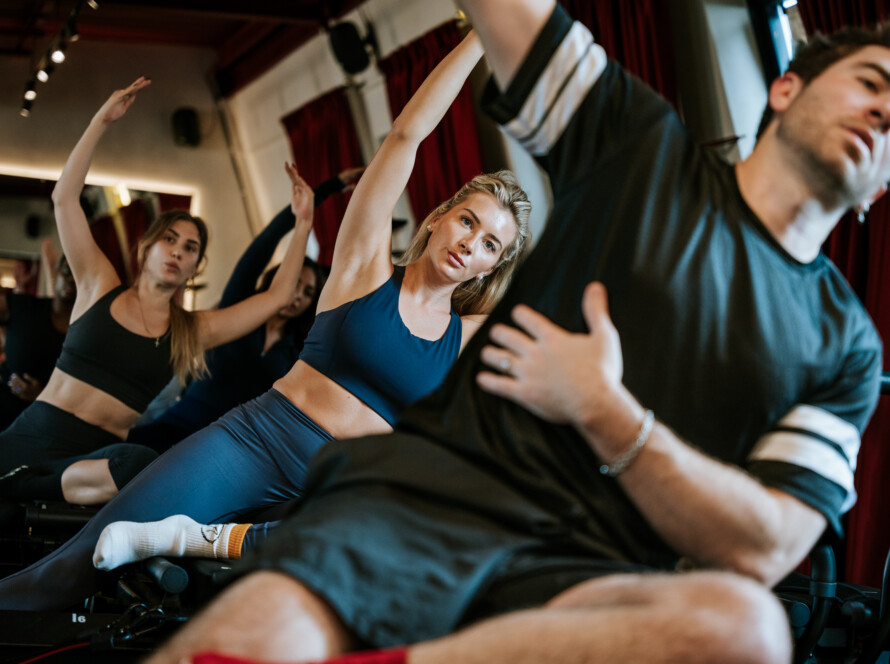
Effective hip opening requires more than passive stretching alone. Building strength in the stabilizing muscles around the hips ensures that flexibility improvements persist throughout the day rather than disappearing after a few hours. For those seeking a comprehensive approach that combines controlled resistance training with mobility work, Lagree in London offers a method that simultaneously develops both strength and length in the hip muscles.
Table of Contents
- Why Tight Hips Keep Coming Back Even If You Stretch
- The Hidden Causes of Limited Hip Mobility
- Why Stretching Alone Doesn’t Create Lasting Flexibility
- Why Stretching Alone Doesn’t Create Lasting Flexibility
- 10 Yoga Poses That Safely Improve Hip Flexibility
- What Actually Makes Hip Flexibility Last
- How BST Lagree Builds Strength to Support Flexible Hips
- Book a Lagree Class in London Today
Summary
- Tight hips persist because the body adapts to what it does most. Adults spend more than half their waking hours sedentary, according to research published in the Annals of Internal Medicine (2012), meaning eight to twelve hours of hip compression for every ten minutes spent stretching. When hips remain flexed at 90 degrees for the majority of the day, that position becomes the baseline, and a few minutes of stretching cannot override thousands of hours of opposite patterning.
- Flexibility without strength creates instability that the nervous system refuses to tolerate. Research in Sports Medicine shows that strength training through full ranges of motion often produces equal or greater long-term flexibility gains than stretching alone. The body maintains mobility more readily when movement pairs with strength, because the nervous system grants access only to ranges it can stabilize and control.
- Most hip tightness comes from overworked muscles, not from muscles that are genuinely short. When glutes remain weak, hamstrings, lower back, and hip flexors step in to stabilize the pelvis, becoming exhausted and chronically tense. Stretching these fatigued muscles provides temporary relief but fails to address the underlying weakness causing them to overwork in the first place.
- Hip osteoarthritis affects approximately 27% of adults over age 45, according to the Journal of Orthopaedic & Sports Physical Therapy, often developing silently from years of insufficient movement variety. Joint health requires regular motion to circulate synovial fluid and maintain capsule elasticity. Mechanical stiffness within the joint environment cannot be resolved by stretching muscles alone.
- A study in the International Journal of Sports Physical Therapy found that 20 participants who performed daily lunge-and-reach stretching interventions showed improved hip flexibility and enhanced gluteal function. The combination of movement and muscular engagement produced lasting change because the body learned to support a new range rather than just tolerate it passively.
- Eccentric training produces greater improvements in both muscle strength and flexibility compared to concentric protocols, according to research in the Journal of Strength and Conditioning Research (2023). Controlled lengthening under load signals safety to the nervous system more effectively than passive stretching, which explains why strength built at end range unlocks mobility that actually holds.
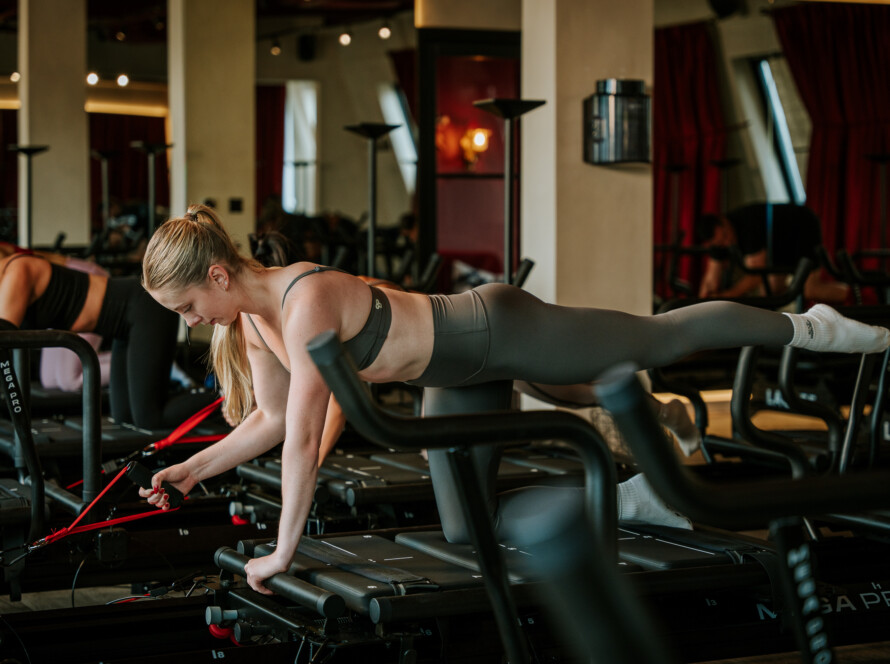
- Lagree in London addresses this through the Megaformer’s spring-based resistance system, which builds strength precisely within the ranges where most people lack control while creating mobility that feels secure rather than precarious.
Why Tight Hips Keep Coming Back Even If You Stretch
Stretching feels good in the moment, but the relief doesn’t last because you’re treating a symptom, not the underlying problem. Hip tightness is your body’s response to how you move throughout the day, combined with muscle imbalances that should support your hips.
🎯 Key Point: Temporary relief from stretching creates a false sense of progress while the underlying issues remain unaddressed.
“Most people experience hip tightness returning within 24-48 hours of stretching because they haven’t addressed the root cause of the problem.”
⚠️ Warning: Relying only on stretching can actually make hip dysfunction worse by creating temporary mobility without building the strength and stability your hips actually need.
Why do daily habits undo your stretching efforts?
Sitting for extended periods creates physical problems that a few minutes of stretching cannot resolve. Prolonged sitting tightens your hip flexors and deactivates your glutes.
According to research published in the Annals of Internal Medicine (2012), adults spend more than half their waking hours sitting still: eight to twelve hours of pressure for every ten minutes spent stretching those same muscles.
How does your body adapt to prolonged sitting?
Your body adapts to what it does most. If your hips spend most of their time bent at 90 degrees, that position becomes what your body considers normal.
Stretching can temporarily pull them out of that pattern, but the moment you sit back down, the tissues return to their trained shape.
You’re stretching the wrong muscles
That tight feeling in your hips often comes from muscles working too hard, not from muscles being short. When your glutes are weak, your hamstrings, lower back, and hip flexors step in to stabilize your pelvis—jobs they weren’t designed for. They feel tight because they’re exhausted, not because they need to be lengthened.
Stretching an overworked muscle reduces tension temporarily but doesn’t address the underlying instability. The tension returns because the weakness persists.
How does restricted hip mobility affect other parts of your body?
When your hips don’t move as freely as they should, nearby joints have to work harder to compensate. Your lower back twists excessively. Your knees absorb forces at awkward angles. Your stride shortens. Over time, this stress manifests as discomfort in seemingly unrelated areas—you address pain in your back or knees without recognizing the root problem lies just inches away.
What methods combine strength and flexibility for lasting results?
BST Lagree in London addresses this problem with the Lagree Method, which builds strength in the stabilizing muscles around your hips while increasing flexibility. The Megaformer’s controlled resistance trains your glutes, deep hip stabilizers, and core to work together, creating balanced mobility that carries into daily life. When strength and flexibility develop simultaneously, improvements endure.
Why does flexibility without strength fail?
Flexibility without strength does not last long. If you can stretch your hip into a wider range of motion but lack the muscular support to control that range, your body will revert to a safer, tighter position. The nervous system will not grant access to movement that it cannot stabilize.
This is why people who stretch every day still feel tight. They work on mobility alone, never building the strength their body needs to trust and maintain that new range.
What’s the real cause of hip tightness?
The real question isn’t why your hips feel tight, but why the muscles that should be supporting them have stopped doing their job.
The Hidden Causes of Limited Hip Mobility
If tight hips persist despite regular stretching, the problem runs deeper than muscle length alone. Hip mobility depends on muscles, joints, connective tissue, and the nervous system working together. When any part of that system falls out of balance, your range of motion decreases.
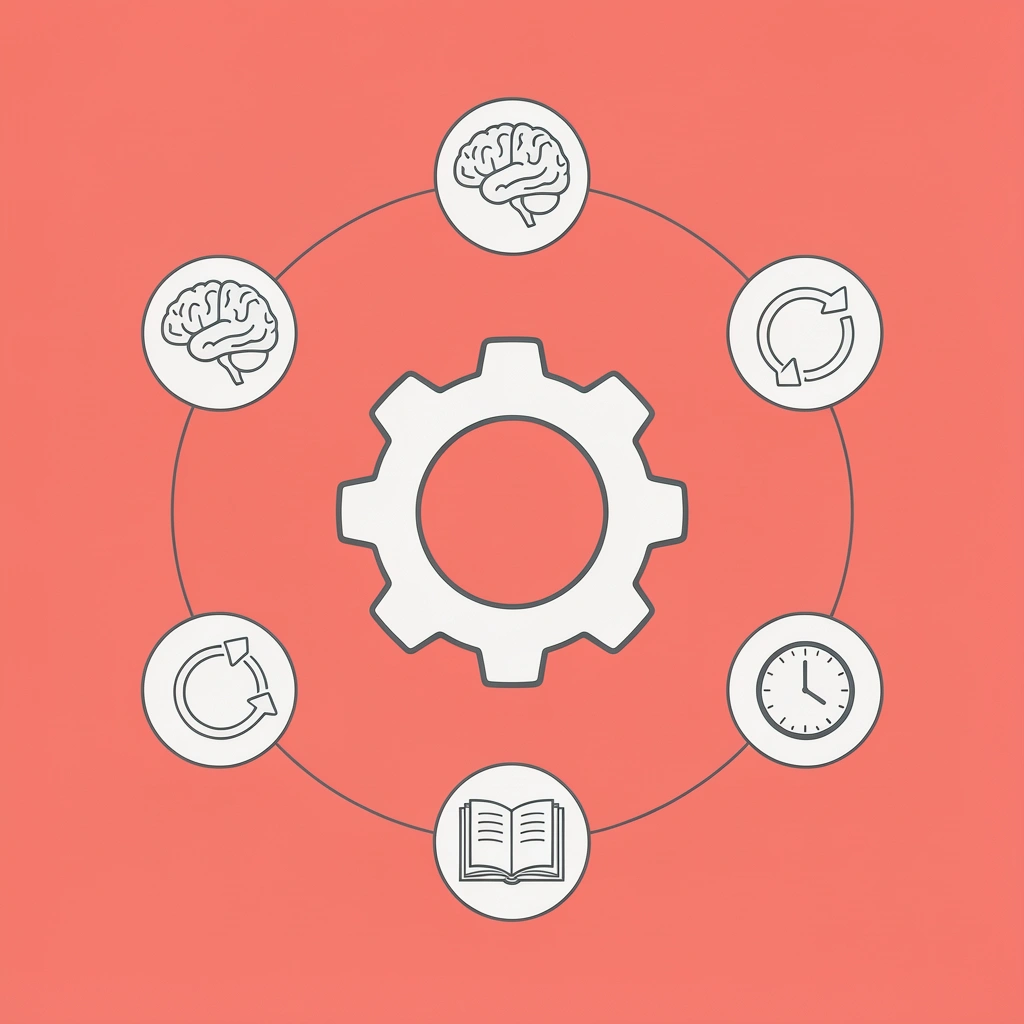
🎯 Key Point: Hip tightness isn’t just about inflexible muscles – it’s a complex interaction between multiple body systems that must work in harmony for optimal mobility.
“Hip mobility depends on muscles, joints, connective tissue, and the nervous system all working together – when any part gets out of balance, range of motion decreases.” — Movement Science Research

This explains why flexibility routines often give temporary results. Traditional stretching addresses only the muscle-length component while ignoring joint mechanics, fascial restrictions, and nervous-system patterns that control your hip movement.
⚠️ Warning: Focusing solely on stretching tight muscles without addressing the root causes can lead to frustrating plateaus and limited long-term mobility gains.

Shortened Hip Flexors From Prolonged Sitting
Sitting for long periods keeps your hips flexed. Over weeks and months, your body adapts by making those tissues less flexible.
Key muscles affected include the psoas and rectus femoris, which connect your spine and pelvis to your thigh. When these muscles shorten, they pull your pelvis forward, limiting hip extension and increasing stress on your lower back.
This is why standing up straight after sitting can feel stiff or tight, even with regular stretching.
Weak Glutes and Deep Stabilizers
Mobility depends on how well the body controls movement, not how far a joint can move. The glutes and deep hip stabilizers keep the pelvis in the correct position and guide motion during walking, running, and standing.
When these muscles are weak or inactive, the body limits the range of motion to stay stable: tightness becomes a protective mechanism, not merely a mechanical problem.
Weak glutes shift the workload to smaller muscles, which tire quickly and become tense, further reducing mobility.
Joint Stiffness From Inactivity
Joints need movement to stay healthy. The hip joint depends on synovial fluid circulation to lubricate surfaces and nourish cartilage. Regular motion distributes this fluid; inactivity reduces it.
Reduced movement leads to decreased joint lubrication, thickening of surrounding connective tissue, and reduced capsule elasticity. This mechanical stiffness cannot be resolved by stretching muscles alone because the limitation lies within the joint environment.
According to the Journal of Orthopaedic & Sports Physical Therapy, hip osteoarthritis affects approximately 27% of adults over age 45, often developing silently from years of limited movement variety.
Protective Muscle Tension
Your nervous system plays an important role in how you move. Your muscles tighten automatically to protect areas that feel unstable, weak, or vulnerable to injury. This tightness limits your movement, even when your tissues can move more freely.
Common reasons include past injuries, poor movement habits, insufficient strength at the end of your range of motion, and pain or fear of pain. Tightness reflects your body’s protective response rather than actual muscle shortening.
What does true mobility require beyond flexibility?
True mobility means moving your joints through their full range of motion while possessing the strength and coordination to control that movement. Flexibility enables movement; control makes it useful and safe.
If flexibility increases without stability, your body may create tension to prevent excessive or poorly controlled motion. Conversely, strong muscles without adequate range of motion can limit your movement.
How can controlled resistance training improve hip mobility?
Lagree in London addresses this through the Megaformer’s unique resistance system, which builds strength in the exact ranges where most people lack control. Slow, controlled movements train stabilizers and prime movers simultaneously, creating mobility that feels secure rather than risky. When your nervous system trusts your strength at end range, it stops defending against it.
Real improvements happen when both qualities develop together. The hips regain motion not only because tissues lengthen, but because the body trusts it can stabilize and control that motion during everyday activities.
But knowing what causes restriction is only half the picture. The harder question is why the solutions most people try fail to address these root causes.
Related Reading
- Morning Stretches for Women
- Why Am I Not Flexible
- How Long Does It Take to Get Flexible
- Does Flexibility Increase Strength
- Mobility Stretching Routine
- Full Body Stretching Routine for Flexibility
- Pregnancy Stretching Routine
Why Stretching Alone Doesn’t Create Lasting Flexibility
Passive stretching increases your range of motion temporarily, but without strength and control in those new ranges, your body reverts to its original limits. Your nervous system governs how much you can move based on safety, not muscle length alone—if it senses instability at the edge of your range, it limits movement to prevent injury, regardless of muscle flexibility.
🎯 Key Point: Your nervous system acts as a protective gatekeeper, prioritizing joint stability over maximum flexibility to keep you safe from injury.
“The nervous system will always choose safety over mobility—without strength in your end ranges, flexibility gains are temporary at best.” — Movement Science Research
⚠️ Warning: This is why people who stretch daily for months often see their flexibility plateau or even regress—they’re fighting their body’s natural protective mechanisms instead of working with them.
Passive stretching without activation can increase instability
Passive stretching temporarily reduces muscle tension and makes joints feel looser. Without activating stabilizing muscles, however, the joint becomes less supported rather than more functional.
Your body prioritizes protection over performance. If it detects insufficient strength to manage the new range, surrounding muscles tighten again within hours, which is why flexibility gains fade so quickly after stretching.
Muscles tighten again if the underlying weakness remains
Weak glutes and deep hip stabilizers lead to other muscles compensating. Those compensating muscles become overworked, fatigued, and chronically tense. Stretching them repeatedly doesn’t change the workload distribution: the moment you stand, walk, or return to your desk, they resume their stabilizing duties because nothing else is available to share the load. The tightness returns because the original demand never changed.
The body resists the range it cannot control
Being able to move depends on your nervous system feeling safe. If your brain perceives a joint as weak at the end of its range of motion, it will limit your movement to protect you.
According to Sports Medicine, strength training through full ranges of motion yields equal or superior long-term flexibility gains compared to stretching alone. Strengthening muscles at the end of their range signals safety to your body, enabling longer-lasting freedom of movement.
Overstretching can irritate joints
Aggressive or prolonged stretching places excessive stress on joint capsules, ligaments, and tendons, triggering inflammation rather than improvement. Clinical guidance recommends moderate, controlled stretching because excessive force provokes protective guarding: the body tightens surrounding muscles to limit damage, resulting in less mobility, not more.
Why do most flexibility routines provide only temporary relief?
Quick relief feels good, but stretching alone only treats symptoms and doesn’t fix the underlying stability problem or change how forces are managed across the joint.
Programs that combine mobility work with activation and strengthening create longer-lasting results. Lagree in London addresses this through the Megaformer’s controlled resistance system, which builds strength within the ranges where most people lack control.
What makes flexibility sustainable long-term?
The slow, unusual movements train stabilizers and prime movers simultaneously, creating secure rather than risky mobility. When the hips are both flexible and supported, the body no longer needs to reintroduce tension as a protective measure.
Flexibility that lasts requires building the strength and control that allow your body to trust new range during real movement, not while lying on a mat.
But if stretching alone isn’t enough, which movements create the stability and control your hips need to stay open?
Related Reading
- Stretches for Women Over 50
- Quad And Hamstring Stretches
- Ballet Stretches
- Split Stretches
- Aerial Yoga Stretches
- Sacrum Stretches
10 Yoga Poses That Safely Improve Hip Flexibility
These poses work on the specific movement patterns and muscle groups that limit hip mobility. The goal is to build a usable range by gradually exploring each position with support, not forcing your body into the deepest version of each shape. Pain-free practice where you actively use your muscles produces better long-term results than passive stretching that causes discomfort.

🎯 Key Point: Focus on controlled movement and muscle engagement rather than forcing your body into extreme positions for sustainable hip flexibility gains.
“Active stretching that engages muscles produces significantly better flexibility improvements compared to passive stretching alone.” — Journal of Sports Medicine Research
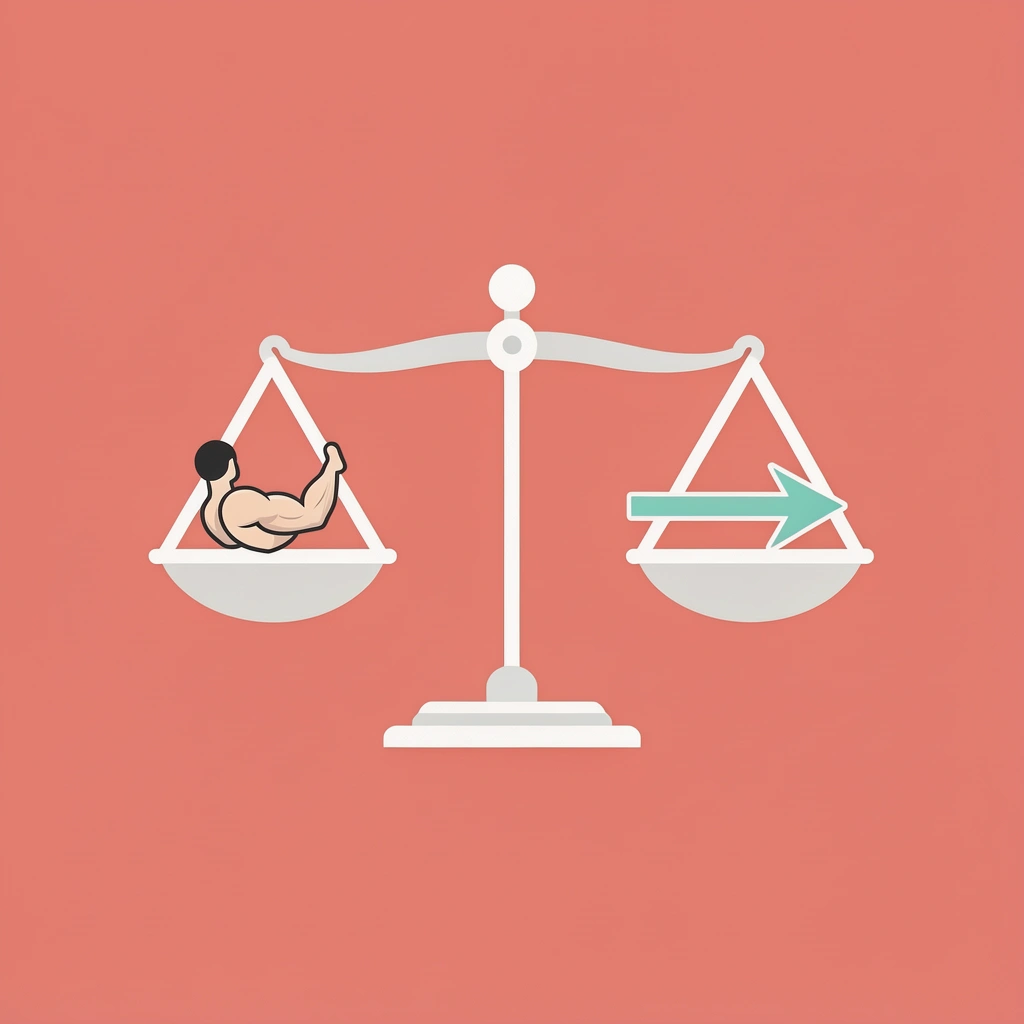
💡 Tip: Hold each pose for 30-60 seconds while maintaining steady breathing and gentle muscle activation to maximize the mobility benefits without risking injury.
1. Low Lunge (Anjaneyasana)
This pose stretches the psoas, iliacus, and rectus femoris muscles to address tight hip flexors from prolonged sitting, while the front leg provides stability.
How should you position your pelvis for maximum benefit?
The key is pelvic positioning. Most people arch their lower back to feel a deeper stretch, but this compensates rather than corrects. Instead, gently tuck your pelvis under, drawing your lower ribs toward your hips. This posterior tilt isolates the hip flexors and protects your lumbar spine.
What’s the proper duration and breathing technique?
Hold for 30 to 60 seconds per side. Breathe slowly, letting each exhale relax the front of your back hip. If your knee feels strained, place a folded blanket underneath for cushioning.
2. Pigeon Pose (Eka Pada Rajakapotasana)
Pigeon targets the deep external rotators, including the piriformis and glutes, which often become tight from compensating for weak stabilizers. This improves external rotation capacity, essential for walking, squatting, and changing direction without strain.
How should you position your front leg safely?
Many practitioners force their front shin parallel to the mat, creating knee torque and missing the hip stretch. Start with your front ankle closer to your opposite hip, allowing the shin angle to increase gradually as your hip opens over weeks of practice.
Why is proper support essential in the pigeon pose?
Without support, you stretch ligaments instead of muscles. Place a block or folded blanket under your front hip to maintain pelvic alignment. Hold for 45 to 90 seconds, softening with each breath rather than pushing.
3. Butterfly Pose (Baddha Konasana)
This seated pose opens the inner thighs and groin, allowing your hips to move outward and rotate inward more easily. Your hip flexibility improves in these directions, particularly if your outer hip muscles have been compensating.
How do you perform the butterfly pose correctly?
Sit up straight with the soles of your feet together and your knees falling outward. Don’t push your knees toward the floor, as this forces the stretch and rounds your spine. Instead, maintain length through your torso and lean forward from your hips for a stronger stretch.
Hold for 60 to 90 seconds. If sitting upright feels difficult, sit on a folded blanket to raise your hips above your knees, allowing your pelvis to tilt forward naturally rather than tuck under.
4. Lizard Pose (Utthan Pristhasana)
Lizard combines hip flexor lengthening with inner thigh opening, addressing two restriction patterns simultaneously. It’s particularly effective for people who experience tightness in the front and inner hip during lunging movements.
How do you perform the lizard pose correctly?
From a low lunge position, bring both hands to the inside of your front foot and lower onto your forearms if possible. Keep your front knee tracking over your middle toes to protect the knee and maximise hip engagement.
Hold for 30 to 60 seconds per side. If your lower back arches too much, stay on your hands rather than lowering to forearms: keeping your spine in a neutral position matters more than depth.
5. Garland Pose (Malasana)
The deep squat restores a basic movement pattern lost through prolonged sitting. It loosens the hips, ankles, and pelvic floor while building strength where flexibility is most needed.
How do you perform the Garland Pose correctly?
Stand with your feet slightly wider than hip-width apart, toes turned out. Lower yourself into a squat, bringing your hands together in a prayer position at your chest. Use your elbows to gently press your knees outward. If your heels lift, place a rolled mat or blanket underneath them.
What breathing technique enhances the pose?
Hold for 30 to 60 seconds, breathing deeply into your belly. Diaphragmatic breathing relaxes the pelvic floor and allows the hips to settle more deeply.
6. Half Frog Pose (Ardha Bhekasana variation)
This pose targets the quadriceps and hip flexors while lying face down, creating length in the front of your body without the balance required by standing poses. It’s especially helpful for people who experience knee discomfort during traditional quad stretches.
How do you perform the half frog pose correctly?
Lie on your stomach, prop yourself up on one forearm, and bend the opposite knee, bringing your heel toward your hip. Reach back with your free hand to hold your foot, keeping your pelvis level without twisting toward the bent leg.
Hold for 30 to 60 seconds per side. If you cannot comfortably reach your foot, loop a strap around your ankle and hold it instead. Forcing the grip creates shoulder tension and misses the hip opening.
7. Fire Log Pose (Agnistambhasana)
Fire Log gives you an intense external rotation stretch without stressing your spine, helping you reach the outer hip and glute tissues that often tighten to compensate for weak deep stabilizers.
Sit with your right shin stacked on top of your left, both knees bent at 90 degrees, and ankles lined up over opposite knees. If this is too difficult, cross your shins with space between your knees and ankles. Sit tall rather than rounding forward.
Hold for 45 to 90 seconds per side. If one hip lifts significantly off the floor, place a block or blanket under that sitting bone to level your pelvis.
8. Wide-Legged Forward Fold (Prasarita Padottanasana)
This standing pose opens the inner thighs and hamstrings while teaching proper hip hinge mechanics: folding from the hips rather than rounding the spine, a pattern that transfers to functional movements like picking objects off the floor.
Stand with feet three to four feet apart, toes pointing forward. Hinge forward from your hips, keeping length through your spine. Fold only as far as you can maintain a neutral back; rounding indicates you’ve gone too far.
Hold for 30 to 60 seconds with your knees soft. Locked knees shift the stretch into the hamstrings, missing the hip component.
9. Cow Face Pose (Gomukhasana Legs)
The leg position in Cow Face creates deep hip rotation in both external and internal directions simultaneously: one hip rotates outward while the other rotates inward, addressing imbalances that develop from overusing one pattern.
How do you properly set up the cow face pose?
Sit with your right knee stacked over your left, both knees pointing forward, feet beside opposite hips. If your knees don’t stack, cross your legs and work toward alignment over time. Use a blanket if needed for height.
Hold for 45 to 90 seconds per side. Leaning to one side indicates tight tissues pulling you out of alignment. Use your hands on the floor beside you for support instead of collapsing.
10. Supine Figure Four (Reclined Pigeon)
This variation provides the same external rotation stretch as Pigeon, in a supported position, reducing knee pressure and allowing muscles to relax more effectively. It’s ideal for beginners or those with sensitive joints.
How do you perform the reclined pigeon pose?
Lie on your back with both knees bent and feet flat on the ground. Cross your right ankle over your left thigh above the knee. Put your right arm between your legs and clasp both hands behind your left thigh. Gently pull your left knee toward your chest.
Hold for 30 to 60 seconds on each side, keeping your head and shoulders relaxed on the floor. Lifting your upper body creates neck tension and reduces hip opening.
Why does pain-free practice matter more than depth
Sharp pain, pinching, or joint discomfort signals structural limitation, not tight muscles. Pushing through them risks irritating joint capsules, ligaments, or cartilage.
Mild to moderate muscle tissue stretch sensation is appropriate. Your breathing should remain steady and controlled. If you hold your breath or grimace, you’ve gone too far.
How does consistent practice build better results?
Regular practice within pain-free ranges produces better outcomes than occasional aggressive stretching. Your nervous system learns to trust new positions when they feel safe. Force triggers protective guarding, undoing your efforts.
BST Lagree in London builds this principle into every Megaformer workout. Slow, controlled movements through the full range of motion develop both flexibility and the strength to support it. When your body builds capacity gradually under load, improvements hold because they’re earned through neuromuscular adaptation, not forced through passive stretching.
The question is how to make the gains stick beyond your time on the mat.
What Actually Makes Hip Flexibility Last
Long-term hip mobility requires your nervous system to trust that your body can stabilize new ranges of motion. Without that trust, protective tension returns regardless of stretching frequency. Building strength and control at the end of your range is essential: your body stops treating those positions as dangerous only when it can control them.
🎯 Key Point: Your nervous system acts as a protective gatekeeper, limiting mobility when it perceives instability or weakness in extended ranges of motion.
“The body will not go where the mind cannot take it safely—mobility without stability is just flexibility waiting to become injury.” — Movement Science Research
💡 Best Practice: Focus on controlled articular rotations and end-range strengthening rather than passive stretching alone. Your hips need to own their new range, not just visit it temporarily.
Release Tight Tissues First
Starting mobility work reduces muscle tightness and restores joint movement. Yoga poses, gentle stretching, or soft tissue work create this opening by lowering tension in overworked muscles.
This step creates an opportunity, not a permanent change. The tissues soften and the joint moves more freely, but without follow-up work, your body reverts to its previous state within hours or days. You’ve unlocked the door, but you haven’t addressed why it locked in the first place.
Activate Stabilizing Muscles
Once range becomes available, the glutes, deep rotators, and core must engage to stabilize the pelvis and guide hip movement. When these muscles fire correctly, they signal to the nervous system that the joint is supported.
Activation reduces the need for protective tension. If your body senses stabilizers are online and ready to manage load, it relaxes the grip that smaller, overworked muscles have been maintaining.
What happens when you skip muscle activation?
This is why people often feel immediate relief after activation exercises, not stretching alone. Many people skip this step, moving from stretching directly into daily activities without teaching their stabilizers to engage in the newly available ranges.
How does strength training improve flexibility at end ranges?
Strength training through full, controlled ranges builds the ability to produce force at the edges of motion, where most injuries happen and where the body is most cautious. When muscles can generate force at these end ranges, the brain interprets the position as safe and stops restricting it.
What research supports combining movement with muscular engagement?
According to the International Journal of Sports Physical Therapy, 20 people who performed daily lunge-and-reach stretching exercises showed improved hip flexibility and stronger gluteal muscles. The combination of movement and muscle work created lasting change because the body learned to support the new range of motion rather than passively allow it.
This is the key moment between temporary flexibility and lasting mobility: stretching opens the door, but strength and control keep it open.
Reinforce Alignment During Daily Activities
Mobility gains must carry over into real-life movement. Sitting posture, walking mechanics, lifting patterns, and exercise technique all influence how the hips are used throughout the day. If daily habits reinforce poor alignment, they gradually undo progress made during dedicated sessions.
The body adapts to what it does most. If you spend one hour moving well and eight hours collapsing into a chair, the chair wins. Your most frequent positions should support, not sabotage, the ranges you’re trying to maintain.
Why does consistency matter more than intensity?
Mobility is not a one-time achievement. Like strength and cardiovascular fitness, it responds to regular stimulus. Periodic movement through full ranges of motion keeps tissues resilient and joints well-lubricated.
Most people treat flexibility as a project with an endpoint: working intensely for weeks, then stopping. Within months, restrictions return. Consistency matters more than intensity. Three shorter sessions per week produce better long-term results than one aggressive session followed by weeks of inactivity.
How does combining strength and flexibility training improve results?
Most flexibility routines keep stretching separate from strengthening. Lagree in London combines both in the same movement. The Megaformer’s spring-based resistance system trains muscles through their full range under constant tension, building strength where most people lack control.
Slow, eccentric movements develop both the flexibility to reach new positions and the stability to hold them safely. When strength and length develop together, improvements persist because the body trusts them.
How do glutes and core muscles work together for hip stability?
The glutes are the primary engines of hip extension and stabilization, while the deep core muscles anchor the pelvis and spine. Together, they distribute forces evenly across your body.
When these systems work well, your pelvis stays stable during movement, your lower back doesn’t have to compensate, and stress on your joints becomes balanced rather than concentrated in one spot.
Why does proper muscle support reduce hip tightness?
Muscles no longer tighten defensively when they sense adequate support from stabilizers designed for that job. This is why people with strong glutes and core often report less hip tightness even without regular stretching.
Building this strength requires progressive resistance applied consistently through the ranges where stability matters most.
Related Reading
- Pregnancy Sciatica Stretches
- Yoga Stretches For Flexibility
- Pelvic Stretches For Women
- Lower Back and Hip Stretches
- Aerial Yoga Stretches
- Yoga Poses for Hip Flexibility
How BST Lagree Builds Strength to Support Flexible Hips
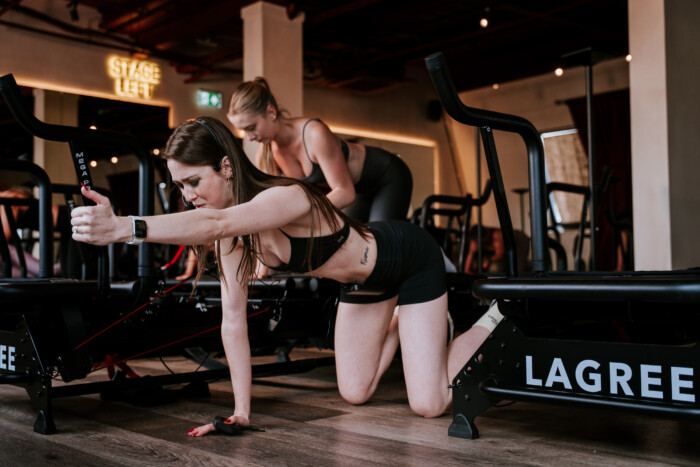
The Megaformer creates continuous resistance throughout the entire range of motion, forcing stabilizers to engage where the body typically compensates or collapses. Slow tempo removes momentum, so glutes, deep hip rotators, and core cannot offload work to joints or connective tissue. Every inch of movement requires muscular control, building strength where flexibility becomes unstable.
🎯 Key Point: The Megaformer’s continuous resistance eliminates compensation patterns that typically allow weak stabilizers to hide during traditional workouts.
“Slow tempo removes momentum, so glutes, deep hip rotators, and core cannot offload work to joints or connective tissue.” — BST Lagree Method
💡 Tip: This muscular control approach builds strength in the exact ranges where your flexibility needs the most support for safe, sustainable mobility.
How does constant tension eliminate muscle hiding places
Traditional strength training includes rest points within each repetition. At the top of a squat or lockout of a leg press, tension drops momentarily: muscles relax, joints bear the load, and the nervous system gets a brief pause.
Why does unbroken tension build better hip stability?
The Megaformer’s spring-based resistance system eliminates pauses. Tension remains unbroken from the first rep to the last. Your hip stabilisers cannot stop working, shift responsibility, or wait for the next rep. This constant demand builds endurance in the muscles that protect joint position and prevents protective tightness from returning after stretching.
How does muscle fatigue reveal movement compensation patterns
When stabilizers fatigue from constant load, compensatory patterns emerge immediately, revealing weakness. Instructors can correct alignment before faulty movement becomes habit, rather than discovering dysfunction weeks later through pain or restricted range.
Why do injuries happen at the end ranges of motion?
Most injuries occur when joints approach their outer limits of motion. The nervous system protects these ranges strongly because they represent the highest risk. If muscles cannot produce force or absorb load at these angles, the body restricts access to them.
How do slow eccentric movements build control?
Lagree training focuses on slow eccentric contractions, which lengthen your muscles while they work hard. For example, lowering into a lunge over eight seconds instead of two forces your hip flexors, glutes, and core to stay stable through positions where most people lose control or engage the wrong muscles. This teaches your body that moving to the end of your range of motion is controllable rather than dangerous.
What does research show about eccentric training benefits?
According to research published in the Journal of Strength and Conditioning Research (2023), eccentric training produces greater improvements in muscle strength and flexibility compared to concentric-only protocols. Participants who trained eccentrically showed increased range of motion alongside strength gains, suggesting that controlled lengthening under load signals safety to the nervous system more effectively than passive stretching.
How does core integration stabilize the pelvis during hip movement?
When your core muscles are weak or not functioning properly, your pelvis can tilt excessively forward, backward, or rotate during movement. This forces your hip muscles to tighten as a protective mechanism, limiting your range of motion, even though your tissues could move further.
Why does Megaformer training improve hip flexibility through core engagement?
Every Megaformer exercise requires your core to stay engaged throughout. For example, planks flow into lunges, and leg work includes moves that resist rotation. Your abdominal muscles, obliques, and deep spinal stabilizers keep your pelvis steady while your hips move through space, mirroring how your body works in real life far better than isolated exercises.
What happens when the core provides reliable support for hip movement?
When the core provides reliable support, hip muscles focus on their primary jobs: extending, rotating, and stabilizing the femur. Tension decreases because the workload is distributed correctly across the system rather than compensating for pelvic instability.
How does low-impact training protect joints while building strength?
High-impact training forces a choice between intensity and joint health. Plyometrics, running, and heavy-loaded movements deliver results but can also place stress on cartilage, ligaments, and joint capsules.
For people with hip tightness or discomfort, aggressive loading can worsen inflammation rather than resolve restriction.
Why does horizontal resistance benefit hip flexibility more than vertical loading?
The Megaformer applies resistance horizontally through springs rather than vertically through gravity, spreading forces gradually across muscle tissue instead of spiking suddenly through joints.
You can train to muscular failure without compressive impact, building strength without irritating sensitive structures.
What makes this approach especially beneficial for women’s hip health?
This becomes especially relevant for women, whose hip anatomy and hormonal fluctuations influence joint laxity and injury risk.
Training that respects these differences while demanding intensity produces better long-term outcomes than protocols designed without considering structural variation.
Why do compensatory movement patterns develop in the hips?
Tight hips often develop because stronger muscles dominate movement while weaker ones disengage: the hamstrings take over for the glutes, and the lower back substitutes for the hip extensors. These compensations redistribute forces inefficiently and create chronic tension, yet feel normal because they’ve been practiced thousands of times.
How does real-time correction prevent dysfunction from becoming ingrained?
Lagree instructors guide alignment continuously throughout each movement. When your knee tracks inward during a lunge, when your pelvis tilts excessively, or when your shoulders compensate for weak hips, correction happens immediately. This real-time feedback retrains motor patterns before dysfunction becomes ingrained.
Most people lack the body awareness to self-correct during intense exercise; fatigue clouds perception, and compensations feel like effort. Coached precision ensures the muscles you intend to strengthen are doing the work, rather than allowing familiar patterns to persist under heavier load.
Why does hip tightness affect your entire body?
Hip tightness rarely exists in isolation. Weak upper back muscles alter shoulder position, which shifts the ribcage, which changes pelvic positioning, which affects hip movement. Addressing only the hips while ignoring upstream or downstream weaknesses produces incomplete results.
BST lagree training sequences movements that challenge the entire kinetic chain within a single session. You cannot brace your upper body to compensate for weak hips when your upper body is already fatigued from the previous exercise. This forces distributed effort and reveals systemic weaknesses that isolated training misses.
How does full-body training create lasting improvements
When the whole system gets stronger together, improvements in one area drive gains in another. Stronger shoulders improve plank position, which allows better hip extension mechanics. Improved core endurance reduces lower back compensation during lunges.
Lagree in London integrates mobility development directly into strength training, building flexibility and stability simultaneously rather than treating them as separate goals. When both qualities develop together under progressive load, the nervous system learns to trust new ranges because they were earned through controlled effort, not forced through passive stretching.
Book a Lagree Class in London Today
If your hips feel tight shortly after stretching, your stabilizing muscles need support. Book a BST lagree session to experience slow, controlled resistance exercises that activate the glutes and deep core while protecting the joints, so the flexibility you gain from yoga lasts.

🎯 Key Point: Lagree addresses the root cause of tight hips by building strength and stability where traditional stretching falls short.
Lagree in London combines strength precisely where your range ends, stability that prevents protective tension from returning, and intensity that respects your joints. When flexibility and control develop together under progressive load, you build permanent change rather than chasing temporary relief.

“When flexibility and control develop together under progressive load, you stop chasing temporary relief and start building permanent change.”
💡 Tip: Don’t let your hip flexibility gains disappear after each yoga session – book your BST Lagree class today to build the deep stability that makes mobility last.