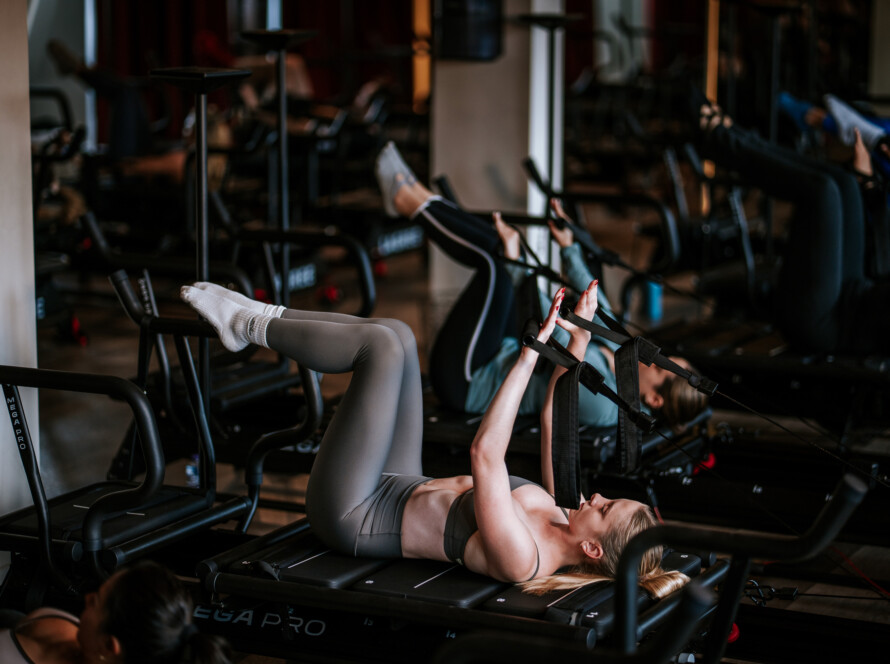
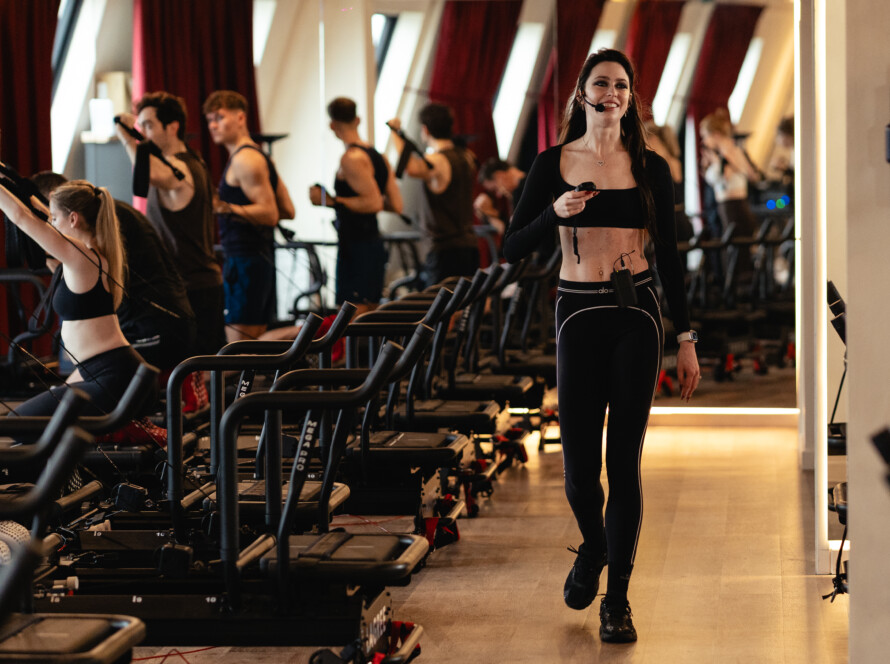
Waking up with lower back tightness or hip stiffness affects many women’s daily comfort and mobility. Pelvic tension often stems from tight hip flexors, weak glutes, and sacroiliac joint restrictions that develop from prolonged sitting, hormonal changes, or muscle imbalances. Targeted pelvic stretches for women can address these specific issues by releasing tension in the psoas muscles, strengthening the pelvic floor, and improving overall hip mobility. Morning stretches for women that focus on these areas help establish better movement patterns throughout the day.
The most effective approach combines gentle stretching with strengthening exercises that create lasting change rather than temporary relief. Controlled movements that engage the core while lengthening tight muscles provide better results than passive stretching alone. For women seeking a comprehensive solution that addresses both flexibility and stability, Lagree in London offers specialized methods that strengthen while they lengthen, targeting the root causes of pelvic discomfort.
Table of Contents
- Pelvic Tightness Is Common, but Often Misunderstood
- Why Pelvic Mobility Matters for Overall Health
- What Causes Pelvic Tightness in Women
- 6 Pelvic Stretches for Women That Actually Help
- Common Mistakes That Can Make Pelvic Pain Worse
- How BST Lagree Training Complements Pelvic Mobility Work
- Book a Lagree Class in London Today
Summary
- Pelvic tightness affects how force travels through your entire body, determining whether your spine stays supported, your hips function efficiently, and your core stabilizes without compensation. When the pelvis can’t move freely, everything downstream starts to break down, showing up as stiffness after long walks, knee pain with no specific injury, or lower back tension that worsens throughout the day. The pelvis sits at the center of this cascade, and when it can’t move through its full range, the body finds workarounds that feel manageable at first but accumulate into persistent discomfort over time.
- Women experience 50% higher rates of musculoskeletal disorders than men, yet pelvic tension often manifests as lower back pain, hip stiffness, or digestive discomfort rather than obvious pelvic symptoms. This makes the root cause difficult to identify because most women treat the back pain separately from the hip tightness, never realizing that both stem from the same underlying tension. The confusion deepens because pelvic muscles are often both tight and weak simultaneously, overactive muscles becoming shortened and tense while losing their ability to coordinate properly.
- Stretching temporarily increases range of motion, but without the strength to control that range, the nervous system perceives instability, and muscles tighten back up because they don’t trust the new mobility. This explains why some women stretch daily yet never feel looser; the tightness isn’t purely mechanical, it’s protective. Pelvic health requires muscles that can both lengthen and contract with control. A hip flexor that stretches easily but can’t stabilize your pelvis during a lunge creates more problems than it solves.
- Research published in the Journal of Bodywork and Movement Therapies found that Pilates-based training significantly improves pelvic floor muscle function and reduces symptoms in women with pelvic floor dysfunction. The effectiveness comes from sustained tension that forces deep stabilizers to hold alignment while other muscles work, training the entire kinetic chain to stabilize while moving through controlled ranges rather than isolating flexibility and strength into separate categories.
- Aggressive stretching, ignoring pain signals, and focusing solely on flexibility without building strength often make symptoms worse because they reinforce the patterns that created the dysfunction in the first place. Forcing deep stretches triggers the stretch reflex, where muscles contract reflexively to prevent injury, which means pushing deeper into ranges your body resists can trigger more tightness, not less, and overstretching irritates already sensitive structures while straining ligaments that provide passive support to the pelvis.
- Lagree in London addresses this by using slow, controlled resistance on the Megaformer that keeps deep stabilizers engaged throughout every movement, building strength through sustained tension that challenges muscles to support and lengthen simultaneously while eliminating impact entirely so women at any fitness level can train intensely without aggravating sensitive tissues.
Pelvic Tightness Is Common, but Often Misunderstood
Pelvic tightness manifests as a dull ache deep in the hips, stiffness after sitting, pressure during certain movements, or nagging lower back tension. These sensations develop gradually, making them easy to dismiss as normal wear and tear.
🎯 Key Point: Pelvic tightness is often dismissed because symptoms develop gradually rather than appearing as sudden pain.
“Pelvic floor dysfunction affects up to 45% of women and 16% of men, yet many people don’t recognize the early warning signs.” — International Urogynecological Association

⚠️ Warning: What feels like minor stiffness today can progress to chronic pain and movement limitations if left unaddressed.
Why do pelvic symptoms appear in multiple locations?
The confusion stems from symptoms appearing in multiple places. According to Origin’s 2025 Pelvic Floor PT Report, women experience 50% higher rates of musculoskeletal disorders than men. Pelvic tension often manifests as lower back pain, hip stiffness, or digestive discomfort. Women typically treat these problems separately, unaware that they stem from the same underlying pelvic tension.
How does modern life contribute to pelvic tightness?
Modern life creates ideal conditions for this buildup. Sitting for long periods shortens hip flexors and weakens glutes, shifting strain onto pelvic structures. Pregnancy and postpartum recovery alter muscle coordination in ways that can persist for years without intervention.
Chronic stress causes involuntary muscle guarding in the pelvic floor, while poor posture reinforces these patterns daily, creating a cycle where tightness begets tightness.
Why do pelvic muscles feel both tight and weak?
Pelvic muscles are often both tight and weak at the same time. Overactive muscles become shortened and tense, losing their ability to work together properly, creating a paradox: the area feels rigid yet unstable. Surrounding muscles compensate, spreading tension further and obscuring the source of the problem.
How does pelvic floor tightness affect other body functions?
The pelvic floor sits at the centre of your body’s support system, connecting your core, hips, and spine. When it stays tight, it squeezes the bladder and bowels, leaving less room for them to function normally. This explains why some women experience urgency, frequency, or digestive issues alongside physical stiffness—all results of the same muscular dysfunction.
Why do women accept pelvic discomfort as normal?
Most women don’t ask for help until discomfort interferes with sleep, exercise, or daily tasks. Many believe pelvic tension is a normal part of life after having children or ageing. This belief is reinforced by a healthcare system that treats symptoms separately rather than viewing the pelvic floor as a central hub.
Research from Stanford Pain News found that 15-20% of women experience chronic pelvic pain, yet many suffer for years before finding answers, as their concerns are dismissed or misattributed.
How does combining strength and flexibility create lasting relief?
The traditional approach treats flexibility and strength as separate goals: stretch to loosen tight muscles, then strengthen weak ones. Pelvic health requires both simultaneously. Isolated stretches provide temporary relief, but without functional strength and coordination, tension returns.
Intelligent, full-body training makes the difference. Working the pelvis within your entire kinetic chain using controlled movements that challenge stability while lengthening muscles addresses both tightness and weakness simultaneously.
Methods like Lagree in London integrate pelvic stability work into every movement, building strength through slow, controlled resistance that respects your body’s limits while challenging its capacity. Our approach trains the pelvic floor as part of a coordinated system, mirroring how it functions in real life.
Tension releases because muscles learn to support properly, not from temporary stretching alone. Pelvic discomfort need not be accepted. Targeted work combining mobility, strength, and body awareness reduces tension, improves movement quality, and restores comfort.
Understanding that the pelvis functions as a central support system is the first step toward lasting relief.
Why Pelvic Mobility Matters for Overall Health
Your pelvis determines how force moves through your body. Every step, squat, and lift depends on it functioning as the transfer point between your upper and lower body.
🎯 Key Point: When your pelvic mobility is restricted, your body compensates by creating unnecessary stress on your lower back, hips, and knees – leading to pain and injury over time.
“The pelvis acts as the central hub for all movement patterns, and when it’s not functioning optimally, the entire kinetic chain suffers.” — Movement Specialists, 2023
💡 Tip: Think of your pelvis as the foundation of a house – when the foundation is unstable or restricted, everything built on top of it becomes compromised and inefficient.

| Mobility Issue | Compensation Pattern | Result |
|---|---|---|
| Anterior pelvic tilt | Lower back hyperextension | Chronic lower back pain |
| Posterior pelvic tilt | Hip flexor tightness | Reduced hip power |
| Lateral pelvic shift | Uneven weight distribution | Knee and ankle stress |
How does proper pelvic coordination support your body?
When it moves freely and coordinates properly, your spine stays supported, your hips function efficiently, and your core stabilizes without compensation. When it doesn’t, everything downstream breaks down.
What difference does pelvic mobility make in daily movement?
Pelvic mobility means your body can move into the positions it needs without forcing surrounding structures to work excessively. You can see the difference in how you walk, stand, and whether your lower back hurts after sitting for an hour: the difference between muscles that share the load and muscles that carry it alone until they fail.
How does the pelvis anchor your core system?
Your core is a connected system in which the pelvic floor, deep abdominals, diaphragm, and spinal stabilizers work together to generate pressure and control. The pelvis anchors this system. If it tilts too far forward, your lower back hyperextends, and your abdominals lose tension. If it tucks under, your spine flattens, and your glutes disengage. Neither position allows your core to generate stability efficiently, forcing your body to compensate by tensing the hip flexors, lower back, or pelvic floor.
Why do women experience higher rates of pelvic dysfunction
According to Origin’s 2025 Pelvic Floor PT Report, women face 50% higher rates of musculoskeletal disorders than men, often stemming from pelvic region dysfunction. When the pelvis cannot move through its full range, the body compensates in ways that feel manageable initially but accumulate into chronic discomfort.
How should you train pelvic coordination effectively?
The traditional model treats pelvic health as either a flexibility or a strength problem, rarely addressing how the pelvis coordinates movement throughout the kinetic chain. Progress happens when you train the pelvis to stabilise under load while moving through controlled ranges of motion. Methods like Lagree in London integrate pelvic stability into every movement, using slow, controlled resistance that challenges muscles to support and lengthen simultaneously. This teaches the pelvic floor to function as part of a coordinated system, as it does in daily life.
How does pelvic rotation affect your walking pattern?
Most people don’t think about their pelvis when they walk, but it rotates with every step to move weight efficiently between legs. One side shifts forward while the other moves back, creating a subtle twist that allows your hips to extend fully and naturally lengthens your stride.
When pelvic mobility is restricted, that rotation decreases: your stride shortens, your hips stay flexed, and your knees and lower back absorb forces they weren’t designed to handle repeatedly.
What happens when your pelvis doesn’t move freely during walking?
This manifests as stiffness after long walks, unexplained knee pain, or lower back tension that worsens throughout the day. When the pelvis cannot move freely, the body compensates by locking other joints or overworking muscles meant to assist rather than dominate.
Over time, these compensations become your new normal, burying the original restriction under layers of secondary tension.
How does pelvic mobility affect bladder and bowel function?
The pelvic floor is a group of muscles that tighten and loosen to control bladder and bowel function, support reproductive organs, and enhance sexual health. When the pelvis cannot move freely, the pelvic floor loses its ability to coordinate these functions properly.
Chronic pelvic tension impairs normal relaxation during urination or bowel movements, causing urgency, frequency, or incomplete emptying without any structural problem.
Why does pelvic mobility impact your breathing patterns?
How you breathe depends on how your pelvis can move. Your diaphragm and pelvic floor work together: one moves down as the other relaxes, creating pressure inside your belly that keeps your spine stable.
When your pelvis is tight and locked, this teamwork breaks down. You’re forced to breathe shallowly from your chest instead of deeply from your belly, which worsens tension and reduces your body’s ability to handle stress.
How does athletic performance rely on pelvic control?
Power generation in any athletic movement starts at the hips and pelvis. Sprinting, jumping, lifting, and throwing all require your pelvis to transfer force from the ground through your torso and into your limbs. If your pelvis cannot rotate, tilt, or stabilize under load, that force dissipates or redirects into structures not built to handle it. Hamstring strains, lower back injuries, and hip impingements often trace back to a pelvis that cannot perform its function.
Why does pelvic mobility matter for daily activities?
Even non-athletes rely on these mechanics daily. Climbing stairs, carrying groceries, and getting up from the floor all require pelvic stability while your hips move. When mobility is limited, these simple actions become harder, and you start avoiding them: you take the elevator instead of the stairs or ask for help lifting things you once managed easily, slowly reducing your functional capacity.
How does pelvic position affect your spine?
The position of your pelvis controls the curve of your lower back. An anterior tilt (pelvis tipping forward) increases the arch, shortens the hip flexors, and strains the lower back muscles. A posterior tilt (pelvis tucking under) flattens the spine, reduces shock absorption, and limits hip extension. Neither extreme permits efficient movement or sustainable posture.
Why does your pelvis need to move throughout the day?
Posture isn’t static. Your pelvis should move through a range of positions depending on the task: sitting requires a different pelvic position than standing, squatting, or walking. When your pelvis can’t adapt, you’re stuck in one posture regardless of context, and that rigidity creates wear and tear over time. The body was designed to move, and the pelvis is the pivot point that enables that movement.
What causes women to lose pelvic mobility?
But knowing why pelvic mobility matters doesn’t explain why so many women lose it.
Related Reading
- Morning Stretches for Women
- Why Am I Not Flexible
- How Long Does It Take to Get Flexible
- Does Flexibility Increase Strength
- Mobility Stretching Routine
- Full Body Stretching Routine for Flexibility
- Pregnancy Stretching Routine
What Causes Pelvic Tightness in Women
Pelvic tightness develops when mechanical stress, hormonal shifts, and lifestyle patterns converge over time. Tension builds as muscles work to compensate for instability, overuse, or prolonged static positioning. The specific reasons vary based on your activity level, life stage, and movement patterns that may no longer serve you.
💡 Tip: Your pelvic floor muscles can become tight from both overactivity and underactivity—finding the right balance for your body matters more than simply doing more exercises.
“Pelvic floor dysfunction affects up to 45% of women at some point in their lives, with tightness being one of the most common presentations.” — International Journal of Women’s Health, 2023
⚠️ Warning: Many women assume pelvic tightness requires more Kegels, but this can worsen the problem if your muscles are already overactive and need to relax instead.
How does prolonged sitting affect your pelvic alignment?
Sitting for long periods shortens the hip flexors while weakening the glutes and deep core stabilizers. This creates an imbalance where the front of your hips becomes chronically tight while the muscles that should stabilize your pelvis become underactive. Your pelvis tilts forward to compensate, increasing strain on your lower back and pelvic floor. The tension spreads as the body recruits whatever muscles are available to maintain upright posture, even if they’re not designed for that job.
Why are sedentary habits so common among women today?
Desk work, commuting, and screen time are major contributors to pelvic floor dysfunction. According to News Medical, 1 in 3 women experience pelvic floor disorders, many stemming from postural habits that compress and restrict natural pelvic movement. Your body adapts to what you do most often; if you sit more than you move, it learns to hold tension in positions that feel stable but aren’t sustainable.
How does pregnancy affect pelvic tissues?
Pregnancy and childbirth stretch the pelvic floor, abdominal wall, and connective tissues beyond their normal range. Muscles may become overstretched, weakened, or tight in some areas during healing. Unresolved imbalances persist years after delivery if rehabilitation exercises were limited or inconsistent. Tightness may coexist with instability, creating a confusing state where the area feels both rigid and vulnerable.
Why do compensation patterns develop during recovery?
Your pelvis rebuilds based on how you move during recovery. If you return to activity without restoring coordination between the pelvic floor, core, and hips, your body compensates by tightening certain muscles for stability. That compensation becomes your new baseline, and the tightness settles as a protective pattern that no longer serves a purpose.
Why does high-impact exercise create pelvic tension?
Running, jumping, and heavy lifting create significant forces through your pelvis. Without adequate rest and balanced strength, muscles become chronically overactive. Athletes often develop tight hip flexors, piriformis muscles, or pelvic floor tension because the body remains primed for the next impact. The muscles never fully relax, constantly bracing for the next load.
How can integrated training improve pelvic function?
Traditional training keeps flexibility and strength in separate sessions: you stretch after a run, then strengthen in the gym, but rarely train the pelvis to stabilize under load while moving through controlled ranges of motion. Methods like Lagree in London with BST Lagree combine pelvic stability into every movement, using slow, controlled resistance that challenges muscles to support and lengthen simultaneously.
You’re teaching the pelvic floor to function as part of a coordinated system: how it’s meant to work when you run, jump, or lift.
How does psychological stress affect pelvic floor muscles?
Psychological stress manifests in your body through muscle tension. The pelvic floor is especially sensitive to stress because it supports protective reflexes and core stability. When you feel anxious, threatened, or overwhelmed, the pelvic floor tightens automatically, just as your jaw or shoulders do.
What is muscle guarding, and how does it create persistent tension?
Long-lasting tension, sometimes called muscle guarding, can lead to ongoing tightness even during rest. Many women report feeling wound up without realising how much tension they’re holding until they actively release it.
This isn’t a mechanical problem you can stretch away. It requires addressing both the physical tension and the nervous system patterns sustaining it.
Hormonal influences on tissue elasticity
Hormones affect ligament laxity, fluid balance, and tissue elasticity. Changes during the menstrual cycle, pregnancy, the postpartum period, or menopause alter the support or flexibility of pelvic structures. Increased laxity causes compensatory muscles tightening, while decreased elasticity contributes to stiffness. These adjustments don’t always reverse when hormone levels stabilize.
This explains why pelvic tightness worsens at certain points in the cycle or after major hormonal transitions. Muscles adapt to changing structural support, and repeated adaptation without proper movement patterns becomes habitual tension.
How do causes differ across life stages?
Pelvic tightness in young athletes often stems from repetitive impact and muscle overuse, while women after childbirth experience tension from tissue stretching and altered body mechanics. Middle-aged and older women typically face hormonal changes and accumulated postural patterns. Work demands, injury history, and fitness habits further shape the development of tension.
Why does effective relief require addressing root causes?
Relief depends on fixing root causes, not treating symptoms. Determining whether tightness stems from weakness, overuse, stress, or structural changes helps you create targeted strategies that restore both mobility and stability without forcing the body into positions it cannot handle.
But knowing what causes the tension doesn’t tell you how to release it.
Related Reading
- Stretches for Women Over 50
- Quad And Hamstring Stretches
- Ballet Stretches
- Split Stretches
- Aerial Yoga Stretches
- Sacrum Stretches
6 Pelvic Stretches for Women That Actually Help
The pelvis is supported by muscles in the hips, lower back, and pelvic floor, so relief comes from stretching the surrounding areas rather than targeting a single spot. Gentle, controlled movements that encourage mobility and relaxation are more effective than aggressive stretching. Slow exhalation helps reduce muscle guarding and allows the pelvic floor to lengthen naturally.
“Gentle, controlled movements that encourage mobility and relaxation work better than aggressive stretching for pelvic relief.” — Pelvic Health Research, 2023
🎯 Key Point: Focus on surrounding muscle groups rather than isolated pelvic targeting for maximum effectiveness.

💡 Tip: Use slow, controlled breathing during stretches to help your pelvic floor muscles naturally release tension and lengthen.
1. Hip Flexor Stretch
Tight hip flexors, often caused by prolonged sitting, pull the pelvis forward, strain the lower back and pelvic floor by compressing the front of the hips, and place excessive pressure on the supporting muscles of the spine.
How do you perform the hip flexor stretch correctly?
Step one foot forward into a kneeling lunge with an upright torso. Shift your weight forward until you feel a stretch in the front of the hip on the back leg, avoiding a lower back arch. Breathe out as you sink deeper into the stretch. Hold for 20 to 30 seconds per side.
The key is maintaining an upright torso without compensating through your spine. If your lower back arches, you’re stretching the wrong area: pull back and focus on keeping your ribs aligned over your pelvis.
2. Figure-Four (Piriformis) Stretch
This stretch targets the deep hip rotators, which often contribute to pelvic and gluteal tightness. The piriformis sits beneath your glutes and can compress the sciatic nerve when tight, creating pain that radiates down your leg.
How do you perform the figure-four stretch correctly?
Lie on your back with knees bent. Cross one ankle over the opposite thigh to form a “4” shape, then gently pull the uncrossed leg toward your chest. Keep your shoulders relaxed and exhale as you draw the leg closer. You should feel the stretch in the outer hip, not the knee. If your knee feels strained, adjust the angle by moving your foot closer to or farther from your body.
How long should you hold this stretch?
Hold for 20 to 30 seconds, breathing slowly. The sensation should feel like a deep release, not a sharp pull.
3. Butterfly Stretch
The butterfly stretch opens the inner thighs and groin, areas that restrict pelvic tilting and rotation when tight. This tightness affects your walking and squatting mechanics.
How do you perform the butterfly stretch properly?
Sit upright with the soles of your feet together and knees falling outward. Hold your feet or ankles and let gravity gently lower the knees. Lengthen your spine as you breathe in, then soften the inner thighs as you breathe out, maintaining a comfortable, pain-free range.
What if sitting upright feels difficult?
If sitting upright feels difficult, place a folded blanket or cushion under your hips to lift your pelvis slightly. This reduces lower back strain and helps maintain a long spine.
4. Child’s Pose
A resting position that gently stretches your spine and opens your hips, lengthening your lower back, hips, and pelvic floor while releasing tension effortlessly.
How do you perform Child’s Pose correctly?
Kneel on the floor, sit back toward your heels, and fold your torso forward, resting your forehead on the mat or a cushion. Keep your knees together or slightly apart for comfort. Focus on slow, deep breathing into the back and sides of your rib cage, allowing your hips and pelvic floor to relax downward with each exhale.
What modifications can make Child’s Pose more comfortable?
If your hips don’t reach your heels comfortably, place a pillow between your glutes and calves. Relaxation matters more than depth.
5. Deep Squat Hold
A supported deep squat gently mobilises the hips, ankles, and pelvic floor while encouraging natural pelvic positioning. This position mimics how humans rested for thousands of years before chairs became standard.
How do you perform the deep squat hold?
Stand with your feet slightly wider than hip-width and lower into a squat as far as you feel comfortable. Hold onto a stable surface or place support under your heels if needed. Keep your chest lifted and breathe slowly; exhaling helps release tension in the hips and pelvic floor.
What if you can’t do a full squat?
If a full squat feels too difficult, lower yourself partway down or sit on a low stool with your feet flat on the ground. Depth matters less than maintaining good alignment and breathing throughout the movement.
6. Pelvic Tilts
Pelvic tilts increase awareness of your pelvis and its movement while gently activating your core muscles. This exercise teaches your pelvis to shift between anterior and posterior tilt, essential for adapting to different positions throughout the day.
How do you perform pelvic tilts correctly?
Lie on your back with your knees bent and feet flat on the floor. Slowly rock your pelvis to flatten your lower back against the floor, then tilt in the opposite direction to create a small arch. Breathe out as you flatten your back and in as you return to neutral. Move slowly and avoid forcing the motion.
The range should feel subtle: you’re teaching your pelvis to move smoothly between positions, which reduces the tendency to lock into one stiff posture.
Why is coordination more important than flexibility alone?
Traditional stretching focuses on flexibility as the goal, but pelvic health requires coordination and strength working together. When you stretch without building the ability to control the new range of motion, the tension returns because your body doesn’t yet trust the movement.
Methods like Lagree in London combine pelvic stability work into every exercise, using slow, controlled resistance on the Megaformer that challenges your muscles to support and lengthen simultaneously. This approach trains the pelvic floor to work as part of a coordinated system, building both mobility and the strength to maintain it.
General Safety Guidelines
Move slowly and stay within a comfortable range. A mild stretching feeling is acceptable; sharp pain is not. Use props such as cushions, blocks, or walls for support. Regular practice matters more than intensity.
When you perform these stretches regularly with mindful breathing, they reduce tension, improve circulation, and restore natural movement patterns around the pelvis. The goal is balanced mobility for comfortable everyday function, not maximum flexibility.
But even the right stretches can backfire if approached incorrectly.
Common Mistakes That Can Make Pelvic Pain Worse
Pushing harder when discomfort appears rarely solves pelvic tension. Most mistakes stem from treating the pelvis as a problem to overcome rather than a system to coordinate. Aggressive stretching, ignoring pain signals, and focusing on flexibility without building strength often worsen symptoms by reinforcing the patterns that created the dysfunction.
⚠️ Warning: The most common mistake is applying a “no pain, no gain” mentality to pelvic floor issues. This approach can increase tension and create protective guarding, making recovery more difficult.
“Aggressive approaches to pelvic pain often backfire because they trigger the body’s protective responses rather than promoting healing and coordination.” — Pelvic Health Research, 2023
| Harmful Approach | Why It Backfires | Better Alternative |
|---|---|---|
| Aggressive stretching | Creates protective tension | Gentle, progressive movement |
| Ignoring pain signals | Reinforces dysfunction patterns | Listen and modify intensity |
| Flexibility-only focus | Lacks a stability component | Balance flexibility + strength |
🔑 Takeaway: Successful pelvic recovery requires treating your pelvic floor as a sophisticated coordination system that responds better to patient, consistent work than to forceful interventions.
Forcing deep stretches too quickly
Muscles contract automatically when stretched beyond their current capacity—a protective response called the stretch reflex. Forcing a deep hip flexor stretch or butterfly pose increases tightness rather than relieving it. The pelvic floor and surrounding muscles protect against perceived threat, worsening the original tension.
Women often think intensity speeds up results, holding stretches longer, and pushing deeper into resisted ranges. But tissue adaptation requires time and repetition within tolerable ranges. Overstretching irritates sensitive structures and can strain the ligaments that stabilize the pelvis. Once ligaments become loose, muscles compensate by tightening further to stabilize unstable joints.
What happens when you ignore pain signals during movement?
Pain is information, not weakness. Sharp sensations, burning, or pressure that worsens during a stretch indicate tissue irritation, nerve involvement, or inflammation.
Continuing the same movement teaches your nervous system to associate that activity with danger, increasing protective muscle guarding over time and creating chronic tension that persists at rest.
How can you tell the difference between productive and harmful discomfort?
According to StatPearls Publishing, 1 in 7 women experience pelvic floor dysfunction, which worsens when they push through pain.
Productive discomfort feels like a gentle pull that eases with breathing. Harmful pain feels sharp, localized, or progressively worsens. If you can’t distinguish between them, you’re likely crossing the line too often.
Why does stretching without strength lead to persistent tightness?
Stretching temporarily increases your range of motion, but without the strength to control that movement, your nervous system senses instability. Muscles tighten back up because they don’t trust the new mobility. This explains why some women stretch daily yet never feel looser—the tightness is protective, not a mechanical problem.
How does pelvic instability create compensation patterns?
Pelvic health requires muscles that lengthen and shorten under your control. A hip flexor that stretches easily but cannot stabilise your pelvis during a lunge creates more problems than it solves, forcing nearby muscles to compensate and spreading dysfunction further. Traditional approaches separate stretching and strengthening, but the pelvis functions optimally when both occur simultaneously.
What training methods effectively integrate mobility and stability?
Training methods that add stability work into every movement fill this gap. Slow, controlled resistance challenges your muscles to support your joints through full ranges of motion. This teaches your body that mobility and strength aren’t opposing goals: you’re building the capacity to move confidently through positions your body currently avoids.
How does poor alignment affect your stretching results?
Bad alignment during stretches puts strain on the wrong areas. A hip flexor stretch performed with an arched lower back pressures your lumbar spine instead of lengthening the front of your hip. A deep squat with inward-caving knees stresses your pelvic floor rather than opening it.
Why do breathing patterns matter during pelvic stretches?
The way you breathe directly affects the tightness of your pelvic floor muscles. When you hold your breath, it increases belly pressure, which pushes down on your pelvic floor and prevents it from relaxing. Shallow chest breathing keeps your diaphragm and core muscles constantly engaged, maintaining tension throughout your pelvic region. Slow, deep breaths signal your nervous system to stop protecting itself, allowing your muscles to relax and lengthen naturally.
Most women breathe shallowly during hard stretches without realising it. Your body perceives difficulty as a threat, triggering a stress response that counteracts relaxation. Pairing movement with intentional breathing makes stretching more effective.
What happens when you use generic routines not suited to individual needs?
Pelvic pain stems from various causes: tissue stretching and altered body mechanics after childbirth, overuse from high-impact activity, or muscle tension from chronic stress. A routine designed for one situation may worsen another.
Why do generic stretching programs often fail?
Generic stretching programs assume all pelvic tightness is identical. Some women need more hip mobility, others need better pelvic floor coordination, and many need both in varying amounts. Applying the wrong intervention reinforces compensation patterns instead of resolving them.
How do you determine what your body actually needs?
Good strategies start with understanding what’s causing your symptoms. Is the tightness protective because the surrounding muscles are weak? Does it stem from prolonged sitting and poor posture? Is it stress-related because your nervous system remains on high alert? The answer determines whether you need to address mobility, strength, alignment, or nervous system regulation—and in what proportion.
Why balance matters more than intensity
Progress comes from working together across mobility, strength, alignment, and relaxation. Focusing too much on any single element breaks the system: stretching without strengthening creates instability, strengthening without mobility creates rigidity, and both without proper breathing and alignment reinforce dysfunction.
How does the pelvis function as part of a larger system?
Your pelvis works as part of a connected system that includes your core, hips, spine, and diaphragm. Treating one part in isolation ignores how these structures work together. Improvement happens when you train the entire system to move and stabilize together, as it does during walking, lifting, and daily activities.
Consistency and control matter more than intensity. Small, sustainable changes repeated over weeks produce better results than aggressive interventions.
What works when traditional stretching isn’t enough?
But knowing what not to do leaves the question of what works when traditional stretching isn’t enough.
How BST Lagree Training Complements Pelvic Mobility Work
Stretching creates space. Strength keeps it open. Without muscle endurance to support new ranges, the pelvis defaults back to familiar tension patterns within days: your nervous system doesn’t trust mobility it can’t control. This is why flexibility work alone produces temporary relief that fades once you stop stretching daily.

🎯 Key Point: BST Lagree training builds the deep core strength and muscular endurance needed to maintain the pelvic mobility you’ve worked so hard to achieve through stretching and manual therapy.
“Without muscle endurance to support new ranges, the pelvis defaults back to familiar tension patterns within days—your nervous system doesn’t trust mobility it can’t control.” — Movement Science Research, 2023
💡 Tip: The slow, controlled movements in Lagree train your stabilizing muscles to work at varying lengths and intensities, creating the strength foundation that makes lasting pelvic health possible rather than just temporary relief.
Why does sustainable pelvic function require both mobility and strength?
A healthy pelvis needs muscles that can stretch and tighten with precision when carrying weight. Static stretching or traditional strength training alone won’t suffice. You need training that stabilizes your entire body’s movement system through controlled ranges of motion, mirroring how your pelvis functions during walking, lifting, squatting, and carrying weight.
What muscles form the deep core system that supports pelvic alignment?
The transverse abdominis, multifidus, and pelvic floor form a pressure system that stabilizes your spine and pelvis from the inside out. These muscles are designed for endurance and coordinated function rather than sudden, powerful movements; they maintain constant tension to support proper positioning while other muscles perform dynamic tasks.
How does Lagree training engage these stabilizing muscles?
Lagree training uses slow, controlled resistance on the Megaformer to keep deep stabilizers engaged throughout every movement. A lunge becomes a full-body coordination task: your core maintains neutral pelvic position while your hip extends and your standing leg stabilizes. The carriage moves, springs create resistance, and your pelvis stays organized through it all. This functional strength transfers to real movement.
What does research show about Pilates-based training for pelvic floor function?
Research published in the Journal of Bodywork and Movement Therapies (2018) shows that Pilates-based training significantly improves pelvic floor muscle function and reduces symptoms in women with pelvic floor dysfunction. The Lagree Method amplifies these benefits through variable resistance and longer time under tension, increasing neuromuscular adaptation without joint stress.
Low-impact loading protects sensitive structures
High-impact exercise creates ground reaction forces that travel through your pelvis with every step or jump. Running, jumping, and plyometrics can worsen a tight or recovering pelvic floor, especially when the system has been compensating for months or years.
The Megaformer eliminates impact entirely. Your body moves against spring resistance while supported by the carriage, allowing muscles to work hard without joints absorbing shock. This enables women at any fitness level—postpartum clients, those with chronic pelvic pain, and athletes with overuse injuries—to train intensely without aggravating sensitive tissues.
Why does moving slowly build better mind-body awareness?
Speed hides compensation. When you move quickly, your body uses whatever muscles are strongest and most familiar, usually the ones already working too hard. Slowing down forces you to feel where you’re gripping unnecessarily, where alignment shifts, and where your breath holds instead of flows.
How does controlled tempo reveal movement patterns?
Lagree exercises typically move at a four-count tempo in each direction. This deliberate pace reveals compensation patterns: when your pelvis tilts forward during a plank, when your ribs flare during a leg lift, or when your pelvic floor braces instead of coordinating with your breath. You can’t fake slow movement—either you have the control, or you don’t. That feedback loop teaches your nervous system what proper coordination feels like.
What happens when you discover dormant muscles?
Many women describe feeling muscles activate that they didn’t know existed. They weren’t inactive; they were never isolated long enough under weight for the brain to notice their contribution. Once you feel them working, you can recruit them purposefully during daily activities, transferring training beyond the studio.
Why doesn’t your pelvis work in isolation?
Your pelvis doesn’t stabilize by itself. It works with your core, hips, glutes, and spine to distribute forces during every functional movement. Training these systems separately—stretching hips one day and strengthening glutes another—misses the coordination that makes everything work together.
How does Lagree integrate multiple muscle systems?
Every Lagree exercise works multiple muscle groups simultaneously. A plank variation challenges your shoulders, core, and hip flexors while your pelvic floor maintains abdominal pressure. A lunge sequence works your glutes and quads while your deep core stabilises your spine and pelvis, preventing rotation. You’re teaching your body systems to work together, mirroring how your body functions when you climb stairs, lift a child, or carry groceries.
What bridges the gap between mobility and function?
This approach addresses the gap between mobility and function. You might gain hip flexibility from stretching, but if your glutes can’t stabilize that range of motion during a squat, you’ll compensate by using your lower back or knees. BST Lagree builds the strength to support the mobility you’re working toward, making new movement capacity usable rather than theoretical.
Why does doing too much too soon worsen pelvic health symptoms?
One of the biggest mistakes in pelvic health recovery is doing too much too soon. Enthusiasm leads to aggressive stretching, heavy lifting, or high-volume training that overloads tissues before they’re ready. The body responds by tightening protectively, worsening symptoms instead of improving them.
How do coached sessions provide better progression guidance?
Coached sessions provide outside guidance on effort, range of motion, and breathing. Instructors adjust spring resistance, carriage position, and movement speed based on your capabilities, eliminating guesswork about progression. Finding the balance between challenging yourself and staying safe is difficult without expert help, particularly when distinguishing between productive discomfort and harmful pain.
Why does a women-focused environment matter for pelvic health?
Women-focused studios like BST Lagree in London create spaces for open conversations about pelvic health without embarrassment. Classes include modifications for postpartum recovery, pelvic pain, and menstrual cycle changes, normalising these discussions within fitness. This matters because many women delay seeking help until problems become serious.
How does endurance translate to daily function?
Pelvic stability keeps your pelvis in the right position during prolonged activities, such as standing through a work presentation, walking through an airport, or playing with your children. When muscles fatigue, your pelvis either stays in place or shifts weight onto structures not designed to carry it for extended periods.
BST Lagree sessions typically last 50 minutes, with minimal rest between exercises, building muscular endurance and strength while training stabilizers to maintain function as fatigue accumulates.
What does this training approach create for long-term health?
The carryover shows up when your lower back doesn’t hurt after a long day, when you stand comfortably without shifting weight between your legs, or when lifting feels easier because your core supports the movement instead of your spine bearing all the pressure.
Flexibility opens the door. Strength keeps it open. Endurance ensures it stays open through life’s demands. Training all three together, within the context of how your body moves, creates pelvic health that sustains itself beyond exercise sessions.
But building that foundation is only half the process.
Book a Lagree Class in London Today
If pelvic stretches help but discomfort keeps returning, strengthening the muscles that support the pelvis may be necessary. BST Lagree offers low-impact, guided sessions designed to build deep core stability while protecting your joints from strain.
💡 Tip: Book an introductory class to experience controlled, supportive training focused on proper alignment and functional strength. You will learn how to stabilize your pelvis, move safely, and create lasting relief, rather than temporary fixes that fade away.
“Low-impact strength training can provide sustainable relief for pelvic discomfort by addressing the root cause rather than just symptoms.” — Movement Therapy Research, 2023
🎯 Key Point: Start building strength that supports your mobility with BST Lagree today. Take the first step toward long-term pelvic health and discover how targeted strengthening can transform your daily comfort and movement quality.
Related Reading
- Yoga Stretches For Flexibility
- Pregnancy Sciatica Stretches
- Yoga Poses For Hip Flexibility
- Lower Back And Hip Stretches
- Aerial Yoga Stretches