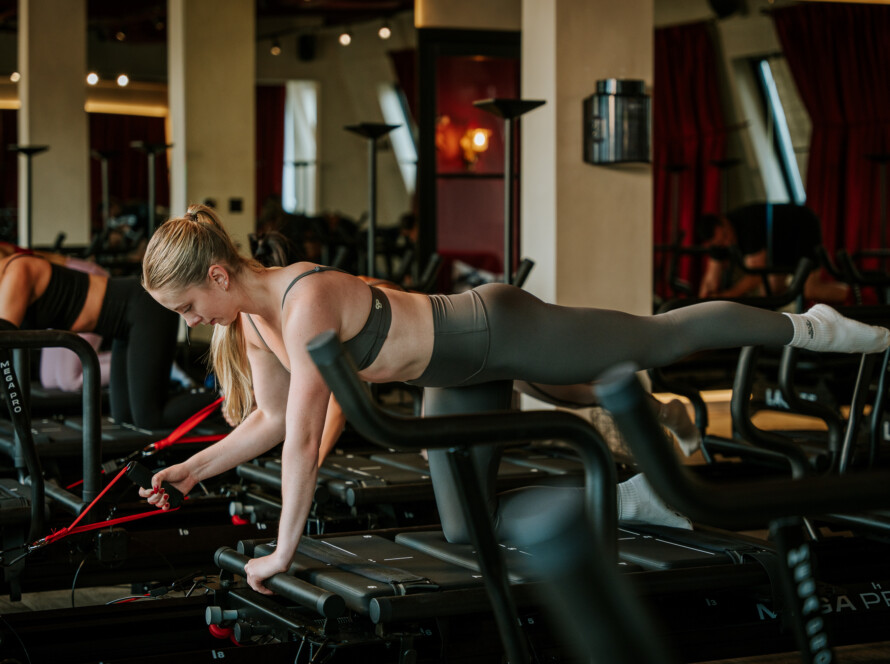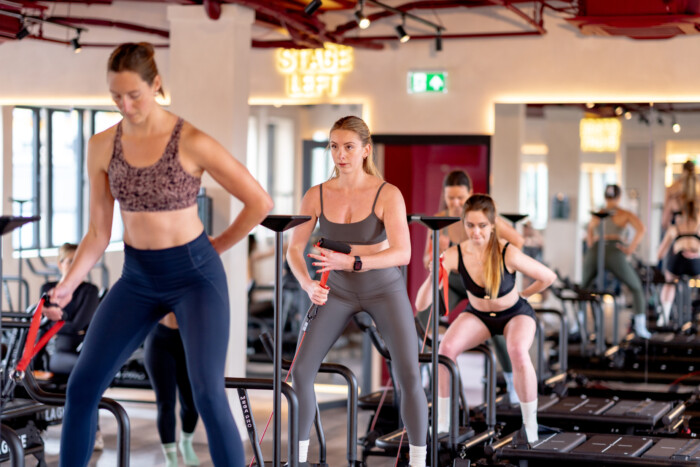
Menopause affects your body: hormones change, muscle mass may decline, bone density may drop, and everyday movement can feel harder. Worried about losing strength as your hormones change? Flexibility and strength training uses low-impact resistance, mobility work, and balance practice to preserve muscle, protect bone, ease joint pain, and help manage hot flashes and energy dips. This article explains strength training and menopause, and why lower-impact training delivers better results, with practical tips on resistance training, recovery, pelvic floor care, and simple ways to maintain metabolic rate and functional strength.
To make that easier, BLOOD, SWEAT & TEARS’ Lagree in London location offers guided sessions that blend controlled resistance, core and pelvic floor work, and mobility to help you build strength without pounding your joints, improving bone health, balance, and everyday function.
Summary
- Menopause reduces recovery capacity, with around 60% of women reporting sleep disturbances, which shortens recovery windows and makes the same workouts produce more fatigue and joint irritation.
- Bone becomes pickier during menopause, losing about 1% of density per year, so consistent, directional mechanical stress over months is more effective than sporadic high-impact loading.
- Hormonal shifts change body composition and session tolerance, with approximately 75% of women experiencing hot flashes that affect session timing, hydration, and perceived exertion.
- Strength training remains crucial, increasing metabolism by about 15%, and adults who do resistance work at least twice weekly see roughly a 30% lower risk of chronic disease.
- Traditional blunt-loading approaches carry measurable risks, with one report showing 30% of lifters experience muscle strains and 50% report joint pain when programs ignore movement variety, breath, and recovery.
- Practical programming that preserves progress relies on short, consistent sessions twice a week, microprogressions every 2 to 4 weeks, and 8 to 12-week blocks to raise adherence and reduce flare-ups.
BLOOD, SWEAT & TEARS’ Lagree in London addresses this by providing guided, low-impact sessions that blend controlled resistance, pelvic floor sequencing, and mobility to support bone health, balance, and everyday function.
What Changes in the Body During Menopause
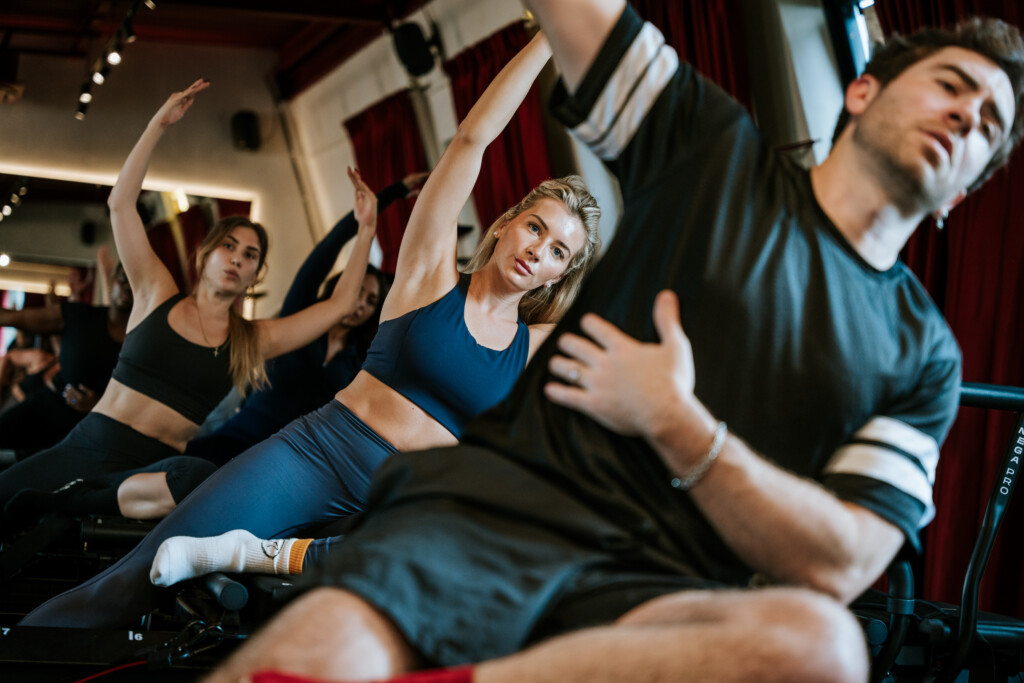
Menopause changes how your body handles and recovers from training stress:
- Hormones affect muscle repair
- Connective tissue elasticity
- Bone responsiveness
- Sleep
So the same workouts that once delivered gains may instead cause fatigue and joint irritation. You still build stronger, denser bones with resistance training, but you must adjust how the load is applied and the recovery rhythm to maintain steady progress.
How Does Falling Oestrogen Affect Muscle and Connective Tissue?
Falling oestrogen reduces the efficiency of muscle repair and the elasticity of tendons and ligaments. That means microtrauma clears more slowly, soreness lasts longer, and ballistic or poorly controlled loading spikes risk without clear benefit.
Think of oestrogen like the lubricant in a machine; less of it makes parts rub more and recover more slowly. In practice, this favours time-under-tension resistance, controlled eccentrics, and measured progression, as slow, precise loading stimulates hypertrophy and tendon adaptation while limiting damaging shear forces.
What Changes in Bone Density, And Why Does Loading Need To Be Smarter?
Bones still respond to mechanical stress, but they become pickier about how that stress arrives. Rapid, high-impact forces can produce pain or strain without reliably improving bone quality if connective tissues and coordination are out of sync.
The familiar approach is to try heavier loads or more jumps to “make up” for perceived losses, but that often fragments training, forces reductions due to pain, and stalls progress. Studios like Blood, Sweat & Tears offer time-under-tension, low-impact resistance that delivers targeted axial and shear loads in a controlled manner, allowing bones to receive consistent osteogenic signals while protecting joints and tendons.
Why Do Sleep and Thermal Symptoms Matter for Training Tolerance?
Recovery is not optional; it is the currency of adaptation, and menopause hits that currency hard. Approximately 60% of women report sleep disturbances during menopause, according to Chemist4U, which reduces recovery time and amplifies soreness, cognitive fog, and perceived effort. That pattern appears consistently across clinical and studio settings: when sleep is fragmented, intensity becomes harder to sustain, form breaks down sooner, and small fluctuations in load translate into disproportionate pain or fatigue.
How Do Body Composition and Symptoms Like Hot Flushes Change the Training Picture?
Fat distribution shifts and muscle retention become hormonally influenced rather than purely effort-based, so strategies that previously worked may need recalibration. Approximately 80% of women experience hot flushes during menopause, according to Chemist4U, which affects session timing, hydration, and perceived exertion in real time.
It is exhausting and confusing when you push harder and see the scale or energy respond differently; that frustration often leads to chasing intensity rather than adjusting stress patterns.
What Training Tradeoffs Actually Work Better Now?
This challenge appears across studio and rehab environments, where women escalate impact to push through losses and repeatedly hit plateaus or niggles. The failure mode is predictable; load is applied like a blunt instrument rather than with intent.
When joint tolerance is limited, choose tempo-based microprogressions, isometric holds, and higher-rep sets with slow eccentrics to accumulate effective load without spikes. When sleep or thermal instability limits session frequency, prioritize shorter, higher-quality sessions focused on compound, controlled movements and reclaim recovery through active mobility and consistent sleep hygiene.
A Short Analogy to Make It Concrete
Think of training during menopause as tuning an engine rather than flooring the accelerator; minor adjustments to timing and load produce smoother, longer-lasting power than repeated full-throttle attempts that overheat the system.
Most people try harder; the smarter fix is to change how stress is delivered, not how much effort you give. But the real reason this keeps happening goes deeper than most people realise.
Related Reading
- Flexibility and Strength Training
- How to Grow Glutes
- HIIT vs Strength Training
- Are Wall Sits Good for Knees
- Lifting Weights With Shoulder Arthritis
- How to Strengthen Weak Muscles Naturally
- Low Impact Strength Training
Why Strength Training Matters More, Not Less

Strength training matters more now because it is one of the few interventions that changes your physiology and risk profile simultaneously, not just your appearance. When you prioritise resistance work sensibly, you preserve the capacity to move, think clearly, and stay independent well into later decades.
How Does Strength Work Translate Into Everyday Independence?
When we redesigned short, focused programs for midlife women, a clear pattern emerged: sessions that felt purposeful and directly related to daily tasks kept people coming back. Motivation shifted from chasing aesthetics to seeking practical wins, such as carrying groceries without pause or climbing stairs without hesitation. That emotional shift, paired with a predictable schedule, created the behavioral momentum that actually preserves function, not vague gym promises.
What Does Strength Training Change Inside Your Body?
This is not only about muscles, but also about systems. Coach BSD Blog, “Strength training can increase your metabolism by 15%,” explains why resistance training helps counteract the slowing of energy needs that come with age, making it easier to manage weight and blood sugar.
And because exercise is prevention as much as performance, “Adults who engage in strength training at least twice a week have a 30% lower risk of developing chronic diseases.” That reframes the choice to train from cosmetic to protective, helping reduce risks like metabolic disease and cardiovascular strain.
Can You Get Meaningful Results Even With a Busy Schedule?
If time is scarce, structure beats volume. Short, consistent resistance sessions twice a week create a reliable stimulus that people can sustain, and that sustainability is the real lever for long-term change.
Many women we work with trade sporadic long workouts for brief, focused sessions across 8 to 12 weeks; attendance rises, perceived exertion falls, and confidence grows because the workload fits life rather than fights it. Some women also layer simple supports, such as adding creatine or collagen under medical guidance, to protect muscle and connective tissue during training.
Efficiency Over Intensity: The Case for Low-Impact Training
Most people default to long workouts or high-impact classes because they are familiar and feel decisive. That works for motivation, but it creates recovery debt, inconsistent progression, and avoidable joint stress as demands climb.
Platforms like Blood, Sweat & Tears in Angel offer instructor-led Lagree in London sessions that deliver effective resistance through efficient, low-impact full-body workouts, giving women a repeatable stimulus that scales with ability while preserving movement quality and time.
What Progression and Accountability Actually Keep Gains Steady?
The most common failure point we see is inconsistent load progression paired with optimism about recovery. Treat strength like a bank account: make regular deposits, and adjust contribution size when the account feels tight. Practically, that means using modest, measurable load increases every 2 to 4 weeks, tracking how daily tasks feel, and prioritising two reliable sessions over sporadic intensity spikes.
Community and coaching matter here; accountability creates the small habit changes that compound into functional strength, posture improvements, and absolute confidence. Picture compound interest applied to strength, not bursts of effort that leave you flat the next day. That momentum feels like progress, but the next section will show why some familiar training habits quietly erase those gains.
Where Traditional Strength Training Can Backfire
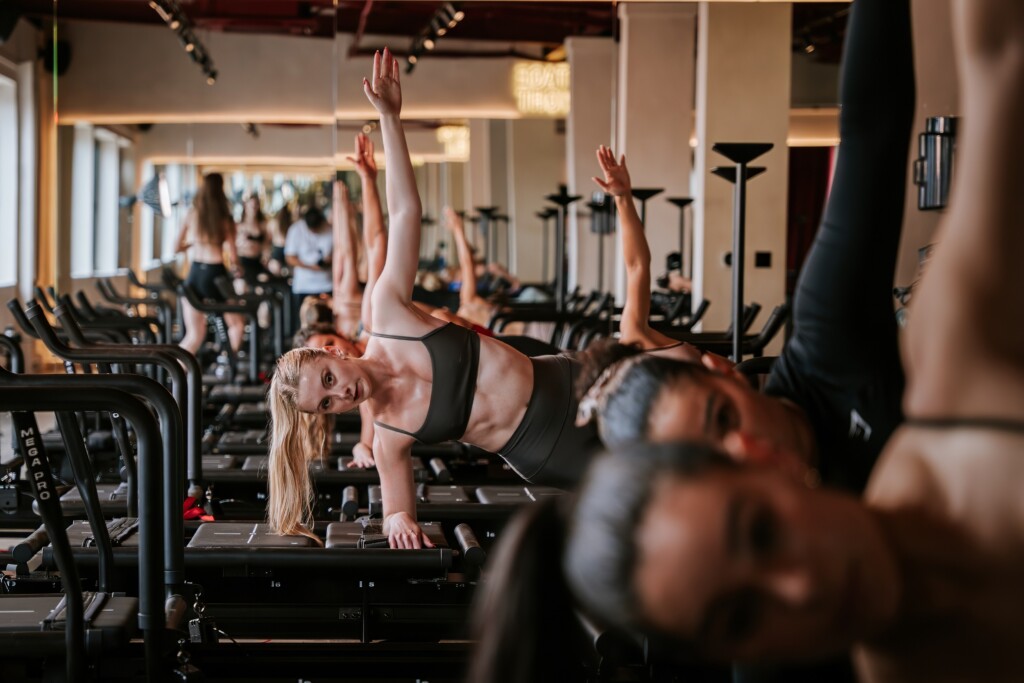
Traditional strength training can backfire when it treats loading as a blunt instrument rather than a precise signal. When programs ignore breath and pressure, rely on repetitive single-plane movement, or stack volume without recovery, the result is not strength; it is chronic discomfort, breakdown, and stalled progress.
How Does Poor Breath and Pressure Control Create Harm?
When breath and bracing are coached like a one-size-fits-all trick, abdominal pressure climbs, and pelvic floor stress follows. That mismatch often shows up as new low back or pelvic pain, urinary leakage, or a sense of instability when lifting, especially during heavier or sustained holds.
The underlying problem is simple:
Without taught diaphragmatic breathing and graded Valsalva timing, clients trade safe force production for internal strain that accumulates over weeks.
When Does Repetition Turn Into Overuse Rather Than Improvement?
Repetition becomes harmful when it repeats the same movement vector at high volume, without rotation, anti-rotation work, or sensory variation. This pattern overload tends to the tendons and motor patterns, reducing resilience.
According to Tonal’s 2025 State of Strength Report, 30% of traditional strength-training participants report muscle strains, often attributed to unvaried, repetitive loading combined with lapses in movement control.
Why Does Ignoring Systemic Stress Break Recovery?
Training decisions that ignore sleep, daily workload, and sympathetic drive turn every session into a gamble. High weekly volume, extra cardio sessions, and poor nutrition compress the nervous system’s recovery window, and that’s how chronic soreness or burnout appears.
The consequence is common:
Progress stalls and motivation wanes, while pain becomes the signal to stop rather than adapt. The same Tonal’s 2025 State of Strength Report shows 50% of individuals who engage in traditional strength training experience joint pain, a marker that program design often mismatches real-world tolerance.
Beyond the Plateau: Balancing Intensity and Movement Quality
Most people default to familiar gym routines because they’re efficient and comfortable, but that habit obscures the trade-off. The familiar approach is to upload or reps when progress slows. That makes sense at first, yet as volume and intensity rise without targeted recovery, minor technique faults compound into persistent niggles, lost sessions, and reduced function.
Studios like BLOOD, SWEAT & TEARS in Angel offer a different approach, using controlled time under tension, low-impact resistance, and coached breathing to deliver measurable load while maintaining movement quality and recovery.
How Does Neuromuscular Control Influence Long-Term Resilience?
Strength is not only about muscle size or bar numbers, but also about how well the nervous system sequences movement under fatigue. When programming skips balance, rotational strength, and proprioceptive challenge, clients gain raw force but lose coordinated power for everyday tasks.
Think of it like upgrading engine horsepower without tuning the transmission; you get bursts of speed, followed by clunky, inefficient shifts and more wear.
A Practical Pattern That Matters for Midlife Women
This challenge is consistent across studio settings. When we shift focus from maximal external load to coached breathing, graded pressure, and varied movement over a 6- to 12-week block, flare-ups decrease, and adherence increases.
The failure mode is predictable, load is applied as escalation, not as adaptation, and the fix is methodical, short, progressive changes to tempo, plane, and autonomic load that preserve gains and reduce pain.
It’s exhausting to try harder when the plan is quietly working against you.
Related Reading
- Do Squats Help Pelvic Floor
- Physical Therapy Strength Training
- Combining Cardio and Strength Training
- Lower Back Arthritis Exercises
- Strength Training for Women over 40
- Joint Friendly Exercises
What Menopausal Bodies Actually Respond To

Menopausal bodies respond best to predictable, repeated mechanical signals delivered with precision, measured tempo, and smart recovery, not blunt increases in weight or impact. Give the system clear, varied strain patterns that it can register and repair around, and you get steady strength, safer bone stimulation, and less downstream soreness.
How Should We Think About Bone Loading Now?
Bone density decreases by about 1% per year during menopause, The Menopause Report, which means the window for cumulative stimulus is long and slow, not dramatic. Bones require directional, repeated strains that create small local deformations, followed by time for mineralisation.
Practically, that favours controlled multi-planar force delivered consistently over weeks and months, with occasional novel loads to signal adaptation. Think of it like irrigation rather than a single downpour; frequency and direction matter more than a one-off heavy event.
What Kind of Muscle Stimulus Produces Reliable Gains?
Muscle during menopause still hypertrophies, but the nervous system needs transparent, sustained recruitment to translate stress into growth. Use moderate loads with extended contraction quality, slow eccentrics, and brief isometric pauses to recruit motor units without compromising form. Schedule compound sequences two to three times per week to create repeated synthesis windows while avoiding chronic fatigue.
When we moved a group from sporadic, heavy sessions to a controlled-tension protocol over an 8- to 12-week block, they reported less post-session pain. They returned more consistently to training, which is the literal currency of adaptation.
How Should Connective Tissues Be Trained Differently?
Tendons and ligaments remake themselves slowly, so short bursts of high-impact force are often the failure mode, not the solution. Progression should favour incremental increases in load or excursion every two to four weeks, paired with higher-quality movement and adequate rest between exposures.
Include slow-loaded movements that load the tendon through full range, then allow 48 to 72 hours before stressing the same tissue again. The failure pattern to avoid is rushing through tasks because it feels productive; that habit creates overload and setbacks. Swap blunt escalation for graded increases in time under tension and controlled range, and the tissues catch up.
How Do Symptoms That Disrupt Daily Life Change Training Choices?
Approximately 75% of women experience hot flashes during menopause, The Menopause Report, so session timing, clothing, and ventilation are not trivial details.
Pick training slots that match an individual’s thermal and sleep patterns, shorten sessions when nights are fragmented, and keep intensity dialled to perceived readiness rather than ego. When recovery is compromised, smaller, higher-quality stimuli sustain progress better than fewer, maximal-effort sessions that sideline you.
What Does Safe Progression Look Like, Practically?
Use microprogressions that change one variable at a time:
- Tempo
- Range
- Rep scheme
- External load
If someone’s joint or tendon tolerance dips, shift from added weight to a tempo change or a longer eccentric rather than cancelling progress.
Track functional markers, like whether carrying groceries feels easier or stairs require fewer breaks; those daily wins are more reliable progression signals than a single heavy lift. When mobility, sleep, or stress fluctuate, use RPE to autoregulate and reduce session density rather than chasing numbers.
Why is Variety in Loading Vectors Important?
Bones and tendons respond to stress direction as much as magnitude. Repeating the exact movement vector compounds local wear without broadening resilience.
Add rotational, lateral, and vertical loading across sessions to spread the stimulus and lower the risk of focal overload. In practice, that means pairing a sagittal squat pattern one day with a transverse-loaded hinge or a lateral lunge several days later, timed to allow tissues to recover and adapt.
Where Does Programming Break Down, and How Do You Fix It?
The common mistake is treating progression like a one-dimensional dial; more weight equals better. That logic works until recovery contracts and niggles appear, then consistency collapses. The fix is to treat programming like engineering tolerances:
- Define safe daily inputs
- Monitor outputs
- Change only one parameter at a time
When soreness or sleep disturbance rises, reduce overall session stress while maintaining movement quality. That keeps momentum and prevents the all-too-familiar cycle of ramp, injure, stop.
Low-Impact Training: Prioritizing Control Over Intensity
Most people default to heavier lifts or impact because it feels decisive. That makes sense emotionally, but it creates a hidden cost:
- Inconsistent recovery
- Recurring niggles
- A gradual loss of confidence
The familiar approach is understandable and works for a while; however, as tolerance narrows, friction grows. Platforms and studios that specialise in low-impact, high-control resistance deliver effective signals in compact sessions, providing consistent stimulus without the full systemic toll.
How Do You Know When the Program is Working?
Beyond aesthetic measures, look for reliable functional signs:
- More manageable daily tasks
- Shorter recovery times
- Fewer flare-ups after hard days
- Steady attendance
If you can increase load, range, or tempo while keeping pain and fatigue stable, you are winning. If those markers stall, step back and change the signal, not the intensity. The most consistent gains come from programs that treat strength as a gradual, measurable process rather than a series of heroic efforts.
That solution feels like progress, but the next piece reveals how a specific method compresses these principles into sessions that actually scale for busy women.
How Lagree Fits Strength Training During Menopause

Lagree’s strength-training approach during menopause provides precise, coach-led signals rather than blunt force. It uses measured progressions, breath and movement sequencing, and simple functional markers to improve strength, metabolic health, and resilience without chronic niggles or missed sessions.
How Do Instructors Control Internal Pressure and Protect the Pelvic Floor?
When you teach, the first decision is sequencing, not intensity. Exercises are ordered so the body builds stiffness in the hips and core before any load travels through the pelvis, and coaches cue a long, controlled exhale on effort to avoid prolonged Valsalva.
We use brief isometric holds and slow eccentrics, for example, a 5-second lowering with a 2-second pause, to build tendon stiffness and neural control without spiking intra-abdominal pressure. That combination reduces the standard failure mode in which people increase the load before coordination is complete.
What Concrete Signs Tell You the Program is Working?
Look beyond the scale and the soreness. Track three simple metrics across 4 to 6-week blocks: how many resistance notches you can add on the machine, whether a 10-second unilateral balance hold becomes steadier, and whether daily tasks like carrying shopping feel easier.
Those wins are objective, low-noise signals you can measure in a class setting. That metabolic carryover is meaningful, too, because Lagree improves insulin sensitivity and blood sugar stability, supporting energy and recovery during training.
Sustainable Strength: Moving Beyond High-Impact Defaults
Most women default to heavier weights or high-impact classes because they feel decisive, and that approach is understandable. What often follows is intermittent pain, stop-start attendance, and stalled progress.
Solutions like BLOOD, SWEAT & TEARS Lagree offer an alternative approach, with instructor mentorship, calibrated machine resistance, and class frameworks that enable participants to scale the load reliably while preserving movement quality.
How Does the Method Protect Bone and Long-Term Structure?
Force matters when it is predictable and directionally varied, not random. Repeated, controlled muscular tension sends clear signals to bone-remodeling cells; in practice, this looks like multiplanar loading sequences paired with recovery windows built into the programming.
Supporting that intent, Lagree Fit 415, “Lagree helps maintain bone density through resistance and muscular tension”, which explains why consistent, teacher-led resistance can be protective over months and years.
What Practical Rules Keep Progression Safe and Steady?
Treat progression like small engineering changes: alter one variable at a time, usually tempo or hold duration before, adding resistance, and reassess for 7 to 14 days. Use a quick readiness check each session: a three-question scan on sleep, recent pain, and hot flash severity.
Then choose a graded option:
Full pattern, reduced range, or an alternate unilateral movement.
Think of it like tightening a bike spoke, small turns maintain alignment; big swings risk breaking the rim. If you want a short, verifiable plan to use in a class, try this 8-week microcycle:
- Week 1: Starts with baseline holds and tempo.
- Weeks 2 to 4: Add 2 to 4 seconds of eccentrics or 2-second isometrics.
- Weeks 5 to 6: Increase resistance by one notch if functional markers improve.
- Week 7: Deload volume while holding tempo.
- Week 8: Retest the three functional markers.
That simple, coach-led loop prevents the familiar boom-and-bust pattern.
There is a Human Side to This Too
Women tell us that steady, visible function gains restore confidence faster than chasing numbers in the gym. That momentum matters because it keeps attendance steady, and constant attendance is the real engine of change.
You think booking a class will answer everything, but there is one choice inside the booking that changes everything about how you progress.
Book a Lagree Class in London Today
After years of teaching studio work, we see the same pattern: women try class after class for months, chasing quick wins and ending up more uncertain and worn down. If you want to stop guessing and try an approach designed for midlife bodies, book a single Lagree session at BLOOD, SWEAT & TEARS in Angel to feel how guided, time-smart strength work for menopause fits your life, then decide from that experience.