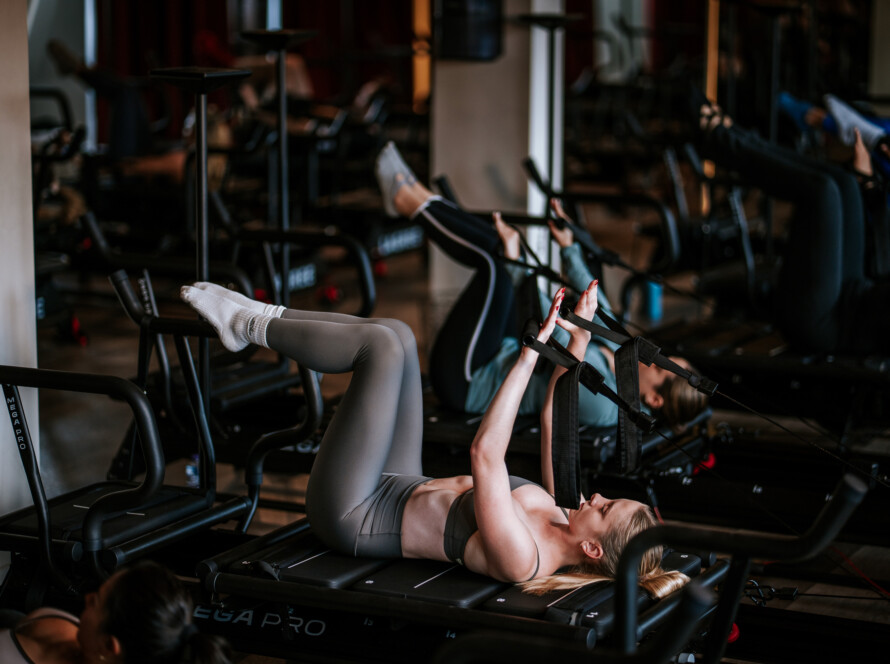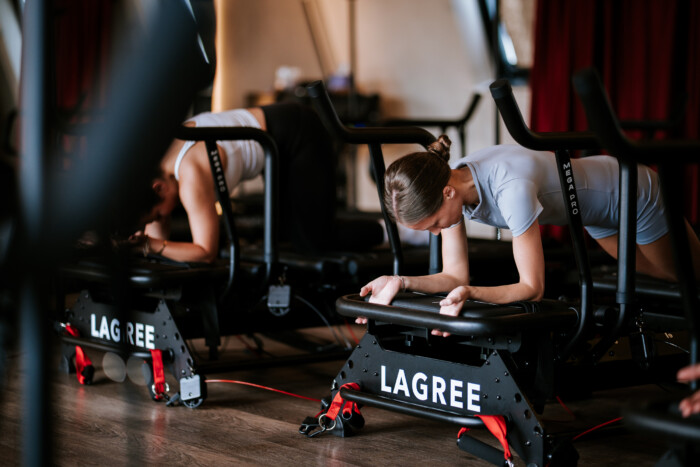
You push through workouts but still feel stiff the next day, your squat never reaches full depth, and your back complains after long periods of sitting. Flexibility and strength training show how mobility and strength fuel each other, so you move better, lift more, and avoid nagging pain. Want to know why you should not treat stretching and resistance work as separate things? This article outlines precise science, practical exercises, and simple routines to help you combine mobility work with strength training and reach your goals.
For practical help, BST’s Lagree in London uses controlled resistance and flowing movement to build core stability, joint health, balance, and muscle endurance, making Flexibility and Strength Training easier to learn and stick with.
Summary
- Treating strength and flexibility as separate projects leads to compensation and plateaus, and 80% of injuries occur when there is an imbalance between flexibility and strength.
- Flexibility gains are fragile unless reinforced under load; 80% of profits are lost within a month without strength training, showing that range is a motor skill that requires progressive loading.
- Time pressure makes mobility optional. Because 75% of people prioritize flexibility over salary and 60% report improved mental health from flexible work arrangements, programs that do not fit busy schedules are more likely to be skipped.
- Program the work around slow, resisted movement, end-range isometrics, and progressive overload, since strength training twice a week can increase muscle mass by 10% over six months and build usable capacity.
- Track progress with two numbers, range plus control, using weekly end-range holds and loaded movement tests, a strategy that aligns with findings that flexibility work can reduce injury risk by about 30%.
BST’s Lagree in London addresses this by using controlled resistance, timed tempos, and end-range holds so mobility is trained under load and becomes usable in everyday movement.
The Mistake Most People Make With Strength and Flexibility
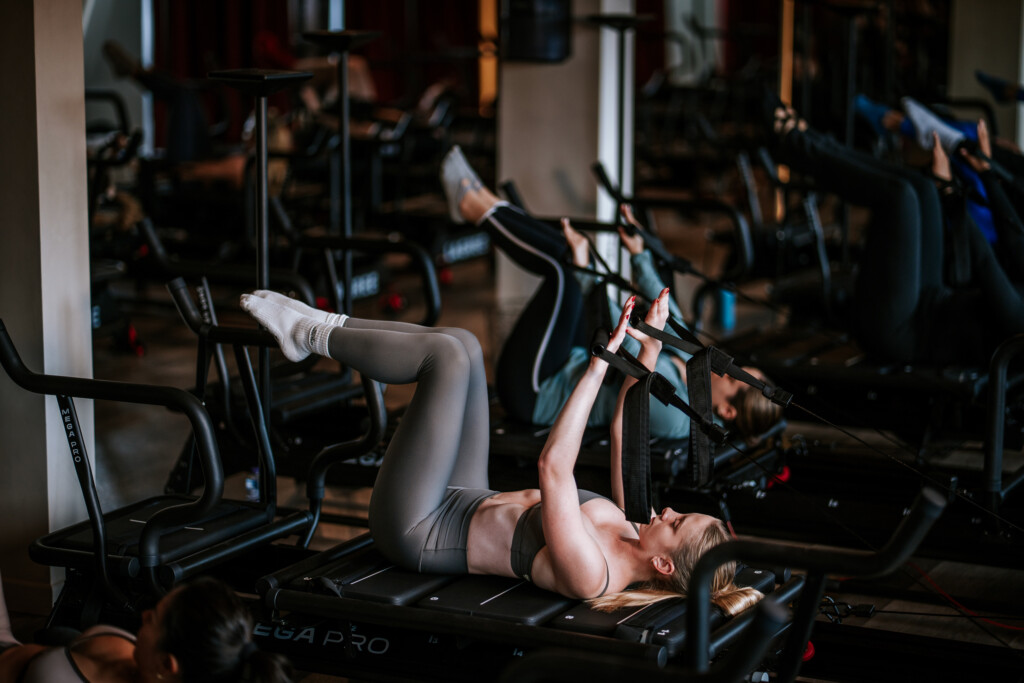
The biggest mistake is treating strength and flexibility as separate projects instead of two sides of the same movement. When you train strength without deliberate mobility under load, or flexibility without strength through that range, progress stalls and injury risk rises.
Why Do People Train Them Separately?
The familiar approach is to reserve strength for the weights area and flexibility for a ten-minute cooldown because that split feels tidy and easy to schedule. That habit persists because most gym programs, classes, and apps reinforce it, leading people to default to compartmentalised sessions rather than integrated work that builds control through range.
What Breaks When Those Pieces Are Split?
This pattern appears across morning classes and private training: strength gains outpace mobility, and the body compensates by shifting load into joints and connective tissue, resulting in recurring soreness and plateaus. Or the reverse occurs: the added range lacks the stability to handle everyday loads, leaving people feeling loose and inefficient.
The failure mode is simple, mechanical, and avoidable, like increasing engine power without upgrading the transmission.
How Does Schedule Pressure Make the Problem Worse?
Training that treats mobility as optional collapses under time pressure, which is why scheduling matters more than many trainers admit. According to Yardi Kube, 75% of people prioritize flexibility over salary when choosing a job. That preference extends to fitness choices: if a program does not fit into a busy day, people skip the sessions that actually build durable movement.
Consistent Practice and Flexible Access
Consistent practice enhances mental resilience, making routine not just physically beneficial but crucial for overall well-being, with 60% of people reporting improved mental health from flexible arrangements. Providing flexible access to training helps individuals maintain consistency, which is essential for achieving lasting gains.
Stacking Separate Sets and Joint Compensation
Most people manage this by stacking separate strength sets and static stretches because it feels familiar and requires no program overhaul. That works for a while, but as the load increases, the friction appears:
- Joints compensate
- Form breaks down
- Gains turn into nagging pain
Integrated Mobility Scaling
Studios like BLOOD, SWEAT & TEARS offer an alternative path, using time under tension and resistance-based Lagree work to load muscles through controlled ranges so mobility and stability develop together, preserving low-impact safety while cutting the back-and-forth between strength and flexibility.
What Should You Focus on in a Session?
Pay attention to control across the full range, not just at the end or with heavier weights. Think slow resistance that challenges the muscle through motion, then reinforce that motion with stability cues and progressive overload. The key training prescription is to expose tissues to tension while they move, then repeat under fatigue to improve neuromuscular control alongside length and strength.
That approach fixes the two standard failure modes: too much torque for the available range, and too much range with no control.
Simultaneous Structural Reinforcement
Visualize it this way: strength without mobility is like turning up a faucet while the pipe is clogged; pressure builds until something gives. Mobility without strength is like widening a doorway but removing the door frame that keeps it square. The safer, faster path is to broaden and reinforce simultaneously.
The following section will break down the precise failure modes and explain why each, taken alone, almost always fails under real-world conditions.
Related Reading
- How to Grow Glutes
- HIIT vs Strength Training
- Are Wall Sits Good for Knees
- Lifting Weights With Shoulder Arthritis
- How to Strengthen Weak Muscles Naturally
- Low Impact Strength Training
Why Flexibility Without Strength (and Strength Without Flexibility) Fails
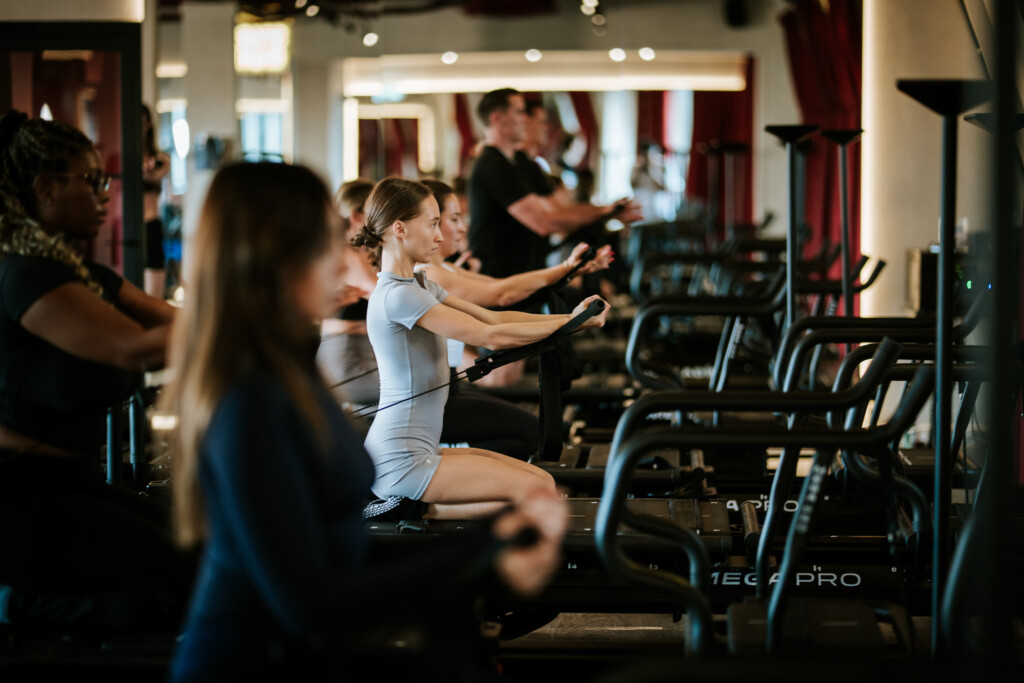
Both approaches fail when they create a range or force the body to control that it cannot, rendering gains either unusable or unsafe. Strength built into a tight envelope stacks stress on joints; flexibility without load produces motion the nervous system cannot stabilize, leaving tissue exposed.
How Does Mismatched Capacity Injure Joints?
When force is applied outside the muscles’ controlled range, the stress is transferred to passive tissues and joint surfaces, causing microtrauma and altered movement patterns. This is not theoretical. According to the VSA Blog, 80% of injuries occur when flexibility and strength are out of balance, underscoring a common failure: a mismatch between what tissues can do and what we demand of them.
In practice, that looks like an enormous, pretty overhead reach followed by a painful shoulder shrug under load, or newly gained hamstring length that fails during an explosive step, resulting in a strain.
Why Does Flexibility Fade If It Is Not Reinforced Under Load?
Range is a motor skill, not just a length measurement; without progressive loading, the neuromuscular system quickly degrades range. Clinical data backs this: 80% of flexibility gains are lost within a month without strength training, which explains why passive gains rarely stick unless you teach the body to produce force through that new length.
Mechanically, collagen remodeling and neural tolerance take time and repeated tensile exposure, so a one-off stretch does not create lasting capability.
What Patterns Show Up in Real Training and Everyday Life?
This pattern appears across rehab clinics and studios: someone improves passive mobility, then notices instability during a lunge, a twist, or when carrying children up stairs. The emotion is predictable, it’s frustrating and deflating — you feel more flexible, yet movement feels riskier. That mismatch explains why many of us revert to protective movement, avoid loading, and lose the very capacity we worked to build.
If programs separate mobility into checkboxes, how does that break down?
Most people separate mobility into short warmups or cooldowns because it fits schedules and feels tidy, and that works until load or complexity rises. As training intensity or daily demands increase, short-term changes lead to recurring pain and compensation.
Solutions like Lagree in London load muscles slowly through full ranges with controlled resistance, so clients build strength where they now have new mobility, preserving low-impact safety while reducing compensatory stress.
How Should You Track Whether a Change is Real or Fragile?
Treat progress as two numbers, not one: measure the new range, then measure strength or control through that same point. Use simple tests, such as single-leg depth with alignment or an isometric hold at end range, and follow trends over weeks rather than days. If range improves but control metrics stall, shift programming toward slow, loaded contractions at that angle until control catches up; that tradeoff-focused approach prevents the familiar loop of loose-but-weak results.
The Psychological Anchor of Adherence
We see the emotional side too: people want movement they can trust in daily life, not just impressive flexibility for its own sake, and that desire drives compliance. When clients commit for a few weeks and see posture improve and previously dormant muscles activate, the psychological payoff keeps them consistent, which is the fundamental factor that turns fragile changes into durable capacity.
The Efficiency of Female-First Fitness
BLOOD, SWEAT & TEARS provides a women focused fitness space that helps their clients achieve their fitness goals faster than other workouts out there, without the risk of injury; through both strength building and cardio within a 45 minute workout clients can feel and see results fast without spending hours trying to “figure it out” in a dirty, boring, creepy gym environment.
All of our instructors are certified and complete a rigorous mentorship program, ensuring every class is fun, uplifting, motivating, effective, and safe. In just 2 weeks of consistent participation, you will feel and see a difference.
Book a class to see why Lagree in London is America’s fastest-growing workout for 3 years in a row.
What Flexibility and Strength Training Should Look Like
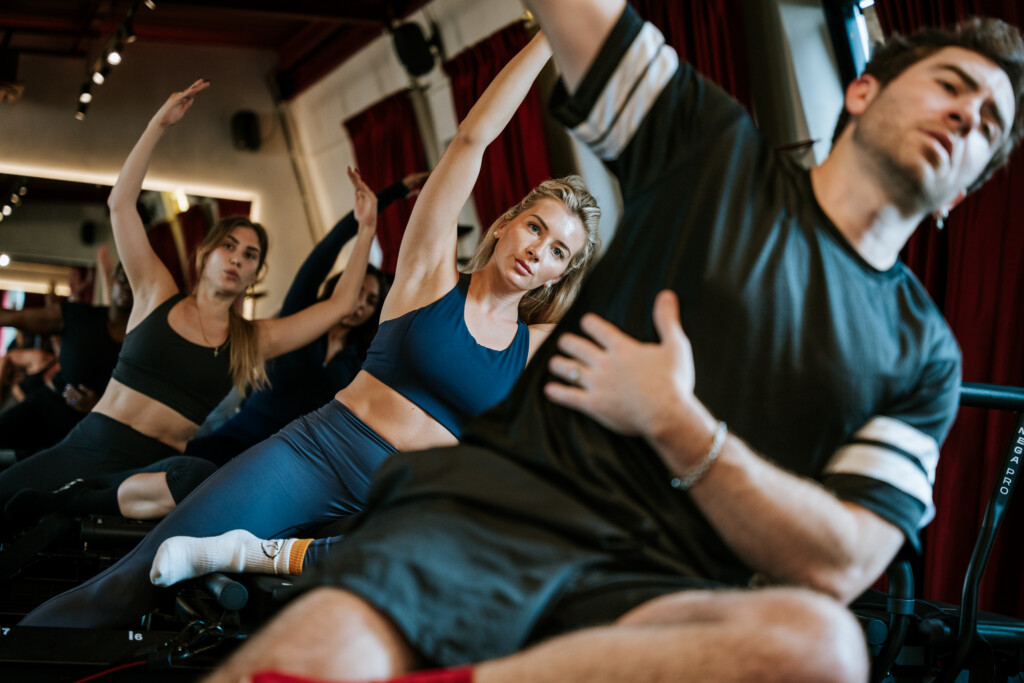
Flexibility and strength training should be programmed together, with slow, resisted movements that load muscles through their full range while you practice control. Build sessions around time under tension, end-range isometrics, and progressive overload to improve mobility and stability simultaneously.
How Should a Single Session Be Structured to Deliver Both Outcomes?
When we rebuilt busy clients’ plans into 30- to 45-minute blocks, the pattern that worked best was clear: a short activation warm-up, two compound sets performed slowly with deliberate eccentric control, then one targeted end-range hold and a light-loaded mobility piece.
Frequency matters too, so aim for consistent resistance exposure rather than indefinite variety, which is why strength training twice a week can increase muscle mass by 10% over six months—two focused sessions a week is a minimum target for structural change. Additional short Lagree‑style sessions stack endurance and control without extra impact.
Structure each set for control, not speed: slow eccentrics, controlled transitions, and consciously braced core make the range usable under load.
What Exactly Should You Do to Build Strength Through Length?
- Start with multi-joint moves that travel through the problematic angles, then slow them to extend time under tension:
- Squats with a 3 to 4 second descent
- Controlled hip hinges leaning into the eccentric
- Single-leg work that forces unilateral stability
- Add brief isometric holds at the end range for 5 to 10 seconds to train torque control.
- Follow with a loaded mobility drill that blends movement and tension rather than passive lengthening.
The Resilience Architecture
This combination of slow resistance and loaded stretching reduces the risk of acute injuries because targeted mobility work beyond simple range-of-motion exercises also lowers injury risk. Flexibility exercises can reduce the likelihood of injury by 30%, highlighting the protective value of structured mobility and strength training.
When Does an Exercise Become a Mobility Tool, Not Just a Strength One?
Pattern recognition helps here: an exercise becomes mobility training when you increase range and require controlled force at that point. If a client can passively reach but cannot hold or generate force for five seconds, the movement remains fragile.
In practice, we test with a simple loaded end-range hold and a slow single-leg descent. If control fails, regress the load or shorten the range, then progress tempo and time under tension. Over 6 to 8 weeks, shifting priorities from heavier, shorter reps to slower, range-focused reps reliably improves both alignment and day-to-day confidence.
Why the Common Approach Breaks Down, and What Fixes It?
Most people stack machine circuits and a quick stretch because that routine fits schedules and feels efficient. That familiarity hides a cost: movement fragments, compensation spreads, and gains do not translate into everyday tasks.
Solutions like BLOOD, SWEAT & TEAR’S Lagree method offer an alternative path: they deliver precise resistance and tempo control in compact classes, allowing women to fit effective, low-impact training into busy weeks while improving usable range and joint safety.
How Should Progress Be Measured So You Know Gains Are Real?
Use two simple checks each week: one for range and one for control. An end-range isometric hold timed for control, and a loaded movement that reproduces the same angle under concentric and eccentric tension. Track whether the hold time, alignment, or load increases while pain or compensatory movement decreases.
When range rises but control stalls, the correct adjustment is not more stretching; it is a more controlled load at that angle until the nervous system integrates the new motion.
The Functional Carryover Effect
When we changed programming for clients who complained of recurring aches, posture, and muscle discomfort, followed within a month, they reported less daily discomfort and could squat lower under load without bracing or shifting weight. That felt like real progress because the movement carried over to carrying toddlers, climbing stairs, and sitting without slouching.
That solution works until you hit the one obstacle nobody talks about.
Related Reading
- Do Squats Help Pelvic Floor
- Strength Training and Menopause
- Physical Therapy Strength Training
- Combining Cardio and Strength Training
- Lower Back Arthritis Exercises
- Strength Training for Women over 40
- Joint Friendly Exercises
Does Flexibility Increase Strength?
Not much on its own. Being more flexible lets you train through a bigger range, but stretching by itself adds little strength, and strength training is what builds it. An international panel of stretching researchers concluded that resistance training is the main way to increase strength over the long term and is far more time-efficient than stretching, which has only small effects on strength (Warneke et al., Journal of Sport and Health Science, 2025).
Timing matters too. The same panel notes that long static stretches, around 60 seconds or more per muscle, can temporarily reduce force, so keep long holds for after training or a separate session and use moving warm-ups before you lift.
The useful link runs the other way: training through a full range builds strength at the positions you can now reach. Three ways to do that this week:
- Take squats, split squats and Romanian deadlifts to the deepest position you can control, lowering for three seconds.
- Pause for two to three seconds at the bottom of each rep instead of bouncing out of it.
- Add range before load: when you can control a deeper position for 8 to 10 reps, then add weight.
If a position hurts rather than just feels challenging, shorten the range and build back up gradually.
How Lagree Combines Flexibility and Strength in One Workout
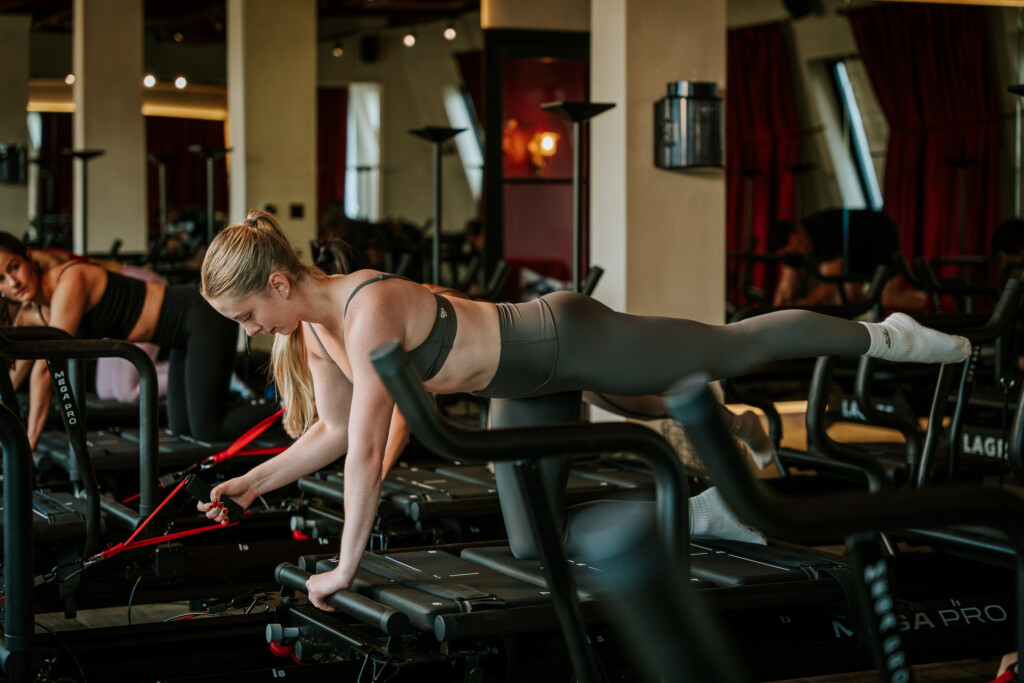
Lagree merges strength and flexibility by forcing muscles to make force while they move through extended ranges, so you learn to control longer positions instead of just stretching into them. The method combines tempo, graduated resistance, and repeated end-range holds into short, repeatable progressions, so mobility becomes a trained skill rather than a fragile byproduct.
How Does the Body Change When You Load Range Deliberately?
Slow, resisted motion alters both the muscle and the nervous system. When you eccentrically load a muscle through a longer arc, the tissue remodels to handle force at that length, and the nervous system lowers protective inhibition, so the range becomes usable under load.
The “Tuned String” Principle
Think of it like tuning a string instrument: you lengthen the string while tightening it so the note holds cleanly under pressure. That shift is why end-range strength matters more than passive flexibility if you want movement that carries into daily life.
What Does a Practical Progression Look Like for Someone Who Cannot Touch Their Toes?
When we coached beginners who could not touch their toes, we used a four-week plan of twice-weekly, tempo-controlled sessions focused on hip hinge depth, posterior chain isometrics, and ankle mobility. Within those four weeks, clients reported reaching lower without sharp strain and noted new hamstring and glute engagement while carrying children or bending to tie their shoes.
The program emphasized incremental range, measured by hold duration and pain-free descent, rather than chasing a single toe-touch metric.
How Do Instructors Turn a Single Exercise Into Both Strength and Mobility Work?
Coaches cue the movement in small steps: set a stable pelvis, breathe to lower neural tone, then lengthen under slow resistance with a timed hold at the end point. They use machine resistance adjustments and tempo counts to scale load instantly, so a movement that starts as mobility work becomes a strength drill as the student maintains form.
That immediate scalability is why a 45-minute session can deliver a real metabolic stimulus alongside motor learning, with a single class capable of burning 500 calories.
Why Keep This Structure When Time is Tight?
The familiar approach is to split lifting and stretching because it feels tidy. That works until you want movement that survives the real world, and the hidden cost is fragile gains that vanish under load. Solutions like Lagree in London offer instructor-led sequencing, adjustable machine resistance, and timed tempos that combine progressive, low-impact loading into a single, compact class, so clients see measurable improvements without extra hours at the gym.
How Should Progress Be Measured So You Know It’s Real?
Use simple, repeatable checks each week: timed end-range holds, a loaded forward reach with controlled return, and single-leg depth with alignment. Coaches track whether hold times, control, or load increase while discomfort decreases.
That practical measurement explains why short, structured Lagree blocks are 25% more effective at converting workout time into measurable strength and mobility gains, especially for busy schedules.
What Cues Change Fast for Women New to This Work?
Focus on breath, hip-hinge initiation, and engagement of the posterior chain rather than forcing length. Minor tactile corrections and mirror feedback deliver significant improvements in alignment, and discovering “hidden” muscles often becomes the motivator that keeps people consistent. That psychological shift is what turns tentative range into confident movement.
That path sounds tidy, but the next step exposes the one decision that determines whether results stick or fade.
Related Reading
- Arm Exercises for Women Over 50
- Long Resistance Band Exercises
- Low Impact Exercise Machines
- Hip Strengthening Exercises for Seniors
- Leg Strengthening Exercises for Seniors
- Low Impact Workouts for Seniors
- Low Impact Exercises for Knee Pain
Book a Lagree Class in London Today
Most of us juggle tight schedules and the risk of wasting time on workouts that feel loud, impersonal, and unstable. Studios like BLOOD, SWEAT & TEARS in Angel, London, offer a women-focused, coach-led alternative that helps short, joint-friendly sessions carry over into daily life.
Try a class and feel the difference for yourself.