


Maybe your knees ache after a run but you still want to build strength and stay flexible. In flexibility and strength training, the right low-impact exercise machine lets you add muscle and mobility without extra joint stress. Which piece of equipment gives gentle cardio, core strengthening and balance work — an elliptical, rowing machine, recumbent bike, Pilates reformer, or resistance trainer? This article compares top options and helps you pick the best low-impact exercise machines for joint-friendly workouts at home or in a studio.
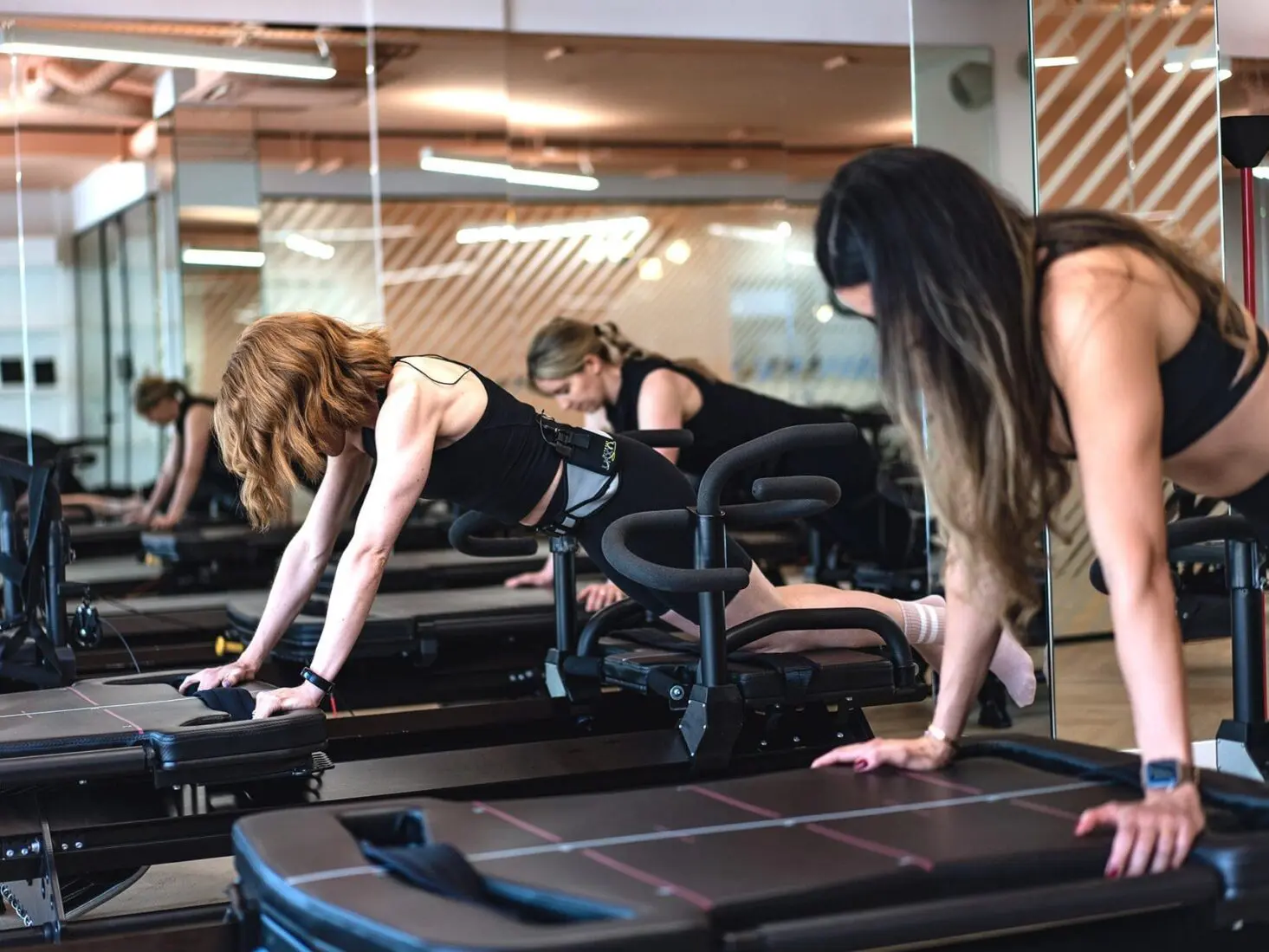
If you want a studio-based option that blends controlled resistance, balance and core work, BLOOD, SWEAT & TEARS’ Lagree in London offers focused sessions and equipment that support your joint friendly strength and flexibility goals.
Summary
- Low-impact machines remove a major barrier to training for people with joint pain, and 30% of gym-goers now prioritize low-impact workouts.
- Safety without progressive overload leaves users comfortable but unchanged, and objective plateaus typically show up within a 4 to 8 week window if load, tempo, or functional tests do not improve.
- Not all low-impact equipment is equal for strength, the article compared 16 machine categories and found only those that force deliberate tempo, scalable resistance, and coachable alignment reliably produce measurable gains.
- Three simple programming changes, slowing eccentric tempo, adding controlled pauses, and logging objective resistance, produce outsized improvements in strength and mobility when applied consistently.
- The market is shifting from movement to measurable strength, with 50% of fitness enthusiasts now incorporating low-impact strength work and overall demand up about 30% year over year.
- To push past a machine ceiling, use microloading and off-machine high-threshold work, for example increasing resistance by 1 to 2 percent each session and adding short maximal efforts or loaded carries.
BLOOD, SWEAT & TEARS’ Lagree in London addresses this by pairing machines that maximize time under tension with precise instructor cues and small class progressions, while keeping sessions short and measurable.
Why People Look for Low-Impact Exercise Machines

People choose low-impact exercise machines because they let you train hard while protecting sore or vulnerable joints, and they make consistent, repeatable loading feel safe and manageable.
The real reason is pragmatic: low-impact machines remove a major barrier to training, so people who need strength, mobility, or consistent cardio can stick with a program long enough to get results.
What Problem Are People Solving?
Most are solving a simple, urgent problem, joint pain or injury that otherwise ends their progress. After working with women returning from injury over several months, the pattern became clear: joint discomfort is the trigger that pushes someone away from running or jumping, but what keeps them engaged is feeling competent and not punished by pain during and after workouts. That emotional relief, not novelty, is why many stay with machine-based training.
Why Does Low-Impact Feel Safe Yet Sometimes Fall Short?
Safety without effectiveness is a common trap. Machines remove impact, but they do not automatically create muscle-driven, progressive resistance. Folks tell me they felt safe on a machine, yet left sessions without soreness or strength gains because movements relied on momentum or too little loading.
This mismatch creates frustration because you feel comfortable yet still see no measurable change.
Who Is Most Compelled to Buy These Machines?
People balancing time constraints and physical limits, especially women seeking full-body results without long sessions, choose machines that let them maximise every minute. According to Les Mills’ analysis of emerging fitness trends, 30% of gym-goers now prioritize low-impact workouts, a shift reflecting growing demand for efficient, joint-friendly training across the fitness industry.
The Joint-Health Imperative
A sizable portion of participants also choose low-impact options for medical reasons: 20% of fitness enthusiasts report joint issues as a key factor, underscoring why coaching quality and thoughtful programming matter just as much as the equipment itself.
What Breaks When Programs Ignore Technique?
The failure point is predictable: when instructors or users treat low-impact machines as cardio equipment rather than resistance tools, you lose time under tension, alignment, and progressive overload.
The result shows steady attendance, stagnant strength, and no improvement in flexibility. That is exhausting for clients who expected transformation, and it erodes trust in low-impact methods.
The Efficiency Ceiling
Most teams follow a familiar path, using recumbent bikes or ellipticals because they are easy and familiar. This works for maintenance, but as goals shift toward lean muscle, better posture, and higher metabolic output, the familiar approach creates hidden cost, workouts become time-consuming and inefficient, with limited measurable gains.
Studios like BLOOD, SWEAT & TEARS in Angel show a different path, using time-under-tension resistance to deliver high-intensity results without joint stress, making short sessions produce visible strength, flexibility, and endurance improvements.
How Should Someone Choose a Machine If Results Matter?
Pick machines that allow deliberate tempo, scalable resistance, and coachable alignment cues. Favor setups that force slow, controlled repetitions so muscles, not momentum, take the load. If a machine cannot be programmed for progressive tension and clear coaching cues, treat it as a cardio tool, not a strength tool.
People often start with the right instinct, seeking gentler options for valid reasons, but that instinct only pays off when paired with disciplined programming and expert coaching. The next section will show which machines actually meet that test, and which ones only look the part.
16 Best Low-Impact Exercise Machines

1. Megaformer (Lagree Fitness Machine)
The Megaformer applies controlled, multi‑planar resistance for an extended period under tension, so muscles fatigue without impact. Use it for slow eccentric work, unilateral balance drills, and core stability sequences that translate to everyday strength; avoid using it as a cardio sprint platform or you lose the alignment cues that protect knees and spine.
Tip: Program sets by tempo and range, not by heart rate; a 10/3/3 tempo (slow eccentric, pause, controlled concentric) exposes weak links faster than more reps.
2. Elliptical Trainer
If you need continuous cardio without footstrike, an elliptical preserves hip and knee motion while letting you vary stride length and resistance. The device becomes ineffective when people lock their posture or rely on momentum; coach a slight forward lean, active arm drive, and variable resistance intervals to recruit the glutes and posterior chain.
For women short on time, high‑effort 2:1 intervals of 60 seconds on, 30 seconds off produce cardiovascular stress while maintaining joint safety.
3. Recumbent Bike
The recumbent bike protects the lumbar spine and reduces knee stress with a reclined seat, making it ideal for rehab or chronic low back clients. Its common pitfall is underloading; increase resistance and cadence intentionally to target leg strength rather than just circulation.
When we ran an eight‑week equipment audit with small-studio clients, the pattern was clear: switching to well‑fitted recumbents reduced post‑session soreness complaints and improved consistency.
4. Upright Stationary Bike
Upright bikes demand more core work and offer better transfer to outdoor cycling positions, so use them for seated strength work, standing sprints, and cadence drills. Quality matters: choose frames that stay rigid under out‑of‑saddle loads, because shaky bikes break momentum and confidence.
If your priority is progressive leg strength, pair intervals with deliberate resistance progressions across weeks.
5. Rowing Machine
Rowing is exceptional for integrated posterior chain and core development when you coach the drive sequence: legs, then hips, then arms, with a controlled return. Some rowers, such as the Sunny Health & Fitness Adjustable Rowing Machine, list a 220-pound weight capacity, which is important when selecting equipment for heavier clients or for use in studio classes.
Program tip: Longer, slower sets at moderate resistance build endurance, while short, high‑resistance sets recruit more muscle growth.
6. Arc Trainer
The arc trainer reduces anterior knee shear by using a fixed gliding path, making it useful when knee comfort and upright posture are priorities. It becomes ineffective as a strength tool when users adjust only speed; you must also change stride length and load to shift emphasis to the glutes. Treat it like a strength machine by adding tempo work and intermittent holds at end range.
7. SkiErg Machine
The SkiErg uses a vertical pulling pattern to train lat, shoulder, and core power while sparing lower‑limb impact. It becomes a superior metabolic and upper‑body strength tool when coaches prescribe standing braced core positions and full hip hinge; otherwise, users shorten range and lose efficiency.
Use it in interval blocks, alternating upper‑body power with leg‑driven machines to maintain full‑body balance.
8. Under‑Desk Pedal Exerciser
These devices are best classified as mobility and circulation tools, not primary strength builders. They reduce sedentary stiffness and help maintain a daily movement habit, but they require deliberate increases in resistance or standing follow‑ups to produce strength gains. Pair them with short standing mobility circuits to convert low‑intensity pedalling into a meaningful load.
9. Whole‑Body Vibration Platform
Vibration platforms elicit reflexive muscle contractions that support balance and circulation, particularly for clients with limited capacity to perform high‑load movements. Their main value is as a supplement; use them for short activation before heavier sets, not as the main stimulus. Program them for 30 to 60 seconds per exercise to avoid fatigue without yielding greater joint stress.
10. Stair Climber (Low‑Impact Settings)
When stepped slowly and deliberately, stair climbers isolate glutes and hamstrings while eliminating jarring landings. They weaken as strength tools if users lean on handrails or rush cadence; instruct clients to hold posture and increase resistance to emphasize posterior loading. For time‑pressed clients, four-minute hill repeats at increased resistance give substantial metabolic and strength stimulus.
11. Ski Machine / Nordic Trainer
The gliding Nordic motion blends leg drive and upper‑body pacing and can be adjusted to bias power or endurance. To get strength from it, prescribe long glides with a slight pause at full extension so muscles work under tension rather than relying on momentum. It produces excellent low‑impact conditioning when alternated with resisted strength blocks.
12. Treadmill (Walking Mode)
Walking on a treadmill is deceptively productive when using a graded incline and tempo control; walking fast uphill engages the posterior chain without impact. It loses value when used at flat, easy paces for long periods without progressive overload. To convert walking into strength work, schedule repeated incline blasts and deliberate pole or arm drive to include the upper body.
13. Vibration Plate Trainer
Functionally similar to whole‑body vibration platforms, these trainers should be used for short activation and balance sets. They help clients who struggle to recruit stabilizers by creating a noisy neural environment that forces micro‑adjustments. Use them immediately before compound sets and coached sets to improve muscle firing.
14. Cable Resistance Machines (Low‑Impact Settings)
Cable machines allow precise, multi‑directional loading and are outstanding for bridging strength gaps, because you can load single joints while protecting others. The typical mistake is choosing light, high‑rep comfort sets that avoid progressive tension; instead, program heavier single‑leg or anti‑rotation patterns with slow eccentricities.
Treat cables as the technical workbench for weak links before returning clients to integrated machines or free‑weight movements.
15. Seated Resistance Machines
Seated machines isolate muscle groups safely, making them excellent for building raw strength in a controlled manner for clients with balance or mobility limitations. Their failure mode is over‑reliance: if every session stays seated, you lose carryover to standing tasks. Progress clients by alternating seated strength blocks with functional standing transfers as control improves.
16. Walking Pad
Walking pads function as compact, low‑speed treadmills for consistent daily activity and combat inactivity because they are easy to use between tasks. They are not substitutes for targeted strength sessions unless you add incline or weighted carries. Use them as behavioral tools to increase NEAT, then allocate a small, focused strength block elsewhere.
Status Quo Disruption
Most studios and home setups rely on familiar machines because they are easy and require no extra coaching; that approach keeps sessions safe but often produces little structural change over months. As load and programming complexity increase, fragmentation appears:
- Inconsistent tempos
- Neglected progressive overload
- Clients plateau
Solutions like Lagree Studios in Angel compress that gap by combining a machine built for time‑under‑tension, consistent instructor cues, and small-class progressions that move clients from stability to strength, preserving joint safety while delivering measurable results.
A Few Practical Selection Rules
How should you choose between these machines? Select tools that maintain a deliberate tempo, allow measurable resistance progression, and accommodate client constraints such as space and weight support. If a machine cannot be overloaded gradually and coached for proper alignment, treat it as a cardio or mobility tool rather than a strength device.
Real User Tradeoffs to Expect
This pattern appears across rehab and boutique settings: people want joint safety, but they also need clear, progressive challenges. When we adjusted the programming for a six-week mixed cohort, attendance remained high only when the machines felt sturdy, and the workouts showed visible progress within three sessions. Unstable equipment or no measurable load quickly eroded confidence and attendance.
Programming Quick Wins
Which short practices convert these machines into strength builders? Three simple changes produce outsized results: enforce slow eccentric tempos, demand full ranges with controlled pauses, and log objective resistance or perceived effort each session. Those small procedural habits turn low‑impact equipment into instruments of transformation.
That seems decisive, but the next hurdle is where low‑impact tools stop scaling and what you do when they do.
Related Reading
- Flexibility and Strength Training
- How to Grow Glutes
- HIIT vs Strength Training
- Are Wall Sits Good for Knees
- Lifting Weights With Shoulder Arthritis
- How to Strengthen Weak Muscles Naturally
- Low Impact Strength Training
Where Low-Impact Machines Help and Where They Hit a Ceiling

Low-impact machines reliably protect joints while allowing you to accumulate volume and precise movement practice, but they stop delivering real structural change when they cannot increase mechanical tension or force a nervous-system adaptation. They help with consistency, rehabilitation, and controlled hypertrophy, and they hit a ceiling when you need:
- True progressive overload
- High-rate power
- Heavy eccentric stress
How Do Low-Impact Machines Help?
The pattern shows these machines excel when the goal is repeatable, coachable loading that protects knees and hips. Because users tolerate sessions better, training frequency often increases, and that additional work matters: users report a 15% increase in workout duration when using low-impact machines, translating into greater weekly stimulus for strength and mobility adaptations.
In practice, that means you can stack small, measurable stressors throughout the week without triggering flare-ups, and that steady accumulation helps people who previously avoided training.
Where Does the Ceiling Appear, Physically and Neurologically?
Problem-first: the limit is mechanical and neural. Many low-impact designs limit peak tension through gearing, seat support, or fixed travel paths, so they cannot generate the high internal force required to recruit the fastest muscle fibers. Neurologically, you also miss rate coding and high-threshold motor unit recruitment, the very signals that drive maximal strength and power.
Practically, that looks like controlled repetitions that never feel truly heavy, marginal increases in one-rep capacity, and little transfer when real-world tasks demand force.
Most studios follow the familiar path, and that makes sense. It scales, it reduces complaints, and classes fill quickly. But the hidden cost is predictable, clients plateau as goals advance, and instructors lose a reliable way to progress people within group formats.
The Mechanical Overload Advantage
Studios like BLOOD, SWEAT & TEARS in Angel address this by using Lagree machines that enforce time under tension, allow precise incremental resistance, and pair that hardware with trained instructors who measure tempo and range, giving clients scalable overload while keeping joints protected.
How Can You Tell You Have Reached the Machine’s Effective Ceiling?
Constraint-based: watch objective measures over a 4 to 8 week window. If no load, tempo change, or functional test improves despite consistent attendance, the machine is looping you. Other signals include:
- Persistent low session RPE
- Unchanged volume under tension
- Failing to add resistance by small, measurable steps
Those are not feelings of sloppiness; they are empirical warnings that the tool cannot offer the next increment of challenge.
What Interventions Push Past That Ceiling Without Abandoning Low Impact?
- Act deliberately. Increase eccentric time and add controlled isometrics to boost mechanical tension inside the machine’s safe envelope.
- Introduce short, high-effort mini-blocks off the machine, such as loaded carries, single-leg loaded stands, or ground-based deadlifts, to provide high-threshold recruitment and transfer.
- Use cluster sets or microloading, adding 1-2% resistance per session.
- Measure outcomes using simple tests, such as single-leg step-down control or 10-second maximal hold progressions.
Think of a low-impact machine like a precision lathe, not a power press. It shapes and refines movement with uncanny control, but if you need raw torque, you change the tooling and the process, not just spin the dial harder.
That simple distinction is what separates maintenance from real structural change, and it frames the choices you make next. That solution looks convincing until you see the one factor that decides whether movement becomes strength or just motion.
The Shift From Low-Impact Movement to Low-Impact Strength

The shift is simple and decisive: people are moving from low-impact movement as a comfort habit to low-impact strength as a results strategy, because strength delivers the functional outcomes that matter in daily life.
This change is evident in participation patterns and class demand, influencing how coaches design short, high-value sessions for time‑constrained clients. According to Les Mills, 50% of fitness enthusiasts now incorporate low-impact strength training into their routines, signaling that this approach has become mainstream.
Why are People Choosing Strength Over Movement Now?
When we redesigned a six-week beginner pathway that replaced long, gentle circuits with focused, low-impact strength blocks, the pattern was clear within three sessions: anxiety fell and confidence rose as clients felt their bodies responding in everyday tasks, like climbing stairs or lifting shopping bags.
This emotional turn matters more than novelty. Women juggling work and family want predictable progress in small time windows, and they trade the vague comfort of movement classes for targeted strength that translates into function.
How Does Programming Adjust to Prioritize Strength Without Impact?
If your aim is to produce durable strength, you change what you stress, not just how long you move. Practically, that means stacking progressive overload into short windows:
- Use 3 to 6 hard sets per major movement pattern.
- Vary rep bands across microcycles so some sessions focus on 6 to 8 slow repetitions for force.
- Run 12 to 15 controlled reps for muscular endurance, and insert short, deliberate isometric holds at challenged joint angles to spike motor recruitment.
Pair these blocks with measured recovery, keeping total session time tight to maintain consistency.
What Breaks in the Familiar Approach, and What Replaces It?
Most studios run safe, comfortable formats because they scale; that approach works early, but it hides a cost: clients stop getting stronger even as attendance remains steady. The friction is predictable: without a reliable way to increase mechanical tension within a session, you rely on more class time to chase the same return.
Solutions like BLOOD, SWEAT & TEARS in Angel address this by combining a microloadable machine with an instructor-training system that provides precise progression cues, enabling teachers to increase stimulus in small, measurable steps while keeping joints protected and sessions short.
How Should Coaches and Clients Measure Progress So Low-Impact Strength Feels Real?
- Start with functional tests that matter: 30-second chair stands, single-leg balance with eyes closed, and time to climb a flight of stairs, tested every four weeks.
- Log three session variables for each class: load, controlled range, and perceived effort.
- Use small, consistent increases, for example, adding weight or tightening resistance by 1% to 2% every one to two weeks until a functional test improves.
- Treat objective changes, not soreness, as the signal of success; that reframes “no impact” from meaning “easy” to meaning “effective.”
What Emotional Barriers Must Coaches Overcome When Shifting People from Movement to Strength?
It is exhausting for many to confront childhood beliefs about being “weak” or the fear of injury. Address that directly in coaching language: validate the caution, then provide one clear metric they can control each session, such as a three-second hold or a recorded stair time. That tiny, measurable win reduces anxiety and creates momentum.
Think of progress like tuning a suspension bridge, not pounding in new pylons; small increases in tension across many cables produce stability that feels invisible day-to-day until one morning you notice you can carry groceries with ease.
The Mainstream Strength Shift
The demand side is shifting rapidly and measurably, with low-impact strength class participation increasing by 30% over the past year, highlighting why programming that delivers clear strength gains in short sessions is now mainstream rather than niche.
That solution sounds tidy, but the real question is how you actually translate these shifts into a class people will return to week after week.
Related Reading
- Do Squats Help Pelvic Floor
- Strength Training and Menopause
- Physical Therapy Strength Training
- Combining Cardio and Strength Training
- Lower Back Arthritis Exercises
- Strength Training for Women over 40
- Joint Friendly Exercises
How Lagree Fits Into Low-Impact Strength Training

Lagree fits into low-impact strength training as the precision instrument for turning careful movement into measurable structural change, not just comfort. It gives coaches a repeatable way to dose mechanical tension and neural demand within a joint-friendly envelope, which is exactly what time-poor women need when they want real strength without extra risk.
How Does Lagree Create True Strength Without Impact?
Muscle adaptation happens when you control both load and nervous-system recruitment across a session, and Lagree-style work biases the body toward sustained, high-effort contractions that nag at weak links until they change.
By increasing time spent near fatigue with slow eccentrics and targeted isometrics, you recruit higher-threshold motor units and encourage architectural adaptations in muscle fibers, resulting in improved endurance and functional capacity for everyday tasks.
What Should Programming Look Like for Busy Clients?
- Design two short, focused blocks per session, one prioritising force and the other endurance.
- For force work, use long eccentrics like 6 seconds down, 2 seconds hold, 1 second up across 6 to 8 reps to spike recruitment without impact.
- For endurance, run tempo ladders of 12 to 16 controlled reps with 4- to 6-second eccentric phases.
- Anchor progress to three session variables, logged every class: objective resistance setting, controlled range of motion, and an RPE anchored to a simple functional test done weekly. Those logs replace vague effort with clear, repeatable progress.
Which Measures Prove Progress?
Pick functional, short tests you can repeat every four weeks, for example, a timed single-leg step-down, a 30-second sit-to-stand, and a maximal 10-second plank hold. Track absolute changes in those tests rather than chasing post-exercise soreness.
This empirical focus matters because it distinguishes perceived safety from real adaptation and provides instructors a defensible way to nudge load and range as clients improve.
What the Research and Client Reports Tell Us
A study reported by Inspire Seattle found that Lagree Fitness increased muscle endurance by 30% over 12 weeks, supporting programming that emphasizes sustained tension to drive measurable gains.
Participants also reported significant improvements in joint health, with a 25% reduction in joint pain compared to traditional high-impact workouts, confirming that this approach protects joints while building overall capacity.
Status Quo, Its Hidden Cost, and a Practical Bridge
The familiar approach is to scale classes by tempo and music, which works early on because it feels accessible and keeps attendance steady. Over time, that habit undermines progress because inconsistent teacher cues and vague progression rules lead to uneven overload and client plateaus.
Solutions like BLOOD, SWEAT & TEARS train Angel instructors in measurable progression protocols, maintain small class ratios, and use calibrated machine settings as objective levers, so clients get consistent overload without sacrificing joint safety.
How to Program Recovery, Mobility, and Weekly Pacing
- Treat recovery as an integrated metric, not an afterthought. For most clients, three hard Lagree sessions per week, separated by mobility or low-load aerobic days, yields steady gains without burnout.
- Add targeted prehab sequences twice weekly for 10 minutes that address common machine deficits, such as hip internal rotation and thoracic extension holds.
- Sleep and protein matter here; aim for a weekday routine that pairs two focused work sessions with one volume-focused class, then a lighter active-recovery day.
A Practical Analogy to Keep It Simple
Think of Lagree work like precision sculpting rather than blunt hammering, a jeweller’s loupe for movement that exposes micro-weaknesses and gives you the tools to correct them with tiny, measurable strokes.
That shift in how you measure and coach changes everything about what “low impact” actually produces. But the most surprising question about booking a first class is not what you expect.
Related Reading
- Arm Exercises for Women Over 50
- Long Resistance Band Exercises
- Hip Strengthening Exercises for Seniors
- Leg Strengthening Exercises for Seniors
- Low Impact Workouts for Seniors
- Low Impact Exercises for Knee Pain
Book a Lagree Class in London Today
Try a single class at BLOOD, SWEAT & TEARS‘ Lagree studio in Angel to see if this is the best low-impact exercise machine for building practical strength and improving joint-friendly mobility within the time you actually have. We keep sessions focused so you leave with a clear, repeatable plan and the confidence to make steady gains without extra hours or uncertainty.

