Employees may show up to work, but true engagement requires more than physical presence. When burnout takes hold, and energy levels plummet, both productivity and morale decline together. Corporate wellness packages now extend beyond basic gym memberships to include comprehensive wellness events that address employees’ complete well-being rather than just their professional roles.
Effective wellness programming demands partners who understand movement, recovery, and sustainable fitness practices. Companies seeking meaningful employee health initiatives can benefit from specialized sessions that combine high-intensity training with low-impact methods, helping teams build strength while reducing stress without traditional workout strain. For organizations ready to transform their workplace wellness approach, Lagree in London provides expert programming that integrates smoothly into corporate health strategies.
Table of Contents
- Why Many Corporate Wellness Events Fail to Deliver Results
- The Hidden Cost of Low Participation in Wellness Programs
- Why One-Time Wellness Events Rarely Change Behavior
- What Effective Corporate Wellness Events Have in Common
- How Companies Can Design Corporate Wellness Events That Employees Actually Attend
- How BST Lagree Helps Companies Host Engaging Corporate Wellness Events
- Book a Lagree Class in London Today
Summary
- Corporate wellness programs consistently fail because they’re designed as isolated events rather than structured systems that build habits over time. The RAND Workplace Wellness Programs Study found that only 46 percent of eligible employees participated in wellness programs in a given year, with lifestyle management components attracting just 21 percent of the workforce. A single yoga session or fitness challenge might generate momentary enthusiasm, but without repetition and progression, these activities rarely produce measurable improvements in employee health or engagement.
- One-time wellness events cannot accommodate the timeline required for actual behavior change. Research from University College London found that developing automatic health behaviors requires an average of 66 days of consistent repetition, with more complex activities demanding even longer periods before they feel natural rather than effortful. A quarterly wellness event provides employees with a single data point when they need a sustained pattern, creating a predictable cycle in which initial commitment fades as competing priorities reassert themselves.
- Low participation creates compounding costs that extend far beyond the cost of empty yoga mats. When attendance hovers around 20 percent, the actual cost per engaged employee triples or quadruples against initial projections, and companies with wellness programs see a $3.27 return for every dollar spent on healthcare costs only when participation rates justify the investment. Chronic low participation also creates an unintended consequence where wellness programs begin serving employees who least need intervention, reinforcing existing health disparities rather than reducing them.
- Group-based exercise programs significantly improve adherence compared with individual exercise efforts, largely because social interaction and peer support increase motivation. According to Health Psychology Review, the social dimension transforms exercise from a solitary task into a collective experience where absence becomes noticeable, generating gentle accountability without feeling punitive. This becomes particularly valuable in corporate settings where employees already have established relationships, making the wellness session feel like an extension of workplace culture rather than an isolated activity.
- Wellness offerings influence employment decisions, with 87% of employees considering health and wellness programs when choosing an employer, according to research cited by WellSteps Blog and Corporate Wellness Magazine. That statistic only matters if the offerings are accessible enough for employees to actually use them consistently. Programs that accommodate multiple fitness levels in the same session, provide professional instruction, and build variety without sacrificing progression convert wellness initiatives from underutilized perks into engagement tools that employees incorporate into their routines.
- Companies with comprehensive wellness programs see a 25% reduction in absenteeism, but that reduction depends entirely on whether employees participate consistently enough to experience measurable health improvements. BST Lagree in London addresses this by structuring corporate wellness packages as multi-session programs where employees build strength and endurance systematically through instructor-led Lagree Method sessions that accommodate different fitness levels working simultaneously.
Why Many Corporate Wellness Events Fail to Deliver Results
Most corporate wellness events fail because they’re one-time experiences rather than structured programs that build habits over time. A single yoga session or fitness challenge creates excitement briefly, but without repeating the activities and increasing their difficulty, these initiatives produce measurable improvements in employee health or engagement only rarely.
🎯 Key Point: Sustainable wellness programs require consistent repetition and progressive difficulty to create lasting behavioral change in employees.
“Without repeating the activities and making them harder over time, these activities rarely produce measurable improvements in employee health or engagement.” — Corporate Wellness Research
⚠️ Warning: One-off wellness events may actually decrease long-term participation by creating the illusion of progress without delivering real results.
What do the participation numbers reveal about wellness program design?
The numbers reveal the structural flaw. According to Forbes, companies spend $60 billion annually on wellness programs, yet participation remains low. The RAND Workplace Wellness Programs Study found that only 46 percent of eligible workers enrolled in wellness programs in a given year, with only 21 percent participating in lifestyle management components. This is a design problem, not a motivation problem.
The One-Time Activity Trap
When wellness events work as separate activities, they miss how the human body adapts to exercise. Strength doesn’t develop from a single workout, endurance doesn’t improve from one fitness class, and mobility gains require consistent practice over weeks, not hours.
Exercise science is clear: physiological adaptation happens through progressive overload and regular stimulus. A quarterly wellness day won’t change body composition, reduce chronic pain, or improve cardiovascular health. The gap between event attendance and health outcomes widens when companies treat wellness as a calendar item rather than an ongoing commitment.
Why Engagement Drops After the First Session
Employees attend initial wellness events because they’re new or encouraged by coworkers, and they enjoy themselves. But then they return to their desks, normal routines, and the stress that prompted their need for wellness support in the first place.
Without a clear plan, accountability measures, or visible progress, people stop showing up. The wellness event becomes a memory rather than a catalyst for change. Solutions like BST lagree address this by offering corporate wellness packages focused on sustained improvement across multiple sessions, where employees build strength and endurance progressively. The Lagree Method’s high-intensity, low-impact approach accommodates fitness levels of all kinds while delivering measurable results through consistent practice.
Why do wellness investments often fail to deliver results?
Companies spend considerable money on wellness programs to support their employees: booking spaces, hiring teachers, providing healthy food, and encouraging participation. However, results often disappoint because the underlying assumption—that exposure to wellness drives behaviour change—proves flawed.
Real change requires repetition, feedback, and incremental progress. A single wellness event raises awareness, but it cannot replace the structured practice needed to build lasting habits.
What happens when wellness programs lack continuity?
When wellness programs lack continuity, they become performative rather than functional. Employees check the box, companies fulfill their wellness mandate, and nothing fundamentally shifts in how people move, recover, or manage stress throughout their workday.
But low participation is only part of the story. What happens when employees don’t engage reveals costs that extend far beyond the cost of empty yoga mats.
The Hidden Cost of Low Participation in Wellness Programs
Low participation creates a compounding cycle of wasted resources, lower credibility, and missed opportunities. When wellness initiatives attract only a fraction of eligible employees, the financial and cultural costs exceed the immediate event.
🎯 Key Point: Poor wellness program participation doesn’t just mean empty seats—it creates a cascading effect that undermines future initiatives and erodes employee trust in company benefits.
“When wellness programs fail to engage employees, organizations lose an average of $3,000 per employee annually in missed productivity gains and increased healthcare costs.” — Corporate Wellness Association, 2023
⚠️ Warning: The hidden costs of low participation often exceed the original program investment by 200-300% when you factor in opportunity costs, reduced morale, and the need for costly program redesigns.
What are the hidden costs of low participation?
Every empty spot in a wellness session represents money spent without return. Instructor fees, venue costs, equipment rentals, and administrative overhead remain constant whether five or fifty employees attend. When participation hovers around 20 percent, the actual cost per engaged employee triples or quadruples against initial projections.
How does engagement affect return on investment?
Wellhub reports that companies with wellness programs see a $3.27 return for every dollar spent on healthcare costs, though this return depends entirely on participation rates. Low participation renders health improvements too small to measure, while the company bears the full cost of the programme.
Why do work-hour wellness events cost twice?
The problem worsens when wellness events occur during work hours. The company pays twice: once for the program itself, and again for the productive hours employees could have spent on core work. That calculation becomes uncomfortable when multiplied across quarterly or monthly wellness events over a full year.
Why do wellness programs attract the wrong participants?
When participation is low, wellness programs help the wrong employees. The same motivated people keep returning—those already exercising, managing stress well, and maintaining their health outside work.
But employees under the most stress, with the most sedentary work patterns, or facing the biggest health challenges, almost never show up. They eat lunch at their desks, skip breaks, and check emails at midnight: these are exactly the people wellness programs were meant to help.
How do wellness programs reinforce workplace inequality?
This creates a perverse outcome in which companies invest in health programs that worsen existing health disparities. Wellness programs become workplace benefits enjoyed by high performers, while struggling employees remain disengaged.
The cultural message is subtle but damaging: wellness is reserved for people with extra time in their schedules.
What happens when wellness events lose credibility?
When wellness events attract minimal participation, leadership questions their value. Budget discussions turn sceptical, renewal decisions get delayed or reversed, and the program shifts from strategic investment to discretionary expense, vulnerable to cuts during financial pressure.
This credibility erosion signals to employees that the company’s commitment to wellbeing is performative rather than genuine. When leadership doubt becomes visible in how wellness initiatives are communicated, resourced, and prioritised, employees disengage further.
How can companies solve participation challenges?
Teams that notice this pattern often find the problem isn’t workplace wellness itself, but how it’s delivered. Solutions like BST Lagree boost participation by creating corporate wellness packages centered on progressive training blocks rather than one-time events. The Lagree Method’s structure—high-intensity combined with low-impact accessibility—builds natural momentum, with employees seeing measurable improvements in strength and endurance across sessions. Visible progress converts first-time participants into regular attendees without constant promotional effort.
What happens when wellness programs fail to engage employees?
When wellness programs fail to reach employees broadly, stress stays unmanaged, physical discomfort continues, and energy levels remain chronically low. These conditions directly affect productivity, decision quality, and workplace morale, yet remain invisible on balance sheets.
Forbes reports that burnout costs the global economy $8.8 trillion annually in lost productivity. When wellness programs fail to reach at-risk employees, companies absorb those costs through increased absenteeism, higher turnover, and diminished performance. This failure represents a missed intervention point at which a modest investment could generate substantial returns.
Why does employee retention suffer without effective wellness support?
Employees who feel supported in their health and wellness show stronger commitment to their organization. Ineffective wellness programs cost companies a valuable tool for retaining employees, particularly younger workers who expect employers to invest in their overall health.
Understanding the cost of low participation matters only if you can determine why employees don’t participate in the first place.
Related Reading
- Corporate Wellness Events Cost
- Wellness Walks for Corporate Events
- Wellness Activities for Corporate Events
Why One-Time Wellness Events Rarely Change Behavior
Single wellness events create excitement without real change because they ignore how the human body builds strength and ability. A workshop on stress management or a lunchtime yoga class might feel effective, but the body needs repeated practice over weeks, not exposure measured in hours.

🎯 Key Point: One session cannot create the gradual increase in difficulty needed for strength gains, the consistent practice required for mobility improvements, or the repetitive exposure that builds cardiovascular endurance. The body adapts to what it experiences regularly, not to what it experiences occasionally.
“The body adapts to what it experiences regularly, not occasionally.”
⚠️ Warning: Single wellness events may create the illusion of progress while actually preventing long-term behavior change by satisfying the psychological need for action without delivering measurable results.
The Habit Formation Gap
Behaviour change requires sustained repetition, not single events. Research from University College London found that developing automatic health behaviours requires an average of 66 days of consistent repetition, with more complex activities demanding longer periods before they feel natural rather than effortful.
A quarterly wellness event provides a single data point when employees need sustained engagement. Without structured follow-up sessions, initial commitment fades as competing priorities reassert themselves and motivation drops sharply once novelty wears off.
Why does momentum disappear after the first session?
When basic practices start too late or occur infrequently, people struggle to build the automatic memory and physical ability that comes from repetition. A single experience feels like progress, but without consistent practice that converts understanding into usable skill, little remains.
How does practice frequency affect skill development?
Employees might learn proper form during a single fitness class, but maintaining that form when tired, applying it across multiple exercises, and progressing to higher intensity requires practice distributed across time. Without additional sessions, employees remain in the beginning phase, never building the strength, endurance, or confidence that would make the activity feel achievable rather than aspirational.
Why do most corporate wellness events fail to create lasting change?
Most corporate wellness events are scheduled as extras squeezed between more important commitments rather than built into how employees manage energy and performance. A 60-minute lunch session signals that wellness is secondary to core work.
Companies book single sessions because ongoing programs require complex logistics, sustained budgets, and genuine organizational commitment. The easiest path leads to isolated events that check boxes without changing outcomes.
What does research show about one-time wellness interventions?
MedCity News reports that only 8% of participants in one-time wellness events maintain behaviour changes after six months. Your body responds to steady physical activity that gradually increases in intensity, not isolated goals.
Programs like BST Lagree solve this problem by offering company wellness packages built around training blocks that gradually increase in difficulty. The Lagree Method’s structure lets employees at different fitness levels take the same class while working at the appropriate resistance level for them. Over multiple sessions, participants build strength and endurance gains that single classes cannot create, turning first-time attendance into regular participation.
Why doesn’t exposure create lasting behavior change?
The idea behind most one-time wellness events is that awareness leads to action: show employees a healthier option, introduce them to a helpful practice, and they’ll continue it on their own. But this approach fails because it underestimates how difficult it is to sustain a behaviour when nothing external reinforces it.
Employees leave wellness events wanting to make changes, but with no one checking in on them. There’s no follow-up meeting to go to, no next step to work toward, and no way to see that they’re getting better.
How do wellness events differ from effective fitness programming?
This is where wellness events differ most from effective fitness programming. Strength training works because each session builds on the previous one, increasing load or complexity as the body adapts. Endurance improves through consistent cardiovascular demand. Mobility expands through regular practice, gradually increasing the range of motion. None of those adaptations occurs from a single exposure, regardless of how well-designed or expertly led.
But if one-time events consistently fail to produce lasting change, what separates effective wellness programs from those that simply fill calendars?
What Effective Corporate Wellness Events Have in Common
Programs that keep people coming back over time have certain things in common: they turn first-time attendance into regular engagement by creating conditions where employees return voluntarily because they see real progress, not because HR sends reminders. Repetition and progression must be built into the framework from the start, not treated as optional add-ons.
🎯 Key Point: The most successful wellness programs focus on voluntary participation driven by visible results rather than mandatory attendance policies.
💡 Tip: Build progression tracking into your wellness events so employees can see their improvement over time, creating natural motivation to continue participating.
“Effective corporate wellness programs create conditions where employees return voluntarily because they can see real progress, transforming one-time events into sustained engagement.” — Wellness Program Analysis, 2024

How does group structure create natural accountability?
Wellness events that bring employees together in shared physical activity create stronger retention than individual initiatives. Absence becomes noticeable when exercise shifts from a solitary task to a collective experience.
When someone commits to a group session, they join a cohort that expects their presence. This expectation creates gentle accountability without feeling punitive. Employees show up partly because others are counting on them and partly because shared effort makes the physical challenge more manageable.
What does research show about group exercise programs?
According to Health Psychology Review, group-based exercise programs improve adherence to fitness compared to solo workouts, largely because exercising with others and receiving peer support increases motivation.
In workplaces where employees already know each other, wellness sessions become a natural part of company culture rather than a separate initiative. This connection encourages sustained participation instead of obligatory attendance.
Why do corporate wellness events struggle with mixed fitness levels?
Workplaces have employees with varying physical abilities. Some exercise regularly; others haven’t done structured fitness in years. Good wellness events accommodate everyone without requiring all participants to work at the same intensity level.
The challenge is creating a space where beginners feel capable while experienced participants feel challenged. Programs that fail to solve this problem lose both groups: beginners quit because they can’t keep up, and advanced participants stop coming because sessions feel too easy.
How can activities accommodate different fitness levels simultaneously?
The solution requires activities that increase in difficulty through resistance, positioning, or range of motion rather than completely different exercises. When everyone performs similar movements at individualized intensity, the group stays together while each person works at the appropriate difficulty level.
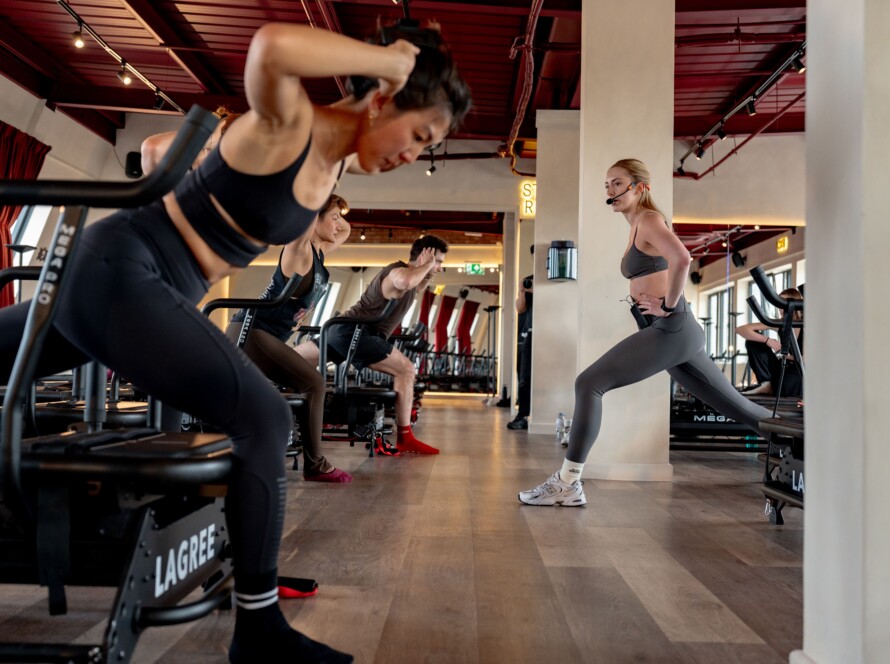
Programs like BST Lagree address this effectively by structuring corporate wellness around the Megaformer, allowing participants at different fitness levels to work simultaneously. Each person adjusts resistance and positioning to match their ability, so beginners and experienced exercisers both finish feeling appropriately challenged.
How does professional instruction maintain safety during corporate wellness events?
Qualified instructors watch your form and correct your technique while you exercise, adjusting intensity based on your body’s response. This active guidance keeps you safe while ensuring you work at levels that promote adaptation, rather than simply spending time exercising.
What happens without professional oversight in workplace fitness programs?
Without professional oversight, employees fall back on familiar movement patterns, reinforcing postural habits and compensations that contribute to chronic discomfort. They risk injury from improper form when tired, creating negative associations that reduce future participation.
Why is instructor guidance crucial as fatigue accumulates?
The instructor’s role becomes especially important as fatigue builds up. Keeping proper alignment during final repetitions requires outside feedback that most people cannot provide themselves: the correction that makes the difference between effective training and merely going through the motions.
What makes employees want to return to wellness events?
Good corporate wellness events are interesting enough that employees want to attend without rewards or requirements. When activities are hands-on, well-organized, and show real results, participation feels rewarding rather than obligatory.
This change happens when employees see real progress between sessions: strength gains that make previously difficult movements feel easier, endurance improvements that reduce fatigue, and mobility gains that eliminate discomfort in formerly stiff positions. These changes create inner motivation that no external reward can match.
How should sessions be structured for higher return rates?
Sessions that maintain a good pace, vary exercises to prevent boredom, and end with a sense of accomplishment bring people back more often. The experience should be challenging without being punishing or discouraging.
According to a RAND study sponsored by the US Department of Labor, employee participation ranges from 20 to 40 percent depending on program size and scope. Higher-performing programs share these characteristics: group structure, accessibility, professional instruction, and design focused on sustained engagement rather than one-time attendance.
What happens when design elements combine effectively?
When these elements combine, wellness events transform from occasional perks into structured experiences that employees integrate into their routines. But designing an effective program is only half the challenge. Getting employees to attend requires solving a different set of problems.
Related Reading
- Corporate Wellness Events Ideas
- Employee Wellness Event Ideas
- Corporate Health And Wellness Events
- Wellness Activities for Employees
How Companies Can Design Corporate Wellness Events That Employees Actually Attend
Attendance improves when wellness events remove barriers to participation. Employees need to know they won’t be the slowest person in the room, that sessions won’t require skills they don’t have, and that participation won’t cause embarrassment or physical pain. Design for accessibility first, and engagement follows.

🎯 Key Point: The biggest barrier to wellness event attendance isn’t lack of interest—it’s fear of judgment and inadequacy. When employees worry about being the least fit person in a yoga class or the slowest runner in a group jog, they simply won’t show up.
“Employees are 3x more likely to attend wellness events when they feel confident about their ability to participate without embarrassment.” — Corporate Wellness Research, 2024

💡 Best Practice: Create beginner-friendly options for every wellness activity. Offer multiple difficulty levels, provide clear descriptions of what to expect, and emphasize that events are designed for all fitness levels. This simple approach can double attendance rates while building a more inclusive wellness culture.
Accommodate Multiple Fitness Levels in the Same Session
The biggest attendance killer is the assumption that everyone starts from the same baseline. Some employees run marathons; others haven’t exercised intentionally in years. Most fall somewhere in between, uncertain whether they’ll keep up.
Why do one-size-fits-all programs fail?
Programs that make everyone do the same movements at the same intensity level lose people at both ends: beginners quit because they can’t keep up, and advanced participants lose interest because the challenge isn’t hard enough.
How can you create individualized challenges within group sessions?
The solution requires equipment or methods that allow each person to adjust workout intensity while exercising in a group. When participants can adjust the difficulty without changing the core exercise, everyone feels appropriately challenged. No one feels overwhelmed or bored.
Why does accessibility matter for program success?
According to WellSteps Blog, 87% of employees consider health and wellness offerings when choosing an employer. This statistic matters only if offerings are accessible enough for employees to use them. A wellness program designed for people who are already fit fails to serve the larger population whose participation determines whether the investment yields real health results.
Why does structure matter for corporate wellness events?
Sessions without a clear plan create worry before employees even show up. Participants don’t know what to wear, what to bring, how challenging it will be, or whether they’ll look silly trying new movements. That uncertainty keeps people away.
How do professional instructors improve the experience?
Professional instructors remove obstacles by giving clear direction from the start. Participants know what comes next, how long each part lasts, and what they’re working toward. The instructor demonstrates proper form, corrects technique in real time, and adjusts intensity based on individual response.
Active guidance keeps participants safe by reducing injury risk and preventing negative associations with future sessions. It ensures employees work at levels that produce adaptation rather than simply passing time. Without professional oversight, people default to familiar movement patterns, often reinforcing the postural habits that contribute to chronic discomfort.
How do you balance variety with consistent progression?
Doing the same thing repeatedly builds strength, but doing it constantly kills motivation. Employees need enough variety to keep sessions interesting while maintaining consistency to track improvement—a balance difficult to achieve with formats that require completely different skill sets each week.
The most effective approach introduces variation within a consistent framework. The fundamental method stays recognizable, but exercises rotate, intensity progresses, and combinations shift enough to prevent monotony. Employees develop competency with the format while experiencing novelty that maintains engagement.
Why does measurable progress matter for employee motivation?
This structure allows participants to notice their own progress. When a movement that felt impossible three weeks ago now feels manageable, that tangible improvement creates intrinsic motivation. Employees return because they can measure the difference in their own capacity, not because HR sends reminder emails.
How does group participation create social accountability?
Most people find working out alone harder than exercising with others who share the same goal. Group sessions transform fitness into a shared experience where people notice your absence, creating gentle accountability without punishment.
When someone joins a group session, they’re part of a team that expects their presence. Employees show up because others are counting on them and because working together makes physical challenges easier to handle.
How can high-challenge workouts accommodate different fitness levels?
The most effective corporate wellness programs recognize that accessibility and intensity aren’t opposites. High-challenge workouts work for people with different fitness levels when resistance adjusts for each person rather than forcing everyone to do identical movements.
Solutions like BST Lagree structure corporate wellness packages around the Megaformer, allowing participants at different fitness levels to work simultaneously in the same session. Each person adjusts resistance and positioning to match their ability, creating an environment where beginners and experienced exercisers alike finish feeling appropriately challenged while building measurable strength and endurance.
How can you schedule sessions that respect employee time?
Wellness events scheduled during peak work hours signal that participation requires sacrificing productivity. Sessions placed too early or too late exclude employees with caregiving responsibilities or long commutes. Timing itself becomes a barrier that no amount of program quality can overcome.
The most successful programs find scheduling windows that minimise conflict with core work demands while remaining accessible to most employees. Mid-morning or early afternoon slots often work better than lunch hours, which many employees use for errands or decompression. Offering multiple session times throughout the week increases the likelihood that employees can find a suitable slot.
Why does consistency matter in wellness scheduling?
Being consistent matters as much as timing. When sessions occur on predictable days at set times, employees can plan around them. This makes the wellness event part of their routine instead of a scheduling puzzle.
But even well-designed programs face one final challenge: convincing leadership that the investment produces measurable results.
Related Reading
How BST Lagree Helps Companies Host Engaging Corporate Wellness Events
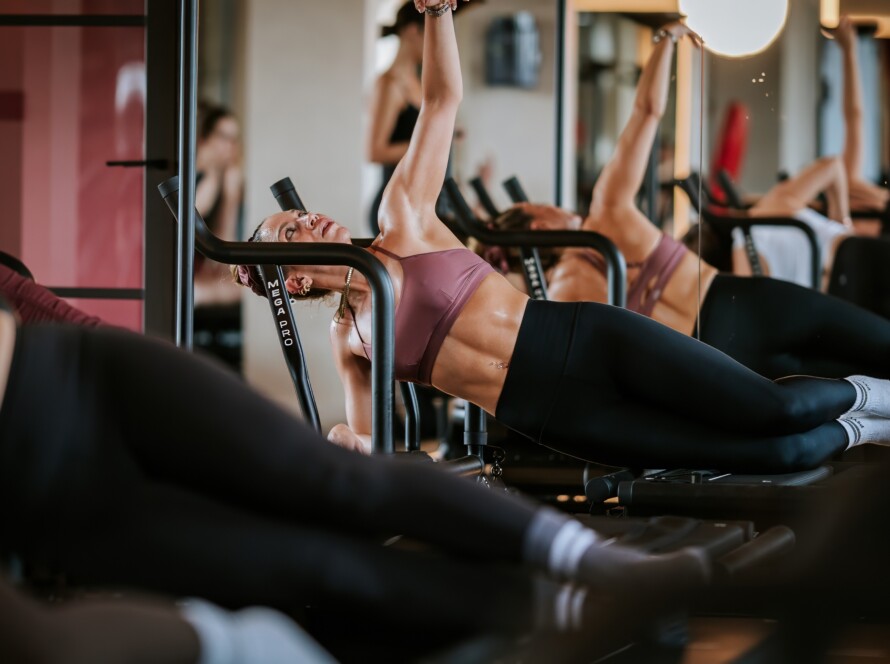
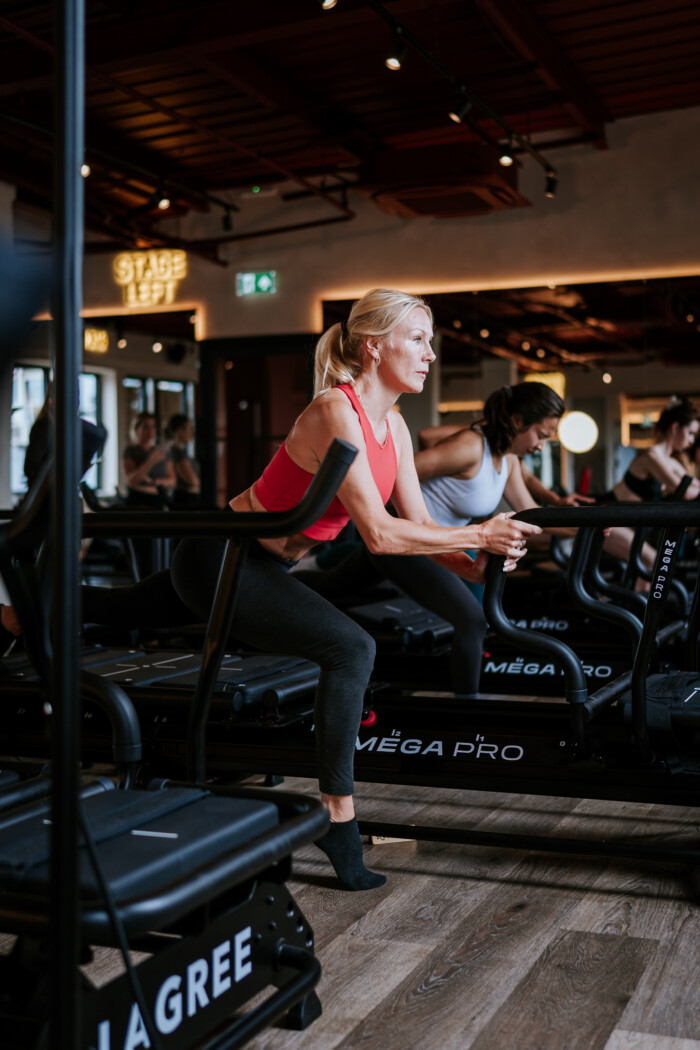
BST Lagree creates corporate wellness packages around instructor-led Lagree Method sessions. Our Megaformer machine lets each person adjust resistance and positioning to fit their needs. This works well for employees at different fitness levels working out simultaneously, ensuring beginners and experienced exercisers finish feeling appropriately challenged.
🎯 Key Point: The Megaformer’s adjustable resistance system ensures every employee gets a personalized workout experience regardless of their current fitness level.
“The beauty of the Lagree Method is that beginners and advanced athletes can work out side-by-side, each getting the perfect level of challenge for their fitness journey.”
💡 Best Practice: Corporate wellness events are most successful when they’re inclusive and accessible to all fitness levels – exactly what BST Lagree’s approach delivers for your team.
The Lagree Method’s Natural Fit for Corporate Settings
The Lagree Method combines high intensity with low-impact mechanics, solving a key corporate wellness challenge: creating sessions that challenge advanced participants without intimidating beginners. The Megaformer adjusts resistance through spring tension and carriage positioning rather than requiring completely different exercises. Everyone performs similar movements at difficulty levels that match their capacity, maintaining group cohesion while varying their individual intensity.
This structure removes the accessibility barrier that keeps participation rates low. Employees who haven’t exercised in years can attend alongside colleagues who train regularly, with both finishing at appropriate muscular fatigue rather than wasting time.
How does professional instruction ensure workout quality?
BST Lagree has qualified instructors who guide employees through each session with real-time form correction and intensity adjustments. This oversight keeps participants safe, reducing injury risk, while ensuring employees work at levels that produce physiological adaptation rather than merely burning calories.
Why does professional guidance improve employee attendance?
According to Corporate Wellness Magazine, companies with comprehensive wellness programs see a 25% reduction in missed workdays. Professional instruction converts first-time attendance into lasting participation by ensuring each session delivers tangible health improvements.
When does instructor feedback become most critical?
The instructor’s role becomes especially important as fatigue builds up during the session. Keeping proper alignment during final repetitions requires outside feedback that most people cannot provide themselves: the difference between effective training and merely going through the motions.
How does structured progression build momentum in corporate wellness?
BST Lagree corporate wellness packages are designed as multi-session programs rather than isolated events. The body adapts to repeated stimuli, and employees build strength and endurance systematically over weeks.
What creates visible improvement that sustains motivation?
This progression structure creates visible improvement that sustains motivation. The movement that felt impossibly difficult during the first session becomes manageable by the third. Employees notice they can hold positions longer, control transitions more smoothly, and maintain form under fatigue: tangible progress that external incentives cannot replicate.
How does the format balance variety with consistency?
The format provides enough variety to prevent monotony while maintaining consistency to track improvement. Specific exercises rotate, combinations shift, and intensity progresses, yet the fundamental method remains recognizable. Employees develop competency with the BST lagree approach while experiencing sufficient novelty to keep sessions engaging.
How does group format create natural accountability?
BST lagree sessions bring employees together through shared physical effort, creating a gentle sense of accountability without punishment. When someone commits to attending a group session, they join a group of people who expect them to show up.
Why does shared challenge make wellness more manageable?
Doing the challenge together makes the physical demand easier to handle. Employees push through difficult moments because others are doing the same, turning the session into part of workplace culture rather than a solitary effort.
What makes group-based wellness programs more effective?
According to Corporate Wellness Magazine, 87% of employees consider health and wellness benefits when choosing a job. Group-based programs with built-in accountability transform wellness initiatives from unused perks into regular engagement tools.
How does BST Lagree fit into busy corporate schedules?
Each BST Lagree session delivers a full-body workout in under an hour, using slow, controlled movements that maintain constant tension across multiple muscle groups, with no break between exercises.
Time efficiency matters in corporate settings where employees struggle to justify hour-long absences. A 50-minute session that produces measurable strength and endurance gains feels like a reasonable investment, while a 90-minute commitment feels like a luxury most professionals cannot afford regularly.
Why can employees participate multiple times per week?
The low-impact nature of the Lagree Method removes the recovery barrier that prevents people from joining high-intensity programs. Employees can attend multiple times per week without joint stress or muscle soreness and can return to work immediately without discomfort.
BST Lagree corporate wellness packages combine professional instruction, progressive programming, and group accountability into a structure designed for consistent participation. The method’s unique mechanics make it accessible to people at different fitness levels while delivering measurable intensity.
But understanding how the program works matters less than experiencing what it feels like.
Book a Lagree Class in London Today
BST Lagree can host corporate wellness events that introduce employees to the Lagree Method. Your first session includes a guided workout and instructor recommendations for structuring future sessions to keep employees interested and motivated.
The difference between a single wellness event and ongoing training becomes clear once employees see measurable strength gains. Continued practice is where health results begin, and corporate wellness investments show trackable returns.
🎯 Key Point: Corporate wellness programs with Lagree training deliver measurable results when structured as ongoing sessions rather than one-time events.
“Continued practice is where real health results begin and corporate wellness investments start showing trackable returns.”
💡 Tip: Book your corporate wellness consultation today to discover how BST Lagree can transform your workplace fitness program with expert instruction and proven Lagree methodology.