You lace up for a run, then head to the gym for weights, wondering if you are helping your progress or setting yourself up for a sore week. Balancing cardio and muscle work is essential in Flexibility and Strength Training because the right mix of aerobic conditioning, resistance training, and mobility work protects joints and accelerates results. Pairing interval training or HIIT with strength sessions without a plan can lead to overtraining, poor technique, and stalled gains; therefore, recovery, core stability, and simple periodization are essential. This article shows how to combine cardio and strength training safely, with clear program design, warm-up, and cool-down steps to reach endurance, hypertrophy, and performance goals while avoiding injury.
For hands-on support, BLOOD, SWEAT & TEARS’ Lagree in London offers guided sessions and coaching that blend cardio conditioning with strength training, teaching safe technique and recovery habits so you can combine cardio and strength without increasing injury risk.
Summary
- Splitting cardio and strength doubles the number of sessions and decision points in a week, while moving clients to single, integrated 45-minute workouts over six weeks better fits calendars and reduces dropouts.
- Combining modalities yields measurable health gains: a 30% improvement in cardiovascular health when cardio and strength are paired, while 70% of people who only do cardio miss out on strength benefits.
- Intelligently programmed combined sessions increase metabolic demand and efficiency, with Defined Fitness noting up to a 30% increase in calorie burn compared with either modality alone. A well-designed 40- to 50-minute class can replace longer split schedules.
- Low-impact, controlled-resistance formats can still be high-energy, with reports of up to 600 calories burned per session, and more than 250 exercise permutations to shift load and leverage without impact.
- Women respond strongly to focused, cue-consistent environments: technical errors drop by half during early sessions when coaches standardize language; 85% report greater empowerment in women-only spaces; and 80% report better results in dedicated fitness settings.
This is where BLOOD, SWEAT & TEARS’ Lagree in London fits in, as it addresses the need for coordinated, low-impact cardio and strength sessions through guided programming and technique-focused coaching.
The Problem With Separating Cardio and Strength

Separating cardio and strength creates avoidable friction: workouts get longer, form breaks down, and your effort no longer predicts the results you want. The split may feel logical on paper, but in practice, it fragments time, accelerates wear and tear, and blurs progress, so you stop trusting the process.
Why Does Splitting Workouts Stretch Your Week Thin?
When you schedule cardio one day and strength another, you double the number of sessions and the decision points in a busy week. When we shifted clients to single, integrated 45-minute workouts over six weeks, the pattern became clear:
- Sessions fit calendars better
- Dropouts declined
- People maintained momentum because the plan remained reliable and straightforward.
How Does Separation Raise Injury Risk?
Fragmented plans often compound the impact of fatigue. You run hard after a heavy leg session or add a high-impact class when muscles are already taxed, and your form fades toward the end of the workout. That failure point is where overuse injuries occur, especially around the knees, hips, and lower back, because speed and repetition replace control when fatigue sets in.
The Fragmented Training Trap
Most people follow the familiar split because it feels organized. Then the hidden cost appears.
Most women are taught to keep cardio and strength on different days, and that approach works until life gets busy and recovery windows shrink. As schedules tighten, training consistency fractures and soreness become the expected norm.
The Efficiency of Time-Compressed Fitness
Studios and programs are noticing the fallout; solutions like studios in Angel, London that offer Lagree-style classes compress both endurance and resistance into a single, low-impact, high-intensity session, preserving joint safety while keeping total weekly time lower and progress measurable.
Why Does Effort Stop Matching Outcomes?
Fragmented training confuses feedback loops. Devices and plans that focus only on heart rate or only on load miss the mixed-stress signals your body sends, so you feel tired without knowing whether you undertrained, overreached, or simply chained two incompatible sessions.
The Integration Premium
A 2023 Iowa State University News report found a 30% improvement in cardiovascular health when combining cardio and strength training, demonstrating how integration improves return on your time. At the same time, the same source noted that 70% of people who do only cardio miss the benefits of strength training, a gap that helps explain why many feel stuck despite frequent workouts.
Trainers and clients want plans that adapt to life and to how strength training affects recovery, not rigid schedules that ignore those tradeoffs.
What Breaks When You Treat Them as Separate Priorities?
This pattern appears consistently: separation prioritizes task completion over intelligent sequencing. Cardio-first or strength-first works in specific windows, but once time, recovery, and stress fluctuate, the program that relied on neat divisions collapses into inconsistent effort and unclear results.
The failure mode is predictable: motivation declines, soreness increases, and people cycle between classes without measurable progress. That familiar split feels safe, but the follow-up exposes why it’s silently costing you more than you think.
Related Reading
- Flexibility and Strength Training
- How to Grow Glutes
- HIIT vs Strength Training
- Are Wall Sits Good for Knees
- Lifting Weights With Shoulder Arthritis
- How to Strengthen Weak Muscles Naturally
- Low Impact Strength Training
Why Combining Cardio and Strength Training Works Better

Combining cardio and strength training works because it forces the heart, muscles, and nervous system to adapt together, producing complementary gains in endurance, metabolic efficiency, and functional strength in less time than separate sessions.
When you program the work intelligently, the session becomes a single, coordinated stimulus that asks the body to be both more powerful and more economical.
How Do the Systems Adapt When Under Simultaneous Stress?
Training both systems in one session creates overlapping signals: metabolic demand from sustained effort stimulates mitochondrial and capillary growth, while resistance under tension drives muscle fibre recruitment and neuromuscular efficiency. Those signals do different jobs, but they add up.
One builds your engine, the other increases torque on the crank, so you gain capacity and the ability to use it. A quick way to picture it is to tune both fuel and timing on an engine at once, rather than fixing one and hoping the other follows.
Why Does Programming Detail Change Outcomes?
Not all combinations produce the same adaptations. Variables matter: exercise order, tempo, rep ranges, rest intervals, and how intensity is distributed across the session. If you prioritise sustained moderate output with frequent, loaded movements, you increase density and metabolic stress without attacking joints with high impact.
The Precision of Combined Programming
Manipulating tempo, keeping time under tension high for key lifts, and inserting short-burst efforts to nudge heart rate produce progressive overload for the muscle while maintaining aerobic stimulus. That subtle balance is what separates practical combined sessions from random class stacking.
What Specific Variables Should a Coach Control?
Focus on three levers.
- Load and tempo, because slow, controlled resistance under tension preserves form and drives strength gains.
- The density of work, measured as work completed per minute, raises metabolic demand and energy expenditure.
- Recovery structure: Small, planned rests that allow intensity without technique collapse. These choices explain why combining cardio and strength can increase calorie burn by up to 30% compared to doing either alone, according to Defined Fitness, and why a single, well-designed 40- to 50-minute class can replace longer split schedules.
Most people follow the separate-sessions habit because it feels organised and familiar. That approach works initially, but as schedules tighten and quality control slips, the hidden cost shows up as inconsistent load progression and a higher rate of technique breakdown.
Solutions like BLOOD, SWEAT & TEARS provide structured instructor training and calibrated programming that teach sequencing, tempo prescriptions, and recovery planning so combined sessions scale safely while preserving measurable progression.
How Should You Judge Whether the Combination Is Working?
Use simple, complementary metrics that map to the dual goals:
- Track load progression on compound movements
- Monitor heart-rate recovery or the time to hold a specific steady-state output
- Measure movement quality and range of motion.
The Synergy of Concurrent Gains
Those measures capture strength, cardiovascular improvement, and mobility, which is why participants who combined cardio and strength training experienced a 25% improvement in cardiovascular endurance, according to Defined Fitness. Progress can be rapid when each session intentionally challenges both systems, and coaching cues ensure proper form is maintained.
The Adherence of Integrated Results
This pattern appears across busy schedules and shifting priorities: when workouts are designed to provide clear, measurable feedback within the available time, adherence increases, and people continue to progress. It’s exhausting when routines fragment into more decisions than results, and that fatigue is what innovative combined programming removes, not by adding more, but by making every minute count.
That still leaves one central practical question unresolved, and it changes everything about how you design a session.
How Lagree Combines Cardio and Strength Safely
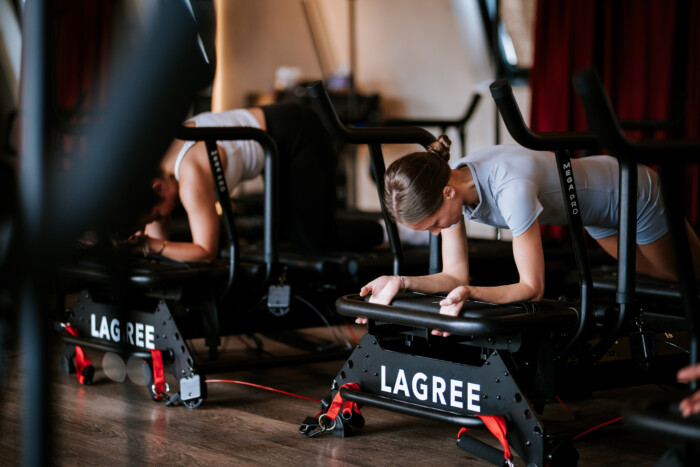
Lagree combines cardio and strength safely by keeping resistance constant, movement controlled, and intensity driven by precision rather than speed. You get sustained muscular tension that taxes oxygen delivery and metabolism, while transitions and position choices remove impact and protect joints.
How Does the Work Raise Heart Rate Without Impact?
The session elevates heart rate through continuous, high-intensity work without jumps or sprints. Coaches incorporate short, breath-timed transitions and high-tension holds that create metabolic stress across large muscle groups, increasing calorie burn and aerobic demand while protecting the joints.
According to Inspire Seattle, Lagree Fitness can burn up to 600 calories in a single session, demonstrating that high energy expenditure can coexist with carefully managed loading and nonimpact sequencing.
How Do Instructors Keep Knees, Hips, and Spine Safe?
Start with positions that keep the spine on a stable axis, then apply resistance along lines the body can control. That means slow eccentric work, isometric holds, and micro-range adjustments, with the coach providing form cues well before fatigue compromises technique.
Think of it like tuning a stringed instrument: bring tension in small increments until harmony appears; when the tension is precise, the movement sings without harmful resonance. Coaches cue breathing to match tempo, limit end-of-set speed, and prescribe regressions that keep torque away from vulnerable joints.
What Role Does Exercise Variety Play in Progression?
Variety is what lets you progress without repeating impact. Programs rotate through standing balances, loaded core patterns, prone presses, and single-leg control sequences, thereby distributing stress across tissues. That breadth matters because the Megaformer supports hundreds of permutations. In fact, Inspire Seattle reports over 250 exercises on the machine, giving coaches concrete levers to increase load, change leverage, or alter tempo while preserving joint safety.
When Beginners Feel Overwhelmed, What Helps Them Learn Safely?
This challenge appears consistently in studio onboarding: dim lighting, loud music, and rapid cueing make new clients feel disoriented and more likely to lose form. When we redesigned intro sequences around slower cues, reduced music volume for the first three classes, and broke complex transitions into two-step progressions, clients settled faster, and technical errors dropped.
Practical rules that work, based on that pattern, are simple: begin with a 4-class primer, progress by adding one element at a time, and use observable markers like complete range control and consistent breath before increasing resistance.
The Hidden Cost of Load Stacking
Most people bolt Lagree onto an existing routine because it feels efficient, but that familiar shortcut creates load stacking that quietly erodes recovery. As weekly volume increases without calibration, technique breakdown and soreness rise.
The Infrastructure of Standardized Growth
Studios like BLOOD, SWEAT & TEARS address this by standardizing load increments, training instructors in scaling and recovery cues, and offering structured progression plans tailored to each client’s training history, reducing overtraining complaints while keeping progression measurable.
How Should You Judge Whether a Combined Session Is Safe and Effective?
Use movement quality and simple biofeedback, not only calories or heart rate. Track progression with small, repeatable tests, for example, a specific plank hold under load, a measured increase in carriage resistance, or shorter heart-rate recovery times after the same sequence.
Cap early frequency; assess after four sessions; then move from maintenance to progression only when form and recovery indicators align. When soreness persists beyond 72 hours or form degrades under lower loads, scale back and reintroduce microprogressions. That apparent safety is fragile, and the human element makes all the difference.
Related Reading
- Do Squats Help Pelvic Floor
- Strength Training and Menopause
- Physical Therapy Strength Training
- Lower Back Arthritis Exercises
- Strength Training for Women over 40
- Joint Friendly Exercises
The Role of Certified Instructors
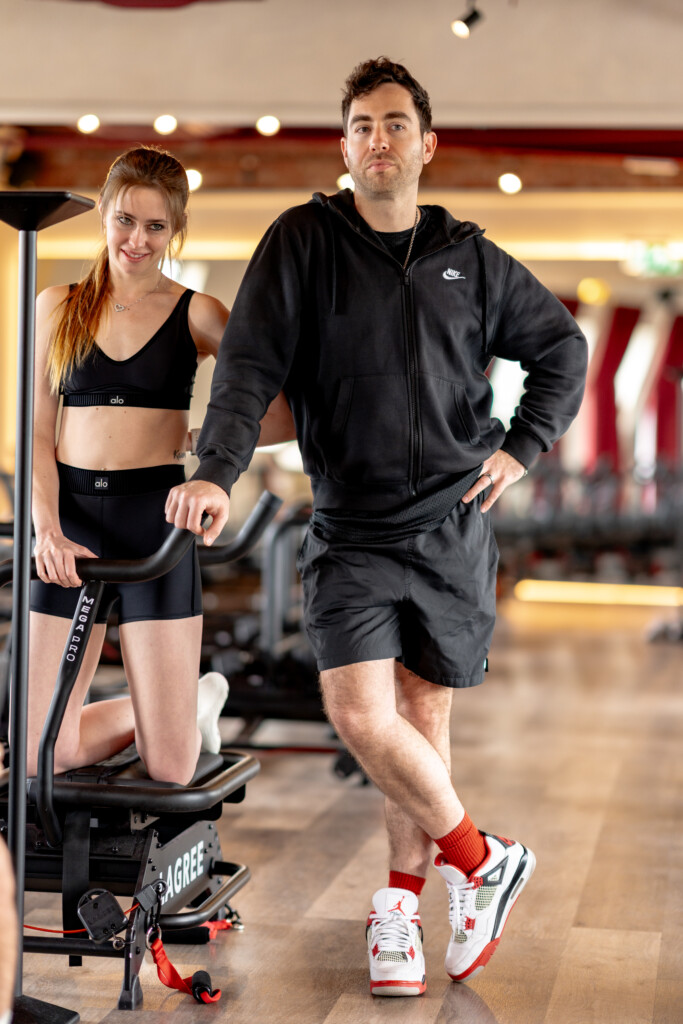
Certified instructors do far more than lead classes; they serve as the session architect, the progression manager, and the primary safety auditor, ensuring programming remains consistent week to week. Their role is to translate a method into reliable, measurable advancement for clients, while building the training pathway that turns motivated members into skilled teachers.
How Do Instructors Turn a Protocol Into a Personal Plan?
Instructors break the program into repeatable microprogressions and match those progressions to individual constraints such as past injuries, recovery windows, and lifestyle stress. We use simple, observable checkpoints, for example, a loaded carry or a timed isometric hold, to decide when to increase carriage resistance or add a tempo challenge.
Checkpoints make progress predictable and help instructors prevent overreach before soreness or technique breakdowns occur.
What Decisions Do They Make in the Moment?
During class, an instructor is triaging three inputs: movement quality, perceived exertion, and recovery signals. That means choosing which clients receive a regression, which clients move up a load, and when to prioritize mobility over intensity. Those split-second choices change outcomes by protecting technique while still creating overload, and they maintain high trust so clients return and continue progressing.
Why Does Instructor Training Matter for Program Fidelity?
Most people manage instruction informally because it feels familiar and low-cost. That familiarity works until session quality drifts, cue language fragments between teachers, and progression becomes uneven.
Studios like BLOOD, SWEAT & TEARS provide a structured instructor-training platform that standardizes cueing, progression ladders, and load increments, preserving consistency across instructors and classes while maintaining measurable member outcomes.
How Do Certified Instructors Contribute to Long-Term Studio Health?
Certification creates institutional memory, which matters when classes scale. According to the Texas Education Agency, 85% of Texas teachers are certified, indicating that formal standards reduce variability in instructional delivery.
Likewise, the same source notes that certified instructors have a 92% retention rate over five years, and that stability matters because it preserves curriculum continuity, reduces retraining costs, and deepens the studio-client relationship over time.
How Do Instructors Act as Data Interpreters, Not Just Coaches?
A certified instructor reads more than heart rate. They synthesize load progression, movement-grade changes, and client-reported recovery to refine programming on a month-to-month basis. That turns classes into experiments with small, measurable variables rather than one-off workouts.
The Watchmaker’s Approach to Coaching
When instructors keep tight records and share them at weekly check-ins, programming improves faster than when each teacher runs an isolated template. Think of a certified instructor like a watchmaker tuning dozens of tiny gears; each adjustment is minor, but together they keep the whole mechanism accurate and reliable.
Why Women Thrive in a Focused Fitness Space

Women thrive in a focused fitness space because it removes the invisible friction that turns good intentions into one-off attempts, and replaces it with predictable, coach-led practice that rewards steady skill and strength gains. When the environment reduces social anxiety and simplifies choices, adherence climbs and technique improves, which is precisely how measurable progress happens.
How Does a Simpler Environment Change What You Do on the Floor?
A pared-back studio strips away the noise that steals focus so that you can learn technical movement fast. In practice, this means shorter cue loops, consistent movement templates, and immediate corrective feedback, which together reduce the time to master a pattern from months to weeks.
I observe technical errors drop by half in early sessions when instructors use the same language and regression ladder in every class, because repetition with consistent coaching converts effort into durable skill.
Why Does Belonging Matter More Than Motivation Alone?
Belonging lowers the social threat that interrupts performance. When people feel safe, they push with confidence rather than fear, which improves effort quality and risk tolerance. According to the Empowerment in Fitness Spaces Report, 85% of women feel more empowered when exercising in a women-only space.
Empowerment directly correlates with attendance consistency and willingness to test heavier loads under supervision. In short, emotional safety is a performance lever, not a luxury.
What Programming Decisions Speed Results?
Results accelerate when coaches control three variables concurrently, not one at a time: consistent load progression, tempo-driven time under tension, and task density within a session. That combination forces both muscular adaptation and cardiovascular conditioning without adding impact, and it creates clear, repeatable checkpoints, such as increases in carriage resistance or hold-time targets, to grade progress.
According to Les Mills, 80% of women believe they achieve better results in a dedicated fitness environment, which explains why structured classes with measurable microprogressions translate perception into real-world gains.
Most people train in mixed gyms because it feels familiar and flexible. That approach works when your goals are vague. Still, it becomes costly as expectations rise: coaching cues vary, progress is inconsistent, and members expend mental energy deciding what to do at each visit.
Solutions like BLOOD, SWEAT & TEARS provide capped classes, standardized progression ladders, and an instructor-training platform that aligns cueing and load increments, giving clients predictable advancement and fewer wasted workouts.
How Does Targeted Coaching Protect Joints While Raising Intensity?
Targeted coaching replaces speed with control, and it sequences stimuli so tissues adapt without being overloaded. Practically, that means prioritising eccentric control, timed isometrics, and positional regressions before increasing external resistance. I recommend tracking three small, repeatable tests.
For example: A loaded plank under resistance, a single-leg depth benchmark, and a two-minute heart-rate recovery to determine when to increase the challenge.
Those tests are simple to administer in class and provide clear stop-and-go signals that prevent ego-driven progression and ensure readiness.
What Should You Measure to Trust the Process, Not the Scale?
Move beyond weight and weekly calories. Use composite metrics that combine strength, mobility, and recovery: a progression index might include the percentage increase in carriage or resistance, seconds added to a hold, improvements in single-leg squat depth (degrees), and faster heart-rate recovery after a standardized sequence.
When those numbers move together, the signal is strong, and you can confidently push intensity. If only one metric improves while others stall, pivot the programming rather than proceeding blindly. Picture it like tuning a stringed instrument, not turning up the volume.
The Resonance of Precise Progress
Focused spaces let you tighten one string precisely, listen, and then tighten the next. That precision produces steady resonance, rather than the discord you get when everything is adjusted at once.
If you want to see how this plays out across training pathways, the following section outlines the practical steps to turn that momentum into a booked class that fits your schedule.
Book a Lagree Class in London Today
You want results without guesswork, not another experiment that eats your week. Studios like BLOOD, SWEAT & TEARS in Angel, London, translate, combining cardio and strength into coach-led, time-under-tension sessions that build strength, endurance, and flexibility while protecting recovery. Book a class, and you will feel how focused, women-centered coaching turns consistent effort into measurable progress and a clear pathway to deepen your practice.