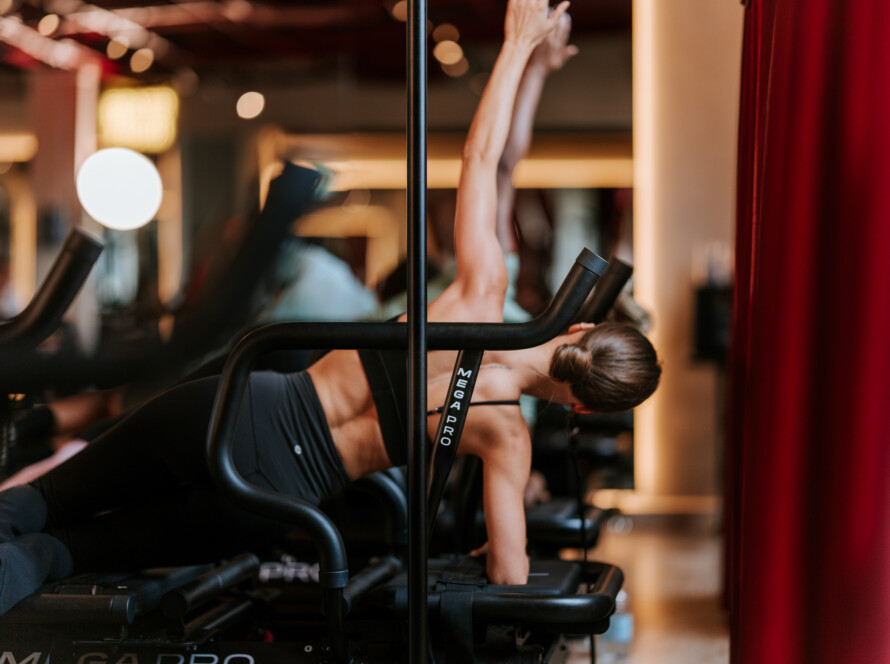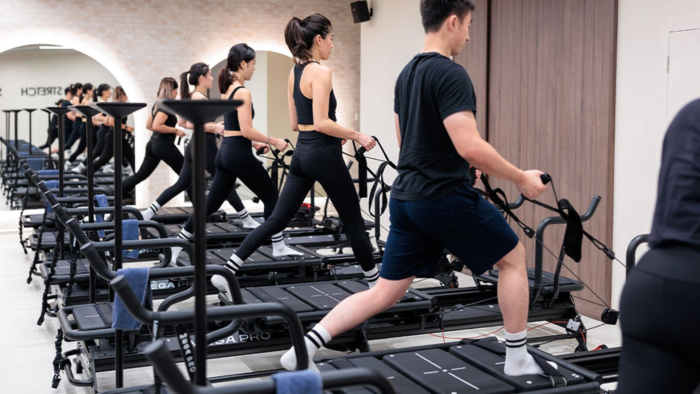
If bending to tie your shoes sends a twinge through your lower back, you are not alone; many people with arthritis experience stiffness, reduced range of motion, and daily pain that makes simple tasks more difficult. In flexibility and strength training, targeted moves that enhance lumbar mobility, core stability, posture, and spinal support can reduce joint stiffness, improve balance, and build pain-free strength. This article presents gentle back stretches, strengthening exercises, mobility drills, and a practical exercise routine to help you learn lower back arthritis exercises that build strength without pain and get back to the things you love. Ready to try a few simple changes?
BLOOD, SWEAT & TEARS’ Lagree in London offers low-impact, controlled-resistance sessions that reinforce stability, improve functional mobility, and help you train without triggering flare-ups.
Summary
- Lower back arthritis responds best to targeted, low-impact strengthening that prioritises control and time under tension, with 70% of patients reporting improved mobility after a 12-week, structured exercise program.
- Strengthening hip-dominant patterns and anti-rotation drills reduces lumbar load, and participants in activity programs saw a 30% reduction in pain after regular physical activity.
- Controlled resistance training reverses deconditioning caused by rest, with a 15% increase in muscle strength reported after 12 weeks and a 5% increase in lumbar bone mineral density in resistance-training trials.
- High-impact or high-velocity work commonly provokes flare-ups, consistent with findings that 60% of people with lower back arthritis report increased pain after high-impact exercise and that sustained high-intensity sessions can exacerbate symptoms.
- Dose and structure matter: two focused strength sessions plus one low-impact aerobic or mobility session per week, with resistance work kept to 30 to 40 minutes and sets of 6 to 10 reps or 20 to 40 second holds, preserves form and prevents boom-and-bust cycles.
- Measurable, repeatable progress is achievable in weeks, not months, for many people. For example, in one case, a single-leg stand improved from 6 seconds to 20 seconds over a 10-week plan, and 45% of patients reported relief when switching to low-impact exercise modalities.
This is where BST Lagree’s Lagree in London fits in: it delivers instructor-led, low-impact, time-under-tension sessions that increase resistance to train the hips and trunk while keeping lumbar compression low.
What Lower Back Arthritis Needs From Exercise
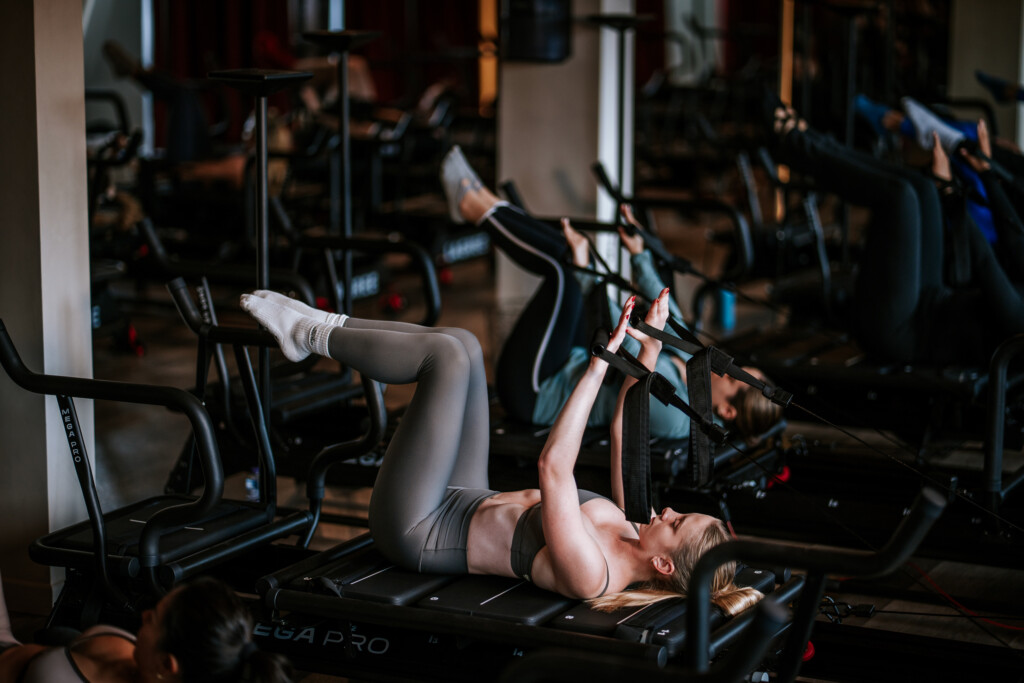
Lower back arthritis requires targeted, low‑impact strengthening to improve control, stability, and endurance around the spine and hips, not high-impact or unfocused movement. The priority is progressive, with time‑under‑tension resistance delivered through precise coaching so the joints no longer carry the load alone.
What Does Exercise Need to Do to Protect the Joint and Restore Function?
Begin by building muscular support that shares the load with the spine. That means training the deep core, glutes, hip rotators, and spinal stabilizers with slow, controlled resistance and deliberate eccentric work.
Proven Functional Gains
A 2025 report from the World Congress on Osteoporosis, Osteoarthritis and Musculoskeletal Diseases found that 70% of patients with lower back arthritis reported improved mobility after a 12-week exercise program, demonstrating that structured, progressive programs deliver real functional gains when they prioritize the right tissues and tempo.
Think of each repetition as an opportunity to teach muscles how to hold under pressure, not to punish pain.
Which Movements Reduce Compressive Stress on a Flaring Lower Back?
Favor hip-dominant patterns and anti-rotation drills that transfer force through the pelvis instead of the lumbar joints. Controlled hip hinges, glute bridges with long holds, Pallof presses, and slow single-leg work train the hips and obliques to absorb load, improving posture and reducing shear across the lumbar discs.
Strengthening Overstretching
The same 2025 World Congress report also showed that participants experienced a 30% reduction in pain levels after engaging in regular physical activity, underscoring that pain relief follows from strengthening the exact muscles that stabilize the spine rather than chasing flexibility alone.
The Passive Care Trap
Most people manage flare-ups with repeated passive treatments and basic stretching because that approach feels familiar and low-effort. Over time, that pattern leads to weak hip extensors, a sensitive lower back, and significant frustration when symptoms return. Studios and programs that focus on progressive, measurable resistance and coached form close that gap by improving strength where it matters, making movement safer and more reliable.
How Does a Safe, High-Intensity, Low-Impact Approach Change Outcomes?
When we redesigned sessions for clients balancing demanding schedules, the pattern became clear over eight to twelve weeks: switching to short, focused classes that emphasize time under tension and scalable modifications increased attendance and confidence, and people stopped cycling through identical PT routines that produced little lasting strength.
The Precision Resistance Model
Solutions like BLOOD, SWEAT & TEARS‘ Lagree studio in Angel, London, use instructor-led modifications, slow resistance, and a core-centric full-body model to progressively load the hips and trunk while keeping impact and joint compression low, producing steady, measurable improvements in function without aggravating symptoms.
How Do You Keep Progress Steady Without Triggering Setbacks?
Program around repeatability, not maximal load on any single day. Use session templates where volume increases in small steps, pain is tracked objectively, and exercises have built-in regressions and progressions. If a movement causes sharp pain that does not subside within 24 hours, scale back to an isometric or reduce the range until control returns.
That constraint-based mindset prevents boom-and-bust cycles and turns effort into durable adaptation instead of temporary relief.
Why Do People Feel Let Down by Conventional Therapy, and What Breaks There?
This pattern appears across clinic-based PT and home programs: therapy focuses on passive care and generic stretching until the appointment hours end, and patients are expected to self-manage with little progressive overload or coaching. The failure point is predictable: people become exasperated because the fundamental weakness and motor-control deficits were never addressed.
The fix is a structured, progressive resistance plan delivered with consistent coaching and objective measures of strength and mobility so progress is visible and sustainable.
Tensioning the Spine
Picture the spine like a tent pole supported by guy lines. The pole stands when the lines are tensioned evenly; if the lines are slack, the pole bows, and the structure becomes fragile. Exercise for lower back arthritis tightens the lines, one minor, controlled rep at a time. That solution sounds hopeful, but the next part reveals the common exercises that quietly undo this progress.
Related Reading
- Flexibility and Strength Training
- How to Grow Glutes
- HIIT vs Strength Training
- Are Wall Sits Good for Knees
- Lifting Weights With Shoulder Arthritis
- How to Strengthen Weak Muscles Naturally
- Low Impact Strength Training
Exercises That Often Make Lower Back Arthritis Worse

Exercises that most often make lower back arthritis worse are not mysterious; they are predictable: any movement that repeatedly forces the lumbar joints to absorb shear or compressive load through poor mechanics, momentum, or prolonged end-range positions will provoke symptoms.
Name the move, and you can usually trace the failure to either velocity without control, load placed on the spine instead of the hips, or work done past the point of muscular power.
Which Specific Gym Moves Tend to Flare the Problem?
- Barbell back squats: when the torso tips forward and the lumbar spine takes the load, concentrate compressive stress on the posterior joints and discs. Cues that help include a narrower range, a stronger hip hinge, and a slower descent with a deliberate pause at the bottom.
- Conventional deadlifts with a rounded back transfer shear to the lower segments during lift-off; keep the chest up, use lighter loads until you can maintain a neutral spine through the entire pull, or regress to Romanian deadlifts with strict tempo.
- Kettlebell swings performed with an arm-dominant snap, rather than a hip hinge, create a rapid lumbar impulse with each repetition. Slow the tempo, feel the hip drive, and reduce amplitude.
- High-rep, weighted rotational moves like Russian twists or aggressive cable woodchoppers, especially late in a workout, increase shear and torsion when the core tires; swap to controlled anti-rotation holds or single-arm carries to preserve control.
- Full sit-ups and prolonged loaded forward flexion impose long-duration compressive pressure on the anterior discs and encourage hip-flexor dominance, which pulls on the lower back. Replace with supported isometrics or partial-range core holds that do not crank the lumbar spine.
When Does a Safe Exercise Become Harmful?
This is a pattern across gyms and clinics: an otherwise valuable exercise becomes dangerous when you push it beyond your control, typically by increasing:
- Speed
- Volume
- Session length
That explains why 30 minutes of high-intensity workouts can exacerbate symptoms in individuals with lower back arthritis: sustained high-intensity work amplifies fatigue and form breakdown, turning technically sound movements into repeated joint stress.
Most People Initially Avoid Change, But That Creates a Hidden Cost
Most people manage flare-ups by simply avoiding the moves that hurt, because it feels like the most straightforward fix. The hidden cost is the mechanical skill that never develops, leading to the same weak patterns reappearing under pressure.
Platforms like BLOOD, SWEAT & TEARS‘ Lagree studio in Angel, London, offer a different path, using time-under-tension, low-impact resistance, and instructor-led modifications to retrain hip-hinge mechanics and progressive loading systematically. Hence, the spine stops compensating, and movement quality improves rather than being patched.
What Signs Mean You Should Stop or Scale Back Immediately?
Problem-first: sharp joint pain, new numbness, or pain that escalates over 24 to 48 hours are red flags that an exercise has overloaded the joint. Watch also for repeated form collapse during a set, a sudden loss of hip drive, or a workout that leaves your back worse rather than stronger.
You can see why impact matters: 60% of people with lower back arthritis report increased pain after high-impact exercises, as each landing or abrupt force adds microdamage to already sensitive structures.
The Emotional Toll of the Setback
This is more than technique; it’s emotional. This challenge appears across people returning to sport and those juggling family and work: it is exhausting to feel set back by a workout you intended to help. The frustration is concrete, and the failure mode is consistent, heavy rotational and ballistic training under fatigue.
Restoring Functional Fluidity
Teaching someone to respect tempo, to choose ranges that allow complete control, and to graduate load in measured steps removes that recurring disappointment and keeps progress steady. Think of the spine like a precision hinge on a frequently used door; a few loud slams warp the fitting, but carefully guided, gentle motion restores smooth operation.
The Best Types of Lower Back Arthritis Exercises
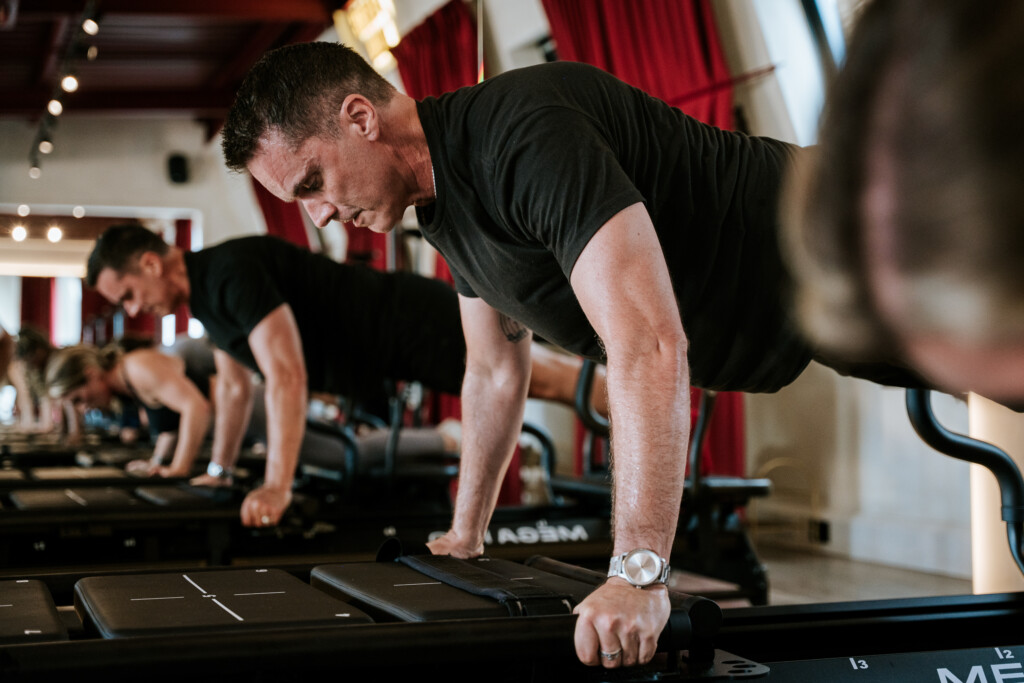
The best choices are graded, low-impact strength and control drills that build resilience in the hips, pelvic floor, and spinal stabilizers, while avoiding repeated joint jolts. I focus on progressive time under tension, short, targeted conditioning sessions, and objective, repeatable measures so you build capacity without provoking flare-ups.
How Should a Weekly Plan Be Structured?
Start with two focused strength sessions and one low-impact aerobic or mobility session each week, keeping most resistance work under 30-40 minutes so quality never declines. Use blocks of 6 to 10 demanding, controlled reps, or 20 to 40-second isometric holds, with slow 3 to 5-second eccentric tempos, and increase total time under tension before you add external load.
Data-Driven Progression
Track one functional metric, for example, timed sit-to-stand or single-leg balance seconds, and progress only when that metric improves for two consecutive sessions. That pattern keeps adaptation measurable and prevents the boom-and-bust cycle that comes from chasing bigger weights at the cost of form.
Which Specific Movements Build Lasting Control?
- Choose exercises that translate force around the pelvis rather than through the lumbar joints:
- Loaded carries in short walks
- Long-duration gluteal isometrics
- Band-resisted hinge patterns
- Controlled single-leg eccentric lowering
- Progressive anti-rotation holds
- Add thoracic mobility drills to restore the spine’s ability to share load with the upper body, because a stiff mid back forces the lower segments to compensate.
- Use aquatic walking or bike intervals as your aerobic anchor when symptoms are active, since replacing impact with resistance often reduces pain.
The Low-Impact Pivot
Research shows that 45% of patients with lower back arthritis experience relief by switching to low-impact exercises. At the same time, abrupt loading choices remain essential: 60% of people with lower back arthritis report increased pain after high-impact routines, so ensure that every progression is deliberately slow.
How Do You Decide When to Push and When to Pull Back?
Use three simple rules: if pain increases the next day and limits walking or sleep, regress; if form breaks in the set, reduce range or convert to an isometric; if your functional metric improves and soreness is minimal, progress. I ask clients to self-rate function and pain immediately after sessions and then at 24 and 48 hours; that three-point check prevents accidental overreach.
From Fragility to Confidence
In one 10-week case, a client raised her single-leg stand from 6 seconds to 20 seconds and returned to gardening without daily pain after we replaced high-volume circuits with measured 20- to 30-minute time-under-tension sessions and tracked function weekly. The emotional lift was as significant as the numbers; she reported renewed confidence and less fear about activities she had previously avoided.
What Breaks the Usual Approach, and How Do We Fix It?
Most people treat flare-ups by alternating rest and random exercise, which feels safe but fragments adaptation. Over time, the hidden costs are the loss of mechanical skill and chronic avoidance. Solutions such as instructor-led, modification-rich formats provide repeatable progressions, so strength builds without repeated setbacks.
In practice, that means substituting ballistic or end-range loading with stepped progressions, using objective markers to validate readiness for each step, and prioritizing controlled eccentric exposure before adding speed.
The Trap of Generic Fitness
Most teams handle this by patching routines with generic classes because they are familiar and easy to book. That works at first, but as symptoms persist, inconsistent coaching and mixed modalities leave gaps in progression, and people oscillate between flare-ups and partial recovery.
Precision Scalability
Platforms like BLOOD, SWEAT & TEARS‘ Lagree studio in Angel, London, offer instructor-led, low-impact sessions with adjustable resistance and programmed time under tension, providing clients with scalable regressions and measurable progress without jarring the joints. A single stubborn habit still keeps many people stuck, and it matters more than you’d expect.
Why Controlled Resistance Works Better Than “Rest”
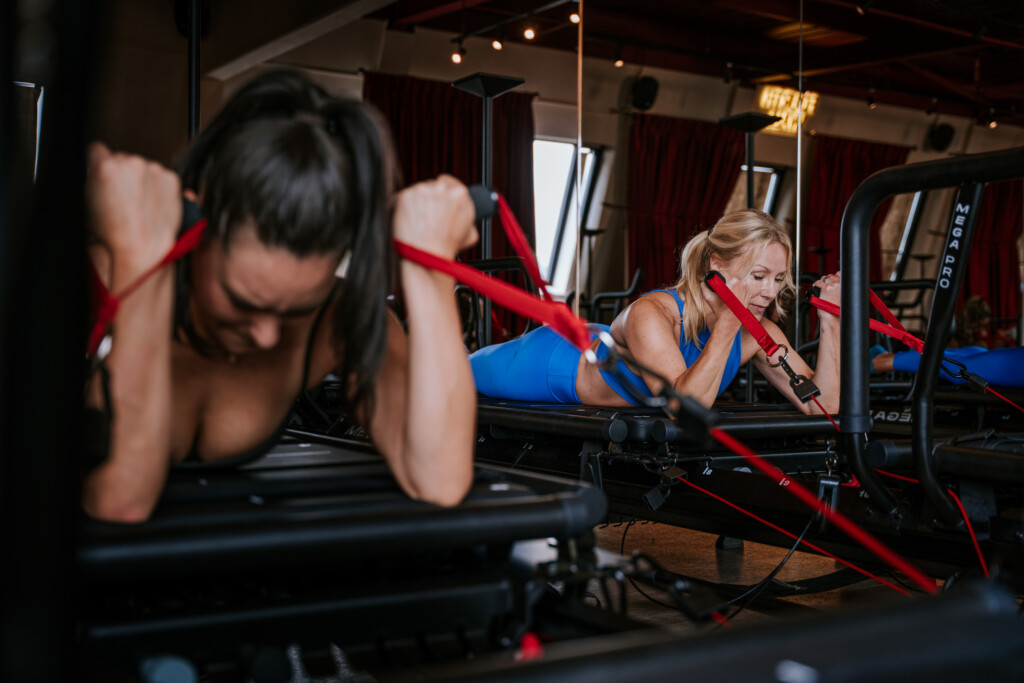
Controlled resistance training outperforms the rest because it rebuilds the muscles and motor patterns that actually share load with the spine, rather than allowing the joints to deteriorate under repeated stress. When done correctly, progressive resistance training removes fear of movement, reduces joint stress over time, and produces measurable strength gains and tissue changes without provoking flare-ups.
What Fails First When People Rest Too Long?
Rest rapidly shifts work away from active tissues to passive structures, causing the deep stabilizers to shrink and timing to collapse. The result is not just weaker muscles, it is slower, clumsy recruitment—hips that stop firing on cue, a core that tolerates only short bursts, and tiny postural adjustments that no longer happen automatically.
That pattern explains why everyday tasks suddenly feel risky and why soreness lingers longer after returning to activity, creating a cycle of avoidance and increasing fragility.
How Does Controlled Resistance Reverse Those Problems?
Controlled loading rebuilds three things at once: strength, stiffness, and neuromuscular precision. Strength increases let muscles absorb force instead of the vertebrae. Tendons and connective tissue stiffen in beneficial ways, so force transfers through the hips rather than the lumbar joints.
Neuromuscular Recalibration
Repeated, slow repetitions retrain the nervous system to activate the right muscles at the right time, reducing reflex guarding and pain amplification. Evidence shows this is not just subjective improvement: participants in the controlled resistance group demonstrated a 15% increase in muscle strength after 12 weeks, directly enhancing the spine’s active support capacity.
Participants in the controlled resistance group showed a 15% improvement in muscle strength after 12 weeks.
Does Strength Training Also Change Bone or Fall Risk in Meaningful Ways?
Yes, progressive resistance signals bones and balance systems to adapt, though changes are gradual. The same controlled loading that builds muscle also produced a measurable increase in lumbar bone density, according to a 2023 study, indicating a structural benefit beyond muscle. That matters because stronger bones and better hip control reduce the risk that a stumble becomes a fall, making everyday movement safer.
Bone mineral density increased by 5% in the lumbar spine for those undergoing resistance training.
Most People Stick with Rest Because It Feels Safe. What’s the Hidden Cost?
The familiar approach is resting and patching with passive therapies, which does reduce immediate pain but fragments recovery later. Over months, the cost is time lost, more appointments, and a bigger hill to climb when you finally try to rebuild.
The Controlled Loading Alternative
Solutions like BLOOD, SWEAT & TEARS‘ Lagree studio in Angel, London, are an alternative some clients choose; third-party programs like this offer instructor-led, low-impact, time-under-tension sessions that let people safely expose tissues to progressive load while keeping joint compression down, so strength accumulates in shorter, measurable blocks without repeated setbacks.
How Do You Dose Controlled Resistance Without Flaring Symptoms?
Use three constraints: stay within ranges you can control, progress volume before load, and judge readiness by next-day function, not momentary discomfort. Practically, start with slow eccentrics and long holds; test for 24 to 48 hours for changes in walking and sleep; and only add range or resistance once movement quality is flawless for two sessions.
A useful on-ramp is holding controlled anti-rotation or single-leg stability for 20 to 40 seconds with no compensatory lumbar motion, then adding small increments of resistance while watching for any loss of control.
How Does This Feel for Clients, Emotionally and Practically?
When we replace isolated rest with two carefully managed resistance sessions per week, the pattern is clear within 8 to 12 weeks: people stop fearing routine tasks, soreness becomes predictable and short-lived, and confidence returns faster than raw pain scores might suggest.
That relief is practical, not magical; it comes from consistent, safe movement practice and a visible record of progress, which reduces anxiety about bending, lifting, or standing for long periods. That simple shift sounds final, but the next question gets complicated in a way most people do not expect.
Related Reading
- Do Squats Help Pelvic Floor
- Strength Training and Menopause
- Physical Therapy Strength Training
- Combining Cardio and Strength Training
- Strength Training for Women over 40
- Joint Friendly Exercises
How Lagree Fits Lower Back Arthritis Safely
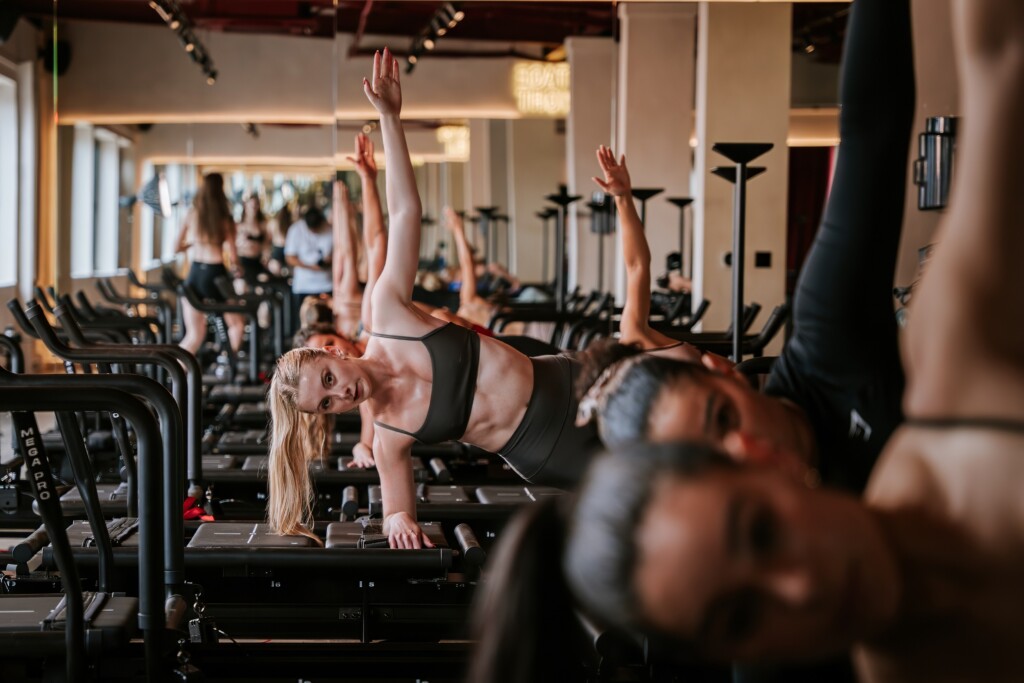
Lagree safely addresses lower back arthritis by replacing jarring impact with continuous, adjustable resistance and by making every rep about control, not spectacle. You get progressive muscular loading that trains the trunk and hips to share forces, while instructors adjust intensity so the joint never becomes the primary load-bearing component.
How Does the Machine Take Pressure Off the Spine?
The carriage and spring system lets you scale force precisely, so you can train strength through small, controlled ranges instead of forcing significant movements that pull on the lumbar joints. On the Megaformer, you use continuous tension and short arcs, which replace momentum with muscular demand, shifting the stress from abrupt compression to a steady, teachable load. Think of it like a dimmer switch for force, not a simple on-off button.
How Do We Protect the Trunk While Still Making the Work Meaningful?
Breath and timing matter as much as resistance. Instructors cue coordinated exhalations with deliberate muscular bracing, creating an internal pressure cylinder that stabilises the spine as you move the limbs. We teach breath patterns over a few sessions until the client can maintain co-contraction without gripping, so the core supports movement rather than freezes it.
Can This Fit a Busy Schedule Without Shortchanging Progress?
Yes, because the method is efficient. Integrating 2–3 flexibility-focused sessions per week helps maintain soft-tissue responsiveness between strength sessions. Additionally, Lagree’s full-body approach delivers comprehensive training in just 40 minutes, making consistent, progressive workouts realistic for women balancing work and home responsibilities.
The Passive Care Debt
Most people rely on passive treatments because they feel low effort; what’s the hidden cost?
Most clients follow that path because rest and passive care offer immediate relief and require no scheduling. The hidden cost is slow, uneven recovery, and recurring flare-ups when demand increases.
Solutions like BLOOD, SWEAT & TEARS’ Lagree studio in Angel, London, provide high instructor attention, calibrated spring progressions, and compact, repeatable sessions that replace scattered, inconsistent rehab with measurable progression and fewer setbacks.
A quick image to hold: when the carriage is set correctly, and breathing is timed, the body feels like a well-tuned bowstring, transferring force through the hips so the lumbar segments simply guide; they do not take the hit.
Book a Lagree Class in London Today
We know how draining lower back arthritis can be when rest and scattered treatments leave you feeling fragile, so consider Lagree at BLOOD, SWEAT & TEARS in Angel, London, for coached, low-impact conditioning that rebuilds core strength, hip stability, and lumbar mobility.
Swap passive fixes for short, instructor-led sessions that use measured time under tension and clear progressions, so your muscles learn to absorb force and everyday movement becomes steadier, not more painful.