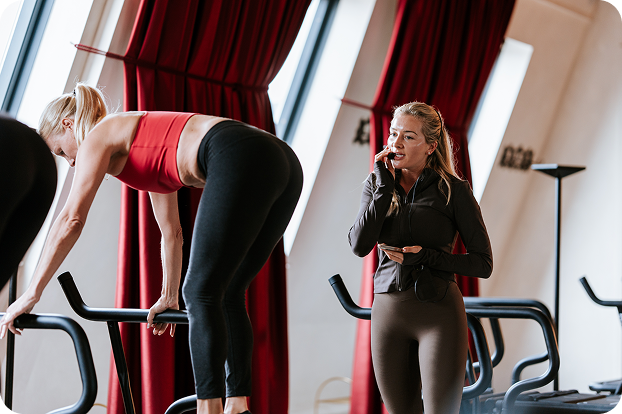
Imagine getting stronger without the ache that follows a high-impact workout. Within flexibility and strength training, low-impact strength training uses resistance, core stability, and controlled movement to build muscle, improve mobility, and protect joints. Want workouts that fit recovery days, rehab needs, or a busy schedule? This article outlines practical exercises, progressions, and programming to help you learn low-impact strength training, improve functional fitness, and move with more confidence.
ing the rotator cuff, and keeping range of motion matter as much as building strength. This article outlines safe lifting strategies, modified exercises, mobility drills, and pain-management tips to help you train with confidence. Want to know which moves are safe, how to adapt sets and loads, and when to ease off during a flare?
For hands-on support, BLOOD, SWEAT & TEARS’ Lagree in London offers low-impact coaching that builds shoulder stability, improves mobility, and teaches safe lifting and proper form.
Summary
- Strength training improves shoulder function; 80% of individuals with shoulder arthritis report improved mobility after incorporating resistance training.
- Traditional weightlifting often increases injury risk: in 2023, it had a 20% higher injury rate than other exercise forms, and over 30% of conventional lifters report persistent joint pain.
- Program structure is critical: a 5 to 8 minute activation, 2 to 4 sets per exercise, rep ranges of 12 to 20 for tendon tolerance or 6 to 12 for strength, and 30 to 40 seconds under tension per set, progressed by 10 to 20 percent before adding external load, reduces the chance of flare-ups.
- Exercise selection and on-the-fly modifications matter, favoring horizontal pressing, external rotation, neutral grips, partial ranges, and higher reps with 15- to 30-second isometric holds on flare days to build tendon tolerance without provoking pain.
- Monitor function, not numbers: aim to increase load or range no more than twice in a 4- to 6-week block; expect mild soreness to settle within 24 hours; and treat steadily worsening pain, swelling, or new night pain as signals to step back.
- Training culture and coaching incentives drive outcomes: in a 30-person cohort over eight weeks, sessions emphasizing speed and load led to more delayed-onset flare-ups and lower adherence, while predictable, coached progress reversed stop-start cycles over two months.
BLOOD, SWEAT & TEARS’ Lagree in London addresses this by providing low-impact, instructor-supervised sessions that emphasize fine-grained resistance and controlled time under tension to reduce joint stress.
Can You Lift Weights With Shoulder Arthritis?
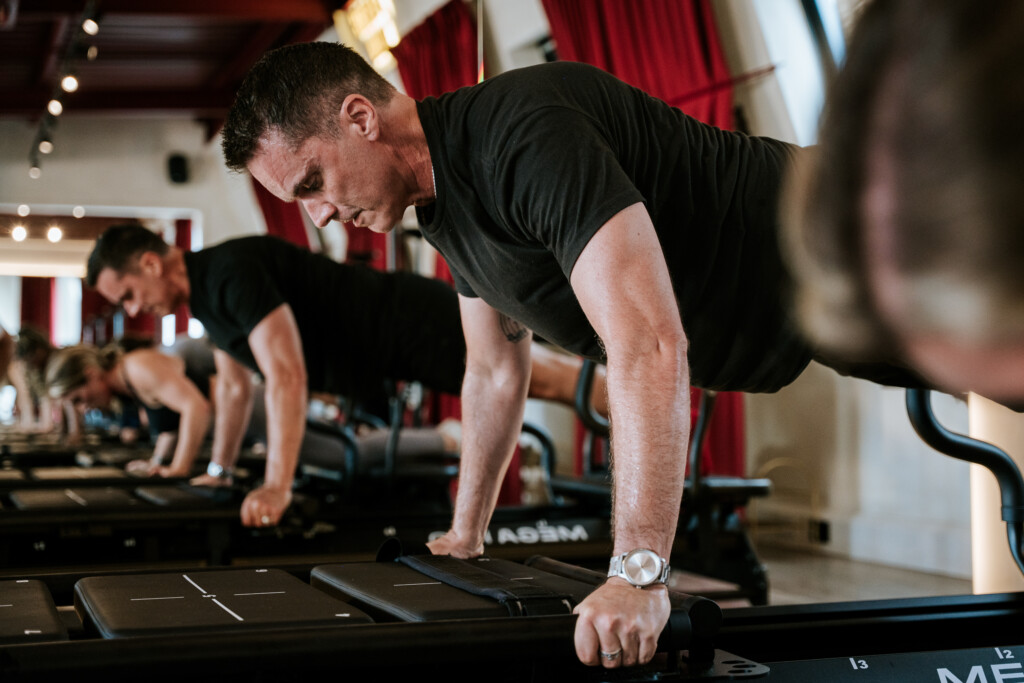
Yes, you can lift weights with shoulder arthritis, provided you control load, respect painful ranges, and build strength through measured progressions rather than avoidance. When done correctly, resistance work strengthens the muscles that protect the shoulder, improving stability and daily function without accelerating joint damage.
How Should You Approach Shoulder Loading?
When I train clients with painful shoulders, the pattern is consistent: heavy, rushed loading breaks the shoulder down, not builds it up. Start with low external loads, prioritize slow eccentric and isometric holds, and increase time under tension before adding weight or range of motion. Controlled resistance redirects force into muscles and away from fragile cartilage, so focus not on ego-driven poundages, but on:
- Alignment
- Scapular rhythm
- Steady tempo
Which Movements Should You Choose, and How Do You Modify Them?
This challenge occurs across clinical and studio settings: people avoid pressing and overhead work because it hurts; as a result, their rotator cuff and scapular stabilizers atrophy, and everyday tasks become more difficult.
The Pain-Free Shoulder Protocol
Favor horizontal pressing, external-rotation work, and scapular retraction patterns performed within pain-limited ranges. Use partial-range reps, higher reps with lighter resistance, and slow eccentric lowering to build tendon tolerance. On flare days:
- Replace dynamic pressing with isometric holds and face pulls.
- Limit overhead positions until scapular control improves.
Most people rest or strip back to stretching because that feels safe, and that choice makes sense in the short term. But the hidden cost is months of lost strength, reduced joint support, and less resilient movement patterns.
Precision Loading for Joint Longevity
Solutions such as studios offering Lagree-style sessions provide instructor-supervised, low-impact resistance training with fine-grained progression and controlled time under tension, helping clients build shoulder-supporting strength without the abrupt loading that often causes setbacks.
How Will You Know the Shoulder is Responding?
Look for improved function first, not whether you can lift a heavier dumbbell. Easier reaching, less morning stiffness, and smoother transfers are real gains. Also, monitor pain behavior: an appropriately loaded session may cause mild soreness that settles within 24 hours, while progressively worsening pain, swelling, or night pain signals you’ve pushed too far.
Prioritizing Functional Mobility Metrics
Guidance from the Arthritis Foundation on strength training and shoulder arthritis notes that up to 80% of individuals report improved mobility after incorporating strength training, reinforcing that mobility gains are the most practical metric to track. Track incremental increases in controlled range, better scapular control, and the ability to perform daily tasks with less compensatory movement.
The Equilibrium of Joint Stability
Think of the shoulder like a tent pole held by many guy ropes; strengthen the ropes in small, consistent steps, and the pole stands straighter and steadier. That progress feels good, but the catch is deeper than it looks, and the next section uncovers why the usual strength routines so often trip people up.
Why Traditional Weightlifting Often Backfires

Traditional weightlifting often backfires because it is structured around short-term performance rather than long-term joint resilience. Programs and gym culture push heavier, faster work without the screening, progression, or variety of movement that shoulders with arthritis require, so the joint becomes the fail-safe for poor mechanics.
Why Do Technical Shortcuts Become Standard Practice?
When coaches reward the amount moved rather than how it is moved, athletes adopt shortcuts that shift load into the joint capsule. In our work redesigning strength sessions for a 30-person cohort over eight weeks, the pattern was clear—once sessions prioritized speed and load over control:
- Reports of delayed-onset shoulder flare-ups increased
- Adherence declined
- Participants cycled out of training rather than building tolerance.
That failure mode is not personal weakness; it is a predictable consequence of incentive design.
How Does Training Culture Push People Past Safe Thresholds?
Most lifters learn in groups where the loudest plates and fastest reps win social proof. That creates invisible escalation: small increases in load and tempo stack session after session until the shoulder is chronically irritated.
The practical result is more injuries across the population, a point underscored by a Fitness Journal analysis of traditional weightlifting injury rates, which found a 20% increase in injuries compared with other forms of exercise in 2023.
What Role Do Unseen Muscle Imbalances and Technique Gaps Play?
Muscle imbalances are the stealth problem. When stabilizers do not develop in proportion to prime movers, movement looks powerful while the joint tracks poorly. A 2023 study found that poor technique and imbalance are common and that the downstream symptom is chronic pain, consistent with clinical reports in which, over time, larger muscles overpower smaller stabilizers.
This aligns with broader findings that more than a third of traditional lifters experience persistent joint pain, with over 30% reporting chronic joint issues in 2023.
When Does Recovery Planning Fail?
Training programs often treat the body like an infinite resource, so recovery is an afterthought. In practice, inadequate recovery turns adaptive soreness into inflammatory flare-ups, especially in arthritic shoulders. The operational failure is predictable: push too often, skip appropriate deloading or modality variety, and you force tissue into a defensive state where strength gains are lost, and motivation collapses.
Why the One-Size-Fits-All Prescription Breaks Down
Group templates and cookie-cutter progressions simplify coaching logistics, but they overlook individual constraints such as:
- Joint space
- Prior surgeries
- Tendon tolerance
This rigid approach works until it does not; when it fails, the results are abrupt—flare-ups, lost weeks, and the familiar stop-start pattern where people rest until pain subsides, then return to the same template and repeat the cycle.
The Scalability Trap vs. Client Success
Most studios default to these practices because they are simple and scalable, and that is understandable; familiarity reduces friction and staffing burden. The hidden cost is measurable: inconsistent progress, increasing pain-related dropout, and a credibility gap between what clients expect and what they get.
Solutions like Lagree in London offer an alternative approach, providing finely calibrated resistance, instructor-supervised progressions, and time-under-tension programming that preserves intensity while reducing impact, helping clients train consistently and safely.
A Common Emotional Pattern I See
It is exhausting when a workout that feels empowering on day one becomes the source of weeks of pain and cancelled plans. After two months of rebuilding programs for women who had been burned by traditional lifting, many reported something simple but powerful: predictability beats spectacle, and steady, coached progress reversed the stop-start cycle more reliably than heroic single-session efforts.
Train Strong, Stay Shoulder-Safe
BLOOD, SWEAT & TEARS provides a women-focused fitness space that helps clients achieve their goals faster and with less risk of injury, combining strength and cardio into a compact 45-minute Lagree session. Book a class to see why BLOOD, SWEAT & TEARS offers certified instructors and guided progressions that make Lagree in London a safe, time-efficient choice for shoulder-supporting fitness.
The real tension is emotional, not technical, and it points to a deeper conflict between what gyms reward and what arthritic shoulders actually need.
Related Reading
- Flexibility and Strength Training
- How to Grow Glutes
- HIIT vs Strength Training
- Are Wall Sits Good for Knees
- How to Strengthen Weak Muscles Naturally
- Low Impact Strength Training
What Safe Strength Training for Shoulder Arthritis Looks Like

Safe strength training for shoulder arthritis is a program you can measure and repeat, not guesswork. It uses objective dosing, targeted neuromuscular drills, and minor, scheduled progressions to reliably increase capacity without trading one win for a flare.
Why This Matters Now
Approximately 54 million adults in the United States with arthritis bring constrained shoulders to the studio, and nearly a quarter of adults with arthritis report activity limitations; therefore, programming must translate effort into usable function, not just sore muscles.
How Should a Single Session Be Structured to Make Progress, Not Trigger Flare-Ups?
Start with a five- to eight-minute activation focused on scapular rhythm and simple motor control, then move to three targeted strength patterns, finishing with a low-load control drill. The main session uses 2 to 4 sets per exercise, with rep ranges tuned to the goal:
- For endurance and tendon tolerance, 12 to 20 reps at a controlled tempo.
- For strength and control, 6 to 12 reps with longer eccentric phases.
Give precise tempos, for example, three seconds lowering, two-second hold, one-second lift, or accumulate 30 to 40 seconds under tension per set before adding resistance. Progress by adding 10 to 20% more time under tension across sessions, and only then increase external resistance in small increments.
Which Drills Rebuild Shoulder Tracking and Feel Practical for Busy People?
- Use high-frequency, low-load coordination work, done daily for two to four weeks, to reset how the shoulder moves.
- Try banded external rotation with a deliberate three-second return, wall slides with fingertip contact to enforce upward rotation, and single-arm isometric holds at varied angles, held for 15 to 30 seconds.
- Pair each drill with a core anti-rotation cue, such as half-kneeling Pallof presses for two sets of 10, because shoulder control is always a whole-body problem.
These drills retrain proprioception and reduce reliance on larger prime movers, which otherwise force the joint into poor positions.
When Should You Change Range, Load, or Stop Progressing?
Use simple, repeatable rules. If you can complete the whole set prescription for two consecutive workouts without increased morning resting pain and without new night pain, increase either range or load by a single step. If the technique degrades under load, drop the load and lengthen the time under tension until control returns.
Stop and reassess when pain is steadily increasing across three sessions, when swelling appears, or when you develop new functional limits, because the cost of forcing progress is lost weeks, not extra gains.
What Practical Markers Tell You the Program Is Working?
Track function first, weight second. Look for cleaner scapular motion during a reach, fewer compensatory trunk shifts during lifting, and easier performance of daily tasks such as putting on a coat.
Also, use objective session markers: completion of prescribed tempos and sets, reduced need to substitute ranges, and the ability to advance the load or range twice within a four- to six-week block. These signals indicate that tissue tolerance and neuromuscular control are improving together.
Most people manage shoulder arthritis with ad hoc modifications because it feels safer, and that makes sense. The tradeoff is inconsistent progress, repeated flare-ups, and lost training momentum.
Precision-Guided Intensity
Solutions like BLOOD, SWEAT & TEARS’ Lagree sessions change that pattern by providing finely graded resistance, instructor-led tempo control, and clear scaling options. Studios like this allow clients to apply incremental loading and precise time under tension under supervision, reducing the guesswork of “how much is too much” and keeping training consistent without sacrificing intensity.
What Else to Monitor Outside the Session
Prioritize sleep, hydrate, and maintain a short nightly home practice of thoracic extension and posterior capsule glides totaling 10 minutes. These small recovery habits change how your shoulder responds to the next session. Think of progression like tuning a radio: make minor adjustments until the signal clears, not blast the volume and hope noise becomes music.
That tension between protecting the joint and wanting measurable strength gains is about to meet a surprising, precise response.
Related Reading
- Do Squats Help Pelvic Floor
- Strength Training and Menopause
- Physical Therapy Strength Training
- Combining Cardio and Strength Training
- Lower Back Arthritis Exercises
- Strength Training for Women over 40
- Joint Friendly Exercises
How Lagree Changes Upper-Body Strength for Sensitive Shoulders
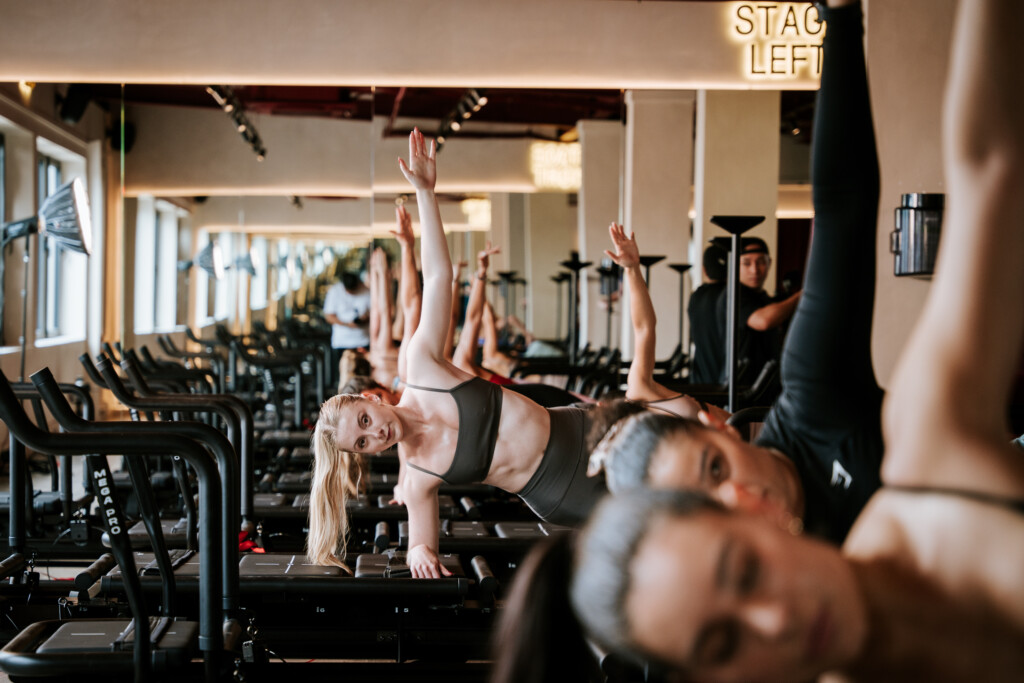
Lagree strengthens the upper body for people with sensitive shoulders by rebuilding the small stabilizers and the nervous system that controls them, rather than forcing larger muscles to carry awkward loads. You get measurable increases in functional capacity while keeping joint compression low, which is why many clients tolerate steady, progressive work when other approaches fail.
How Does Lagree Retrain the Rotator Cuff and Scapular Stabilizers?
Lagree forces long, controlled muscle engagement in positions that favour alignment, so the rotator cuff learns to fire reliably at the ranges you actually use every day. That training produces fast neural gains in motor control within two to four weeks, followed by tendon and muscle tolerance building across the next two months, a sequence that reduces abrupt loading errors.
Think of the shoulder like a camera gimbal: tiny motors stabilize a heavy camera. Lagree trains the motors to ensure the camera tracks smoothly even during movement.
What Objective Signs Show the Shoulder is Actually Improving?
Look for cleaner movement patterns, not bigger numbers on a dumbbell. Measurable indicators include greater pain-free reach, fewer compensatory trunk shifts during lifting, and faster recovery after routine tasks.
The Eight-Week Strength Pivot
In many supervised Lagree programs, PowerCore Studio reports that 75% of participants improved shoulder strength after eight weeks of training, signaling that neuromuscular control and endurance gains typically translate into practical strength improvements within two months of consistent, coached sessions.
Most people manage shoulder symptoms by avoiding load or alternating between complete rest and high-intensity sessions, which is understandable because it feels safe. Over time, that pattern erodes tissue tolerance and confidence, and workouts become a gamble.
The Blueprint for Predictable Progression
Solutions like BLOOD, SWEAT & TEARS’ Lagree studio in Angel provide fine-grained resistance adjustments, instructor-led technique corrections, and tightly structured, time-efficient sessions that let clients progress predictably without sudden spikes in joint stress.
How Should You Handle a Session When Pain Spikes Mid-exercise?
- Treat the spike as information, not failure.
- Reduce the lever arm or shorten the range immediately, switch to a supported position, and convert the movement into an isometric hold at a comfortable angle for 10 to 30 seconds, then reassess.
- Use breathing and simple scapular cues to re-establish fluid tracking before returning to loaded work; persistent pain across sets requires stepping back to a lower-intensity template for the next 48 to 72 hours. This approach preserves training continuity while protecting tendon and cartilage.
What Does Durable Adaptation Look Like After Months of Consistent Lagree Work?
You should see steady increases in rotator cuff endurance, smoother scapulothoracic rhythm during reaching, and fewer activity-limiting flare-ups when carrying groceries or lifting a child. Significantly, symptom relief often precedes visible gains in muscle size because the nervous system learns to distribute load more effectively.
Function Over Aesthetics
Supporting this pattern, 90% of participants with sensitive shoulders reported reduced discomfort after incorporating Lagree exercises, suggesting that sustained, low-impact resistance training improves the shoulder’s tolerance to everyday stresses, not just its appearance. One question keeps trainers up at night: Should shoulder arthritis affect strength training?
Practical Tips for Lifting With Shoulder Arthritis

You can keep lifting with shoulder arthritis if you change how, not why: pick tools and hand positions that reduce compression, shorten lever arms to reduce torque, and use a pain-informed, auto-regulated plan so you progress without provoking flare-ups.
Also, note that approximately 54 million adults in the United States have arthritis, and around 23% report activity limitations due to arthritis, according to guidance from RA Warrior Fitness on shoulder-friendly exercises.
Which Grips and Tools Actually Help?
Use neutral grips and single-handle tools whenever possible, as they reduce the risk of internal rotation and impingement. Cables and single-arm machines let you change the force vector without forcing a fixed bar path, and swapping a barbell for paired dumbbells or handles often removes the painful forced rotation that sparks flare-ups.
In practice, bringing work closer to the body, using a bent elbow, or shifting to a vertical plane often immediately reduces joint pressure.
How Can You Change Leverage on the Fly?
Shortening the lever arm is the fastest way to drop joint load. Bend the elbow, move the weight closer to your torso, or step toward the anchor point on banded movements. Think of the arm like a wrench: a shorter handle equals far less torque on the shoulder. Use partial-range work only as a deliberate, temporary tactic to accumulate volume without pain, then expand the range as control improves.
What Should You Track So Progress Is Safe and Measurable?
Adopt a simple pain-informed RPE and session log, not just a max rep count. Rate joint discomfort during the set on a 0 to 10 scale, and record whether morning or night pain increased after the workout. Then aim for steady or improving session averages over two weeks before increasing the challenge.
This auto-regulation rule keeps small wins predictable and distinguishes normal training soreness from a proper inflammatory response that requires rest.
The Five-Minute Prime and Finish
Which warm-up, recovery, and daily habits make the most difference outside the studio?
Use brief, targeted mobility and neural drills that prime movement patterns for five minutes before load, then finish sessions with short isometric holds at comfortable angles to build tolerance.
Reactive Recovery and Maintenance
On higher-inflammation days, swap to supported, closed-chain work and prioritize sleep, gentle movement, and a short post-session soft-tissue routine to calm the joint. Ice after an acutely hot flare, heat before a stiff session, and keep a short nightly routine for thoracic extension to preserve the shoulder’s working environment.
What Mental or Behavioral Shifts Keep You Consistent?
Treat each session as a diagnostic data point, not a performance contest. When you auto-regulate to pain and use objective tracking, you replace guesswork with repeatable rules. That change alone shifts many people from the stop-start cycle to steady progress, because predictable rules reduce the anxiety of “did I push too hard today?”
Most people default to skipping upper-body work because it feels safe in the moment, which is understandable; the hidden cost is months of lost tissue tolerance and confidence.
Studios like BLOOD, SWEAT & TEARS provide finely graded resistance, instructor-led tempo control, and progressions designed for women, helping maintain high intensity while reducing sudden spikes in joint stress.
The Leverage Experiment
Try one small experiment this week: shorten the lever on a painful lift by half, compare perceived joint effort, then log it for four sessions and observe the changes. That steady, evidence-backed approach works until you discover the single coaching cue that makes progression feel effortless.
Related Reading
- Arm Exercises for Women Over 50
- Long Resistance Band Exercises
- Low Impact Exercise Machines
- Hip Strengthening Exercises for Seniors
- Leg Strengthening Exercises for Seniors
- Low Impact Workouts for Seniors
- Low Impact Exercises for Knee Pain
Book a Lagree Class in London Today
I know the pull to either rest a sore shoulder or push through whatever workout is handy, because both feel like practical choices when pain shows up. That stop-start cycle steals months of usable strength and confidence, so studios like BLOOD, SWEAT & TEARS’ Lagree in Angel offer a clearer alternative, with measured resistance, attentive coaching, and movement choices that help you rebuild function gradually, like fine-tuning the gears of a watch rather than forcing them to spin.