


You signed up for reformer classes and now wonder how often to train to see real change: Is twice a week enough, or do you need more intensity, recovery, and consistency? Reformer Pilates body transformation depends on factors such as session frequency, workout routine, class length, and the balance of strength, flexibility, and rest. This article provides clear, practical guidance on the frequency of sessions per week for beginners through advanced levels, as well as on how to effectively combine private sessions and group classes. It also provides realistic timelines for progress, enabling you to plan your schedule effectively.
BLOOD, SWEAT & TEARS’ Lagree in London offers guided classes and coaching that match your frequency to your goals, helping you choose the right sessions per week and recovery plan to achieve steady results without burnout.
Summary
- Reformer Pilates can increase core strength by up to 30% in 12 weeks, with clients typically showing improved pelvic control within the first month and clearer exercise carryover by the eighth week.
- Beginners should generally train two times a week, intermediates three to four times, and advanced practitioners can progress to five sessions weekly when programming, recovery, and planned deloads every 3 to 6 weeks are in place.
- Reformer training enhances usable flexibility, with participants reporting a 20% increase in flexibility after eight weeks, which helps reduce daily stiffness and alters how joints are loaded.
- Therapeutic effects are notable, as doing Reformer twice a week reduced back pain by about 40% in chronic sufferers, and combining Pilates with strength training has been shown to increase muscle strength by roughly 20%.
- Watch objective recovery markers closely, such as a rising resting heart rate for 4 or more consecutive mornings or a climbing session RPE, and use a tracked performance metric across six sessions or six weeks to decide whether to increase volume or prioritize recovery.
- Sequencing matters because pairing one heavy, progressive strength session per week with focused Lagree or Reformer classes improved functional strength and reduced soreness in tested cross-training blocks, while advanced five-day schedules require varied intensity and strategic recovery to avoid overuse.
This is where BLOOD, SWEAT & TEARS’ Lagree in London fits in, addressing programming and scheduling challenges by offering instructor-led classes that match session frequency to recovery and specific goals.
Understanding What Reformer Pilates Does for Your Body

Reformer Pilates reshapes how your body moves and holds tension, not by piling on heavy loads, but by training your nervous system to:
- Utilize strength
- Length
- Breathing in harmony
You get a tighter, more reliable midline, cleaner movement through the spine and shoulders, and measurable improvements in mobility and tone when the work is programmed and coached.
How Does The Reformer Work The Core So Effectively?
The critical difference is control under resistance, not brute force. Reformer work forces your deep stabilisers to work eccentrically and isometrically while limbs move, which rewires coordination and endurance. When we ran progressive 8–12 week Lagree cycles with clients, the pattern was clear: better pelvic control and less energy wasted in compensatory movement within the first month, and clearer improvements in exercise carryover by week eight.
According to Fitness Journal, “Reformer Pilates can increase core strength by up to 30% in just 12 weeks. That kind of targeted programming produces measurable central strength gains when paired with precise cueing and time under tension.
What Changes For Flexibility And Joint Range?
Reformer sessions combine loaded movement, controlled stretching, and repeated end-range practice, which together enhance tolerance to length and dynamic mobility. Practiced progressively, this approach increases usable range rather than just a passive “stretch” you might feel after a class.
Participants who commit to an evidence-based programme notice functional gains quickly, and Health & Wellness Magazine, “Participants reported a 20% improvement in flexibility after 8 weeks of Reformer Pilates.” That improvement matters because it changes how you load joints during daily tasks and reduces stiffness that accumulates from sitting.
Will The Reformer Make You Bulky Or Help You Develop Those “Long, Lean” Muscles?
Reformer is a low to moderate load with high control, so it stresses neuromuscular coordination and endurance more than hypertrophy. Think of it like tuning a violin rather than replacing its strings; you refine tension and timing so muscles look more defined without needing the heavy sets that drive large muscle size.
Visible definition still depends on body fat, nutrition, and genetics, but the reformer helps you achieve the kind of muscle quality and posture that makes tone more noticeable.
How Does It Affect Posture, Pain, And Daily Movement?
The work translates because it trains movement patterns, not isolated muscles. When clients learned to load through their posterior chain and cue scapular stability during reformer progressions, they reported a decrease in stiffness and movement failure in everyday activities, and they moved with less conscious effort.
That carryover is the reason many describe reformer as a “game changer” for how they approach exercise; the tool converts technical practice into dependable movement.
Why Structured Lagree Training Beats Random Workouts
Most people treat fitness the same way they treat busywork, stacking sessions without clear progression or coaching. That familiar approach keeps progress slow and raises the risk of repetitive strain as intensity increases.
Studios like BLOOD, SWEAT & TEARS in Angel, London, focus on programmed, instructor-led Lagree classes with time under tension and measured resistance, providing practitioners with a structured path that accelerates results while reducing the risk of injury.
Building a Core Habit with Reformer Pilates
Picture your core like the cables of a suspension bridge, tuned to smoothly hold shifting loads. Reformer training tightens those cables with precision, allowing the whole structure to move less and perform more effectively.
That clarity is one thing, but the trickier question about how often to translate this into a habit is where the story deepens.
Related Reading
- Is Bodyrok Lagree
- How Many Calories Does Lagree Burn
- Xformer vs Megaformer
- Barre vs Lagree
- Lagree vs Weight Lifting
How Often Should You Do Reformer Pilates? Recommended Frequency by Experience Level
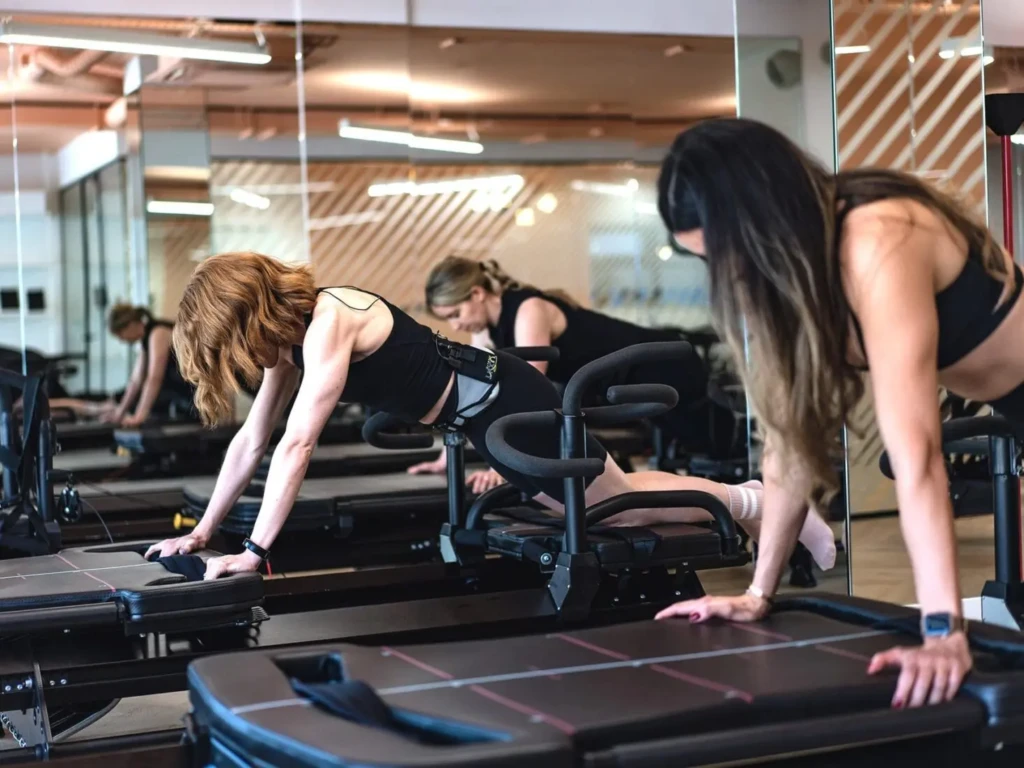
Beginners should generally train two times a week, intermediates three to four times, and advanced practitioners can progress to five sessions weekly when recovery, programming, and sleep are reliably in place.
Frequency matters less than the mix of intensity, recovery, and coaching you use each week.
How Often Should Beginners Practice?
Complete Pilates recommends two sessions per week for beginners, which provides sufficient time without overexertion to:
- Learn breath control
- Proper alignment
- Machine timing
This matches a pattern we observe with new members:
- Starting at two classes a week reduces confusion and the small
- Technical errors that lead to compensations
- It gives instructors time to correct movement patterns before intensity increases
If your cues stay clean, you experience steady recovery between sessions, and you stop waking up sore for three days after class, consider adding a third session focused on technique rather than load.
When is it Time to Increase Volume?
Most people should only add sessions when clear markers show readiness, not because they want results faster.
Increase frequency when you:
- Can hold form for the final sets
- Recover between classes
- Progress resistance or tempo without losing control
For intermediate trainees, three to four sessions per week provide sufficient stimulus for strength and tone, while still allowing for variation in session focus, such as one higher-resistance day and one dedicated to mobility or technique. This approach prevents the slow creep of overuse injuries that comes from repeating the same intensity every session.
Is Five Times A Week Safe For High-Level Practitioners?
Complete Pilates recommends up to 5 times a week for advanced practitioners, but this approach only works when programming cycles incorporate intensity, include planned deloads, and feature active recovery.
Advanced athletes often hit a wall not because the work is too hard, but because it is too monotonous; the failure point is repetition under the same load and tempo, which causes chronic soreness and a decline in performance.
Treat a five-day week like maintaining a high‑performance engine:
- Rotate intensity
- Vary resistance
- Schedule a lighter week every 3 to 6 weeks to reset
What Signs Tell You To Back Off Or Push Harder?
If sleep, mood, or daily energy decline, if technique degrades in the second half of a class, or if soreness accumulates rather than resolving, consider dropping a session or shifting one to focus on mobility and breathing work. Conversely, if you can increase resistance, maintain crisp cues under fatigue, and show steady gains in session-to-session performance, you can add controlled volume.
Think in terms of capabilities: can you perform the programmed load with precision? If yes, add stimulus; if no, prioritise recovery and cueing.
Structured Lagree: Maximising Gains Without Overtraining
Most people assume more classes equal faster change, and that makes sense when you’re eager for results. But that familiar approach breaks down as intensity rises, because unprogrammed frequency fragments progress and invite repetitive strain.
Solutions like Lagree in London provide structured, instructor-led programming that staggers intensity, varies resistance and tempo, and embeds recovery strategies, allowing practitioners to achieve faster, safer gains without having to guess which days to push.
Integrating Lagree and Reformer for Real, Sustainable Progress
BLOOD, SWEAT & TEARS offers a women-focused fitness space where certified instructors lead 45-minute Lagree sessions that combine strength and cardio, allowing clients to see and feel results quickly and safely, often noticing a change within two weeks of consistent attendance. Book a class to see why Lagree in London is America’s fastest-growing workout for 3 years in a row.
The next choice, how you incorporate Reformer into a week that already includes lifts, runs, or family life, is the part that separates random effort from real progress.
Related Reading
- Body Sculpting for Women
- What Are the Benefits of Pilates Reformer
- Reformer vs Mat Pilates
- Is Reformer Pilates a Good Workout
- How Many Calories Does Reformer Pilates Burn
How to Balance Reformer Pilates with Other Workouts

Balance comes from matching what you want from each session to where your body is strongest that day, then sequencing workouts so one reinforces the other instead of competing for the same recovery.
Treat the Reformer as a precision tool you can program around heavy lifts, intervals, and life stress to protect gains and reduce aches.
Which Workout Should Come First On The Same Day?
If your priority is raw strength or a heavy compound lift, do that first, because maximal force demands fresh motor units and intact technique. If your priority is movement quality, pelvic control, or rehabbing a nagging pattern, use Reformer work first as a primer for coordination and breathing, then follow with targeted strength or conditioning.
The pattern is simple, and it repeats across clients: priority first, accessory second.
That rule protects technique, preserves the stimulus you need for progressive overload, and keeps your nervous system from being asked to produce maximal force after fatigue has already set in.
How Do You Combine Reformer With Cardio Without Undoing Progress?
Use modality separation rather than stacking equal intensity in the same hour. Easy to moderate cardio pairs well after Reformer as a finisher to build metabolic capacity without stealing neuromuscular quality.
Save high-intensity intervals for separate sessions or days when your legs and CNS are fresh, because repeated high-intensity work in close succession increases injury risk and blunts strength adaptations. When you have limited days, replace a pure steady run with a mixed session: shorter interval work with a focused Lagree class to keep impact lower while preserving aerobic stimulus.
What Should Older Women And Bone-Health-Focused Clients Do Differently?
This group faces a mechanical constraint, not a motivation problem. The reformer builds control and reduces pain, but it does not provide the same axial loading stimulus that bones need to adapt.
To avoid fatigue-driven form breakdown, if maintaining bone density is a goal, include:
- Progressive
- Loaded compound lifts that deliver higher compressive forces
- Prioritise them in the weekly plan around Reformer sessions
That approach addresses the common worry clients describe, where stopping Pilates increases discomfort and replacing it with only low-load work leaves strength and density vulnerable.
How Do You Balance Recovery While Continuing To Train Consistently?
Think in terms of central and local load. Local load is the muscle-level stress you can measure by sets and resistance, and central load is the nervous system, sleep, and life stress that accumulates across days. When life stress is high, consider shifting one Reformer session to a mobility-and-breathing class or an instructor-led lower-intensity block, as this preserves movement practice while reducing central fatigue.
When you can recover well, use a programmed, progressive Lagree class as a higher-intensity stimulus to push tempo and resistance. This tradeoff keeps progression measurable because you increase the load only when the technique stays clean.
The Power of Sequencing in Lagree and Strength Training
When we tested programmed cross-training blocks with clients juggling lifts and Reformer work, a clear pattern emerged: pairing one heavy, progressive strength session per week with focused Lagree classes improved functional strength carryover while reducing soreness that previously forced skipped sessions.
That pattern shows why sequencing and programmed variation matter more than arbitrary session counts.
Why Recovery Planning Matters More Than More Workouts
Most people stack workouts because it feels efficient, but that familiar approach has a hidden cost: it fragments recovery and obscures long-term progress under a short-term hustle. As training intensity and life complexity rise, session overlap creates conflicting demands on the same tissues and the same nervous system, so strength plateaus or nagging aches become the norm.
Studios like BLOOD, SWEAT & TEARS offer programmed Lagree classes with staged progressions, instructor-led corrections, and clear tempo-resistance pairings, allowing women to safely engage in higher-intensity, repeatable training while preserving recovery and reducing the guesswork about when to push or back off.
How Do You Measure Whether The Mix Is Working For Your Goals?
Select one clear metric and track it for six weeks. For strength goals, select a compound lift weight or target rep range. To track pain and function, try a task such as lifting a crate or walking up stairs without experiencing discomfort. For endurance, use a timed effort. If that metric moves consistently week to week alongside stable technique and manageable soreness, your sequencing is working.
If it stalls despite apparent effort, the failure mode is usually a mismatched session order or insufficient progressive overload in the strength domain, rather than the presence of Reformer work itself.
What Practical Tweaks Make Balancing Simpler in Busy Weeks?
Micro-dose technical drills, such as a 10-minute targeted Reformer sequence at home, preserve motor control without requiring a studio slot. Use a single higher-quality, instructor-led Lagree session that focuses on progression and cueing during peak weeks, then slot shorter maintenance sessions around family or travel days.
These small design choices keep quality and recovery aligned, so your work compounds instead of wearing you down.
How to Map Your Training Goals to Reformer Sessions
According to Healthline, engaging in Reformer Pilates twice a week can reduce back pain by 40% in individuals with chronic back pain, underscoring the importance of scheduling Reformer work as either a primer or a recovery-focused session to achieve significant functional benefits.
Meanwhile, evidence from BK Pilates suggests that combining Pilates with strength training can increase muscle strength by 20%, highlighting the potential benefits of intentionally pairing modalities rather than simply adding them together.
That solution feels obvious once you map goals to sessions, but it still leaves one critical question unresolved.
Signs You’re Doing Too Much (or Not Enough)

Track signs with measures, not mood. Look for short windows of change in recovery and performance, shifts in how you move under load, and changes in daily function or mood that last more than a week; those are the clearest signals you are either overdoing it or not doing enough.
What Objective Numbers Tell The Story?
Monitor simple, repeatable markers for two weeks:
- Resting pulse on waking
- Perceived exertion for a standard sequence
- Sleep quality
If resting heart rate rises by several beats for four or more consecutive mornings, or your session RPE climbs while resistance stays the same, that is a physiological flag, not a training badge.
Track one performance metric for six sessions, for example, hold time on a core plank or the number of controlled reps at a set spring tension; a steady decline or no change after a sensible progression usually means your stimulus is misaligned.
Which Movement Details Signal Mismatch?
Pay attention to breath and control inside specific moves. If your breathing shortens during midline holds, or you start hitching the shoulders and losing neutral pelvis during leg springs, you are off-target.
If you complete the class with flawless breathing, crisp tempo, and an apparent ability to add one notch of resistance after four sessions, you are in the productive zone. These are movement-level diagnostics you can check in each class without lab equipment.
How Do Behaviours And Life Stress Show Up In Training?
This pattern is observed among busy clients and high achievers: when work or home pressure increases, training quality often declines, even if the session count remains the same. According to The Marine Corps University Communications Style Guide, “75% of people report feeling overwhelmed by their workload.”
That pervasive overwhelm explains why technical breakdowns and slower recovery are common in weeks that appear full on paper but are actually underutilized in terms of capacity. At the same time, a sizable portion of people struggle to find balance between commitments, which makes picking the right training frequency harder than choosing a class time; see The Marine Corps University Communications Style Guide, which notes that “30% of workers report a lack of balance between work and personal life.”
What About the Emotional Signals Instructors Should Notice?
After working with new clients during onboarding cycles, the pattern became clear:
- When instructors communicate sharply
- Clients often withdraw instead of asking for regressions
- That hesitation either leads them to push through bad form or to stop coming
That feeling of being dismissed is exhausting and erodes progress, and clients tell us they value clear, encouraging direction as much as the physical work. If you find yourself avoiding asking for a modification, that alone is worth addressing before changing session counts.
Progression Beats Volume: How Structured Lagree Programming Sustains Long-Term Gains
Most people handle frequency by adding more classes because it feels proactive and visible. That familiar approach scales poorly as life stress increases, because quantity without structured progression fragments recovery and magnifies minor faults into chronic niggles.
Studios like BLOOD, SWEAT & TEARS provide staged Lagree progressions and hands-on cueing that allow clients to increase intensity safely, enabling women to attend more sessions without compromising consistency for compensations.
How To Triage What You See, Fast?
If a sign is sudden and sharp, like joint pain that changes how you step or lift, stop that movement and consult an instructor that day.
For gradual trends, use a one-week experiment:
- Reduce spring tension or class intensity by approximately 25 percent
- Replace one session with a mobility-and-breathing class
- Monitor your chosen metric for six consecutive classes
If your performance and sleep rebound, the reduction was necessary; if nothing changes, the stimulus was probably too low, and you can reintroduce gradual load. Keep this process short and measurable; it prevents guessing and preserves momentum.
A Simple Checklist To Decide On Day-Of Adjustments
- Sharp pain or altered movement pattern: cease the offending pattern and seek coaching.
- Rising morning pulse, poor sleep, or persistent low mood for 4+ days: shift to a low-intensity or restorative class for a week.
- No performance gains were observed after six coached sessions, despite maintaining clean form. To achieve further improvements, consider increasing resistance or adding a targeted session.
- Anxiety about asking for scaling or feeling dismissed: request a private cue or smaller group session to rebuild confidence.
The Hidden Fork: Why Most People Misread the Next Training Move
When you read these signals clearly, choices become simple, not vague; you either reduce central load by swapping intensity or increase progressive load while protecting form. Which one you pick depends on the short diagnostic window you just tracked.
That next step feels like the obvious move, until you realise how many people keep getting it wrong.
Book a Lagree Class in London Today

Consistency beats randomness when you want real, measurable change, so choose a programme that fits your life and protects quality. The familiar patchwork of missed sessions slows progress, but with over 500 classes available monthly, BLOOD, SWEAT & TEARS , you can lock into times that match your week and keep momentum.
When you join over 1,000 satisfied members, BLOOD, SWEAT & TEARS, you step into a coached, women-focused community that treats progression and safety as standard, so book a class and see how quickly the work pays off.
Related Reading
- Does Reformer Pilates Help You Lose Weight
- Best Toning Exercises for Women
- Benefits of Lagree
- Beginner Pilates Reformer Exercises
- Low Impact Strength Training Exercises


