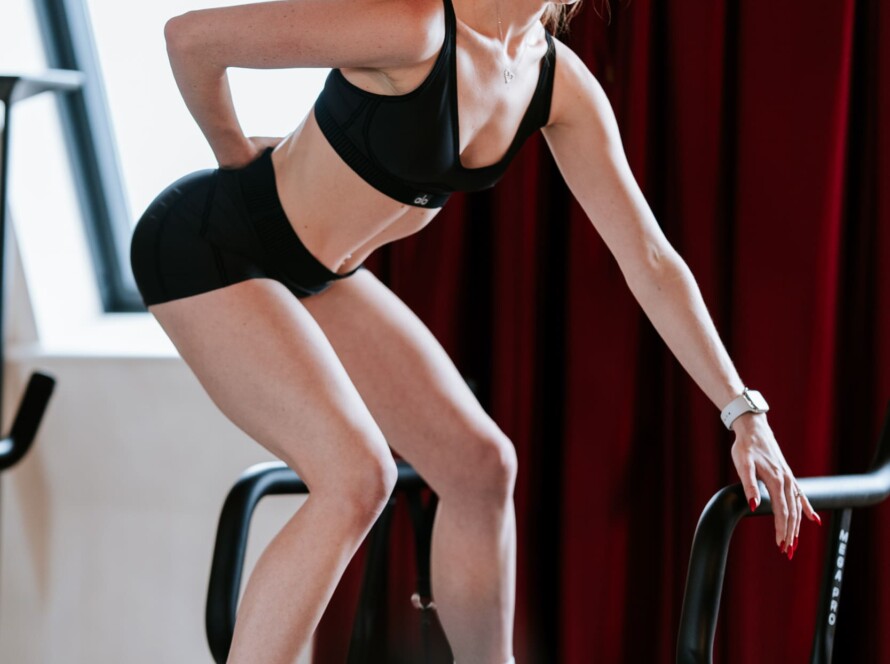
You wake up feeling stiff, your muscles tight from yesterday’s work or last night’s sleep. Morning stretches for women aren’t just about touching your toes. They’re about reclaiming how your body moves through the day. This article shows you the best yoga stretches for flexibility that actually work, giving you practical movements that lengthen tight hamstrings, open resistant hips, and restore the range of motion you thought you’d lost.
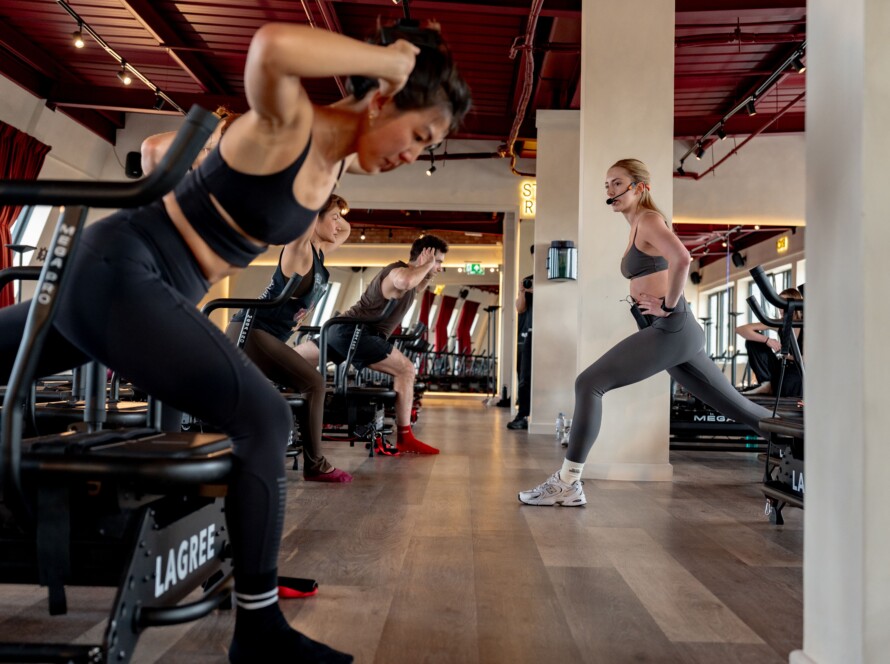
While you can practice these flexibility exercises anywhere, BLOOD, SWEAT, AND TEARS’ Lagree in London offers specialized support for women seeking structured guidance on their stretching journey. Their Lagree method combines controlled movement with mindful stretching, helping you build both strength and suppleness in each session. The approach addresses common flexibility challenges many women face, creating a foundation that makes your daily yoga stretches more effective and sustainable over time.
Summary
- Morning stiffness affects even consistently active women because exercise builds capacity only in the ranges you use repeatedly, not the ranges you avoid. If you spend an hour training but eight hours sitting, your tissues respond to the dominant pattern, reinforcing restrictions rather than releasing them
- Flexibility improvements fade within 48 to 72 hours if not reinforced with strength through newly acquired range, according to research published by the American Council on Exercise in 2023. Passive stretching creates temporary length, but without active control in those extended positions, the nervous system reverts to familiar patterns as a protective response.
- Athletes with reduced hamstring flexibility experienced significantly higher rates of muscle strains during high-speed activity, according to findings published in the American Journal of Sports Medicine in 2003. When tissue cannot lengthen quickly enough to accommodate sudden force, it tears instead.
- A 2021 systematic review in Sports Medicine found that resistance training through a full range of motion improves flexibility to a similar or greater extent than static stretching alone, particularly when movements load the muscle in its lengthened state. Your nervous system prioritizes joint protection, so when you stretch into a new range without building strength to control that position.
- Regular yoga practice leads to measurable improvements in flexibility, with research in the International Journal of Yoga showing that 10 weeks of consistent practice significantly improved flexibility and balance in college athletes. The key is consistent, controlled exposure to end ranges with slow breathing that helps relax protective muscle tension.
Lagree in London addresses the gap between temporary flexibility and lasting mobility by loading muscles through extended ranges under controlled tension, teaching the nervous system that new positions are both safe and functional.
Why Many People Feel Stiff Despite Being Active
You train consistently, move your body regularly, yet your hips feel locked, your hamstrings refuse to lengthen, and bending forward feels like pushing against a wall. The assumption that exercise automatically creates flexibility is one of the most persistent myths in fitness.
Activity builds capacity in the ranges you use repeatedly, but it doesn’t expand those ranges unless you specifically train for it.
The Science of Tissue Plasticity and Desk-to-Dynamic Recovery
Your body adapts to what you ask of it most of the time. If you spend an hour training but eight hours sitting, your tissues respond to the dominant pattern. Hip flexors shorten from:
- Prolonged chair time
- Thoracic spine mobility diminishes from forward-leaning postures
- Shoulders rounded from computer work
Even after a challenging workout, your body returns to the positions it holds longest, reinforcing restrictions rather than releasing them.
The Strength Without Length Problem
High-intensity training without complementary mobility work creates a specific type of tightness. Muscles that are repeatedly loaded but rarely lengthened develop increased tone, a state where they remain partially contracted even at rest. You feel strong, but rigid.
The sensation isn’t weakness; it’s restriction, a nervous system that has learned to protect rather than release.
Understanding Neuromuscular Guarding
This protective tension often intensifies after exercise. When you challenge muscles without taking them through their full range of motion, they can become more resistant to stretch, not less.
Runners develop tight hip flexors and hamstrings because running repeatedly uses a limited range of motion. Cyclists experience similar patterns in their posterior chain. Strength training with partial ranges reinforces existing movement limitations rather than expanding them.
Why Stretching Alone Doesn’t Stick
You stretch, feel temporarily looser, then wake up the next morning feeling just as tight. This cycle frustrates many active women who dedicate time to flexibility work without seeing lasting change. The missing element is control.
Your nervous system prioritizes stability above all else. If you gain range of motion but lack the strength to control it, your body will tighten back up as a protective response.
Why Your Brain Locks New Flexibility
According to research published by the American Council on Exercise, flexibility gains fade within 48 to 72 hours if not reinforced with strength training within the newly acquired range. Passive stretching creates temporary length, but without active control, the body reverts to its familiar patterns.
This explains why yoga practitioners sometimes feel flexible during class but stiff the rest of the week.
Rewiring the Safety Switch for Permanent Length
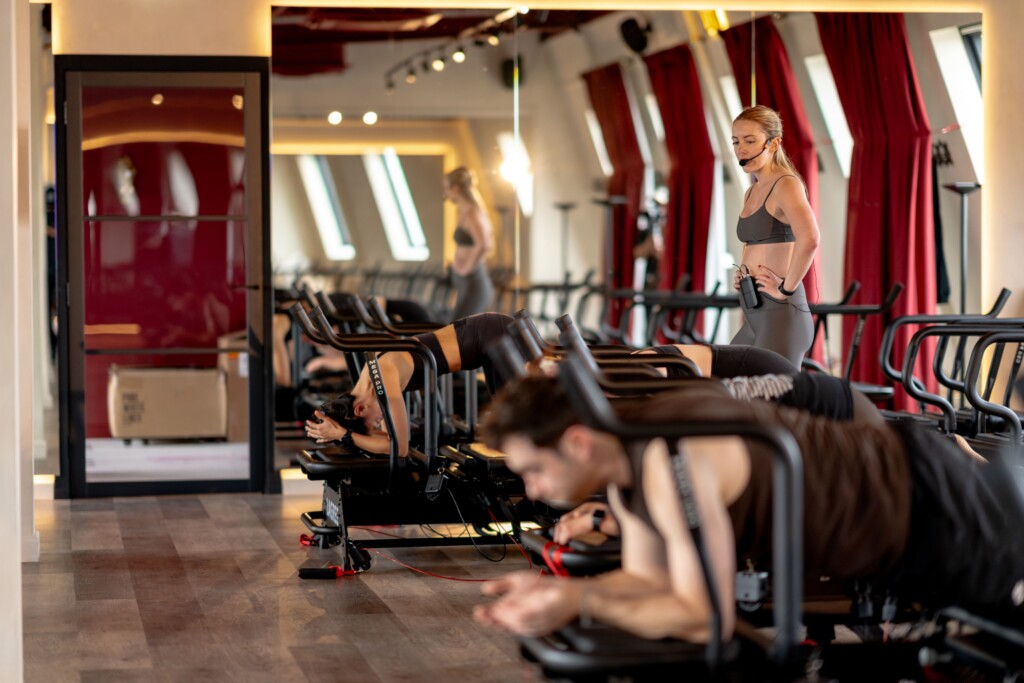
The Lagree Method addresses this gap by combining controlled lengthening with resistance. Each movement on the Megaformer takes muscles through extended ranges while they’re under load, teaching your nervous system that these positions are both safe and functional. You’re not just stretching, you’re building strength in lengthened positions, which creates flexibility that actually lasts.
Studios like BLOOD, SWEAT, AND TEARS’ Lagree in London specialize in this approach, offering classes led entirely by Lagree-certified instructors who understand how to balance intensity with sustainable range development.
Where Tightness Concentrates
Certain areas accumulate restrictions faster than others, typically the joints that bear the consequences of modern posture and repetitive movement patterns.
- Hip flexors shorten from sitting, creating anterior pelvic tilt and lower back compensation.
- Hamstrings tighten from limited posterior chain engagement, making forward folds feel impossible.
- Shoulders round forward from desk work and phone use, restricting overhead range and contributing to neck tension.
Why the Hips Hold the Key to the Spine
Lower back stiffness often signals hip restriction rather than a spinal problem. When the hips lose mobility, the lumbar spine compensates by moving more than it should, creating discomfort and vulnerability. This compensation pattern shows up in everyday movements like bending to pick something up or twisting to reach behind you.
Expanding Your Physical Vocabulary
The tension is that movement alone doesn’t guarantee mobility. Repetitive activity, whether sedentary or athletic, reinforces specific patterns rather than expanding your physical vocabulary.
Without deliberate work to lengthen, strengthen through new ranges, and balance your training, stiffness accumulates regardless of how active you are. Recognizing this distinction reframes tightness not as a failure of effort, but as a gap in training focus.
The Hidden Costs of Poor Flexibility
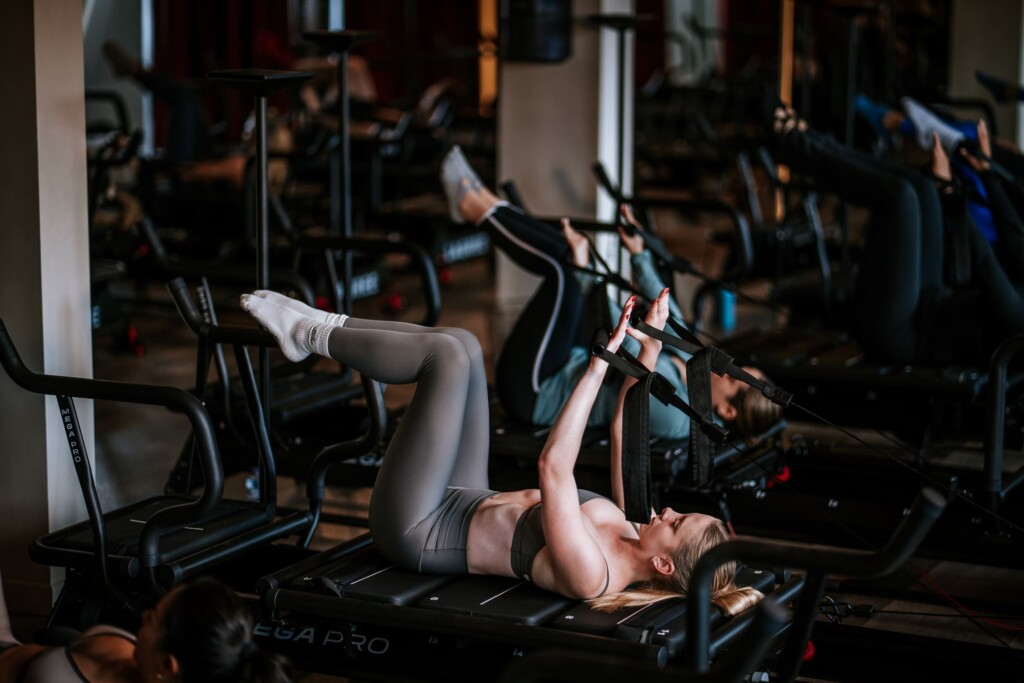
When mobility restrictions persist, they don’t just limit your workout depth. They create a cascade of mechanical compromises that affect everything from how you walk to how confidently you move through space.
The real cost isn’t measured in how far you can reach your toes; it’s measured in the injuries that happen because your body couldn’t absorb force properly, the chronic aches that never quite resolve, and the physical activities you quietly stop attempting.
When Tight Muscles Become Injury Magnets
Your body distributes stress across joints, tendons, and muscle tissue during movement. When one area lacks adequate range, that stress concentrates elsewhere. A tight calf forces your knee to compensate during a squat. Restricted thoracic mobility pushes your lower back to overextend during overhead reaches. Limited hip flexion makes your hamstrings work harder during forward bends, increasing the risk of strain.
Regional Interdependence and the Kinetic Chain
This isn’t theoretical. Witvrouw et al. published findings in the “American Journal of Sports Medicine”, showing that athletes with reduced hamstring flexibility experienced significantly higher rates of muscle strains during high-speed activity. The tissue simply couldn’t lengthen quickly enough to accommodate sudden force, so it tore instead.
The pattern repeats across different movement contexts.
- Ankle stiffness alters your gait mechanics, shifting load to your knees and hips.
- Tight hip flexors tilt your pelvis forward, compressing your lumbar spine and increasing the risk of lower back injuries during lifting or twisting movements.
Each restriction creates a weak point in your kinetic chain.
The Posture Problem Nobody Connects
Flexibility imbalances pull your skeleton out of neutral alignment. When your chest muscles are chronically tight, your shoulders round forward. When hip flexors shorten from prolonged sitting, your pelvis tilts anteriorly, exaggerating the curve in your lower back. When your calves lack length, your body compensates by shifting weight forward, altering how your entire spine stacks.
These postural shifts aren’t cosmetic. They create continuous mechanical stress on joints and connective tissue. Your neck works harder to hold your head upright when your shoulders are rounded. Your lower back bears excessive compression when your pelvis is tilted. Your knees track improperly when your hips can’t extend fully during walking.
How Cumulative Micro-Trauma Shapes Your Body
Over months and years, this adds up to persistent discomfort that doesn’t stem from a specific injury. You wake up with neck tension, feel lower back stiffness after sitting, or notice knee pain when going up stairs, all without a clear incident that caused it. The cause is positional stress accumulated over thousands of repetitions of compromised movement.
Performance Leaks You Don’t Notice
Athletic output depends on generating force through complete ranges of motion. When mobility is restricted, movements become mechanically inefficient. Your stride shortens during running because your hip flexors don’t fully extend. Your squat depth decreases because ankle dorsiflexion is limited. Your overhead press feels weaker because thoracic extension is restricted.
These aren’t just flexibility issues; they’re power losses. Force production drops when you can’t access the full length-tension relationship of a muscle. Your nervous system inhibits output when it senses you’re approaching the edge of your available range. The result is movements that feel harder than they should and performance that plateaus without a clear explanation.
The Biology of Growing Longer Muscles
The Lagree method addresses this directly by loading muscles through extended ranges under controlled tension. Each movement on the Megaformer requires you to stabilize while lengthening, which teaches your nervous system that these positions are both safe and functional. You’re not passively stretching; you’re building strength in lengthened states, which creates lasting mobility improvements.
Studios like BLOOD, SWEAT, AND TEARS’ Lagree in London specialize in this approach, with all instructors Lagree-certified and trained to balance intensity with sustainable range development.
Compensation Patterns That Redistribute Stress
Your body prioritizes task completion over ideal mechanics. If you ask it to perform a movement and one joint lacks the necessary mobility, another joint will move excessively to compensate. This redistribution allows the activity to continue but places stress on tissues not designed to handle it.
The Joint-by-Joint Approach: Decoding Your Body’s Silent Compensations
Common examples include lower back hyperextension to compensate for tight hips during:
- Forward bends
- Excessive knee valgus (inward collapse) to compensate for limited ankle mobility during squats
- Shoulder elevation to compensate for restricted thoracic rotation during reaching movements
Each compensation protects the restricted area but overloads the compensating one.
The danger is that compensation feels normal until it no longer does. You adapt gradually, so the movement never feels wrong; it just becomes your baseline. Then one day, the compensating tissue reaches its limit, and you experience pain or injury in a location that seems unrelated to the original restriction.
Daily Function Erosion
Flexibility affects more than training sessions. Bending to tie your shoes, reaching overhead to place items on shelves, turning to check your blind spot while driving, and getting up from the floor all require adequate joint mobility. As restrictions accumulate, routine tasks become effortful or uncomfortable.
Breaking the Psychological Cycle of Stiffness
This decline is gradual enough that many people have come to accept it as normal. You start bending your knees more to pick things up because your hamstrings won’t lengthen. You rotate your entire body, not just your neck, to look behind you. You avoid sitting on the floor because getting back up feels awkward. Each adaptation reduces your physical autonomy slightly.
The reinforcing cycle is what makes this particularly insidious. Discomfort discourages movement; reduced movement worsens stiffness; increased stiffness slows recovery from activity; and diminished confidence leads to avoiding physical challenges altogether. What starts as mild tightness evolves into a genuine limitation on how you move through the world.
Related Reading
- Morning Stretches for Women
- Why Am I Not Flexible
- How Long Does It Take to Get Flexible
- Does Flexibility Increase Strength
- Mobility Stretching Routine
- Full Body Stretching Routine for Flexibility
- Pregnancy Stretching Routine
10 Yoga Stretches for Flexibility (What Actually Helps)
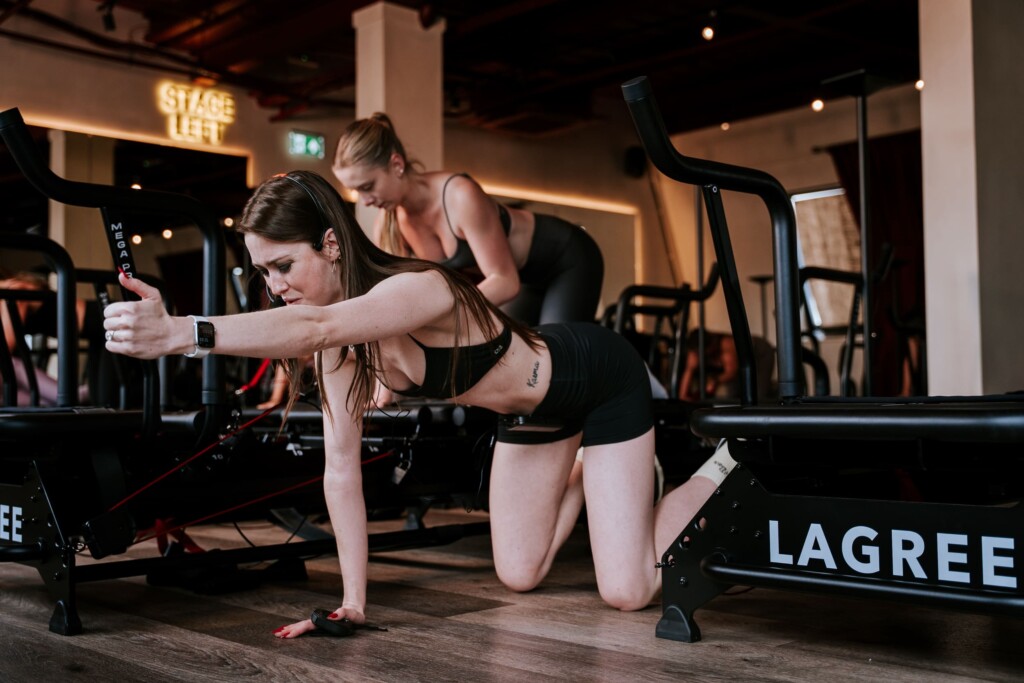
Consistent, well-chosen yoga poses restore mobility by lengthening tight tissues, improving joint range of motion, and calming the nervous system, thereby helping maintain muscular tension. The key isn’t in forcing extreme positions, but in practicing regularly with slow breathing and controlled transitions.
These ten poses target the most commonly restricted regions in active women:
- Hips
- Hamstrings
- Spine
- Shoulders
1. Downward-Facing Dog (Adho Mukha Svanasana)
This foundational pose lengthens the entire posterior chain, including calves, hamstrings, glutes, and spine, while opening the shoulders. It gently decompresses the back and builds tolerance for weight-bearing flexibility.
Focus on pressing the hips upward and lengthening the spine rather than forcing the heels down. The stretch should feel distributed across multiple areas, not concentrated in one tight spot.
2. Low Lunge (Anjaneyasana)
Prolonged sitting shortens the hip flexors, contributing to back discomfort and limited stride. Low Lunge targets these muscles while also stretching the quadriceps and groin.
Keep the pelvis gently tucked to safely deepen the stretch. You’ll feel this in the front of your back hip, exactly where desk work creates the most restriction.
3. Seated Forward Fold (Paschimottanasana)
This pose improves hamstring flexibility and lengthens the entire back line of the body. It also promotes relaxation of the nervous system when held with steady breathing. Prioritize a long spine over reaching the toes to avoid excessive strain on the lower back. The goal is length, not depth.
4. Pigeon Pose (Eka Pada Rajakapotasana Prep)
Pigeon Pose targets deep hip rotators and gluteal muscles that are difficult to stretch with conventional exercises. It relieves tension associated with prolonged sitting and repetitive lower-body training.
Support the hips with a cushion if they don’t reach the floor comfortably. This modification isn’t a weakness; it’s an intelligent progression that allows tissues to release without protective guarding.
5. Cat-Cow Flow (Marjaryasana-Bitilasana)
Unlike static stretches, this dynamic sequence mobilizes the spine through flexion and extension. It improves coordination between breathing and movement while reducing stiffness in the back and neck.
Move slowly, synchronizing each phase with inhalation and exhalation. The rhythm matters more than the range.
6. Child’s Pose (Balasana)
Child’s Pose provides a gentle stretch for the lower back, hips, and shoulders while encouraging relaxation. It’s especially useful between more demanding poses or at the end of a session. Extending the arms forward increases the shoulder stretch component, targeting the areas that tighten from desk work and strength training.
7. Cobra Pose (Bhujangasana)
Cobra opens the chest, shoulders, and abdominal muscles, counteracting the forward-leaning posture caused by desk work and device use. It also strengthens the back while promoting spinal extension. Lift through the chest rather than pushing aggressively with the arms. The sensation should be opening, not compression, in the lower back.
8. Butterfly Pose (Baddha Konasana)
This seated hip opener stretches the inner thighs and groin, areas that often remain tight even in active individuals. It improves comfort in squatting and lateral movements. Avoid bouncing the knees; allow gravity and breathing to create a gradual release.
Many women find inner thigh tightness limits their ability to sit comfortably on the floor or move laterally during training.
9. Standing Forward Fold (Uttanasana)
A simple yet effective stretch for the hamstrings, calves, and lower back, this pose also helps decompress the spine. Slightly bending the knees helps maintain spinal length while safely targeting the posterior chain.
The bend isn’t cheating; it’s protecting your back while still creating length where it’s needed.
10. Thread the Needle (Parsva Balasana Variation)
This gentle twist stretches the shoulders, upper back, and posterior shoulder capsule, areas frequently tightened by desk work and strength training. It also improves thoracic rotation, which supports healthier shoulder mechanics. The twist should feel like release, not force.
Why Technique Matters More Than Intensity
Flexibility improves through consistent, controlled exposure to end ranges, not by forcing deeper positions. According to research published in the International Journal of Yoga, 10 weeks of yoga practice significantly improved flexibility and balance in college athletes, demonstrating that regular practice creates measurable change. Slow breathing helps relax protective muscle tension, allowing tissues to lengthen safely.
These poses work because they target the most commonly restricted regions while encouraging balanced mobility rather than isolated stretching. Regular practice, even for short durations, proves more effective than occasional intense sessions. Your nervous system needs repeated exposure to new ranges to recognize them as safe and functional.
Why Strength is the Glue of Flexibility
The Lagree method complements this approach by loading muscles through extended ranges under controlled tension. While yoga stretches create length, training on the Megaformer at studios like BLOOD, SWEAT, AND TEARS’ Lagree in London builds strength in those lengthened positions, teaching your body that new ranges are both accessible and usable.
The combination creates flexibility that actually lasts because you’re not just stretching, you’re reinforcing new mobility with functional strength.
Building a Sustainable Practice
Start with five to eight minutes daily rather than attempting hour-long sessions sporadically. Hold each pose for five to ten breaths, focusing on steady inhalation and exhalation rather than pushing deeper. Your breath pattern signals your nervous system’s state.
Forced breathing indicates you’re pushing too hard; smooth, controlled breathing suggests you’re working at a productive edge.
Why Micro-Loading Trumps Weekly Overloading
Consistency matters more than duration. Your tissues adapt to patterns they experience regularly. Daily brief practice creates more lasting change than weekly extended sessions because your body recognizes the stimulus as a new baseline rather than an occasional event.
These stretches address the mechanical restrictions that accumulate from modern life, but they’re most effective when combined with strength work that reinforces new ranges of motion. Mobility without stability reverts quickly. Strength without length creates rigidity. The balance between the two determines whether flexibility improvements actually stick.
Why Stretching Alone Often Isn’t Enough
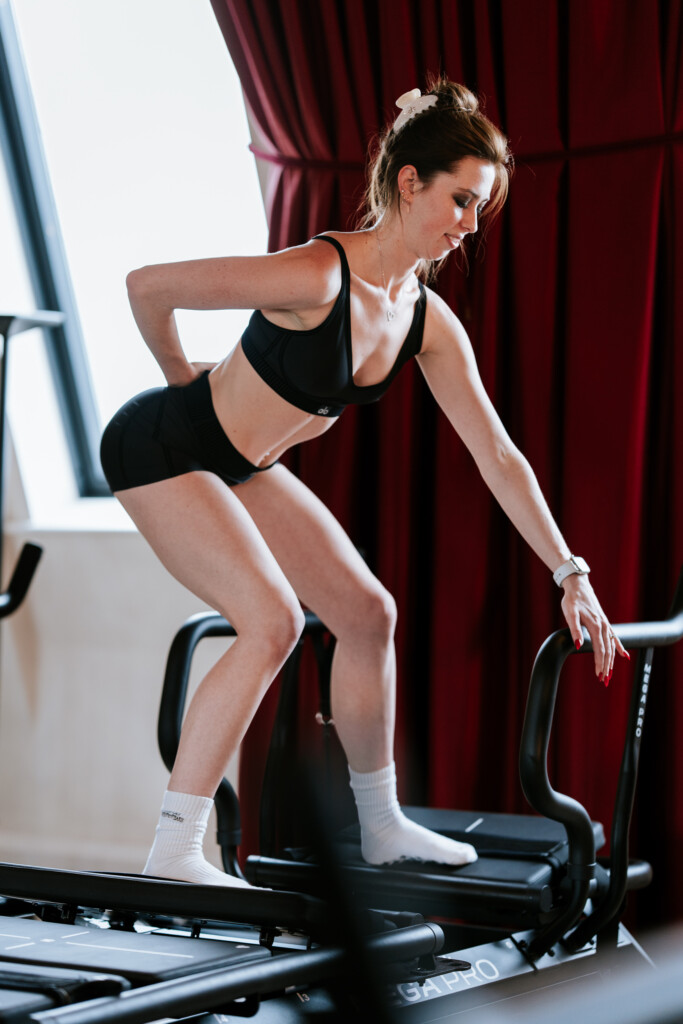
Stretching creates temporary length, but your nervous system won’t maintain range it can’t control. When you passively lengthen a muscle without building strength in that extended position, your body treats the new range as unstable and tightens back up within hours. Lasting flexibility requires both length and the capacity to stabilize what you’ve gained.
Weak Muscles Cannot Support a New Range of Motion
Your nervous system prioritizes joint protection above everything else. When you stretch into a new range but lack the strength to control that position, your body interprets it as a sign of vulnerability. The response is predictable: increased muscle tension to prevent what it perceives as potential injury.
How Full-ROM Loading Outperforms Static Stretching
This explains why many women feel looser immediately after stretching but wake up the next morning with the same tightness. The tissue lengthened temporarily, but without the strength to stabilize the new range, the nervous system reverted to its protective baseline.
According to a 2021 systematic review in Sports Medicine by Afonso and colleagues, resistance training through a full range of motion improves flexibility to a similar or greater extent than static stretching alone, particularly when movements load the muscle in its lengthened state.
Closing the Gap Between Passive and Active Range
The pattern is clearly evident in hip flexibility. You can passively pull your knee toward your chest and feel a deep stretch, but if you can’t actively lift that leg to the same height without assistance, your body won’t trust that range during functional movement.
The gap between passive flexibility (how far someone can move their joint) and active flexibility (how far they can move it themselves) reveals where strength is missing.
Lack of Control Leads the Body to Tighten Back Up
Flexibility without control is rarely maintained. If you cannot actively move or stabilize within a new range, the nervous system reduces access to that range after the stretch ends. This protective mechanism exists because an uncontrolled range of motion increases injury risk during dynamic activities such as:
- Walking
- Lifting
- Reaching
Why Strength is the Transfer Mechanism for Flexibility
Physical therapy research highlights that improvements in active range of motion correlate more strongly with strength gains than with passive stretching alone. Your hamstrings might lengthen during a seated forward fold, but if you can’t control a single-leg deadlift or actively lift your straight leg while standing, that flexibility won’t transfer to real movement demands.
Why Strength is the Glue of Flexibility
The Lagree method addresses this gap by combining controlled lengthening with resistance. Each movement on the Megaformer takes muscles through extended ranges while they’re under load, teaching your nervous system that these positions are both safe and functional.
Studios like BLOOD, SWEAT, AND TEARS’ Lagree in London specialize in this approach, with all instructors Lagree-certified and trained to build strength in lengthened positions, creating flexibility that actually lasts because you’re not just stretching, you’re reinforcing new mobility with functional strength.
Static Stretching May Not Transfer to Real Movement
Traditional static stretching involves holding a position without load. While this temporarily reduces muscle stiffness, it doesn’t train the coordinated muscle-activation patterns needed for dynamic activities. Being able to touch your toes while seated doesn’t necessarily mean you can hinge safely under load or move efficiently during sports.
A review in the Journal of Strength and Conditioning Research reported that static stretching alone has a limited impact on performance measures and functional mobility compared with programs that integrate strength or dynamic training. The disconnect happens because static positions don’t replicate the neural demands of movement. Your body learns what you practice, and holding still teaches a different skill than moving with control.
Moving From Stretching to Motor Learning
This explains why yoga practitioners sometimes demonstrate impressive flexibility during class, but experience limited carryover to athletic performance or daily function. The poses create length, but without load or dynamic challenge, the nervous system doesn’t fully integrate that range into movement patterns.
Lasting Flexibility Requires Strength in the Lengthened Position
Modern mobility training increasingly emphasizes strengthening at end ranges. When muscles can generate force while lengthened, the nervous system interprets that range as safe and usable. Deep squats that strengthen the hips at full depth, controlled lunges that load the extended hip flexors, and overhead movements that stabilize the shoulders at end range all create this dual adaptation.
Using Full-Body Tension to Unlock Deep Range
This approach mirrors how flexibility develops naturally in activities like gymnastics or dance, where strength and range are trained simultaneously.
The performer doesn’t just stretch into a split:
- They built the capacity to hold it
- Control transitions in and out of it
- Generate power from that position
Slow resistance exercises emphasizing full motion create this effect more reliably than stretching alone. The tissue lengthens under tension, which signals both mechanical adaptation and neural acceptance. Your body learns that the extended position isn’t just accessible, it’s functional.
The Real Mechanism Behind Permanent Flexibility
Long-term mobility improvements occur when three elements align:
- Adequate tissue extensibility (the ability to lengthen)
- Strength within the new range (the ability to control it)
- Neurological acceptance (the brain’s perception of safety)
Stretching addresses only the first component. Without the others, gains fade within 48 to 72 hours.
The key insight is that flexibility is not merely the absence of tightness. It is the presence of controlled movement through a full range. Building strength where you are most restricted transforms temporary looseness into durable mobility that carries over into daily life and athletic performance. Your body trusts what it can control, and control comes from strength, not passive lengthening.
Related Reading
- Stretches for Women Over 50
- Quad And Hamstring Stretches
- Ballet Stretches
- Split Stretches
- Aerial Yoga Stretches
- Sacrum Stretches
How to Build Flexibility Safely and Progressively
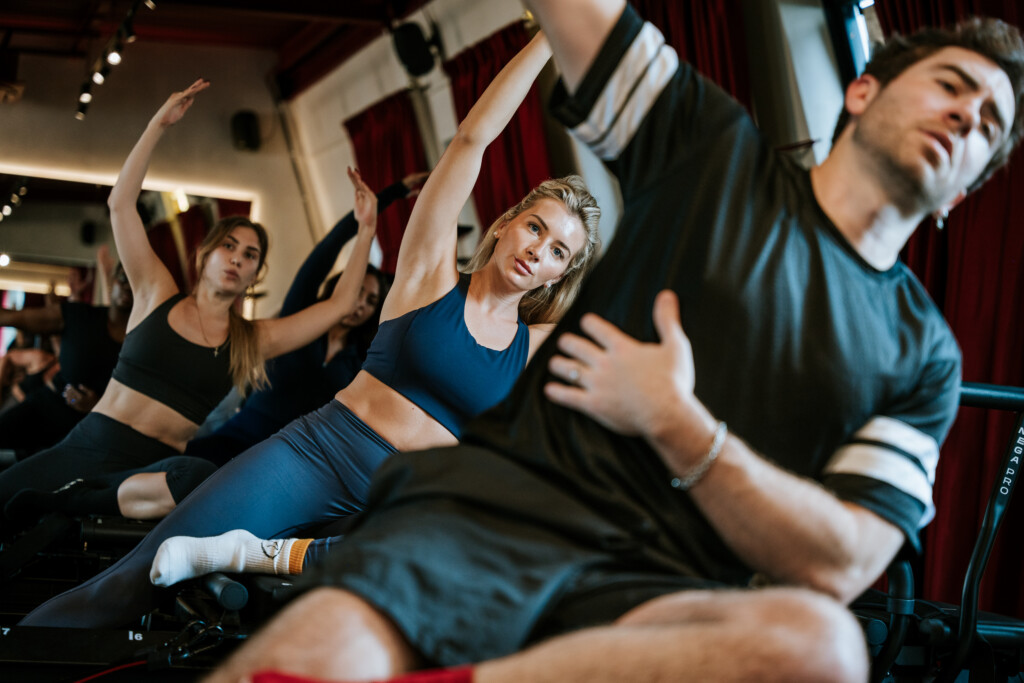
Safe flexibility development requires gradual tissue adaptation paired with nervous system reassurance. You cannot force range faster than your body can build the structural and neurological capacity to support it.
Rushing creates inflammation, protective tightening, or injury that sets progress back weeks. Patience here is a strategy, not hesitation.
Prepare Tissues Before Demanding Length
Cold connective tissue resists elongation and tears more easily under tension. Warming increases blood flow, raises local temperature, and makes collagen fibers more pliable. This isn’t optional preparation; it’s a mechanical necessity.
Five minutes of light movement transforms tissue readiness. Walking, gentle cycling, or controlled joint circles elevate tissue temperature enough to reduce injury risk during deeper work. Your hamstrings will lengthen further after a brief walk than they will first thing in the morning because the tissue is literally warmer and more elastic.
Feed-Forward Control in Mobility
Dynamic mobility drills prepare the nervous system as well as the muscles. Leg swings, arm circles, and controlled spinal rotations teach your brain that movement through range is safe before you ask it to hold positions at end range. This neurological priming reduces protective tension during static holds.
Layer Dynamic Movement With Static Holds
Dynamic stretching moves joints through their range of motion repeatedly, building tolerance for motion. Static stretching sustains positions to encourage tissue lengthening and nervous system relaxation. Neither approach alone produces results as reliable as combining both.
The Body’s Internal Release Valve
Dynamic work first establishes that the range is accessible and controlled. Ten to fifteen repetitions of a movement like walking lunges or leg swings signal safety to your nervous system. Following this with a 30-second static hold, as recommended by GQ’s flexibility and longevity experts, consolidates the range your body just demonstrated it can handle.
This sequence respects how your nervous system evaluates threat. Repeated motion proves capability. Sustained holds allow tissue adaptation without triggering protective reflexes. The combination creates both immediate and cumulative gains.
Build Strength Where You Feel Weakest
Flexibility you cannot actively control disappears within days. Your body abandons ranges it perceives as unstable. Strengthening muscles in their lengthened positions teaches your nervous system that new mobility is functional, not fragile.
Slow, controlled squats to comfortable depth build hip and ankle flexibility while simultaneously strengthening those ranges. Overhead movements with light resistance improve shoulder mobility while training stability at the end range. Resistance exercises that emphasize the stretch position, such as Romanian deadlifts or deep lunges, create lasting flexibility by pairing length with load.
Why Elite Athletes Train Strength to Unlock Length
This mirrors how elite athletes develop mobility.
- Gymnasts don’t just stretch into splits; they train strength throughout the entire range.
- Dancers don’t passively hang in positions; they control transitions in and out of them.
The body trusts what it can actively manage.
Choose Frequency Over Intensity
Connective tissue remodels slowly in response to consistent, moderate stimulus. Aggressive stretching once weekly triggers inflammation and protective tightening. Brief, frequent sessions signal your body to adapt structurally rather than react defensively. Three to four sessions per week at moderate intensity produce more durable change than one intense session.
Your tissues need time between exposures to rebuild slightly longer and stronger. Overloading this process creates micro-damage faster than repair mechanisms can address it. Many women push deep stretches until they feel significant discomfort, assuming intensity equals progress. The opposite proves true. Moderate tension sustained consistently teaches your body that the new range is permanent, not an emergency to recover from.
Recognize Productive Tension Versus Damage Signals
Effective stretching feels like a moderate pull that eases as you breathe and settle into the position. This sensation indicates tissue lengthening without protective resistance. Sharp pain, pinching, numbness, or joint discomfort signals mechanical stress that can cause injury.
Your nervous system distinguishes between challenge and threat. The challenge feels uncomfortable but manageable. Threat triggers sharp, localized pain or spreading discomfort that intensifies rather than eases. Learning this distinction prevents the strains and ligament stress that derail flexibility training for weeks.
Why Pain Shuts Down Flexibility Gains
If a stretch causes pain that doesn’t diminish within three to five breaths, you’ve exceeded the safe range. Back off slightly and allow your body to relax into a more moderate position. Progress happens at the edge of comfort, not beyond it.
Advance Range Only When Control Exists
Increasing depth before you can actively stabilize the current range creates instability that your body will correct by tightening. Each progression should feel secure, not precarious. When a position becomes comfortable, and you can move in and out of it with control, you’re ready to explore a slightly deeper range.
Safe progression involves small increments. Extending a hold time by ten seconds, increasing depth by an inch, or adding light resistance to a familiar range. These modest advances accumulate into significant change over weeks without provoking protective responses.
The 48-Hour Window of Structural Rebirth
Recovery matters as much as training. Tissues adapt during rest, not during the stretch itself. Allowing 48 hours between intense flexibility sessions gives your body time to rebuild slightly longer and stronger. Ignoring this rhythm leads to chronic soreness and stalled progress.
Traditional stretching creates temporary length. Strength training builds power, but often in limited ranges. The gap between these approaches explains why flexibility gains fade so quickly for most women. What if the solution isn’t choosing between them, but finding a method that integrates both simultaneously?
How BLOOD, SWEAT, AND TEARS’ Lagree Training Supports Lasting Flexibility
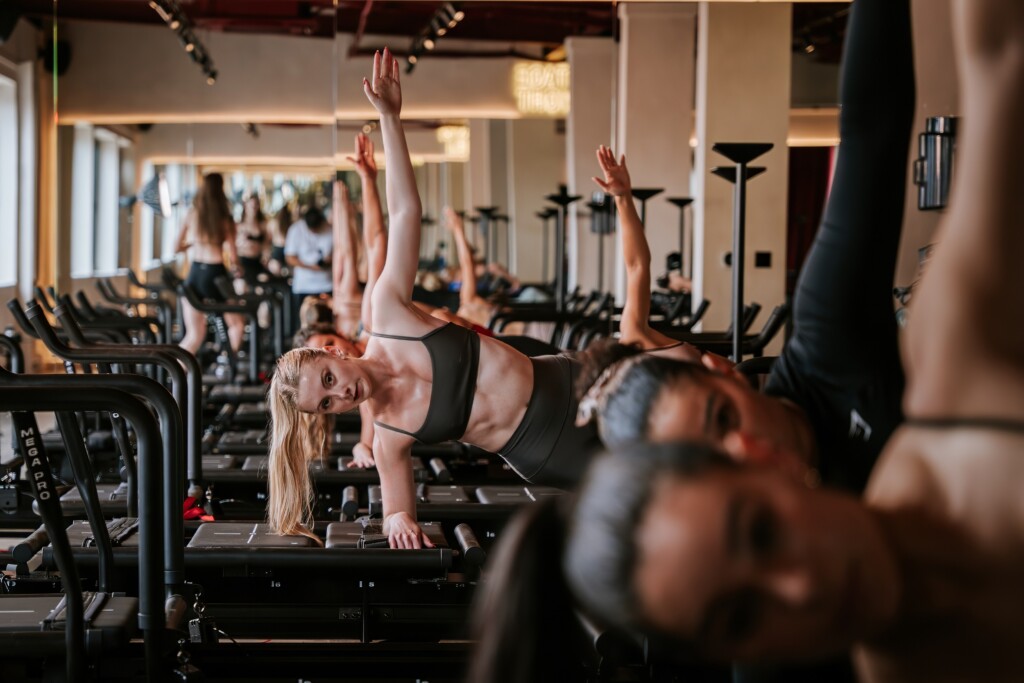
Lagree training strengthens muscles while they’re lengthened, which solves the core problem yoga stretching alone cannot: building control in extended ranges. When you load a muscle at its longest point under tension, your nervous system learns that position is both safe and functional. This creates flexibility that persists because your body trusts the range enough to maintain it.
Strengthening the Core to Support Posture
A stable core keeps your spine and pelvis aligned during both movement and stillness. When these deep muscles are weak, your body compensates by tightening the hips, back, or shoulders to create artificial stability.
You stretch those areas, feel temporary relief, then wake up tight again because the underlying instability never changed.
Replacing Protective Guarding With Structural Support
Lagree exercises place continuous tension on the transverse abdominis, multifidus, and pelvic floor muscles that stabilize your trunk. The Megaformer’s spring resistance doesn’t allow momentum or rest points, so these stabilizers work throughout every movement.
Over time, your body stops relying on surface tension to protect your spine and starts using the structural support it’s built. The tightness that kept returning after stretching finally has a reason to stay away.
Low-Impact Resistance That Protects Joints
High-impact training creates a force your joints must absorb. When mobility is already limited, that impact concentrates stress on the most restricted areas. Your body responds by tightening further to protect itself, the opposite of what you need for lasting flexibility.
Why Springs Outperform Gravity for Joint Longevity
Lagree’s spring-based resistance eliminates impact entirely. The carriage glides smoothly, creating constant tension without jarring your joints. You can work at high intensity while your connective tissues gradually strengthen rather than defend.
According to LagreeFit 415, 2 to 3 flexibility-focused Lagree sessions per week allow this adaptation to occur without overloading recovery capacity. Your body becomes more resilient at end ranges because it’s building tolerance through controlled load, not surviving repeated shock.
Slow, Controlled Movements Reinforce Alignment
Speed hides compensation. When you move quickly, your body uses momentum to bypass weak or restricted areas. You complete the movement, but you don’t actually strengthen the vulnerable positions that need support.
The Slow-Motion Secret: Recruited Resilience
Lagree exercises progress at a deliberately slow tempo, often taking four to six seconds per repetition. This eliminates momentum entirely and forces every muscle to contribute throughout the full range of motion. You cannot cheat the movement by swinging or bouncing.
- Your hip flexors must control the entire descent of a lunge.
- Your hamstrings must support the full extension required for a leg lift.
This time, under tension in lengthened positions, your nervous system learns precise control, which transforms temporary mobility into permanent capacity.
Strength and Endurance Improve Mobility Retention
Reaching a new range once doesn’t mean you own it. Your body needs the endurance to sustain that range repeatedly without fatiguing into poor form. When muscles tire, they revert to protective tension patterns that recreate the tightness you worked to eliminate.
Why 90 Seconds of Tension Ends Desk-Bound Tightness
Lagree training builds muscular endurance by maintaining tension for 45 to 90 seconds per exercise. Your muscles learn to function in extended positions under fatigue, which mirrors the demands of daily life. Walking, standing, and sitting all these activities require sustained muscle activity.
By training endurance in lengthened states, your body stops defaulting to tightness when tasks become repetitive or prolonged. The flexibility you gain during class carries into the hours and days that follow.
Structured Coaching Enhances Safety
Proper alignment determines whether a movement builds capacity or creates strain. Without guidance, most people compensate by overusing strong areas and avoiding weak ones. This reinforces existing imbalances rather than correcting them.
Correcting Synergistic Dominance
Instructors at studios like BLOOD, SWEAT, AND TEARS Lagree in London are all Lagree-certified and trained to recognize compensation patterns and adjust form in real time.
They modify:
- Spring resistance
- Body positioning
- Range based on individual ability
This ensures you’re working at an edge that challenges without overwhelming. Progress becomes gradual and sustainable because each session builds on the last without forcing positions your body isn’t ready to support.
A Women-Focused, Functional Strength Environment
BLOOD, SWEAT, AND TEARS’ Lagree emphasizes training that translates into better movement quality and physical confidence, not just aesthetic goals. The focus is on whole-body coordination that supports how you actually live. Picking things up, reaching overhead, sitting on the floor, and standing back up are the movements that determine your physical autonomy.
Why Whole-Body Integration is the Secret to Lasting Mobility
The methodology combines high intensity with low impact, prioritizing functional strength over isolated muscle development. You’re not training muscles for appearance alone.
You’re building:
- A body that moves better
- Feels more capable
- Maintains the mobility you’ve worked to develop
The result is flexibility that serves you outside the studio, in the activities and movements that define your daily experience.
Related Reading
- Pregnancy Sciatica Stretches
- Pelvic Stretches For Women
- Yoga Poses For Hip Flexibility
- Lower Back And Hip Stretches
- Pelvic Stretches For Women
- Aerial Yoga Stretches
Book a Lagree Class in London Today
If you have been stretching consistently but still feel tight, BLOOD, SWEAT, AND TEARS’ Lagree can help you build the strength needed to safely hold a new range of motion. Try a class and experience how controlled resistance training can turn temporary flexibility gains into lasting mobility.
Book your first session at BLOOD, SWEAT, AND TEARS’ Lagree and discover why London’s only studio with all Lagree-certified instructors creates results that stretching alone cannot. Your body already knows how to lengthen. Now it’s time to teach it how to stay that way.