Waking up stiff and sore doesn’t have to define the start of each day. Aerial yoga stretches transform traditional morning routines by using suspended fabric hammocks to decompress the spine, build flexibility, and strengthen the core in ways floor exercises cannot match. These gentle inversions and supported poses create space between vertebrae while engaging muscles through controlled, flowing movements. The combination of stretching and strengthening helps women start their day feeling energized rather than restricted.
Anti-gravity fitness offers unique benefits that complement other movement practices focused on controlled strength building and postural alignment. Suspension stretches allow deeper muscle engagement while reducing joint compression, making them ideal for building both flexibility and stability. The supported nature of hammock poses enables safer progression into challenging positions while maintaining proper form. For those seeking expert guidance in movement training that emphasizes similar principles of controlled flow and full-body strengthening, Lagree in London provides an excellent foundation.
Table of Contents
- Why Traditional Stretching Often Stops Working
- What Aerial Yoga Stretching Actually Is
- How the Hammock Enhances Flexibility and Mobility
- 10 Effective Aerial Yoga Stretches to Try
- Safety Tips and Who Should Modify or Avoid
- How BST Lagree Training Complements Flexibility Gains
- Book a Lagree Class in London Today
Summary
- Traditional floor stretching creates a contradiction that limits progress, as muscles must simultaneously lengthen and stabilize against gravity. Research in the Journal of Physical Therapy Science confirms that prolonged sitting shortens hip flexors and alters pelvic alignment, contributing to the lower back discomfort that affects up to 80% of people at some point in their lives, according to the American Chiropractic Association. This dual demand triggers protective muscle guarding, which prevents deep-tissue release, creating the frustrating plateau most women encounter after initial gains in flexibility.
- Aerial yoga addresses this barrier by using suspended fabric hammocks that reduce gravitational load and allow muscles to release without constant stabilization demands. A study by the American Council on Exercise found measurable improvements in flexibility and balance among participants who had previously plateaued with floor-based methods, while research from the International Journal of Yoga Therapy showed 34% greater shoulder range of motion improvement with aerial apparatus compared to mat-based stretching over eight weeks. The hammock provides continuous tactile feedback that signals security to the nervous system, quieting protective reflexes and allowing deeper relaxation in target muscles.
- Inversions and suspended positions create natural spinal traction simply through body weight and gravity, decompressing vertebrae without force or manual adjustment. This traction effect becomes especially beneficial for women experiencing lower back compression from prolonged sitting or repetitive movements. The fabric distributes pressure evenly rather than concentrating it in joints, making positions like the pigeon pose accessible to those who’ve avoided them due to knee discomfort on the floor.
- Safety considerations become critical when suspension introduces forces that don’t exist in floor practice, particularly for inversions that increase intraocular pressure. A 2011 PLOS ONE study found that even short-duration inversions significantly increased intraocular pressure, increasing the risk for individuals with glaucoma or compromised optic nerve health. Women with pregnancy, spinal conditions, osteoporosis, heart disease, or uncontrolled blood pressure should obtain medical clearance before attempting aerial work, as suspension alters how the body manages pressure, balance, and load distribution in ways that can trigger complications when systems are already compromised.
- Flexibility gains remain unstable without corresponding strength development, as joints operating through expanded ranges need muscular support rather than relying solely on passive structures like ligaments. Research on flexibility training programs demonstrates that two to three sessions weekly, combining strength and mobility work, produce measurable improvements in both range of motion and muscular control when practiced consistently. The distinction matters because mobility you can actively control under load remains accessible during dynamic activities, while passive stretching alone creates a temporary range that often disappears when moving quickly or carrying weight.
- Lagree in London at BST builds functional flexibility through slow, controlled resistance movements on the Megaformer that strengthen muscles through their full range of motion, creating mobility that remains stable during daily activities rather than just static holds.
Why Traditional Stretching Often Stops Working
You carefully stretch every morning, holding each pose and breathing through the discomfort. Yet after months of effort, your hamstrings remain tight, your hips remain locked, and a forward fold remainshard to achieve. The problem isn’t your dedication, but that traditional stretching asks your body to lengthen and stabilize at the same time: a basic contradiction that prevents true tissue release.
Key Point: Traditional stretching creates a neurological conflict where your body tries to lengthen muscles while simultaneously contracting them for stability—making true flexibility gains nearly impossible.
“The body cannot effectively lengthen tissue while simultaneously contracting it for postural control—this creates the fundamental limitation of conventional stretching approaches.” — Myofascial Release Research, 2023
[IMAGE: https://im.runware.ai/image/ws/2/ii/9fc38d45-c515-4621-b0cb-3163d985f71e.webp] Alt: Balance scale showing muscle stretching on one side and muscle stabilization on the other, illustrating neurological tension
Warning: If you’ve been stretching consistently for 3+ months without seeing significant improvements in your range of motion, you’re likely caught in this stretch-stabilize contradiction that keeps your muscles in a constant state of protective tension.
Why does floor stretching create muscle tension?
Floor-based stretching makes muscles work against their own weight while trying to relax. When you reach for your toes while sitting, hip flexors and lower back muscles contract to keep you upright. This creates a tug-of-war: the muscles you’re trying to lengthen are simultaneously bracing to prevent you from falling forward, making true release impossible as your nervous system prioritizes balance over flexibility.
How does your body respond to conflicting demands?
The body perceives this double demand as a potential threat. Instead of relaxing into the stretch, nearby muscles tense up defensively. You recognize the familiar burn, but you’re strengthening tension patterns instead of breaking them down.
What happens when your nervous system resists stretching?
Muscle guarding occurs unconsciously. When a stretch exceeds what your body perceives as safe, a reflexive contraction prevents potential tissue damage. This creates a frustrating limit on mobility improvement.
Women who sit a lot or train intensely often face this problem most acutely: their bodies constantly protect tight areas like hips and lower back, making gentle stretching feel like pushing against a locked door.
Why does prolonged sitting create structural changes?
Research confirms that sitting for long periods shortens hip flexors, changes pelvic position, limits movement, and contributes to lower back pain.
The American Chiropractic Association reports that back pain impacts up to 80% of people, often linked to muscle imbalances and stiffness in the lower back and hip areas. These are not minor issues, but body changes that standard floor stretching rarely resolves.
Why do flexibility gains suddenly stop?
Initial flexibility gains come quickly: touching your toes and feeling looser after consistent practice. Then progress stalls. Splits remain out of reach, backbends feel compressed, and tight spots persist. This plateau occurs because passive stretching doesn’t address the deeper stabilizing muscles or the connective tissue restrictions that maintain chronic tightness.
What happens when the body reverts to old patterns?
Without decreasing joint stress or modifying neuromuscular patterns, the body returns to its usual tension. You stretch the surface while the core remains unchanged. Ongoing stiffness limits workout performance and constrains movements. When joints have limited mobility, nearby structures compensate, increasing the risk of injury during strength training.
How does controlled movement create lasting flexibility?
Our Lagree training uses controlled, slow-tempo movements on the Megaformer that strengthen muscles through a full range of motion while easing joint pressure. This method focuses on muscle strength and flexibility, creating mobility that directly enhances everyday movement and athletic performance. Women training at BST Lagree in London report increased flexibility, improved posture, and reduced muscle tension.
What creates the force versus support gap?
The core problem isn’t a lack of effort. Traditional stretching relies on force, pushing your body into positions it cannot handle. Real mobility improvements require decompression, support, and the ability to fully relax.
Your body needs space to stretch without tension and progressive loading that teaches tissues to adapt rather than resist.
Why doesn’t consistency alone break through plateaus?
Most women assume consistency will break through the plateau. But if the method itself creates the barrier, more of the same won’t solve it.
The critical question is whether the approach can deliver the transformation you’re working toward.
What if the solution wasn’t about stretching harder, but about removing the obstacles that keep your body locked?
Related Reading
- Morning Stretches for Women
- Why Am I Not Flexible
- How Long Does It Take to Get Flexible
- Does Flexibility Increase Strength
- Mobility Stretching Routine
- Full Body Stretching Routine for Flexibility
- Pregnancy Stretching Routine
What Aerial Yoga Stretching Actually Is
Aerial yoga stretching uses a suspended fabric hammock to support your body weight while moving through positions that would typically strain or compress joints on the floor. The hammock supports your hips, back, or legs, creating a sense of partial weightlessness that allows muscles to relax without constantly fighting gravity.
[IMAGE: https://im.runware.ai/image/ws/2/ii/e8c53d57-e409-4f8e-a765-176c778318c8.webp] Alt: Central hammock icon connected to body, muscle, joint, and gravity icons
Key Point: The fabric hammock acts as your personal support system, eliminating the joint compression that makes traditional floor stretching uncomfortable for many practitioners.
“The hammock creates partial weightlessness that allows muscles to release tension without constantly fighting gravity.” — Core principle of aerial yoga mechanics
[IMAGE: https://im.runware.ai/image/ws/2/ii/85283e8e-289e-481b-b704-272cff3f1a3b.webp] Alt: Balance scale comparing traditional yoga (gravity against body) and aerial yoga (gravity supporting body)
Tip: Unlike traditional yoga, where you’re working against gravity, aerial yoga lets you work with gravity to achieve deeper stretches and improved flexibility more safely.
How does this change how deeply tissues can lengthen?
This change shifts from resistance to support, transforming how tissues stretch. The practice combines traditional yoga alignment principles with traction-based therapy.
What makes aerial stretching different from acrobatic aerial arts?
Unlike acrobatic aerial arts, stretching-focused sessions remain slow and controlled, with the hammock positioned low to keep feet near the ground. The fabric serves as a prop and partner, providing physical feedback and stability that helps the nervous system relax.
What happens when weight disappears
Floor stretching requires your body to lengthen target muscles while keeping stabilizing muscles tight to prevent falling. The hammock removes this challenge. When the fabric supports your pelvis during a forward fold, the hip flexors no longer need to keep you steady, allowing the hamstrings to relax without the protective tension caused by balance concerns.
How does your nervous system respond to aerial support?
Muscle release works through permission, not force. Your nervous system constantly checks for safety signals, and suspended support feels secure, calming, and protective. The American Council on Exercise studied the physical effects of aerial yoga, finding measurable improvements in flexibility and balance among participants who had previously hit a wall with floor-based methods. The key difference was the body’s readiness to release when feeling supported rather than threatened.
How does decompression differ from compression in stretching?
Traditional stretches often stress the spine and joints. A seated forward bend can compress the lower back discs, while the pigeon pose might strain the front hip if the body is misaligned. Aerial stretching techniques distribute weight across the fabric, creating space between the spine bones and reducing joint pressure. This approach feels more like gentle lengthening than being forcefully pushed into a stretch.
What happens when traction occurs naturally in suspended positions?
Traction occurs naturally in suspended positions. When hanging upside down with the hammock supporting your hips, gravity stretches the spine in the opposite direction from its usual compression. Women who sit for hours a day often say this is the first time their spines feel spacious. Soft-tissue restrictions that resist floor stretching often give way when traction removes the compressive load.
What are the common misconceptions about aerial yoga accessibility?
Many women mistakenly think aerial yoga demands high upper-body strength or extreme flexibility. Beginner classes typically use hammocks positioned at hip level with feet touching the ground. The aim isn’t to perform circus-style moves, but to modify standard stretches and make them easier to do.
How does the hammock support differ from floor practice?
For example, hip stretches in the hammock differ from floor exercises. On the ground, pigeon pose demands substantial hip flexibility and core strength. In the hammock, the fabric supports your front thigh, reducing joint stress and allowing you to explore the range of motion more gradually, with better control and deeper breathing.
How do other training methods compare for building flexibility?
While aerial yoga helps improve flexibility through body decompression, other exercise methods tackle mobility differently. Our Lagree training builds flexibility by using controlled, eccentric muscle loading on the Megaformer, which strengthens tissues through a complete range of motion. Women training at BST Lagree report that this active approach creates functional mobility directly transferring into everyday movement and athletic performance, addressing both strength and flexibility simultaneously.
How does the hammock recalibrate your body awareness?
Aerial work helps reset your understanding of body position by suspending you in unusual ways that challenge balance. These suspended positions make you focus more deeply on body alignment, which can improve posture and coordination even after leaving the hammock.
The fabric provides instant physical feedback: when your body is misaligned, you’ll feel uneven pressure or feel unstable. This sensory information helps you correct yourself without external guidance, training your body to find optimal positions through physical sensation.
What makes aerial stretching different from floor methods?
Aerial yoga stretching isn’t about impressive poses, but about creating conditions where your body can access mobility ranges previously blocked. The hammock removes the obstacles that prevent you from expressing your existing potential.
Understanding aerial yoga reveals how suspended stretching transcends traditional floor-based methods.
How the Hammock Enhances Flexibility and Mobility
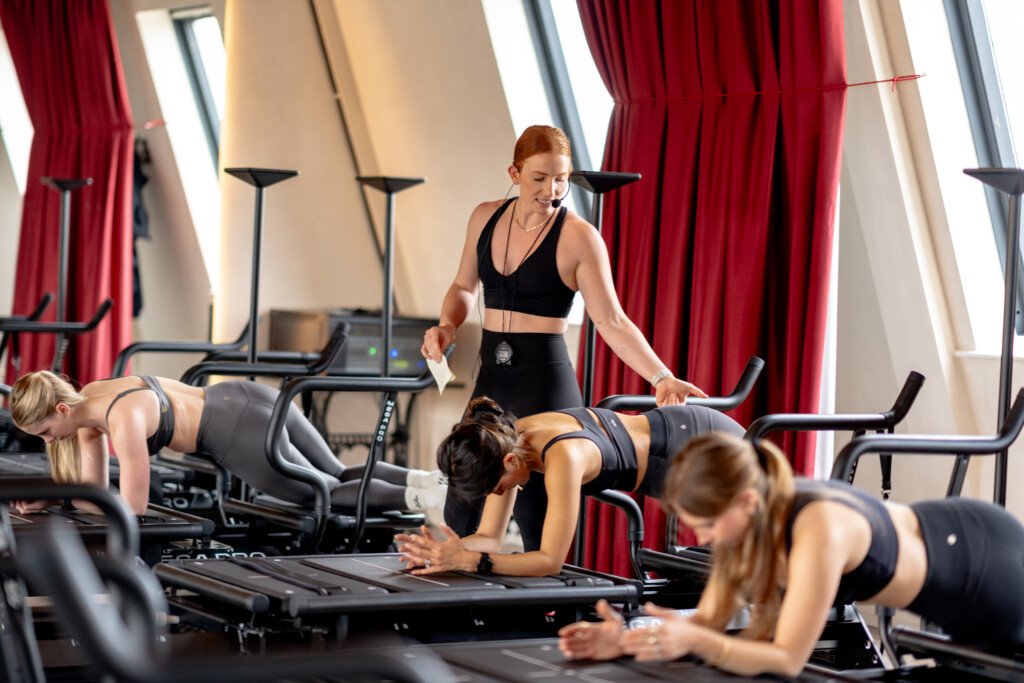
The hammock creates three special conditions that floor stretching can’t match: it lowers muscle strain, offers constant external support that calms protective muscle responses, and lets gravity help stretch tissues. These changes completely reshape how your nervous system perceives safety during stretching, directly affecting how thoroughly tissuesrelax.
[IMAGE: https://im.runware.ai/image/ws/2/ii/78dc7923-1b2c-427b-8f5d-3ee6fefc122f.webp] Alt: Balance scale comparing hammock and floor stretching, showing reduced muscle strain in hammock
Key Point: The hammock’s external support system eliminates the need for your muscles to work against gravity, allowing for deeper relaxation and more effective stretching than traditional floor-based methods.
“The hammock’s unique support system allows gravity to assist rather than resist the stretching process, creating optimal conditions for tissue lengthening and nervous system relaxation.”
[IMAGE: https://im.runware.ai/image/ws/2/ii/274b1b8e-a573-4a84-9953-d19399d6f6d7.webp] Alt: Shield icon representing the hammock’s protective and supportive stretching environment
Tip: Unlike floor stretching, where your muscles must constantly engage to maintain position, the hammock support allows your protective reflexes to fully disengage, leading to breakthrough flexibility gains that would be impossible to achieve on solid ground.
How does unloading change the stretching equation?
When the fabric supports your body weight, muscles no longer split their focus between stretching and stabilizing. A hip flexor stretch on the floor requires your core to brace, your standing leg to balance, and your arms to support you. The hammock reduces most stabilizing demands, allowing the hip flexors to focus on lengthening.
Why do shoulders and upper back respond so well to aerial support?
This unloading effect becomes noticeable in the shoulders and upper back, areas where women often carry chronic tension from desk work. Suspended shoulder openers allow the shoulder blades to move freely without the restriction of a hard surface or the strain of holding arms against gravity. The fabric cradles the upper spine, creating space for rotation and extension that feels impossible on the floor.
Research published in the International Journal of Yoga Therapy (2019) found that participants using aerial equipment showed 34% greater improvement in shoulder range of motion than those using mat-based stretching over eight weeks. The difference stemmed not from practice frequency, but from the body’s ability to release tension when weight was distributed through fabric rather than concentrated in joints.
How does aerial yoga create traction without force?
Inversion-based positions create gentle spinal traction through body weight and gravity. When you hang in the hammock, supporting your pelvis or legs, the spine stretches naturally. No pulling occurs—just your body weight creating space between vertebrae.
Women who experience lower back compression from prolonged sitting often describe this as the first time their lower back feels relaxed and decompressed.
Why do suspended poses feel different for the hip joints?
The same principle applies to hip joints. A suspended pigeon pose allows the thigh bone to settle into the hip socket differently from floor versions. The fabric supports your front leg at an angle that reduces joint pressure while maintaining an active stretch through the buttocks and outer hip muscles.
You can maintain this position longer because you’re not struggling to keep proper body alignment.
Why does your nervous system resist stretching?
Flexibility improvements rely on teaching your nervous system that stretching is safe. Muscle spindles, sensory receptors inside muscle fibers, track stretch and tension. When they notice quick lengthening or instability, they activate a protective muscle contraction: a reflex that stops potential injury but also creates the limit most women experience with standard stretching techniques.
How does the hammock provide safety signals?
The hammock provides steady physical feedback, signaling safety. This sensory input halts the protective reflex by sending clear signals that you won’t fall or overextend a joint. The result is more relaxed target muscles and reduced tissue tension.
What other approaches build functional flexibility?
While aerial yoga helps improve flexibility through suspension techniques, other methods build mobility by actively loading muscles. Our Lagree training strengthens muscles across their full range of motion using slow, controlled resistance on the Megaformer. This approach creates practical flexibility that directly impacts performance, enabling women training at BST Lagree in London to develop mobility that remains useful during active movements.
Proprioception gets recalibrated
Suspended positions challenge spatial awareness beyond stretching. When the ground disappears, your brain must recalculate limb positions in space. This heightened proprioceptive demand forces deeper alignment engagement, compelling you to feel subtle shifts in weight distribution, muscle activation, and joint angles without visual feedback or floor contact.
This recalibration improves movement quality after leaving the hammock. Your body retains enhanced awareness, making movement initiation more precise and joint control refined. Each session incrementally sharpens your internal alignment sense, translating into better posture and more efficient movement patterns.
How does the hammock enable active mobility work?
The hammock enables mobility exercises impossible on the ground. You can perform precise leg lifts while hanging, strengthening hip muscles through their full range of motion as the fabric stabilizes your pelvis. With this setup, you can also move your spine during inversions, shifting each vertebra smoothly without the friction or pressure of a mat.
Why does building strength in lengthened positions matter?
These active variations build strength in lengthened positions, creating more durable flexibility. Muscles learn to control and stabilize through expanded ranges, not passively tolerate them. Mobility you can actively control is mobility you can access during movement, not in static holds.
The key question isn’t whether suspension helps you stretch deeper, but whether deeper stretching without strength creates lasting change or temporary range that disappears under load.
10 Effective Aerial Yoga Stretches to Try
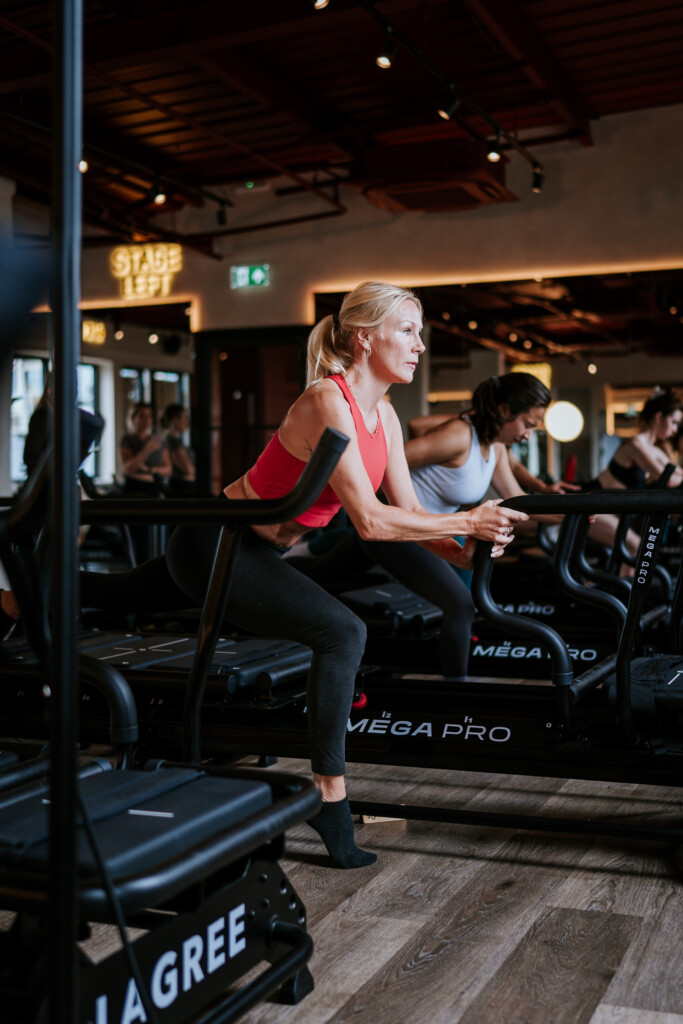
The most helpful aerial stretches focus on smooth, controlled movement, using the hammock as a safe support system that carefully reduces muscle tension and improves your body’s range of motion and ease of movement.
Key Point: Aerial yoga stretches combine the benefits of traditional stretching with gravity-assisted decompression, allowing for deeper releases and improved flexibility without straining your joints.
“Aerial yoga provides a unique combination of strength building, flexibility enhancement, and stress relief through the use of suspended fabric hammocks.” — International Association of Yoga Therapists, 2023
[IMAGE: https://im.runware.ai/image/ws/2/ii/57b97b1f-9ed7-4df2-b5a5-c9727b26516c.webp] Alt: Central hub showing interconnected benefits of aerial yoga: strength, flexibility, and stress relief
Tip: Start with basic positions and focus on proper alignment before attempting more advanced aerial stretches. The hammock support should feel secure and comfortable throughout each movement.
1. Supported Backbend Stretch
This position focuses on stretching the chest, hip flexors, front body, and upper spine. The hammock provides support for the pelvis or mid-back while you lean backward, helping to open areas that become tight from sitting and forward-leaning postures. Your body weight is partially supported, enabling extension without pressuring the lower back.
Begin with a gentle backbend and engage your core to protect the lumbar spine. Women in desk jobs will especially benefit from this stretch, as it helps address rounded shoulders that develop from working at a screen. The fabric’s support enables front body opening without balancing on your hands or feet.
2. Inverted Spinal Decompression
Partial or full inversion uses gravity to stretch the spine, reducing pressure from daily activities and creating a sense of lightness. Start with a supported, low inversion and exit slowly to prevent dizziness.
Unlike floor-based stretches, inversion suspends you in a stretched position. Your spine bones naturally separate under body weight, creating space impossible when lying down. Women who experience tension from repetitive lifting or prolonged standing often describe this as the first time their lower back truly relaxes, not merely tolerates stretching.
3. Hip-Opening Hammock Lunge
With one leg supported in the fabric, the hip can stretch deeply without balancing on the floor. This helps reduce tightness from prolonged sitting. Keep your pelvis level and avoid overexertion; a gentle stretch is ideal to start.
The hammock stops the wobbling that makes floor lunges challenging. Your back leg stays secure, allowing you to sink deeper into the front hip without constant repositioning. This stability helps you breathe easily and stay focused on the stretch.
4. Shoulder-Opening Hang
Holding the hammock while leaning away helps open the shoulders during gentle stretching, improving overhead mobility and posture. Keep a slight bend in the elbows and avoid hanging with full body weight if shoulder strength is limited.
The fabric provides resistance, allowing you to control the intensity of stretching. Unlike passive bar hanging, you actively engage your back muscles while the hammock supports enough weight to create space at the shoulder joint. This combination builds strength in lengthened positions, making mobility improvements more lasting.
5. Supported Hamstring Stretch
The hammock supports one leg while you lie or sit, helping the muscle stretch without straining the lower back. Keep the other leg on the ground or supported to protect your pelvis.
Standard hamstring stretches often create tension in the lower back because the pelvis shifts to adjust for tight muscles. The hammock holds your leg at the optimal angle, eliminating compensatory movement and allowing you to focus entirely on the hamstring without straining your lower back.
6. Reclined Butterfly in the Hammock
The fabric supports the back while the legs open outward, allowing the hips to release without pressure on the knees. Use hands or blocks to support the legs if the stretch feels intense.
Floor butterfly poses often create knee discomfort as gravity pulls the legs down while the hips resist. When suspended, you control the descent rate. The hammock cradles your spine, tilting the pelvis to make hip opening more accessible and enabling longer, more comfortable holds.
How does the hammock support improve the pigeon pose?
Lifting the front leg in the hammock reduces pressure on the knee and allows a deeper, more comfortable hip stretch. Keep the foot flexed to protect the knee and prevent aggressive leaning forward.
Pigeon pose on the floor often becomes a knee-tolerance test rather than a hip-flexibility exercise. The hammock changes this by distributing pressure evenly at hip height, making the stretch accessible to women who have avoided pigeon because of knee discomfort.
What other methods complement aerial hip mobility work?
While aerial yoga helps improve hip mobility through suspension, other techniques build functional flexibility through active loading. Our Lagree training strengthens the hips, glutes, and core using slow, controlled movements, creating mobility that remains stable under load. Women training at BST Lagree discover this method creates practical flexibility for dynamic activities, developing both strength and range simultaneously.
Side Body Stretch
With one side supported in the fabric, you can stretch the opposite side of the torso, improving side movement and breathing. Move carefully and avoid twisting simultaneously.
Side bending is often overlooked in stretching exercises, but the hammock makes it easy. One hip rests in the fabric as you reach overhead, creating a long curve along your side. This opens muscles between the ribs, helping you breathe more deeply and reducing tightness from repeated movements.
Supported Squat Stretch
Using a hammock for balance helps you sink into a deep squat, safely stretching your hips and ankles while keeping your heels grounded or supported to prevent injury.
Many women lose deep squat mobility as their ankle and hip flexibility decrease. The hammock provides support to explore movement range without falling, enabling you to adjust fabric tension and gradually build strength for an independent, progressive stretch.
Gentle Forward Fold with Support
The hammock supports your upper body, reducing pressure on the spine while allowing gentle bending. You can bend your knees as needed to stay comfortable and prevent excessive back curvature.
How does aerial support improve forward folds?
Forward folds on the floor can turn into a struggle between tight hamstrings and lower back stress. Fabric support helps remove that conflict by supporting the upper body and reducing spinal compression. This approach lets you focus on stretching and lengthening muscles, creating a sense of release rather than fighting tension.
What approach works best for aerial stretching?
These movements work best as careful mobility exercises, not intense stretching. The aim is to give muscles enough support to relax, which helps improve flexibility while reducing the chance of strain and injury.
Related Reading
- Stretches for Women Over 50
- Quad And Hamstring Stretches
- Ballet Stretches
- Split Stretches
- Sacrum Stretches
Safety Tips and Who Should Modify or Avoid
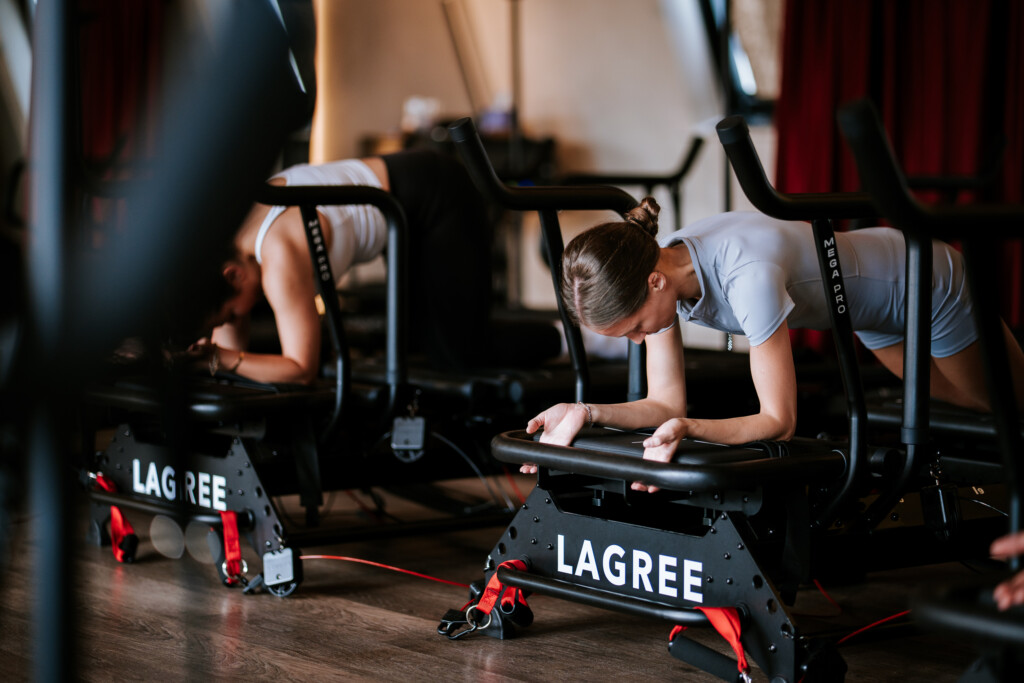
Aerial yoga carries inherent risks when setup, instruction, or individual health factors are not considered carefully. Suspension introduces unique physical forces and body positions not found in traditional yoga. Upside-down positions change blood flow, and spinal stretching differs from ground-based practice. The precise placement of the fabric determines whether movements help or strain joints. Safety depends not on flexibility, but on proper preparation and understanding how the body responds to suspended movement.
[IMAGE: https://im.runware.ai/image/ws/2/ii/2df5634c-89cb-4777-9368-859b13d2beab.webp] Alt: Central safety icon connected to factors like instruction, equipment, and individual health
Warning: Never attempt aerial yoga without proper instruction – improper fabric placement or incorrect body positioning can lead to serious injury, especially during inversions and spinal decompression movements.
“Suspension training introduces unique biomechanical challenges that require specialized knowledge and progressive conditioning to perform safely.” — American Council on Exercise
[IMAGE: https://im.runware.ai/image/ws/2/ii/0e99d407-7510-4e84-83f6-7abb1342870b.webp] Alt: Comparison of correct and incorrect aerial yoga fabric positioning
Key Point: Your safety in aerial yoga depends on three critical factors: qualified instruction, proper equipment setup, and honest assessment of your current physical limitations and health conditions.
What structural requirements ensure safe aerial yoga practice?
The fabric must connect to a structure that can support at least 1,000 pounds. Studio installations use ceiling beams or reinforced mounting systems that are tested for dynamic loads. Home setups require professional evaluation, as drywall anchors rarely provide sufficient support. A hammock that falls during an inversion can cause serious injury.
How does hammock height affect your stretching experience?
Height is as important as strength when using a hammock. If it’s too high, you risk instability and a longer fall. If it’s too low, you might compress your joints or cannot fully extend your body. Most classes set the hammock at hip height, which lets you keep one or both feet on the ground. This approach gives you better control over weight transfer and allows you to quickly exit positions if something feels uncomfortable.
Safety-focused studios always check the rigging before each class and adjust the hammock height to individual body sizes. The setup isn’t universal: a height that works for a 5’2″ woman won’t be suitable for someone who is 5’10”, and ignoring these differences can turn support into strain.
Why do inversions require qualified guidance?
Being upside down can feel exciting, but it can quickly become uncomfortable when dizziness or head pressure sets in. Upside-down positions can increase eye pressure within minutes, which is why people with glaucoma or serious eye problems should avoid them. A 2011 study published in PLOS ONE found that even short inversions significantly increased intraocular pressure, increasing the risk for people with weakened optic nerve health.
How do inversions affect blood pressure?
Blood pressure changes significantly during an inversion. People with uncontrolled high blood pressure or heart problems might experience sudden blood volume shifts that can cause dizziness or headaches. Low blood pressure can cause fainting when moving from an upside-down position back to standing quickly. Skilled instructors monitor for signs of distress and teach safe, controlled ways to exit an inversion that help blood pressure return to normal gradually.
What makes qualified instruction essential for safe practice?
Qualified instruction is crucial because most people can’t accurately judge their body alignment while hanging upside down. A trained instructor helps adjust fabric positioning, ensures your neck isn’t compressed, and tracks the duration of your inversion. Without professional guidance, you’re essentially making risky guesses that could strain your neck or trigger persistent pressure headaches.
What pregnancy-related risks should you consider?
Pregnancy changes your center of gravity and increases joint flexibility due to hormonal shifts. Inversions add fall risk and circulatory stress that most healthcare providers recommend avoiding. Some gentle, grounded aerial positions may be safe under medical supervision, but full inversions or deep backbends carry significant risks.
How do spinal conditions affect aerial yoga safety?
Spinal conditions add complexity to treatment. Herniated discs, severe scoliosis, or recent spinal surgery could worsen existing damage through traction and suspension. Similarly, osteoporosis increases the risk of fractures, as weakened bones may not withstand the forces of suspension.
Which cardiovascular and neurological conditions require clearance?
Heart disease, recent head injuries, and vertigo require medical clearance before aerial work. Suspension alters how your body handles pressure, balance, and weight distribution. If your cardiovascular, neurological, or skeletal systems are compromised, these changes can cause serious health problems.
How does severe arthritis impact aerial yoga practice?
Severe arthritis creates complex problems. While gentle suspension might help reduce joint pressure, certain positions can aggravate inflamed tissue if alignment fails or range of motion is pushed too far.
Why does progression matter more than ambition in aerial yoga?
Beginners attempting advanced yoga hammock positions without basic strength and body awareness risk injury. Muscles require time to adapt to suspension training. Jumping into long inversions or deep backbends before the nervous system learns to stabilize in the hammock increases strain on connective tissue and injury potential.
The body adapts to challenges slowly. Tendons and ligaments strengthen more gradually than muscles, meaning that even if you feel strong enough to hold a position, the supporting joint structures might not be ready for repeated stress. This mismatch is where most non-acute injuries originate. Small damage accumulates over weeks until something finally breaks.
How should you build up your aerial yoga practice safely?
Start with stable positions where one or both feet remain on the floor. Build tolerance for partial inversions before attempting full ones. Increase hold times gradually, rather than pushing for the maximum duration immediately. These aren’t random rules, but reflect how muscle tissue adapts.
While aerial yoga offers one path to enhanced mobility through suspension, other methods build flexibility and strength simultaneously through controlled resistance. Lagree training strengthens muscles through their full range of motion using slow, eccentric loading on the Megaformer, creating functional mobility that remains stable under dynamic conditions. Women training at BST Lagree in London report that this approach produces lasting flexibility they can access during daily movement and athletic performance, not in static holds.
Why does technique matter more than intensity in aerial stretching?
Pushing too hard in a stretch won’t accelerate progress. Instead, it causes muscles to tense defensively, increasing the risk of injury. Accuracy matters more than range. Maintaining proper body position with a smaller range of motion is better than using poor technique in a deeper stretch.
Warming up is crucial for aerial activities. Muscles that aren’t warmed up won’t relax properly, and suspension amplifies the risks of poor preparation. Take five to ten minutes to move actively before entering the hammock. This helps raise body temperature, improve blood circulation, and prepare the nervous system.
How should you approach movement control in the hammock?
Controlled movement is more important than momentum. Swinging into positions creates unpredictable forces that your body cannot safely manage. Slow, careful transitions let you check each position and adjust before applying full weight to the fabric. This self-control separates effective practice from risky experimentation.
Aerial yoga isn’t inherently dangerous, but it requires respect for setup, progression, and personal limitations. The hammock increases both benefits and risks. With proper instruction and honest self-assessment, it becomes a powerful mobility tool. If treated casually, it can become a liability.
Does suspended stretching actually build lasting flexibility?
But understanding safety protocols doesn’t explain whether suspended stretching helps build lasting flexibility and strength.
How BST Lagree Training Complements Flexibility Gains
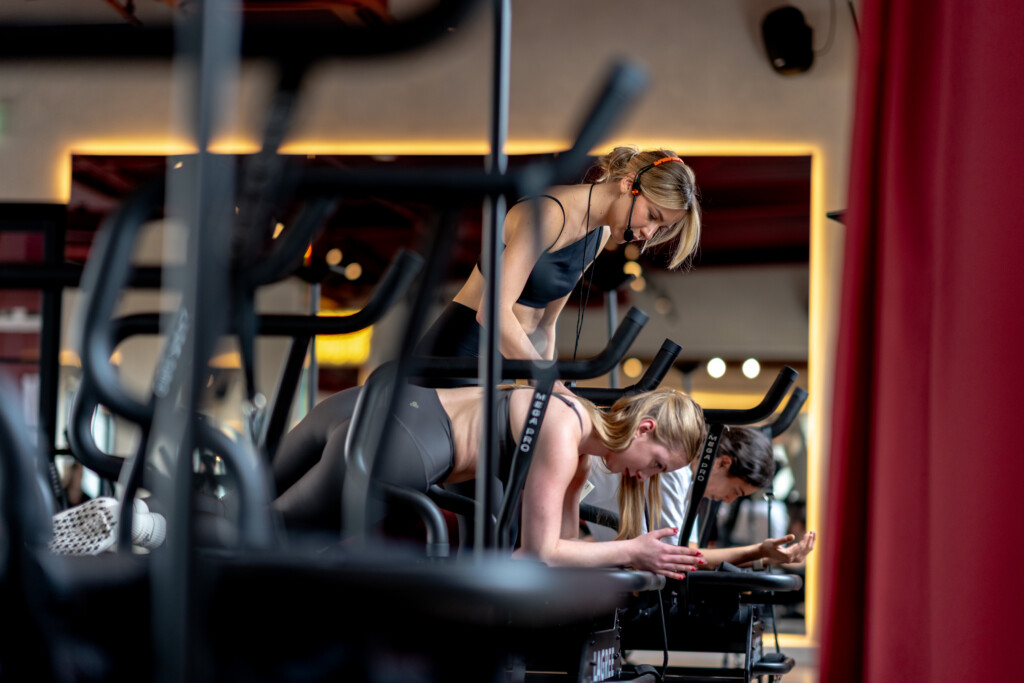
Safe stretching is part of the process. As mobility improves, the body requires strength and control to maintain the new range of motion. Without this support, flexibility improvements might feel short-lived or increase the risk of injury. Focused strength training becomes crucial, not as a substitute for mobility exercises, but as their core support.
Key Point: Flexibility gains without corresponding strength development create an unstable foundation, leading to decreased performance and increased injury risk.
[IMAGE: https://im.runware.ai/image/ws/2/ii/62695285-996f-4cc7-aec9-71c002f9f875.webp] Alt: Balance scale comparing flexibility and strength training
“Strength training becomes crucial, not as a substitute for mobility exercises, but as their core support for maintaining long-term flexibility improvements.”
Tip: Think of BST Lagree training as the perfect complement to your flexibility work – it builds the muscular control needed to safely utilize your improved range of motion in real-world movements.
[IMAGE: https://im.runware.ai/image/ws/2/ii/1fb8e274-d39e-43b4-9383-ec228ad76992.webp] Alt: Upward arrow showing improvement in range of motion with strength support
How does Lagree training support improved flexibility?
BST Lagree training builds strength through deep core muscle engagement and controlled resistance. The method helps the body maintain alignment as it moves through a wider range of motion. Strong stabilizing muscles in the core, hips, and glutes support joints safely, reducing reliance on passive tissues like ligaments.
The low-impact advantage
BST Lagree’s low-impact design is key for women seeking muscle results without joint damage. Using slow, high-tension movements, our workout challenges muscles while reducing stress on knees, hips, and spine, effectively supporting mobility gains with minimal strain.
The purposely slow, controlled pace improves body awareness and alignment. By removing momentum, participants learn to maintain stability during each exercise, which helps create safer movement and better stretching results.
What is functional mobility versus isolated flexibility?
BST Lagree combines strength and cardio in a single workout, improving functional mobility rather than isolated flexibility. Enhanced circulation, endurance, and muscular balance help the body move smoothly, reducing stiffness caused by muscle weakness or fatigue.
How does structured coaching enhance safety and effectiveness?
Structured coaching improves safety and performance. Our BST Lagree instructors are certified and undergo intensive training, ensuring they provide clear, helpful guidance tailored to women. Correct instructions help participants activate the right muscles and prevent mistakes that could slow their progress.
Why does the environment matter for consistency and results?
The environment is designed to feel welcoming. As a women-focused fitness center, BST Lagree prioritizes encouragement, motivation, and comfort, which improve consistency and drive results. According to LagreeFit 415’s analysis of flexibility training, 2–3 flexibility-focused Lagree sessions per week create measurable improvements in both strength and range of motion when practiced consistently.
Building resilience through eccentric loading
The result is a more resilient, balanced body. Flexibility gained through stretching becomes usable strength, improving posture and everyday movement. Research on the Effect of an 8-Week Pilates Training Program showed that twice-weekly 60-minute sessions produced significant improvements in flexibility and muscular control in young athletes.
Mobility you can actively control under load is mobility accessible during dynamic activities. Passive stretching creates range, but active strength training through full range teaches your nervous system to trust and utilize that range, producing lasting change.
How does combining strength and mobility create lasting results?
Women who work out at BST Lagree report greater flexibility, reduced muscle tension, and improved performance across physical activities. The training method builds strength and mobility simultaneously, creating a solid foundation that enhances overall movement.
Understanding that strength supports flexibility is helpful, but it doesn’t explain how to build this foundation with a busy schedule.
Related Reading
- Pregnancy Sciatica Stretches
- Yoga Stretches For Flexibility
- Pelvic Stretches For Women
- Lower Back and Hip Stretches
- Aerial Yoga Stretches
- Yoga Poses for Hip Flexibility
Book a Lagree Class in London Today
Book a class at BST Lagree to experience Lagree, America’s fastest-growing workout. Our Megaformer builds mobility through controlled resistance, creating a functional range of motion that remains accessible during daily activities and athletic performance. You’ll strengthen muscles through their full extension and contraction, teaching your nervous system to trust and stabilize new ranges rather than merely tolerating them.
[IMAGE: https://im.runware.ai/image/ws/2/ii/7321c66e-2830-491e-9336-bec8f0d39af9.webp] Alt: Central Megaformer machine with connected icons showing mobility, resistance, and muscle engagement
BST Lagree operates as London’s only studio where every instructor holds full Lagree certification, led by Europe’s most experienced trainer. Classes combine high-intensity effort with low-impact execution, protecting joints while challenging muscles in ways that traditional training and passive stretching cannot match. The result is a body that moves with both power and ease, flexibility supported by the strength to use it.
[IMAGE: https://im.runware.ai/image/ws/2/ii/12d80731-75bd-4758-af17-c1f4c6801f83.webp] Alt: Badge showcasing fully certified Lagree instructors in London
Key Point: BST Lagree is the only studio in London where you’ll train with fully certified instructors using authentic Megaformer equipment for maximum results.
“Lagree creates functional range of motion that stays accessible during daily activities, teaching your nervous system to trust new ranges instead of just tolerating them.” — BST Lagree Training Philosophy
Tip: Book your first class today to discover why Lagree has become America’s fastest-growing workout experience, the difference that controlled resistance and full muscle extension make for both strength and mobility.
[IMAGE: https://im.runware.ai/image/ws/2/ii/29499b13-dc05-40ef-a3fa-d74c11ffafd1.webp] Alt: Comparison of standard exercise versus Lagree’s functional range of motion