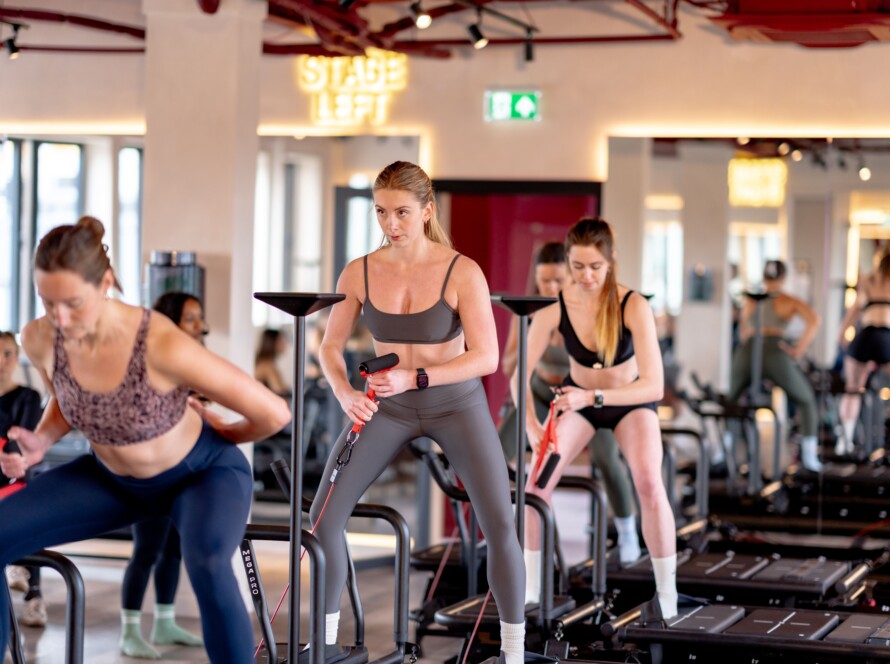
Traditional workouts often fall short because they focus on isolated benefits rather than comprehensive fitness. Spinning classes may boost cardio but neglect strength building, while weightlifting builds muscle but often ignores core stability and flexibility. Lagree addresses these gaps by combining strength training, cardio, and flexibility into one efficient session on a specialized machine called the Megaformer. This low-impact, high-intensity method uses slow, controlled movements that activate muscles more deeply, delivering measurable results in body composition, endurance, and functional strength.
The effectiveness lies in Lagree’s ability to challenge multiple muscle groups simultaneously while maintaining constant tension throughout each movement. This approach creates the muscle fatigue necessary for real transformation without the joint stress common in high-impact workouts. Recovery becomes faster, posture improves, and lean muscle development accelerates compared to traditional fitness routines. For those in London ready to experience these comprehensive benefits, BST Lagree offers expertly guided classes designed to help participants achieve their specific fitness goals.
Table of Contents
- Most People Misunderstand What Makes a Workout Effective
- What Actually Drives Results in Lagree
- The Core Benefits of Lagree (Backed by Mechanism)
- Why Lagree Produces Results Faster (For the Right Person)
- Who Sees the Best Results From Lagree
- How BST Lagree Helps You Get These Benefits
- Book a Lagree Class in London Today
Summary
- Lagree delivers results by keeping muscles under continuous tension throughout every movement, eliminating the brief recovery windows that reduce effectiveness in traditional strength training. Research published in Sports Medicine found that slower movement tempos, which increase time under tension, can produce muscle hypertrophy and strength gains comparable to traditional resistance training, even when lighter loads are used. This sustained engagement increases metabolic stress and forces deeper muscle fiber recruitment across the entire set.
- A 6-week Lagree intervention study documented measurable improvements in functional fitness, with dynamic core endurance improving by 56 percent and static core endurance by 23 percent. These gains reflect real changes in how long the body can sustain effort before breaking form, which carries over into maintaining posture during long workdays, stabilizing the body during movement, and reducing fatigue in everyday activities beyond the studio.
- Training density matters more than training volume for producing faster results. Lagree compresses more effective work into less time by eliminating the gaps that dilute most workouts, creating higher work-to-time ratios without extending session length. Most people notice shifts in strength and endurance within 3-4 weeks because the stimulus is clear and sustained rather than sporadic, with the body receiving a consistent, uninterrupted signal it must respond to.
- The method builds lean, defined muscle without requiring maximal loads, emphasizing time under tension over heavy lifting. Spring-based resistance allows precise control over how much load muscles experience, which means you can challenge yourself intensely while keeping the stimulus focused on endurance and definition rather than size. This approach supports visible tone and control without the hypertrophy that comes from traditional powerlifting.
- Low-impact intensity makes consistent training sustainable without the joint stress that comes from running, jumping, or high-impact interval training. The slow tempo and controlled movement eliminate the pounding that wears down cartilage and strains ligaments, allowing you to push muscles to fatigue without worrying that today’s effort will cost tomorrow’s mobility. Transformation comes from consistently training over weeks and months without breaking down.
- BST Lagree operates London’s only all-Lagree certified instructor team, providing real-time form correction and resistance adjustments that keep the continuous tension stimulus effective across every session.
Most People Misunderstand What Makes a Workout Effective
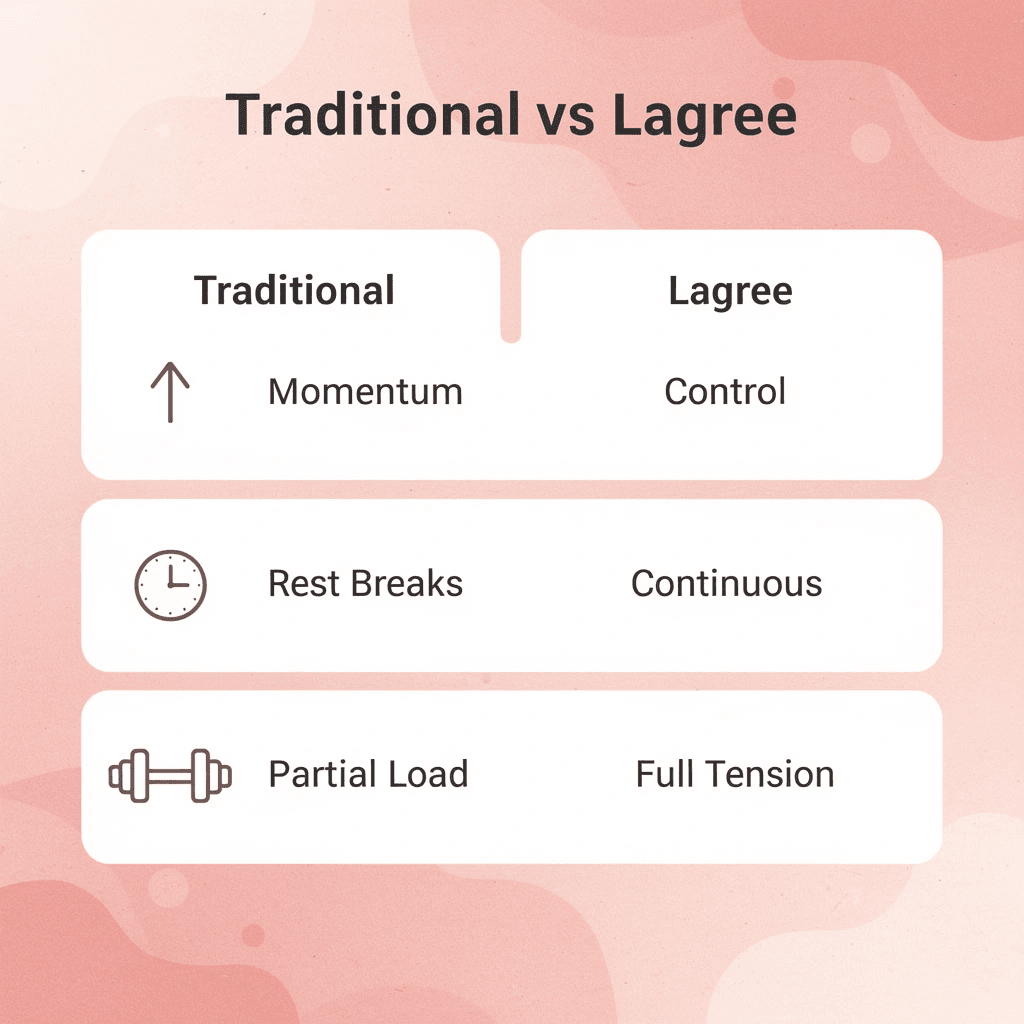
Results come from how muscles are loaded, how long they stay under tension, and how well they are tired out. Most traditional workouts fail because tension is not consistent: muscles work during part of a movement, then relax as momentum takes over or you reset between reps.

🎯 Key Point: The secret to workout effectiveness isn’t how hard you push—it’s how consistently you challenge your muscles throughout the entire movement.
“Sustained muscle tension creates a continuous stimulus that forces adaptation and drives real results.” — Exercise Physiology Research

Lagree eliminates those breaks entirely. Muscles remain engaged throughout each movement via constant tension, slow tempo, and continuous transitions. This creates a sustained stimulus that the body must respond to.
⚠️ Warning: Traditional workouts with momentum-based movements and rest periods between reps give muscles micro-breaks that reduce overall effectiveness and slow progress.
How does time under tension create muscle changes?
Research published in Sports Medicine shows that slower movement tempos, which increase time under tension, produce muscle growth and strength gains similar to those of traditional resistance training, even with lighter loads. Prolonged muscle tension increases metabolic stress and muscle fiber recruitment, key drivers of muscle adaptation. BST Lagree applies this principle by increasing the duration and consistency of muscles tension, rather than relying on heavier weights or faster repetitions. Muscles stay active longer, fatigue more deeply, and recruit more fibers over time, creating sustained demand that triggers real change in muscle composition and endurance.
Why do most people struggle to maintain proper tension?
New clients who miss class instruction often struggle to maintain tension throughout movements, reducing workout effectiveness. BST Lagree offers expertly guided classes led by London’s only all-Lagree-certified instructor team, ensuring every client understands how to sustain tension from the first movement to the last. Our slow, controlled approach activates muscles at a deeper level, creating the sustained stimulus that drives transformation. Most people struggle not from a lack of effort, but because their training doesn’t consistently place demand on muscles to drive change. You’re lacking the right stimulus. Understanding tension is only half the equation. What happens inside the muscle during that tension is where transformation begins.
Related Reading
What Actually Drives Results in Lagree
How does continuous tension eliminate rest between reps?
Lagree works because muscles stay engaged without interruption. Traditional strength training creates short breaks between reps when you reset position or momentum carries part of the load. In Lagree, the Megaformer’s spring resistance, combined with slow, controlled carriage movement, keeps muscles loaded from start to finish. There is no reset, pause, or disengagement. This sustained engagement increases metabolic stress and forces deeper recruitment of muscle fibers throughout the entire set.
What does research show about continuous tension protocols?
That burning sensation is your body’s response to something that requires attention. According to [research published in the Journal of Strength and Conditioning Research, continuous tension protocols produce greater muscle activation and endurance adaptations compared to traditional rest-based training. Removing rest periods between repetitions significantly increases time under load, which directly connects with strength and hypertrophy outcomes.
How does a slow tempo remove momentum and force control?
Speed hides weakness. When you move quickly, momentum does part of the work, and muscles don’t have to stabilize or control the load through the full range of motion. BST Lagree intentionally slows everything down, often taking four to six seconds per direction. This removes momentum’s assistance and places the entire demand on the muscle itself. Every inch of movement requires deliberate control, which increases both strength and neuromuscular coordination.
How does tempo change fatigue accumulation?
The speed changes how tiredness builds up. Instead of wearing out quickly with sudden hard effort, muscles tire slowly and deeply, sustaining effort for minutes. This trains endurance and strength at a muscular level. People report feeling their body strengthen and movement become easier over time because the training stimulus is steady and cumulative, not random and intense.
How does adjustable resistance enable precise progression?
You don’t need a heavier weight to make exercise more intense. In Lagree, resistance changes through spring tension and body positioning, so you can get stronger without changing equipment or stressing your joints. You can increase difficulty by adding springs, changing your angle, or moving through a larger range of motion, all of which challenge your muscles without impact. This careful approach maintains consistent challenge as your body strengthens. According to Lagree Fitness, the method is built on over 200 patents designed to maximize resistance variation and muscle engagement.
Why does this engineering approach create lasting results?
This engineering ensures every movement grows with your strength, making progress controlled and safe rather than injury-prone. Your body receives a clear, steady signal to change and adapt through continuous tension, tempo, and resistance. That’s why results feel different and why they last.
The Core Benefits of Lagree (Backed by Mechanism)
How does Lagree build strength without creating bulk?
BST Lagree builds strength and visible muscle tone without requiring maximal loads or creating bulk. The method extends time under tension through slow, controlled movements that keep muscles engaged continuously. Research on muscle adaptation shows that prolonged muscle loading increases metabolic stress and fiber recruitment, even at lower resistance than in traditional strength training. Your muscles work harder for longer, triggering adaptation without the joint stress or recovery demands of heavy lifting.
What makes each movement more challenging than traditional reps?
Each rep takes longer, transitions eliminate rest, and resistance stays constant throughout the entire movement. Your muscles receive no break to recover during the set, forcing them to recruit more fibers and sustain effort beyond their usual threshold. The result is lean, defined muscle that develops from sustained demand rather than explosive force.
Endurance That Translates Beyond the Studio
Lagree trains muscles to sustain effort even when fatigued, improving muscular endurance and functional stability. Slow, controlled movements keep your core and stabilizing muscles active throughout every exercise. A 6-week intervention period study found dynamic core endurance improved by 56 percent and static core endurance by 23 percent: measurable gains in how long your body can maintain effort before form breaks down. This endurance carries over beyond the studio: maintaining posture during long periods at a desk, stabilizing your body during movement, and reducing fatigue in everyday activities. Lagree trains your body to hold tension efficiently, a benefit that extends into everything you do outside the studio.
How does one session replace multiple workouts?
Most people split training across different days to focus on specific muscle groups. Lagree eliminates that need through compound movements that engage your entire body simultaneously. Every exercise combines lower-body strength, core stabilization, and upper-body engagement, increasing total workload in less time. This design requires coordination across multiple systems at once, making each session more efficient without sacrificing depth. Our BST Lagree classes deliver this full-body approach through expertly sequenced programming led by London’s only all-Lagree certified instructor team. Our programming challenges every muscle group in a single session, eliminating the need for multiple visits each week. You train smarter by engaging your body as an integrated system rather than isolated parts.
How does Lagree deliver intensity without joint stress?
Lagree gives your muscles a tough workout without stressing your joints or connective tissue. The spring-based resistance of the Megaformer challenges your muscles while keeping movements slow and controlled, eliminating jumping, impact, and explosive loading that wear down cartilage or strain ligaments. This enables consistent high-level training without the cumulative damage from high-impact workouts.
Why is sustainability crucial for transformation?
People who have dealt with joint pain or injury often find Lagree sustainable in ways that other intense training is not. You can push hard without compromising tomorrow’s mobility. This sustainability matters because transformation requires consistent training over weeks and months without breaking down. Getting results faster depends on whether the method matches how your body adapts and what you can sustain.
Related Reading
- Can You Do Lagree At Home
- Can You Do Lagree Everyday
Why Lagree Produces Results Faster (For the Right Person)
How does training density replace training volume?
BST Lagree compresses more effective work into less time by eliminating gaps that weaken most workouts. Traditional training spreads effort across sets, rest periods, and transitions where muscles disengage. BST Lagree removes those pauses entirely. Muscles stay loaded through every transition, position change, and second of movement, creating higher training density: a greater ratio of work to time without extending session length.
Why does concentrated effort produce faster results?
You’re not working out longer; you’re working more effectively within the time you have. This concentration of effort forces faster adaptation because your body receives a consistent, uninterrupted signal to respond to. Most people notice shifts in strength and endurance within 3-4 weeks, according to Blood, Sweat & Tears, because the stimulus is clear and sustained rather than sporadic.
Compound Movements Load Multiple Systems Simultaneously
Every Lagree exercise works multiple muscle groups simultaneously. A single plank variation on the Megaformer activates your core, shoulders, glutes, and legs while maintaining constant tension and requiring balance, stability, and control. This simultaneous demand increases total workload per movement, so fewer exercises are needed to challenge your entire body. This approach mirrors how your body actually functions. You don’t move one muscle at a time in real life. Lagree trains multi-system coordination under fatigue, building strength that transfers directly into everyday movement.
Progression Happens Without Adding Impact
Intensity increases through spring tension, body angle, and range of motion, not heavier weights or faster reps. This enables steady progress without excess stress on joints or connective tissue. You can intensify a movement by adjusting your position or adding a spring, both of which increase muscular demand while maintaining slow, controlled motion. That precision lets you approach fatigue safely without risking injury. BST Lagree structures every class to intentionally guide this progression. Our Lagree-certified instructors adjust resistance and positioning based on individual capability, ensuring you’re challenged at the right level without overloading. Expert cuing keeps the stimulus effective and sustainable.
Why does proper execution matter more than effort alone?
Lagree works faster when your form stays tight, tension remains constant, and you push hard enough to fatigue your muscles so they adapt. Rushing through movements, dropping tension during transitions, or stopping before reaching true fatigue undermines effectiveness. Without focus and control, it becomes another hard workout, with a lower rate of change.
What mental challenges come with the Lagree method?
Some people find the mental load overwhelming. The continuous tension format leaves no room to zone out: you’re either fully engaged or not getting full benefit. This feature rewards being present and precise, which not everyone finds sustainable or enjoyable.
How important is sustainability for long-term success?
Faster results mean nothing if the method doesn’t match how you train and what you’re willing to sustain over time.
Who Sees the Best Results From Lagree
Lagree works best for people whose goals align with sustained tension, controlled fatigue, and consistent training rather than maximal lifting or explosive power. If your goal is visible muscle definition without heavy weights, low-impact intensity without joint stress, or full-body sessions that combine multiple training goals into one workout, Lagree delivers.

🎯 Key Point: Lagree is ideal for those seeking muscle definition and strength building without the joint impact of traditional weightlifting or high-intensity cardio.
“Lagree combines the muscle-sculpting benefits of resistance training with the low-impact nature of Pilates, making it perfect for sustainable fitness goals.” — Fitness Industry Analysis, 2024
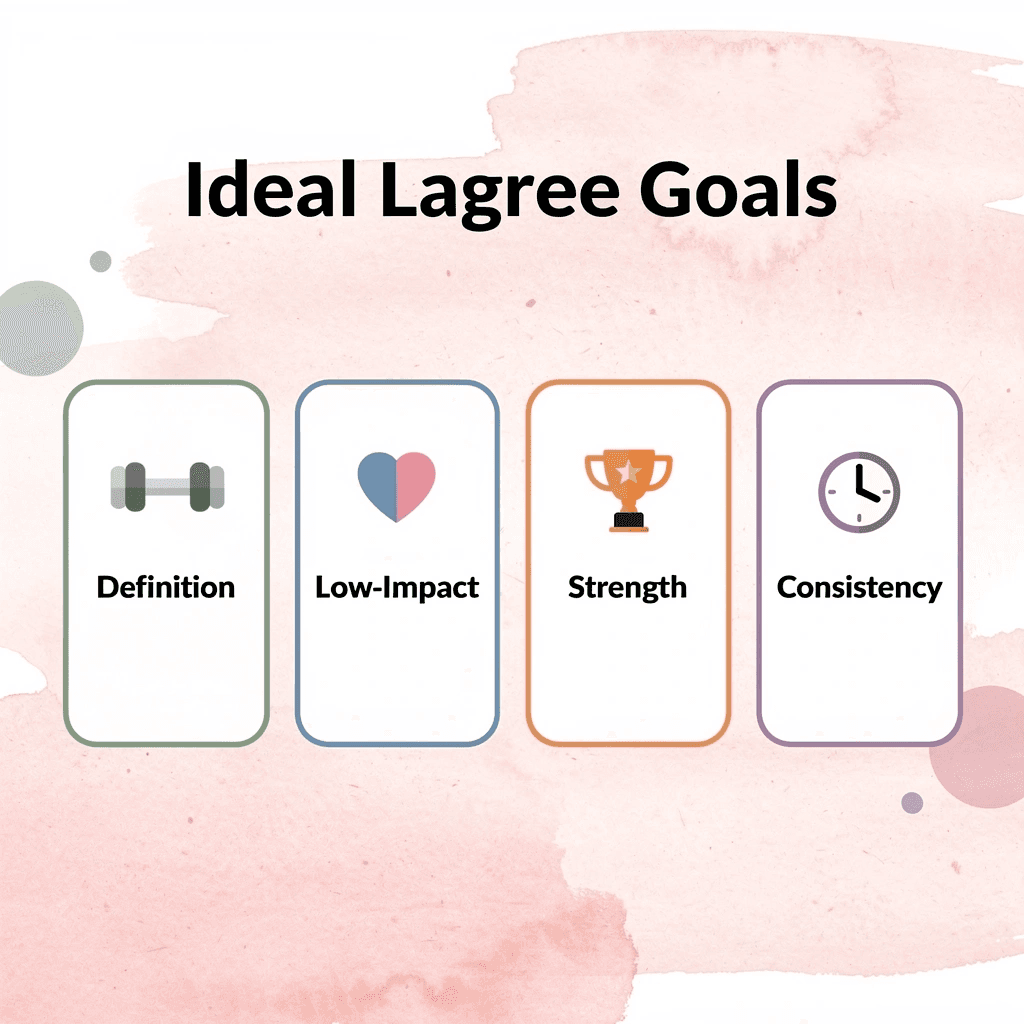
💡 Best Practice: Choose Lagree if you want consistent results through controlled movements rather than explosive power training – it’s designed for long-term muscle development and injury prevention.
People Who Want Muscle Tone Without the Bulk
Lagree emphasizes time under tension over maximal load, making it ideal for building lean, defined muscle without heavy weights. Muscles stay engaged through slow, controlled movements, shifting focus from lifting heavier to sustaining effort longer, which creates visible tone without adding bulk. Women often find this particularly effective because the method builds strength without the hypertrophy associated with traditional powerlifting. The spring-based resistance of the Megaformer allows precise control over load, enabling intense challenge while keeping the stimulus focused on endurance and definition.
People Who Need Low Impact but High Challenge
BST Lagree removes impact while maintaining high intensity, making it effective for those who want to train consistently without joint stress from running, jumping, or high-impact interval training. The slow tempo and controlled movement eliminate the pounding that wears down cartilage and strains ligaments. You can push muscles to fatigue without sacrificing tomorrow’s mobility. This matters because transformation comes from consistent training over weeks and months, not from breaks between sessions.
Why do people struggle with consistency in traditional gyms?
Many people stop going to the gym because workouts feel repetitive, unstructured, or difficult to scale. BST Lagree solves this by providing structured classes that deliver consistent challenge in a time-efficient format.
How does Lagree’s class format eliminate workout guesswork?
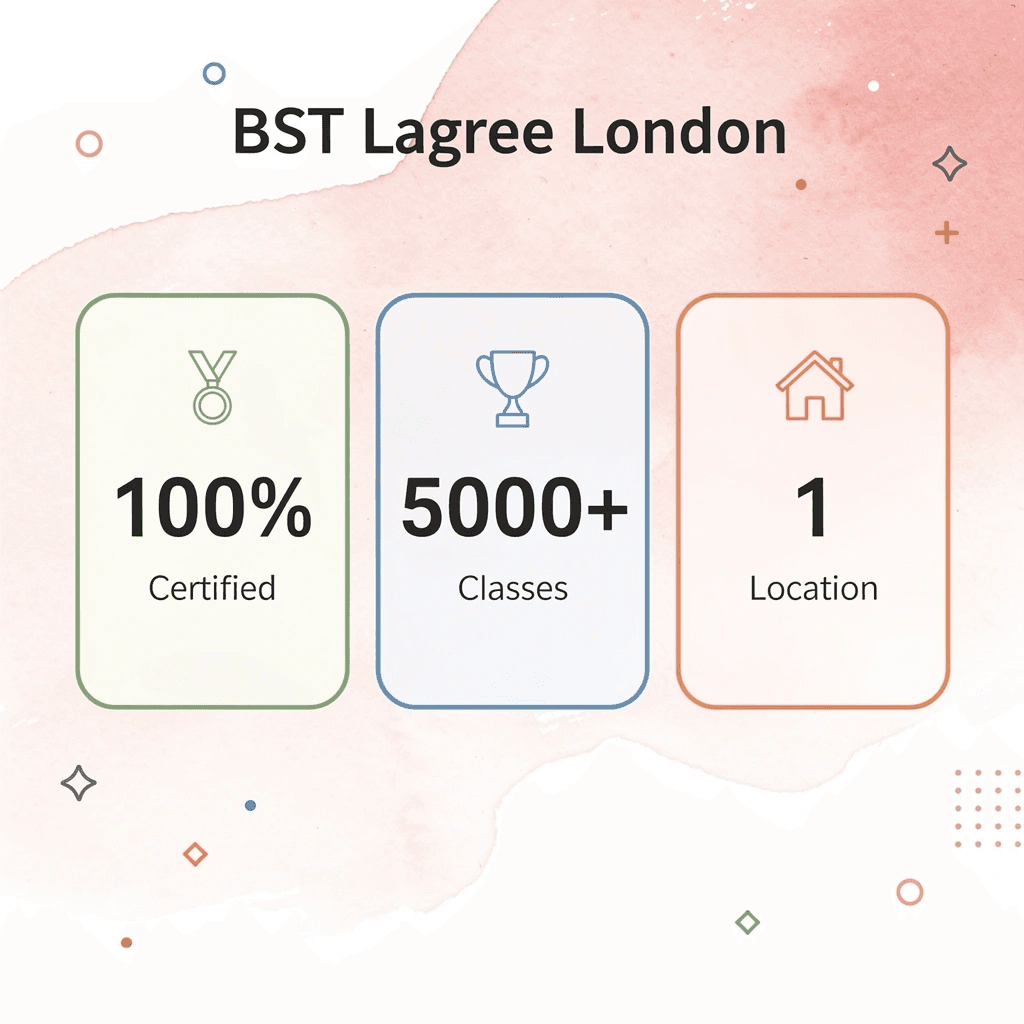
According to Lagree Fit 415, most people see noticeable results with 3-4 classes per week, so you don’t need to train daily or design your own program. The class format eliminates guesswork: you show up, follow expert instruction, and leave knowing you’ve worked every muscle group effectively. BST Lagree delivers this through London’s only all-Lagree-certified instructor team, led by Europe’s most experienced trainer, who has taught over 5,000 classes. Our programming ensures every session challenges you at the right level while maintaining the continuous tension and controlled tempo that define the method. Expert cuing keeps the stimulus consistent and sustainable.
Who benefits most from Lagree’s efficiency approach?
BST Lagree combines strength, endurance, and stability into one workout, making it ideal for time-constrained schedules. You work your lower body, engage your core, and activate your upper body through movements requiring simultaneous coordination across multiple systems. This delivers efficiency without sacrificing depth.
How does training smarter align with your goals?
This method works best for people who care about training smarter, not harder. If your goal is building strength and endurance through controlled, steady effort rather than maximum lifts or explosive performance, the BST Lagree suits you. If your goal is purely powerlifting or heavy barbell work, other methods may be better.
Why does continuous tension create lasting transformation?
For people who can handle the mental challenge of sustained tension, change happens faster and lasts longer than methods relying on momentum, rest periods, or isolated movements.
Related Reading
How BST Lagree Helps You Get These Benefits
Most people fail not because they don’t work hard enough, but because they train without a clear plan, proper form, or a system that progresses with their ability. BST Lagree removes those barriers by turning the method into a repeatable, guided experience where every session builds on the last.

🎯 Key Point: BST Lagree eliminates the guesswork from your fitness journey by providing structured progression and proper form guidance that most traditional workouts lack.
“BST Lagree transforms the Lagree method into a systematic approach where every movement is intentional and every session progressively challenges your body.” — BST Fitness Philosophy

💡 Pro Tip: The guided experience means you’ll never wonder whether you’re doing an exercise correctly or challenging yourself enough – the system automatically adapts to your fitness level and progress rate.
Megaformer-Based Sessions That Deliver True Constant Tension
You train on equipment specially designed to keep your muscles under constant tension. The Megaformer’s spring resistance system removes the momentum-based relief that weakens traditional workouts. According to Lagree Fitness, the method is built on over 200 patents designed to optimize resistance variability and muscle engagement throughout every movement. Muscles remain under tension from start to finish, creating a sustained stimulus that drives adaptation.
Coaching That Ensures Proper Form and Intensity
Lagree is precise. A two-inch shift in body angle, a half-second change in tempo, or a slight loss of core engagement can mean the difference between effective muscle loading and wasted effort. BST Lagree provides London’s only all-Lagree-certified instructor team, led by Europe’s most experienced trainer, who has taught over 5,000 classes. Real-time cuing corrects your form before tension drops, adjusts resistance when you’re ready to progress, and ensures you’re pushing close enough to fatigue that your muscles adapt. Expert guidance keeps the stimulus effective every session.
Structured Classes That Balance Effort and Recovery
Each session challenges your muscles without overwhelming your body’s recovery capacity. The workout progresses through muscle groups strategically, allowing some areas to rest while others work intensely. This prevents burnout while maintaining the constant tension that makes Lagree effective. You can train regularly because the method doesn’t exceed your body’s capacity to rebuild, turning short-term effort into long-term transformation.
A System Designed for Progression Over Time
Progress in Lagree comes from slowly increasing the time your muscles work hard, improving your control, and adjusting the weight as your body strengthens. Our BST Lagree classes build progression into your routine so each session delivers measurable improvements. Your hard work compounds over weeks and months, creating lasting strength and endurance. But knowing how to get results is only half the battle. The other half is committing to the method that delivers them.
Book a Lagree Class in London Today
Lagree removes the guesswork by creating a stimulus your body can’t ignore through constant tension, controlled tempo, and expert instruction. The question isn’t whether the method works—it’s whether you’re ready to experience what happens when effort meets precision.
🎯 Key Point: The only way to truly understand Lagree’s effectiveness is to experience the precise muscle activation and controlled resistance firsthand.

“BST Lagree offers the only all-Lagree certified instructor team in London, led by Europe’s most experienced trainer with over 5,000 classes taught.”
BST Lagree offers the only all-Lagree certified instructor team in London, led by Europe’s most experienced trainer with over 5,000 classes taught. Our Angel, Islington studio delivers the full benefits of the Megaformer through structured sessions designed for women seeking strength, definition, and endurance without joint stress. Book your first class and experience the difference between working hard and working effectively.
💡 Tip: Your first Lagree class will show you the difference between traditional workouts that exhaust you and precision training that transforms you.