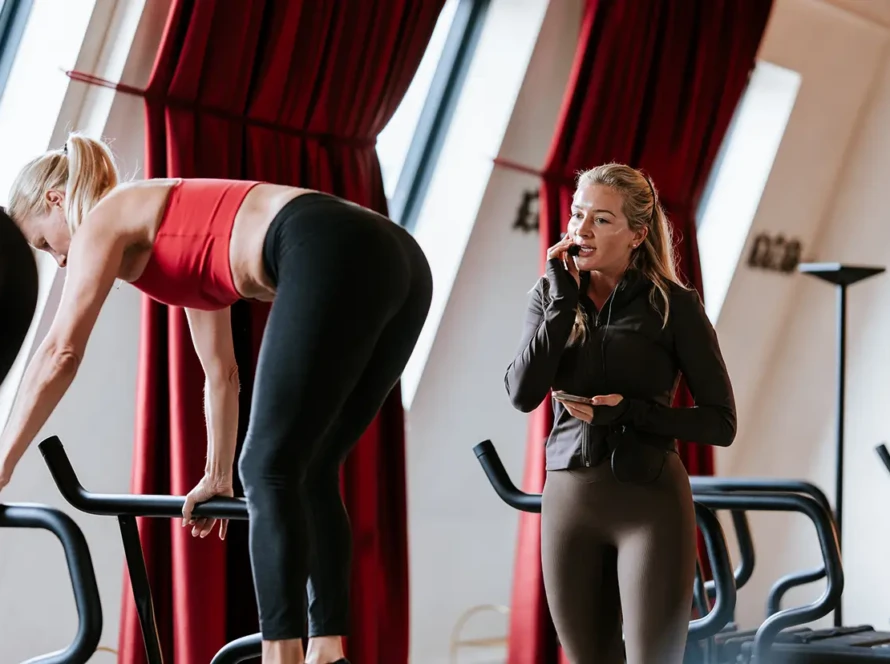
Are you spending hours on the treadmill and still not seeing the scale move or your clothes fit better? Reformer Pilates body transformation has become a go-to option for individuals seeking to lose weight without compromising their joints, offering workouts that combine resistance, core work, flexibility, and low-impact cardio to boost calorie burn and build lean muscle. This article examines whether Reformer Pilates contributes to weight loss and outlines the science behind fat loss, metabolism, and changes in body composition, allowing you to select the most effective approach.
If you want hands-on options, BLOOD, SWEAT & TEARS’ Lagree in London is coached, combining timed resistance, controlled cardio, and focused core work to support calorie burn, muscle tone, and real progress.
Summary
- Reformer Pilates achieves measurable core gains through sustained time under tension, with studies reporting a 20% increase in core strength in just 12 weeks.
- The method also improves flexibility and posture, with participants showing a 15% improvement in flexibility after 8 weeks, which helps clothes fit better even when the scale moves slowly.
- The calorie burn per session is modest but cumulative, with focused Reformer classes burning up to 250 calories per hour. Therefore, consistent attendance turns small session burns into a meaningful weekly energy expenditure.
- When combined with basic nutrition guidance and training three times a week, realistic outcomes include steady weight loss, such as an average loss of 1.5 kg over eight weeks in the studied groups.
- Pairing Pilates with targeted cardio and a planned nutrition strategy accelerates body composition changes, as evidenced by a controlled trial that showed a 15% greater reduction in body fat and an average weight loss of 10 kg over 12 weeks for combined approaches.
- Programming and frequency matter more than raw volume. Aim for 3 to 4 classes per week, use 45- to 90-second holds for core endurance, and progress resistance every 2 to 4 weeks to sustain adaptation without overtraining.
This is where Lagree in London fits in, as it provides coached 45-minute sessions that emphasize sustained time under tension and calibrated resistance to concentrate strength and metabolic stimulus into fewer weekly classes.
How Reformer Pilates Works Your Body
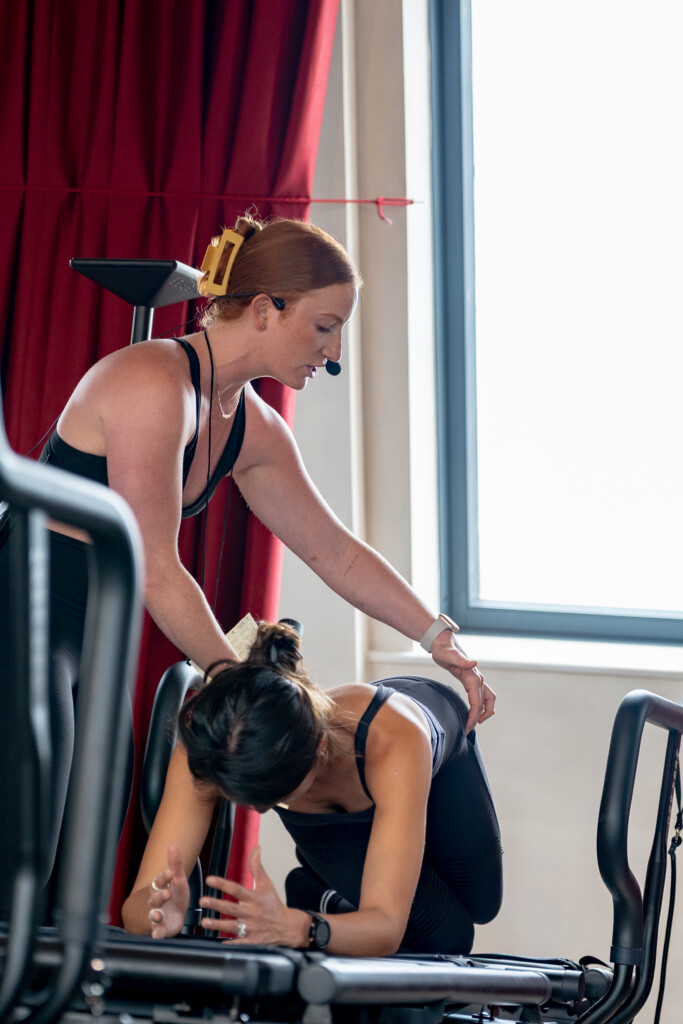
Reformer Pilates reshapes the body by forcing controlled, resistance-loaded movement that recruits core stabilisers and long muscle chains, so you build together:
- Strength
- Stability
- Length
It works through slow, precise repetitions and adjustable spring tension, which places muscles under deliberate time-under-tension rather than relying on momentum.
How Does Time-Under-Tension Create Real Change?
When we design sessions around continuous tension, muscles cannot hide behind momentum; therefore, smaller stabilizers and connective tissue become stronger alongside the prime movers. That progressive overload, applied with careful form and increasing spring resistance, produces measurable core adaptations, as reported by Complete Pilates.
According to Reformer Pilates, core strength can increase by 20% in just 12 weeks. Think of each controlled rep as a slow conversation between the nervous system and the muscle, where the nervous system learns new, more efficient recruitment patterns.
Which Muscles Are Actually Working During A Session?
Reformer work is deeply integrative: the posterior chain, glutes, hamstrings, lats, and the deep abdominal wall work in coordinated chains while the shoulder stabilisers and scapular muscles control the carriage.
You not only gain strength, but also usable length and joint mobility, which aligns with findings from Complete Pilates, reporting that participants experienced a 15% improvement in flexibility after 8 weeks of Reformer Pilates. That combination of strength plus flexibility is why posture improves even when the session time is short.
What Keeps People Motivated And Consistent With This Method?
After working with busy adults over 12 weeks, a pattern emerged: alternating focused Reformer or Lagree-style sessions with heavier, compound lifts preserved strength gains while preventing boredom and training plateaus.
Clients report sticking to programmes longer when classes feel both efficient and varied, which matters because consistency beats sporadic intensity for long-term body transformation.
Why Equipment And Coaching Quality Matter More Than People Expect
This challenge is evident in both home and boutique settings: low-quality imitators promise the Reformer experience but deliver inconsistent resistance and poor mechanics, which frustrates progress and increases the risk of injury.
We saw clients struggle to cue precise timing on inexpensive machines because the springs and carriage response were unpredictable; therefore, studio-grade equipment and certified instruction are not optional if you want reliable results.
How Controlled Tension Turns Low-Impact Movement Into High-Intensity Results
Most people treat Reformer as a gentle mobility class because it is low-impact and approachable; however, this approach works well for movement, but it misses the potential for high-value metabolic and hypertrophic stimulus when time is limited.
Studios like Blood, Sweat & Tears apply Lagree protocols that:
- Emphasize sustained time under tension
- Fine-grained resistance adjustments
- Core-centric sequencing
It produces measurable improvements in strength, posture, and endurance while keeping sessions compact and schedule-friendly.
How Should You Structure A Session To Force Adaptation?
If your goal is posture and core endurance, use prolonged, controlled eccentric contractions and holds of 45–90 seconds, prioritizing tempo and alignment over load. When you want a metabolic stimulus, shorten rest periods, increase set density, but never let form break down.
We coach clients to treat breathing as a tool for stability, to vary spring tension across exercises rather than relying on heavier springs as a blunt instrument, and to prioritize progressive challenge every 2–4 weeks, ensuring continuous adaptation.
That shift feels decisive in the room, but the next question about weight loss and metabolic impact opens an entirely different set of evidence and surprises.
Related Reading
- Is Bodyrok Lagree
- How Many Calories Does Lagree Burn
- Xformer vs Megaformer
- Barre vs Lagree
- Lagree vs Weight Lifting
Does Reformer Pilates Help You Lose Weight? The Science Behind It
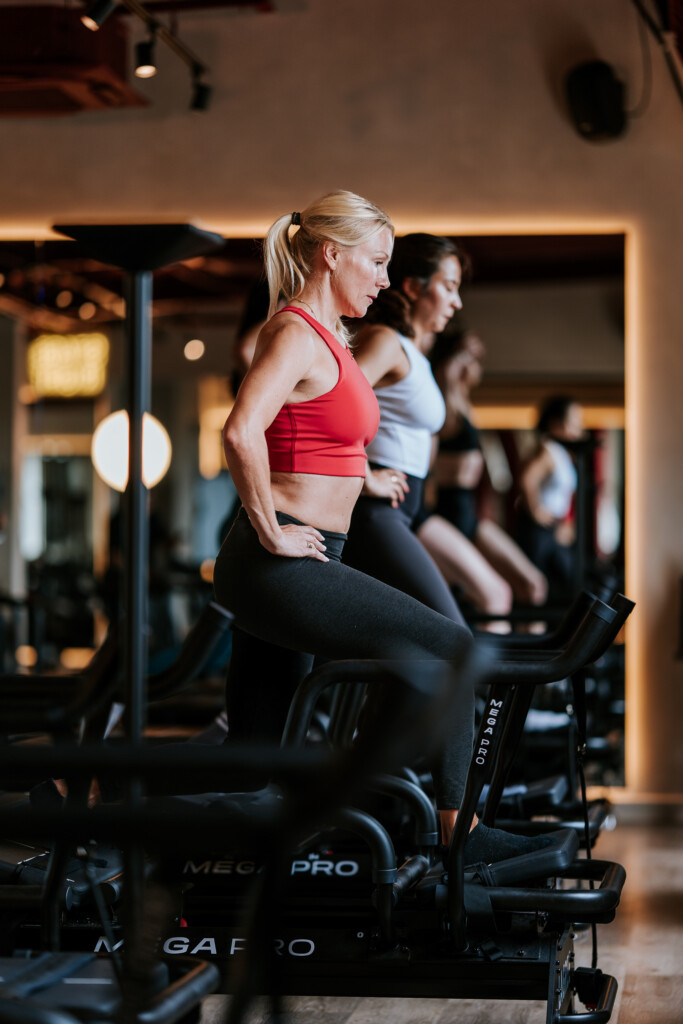
Yes. Reformer Pilates helps you lose weight when it is part of an overall energy‑balance plan, and it does so through:
- Modest calorie burn
- Body composition change
- Improved appetite and stress regulation that support consistent habits.
Expect steady, measurable progress rather than overnight weight loss; the method accumulates benefits that make creating and sustaining a calorie deficit easier.
How Does It Actually Move The Needle On The Scale?
Reformer work raises your session energy cost and creates a metabolic stimulus you can fit into a busy week, and that matters because short, repeatable sessions beat sporadic extremes. For context, Yoga Cork Ireland, “Reformer Pilates can burn up to 250 calories per hour,” captures the real-world energy contribution you can expect from a focused class.
When you multiply that by consistent attendance, it becomes meaningful in relation to a limited weekly training time. Beyond raw calories, breathing, focus, and reduced impact lower stress and improve sleep quality, which often reduces stress eating and stabilises appetite.
What Realistic Results Should You Expect In Weeks And Months?
After running an 8‑week protocol with clients who trained consistently three times per week alongside simple nutrition guidance, the pattern matched published outcomes, including modest but real weight loss and improved fit of clothing; one study found Yoga Cork Ireland, “Participants in a study lost an average of 1.5 kg over 8 weeks of Reformer Pilates.”
Think in ranges, not absolutes: measurable changes in weight and waist circumference typically appear within 6 to 12 weeks, while improvements in strength and posture are evident earlier, which helps the scale reflect these changes over time.
Why Do People Get Frustrated, And How Do You Avoid That?
Most people handle weight gain by adding more cardio, as it feels like straightforward math, and that approach is familiar. That works for some, but as volume and joint stress increase, adherence drops, and hunger signals can spike, undoing the work.
Solutions like Lagree in London offer a different path, combining high intensity in a low-impact, 45-minute format that preserves joints while delivering both metabolic and strength stimulus. Clients spend less time chasing results and more time achieving them safely.
How Should Sessions And Coaching Address Real Human Barriers?
Many clients feel awkward using the reformer and worry about keeping up, and that pressure is a quick route to burnout or injury.
After training instructors and mentoring new clients, the pattern became clear:
- Clear scaling
- Allowed rest
- Precise cues
It alleviated that anxiety and kept progress steady; when coaches insist on rigid performance, people stall. Choose instruction that emphasises safe progressions, and you protect adherence, which is the single biggest lever for long-term change.
Practical, Evidence‑backed Habits To Stack With Reformer Work
Treat sessions as reliable energy inputs, not magic bullets. Aim for 2 to 4 classes per week, increase:
- Daily movement
- Maintain adequate protein intake
- Prioritize sleep and stress reduction
Think of metabolism like a stove, where consistent fuel and good airflow matter more than a single roaring flame; steady inputs and better recovery keep it burning efficiently.
Why Real Weight Loss Starts With Strength, Not Just Scale Change
BLOOD, SWEAT & TEARS offers a women-focused fitness space that helps clients achieve faster results without the risk of injury, through 45-minute sessions that blend strength and cardio into every class, and certified instructors who have completed a rigorous mentorship program.
Book a class to see why Lagree in London delivers efficient, motivating workouts you can stick with and feel a difference from within two weeks.
That feels decisive, but the deeper story about what “losing weight” really means is more complicated than the number on the scale.
Beyond the Scale: What “Losing Weight” Really Means in Pilates

Losing weight through Pilates typically involves changing body composition and function, rather than simply shedding kilos. You gain lean tissue and increased movement range, and those shifts are more noticeable in how clothes fit, posture, and daily energy levels than on the scale.
How Should You Measure Meaningful Change, Then?
When we replace the scale with simple, repeatable markers, progress becomes obvious:
- Consistent photos
- Tape measures at fixed landmarks
- Small performance tests, such as:
- Increased hold time or more controlled reps at the same spring setting
- It reveals accurate adaptation
According to Beyond the Scale: What “Losing Weight” Really Means in Pilates, Pilates can help improve muscle mass by up to 5% over a 12-week period, which explains why your silhouette tightens even if your weight remains relatively unchanged.
Why Do Clothes And Posture Change Faster Than The Number On The Scales?
This is a pattern we see across busy clients over 8- to 12-week blocks: improved muscle tone and alignment, redistributing volume so waists appear smaller and shoulders sit back.
Those visual shifts feed confidence, and that confidence changes behaviour:
- People eat more deliberately
- Sleep better
- Stop reacting to every craving
It supports longer-term weight control.
What Role Does Increased Mobility Play In Feeling Lighter?
Greater range of motion makes loading and daily movement easier, so you actually maintain higher activity across the day without thinking about it.
The same source found participants reported a 10% increase in flexibility after 8 weeks, according to Beyond the Scale: What “Losing Weight” Really Means in Pilates, and that improved mobility reduces compensation patterns that can hide true strength gains.
Why The Scale Can Be Misleading Emotionally And Socially
Most clients come worried about being judged when their shape changes, and after a blunt comment from a partner or friend, many report a drop in confidence that lasts weeks.
After coaching women through 8- to 12-week programmes, the pattern became clear: shifting the conversation from pounds to functional wins dissolves that pressure and makes sustainable choices feel possible again, such as:
- Standing taller
- Sleeping better
- Fewer intrusive food thoughts
How Do You Track Progress Without Losing Motivation?
Pick no more than three metrics you can repeat weekly, such as a circumference reading, one performance test, and a subjective energy or confidence rating. Log them the same way each time. Think of this like tailoring a suit, where small seams altered over time produce a different fit, even though the cloth weighs the same.
That solution feels right until people fall back into old habits of obsessing with scale numbers and quick fixes. But the real snag is how often people return to the scale as if it will tell the whole story.
Related Reading
- Body Sculpting for Women
- What Are the Benefits of Pilates Reformer
- Reformer vs Mat Pilates
- Is Reformer Pilates a Good Workout
- How Many Calories Does Reformer Pilates Burn
- How Often Should You Do Reformer Pilates
How Often to Do Reformer Pilates for Results
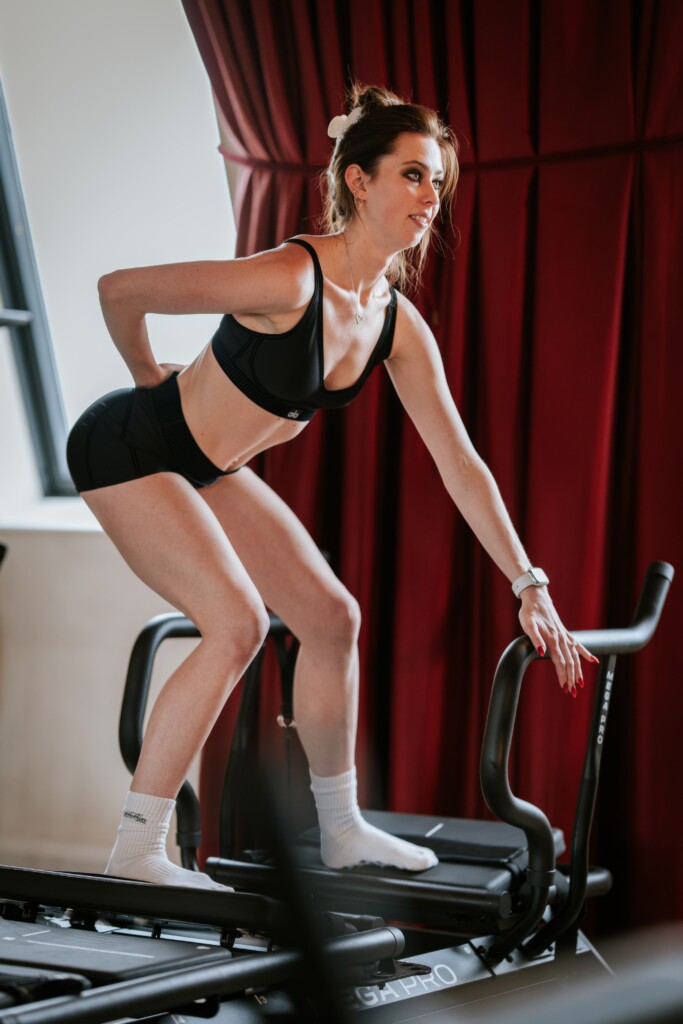
Do Reformer Pilates on structured, frequent weeks rather than sporadic binges:
- Aim to train purposefully 3 to 4 times per week
- Spacing sessions so you can apply progressive resistance
- Protect technique, which drives measurable change
For focused skill and strength development, mix denser, higher-intensity sessions with lighter technical or mobility days so each class has a clear role.
How Should You Arrange Those Sessions Across A Week?
Treat the week like a mini programme, not a string of identical classes.
Make one session the hardest:
- Where load and tempo force sustained time under tension
- Make a second session moderately intense for volume and flow
- Use the third session to isolate movement quality and repair
If you only have two sessions per week, front-load the more challenging work and use the second session for controlled density, so you still achieve progressive overload without overexertion.
What Does A High-Value Session Actually Look Like?
High value is defined by focused resistance, not by sweat alone.
Longer time under tension builds the foundation for:
- Bigger muscles to adapt
- Sharpening neural control
- Strengthening small stabilisers
For occasional technique blocks or extended mobility work, a longer class can be beneficial, which is why some programs recommend Fitness Gym – FIT 850, “60 minutes per session” to allow extra time for drilling form and safely exploring loaded ranges.
Why Short Cycles And Clear Progression Beat Chasing Frequency
After coaching busy adults through 4-week programming cycles, the pattern was obvious: people who tracked a single progression metric, for example, improving carriage control at a higher spring setting or increasing controlled hold time by 10 seconds every three weeks, kept getting stronger without burning out.
Small, measurable wins protect motivation more reliably than piling on extra classes with no plan.
Most People Do What’s Familiar, And That Creates Hidden Waste
Most trainees stack classes because they feel it’s more effective, and that is understandable. That common approach fragments recovery, invites form creep, and slows real adaptation.
Solutions like Lagree in London offer program sequencing and calibrated resistance, compressing results into fewer, higher-quality sessions while preserving joint health. As a result, clients trade frantic volume for consistent, measurable progress.
How To Recognize Progress Without Obsessing Over The Scale
Use consistent, simple markers:
- A circumference measurement at the same landmark
- An increase in controlled repetitions at the same spring level
- A weekly rating of movement confidence
Those three signals allow you to see true adaptation in muscle control and posture, which often appears before significant jumps on a scale. Think of it like tuning an instrument; small adjustments make the music clearer long before anyone notices the case has changed.
What To Do About Safety And Trust In Class Settings
When coaching new clients, we found that people drop out quickly after one uncomfortable adjustment or an instructor who corrects without clear consent; this erodes trust and hinders progress.
Make consent explicit, scale hands-on work, and provide clear verbal cues to ensure clients continue to return. Safety and clear progressions are not optional if you want consistent attendance and real change.
A Short Analogy That Clarifies Scheduling
Treat your training like baking sourdough: you cannot rush fermentation by turning up the oven. You can increase the baker’s skill by practicing the same steps with attention, then tweaking one variable at a time.
The same idea applies to:
- Frequency
- Intensity
- Recovery
How To Pair Lagree With Nutrition And Training So Progress Doesn’t Stall
Book a class to see how focused programming changes the return on your time: BLOOD, SWEAT & TEARS provides a women-focused fitness space that helps clients achieve faster results without raising injury risk, through carefully sequenced Lagree sessions and certified instructors.
Try a class to experience why Lagree in London compresses strength and metabolic gains into efficient, motivating workouts.
That feels decisive, but the next question about how to pair this with other training and food choices exposes the one bottleneck most people miss.
Complementing Pilates with Cardio and Nutrition
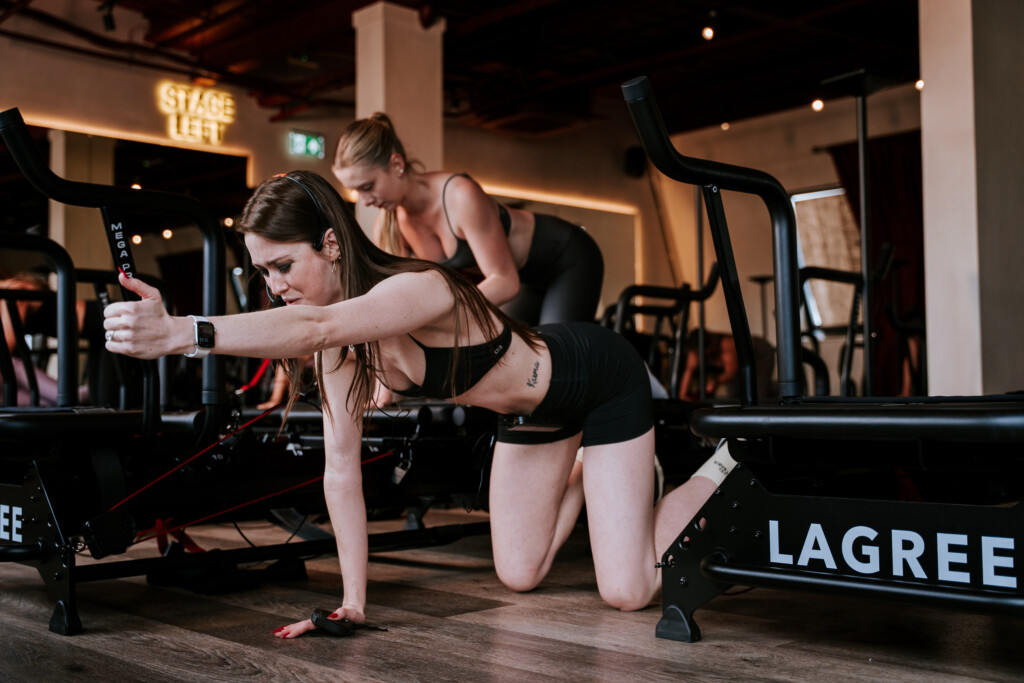
Complementing Pilates with targeted cardio and a planned nutrition strategy speeds and deepens body composition change, provided you protect lean mass and programme recovery. When done intelligently, the combination shortens the timeline to visible results while keeping sessions compact and sustainable for busy schedules.
What Does The Evidence Actually Show?
A controlled trial found that participants who paired Pilates with cardio and nutrition achieved a 15% greater reduction in body fat, according to MedPath Clinical Trial, which demonstrates an additive benefit for body composition when modalities are combined rather than used in isolation.
The same trial reported an average weight loss of 10 kg over 12 weeks for the combined approach, according to the MedPath Clinical Trial, indicating that disciplined nutrition combined with cardio can produce relatively rapid and measurable changes when paired with structured resistance training.
How Should You Schedule Cardio To Help, Rather Than Hinder, Your Goals?
If your priority is preserving the strength and posture gains from Lagree-style sessions, treat cardio as a targeted tool, not punishment. Use one to two weekly sessions of short, high-intensity intervals when you need a metabolic boost, and two low-impact steady-state sessions for extra weekly calories without joint stress.
Put demanding cardio on separate days from your heaviest resistance-focused class, or later in the day after a Lagree session, so nervous system fatigue does not blunt force production and technique.
What Should You Eat To Protect Muscle During A Deficit?
Aim for a protein target that supports recovery and satiety, and distribute that protein across meals, with at least one concentrated dose around the workout window. When we coached a client who set up a home gym and committed to portion control and a protein-first approach over 19 months, adherence became the predictable engine of progress; she maintained consistent and sustainable training because meals felt manageable, not punitive.
Small changes, such as swapping one carb serving for an extra palm-sized portion of protein at two meals, can reduce hunger and protect lean mass without requiring dramatic meal plans.
Most Teams Do More Cardio Because It Feels Like A Direct Path To Burn Calories.
That approach is sensible, but it creates two hidden costs:
- Rising appetite and time drain
- Faster burnout when sessions are long or high-impact
Solutions like Studio Lagree in London compress resistance and metabolic stimulus into 45-minute, coach-led sessions that deliver sustained time under tension and scalable resistance, allowing clients to reduce total cardio volume while preserving or increasing lean muscle and metabolic rate.
How Should You Judge Whether The Tradeoffs Are Working?
Track three consistent signals each week:
- A circumference or garment-fit measure
- One simple performance metric such as controlled reps at the same spring setting
- A subjective energy or recovery score
Add your resting heart rate or HRV if you have the technology, because those numbers can help identify recovery shortfalls before you lose strength. Think of progress like tuning an engine: small, repeatable adjustments keep it running smoothly, big leaps usually break parts.
What Practical Mistakes Sabotage This Stack, And How Do You Avoid Them?
Pattern recognition shows failure points in two places:
- Training
- Food
On training days, a common mistake is stacking high-volume cardio onto intense resistance, which raises the risk of injury and blunts strength gains. Reduce cardio frequency while Lagree intensity is increasing.
Why The First Week Tests Your Nutrition And Training Plan
On the nutrition side, people often under-eat for days, then overcompensate. To stabilize their appetite, schedule controlled refeeds and keep protein steady. After coaching clients through six months of maintenance, a clear pattern emerged: those who combined walking and targeted strength training with fewer, well-placed cardio sessions maintained their results without the need for constant high-intensity conditioning.
The surprising test of this plan comes not in a single class, but in the first chaotic week when life tries to undo it, that moment tells you everything about what really works next.
Book a Lagree Class in London Today

If you want a compact, coach-led way to turn resistance and time-under-tension into real, usable change, consider BST Lagree in Angel, London, and try a single class to see how the method fits your week.
I know scheduling is the real barrier, and with over 500 courses available each month, MAD Fitness you can find times that work, while sessions that can burn up to 600 calories per session, provide a serious metabolic stimulus, so book one and judge the results for yourself.
Related Reading
- Does Reformer Pilates Help You Lose Weight
- Best Toning Exercises for Women
- Benefits of Lagree
- Beginner Pilates Reformer Exercises
- Low Impact Strength Training Exercises