You wake up feeling stiff, your joints reluctant to cooperate as you swing your legs out of bed. This daily struggle affects countless women who skip morning stretches for women, leaving their bodies unprepared for the day ahead. A well-designed mobility stretching routine can transform those first waking moments, helping you move with greater ease, reduce tension, and build a foundation for long term joint health and flexibility.
Understanding which movements serve your body best makes all the difference in creating an effective practice. BST Lagree in London offers specialized guidance that bridges the gap between wanting to move better and actually doing so, teaching proper form and progression for mobility exercises tailored to women’s bodies. Their approach helps you learn sustainable stretching techniques that fit into your morning schedule, whether you have 5 minutes or 30, so you can build strength and flexibility simultaneously without complicated equipment or confusing routines.
Summary
- Passive stretching improves range primarily through increased stretch tolerance, not through structural or strength changes in muscle tissue. A 2025 systematic review published in Sports Medicine found that static stretching teaches your body to tolerate discomfort in deeper positions, but it doesn’t develop the capacity to move powerfully or safely within those ranges. This explains why flexibility gains disappear quickly under real movement demands; your nervous system never learned to trust the new range with strength.
- Resistance training through full ranges of motion produces more durable mobility improvements than stretching alone. Research published in Frontiers in Physiology (2025) compared stretching-only programs with full-range strength training and found that strength training made range usable under load and movement, not just accessible in static holds. When you strengthen a muscle while it’s lengthened, you signal to your nervous system that this position is safe and functional. The range becomes integrated into how you move rather than something you can only reach when relaxed.
- Flexibility training saw a 30% increase in popularity, yet most people still feel chronically tight despite consistent stretching. The surge in stretching routines hasn’t solved the underlying issue because most approaches separate flexibility from the strength and control that make it useful. Modern desk work compounds this by training hip flexors to stay short and glutes to forget proper firing patterns, while repetitive exercise routines reinforce these imbalances if they don’t challenge the body through varied ranges of motion.
- Mobility work frequency recommendations suggest 2-3 times per week for effective training, yet women often stretch daily and still feel stiff. The problem isn’t commitment or frequency; it’s that passive stretching creates temporary length without building the neuromuscular control that makes that length functional. Your nervous system doesn’t trust what it can’t control. When you stretch into positions your muscles can’t actively support, your body responds by tightening back up as a protective mechanism.
- Slow, controlled movement removes momentum and reveals compensation patterns that speed conceals. Research from NYU Langone Health (2024) found that just 3 weeks of appropriate training stimulus produced measurable changes in how the body manages movement and mobility. Moving slowly forces muscles to stabilize every position rather than relying on velocity, giving your nervous system time to process movement and build motor patterns that allow confident range access later.
- Lagree in London by BST Lagree addresses this by training strength and mobility simultaneously through spring-based resistance that maintains continuous tension as you slowly move through positions most workouts avoid, building neuromuscular control in the deep ranges where traditional training leaves muscles weak and vulnerable.
Why Women Search for a Mobility Stretching Routine
Women search for a mobility stretching routine because they’re stuck in a frustrating loop: they stretch consistently, sometimes daily, but their bodies still feel tight, restricted, and fragile. The promise was that regular stretching would unlock freedom of movement, but instead, they’re left wondering why the effort never translates into lasting change or confident motion through their full range.
The real problem isn’t commitment. It’s that stretching alone that teaches your body to access positions you don’t have the strength to control. You can fold into a deeper hamstring stretch, but can you move powerfully through that range when you need it? Can you trust your hips in a lunge, or do you still feel that hesitation, that subtle fear of going too deep?
That’s the gap no one talks about.
The Mismatch Between Effort and Results
According to research on mobility work frequency, practitioners recommend 2-3 times per week for effective mobility training. Yet women often stretch daily and still feel stiff. The issue isn’t frequency. It’s that passive stretching creates temporary length without building the neuromuscular control that makes that length functional.
Your nervous system doesn’t trust what it can’t control. When you stretch into a position your muscles can’t actively support, your body responds by tightening back up as a protective mechanism. This is why you can feel looser immediately after stretching, then wake up the next morning just as tight as before.
The traditional approach treats mobility and strength as separate practices. Stretch on recovery days, lift on training days. But your body doesn’t compartmentalize like that. Real mobility requires strength at end range, not just the ability to reach it passively.
What Modern Life Does to Movement
Desk work compounds this problem in ways most people underestimate. Sitting for hours trains your hip flexors to stay short and your glutes to forget how to fire properly. Stress keeps your shoulders boosted, and your jaw clenched. Repetitive exercise patterns, even good ones, can reinforce these imbalances if they don’t challenge your body through varied ranges of motion.
Flexibility training has seen a 30% increase in popularity as more people recognize these limitations. But popularity doesn’t equal effectiveness. The surge in stretching routines hasn’t solved the underlying issue: most approaches still separate flexibility from the strength and control that make it useful.
Traditional workouts can make this worse. High-intensity training without adequate mobility work leaves muscles chronically shortened and tense. You finish a workout feeling accomplished but also stiffer, tighter, less able to move freely through daily activities like reaching overhead or bending to pick something up.
The Emotional Weight of Physical Restriction
The frustration isn’t just physical. When your body feels older than you are, when you hesitate before movements that used to feel natural, when you’re unsure whether you can trust yourself in deeper ranges, it creates a specific kind of discomfort that’s hard to articulate.
You’re doing everything right according to conventional wisdom. You stretch regularly, you follow routines, you check the box. But the results don’t match the effort, and that gap erodes confidence in your body’s capabilities.
This is why the search continues. Women aren’t looking for more stretches to add to their routine. They’re searching for an approach that actually works, one that translates into the freedom to move confidently through daily life without fear, restriction, or that constant background tension that never quite releases.
Movement practices that integrate strength with flexibility, like Lagree in London, teach your body to control the ranges you’re working to access. The method uses time under tension and resistance to build strength precisely where most stretching routines leave you vulnerable: at the edges of your range of motion. This creates mobility you can trust, not just positions you can passively reach.
When Mobility Issues Become Daily Obstacles
Tight hips don’t just affect your workout. They change how you sit at your desk, how you walk up stairs, hand ow you sleep at night. Restricted shoulders make reaching into a high cabinet feel precarious. A tight lower back turns a simple bend into a moment of hesitation and calculation.
These aren’t dramatic injuries. They’re subtle limitations that accumulate into a pervasive sense of physical restriction. You adapt around them so gradually that you don’t notice how much you’ve started avoiding certain movements altogether until someone points it out, or until you try something that used to be effortless and realize it isn’t anymore.
The real cost is in the movements you stop attempting. The confidence you lose in your body’s ability to handle unexpected demands. The way you start feeling fragile when you should feel capable.
But here’s what most mobility routines miss: the solution isn’t more passive stretching.
What Mobility Actually Is (And Why Stretching Falls Short)
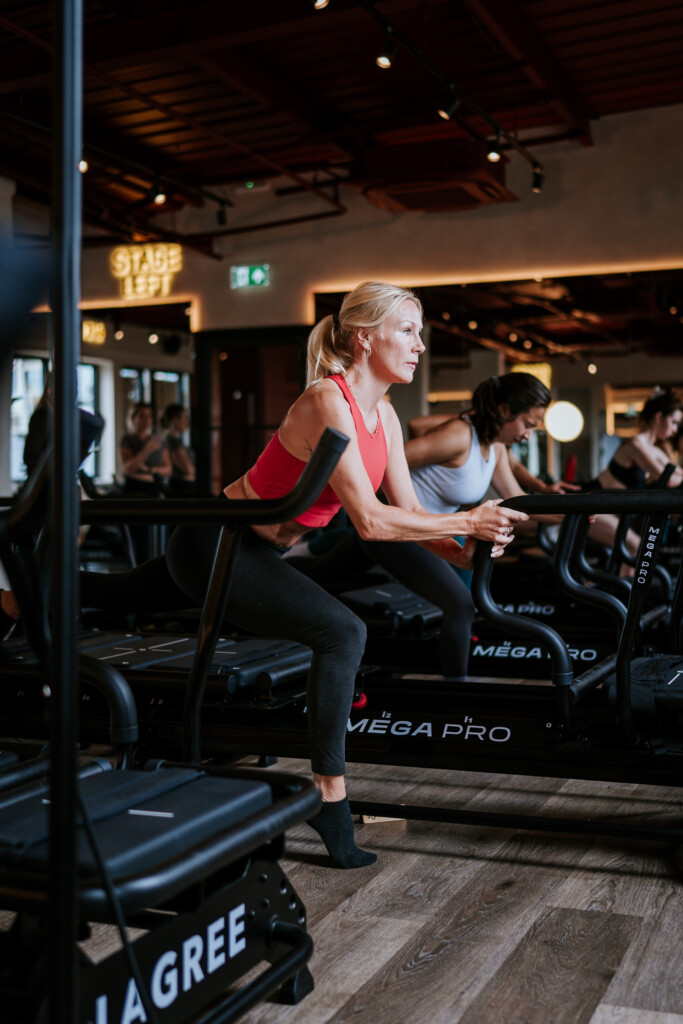
Mobility is your ability to move purposefully and control your body through its full range of motion under load. According to Harvard Health Publishing, it’s not about how far you can stretch; it’s about how well you can move, control, and support your body when real demands are placed on it. That distinction explains why you can touch your toes in a static stretch but still feel unstable in a deep squat or hesitant when reaching overhead with weight.
Flexibility gives you access to a position. Mobility gives you strength and control within that position.
This is the critical difference most routines ignore. You can passively fold into a hamstring stretch and feel looser temporarily, but that doesn’t mean your hamstrings can actively control that length when you’re walking downhill, picking up something heavy, or moving quickly. The nervous system doesn’t care how far you can stretch when relaxed. It cares whether you can produce force and stability at that range when it matters.
The Control Problem
Static stretching improves your tolerance to a position, not your ability to use it. Your muscles and joints may allow a brief range, but they’re not trained to manage the load there. This creates a gap between what your body can passively reach and what it trusts enough to move through with confidence.
The nervous system naturally resists ranges that feel weak or unsafe. When a position lacks strength, your body responds by tightening up as a protective mechanism. That tightness isn’t always a flexibility problem. It’s often a trust problem.
Many people stretch consistently yet still feel tight, unstable, or hesitant to move deeper because they’re training length without training control. The body allows the stretch, then pulls you back to a safer, stronger range the moment you stop holding the position. This is why flexibility gains disappear so quickly, why you feel loose after stretching but stiff again the next morning.
Why Range Disappears Under Demand
Unloaded flexibility doesn’t feel safe under movement. As soon as speed, resistance, or real-life demands are added, the range you worked so hard to access vanishes. You might be able to sink into a deep lunge during a stretching routine, but try that same depth while carrying groceries or moving quickly, and your body won’t let you go there.
This happens because passive stretching doesn’t prepare your muscles to fire properly at the end range. You’ve taught your body to tolerate the position rather than control it. The moment your nervous system senses instability or weakness, it restricts your movement to protect you from injury.
The body doesn’t retain positions it cannot control. This is why traditional flexibility training often feels like pushing against an invisible wall. You’re asking your body to trust a range it has no strength in, and your nervous system refuses.
Strength at End Range Changes Everything
Real mobility requires building strength precisely where most stretching routines leave you vulnerable: at the edges of your range of motion. This is where time under tension and resistance training become essential, not optional. When you strengthen a muscle while it’s lengthened, you teach your nervous system that this position is safe and usable, not just accessible.
Methods like Lagree in London integrate this principle directly into movement. The Lagree Method uses controlled resistance and time under tension to build strength through full ranges of motion, training your body to control the positions you’re working to access. You’re not just stretching your hip flexors, you’re strengthening them while they’re lengthened, creating mobility you can trust under load.
This approach doesn’t separate flexibility from strength. It recognizes that your body needs both simultaneously to move well in real life. The slow, controlled movements force muscles to engage at ranges where traditional workouts leave them passive, building the neuromuscular control that makes flexibility functional.
What Your Body Actually Needs
Training muscles while engaged allows you to stretch with more integrity and control. This is why combining strength work with stretching helps build control within your range of motion, not just access to it. Active engagement during movement is more effective than passive static holds because it teaches your body to produce force where it’s weakest.
Warming up before working through deeper ranges improves control, comfort, and safety at the end ranges. But the real shift happens when you stop thinking of mobility as something separate from your training and start treating it as an integrated component of how you build strength, endurance, and body awareness.
The goal isn’t to stretch farther. It’s to build the strength and confidence to move well through the ranges you already have, then gradually expand those ranges as your control improves. This is how you stop feeling fragile and start feeling capable.
But knowing what mobility actually requires doesn’t explain why so many routines still fail to deliver lasting results.
Related Reading
- Morning Stretches for Women
- Why Am I Not Flexible
- How Long Does It Take to Get Flexible
- Does Flexibility Increase Strength
- Full Body Stretching Routine for Flexibility
- Pregnancy Stretching Routine
Why Most Mobility Stretching Routines Don’t Work Long Term
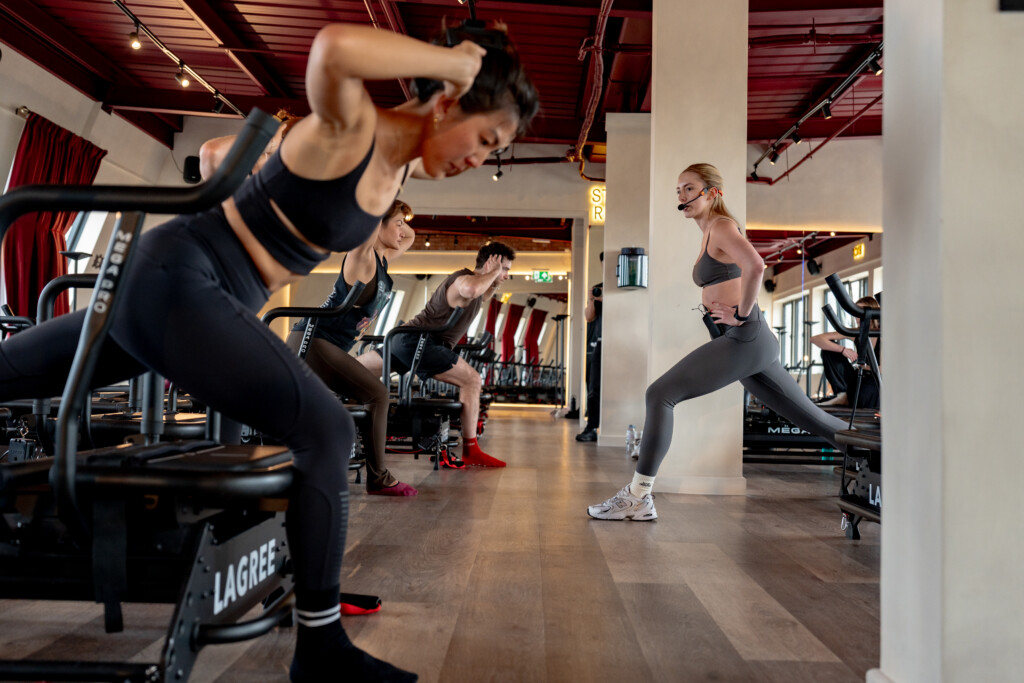
Most mobility routines collapse because they temporarily improve range without teaching the body to control it under real conditions. You feel looser after a session, maybe for a few hours, but by the next workout or the next morning, tightness returns. The gains vanish the moment stress, speed, or load re-enter the equation because your nervous system never learned to trust the new range with strength.
The problem isn’t effort. It’s a strategy.
Stretching Creates Tolerance, Not Capability
A systematic review published in Sports Medicine (2025) found that static stretching improves range of motion primarily by increasing stretch tolerance, rather than through structural or strength changes in the muscle. Your body learns to tolerate the discomfort of a deeper position, but it doesn’t develop the capacity to move powerfully or safely within that position.
This distinction matters more than most people realize. Tolerance fades quickly. Your hamstrings might allow a deeper forward fold during your stretching routine, but that doesn’t mean they can control that length when you’re walking downhill, running for a bus, or lifting something off the floor. The range exists passively, but it disappears the moment your body needs to produce force there.
When load or movement demands return, those temporary gains fade because the body was never trained to support the range with force or stability. You stretched into a position your muscles can’t actively manage, so your nervous system pulls you back to a safer, stronger range as a protective response.
Strength Through Range Is What Lasts
Research published in Frontiers in Physiology (2025) compared stretching-only programs with resistance training through full ranges of motion. The findings were clear: stretching increased range, but full-range strength training produced more durable improvements in mobility. The difference wasn’t subtle. Strength training made that range usable under load and movement, not just accessible in a static hold.
Your body retains what it can control. When you strengthen a muscle while it’s lengthened, you signal your nervous system that this position is safe and functional. The range becomes integrated into how you move, not just something you can reach when you’re relaxed and focused on stretching.
This is why mobility work that combines resistance with range produces results that last. You’re not just asking your hip flexors to tolerate a deeper lunge. You’re teaching them to fire properly at that depth, to stabilize under tension, to move you through the position with confidence.
Methods like Lagree in London embed this principle in every movement. The Lagree Method uses slow, controlled resistance and extended time under tension to strengthen muscles precisely where traditional stretching leaves them weak: at end range. You’re not separating flexibility work from strength work. You’re training your body to control the range of motion you access, creating mobility that transfers to real movement.
Random Routines Lack Progression
Most stretching routines fail for practical reasons beyond the research. Random sequences lack progression. Doing different stretches each day without increasing control or challenge gives the body no reason to adapt. Your nervous system needs consistent, progressive demand to build new capacity. Variety for its own sake creates novelty, not improvement.
Progression doesn’t mean stretching farther each week. It means increasing your ability to control, stabilize, and produce force within the ranges you’re working. This requires intentional structure: building from simpler positions to more complex ones, adding load gradually, increasing time under tension as control improves.
Without progression, you’re just repeating the same stimulus indefinitely. Your body adapts to the first few sessions, then plateaus. The tightness you feel isn’t because you need more stretching. It’s because you haven’t given your body a reason to change.
Compensation Hides the Real Problem
No coaching leads to compensation. Without guidance, people stretch around tight areas instead of strengthening them, reinforcing imbalance and tension rather than resolving it. You fold forward and feel a pull in your hamstrings, but you’re actually hinging from your lower back because your hips won’t move. You sink into a hip flexor stretch, but your pelvis tilts forward, creating the sensation of depth rather than your hip actually opening.
These compensations feel like progress. You’re going deeper, feeling more sensation. But you’re training the wrong patterns, often making existing imbalances worse. The areas that need to move stay restricted. The areas that already move too much get stretched further.
The consequence is predictable: mobility gains disappear as soon as real life adds stress. Workouts, fatigue, speed, and daily movement. The range was never trusted by the nervous system because it was never made strong. Your body allowed the stretch to keep you happy, then immediately reverted to the patterns it actually trusts.
Why the Feeling of Progress Doesn’t Match Results
That’s why stretching alone feels helpful in the moment but unreliable long term. The immediate sensation of looseness creates the illusion of improvement. You finish a stretching session feeling more mobile, more open. But that feeling doesn’t translate to how you move through the rest of your day or how your body performs under demand.
Mobility only lasts when the body learns it can control the range, not just access it. This requires strength, stability, and neuromuscular coordination built specifically at the ranges you want to use. Passive stretching can’t provide any of those elements.
The routines that work long term don’t treat flexibility as separate from strength. They integrate both into movement patterns that teach your body to trust new ranges by strengthening, stabilizing, and making them functional.
But understanding why most routines fail still leaves a question: which specific movements actually build the control and strength that sustain mobility?
13 Common Mobility Exercises
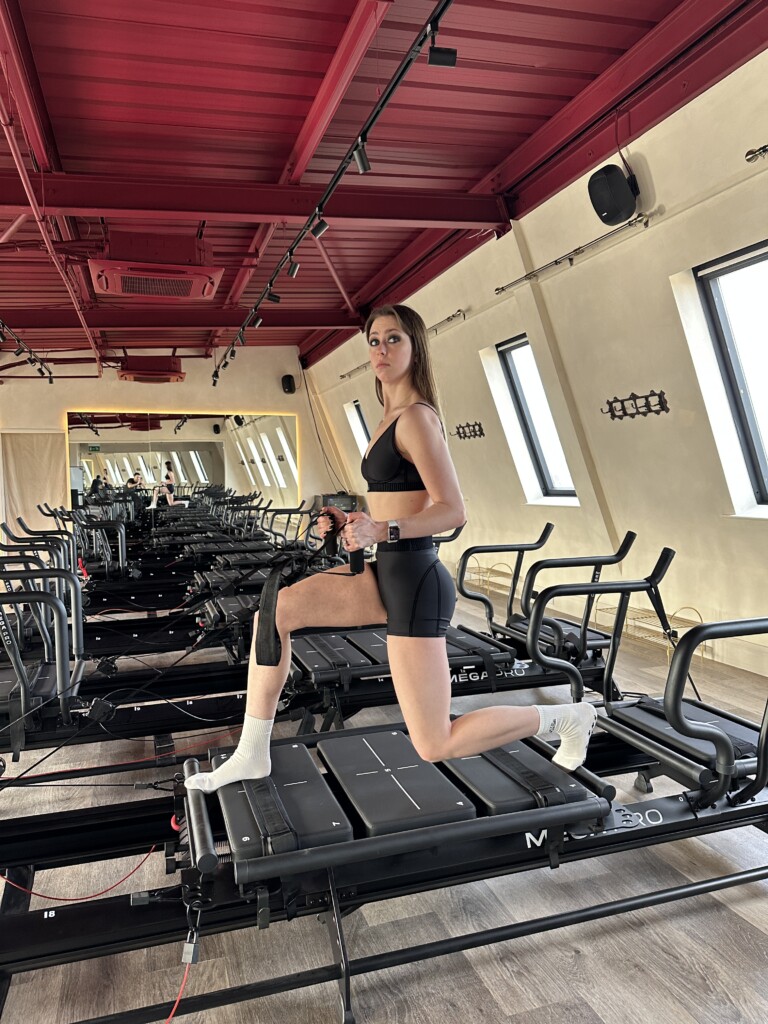
The exercises that improve mobility most effectively combine range of motion with resistance, control, and time under tension. They’re not passive holds or static stretches. They’re movements that challenge your body to stabilize, strengthen, and control positions at the edges of your current capacity, teaching your nervous system to trust new ranges by making them functional.
What separates effective mobility exercises from ineffective ones isn’t complexity. It’s whether they build strength within the range they’re accessing. The movements below represent different approaches to this principle, from machine-based loaded stretching to bodyweight patterns that demand active control. Some integrate resistance directly. Others rely on positioning and tempo to create the tension needed for neuromuscular adaptation.
1. Lagree Method Mobility Work
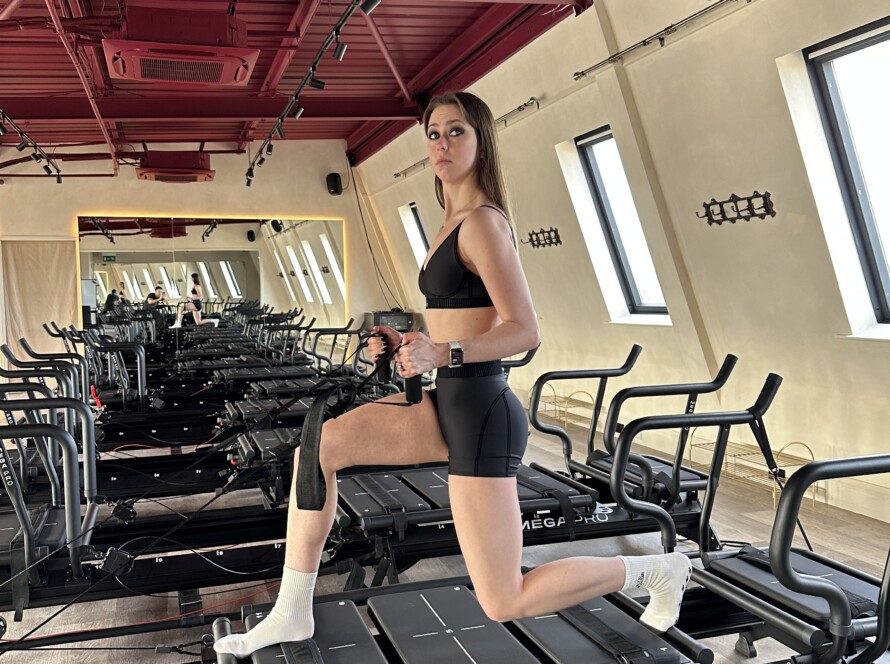
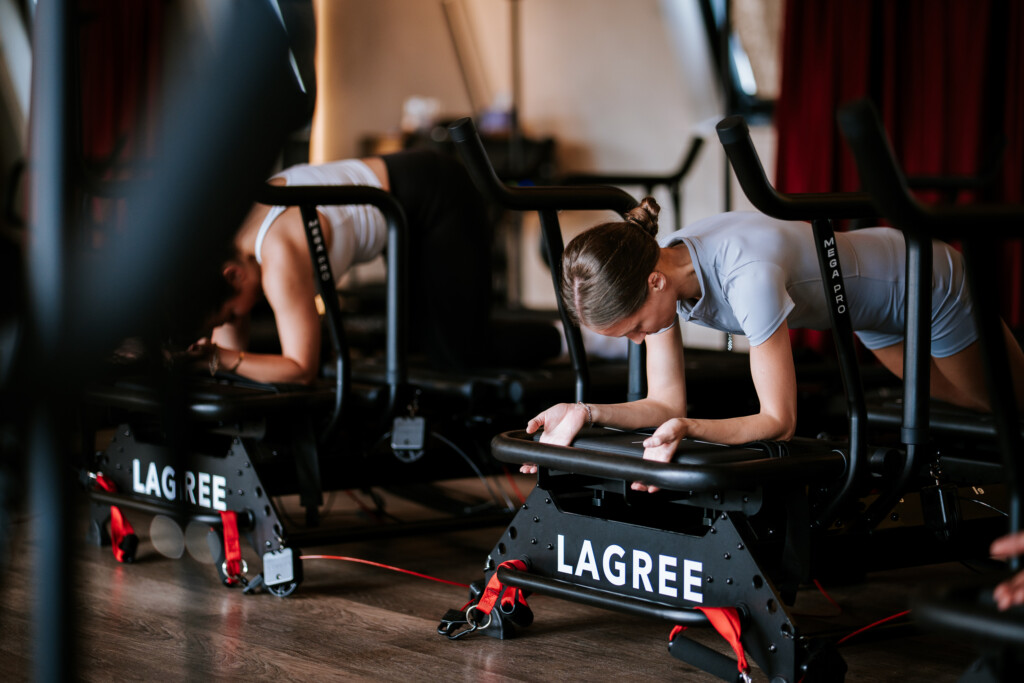
The Lagree Method uses the Megaformer machine to perform controlled mobility exercises with spring-based resistance that maintains constant tension throughout the movement range. Unlike traditional mobility work that relies solely on body weight, Lagree mobility exercises combine stretching with muscle engagement, creating a form of “loaded stretching.”
Typical Lagree mobility movements include controlled hip openers on the carriage, shoulder mobility exercises using the front platform and poles for support, spinal articulation work through cat-cow variations with spring resistance, and dynamic hamstring and hip flexor stretches performed slowly against adjustable tension. According to a 2024 trial study, training 3 times per week for 30 to 45 minutes over a 4-month period produces measurable improvements in physical fitness and body composition markers.
The slow tempo, typically 4 seconds per direction, eliminates momentum and requires muscular control throughout the entire range of motion. This isn’t stretching that lets you zone out. Your muscles stay engaged, working against resistance even as they lengthen, which is precisely how you build the strength that makes mobility last.
The method’s advantage in terms of mobility is that spring resistance provides smooth, consistent tension that can be precisely adjusted to individual needs. This allows practitioners to work at the edge of their current range while maintaining stability and control. The integration of strength and mobility means you’re not just passively stretching but actively strengthening muscles in lengthened positions, which improves functional mobility rather than just static flexibility.
Lagree mobility work particularly benefits those with joint instability who need to build strength alongside flexibility, individuals recovering from injuries that require controlled range-of-motion work, and anyone seeking to improve mobility while simultaneously building muscular endurance.
2. Thread the Needle
Begin on hands and knees. Slide one arm underneath your body, threading it between the opposite arm and knee while rotating your torso. Your shoulder and head rest on the floor. Hold for 20 to 30 seconds, then repeat on the other side.
This stretches the upper back and shoulders whilst improving thoracic spine rotation, which often becomes restricted from prolonged sitting. Desk work trains your thoracic spine to stay locked in one position for hours. Thread the Needle reverses that pattern by actively rotating through a range your body has forgotten how to access, not just stretching into it but requiring control to maintain the position without collapsing.
The exercise addresses a specific compensation pattern. When thoracic rotation is limited, your body borrows movement from your neck and lower back instead, creating strain in areas that shouldn’t be doing the work. By restoring rotation where it belongs, you reduce the compensatory stress that contributes to neck stiffness and shoulder problems.
3. Hip Circles
Stand with your feet hip-width apart and your hands on your hips. Make large circles with your hips, moving through the fullest range of motion you can comfortably reach. Complete 8 to 10 circles in one direction, then reverse.
This mobilizes the hip joint in multiple planes of motion, lubricates it, and improves mobility for activities such as squatting, walking, and climbing stairs. Circular motion forces your hip to move through ranges it rarely encounters in linear activities like running or cycling, waking up dormant motor patterns.
Hip mobility limitations contribute to lower back discomfort and restricted movement patterns because when your hips don’t move well, your spine compensates by moving more than it should. Hip Circles restore movement where it belongs, reducing the load on your lower back during daily activities.
4. World’s Greatest Stretch
Step forward into a lunge position with your right foot. Place both hands on the floor inside your front foot. Rotate your right arm toward the ceiling, following it with your eyes. Hold briefly, then return your hand to the floor. Repeat 5 to 6 times, then switch sides.
This comprehensive movement mobilizes the hips, thoracic spine, and shoulders simultaneously, whilst stretching hip flexors and improving rotational mobility. The combination of hip extension, thoracic rotation, and shoulder opening in a single fluid sequence makes it efficient for addressing multiple restriction points that often occur together in people who sit frequently.
The rotation component is what boosted this beyond a standard lunge stretch. You’re not just passively holding a hip flexor stretch. You’re actively rotating your spine while maintaining hip position, which requires your core to stabilize and your hip flexors to lengthen under tension. That’s how you build mobility that transfers to real movement, not just positions you can reach when you’re focused and still.
5. Shoulder Pass-Throughs
Hold a resistance band, towel, or broomstick with a wide grip. Keeping arms straight, slowly raise the object overhead and continue the arc behind you until it reaches your lower back. Reverse the movement to return to the starting position. Repeat 8 to 10 times, gradually narrowing your grip as mobility improves.
This improves shoulder mobility and range of motion, particularly beneficial for reaching overhead and behind the back. The movement addresses shoulder restrictions that develop from typing, driving, and exercises that keep your arms in front of your body without ever challenging overhead or behind-the-back ranges.
The progressive narrowing of grip width results in measurable improvement. When you start with a wide grip, almost everyone can complete the movement. As your grip narrows over weeks and months, the exercise becomes harder, requiring more shoulder mobility and control. That progression is what drives adaptation. Your body doesn’t change from repeating the same stimulus indefinitely. It changes when demands gradually increase.
6. 90/90 Hip Stretch
Sit on the floor with one leg bent in front of you at 90 degrees and the other bent behind you, also at 90 degrees. Keep your back straight and lean forward slightly over the front leg. Hold for 30 to 45 seconds, then switch sides.
This stretches the hip external rotators and improves hip internal and external rotation, addressing mobility limitations that contribute to lower back discomfort and restricted movement. The position is uncomfortable for most people initially because it exposes exactly where hip rotation is limited. Your front leg requires external rotation. Your back leg requires internal rotation. Both ranges tend to become restricted together in people who sit frequently.
The discomfort isn’t a reason to avoid the stretch. It’s information about where your body lacks control and strength. The goal isn’t to force deeper into pain. It’s to sit in the position, breathe, and allow your nervous system to gradually accept the range as safe. Over time, the position becomes less uncomfortable as your hips learn to control the rotation they’ve been avoiding.
7. Ankle Circles
Sit on a chair or lie on your back. Lift one foot off the ground and slowly rotate your ankle in circles, moving through the full range of motion. Complete 10 circles in one direction, then reverse for 10 circles. Switch to the other ankle.
This mobilizes the ankle joint, improving range of motion critical for balance and walking mechanics, and helping prevent ankle injuries. Ankle mobility is one of the most overlooked restrictions that affect movement quality. When your ankles don’t move well, you can’t squat deeply, you can’t absorb impact properly when walking or running, and you compensate by altering knee and hip mechanics, which creates strain further up the chain.
Circular motion is more effective than simple flexion and extension because it moves the ankle through ranges of motion that aren’t used in linear activities. Most people walk and run in straight lines, never asking their ankles to move side to side or rotate. That creates stiffness in ranges that are essential for balance and injury prevention when you step on uneven ground or change direction quickly.
8. T-Spine Windmills
Lie on your side with knees bent and arms extended in front at shoulder height. Keeping your bottom arm and legs stationary, rotate your top arm in a large arc toward the ceiling and behind you, following it with your eyes. Your torso rotates while your hips remain stable. Complete 6 to 8 repetitions per side.
This specifically targets thoracic spine rotation, which often becomes restricted and contributes to neck and shoulder problems. The exercise isolates thoracic rotation by preventing your hips from moving, forcing the rotation to come from your mid-back instead of compensating through your lower back or shoulders.
Following your hand with your eyes adds a neurological component that enhances the movement. Your vestibular system and visual tracking are connected to how your spine moves. By coordinating eye movement with spinal rotation, you’re teaching your nervous system to integrate the movement pattern more fully, increasing the likelihood that it will transfer to activities where you need to rotate quickly or under load.
9. Deep Squat Hold
Stand with feet slightly wider than hip-width. Lower into the deepest squat you can while keeping your heels on the ground and your torso relatively upright. Hold this position for 30 to 60 seconds, allowing hips, ankles, and spine to gradually relax into the stretch.
This mobilizes hips, ankles, and spine simultaneously whilst improving the squat pattern used in countless daily activities. The deep squat is a fundamental human position that most adults have lost access to. Children can sit in a deep squat comfortably for minutes. Most adults can’t hold it for 10 seconds without falling backward or lifting their heels.
The position exposes multiple restrictions at once. If your ankles are tight, your heels come off the ground. If your hips lack mobility, your torso tends to fall forward, or your lower back rounds excessively. If your thoracic spine is stiff, you can’t keep your chest up. The hold teaches your body to find stability in a position that requires mobility in multiple joints working together, which is how real movement works outside of isolated stretches.
10. Wrist Circles
Extend one arm in front of you. Make circles with your wrist, rotating your hand through the full range of motion. Complete 8 to 10 circles in each direction, then switch hands.
This mobilizes the wrist joint, improving flexibility and reducing stiffness, particularly beneficial for those who type frequently or perform repetitive hand movements. Wrist stiffness might seem minor compared to hip or shoulder restrictions, but it creates problems that radiate up the arm. When your wrists don’t move well, you compensate by altering the mechanics of your elbows and shoulders during activities like push-ups, planks, or carrying bags.
The circular motion moves the wrist through ranges that typing and mouse work never access. Most computer work keeps wrists in a limited range of flexion and extension, never challenging the side-to-side or rotational movement that maintains joint health. Wrist Circles restore movement that your daily activities have eliminated, reducing the chronic low-grade stiffness that accumulates over months and years.
11. Neck Half Circles
Sit or stand with relaxed shoulders. Drop your chin toward your chest, then slowly roll your head to one side, bringing your ear toward your shoulder. Pause, then roll back through the center to the opposite side. Avoid rolling your head backward. Complete 5 to 6 half-circles, moving slowly and controlled.
This mobilizes the cervical spine, reducing neck stiffness caused by prolonged computer use or poor posture. The movement specifically avoids rolling the head backward because that position compresses the cervical spine, which can create problems rather than solve them. The half-circle pattern keeps the stretch safe while still accessing the ranges that become restricted from forward head posture.
Neck stiffness from prolonged computer use or poor posture can create tension that radiates into the shoulders and upper back. When your neck doesn’t move well, your shoulders compensate by staying boosted and tense, creating the chronic tightness that no amount of shoulder stretching seems to resolve. By restoring cervical mobility, you reduce compensatory tension throughout the upper body.
12. Hamstring Flossing
Sit on the edge of a chair. Extend one leg straight in front with heel on the ground and toes pointed up. Keeping your back relatively straight, hinge forward from your hips while simultaneously pointing your toes and looking up. Then reverse: flex your foot (toes toward shin) while rounding your back and looking down. Repeat this “flossing” motion 10 to 12 times per leg.
This improves hamstring flexibility while mobilizing the nerve tissue running through the leg, addressing both muscle tightness and neural tension. Hamstring restrictions aren’t always about muscle length. Neural tension, the tightness in the sciatic nerve and its branches, often contributes more to the sensation of tightness than actual muscle shortness. Hamstring Flossing addresses both by moving the muscle and nerve tissue simultaneously.
The alternating pattern of toe pointing with back extension and toe flexing with back rounding creates a sliding motion of the nerve through the surrounding tissues. This “flossing” effect reduces neural adhesions and improves nerve mobility, often leading to faster improvements in hamstring flexibility than traditional static stretching, which only addresses muscle length.
13. Cat-Cow Stretch
Start on hands and knees with wrists under shoulders and knees under hips. Inhale as you arch your back, lifting chest and tailbone toward the ceiling. Exhale as you round your spine, tucking your chin and tailbone. Move slowly between these positions for 8 to 10 breaths.
This mobilizes the entire spine through flexion and extension, addressing stiffness in the thoracic and lumbar regions while coordinating breath with movement. The breath coordination is what makes Cat-Cow more effective than simply moving through spinal flexion and extension. By linking movement to breath, you’re engaging the diaphragm and core muscles that support spinal movement, teaching your body to coordinate breathing with motion as it does during real activities.
The movement addresses spinal stiffness that develops from prolonged sitting in static positions. Your spine is designed to move through flexion, extension, and rotation throughout the day, but modern work keeps it locked in one position. Cat-Cow restores the fundamental flexion and extension patterns your spine needs to maintain health and reduce the chronic stiffness that makes bending, reaching, and twisting feel restricted and uncomfortable.
These movements work because they don’t separate flexibility from strength. But knowing which exercises to do still leaves the question of how to combine them into a system that produces results faster than traditional stretching.
Related Reading
- Stretches for Women Over 50
- Quad And Hamstring Stretches
- Ballet Stretches
- Split Stretches
- Aerial Yoga Stretches
- Sacrum Stretches
What Actually Improves Mobility Faster and More Safely
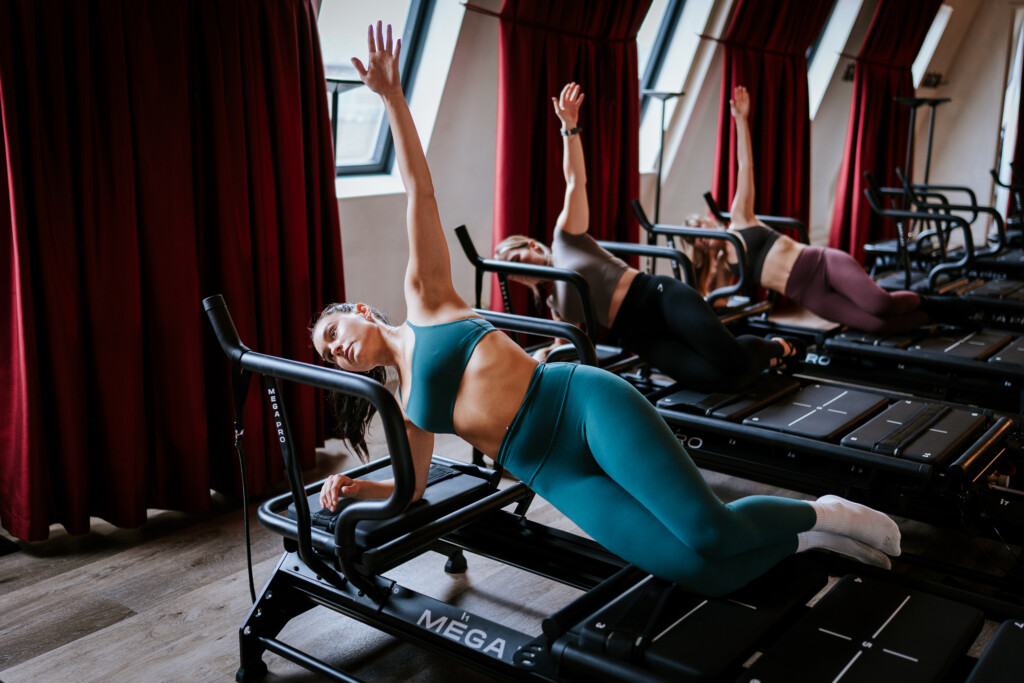
Mobility improves fastest when muscles are trained to produce force while lengthened, rather than simply stretched into passive positions. Slow, controlled resistance training performed through full ranges of motion teaches your nervous system that extended positions are safe, supported, and usable under load. This creates mobility you can trust in real movement, not just flexibility you can demonstrate when relaxed.
The difference matters because your body doesn’t retain ranges it cannot control. You can passively fold into a deeper hamstring stretch every day for months, but if those muscles never learn to fire properly at that length, your nervous system will pull you back to a safer range the moment you need to move quickly or carry something heavy. The restriction isn’t always about tight muscles. It’s often about weak muscles in lengthened positions.
Loading Muscles at End Range
When a muscle lengthens under tension, it adapts differently than when it’s simply held in a stretched position. The neuromuscular system learns to generate force precisely where most people feel weakest and most vulnerable. Your hip flexors don’t just tolerate a deeper lunge; they thrive on it. They learn to stabilize and move you through that depth with control.
This is why resistance training through full ranges produces more durable mobility improvements than stretching alone. According to a 2024 Innovation in Aging study, participants showed a 0.05 m/s improvement in gait speed, which may seem small but represents a meaningful functional change in how the body moves under real-world conditions. The improvement wasn’t from stretching farther. It was from strengthening the ranges they already had access to, making those ranges stable and usable during walking.
The body responds to what challenges it, not what it can already do comfortably. If you stretch your hamstrings to a certain depth every day without increasing the demand, your nervous system has no reason to adapt beyond the initial tolerance you’ve built. But when you add resistance, when you ask those hamstrings to produce force while lengthened, you create a stimulus that demands adaptation. The muscle gets stronger at the end range. The nervous system learns to trust that position under load.
Continuous Tension Builds Stability
Maintaining tension throughout the full range of motion forces muscles to work at every point in the movement, not just at the comfortable mid-range positions where most people naturally feel strong. This eliminates the dead spots where muscles disengage and joints become vulnerable.
Most traditional exercises allow muscles to rest at certain points in their range of motion. The top of a bicep curl. The lockout of a leg press. These rest points feel easier, but they’re exactly where you lose the mobility training effect. Your muscles aren’t learning to stabilize the joint through the complete movement. They’re only working where it’s mechanically advantageous.
Continuous tension changes this. When resistance is maintained through the entire arc of movement, your muscles never get to disengage. They’re forced to control the position at the bottom of a squat, the top of a shoulder press, and the deepest point of a lunge. These are the ranges where tightness and injury risk are most common because strength is typically absent in these ranges.
The familiar approach is to separate strength training from flexibility work. You lift weights through partial ranges where you feel strong, then stretch statically into the ranges you avoided during training. As your movement demands increase and daily activities require more from your body, this separation creates a gap. You’re strong in some ranges, flexible in others, but rarely both simultaneously. Real movement doesn’t respect that division. You need strength and range together, in the same positions, under the same loads.
Methods like Lagree in London eliminate this separation by training strength and mobility as one integrated system. The spring-based resistance maintains continuous tension throughout movements that challenge your deepest ranges, building the neuromuscular control that makes those positions functional rather than fragile. You’re not stretching and then strengthening. You’re doing both in the same moment, teaching your body that these ranges are both accessible and strong.
Slow Movement Teaches Control
Speed hides weakness. When you move quickly through a range of motion, momentum carries you through the positions where you lack control. Your muscles don’t have to stabilize the joint because velocity does the work for you. This is why you can swing your leg higher than you can lift it slowly, or drop into a squat faster than you can lower yourself with control.
Moving slowly removes momentum entirely. Every inch of the movement requires muscular effort. Every position demands active stabilization. This gives your nervous system time to process the movement, to recognize the position as safe, to build the motor patterns that will allow you to access that range with confidence later.
Research from NYU Langone Health, published in 2024, found that 3 weeks of voluntary wheel running was enough to produce measurable changes in how the body manages movement and mobility. The timeline matters because it shows adaptation happens faster than most people expect when the training stimulus is appropriate. But the adaptation isn’t from repeating the same movement at the same speed indefinitely. It’s from progressively challenging the body’s ability to control movement through ranges that were previously avoided or rushed through.
Slow, controlled movement also reveals compensation patterns that speed conceals. When you lower into a lunge slowly, you’ll notice if your knee caves inward, if your pelvis tilts, if your weight shifts to one side. These compensations disappear when you move quickly because momentum masks them. But they’re still there, creating imbalance and injury risk. Slow movement forces you to confront and correct these patterns rather than work around them.
Why This Approach Works
Strength at ethe nd range eliminates the protective tightness your body uses to guard positions it considers weak or unsafe. When your hip flexors can produce force in a deep lunge, your nervous system stops restricting how deep you can go. The tightness wasn’t structural. It was protective. Building strength removes the need for protection.
Joint stability improves because muscles are learning to support positions under load, not just reach them passively. Your shoulder isn’t just flexible enough to reach overhead. It’s strong enough to control weight overhead, to stabilize against resistance, to move through that range safely when you’re tired or moving quickly.
The nervous system governs how much range you’re allowed to use based on how safe it perceives that range to be. No amount of stretching will convince your nervous system that a position is safe if you’ve never demonstrated strength there. But train that position under load, move through it slowly with control, and your nervous system receives a clear signal: this range is supported, stable, and functional. Permission to access it expands naturally.
But understanding what improves mobility still leaves the question of whether you need to add another practice to an already full schedule.
How Lagree Replaces the Need for a Separate Mobility Routine
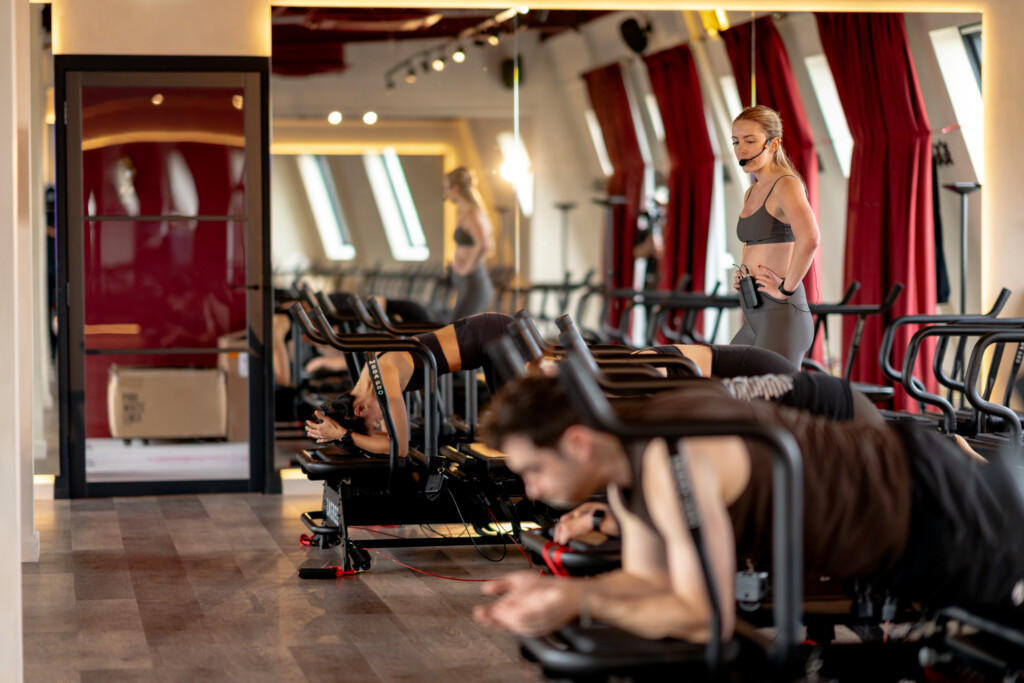
BST Lagree eliminates the need for separate mobility work because every movement builds strength through the full range, unlike traditional workouts, which leave you weak. The method doesn’t separate flexibility from force production. It trains both simultaneously, teaching your body that deep positions are supported, stable, and usable under load, not just accessible when you’re relaxed.
This happens through intentional design, not as an accidental benefit. The spring-based resistance maintains constant tension while you move slowly through positions that most exercises avoid or rush through. Your hip flexors don’t just tolerate a deeper lunge; they thrive on it. They fire properly at that depth, stabilize under resistance, and build the neuromuscular control that makes the range functional rather than fragile.
Strength Built Where Mobility Lives
Traditional strength training keeps you in comfortable mid-range positions. The bottom of a squat gets skipped. The deepest part of a lunge happens too fast to matter. The overhead press stops before your shoulder reaches full flexion. These are precisely the ranges where tightness and restriction appear because they’re the ranges where strength is absent.
Lagree forces engagement at the positions most workouts avoid. According to Lagree Fit 415, movements maintain a 60 to 90-second microsequence of constant tension, which means your muscles never disengage, never rest, and never get to avoid the uncomfortable depths where mobility breaks down. You’re not stretching into a position and hoping your body remembers how to use it later. You’re strengthening that position while you’re in it, under resistance, with control.
The outcome is mobility you can trust in real movement. Your hamstrings don’t just allow a forward fold. They can control your descent when you bend to pick something up. Your hips don’t just tolerate a deep squat; they thrive on it. They can move you through that range when you’re carrying groceries or playing with your kids. The range becomes integrated into how your body moves, not something you access only during dedicated stretching sessions.
Low Impact Removes the Fear Response
Impact and momentum trigger protective tightness. When your body anticipates stress that it can’t control, it restricts range as a defense mechanism. This is why people who run frequently often feel tight despite consistent movement. The repetitive impact teaches the nervous system to guard against deeper ranges to protect joints from forces they’re not prepared to handle.
Lagree’s spring-based resistance provides smooth, controlled tension without jarring your joints. There’s no jumping, no pounding, no sudden force your body needs to brace against. This allows your nervous system to explore ranges it would normally restrict, building confidence in positions that previously felt unstable or unsafe.
The method addresses a fundamental problem with high-intensity training. You can work hard without teaching your body to fear movement. Intensity comes from time under tension and muscular effort, not from impact or speed. Your heart rate boosts, your muscles fatigue, but your joints stay supported through ranges that traditional high-intensity work would compress or avoid entirely.
Efficiency That Respects Your Time
Most people don’t have 90 minutes to train and then stretch. They barely have 45 minutes to exercise. The familiar approach is to prioritize strength or cardio and hope mobility takes care of itself, or to squeeze in rushed stretching that never addresses the underlying weakness that creates the tightness.
Lagree Fit 415 notes that 30 to 90 seconds of controlled reps creates both strength and mobility adaptations simultaneously. You’re not adding mobility work to your training. The training itself improves mobility as a natural consequence of how movements are structured and paced. Strength, endurance, and range of motion develop together in a single 45-minute session.
This integration removes the mental load of managing multiple practices. You don’t need to figure out which stretches address which tightness, or when to fit them into your schedule, or whether you’re doing them correctly. The workout handles it by design. Mobility improves because the movements require it, not because you’re layering another practice on top of an already full routine.
Precision Through Expert Guidance
Compensation patterns sabotage mobility work when no one corrects them. You think you’re stretching your hip flexors, but you’re actually arching your lower back. You believe you’re improving shoulder mobility, but you’re compensating through your neck and upper traps. These patterns feel like progress because you’re experiencing sensation, but they reinforce imbalance instead of resolving it.
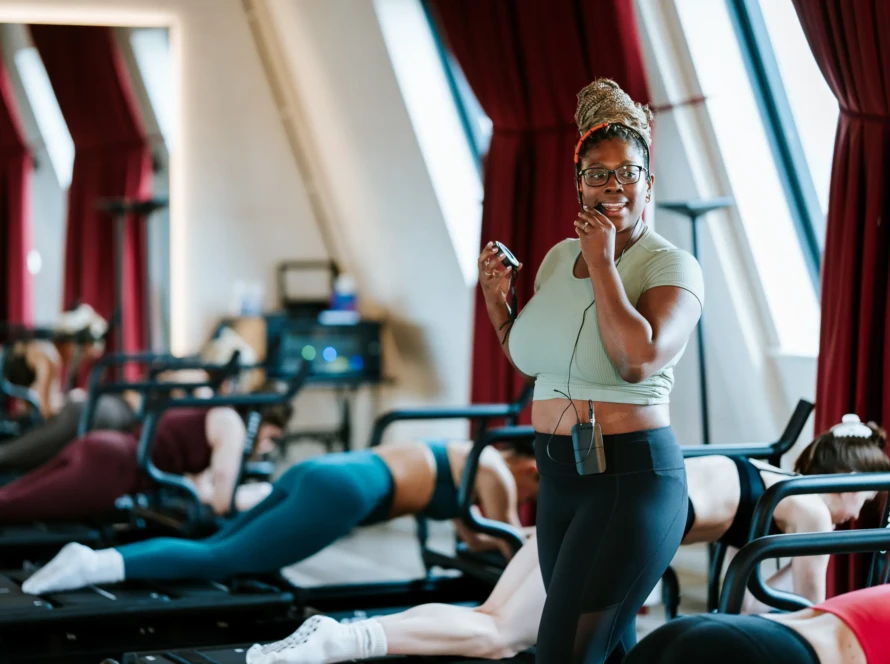
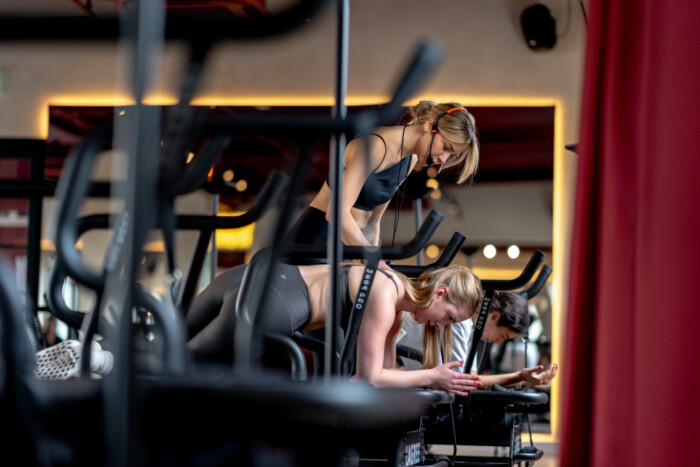
BST’s certified instructors catch these compensations in real time. Form cues keep you aligned, engaged, and working the right muscles through the right ranges. The structured mentorship ensures you’re not just moving through positions but building control within them. This precision is what makes mobility gains stick rather than disappear the moment class ends.
The coaching removes the guesswork that makes solo mobility work frustrating. You don’t need to research which stretches address your specific restrictions, or wonder if you’re doing them correctly, or question why results aren’t appearing. The instructor guides you through movements that systematically address mobility, correcting form so the work goes where it needs to.
Who Benefits Most
This approach works especially well for women who feel tight but recognize that yoga-only solutions don’t build the strength component their bodies need. Stretching feels good temporarily, but the tightness returns because the underlying weakness never gets addressed. Lagree provides the missing piece: resistance that makes flexibility functional.
Anyone worried about injury in deeper ranges finds the controlled environment reassuring. The spring resistance adjusts to individual needs, allowing you to work at your edge without risking the sudden movements or heavy loads that create fear. You build confidence in your body’s capabilities gradually, with support, which is how trust develops.
People who are tired of figuring out workouts on their own appreciate the structure. No more searching for the right combination of exercises, or wondering if you’re missing something important, or feeling uncertain whether your approach makes sense. The method provides a clear system. The instructor provides expertise. You show up and do the work.
Busy women who want results without extra time commitments get both efficiency and effectiveness. The 45-minute session delivers strength, cardio, and mobility improvements together. No separate stretching routine required. No additional practices to manage. Just consistent training that addresses everything your body needs to move well.
The Environment That Supports It
BST’s clean, welcoming studio removes the intimidation factor that makes many women avoid traditional gyms. The space feels intentional, not chaotic. The focus stays on your workout, not on navigating crowded equipment or dealing with distractions that pull attention away from form and engagement.
Classes feel fun and uplifting instead of boring or punishing. The energy motivates without overwhelming. You work hard, but the atmosphere supports effort instead of creating pressure or comparison. This matters more than most people realize. When the environment feels safe and encouraging, your nervous system relaxes enough to explore ranges it would otherwise guard against.
The women-focused approach means the coaching, pacing, and community understand the specific challenges women face with mobility and strength. Instructors recognize how hormonal cycles affect joint laxity and recovery. Class design accounts for the need to build strength without bulk, to improve mobility without sacrificing stability, to challenge the body without triggering the protective patterns that develop from feeling unsafe in fitness spaces.
But understanding how Lagree replaces separate mobility work only matters if you’re ready to experience what that integration actually feels like in your body.
Book a Lagree Class in London Today
If you’ve been searching for a mobility stretching routine that actually works, the fastest way to understand the difference is to feel it in your own body. At BST Lagree, mobility isn’t treated as a separate task or an add-on—it naturally improves during a 45-minute Lagree workout that combines controlled strength, low-impact resistance, and expert coaching, so your body learns to move well while it gets stronger. Book a class at Lagree in London and experience how mobility improves naturally when strength and control are trained together, without guesswork, extra stretching sessions, or injury risk.
Related Reading
- Pregnancy Sciatica Stretches
- Yoga Stretches For Flexibility
- Pelvic Stretches For Women
- Lower Back and Hip Stretches
- Aerial Yoga Stretches
- Yoga Poses for Hip Flexibility