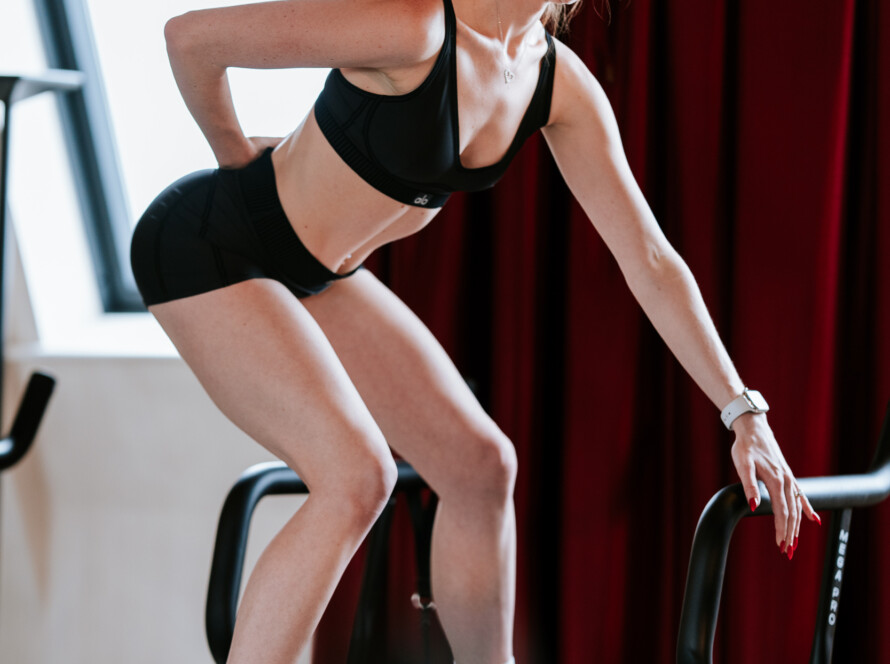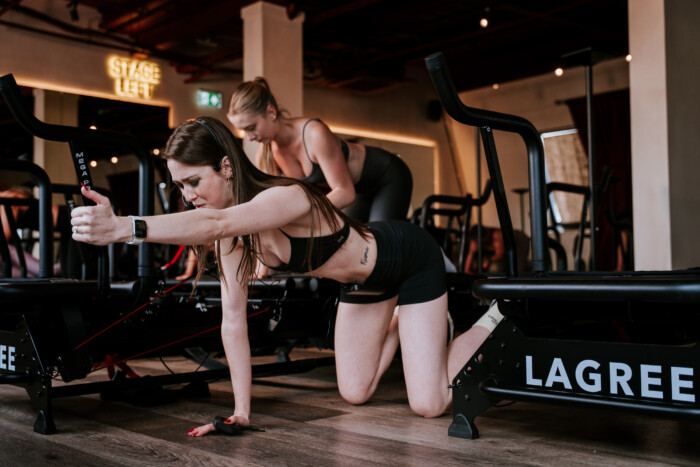
Pregnancy brings a unique set of physical changes that make morning stretches for women more important than ever, yet many expectant mothers struggle to find gentle movements that support their changing bodies without causing discomfort or risk. You might wake up with tight hips, an aching lower back, or stiff shoulders, wondering which stretches are safe and which you should avoid as your body adapts to support a new life. This guide offers practical guidance on building a safe pregnancy stretching routine that actually helps you stay active while expecting your child, with clear instructions on prenatal flexibility exercises, proper alignment techniques, and modifications for each trimester.
BST Lagree in London understands that pregnant women need specialized support to maintain strength and mobility throughout their journey. Their Lagree method provides low-impact prenatal workouts designed specifically for expectant mothers, combining controlled muscle engagement with safe stretching protocols that protect your joints and core while building the stamina you’ll need for labor and recovery. The studio’s trained instructors guide you through pregnancy-appropriate movements that complement your daily stretching routine, helping you stay connected to your body during this transformative time.
Summary
- Most pregnancy stretching routines fail because they address muscle tightness without recognizing the underlying cause: instability. As the pelvis tilts, the ribcage shifts, and the center of gravity moves forward, muscles tighten protectively to compensate for loosened joints. Simply stretching deeper rarely solves the problem because the body interprets passive lengthening as a vulnerability, triggering the same protective tension within hours.
- Relaxin hormone levels increase by 50% during pregnancy, affecting ligament laxity throughout the entire body, not just the pelvis. This systemic change means that every joint experiences reduced passive stability, from the ankles to the shoulders. Without muscular support to compensate, the nervous system responds by limiting movement or creating sensations of tightness as a protective mechanism against potential injury.
- Structured physical exercise during pregnancy produces measurable delivery outcomes. Women who maintained exercise routines had a 14% higher rate of normal vaginal delivery than sedentary women, and their first stage of labor was, on average, 61.30 minutes shorter. These results suggest that building functional strength and endurance throughout pregnancy creates benefits that extend beyond temporary discomfort relief.
- Blood volume increases by approximately 50% during pregnancy to support fetal circulation and prepare for delivery. This dramatic cardiovascular shift, combined with hormonal changes, affects everything from heart rate to the efficiency with which oxygen reaches working muscles. The body operates within an entirely different internal environment, which explains why familiar movements suddenly feel harder or less coordinated than before pregnancy.
- Resistance-based stretching teaches muscles to stabilize while lengthening through eccentric loading, building strength at end ranges of motion. When stretching includes active muscle engagement rather than passive sinking, the nervous system stops treating those positions as threats because muscles are demonstrably controlling the range. This approach addresses the root cause during pregnancy: the body’s simultaneous need for both mobility and control as it transforms.
- Lagree’s spring-based resistance creates sustained muscular engagement, with muscles traveling the equivalent of three marathons’ lengths during a 45-minute session. This time, under tension builds endurance in positions pregnancy specifically requires: holding upright posture as the belly grows, stabilizing the pelvis while walking, and controlling descent when sitting.
- Lagree in London offers prenatal programming that combines this controlled resistance with pregnancy-appropriate modifications, helping expectant mothers build functional strength in the exact ranges their changing bodies need for daily movement.
The Real Problem with Most Pregnancy Stretching Routines
Most pregnancy stretching routines focus on “being gentle,” but they often miss what’s actually causing discomfort in the first place. As pregnancy progresses, many aches and pains don’t come from a lack of stretching. They come from changes in posture, shifts in balance, and a gradual loss of stability as the body adapts.
The pelvis tilts. The ribcage shifts. The center of gravity moves forward. Muscles that once supported movement easily now work differently. Simply stretching more often doesn’t solve the problem because the underlying issue isn’t tightness; it’s instability masked as tension.
Many pregnant women already feel this firsthand. They stretch because their hips feel tight, their lower back aches, or their shoulders carry tension. The stretch brings relief in the moment, then the discomfort returns a few hours later, or the next day. Over time, flexibility feels inconsistent, and confidence in movement drops.
Why passive stretching creates temporary relief
When you hold a static stretch, you’re lengthening muscle fibers without teaching them how to stabilize in that new range. Your nervous system interprets this as a potential vulnerability. So once you stand up and move, those muscles tighten again to protect joints that feel unsupported.
During pregnancy, this protective response intensifies. Your body is already managing increased weight, shifted alignment, and hormonal changes that loosen ligaments. When stretching only addresses muscle length without building strength in that range, the body defaults back to tension as a safety mechanism.
That’s why the same tight spots keep returning. You’re not failing at stretching. You’re working against a system designed to prioritize stability over mobility when it senses risk.
The fear of doing too much (or the wrong thing)
There’s a real fear of pushing too far, overstretching, or creating more discomfort instead of less. This fear isn’t irrational. Pregnancy hormones like relaxin increase joint laxity, making it easier to move beyond a safe range without realizing it. Many women worry about harming themselves or their baby, so stretching becomes cautious, limited, and often ineffective.
The result is a frustrating middle ground: too gentle to create change, but anxious enough to avoid the movements that might actually help. You end up stuck between doing nothing and doing something that doesn’t work.
What actually helps: stability through controlled resistance
What actually helps is a different approach: a pregnancy stretching routine that supports both mobility and stability, helping the body feel safe and supported as it changes. When movement is controlled and supported, not just passive, flexibility starts to feel more reliable, and discomfort becomes easier to manage rather than something that constantly returns.
Resistance-based movement during pregnancy teaches muscles to engage while lengthening. This combination, what trainers call “eccentric loading,” builds strength at end ranges of motion. Your body learns it can trust those positions because muscles are actively working, not just being pulled.
According to research published in PLOS ONE, women who maintained structured physical exercise during pregnancy had a 14% higher rate of normal vaginal delivery than those who remained sedentary. The same study found that exercise groups had a first stage of labor that was, on average, 61.30 minutes shorter. These outcomes suggest that building functional strength and endurance throughout pregnancy creates measurable benefits during delivery, not just temporary relief from discomfort.
Low-impact, resistance-based training methods, such as the Lagree approach, allow pregnant women to work muscles under tension without the joint stress of traditional workouts. The slow, controlled movements on a specialized platform create time under tension that builds both strength and body awareness. You’re not just stretching your hip flexors; you’re teaching them to stabilize your pelvis while it moves through pregnancy-appropriate ranges.
This method addresses the root cause: the body’s need for both mobility and control as it transforms. When you combine lengthening with resistance, muscles don’t just relax temporarily. They adapt. They get stronger in stretched positions, which means the nervous system stops treating those positions as threats.
Platforms like BST Lagree integrate this principle into prenatal programming, using spring-based resistance to engage muscles without impact. The carriage movement requires constant core stabilization, which helps maintain pelvic floor connection and postural control as your center of gravity shifts. You’re building the stamina and stability needed for labor while addressing the daily discomfort caused by postural changes.
The missing piece in most routines
Most pregnancy stretching routines treat the body as if it just needs to relax. But relaxation without strength creates instability. And instability during pregnancy doesn’t feel freeing. It feels vulnerable.
The missing piece is intentional muscle engagement during movement. When you stretch with resistance, you’re telling your body, “We can be strong here. We can control this range.” That message changes everything about how sustainable your flexibility becomes.
Pregnant women don’t need more ways to feel cautious about their bodies. They need movement practices that build confidence through capability. When stretching is paired with strength, discomfort doesn’t just ease temporarily. It shifts because the underlying mechanics improve.
But understanding why your body feels different is only half the picture. The real shift happens when you see exactly what’s changing inside, and why those changes make traditional stretching feel so unreliable.
What Changes in the Body During Pregnancy, and Why Stretching Feels Different
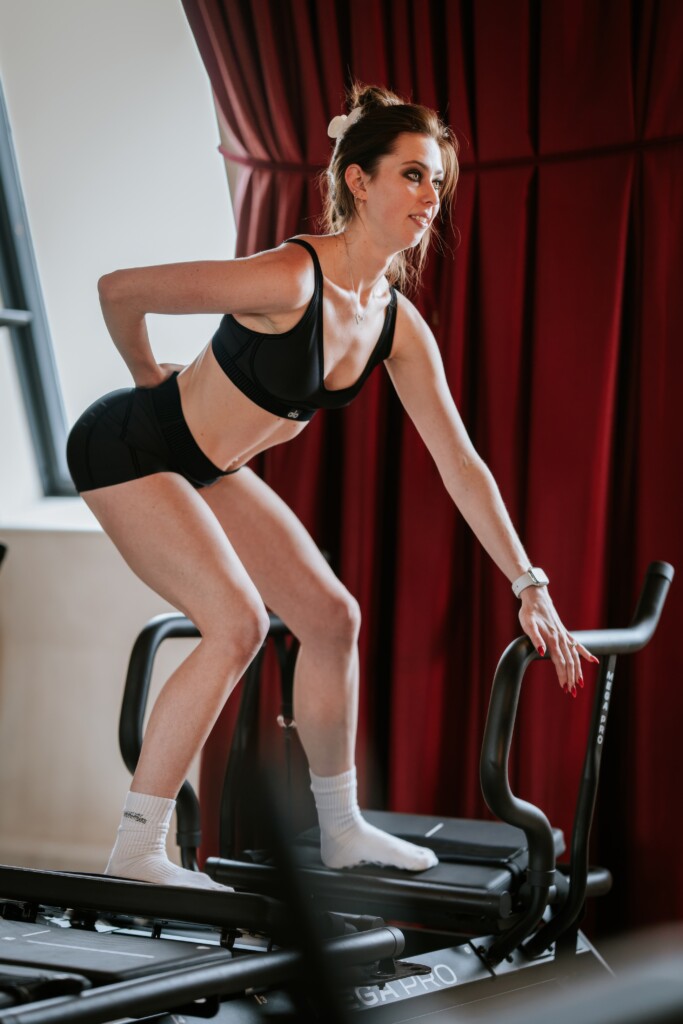
Your body doesn’t just expand during pregnancy. It reorganizes how it moves, stabilizes, and distributes weight across every joint and muscle group. Stretching feels different because the rules governing tension, stability, and flexibility have fundamentally changed.
These shifts aren’t cosmetic. They’re structural, hormonal, and neurological. Understanding what’s actually happening inside helps explain why the same stretches that felt productive before pregnancy now feel unreliable, uncomfortable, or even risky.
Hormones reshape how joints behave
Pregnancy floods the body with hormones that prepare it for birth. Relaxin, progesterone, and estrogen work together to increase the elasticity of ligaments and connective tissue. This is essential for allowing the pelvis to expand during delivery, but it also means every joint in your body becomes less stable.
When ligaments loosen, joints can move beyond their typical range. Your nervous system senses this vulnerability and responds protectively. Muscles tighten, not because they’re short, but because they’re trying to compensate for the instability that hormones have created. This is why stretching deeper doesn’t always help. You’re not addressing the root cause: a loss of control, not a lack of length.
According to StatPearls, maternal physiological changes, blood volume increases by approximately 50% during pregnancy to support fetal circulation and prepare for delivery. This dramatic cardiovascular shift, combined with hormonal changes, affects everything from heart rate to the efficiency with which oxygen reaches working muscles. Your body is managing an entirely different internal environment, which is why familiar movements suddenly feel harder or less coordinated.
Your center of gravity moves forward
As your baby grows, your body’s weight distribution shifts. The center of gravity moves anteriorly, pulling your pelvis into a forward tilt and increasing the curve in your lower back. This isn’t a posture problem you can simply correct. It’s a mechanical reality your body must adapt to every single day.
Your hips, lower back, and upper back absorb more load to counterbalance this shift. Muscles that once worked quietly in the background now have to stabilize actively throughout the day. Tightness shows up in these areas not because the muscles are short, but because they’re working overtime to keep you upright and balanced.
Core and pelvic floor coordination changes
The deep core and pelvic floor don’t just weaken during pregnancy. Their timing and coordination shift. These muscles work together to create intra-abdominal pressure that stabilizes your spine and pelvis. As your abdomen expands, that relationship becomes harder to maintain.
When core support feels less reliable, your body limits movement as a protective response. Stretching into deep ranges can feel unstable or even unsafe because the muscles responsible for controlling those ranges aren’t firing the way they used to. This is why many pregnant women feel tight and restricted, even though their ligaments are technically more lax.
It’s deeply frustrating to feel like your body is betraying you. You stretch because your hips ache, your lower back throbs, or your shoulders carry tension that won’t release. The stretch brings temporary relief, then the discomfort returns. You’re not failing. You’re working against a system that has fundamentally reorganized how it stabilizes movement.
Static stretching doesn’t address the underlying need
When you hold a passive stretch, you’re lengthening muscle fibers without teaching them how to stabilize in that new range. Your nervous system interprets this as a gap in control. Once you stand up and move, those muscles tighten again to protect joints that feel unsupported.
During pregnancy, this protective response intensifies. Your body is already managing increased weight, shifted alignment, and hormonal changes that loosen ligaments. Stretching without resistance only addresses muscle length. It doesn’t build the strength or coordination needed to make that length functional.
Most pregnancy stretching routines treat the body as if it just needs to relax. Relaxation without strength creates instability. And instability during pregnancy doesn’t feel freeing. It feels vulnerable. Many women describe their bodies as feeling “loose” or “saggy,” not because they’ve let themselves go, but because the body’s protective systems are working harder to stabilize movement in the absence of reliable joint support.
Controlled resistance builds trust in new ranges
What actually helps is movement that combines lengthening with active muscle engagement. When you stretch with resistance, you’re teaching muscles to work while they lengthen. This is called eccentric loading, and it builds strength at the end ranges of motion. Your body learns it can trust those positions because muscles are actively stabilizing, not just being pulled.
Low-impact, resistance-based training methods allow pregnant women to work muscles under tension without the joint stress of traditional workouts. Slow, controlled movements create time under tension that builds both strength and body awareness. You’re not just stretching your hip flexors. You’re teaching them to stabilize your pelvis while it moves through pregnancy-appropriate ranges.
Platforms like BST Lagree integrate this principle into prenatal programming, using spring-based resistance to engage muscles without impact. The carriage movement requires constant core stabilization, which helps maintain pelvic floor connection and postural control as your center of gravity shifts. You’re building the stamina and stability needed for labor while addressing the daily discomfort caused by postural changes.
The body needs support, not just flexibility
Pregnancy changes the body’s relationship with movement. Joints are less stable. The center of gravity shifts. Core and pelvic floor coordination changes. Muscles absorb more load to compensate for these shifts. Stretching alone doesn’t address any of these realities.
When movement is controlled and supported, not just passive, flexibility becomes more reliable. Discomfort becomes easier to manage rather than something that constantly returns. This isn’t about pushing harder or stretching deeper. It’s about creating the conditions where your body feels safe enough to move well.
The body doesn’t need to be pushed into deeper ranges during pregnancy. It needs to build strength and control in the ranges it already has, so that flexibility becomes sustainable rather than temporary. When stretching is paired with intentional muscle engagement, the nervous system stops treating movement as a threat.
But knowing what’s changing inside your body is only the beginning. The real question is what you actually do about it, and what that looks like in practice.
Related Reading
- Morning Stretches for Women
- Why Am I Not Flexible
- How Long Does It Take to Get Flexible
- Does Flexibility Increase Strength
- Mobility Stretching Routine
- Full Body Stretching Routine for Flexibility
What a Safe and Effective Pregnancy Stretching Routine Includes
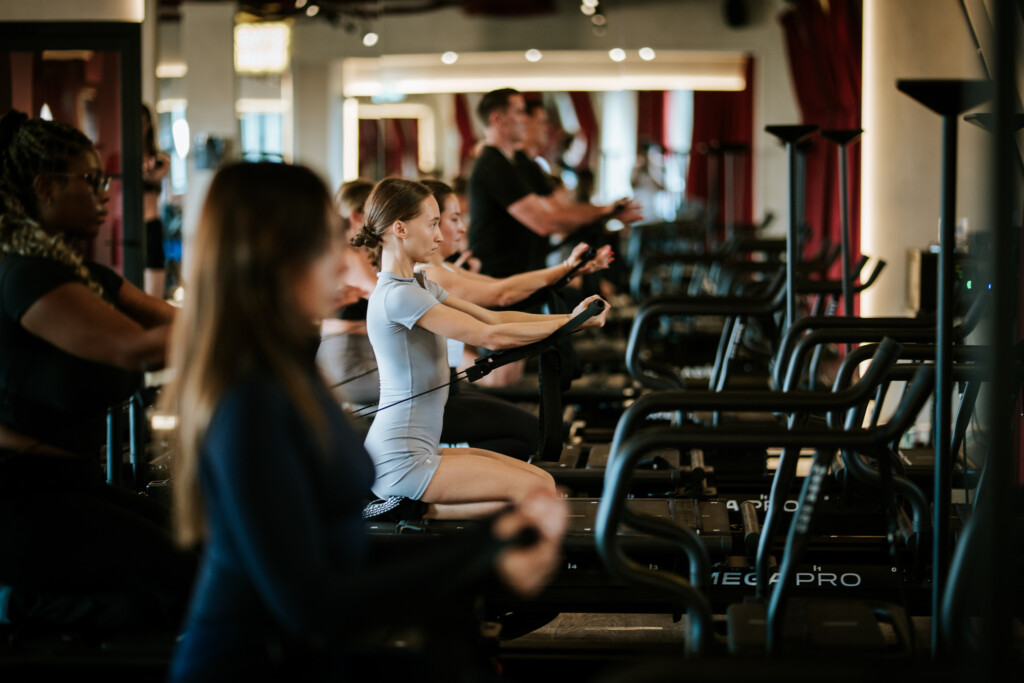
“Safe” during pregnancy doesn’t mean doing as little as possible. It means choosing movements that support the body’s changing needs instead of working against them. Clinical guidance consistently shows that prenatal movement is most effective when it prioritizes control, stability, and breath, not extreme ranges of motion.
The American College of Obstetricians and Gynecologists recommends that women with uncomplicated pregnancies engage in at least 150 minutes per week of moderate-intensity aerobic activity, emphasizing controlled movement, proper alignment, and avoidance of activities that place joints at risk due to increased laxity. Their guidance specifically warns against overstretching, as pregnancy hormones increase joint mobility before muscular control adapts.
This reframes what “safe” really means. Safe does not mean forcing range of motion, collapsing into passive stretches, or ignoring strength, posture, and alignment.
Gentle, controlled mobility
Movement stays within a comfortable range and is guided by control rather than depth. This respects increased joint laxity while still maintaining mobility. Think of it as moving to a point where you feel sensation, not strain. Your body should feel engaged, not vulnerable.
When you move slowly through a range, you give your nervous system time to register what’s happening. Fast, bouncing stretches bypass this awareness. Controlled mobility builds a conversation between your brain and muscles, teaching them to trust each position before moving deeper.
Light muscle engagement for joint support
Keeping muscles gently active helps stabilize joints that are more mobile due to hormonal changes. This neuromuscular support is key to reducing discomfort and preventing overextension. You’re not just lengthening tissue. You’re teaching muscles to hold space around joints that hormones have destabilized.
Picture a door hinge that’s been loosened. If you swing the door hard, it wobbles. If you guide it slowly with your hand on the frame, it moves smoothly. Your muscles become that guiding hand, stabilizing joints as they move through pregnancy-appropriate ranges of motion.
Slow, intentional transitions
Moving slowly between positions improves coordination and balance, which becomes increasingly important as posture and center of gravity change. Rushing through transitions forces your body to compensate, often by gripping muscles or shifting weight unevenly. Slow movement builds proprioception, the body’s sense of where it is in space.
This matters more as pregnancy progresses. Your relationship with gravity changes. The floor feels farther away. Getting up from a seated position requires different mechanics. Slow transitions prepare you for these daily realities, not just the stretching routine itself.
Breath-led movement to reduce tension
Breathing patterns directly influence the nervous system. Coordinating breath with movement helps reduce guarding, improve comfort, and support core and pelvic floor coordination. When you hold your breath, muscles tighten protectively. When you breathe fully, tension softens.
Inhale to prepare. Exhale to move deeper. This rhythm teaches your body that movement doesn’t require bracing. It creates space for muscles to lengthen without triggering a defensive response. Over time, this pattern becomes automatic, making daily movements feel easier and less effortful.
This is where Lagree-style principles naturally align with prenatal needs. The emphasis on slow tempo, controlled resistance, and intentional movement supports mobility without sacrificing stability. Spring-based resistance creates constant muscle engagement, which means you’re building strength in the exact ranges you’re trying to access. You’re not just stretching your hamstrings. You’re teaching them to stabilize their pelvis as they move through a lunge or squat.
Platforms like BST Lagree integrate these principles into prenatal programming, using spring-based resistance to engage muscles without impact. The carriage movement requires constant core stabilization, which helps maintain pelvic floor connection and postural control as your center of gravity shifts. You’re building the stamina and stability needed for labor while addressing the daily discomfort caused by postural changes.
When stretching respects how the pregnant body actually adapts, flexibility becomes something that feels safe, grounding, and genuinely helpful, not something to approach with hesitation. You’re not just managing discomfort. You’re building capacity.
But understanding these principles is only useful if you know where to apply them and which parts of your body need the most attention.
Related Reading
- Stretches for Women Over 50
- Quad And Hamstring Stretches
- Ballet Stretches
- Split Stretches
- Aerial Yoga Stretches
- Sacrum Stretches
Pregnancy Stretching Routine (Head-to-Toe Focus Areas)
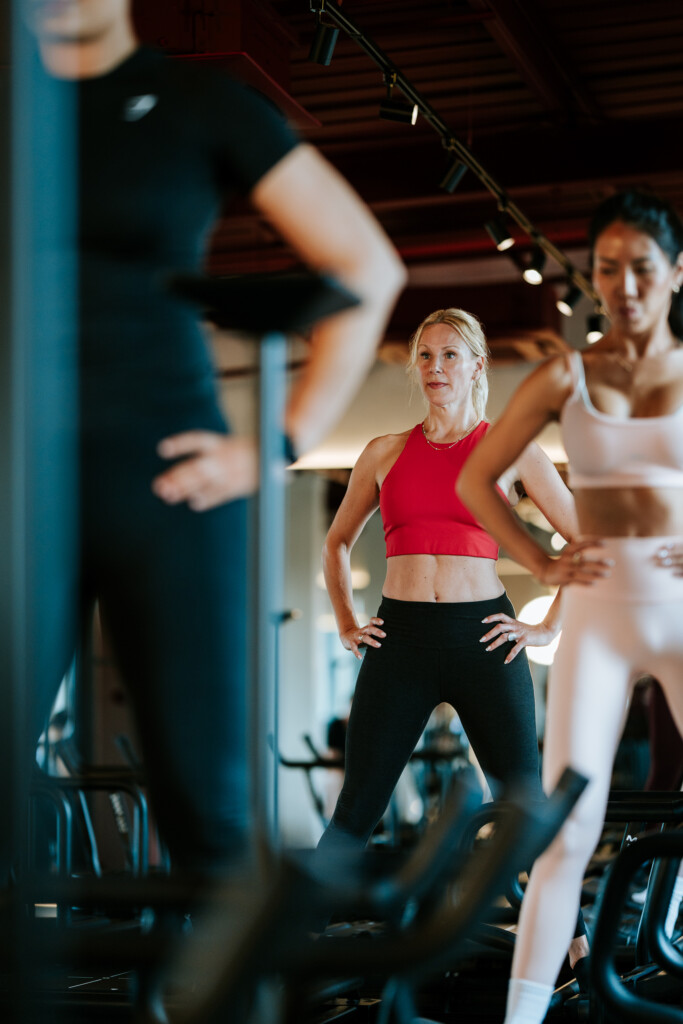
This routine targets areas where pregnancy creates the most tension, but it doesn’t treat them in isolation. Each stretch connects to the larger system of postural support your body is actively rebuilding. The focus stays on supported movement, controlled range, and breathing, so flexibility feels helpful rather than uncertain.
Lower Body
Hips
Hip stretches during pregnancy aren’t about achieving an extreme range of motion. They’re designed to relieve pressure while maintaining pelvic alignment. The pelvis is already shifting forward as your center of gravity moves. Adding passive, deep hip stretches on top of that can destabilize rather than help.
Gentle opening paired with light muscle engagement reduces discomfort without overloading joints that hormones have already made more mobile. Think of a modified pigeon pose where you actively press through your hands, keeping your core engaged, rather than sinking into the stretch. You’re teaching your hip flexors and glutes to stabilize the pelvis as you move through a range that feels comfortable, not forced.
The goal is to reduce the compensatory tension that builds up from standing all day. When hip stretches respect alignment and engage muscles, they relieve the ache without creating new instability.
Glutes
The glutes support the pelvis and lower back, but pregnancy often weakens their activation patterns. When glutes stop firing effectively, the lower back takes over, which is why so many pregnant women describe a persistent lower-back tightness that stretching alone won’t fix.
Stretching the glutes actively, meaning with intentional muscle engagement rather than passive sinking, helps reduce these compensation patterns.
A bridge position with a controlled hold at the top, or a standing glute stretch where you maintain balance and resist gravity, teaches the muscle to engage while lengthening. You’re not just loosening tissue. You’re retraining the glutes to do their job of stabilizing your pelvis as it shifts.
This distinction matters. Passive glute stretches might feel good temporarily, but active ones build the strength needed to reduce lower-back overload in the long term.
Hamstrings
Hamstring tightness during pregnancy often isn’t about the hamstrings themselves. It’s about the pelvis tilting forward, which puts the hamstrings on constant stretch. Pulling harder on them doesn’t address the root cause and can further stress the lower back.
Hamstring mobility is maintained by keeping the core engaged and the pelvis neutral. A seated forward fold, where you hinge from the hips, not the spine, targets the muscle without pulling on your lower back. The stretch should feel like it’s happening in the back of your thigh, not your spine.
When you keep your pelvis stable and your breath steady, the hamstring stretch becomes functional rather than risky. You’re teaching the muscle to lengthen in a way that supports movement, not one that destabilizes your already-shifting alignment.
Core & Spine
Gentle spinal mobility
Slow flexion and extension help relieve back tension and stiffness without forcing range. A cat-cow position on hands and knees, moving only as far as feels comfortable, creates space in the spine without compromising stability. Movement stays smooth and comfortable, never pushing into discomfort.
The spine is managing new loads every day as your belly grows. Gentle mobility reminds it that movement is safe, reducing the protective tightness that builds when your body feels uncertain.
Controlled movement for posture support
Rather than collapsing into stretches, the spine moves with intention. This reinforces postural support as your center of gravity shifts. A standing side stretch where you actively reach up and over, engaging your obliques rather than just leaning, builds strength in the exact positions your body needs to maintain throughout the day.
You’re not just moving for the sake of moving. You’re training your spine to stay supported as it adapts to carrying weight differently.
Neutral alignment and breathing
Breath guides movement, helping the ribcage, core, and pelvis work together. This coordination supports both comfort and confidence in movement. Inhale to prepare, lengthening your spine. Exhale to move deeper, engaging your core without gripping.
When breath and movement sync, your nervous system interprets the stretch as safe rather than threatening. Tension releases because your body trusts the position, not because you’ve forced it to relax.
Upper Body
Chest and shoulders
Stretching the front of the body counters the forward posture that develops as pregnancy progresses. A doorway chest stretch, where you step forward gently while keeping your ribs stacked, opens the chest without arching the lower back or flaring the ribs.
This matters because forward posture compresses the ribcage, making breathing harder and worsening shoulder tension. Opening the chest with control gives your lungs more room and reduces the strain on your neck and upper back.
Upper back mobility
Gentle movement through the upper back improves comfort and supports easier breathing, especially as posture changes. A seated twist, moving slowly and only as far as feels natural, releases tension without forcing rotation.
Your upper back is working harder to counterbalance the weight in front of you. Mobility here reduces the stiffness that builds up from holding that position all day.
Neck and traps
Neck tension is addressed carefully, using small, controlled ranges of motion. There’s no pulling or forcing, just gradual release with breath. A gentle neck stretch where you tilt your head to one side, using only the weight of your head rather than pulling with your hand, keeps the movement safe.
The neck and traps carry a surprising amount of tension during pregnancy, often from the stress of holding your head over a shifted center of gravity. Small, controlled stretches release that tension without creating new strain.
What Matters Most
Throughout the entire routine, movements stay slow and controlled. Stretching remains active, not passive. Comfort and stability come first, always.
This head-to-toe approach supports the body as it changes, helping flexibility feel grounded, safe, and genuinely useful during pregnancy. You’re not trying to become more flexible. You’re building the strength and coordination that sustain flexibility.
Many traditional stretching routines miss this entirely. They focus on lengthening muscles without addressing the underlying need for stability. Resistance-based methods like Lagree naturally integrate both, using spring tension to engage your muscles as you move through the range of motion.
Platforms like BST Lagree apply this principle to prenatal programming, teaching your body to be strong in stretched positions rather than just loose. The carriage movement requires constant stabilization, which means every stretch you perform is also building the control your body needs as it transforms.
But knowing where to stretch is only part of the equation. The deeper question is why strength and stretch need to happen together, especially now.
Why Strength-Supported Stretching Is Especially Important in Pregnancy
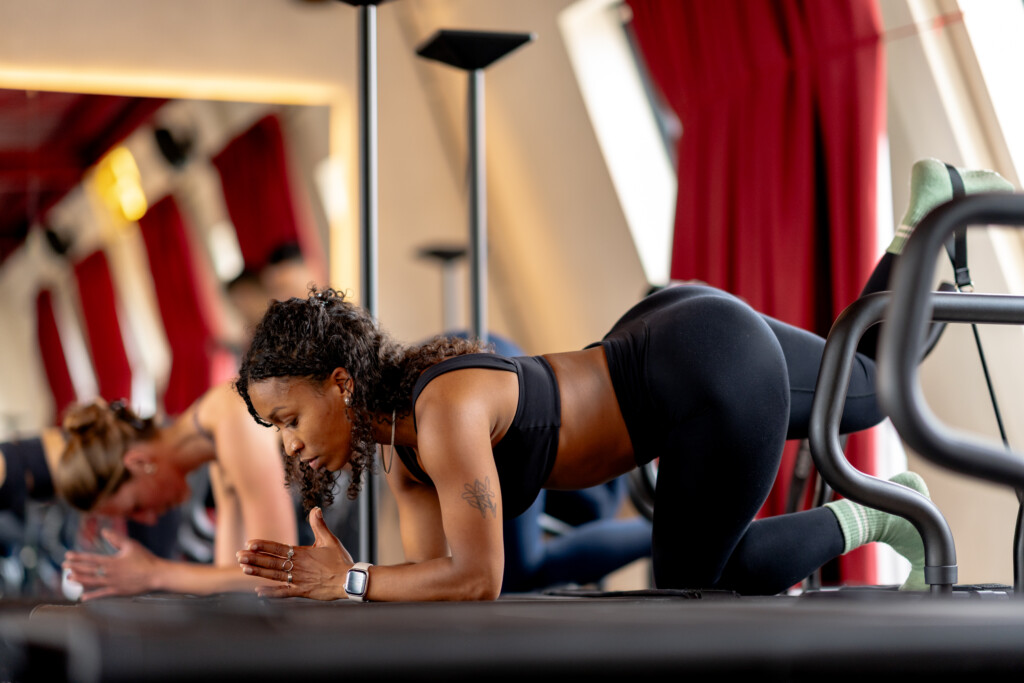
During pregnancy, the goal of stretching isn’t to become more flexible. It’s to move comfortably and confidently as the body changes. That’s why strength-supported stretching matters more than ever.
As pregnancy progresses, joint laxity naturally increases. This doesn’t mean the body is broken or fragile. It means the structures that usually provide stability are doing less of that work. When stability decreases, the body responds by limiting movement or creating sensations of tightness as a form of protection.
This is where strength and control come in.
When muscles remain lightly engaged during stretching, they provide the support that joints no longer provide on their own. That support helps the nervous system relax, allowing movement to feel secure instead of uncertain. Without it, the body may resist deeper ranges or tighten back up shortly after stretching ends.
The protective response intensifies when support is missing
Picture a bridge with loosened cables. The structure doesn’t collapse immediately, but it starts to sway. Your body does the same thing during pregnancy. According to research published by the Mend Colorado physical therapy team, relaxin hormone levels increase by 50% during pregnancy, significantly affecting ligament laxity throughout the entire body, not just the pelvis. This systemic change means every joint, from your ankles to your shoulders, experiences reduced passive stability.
Your muscles compensate by gripping harder. That’s not a weakness. That’s your body trying to prevent injury when it senses the usual support system has gone slack.
Passive stretching, where you simply sink into a position and hold, asks those already-overworked muscles to release without offering anything in return. The nervous system interprets this as risky. So the moment you stand up, those muscles re-engage protectively, often tighter than before. You’re stuck in a cycle where stretching brings temporary relief but no lasting change.
Strength-supported stretching breaks this pattern. When you engage muscles while lengthening them, you’re teaching your body that it can control the range you’re moving through. The nervous system stops treating the stretch as a threat because muscles are actively stabilizing the joints that hormones have loosened.
Overextension becomes a real risk without active engagement
Flexibility during pregnancy can be deceptive. Tissues feel more pliable, so you might sink deeper into a stretch than you could before. But depth doesn’t equal benefit. In fact, moving beyond what your muscles can actively control creates instability that your body will later compensate for through pain, restriction, or protective guarding.
The critical difference is this: can you move into that range with control, or are you just collapsing into it?
When you stretch with resistance, using your own muscle engagement or external support like spring-based equipment, you build strength at the exact ranges your body needs to access daily. Getting up from the floor. Reaching overhead. Squatting to pick something up. These movements require both length and control. Passive stretching only addresses one side of that equation.
Resistance-based approaches naturally integrate both. Spring tension creates constant feedback, requiring muscles to stabilize throughout the entire range of motion. You’re not just lengthening your hamstrings in a forward fold. You’re teaching them to control their pelvis as it tilts, which is exactly what they need to do when they bend over to tie their shoes or lift a laundry basket.
Platforms like BST Lagree apply this principle directly to prenatal programming. The carriage movement on a Lagree machine requires continuous engagement of the core and pelvic floor, even during what feels like a stretch. You’re building the neuromuscular patterns that support daily movement, not just temporary flexibility that disappears the moment you stand up.
The nervous system needs proof that movement is safe
Your body doesn’t trust promises. It trusts evidence. When you stretch passively, you’re asking your nervous system to believe that a position is safe without demonstrating control in that position. During pregnancy, when so many other signals are telling the body to be cautious, that’s a hard sell.
Active engagement provides the proof your nervous system needs. When muscles fire while lengthening, the brain receives clear feedback: we can stabilize here. We can control this. The position isn’t just accessible, it’s functional.
This shift changes everything about how sustainable your flexibility becomes. You’re not fighting against your body’s protective instincts. You’re working with them, building capacity instead of just borrowing a range you can’t actually use.
Many pregnant women describe feeling disconnected from their bodies, like they’re living in something unfamiliar. That disconnection often comes from the gap between what the body can passively access and what it can actively control. When stretching includes strength, that gap closes. Movement starts to feel trustworthy again.
The goal isn’t to push through resistance or force your body into submission. It’s to build a relationship with movement where flexibility feels supported, not loose. Where stretching makes you feel more capable, not more cautious.
But understanding why this matters only gets you halfway. The real shift happens when you see exactly how resistance and control work together in practice.
Related Reading
- Pregnancy Sciatica Stretches
- Yoga Stretches For Flexibility
- Pelvic Stretches For Women
- Lower Back and Hip Stretches
- Aerial Yoga Stretches
- Yoga Poses for Hip Flexibility
How Lagree Principles Support Pregnancy Mobility
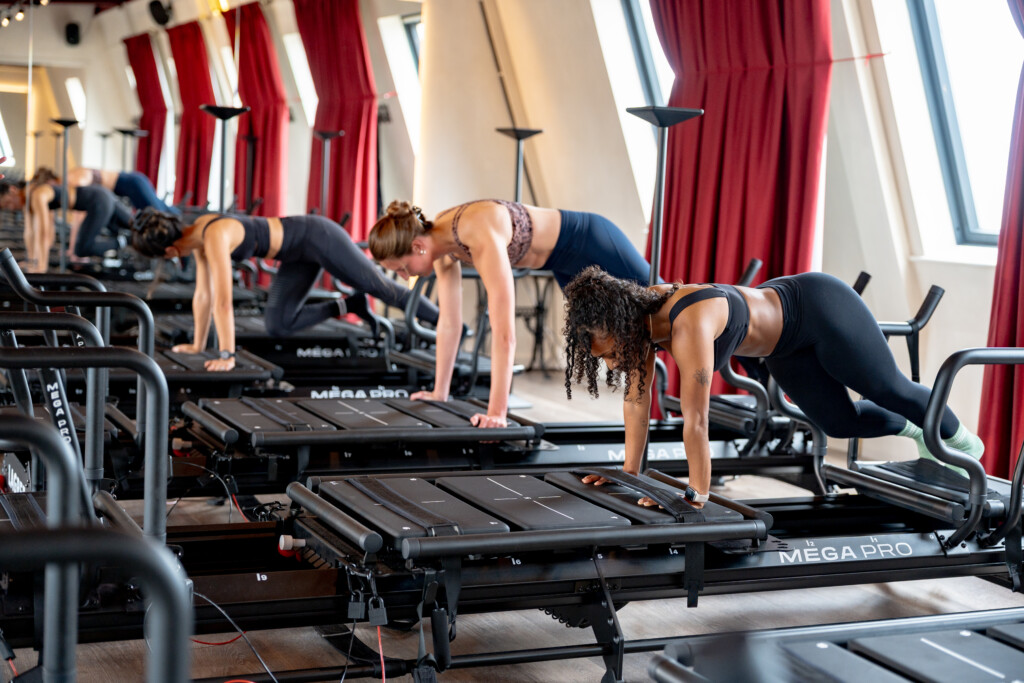
When adapted thoughtfully, Lagree principles align well with what the body needs during pregnancy: support, control, and confidence in movement, not intensity or extremes. The method’s foundation rests on slow, deliberate movement under constant tension, which teaches muscles to stabilize as they lengthen. That combination becomes especially valuable when hormones loosen joints, and your center of gravity shifts daily.
BST Lagree applies these principles with appropriate prenatal modifications, keeping the focus on safe, functional mobility as the body changes.
Slow tempo encourages control and awareness
Lagree’s hallmark slow pace increases awareness of how each movement feels. During pregnancy, this helps you move with intention, maintain balance, and stay aligned rather than rushing into positions that feel unstable. When you slow down, you notice how your pelvis tilts, where your ribs stack, and which muscles are actually working versus which ones are compensating.
That awareness matters because pregnancy changes your body’s feedback systems. What felt stable three weeks ago might feel wobbly today. Slow movement gives you time to adjust, to find your balance point, to recognize when something feels off before you’ve moved too far into a risky range.
The tempo also prevents momentum from doing the work your muscles should be doing. Fast movement lets you swing into positions your body can’t actually control. Slow movement removes that option. Every inch of range requires active muscle engagement, which builds the neuromuscular patterns your body needs as it transforms.
Light resistance supports joints through range
Gentle resistance keeps muscles engaged as they lengthen, supporting joints that may feel less stable due to natural changes. This makes mobility feel secure and usable, instead of loose or uncertain. Spring tension provides constant feedback, requiring your muscles to stabilize throughout the entire movement rather than just at the beginning or end.
According to The Bloom Method, muscles can travel the equivalent of 3 marathons during a 45-minute workout on a Lagree machine. That sustained muscular engagement builds endurance in the exact positions pregnancy requires: holding your posture upright as your belly grows, stabilizing your pelvis while walking, and controlling your descent when sitting down.
Light resistance doesn’t mean easy. It means appropriate. The load stays within a range that challenges muscles without stressing joints. You’re building capacity where your body needs it most, at ranges you’ll actually use in daily life.
A focus on alignment reduces unnecessary strain
Careful attention to posture, stacked ribs, neutral pelvis, and controlled transitions helps distribute load more evenly. That reduces strain on areas that often feel overworked, like the lower back, hips, and shoulders. When alignment shifts during pregnancy, some muscles start carrying more than their share. The lower back arches to counterbalance your growing belly. The shoulders round forward from the weight of changing breast tissue. The hips tilt to adjust your center of gravity.
Lagree’s emphasis on alignment doesn’t fight these changes. It teaches your body to adapt to them efficiently. You learn how to find neutral in your new posture, how to stack your joints even when your proportions have shifted, how to move between positions without collapsing into compensation patterns.
This focus prevents the cascade effect where one misalignment creates another. When your pelvis tilts too far forward, your lower back overarches. When your lower back overarches, your ribcage flares. When your ribcage flares, your shoulders round. Addressing alignment at each point in the movement chain stops that cascade before it starts.
Stretching becomes functional for daily movement
Because mobility is paired with light strength and control, it carries over into everyday tasks: standing, walking, lifting, and changing positions, rather than existing only within a stretch session. You’re not just able to touch your toes on a mat. You’re able to bend down to pick up groceries, squat to tie your shoes, rand each overhead to put dishes away, all without your body tightening protectively afterward.
That transfer happens because you’re training movement patterns, not just muscle length. A hamstring stretch on a Lagree machine requires you to control your pelvis while your leg moves. That’s the same coordination you need when you step up onto a curb or get out of a car. The nervous system recognizes the pattern and applies it beyond the studio.
What to expect in practice
Classes are modified appropriately for pregnancy, with options that prioritize comfort and safety. The emphasis stays on control over depth, stability over range, and confidence over intensity. Instructors adjust spring tension, carriage positions, and movement tempo based on which trimester you’re in and how your body feels that day.
You won’t be asked to push through discomfort or prove anything. The method already assumes that slow, controlled movement under light resistance builds more sustainable strength than explosive effort. During pregnancy, that philosophy becomes even more relevant.
The result is pregnancy mobility that feels supportive and reliable, helping you move through each stage with greater ease, not caution. You’re building a relationship with your changing body where movement feels like something you can trust, not something you need to approach carefully or avoid altogether.
But knowing how these principles work is different from experiencing what they actually feel like in your body.
Book a Lagree Class in London Today to Move Comfortably Through Pregnancy
If you’re looking for movement that supports your changing body rather than works against it, booking a Lagree class in London offers a practical way to combine gentle strength with controlled mobility. These classes are designed to help you feel more stable and confident as your body transforms, not just temporarily looser.
At BST Lagree, prenatal programming integrates the principles you’ve been reading about: slow tempo, spring-based resistance, and intentional muscle engagement that builds strength while you stretch. When appropriately modified for pregnancy, these sessions create the neuromuscular support your body needs as joints loosen and your center of gravity shifts. You’re not just moving through positions.
You’re teaching your muscles to stabilize the range of motion you use every day when you walk, stand, or bend down. Movement becomes something that feels grounding and reliable, not something to approach with caution or second-guess.